Author name: Kaat Van Der Linden

Culinary, Uncategorized

Stockholm Chefs Tommy Myllymäki and Pi Le Open Liv at Slussen

Stockholm Chefs Tommy Myllymäki and Pi Le Open Liv at Slussen Stockholm’s dining scene is about to gain a bright new spark. On 19th of May, chefs Tommy Myllymäki and Pi Le open Liv, their first restaurant on Södermalm in Stockholm and a completely new creation inside the glass wrapped Mälarterrassen at Slussen. With wide views over the water and Gamla Stan, the space feels less like a traditional opening and more like the unveiling of a fresh viewpoint on Stockholm life. Both chefs already carry the kind of reputations that make food lovers lean in with interest. Tommy Myllymäki’s achievements range from Årets Kock to Bocuse d’Or medals and bestselling cookbooks, while Pi Le brings experience from the national culinary teams and his work as co-owner (together with Myllymäki) of the two starred AIRA. Together they also run Bobergs Matsal and Akvileja at NK. Liv becomes the next chapter in this shared story, but with a new kind of creative freedom at its center. That freedom is exactly what defines Liv. Instead of inheriting a room with long standing traditions, the chefs were given a blank canvas and turned it into a restaurant that feels personal and alive. It is warm without being heavy, relaxed without being casual, and clearly shaped by the playful energy of Södermalm and the steady calm of the surrounding water. The room glows with daylight. The terrace reaches out toward the quay like an invitation. You can picture long lunches that drift into the afternoon, glasses that refill just because the mood is right, and those soft Stockholm evenings when the city seems to exhale. Liv is designed for all of it. images courtesy Liv “We want Liv to feel like somewhere we would visit ourselves,” Tommy says. And that philosophy shows in every corner. This is not a place chasing strict fine dining rules. It is a restaurant built on honest food prepared with serious skill, served in a room that encourages conversation, curiosity, and staying just a little longer than planned. Pi adds, “Södermalm means a lot to us. The food scene here has really grown, and it feels fantastic to be part of it.” The creation of Liv is closely tied to Atrium Ljungberg, the developer behind the new Slussen and Mälarterrassen. The area will welcome six distinct restaurant concepts, all part of a vision to make the waterfront one of Stockholm’s next major destinations for food and community. Annica Ånäs, CEO of Atrium Ljungberg, sees the opening as a milestone. Liv, she notes, balances craft with comfort in a way that fits perfectly into the evolving story of the city. Tables will be released one month at a time through restaurangliv.se, and interest is already high. Liv opens on 19th of May. It arrives in a part of Stockholm that is being reshaped in real time, and it already feels like the kind of restaurant people will return to often simply because the room, the food, and the mood make you want to return.

Opiates, Uncategorized

Louis Vuitton Flight Mode 2026

Louis Vuitton Flight Mode 2026 Louis Vuitton’s Flight Mode 2026 collection refines the Art of Travel into a wardrobe built for movement. Leather bombers, flight jackets, cardigans and gilets appear in supple, grained and velvety finishes, all in quiet neutral tones that feel both grounded and aerodynamic. Cashmere and virgin wool add softness, anchoring the collection in comfort. Denim introduces contrast through faded blue‑grey pieces reinterpreting the Brown Denim Monogram, while cotton poplin, printed taffeta and washed silk move lightly in shades of tangerine, rosé, sand, sienna and white. Two motifs define the season: the white‑and‑brown Mahina pattern and an all‑over print inspired by vintage hotel keys. Accessories extend the narrative. The Low Key bag returns in Moonstone, Quartz and Dark Fango, its minimalist hobo shape marked by a central V and gold padlock. The LV Sneakerina evolves into mule and boot versions, combining agility with a sleek, urban silhouette. Flight Mode 2026 is a study in functional elegance; pieces designed to travel lightly, move freely and carry the spirit of adventure forward. images courtesy Louis Vuitton

Art, Uncategorized

Olga Krüssenberg on Navigating the World Between Art and Film

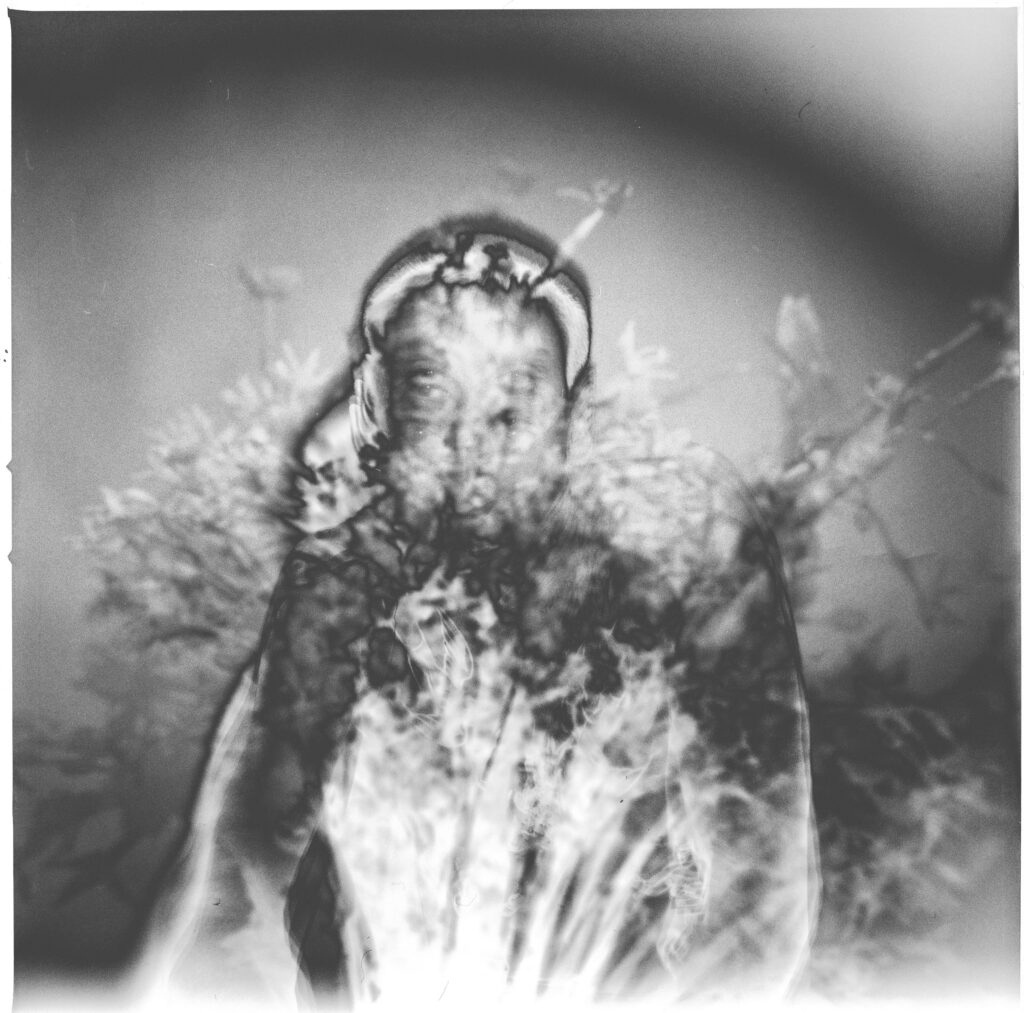
photography Sebastian Sanchez Olga Krüssenberg on Navigating the World Between Art and Film text Koshik Zaman 2024 Royal Institute of Art MFA graduate Olga Krüssenberg is part of a new wave of artists working across film and visual art, alongside peers such as Salad Hilowle, Victoria Verseau, Sophie Vukovic and Kasra Alikhani. Currently developing her first feature film — set in Svalbard, in the Norwegian archipelago in the Arctic Ocean — I met Olga in her studio at Korvfabriken, a former sausage factory turned studio collective and art space in Stockholm’s Meatpacking District, to talk about navigating between film and art. During a recent residency in Mexico City, Krüssenberg found herself in a state of sensory overload — a dense, shifting environment of sound, movement and social intensity that contrasted sharply with the quieter northern landscapes she often works with. Not speaking Spanish at first made her dependent on others in unfamiliar ways, but gradually learning the language changed how she moved through the city and how she related to it. At the same time, she became aware of the dynamics of gentrification in certain neighbourhoods, especially the presence of English speaking communities, and the discomfort of being implicated in those dynamics. Looking back, she sees the residency less as a defined period of production and more as something that subtly altered how she thinks about presence, attention and place; themes that continue to shape her work today. Koshik Zaman: You’re currently working on your first feature film, for which you also wrote the script, and I understand you recently began shooting on location in Svalbard. Why Svalbard—and how is the process coming along so far? Olga Krüssenberg: I first went to Svalbard in November 2019, when I was living in Tromsø during an exchange at the Art Academy. A friend asked if I wanted to join her for research for an exhibition, and without really knowing where I was going, I said yes.   Svalbard came to me first as a place of contradiction: it’s geographically remote, yet deeply entangled in global systems, whether political, ecological, or economic. I was drawn to that tension, and to the people living there in a kind of in-between state.   The process so far has been slow and somewhat fragmented, which also reflects the film itself. The project was initially conceived as a documentary, but when the main character chose to withdraw, I began to rethink the form. That shift led me toward a hybrid approach, where an actor takes on the central role. It’s not a linear narrative, but something that grows out of encounters, conversations, and situations on site. I’m still developing the script together with my partner, Andy Allen Olivar, who has been an important support in that process.   I don’t come from a background in scriptwriting, and I find the format quite resistant. In my previous films, I’ve worked more intuitively, following threads that gradually unfold during filming and editing. The film takes shape in the process, rather than being fully defined in advance. But when applying for fiction funding, you’re expected to present a finished script, and that creates a certain tension for me. photography Olga Krüssenberg photography Sebastian Sanchez K.Z: What initially drew you to film as a medium? When did you realise you wanted to incorporate it into your art practice? O.K: I think I was drawn to film through questions of memory and time. I was interested in how something can be both documented and constructed at once. I remember studying at Ölands Folkhögskola, where we worked with a different medium each week. When we were introduced to film, I immediately felt a kind of recognition, as if I had found a language that made sense to me. I was drawn to duration, and to the possibility of layering image, text, voice, and sound in a way that felt closer to how memory actually operates. Memory has also been a recurring theme in my work, perhaps more than I initially understood. Dementia runs in my family, and I carry an awareness that memory is something fragile, something that can shift or disappear. I think that awareness has quietly shaped many of my works over time. K.Z: As an artist working across both film and visual arts, what differences or similarities have you observed between these fields from the perspective of an emerging filmmaker? O.K: One clear difference is the level of structure. Film often requires a more defined production framework, with funding, timelines, and collaboration on a larger scale. In the visual arts, I’ve experienced more flexibility and openness in terms of process. At the same time, I’m interested in working in the space between these fields. I try to bring a certain openness and fragmentation from visual art into film, while also embracing the collaborative aspects of filmmaking. I am a very structured person, which helps me a lot in both fields. I spend a lot of time applying for funding, both for film and art projects, which has so far allowed me to sustain my practice after art school. What has been most rewarding about entering the film field is collaborating with very talented people, and something I would like to integrate more into my visual art practice as well. Since I didn’t attend a formal film school, these collaborations have, in many ways, become my education. I remember the first day of shooting on Svalbard with a bigger crew and an actor for the first time. I was so nervous; everyone was looking at me, waiting for me to say “action”, and I just looked very confused (yes, it was caught on camera, unfortunately). But I had decided beforehand to have a team with whom I could feel very vulnerable and lost, and they were very patient and supportive. That experience has stayed with me. It reminded me that filmmaking is not only about control, but also about trust. K.Z: You’ve already gained recognition for your films, with screenings

Opiates, Uncategorized

Zalando launches Pack for Possibilities

images courtesy Zalando  Zalando launches Pack for Possibilities Zalando introduces Pack for Possibilities, an outdoor campaign led by Norwegian pop artist Peder Elias and Oslo‑based model and writer Sara Flaaen Licius. Set against a road trip through Norway, the campaign turns a simple question into its guiding thread: what do I wear when the journey is the destination. For Peder Elias, whose creative world is rooted in writing among forests and fjords, the project becomes a natural fit. He describes Norwegian nature as an extension of his identity and speaks to the balance between the calm of home and the energy of performing for a crowd. Filming in the landscapes that shape his work felt, in his words, like a genuine pleasure. The campaign follows four friends moving through Norway’s rugged terrain, capturing unfiltered moments of weather, connection and the outdoor‑first mindset that defines the region. It reflects Zalando’s ambition to grow as a lifestyle destination, expanding its expertise in running, hiking and cycling and offering a more curated, high‑performance sports experience for Nordic consumers. Pack for Possibilities runs from April 24 to June 19 across all Nordic markets, returning in autumn through out‑of‑home, streaming and social placements.

Design, Uncategorized

Odalisque Magazine Interviews Efva Attling 

Odalisque Magazine Interviews Efva Attling images courtesy Efva Attling Efva Attling has never followed a straight path. From modeling and music to silversmithing, her creative journey has shaped a distinct voice in contemporary jewellery. Since founding her brand in the mid 90s, Attling has become known for designs that merge clean Scandinavian aesthetics with powerful messages about love, identity, and equality. Now, as Efva Attling Stockholm approaches its 30 year milestone, her work remains as relevant as ever.     Jahwanna: You moved from modeling to Gogo dancing to silversmithing. How do music, dance, and fashion still influence your jewelry today?  Efva Attling: Well I moved from Go Go dancing at night and silversmithing in the daytime when I was sixteen to modelling at seventeen. I can’t live without music, and dance is so good for your body and mind. It always inspires me to create new designs.  JB: You actually began training under Bengt Liljedahl at age 16 before your modeling career took off. What was it about returning to the bench in the mid-90s that felt like the right ‘homecoming’ for your creativity? EA: I never thought about creating jewellery for nearly 30 years. So when I got back to jewelry I was really ready. I needed to live my colorful life, with all the experience I got from modelling, being a pop star, and having two sons.   JB: As you mark 30 years of Efva Attling Stockholm in 2026, you’ve seen the brand grow from a small atelier in Södermalm to a global name. If you could send a piece of jewelry back to yourself in 1996, which one would it be, and what message would it carry? EA: The Homo Sapiens necklace, “the thinking man” in Latin, and the Human ring. My message would be to respect and be respected. JB: The “Homo Sapiens” collection became internationally known when Madonna wore it. Why do you think the “thinking human” message feels even more relevant in today’s digital age? EA: The Knowing Man in Latin. I divided the word. What I want to say is that all human beings are equal and have the right to love whoever they want. Just as important then as it is now.   JB: Your philosophy is ‘Beauty with a Thought.’ You’ve mentioned that jewelry should be a ‘conversation piece.’ Can you share a story of a customer whose life was changed or ‘boosted’ by the message on one of your pieces?  EA: Glenda Bailey, former editor of Harpers Bazaar, got the ring Fuck Off and said this piece gives a whole new meaning to jewellery. She needed it every day…   JB: With your sub-brand ‘The Högdalen,’ you’ve created a ‘cocky little sister’ to your main line. How does this outlet allow you to express the more rebellious, ‘rule-breaking’ side of your personality that might not fit the classic elegance of the main collection? EA: Jonas Åkerlund, who is a fantastic film director making videos for Madonna and recently for Billy Idol, made some jewelry with upside down crosses. One big cross worn by Ozzy Osbourne weighed a quarter of a kilo. It is fun to play with other talented artists.   JB: You often mix the ‘cool’ of sterling silver with the ‘warmth’ of gold. In collections like ‘Twosome’ or ‘Love Knot,’ how do you use these contrasting materials to symbolize the complexity of human relationships? EA: My basic thoughts are about human relationships…, love, humor, and politics. Jewellery has always been around mankind as talismans wishing for love, a better crop, a better self consciousness, and maybe even a change of life.

Cinema, Uncategorized

Aggy K. Adams on Channelling ‘Chaos’ and Learning to Let Go of Control 

Aggy K. Adams on Channelling ‘Chaos’ and Learning to Let Go of Control “There’s nothing better than putting your lived experience into an art form” photography Jason Jude talent Aggy K. Adams / CLD Communications Ltd fashion Rachel Davis / ONE REPRESENTS makeup Dani Guinsberg fashion assistant Lauren Glazer production Ignas Kelpsas suit Bella Freud shirt Rejina tie Bella Freud PYO @Couveture & the Garbstore shoes Burberry ring Ruha suit Bella Freud shirt Rejina tie Bella Freud PYO @Couveture & the Garbstore shoes Burberry ring Ruha shirt Rejina tie Bella Freud suit trousers Bella Freud socks Missoni ring Ruha With several shorts and featured roles under her belt, Polish-born British actress Aggy K. Adams joined Netflix’s hit drama series The Witcher (2019) for its third season in 2023 and is on a booming career trajectory, pursuing independent film. In conversation with ODALISQUE, Adams breaks down the early stages of her acting career, how she got into character for The Witcher, and tells us about her upcoming indie film debut.      Ella Nelson: When did you first realise you wanted to pursue acting as a career, or has being an actor always been the goal?  Aggy K. Adams: The first thought of acting came to me as an impulse – I must’ve been around 10 years old, and I did some acting classes, which I really loved. I remember receiving a lot of praise from my teacher and classmates, too, which made me feel that I was good at it.    Realising later on in life that I wanted to pursue it as a career has always been a negotiation between that pure moment of love, joy and creativity, and crippling doubts in my mind. I am learning that perhaps one wouldn’t exist without the other.    EN: That can be a hard balance to navigate. Was there someone in particular whom you looked up to when it came to acting while you were growing up?  AA: I remember watching Julia Stiles in Save the Last Dance and Angelina Jolie in Girl, Interrupted. I really looked up to them both, especially Angelina. She had that sensitivity and rawness I was mesmerised by. For example, in that intro scene where she rules the psych ward – I just couldn’t look away.  EN: You trained at the Royal Central School of Speech and Drama in London. Did you have any drama or acting experience prior to attending? What were those early experiences like?  AA: I had very little experience at that time. Whatever I heard from teachers when I was 18-19 years old, I took it extremely seriously and as ‘the truth’. I didn’t realise at the time that teachers are also humans with their own journeys and flaws. I was lucky to work with great teachers at Central, but also not so lucky later on with other ones.    EN: Great teachers can truly have such an impact! Was there a particular teacher, moment, or lesson that left a lasting impression on you – something you still carry with you in your work today?  AA: The person who helped me the most with confidence and craft was Alexa Lipworth, who runs an English-speaking theatre company in Paris called ‘Acting Ensemble’. I spent a lot of time in Paris training with her during and after COVID. She dug me out of the hole of insecurity that previous teachers helped me enter. She is busy directing plays now, but we still work together when we can.    EN: You’ve worked in both film and TV. How do you approach these two formats as an actor? Do you find your process changes between them? AA: I have been lucky enough to work in TV for the last four or five years, and this year I wanted to focus more on independent film. The approach between film and TV is very different. In film, I feel a lot more agency and co-creation. The formats and scripts are shorter; I can approach them more with the entire context in mind and then try to work out how best my character can serve the story. TV is a much longer process, often without a single visionary, and the scripts and episodes are always changing. I feel ready to take on a new TV show now though, and I have read some incredible scripts recently!  cardigan Toga skirt Ray Chu pulla @Couveture & the Garbstore  dress Milo Maria shirt A Jane tights Tabio boots Huishan Zhang EN: In 2023, you joined the cast of The Witcher as Iskra – an elven member of the notorious gang of teenage fugitives known as The Rats – for the series’ third season. What was it like joining a show that already had so much momentum and such an established fanbase?  AA: It was tricky at times because there was a lot of attention on us already. But that pressure came with some benefits, and doors have opened as a result.    EN: How did you prepare for the role of Iskra?  AA: She was a great character to prepare – very physical! Firstly, training how to fight with the Wakizashi (shorter Katana) sword was a very thrilling and challenging experience too. The prosthetics, hair and costume were a large part of the preparation for an elf character in the fantasy world. Shoutout to the incredible Megan Thomas, who did my hair, makeup and ears every day!    EN: Was there a particular aspect of her character you were especially drawn to explore? And in what ways, if any, do you see yourself reflected in Iskra, and vice versa? AA: I wanted to make Iskra a little like a Harley Quinn character. I’ve worked towards complex, unpredictable and chaotic energy, high intellect and emotional instability. I definitely have some chaos in me, so it was about tapping into it and bringing it out to the surface. She is also bubbly, fun-loving and witty – that, I say, we share somewhere too.

Art, Uncategorized

Paris Art Spring 2026: What Not To Miss

Paris Art Spring 2026: What Not To Miss text Eva Drakenberg Birds singing, green trees dancing, and happy Parisians drinking wine in the sun at every single brasserie. Spring has fully sprung in Paris, which not only entails blooming tulips at the florists but also a full-on blossoming art scene. As the season draws to a close, a few current exhibitions are truly worth visiting. Explore recurring themes of light, chaos, female energy, and spiritual geometry. Les Petites Aquarelles, n° 1,1908, aquarelle et crayon sur papier, 26 × 36 cm, HaK085. By courtesy of the Hilma af Klint Foundation – photo The Moderna Museet, Stockholm LIGHT EXPLOSION As spring arrives, we tend to crave more light in our lives, and a few shows offer exactly that. At the Bourse de Commerce, the Pinault Collection is presenting the striking Clair-Obscur, where over one hundred works explore the philosophical interplay of light and shadow. From Sigmar Polke’s unconventional postwar paintings and Wolfman Tilman’s photography, to Maria Martins’ sculptures, artists working across media transport you to new realities.  Meanwhile, across the Seine, the Musée d’Orsay offers a glimpse of Scandinavia with its temporary Northern Light exhibition. In a small room featuring eight paintings, artists such as the Swedish national romantic Carl Larsson capture the subjectivity of light. By visiting both shows, we allow a dialogue between the past and the contemporary. How is our relationship to light influenced by the ideas of our time?  Pinault Collection, Clair-obscur  Open now to August 24 View of the exhibition “Clair-obscur”, Bourse de Commerce – Pinault Collection, Paris, 2026. © Tadao Ando Architect & Associates, Niney et Marca Architectes, agence Pierre-Antoine Gatier. Photo: Nicolas Brasseur. I Pierre Huyghe. Camata. 2024. Robotic driven by machine learning, self-directed film, edited in real time by self-learning algorithms, sound, sensors. Pinault Collection. © Adagp, Paris, 2026 Musee D’Orsay- Northern Light  Open now to May 10 Carl Johan Forsberg. Pax, 1905. Musée d’Orsay. Achat, 2022. © Musée d’Orsay, dist. RMN-Grand Palais / Sophie Crépy NAVIGATING CHAOS How often have you heard “we live in such a crazy time” recently? Well, you are definitely not alone. As always, artists help us navigate difficult societal issues such as climate change and inequality. Find clarity, comfort, or discomfort through performative works by Paul McCarthy, photography through the lens of mass tourism by Martin Parr, and figurative paintings by Henry Taylor. These American and British contemporary artists navigate a turbulent world through their own artistic expressions. Hauser & Wirth Gallery – Paul Mccarthy, SS EE Saint Santa Eva Elf Open now to May 9 Installation view, ‘PAUL McCARTHY.SS EE SAINT SANTA EVA ELFDRAWING SESSIONS 2025WITH LILITH STANGENBERG,’Hauser &WirthParis,2026.© Paul McCarthy. Courtesy the artist and Hauser & Wirth. Photo: Nicolas Brasseur Jeu De Paume – Martin Parr, Global warming  Open now to May 24 © Martin Parr / Magnum Photos. 1996.  Picasso Museum – Henry Taylor, Where Thoughts Provoke  Open now to September 6  Henry Taylor, We Were Framed, 2014. Coll. Part. Photo Brian Forrest. © Henry Taylor. Courtesy the artist and Hauser & Wirth FEMALE ENERGY Gender roles are questioned by strong voices, such as Nan Goldin’s film installation at Grand Palais and British artist Rose Wylie’s figurative paintings interpreting Henri Rousseau at David Zwirner Gallery. While tackling different aspects of misogyny in two separate media, both do so with a similar wit and a sense of joie de vivre. Goldin’s photography famously captures the intimacy of the present and Wylie understands the now by interpreting the past. Despite difficult topics, both shows echo a sense of hopefulness. Grand Palais – Nan Goldin, This will not end well  Open now to June 21 Vue de l’exposition Nan Goldin, This Will Not End Well, Grand Palais, Paris__455 © Photo Simon Lerat pour le GrandPalaisRmn.  David Zwirner – Rose Wylie, Henri, Egypt…Bette, Bear Open now to May 23 Installation view. Rose Wylie: Henri, Egypt…Bette, Bear, David Zwirner, Paris, April 2-May 23, 2026. Courtesy David Zwirner. Photo by Nicolas Brasseur. SPIRITUAL GEOMETRY For some, geometry typically feels static and mathematical, yet several current exhibitions suggest the opposite. By embracing a geometric visual language, many artists seek to explore the spiritual dimension of reality. The Fondation Louis Vuitton exhibits a retrospective of Alexander Calder, who explored spirituality by rejecting logical shapes in his sculptures. In the Marais, the Institut suédois celebrates geometric abstract art with around 30 works of concretist Olle Bærtling, accompanied by contemporary artists. Similar to Calder, Bærtling was also interested in seeking spirituality in nature through shapes and colours.  Lastly, in early May, the Grand Palais opens its very grand Hilma af Klint exhibition, a must-see for every Scandi in Paris. Try to name a better way to finish Paris art spring than seeing the world through Hilma! On top of that, from grand to more petite, one should not miss the new Swedish, material-focused Galerie Börjesson Perott. From May 6, they are exhibiting a group show that continues the echo of Af Klint, featuring works by contemporary artists Bella Rune, Nadine Byrne, Ylva Snöfrid, and more. Fondation Louis Vuitton – Alexander Calder, Rêver en équilibre Open now to August 16 Alexander Calder, La Grande vitesse (1:5 intermediate maquette), 1969, Sheet metal, bolts, and paint, 259.1 x 342.9 x 236.2 cm, Calder Foundation, New York. © 2026 Calder Foundation, New York /ADAGP, Paris. Photo courtesy of Calder Foundation, New York / Art Resource, New York Institut suédois – Olle Bærtling and more, Formes Ouvertes Open now to July 19 Installation view. Formes Ouvertes. Vinciane Lebrun (Voyez-Vous). Grand Palais – Hilma Af Klint  Opens at May 6  Éros, n° 4, 1907, huile sur toile, 58 × 79 cm, HaK030. By courtesy of the Hilma af Klint Foundation – photo The Moderna Museet, Stockholm.jpg as light brings hope we feel to cope as tragedy occurs  we choose magic to stir

Opiates, Uncategorized

Iittala × Pokémon

Iittala × Pokémon photography Atlas Woo Iittala marks Pokémon’s 30th anniversary with a capsule collection that brings the franchise’s familiar world into the Finnish design house’s own universe of clarity and craft. At its center is Origo, Alfredo Häberli’s striped icon from 1999, reinterpreted with Pikachu‑inspired colors and small illustrated adventures that move playfully across the surface. The collaboration feels less like a crossover and more like a shared origin story. Pokémon was born in 1996; Origo arrived three years later. Both shaped the late‑90s imagination, both became cultural touchstones, both endured. Here, they meet again in objects designed for everyday use: mugs, plates and bowls that carry narrative without losing Origo’s graphic discipline. Rather than treating Pokémon as novelty, the collection integrates it into functional pieces meant to live on tables, in kitchens, and in daily rituals. Nostalgic, yes, but also contemporary, rooted in Iittala’s belief in restraint, color, and objects made to last. Launching 1 May 2026 in Finland and Japan, the capsule sits at the intersection of design, collectability and memory, a reminder that some things we grew up with continue to shape us long after.

Scroll to Top