Music

Music, Uncategorized

From Biskopsgården to the Grammis: Jackie Mere’s Next Chapter

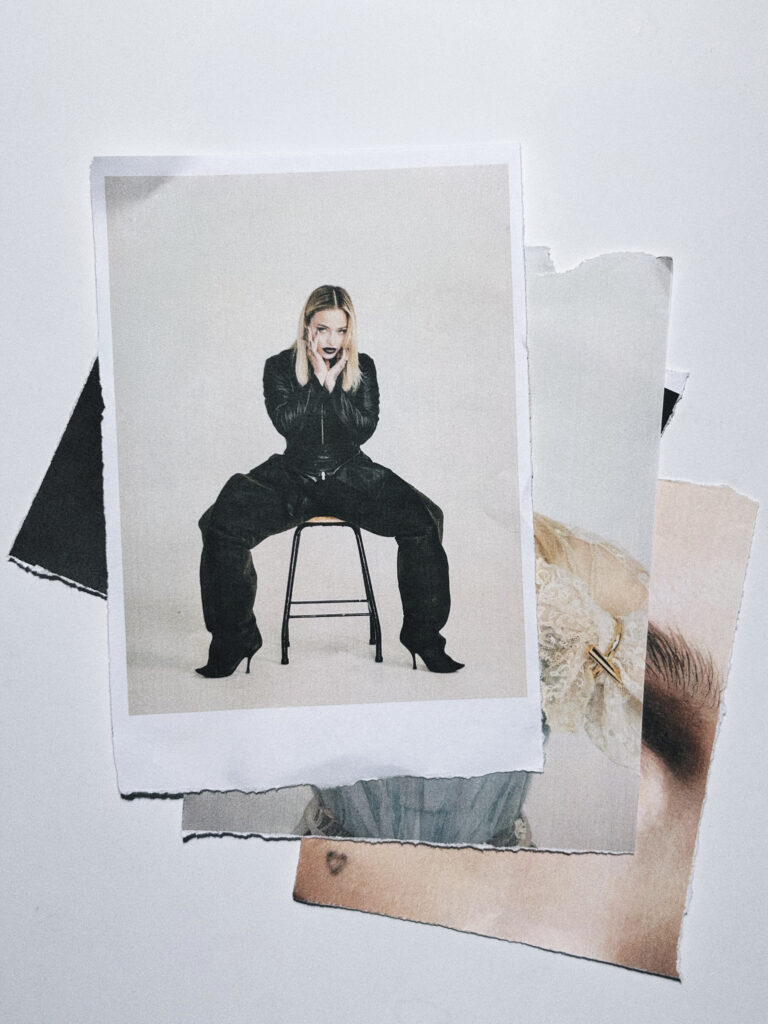
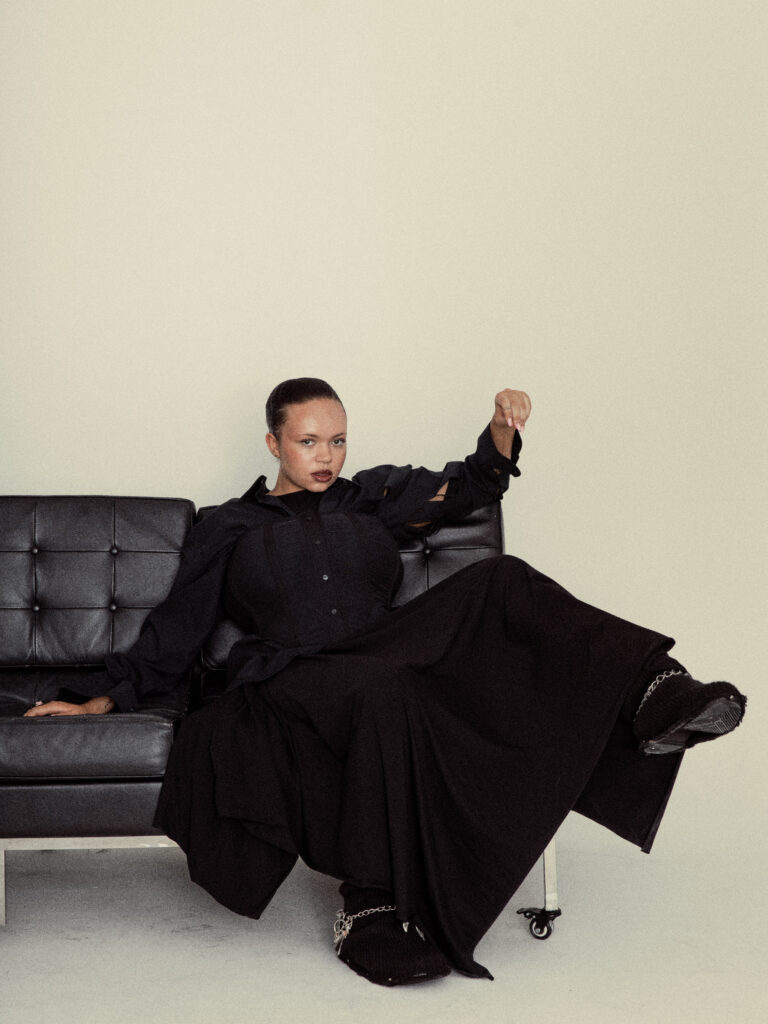
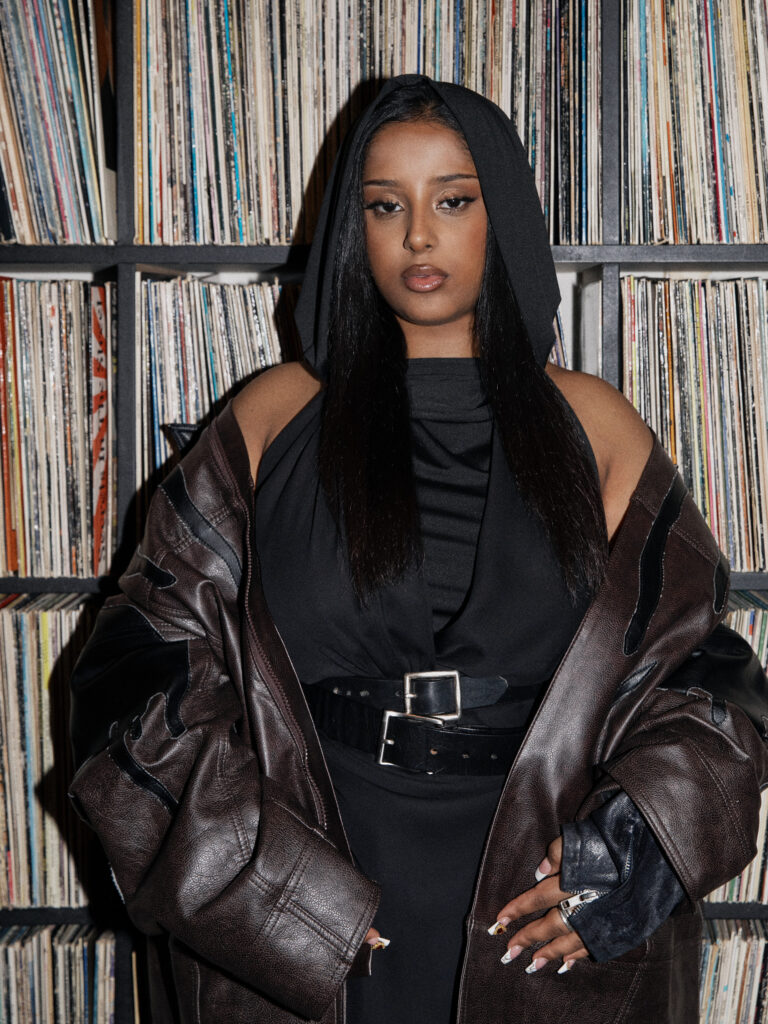
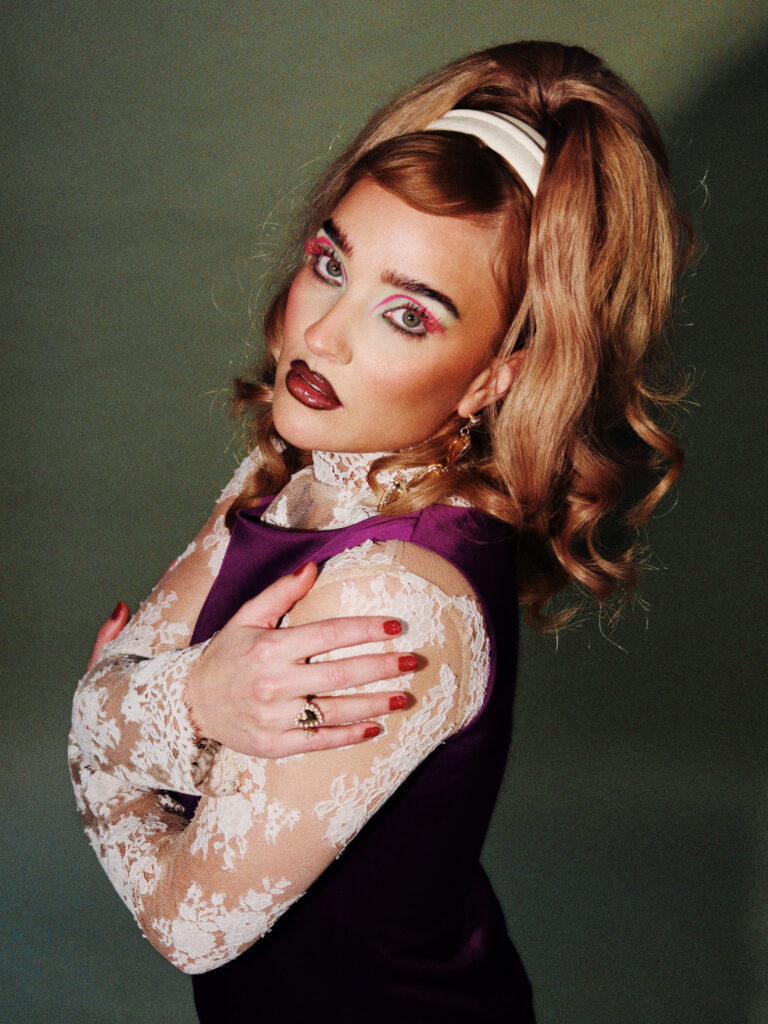
From Biskopsgården to the Grammis: Jackie Mere’s Next Chapter Jackie Mere’s story begins in Biskopsgården, the place that shaped her drive and the honesty that runs through her music. After a breakthrough year that brought her first releases, TV performances and a Grammis nomination, she’s still adjusting to how quickly everything changed.   Now she’s entering a new chapter with a heavier, more live‑oriented sound and lyrics that stay close to her own experiences. Identity, mental health and the intensity she carries from where she grew up continue to guide the way she writes and the artist she’s becoming.     How does growing up in Biskopsgården still shape your music today? Biskopsgården still lives within me. It’s the place that shaped me into who I am today. The drive, strength, and determination I carry probably wouldn’t exist if I hadn’t grown up there. It was a place where you learned early on to fight for yourself and your dreams, and that has influenced me both as a person and as an artist. Everything I create carries a part of where I come from.   You’ve said that songwriting became a way to tell your own story early on. What’s the first memory you have of using music as a form of self‑expression? I remember always singing what I felt instead of saying it directly. If I was hungry, I would sing about it instead of just saying it. Music and melodies have always been the most natural way for me to express myself. When I was younger, I would also send songs to people that captured exactly how I felt but couldn’t explain myself. I just hoped they would understand the hint. In a way, I still do the same thing today, except now I write my own songs. coat Fayette / Norlingjewelry Ole Lynggaard skin MILK MAKEUP hydro grip primer & hydro grip gel tint 7 HICKAP glow monkey setting spray blush CHARLOTTE TILBURY pillow talk lip & cheek glow colour of dreams eyes ISADORA shimmer eyeshadow stick green shimmer & SEPHORA eyeliner matte burgundy & shimer espresso lips SEPHORA glossed powerful nails SWITCH NAILS strawberry cream almond short photography Sandra Myhrberg fashion Louise Dyhrfort  hair and makeup Michaela Widergren  assistant Saskia Clarke shirt Liesl De Riddercorset STHLM Miscdress and chains NAFF by Ellen Hedin shoes Imaskopiring Jewelry Escape Archive jacket Fayette / Norlingcorset STHLM Miscskirt w/ straps Anna Danielssonshoes Imaskopichains NAFF by Ellen Hedinearrings Ole Lynggaardring Jewelry Escape Archivenecklace Artist’s Own jacket and skirt Linda Dekhlacorset STHLM Misc ring Jewelry Escape Archivenecklace Artist’s Own skin MILK MAKEUP  hydro grip primer & hydro grip gel tint 7 HICKAP glow monkey setting spray blush CHARLOTTE TILBURY pillow talk lip & cheek glow colour of dreams eyes ISADORA shimmer eyeshadow stick green shimmer & lavender vibe CHARLOTTE TILBURY palette pink love SWEED cloud mascara dark brown SEPHORA eyeliner matte burgundy & shimer espresso lips SEPHORA outrageous plump effect gloss 02 MAC squirt plumping gloss stick nova nails SWITCH NAILS strawberry cream almond short Your debut year moved incredibly fast; from first releases to TV performances and a Grammis nomination. What did that shift feel like in real time? I loved every second of it. At the same time, it was hard to fully understand that it was actually happening to me. It had been something I dreamed about my entire life, and suddenly it became my reality. I often felt like I was having an out-of-body experience, but in the best possible way. Everything moved very fast, but I really tried to appreciate every moment of it.   Some of your work draws from very personal writing. What was it like turning something private into something public? I honestly don’t think too much about the fact that it will become public when I write. I write almost as if no one else is ever going to read it. That’s how I manage to keep it honest and personal. I’m drawn to music and lyrics where you can feel that there’s something real behind the words, where you actually feel something. For me, the most important thing is that the music means something.   You’ve described your lyrics as a mix of vulnerability and self‑irony. How do you find that balance when you write? It’s not really a balance I’m trying to find, it’s simply who I am. I’m both very sensitive and pretty self-ironic as a person, and that naturally comes through in my writing. I think that’s why my lyrics feel so close to me — they’re not constructed, they just come out the way I am.   Your interpretation of Robyn’s “Call Your Girlfriend” explored the song from several emotional angles. What made you want to revisit that track in your own way? I think I was drawn to the song because it reflected a lot of where I was emotionally at that point in my life. I also love that it can be interpreted from different perspectives depending on who’s listening and what situation they’re in themselves. I wanted to make it my own and explore those emotions in my own way. coat Fayette / Norlingjewelry Ole Lynggaarddress Imaskopijewelry Ole Lynggaard You’re now entering a more rock‑leaning, live‑oriented sound with The Art of…. What sparked that musical shift? For me, everything is about keeping it natural. I never go into the studio thinking something has to sound a certain way. During the process of making this album, I wanted all of my emotions to have space without adapting them to a specific genre or sound. I always follow what feels genuine to me and hold onto that tightly. Since I carry a lot of emotions and intense energy, some of my lyrics naturally found their home in a heavier and more live-oriented sound.   Artists like Lola Young, Chappell Roan, and Avril Lavigne inspire your new direction. What are you connecting with in their music right now? I’m drawn to artists who dare to be completely uncompromising in
Music, Uncategorized

“Whatever, We Are Dying” – An Interview With River

“Whatever, We Are Dying” AN INTERVIEW WITH RIVER photography Saskia Clarke & Jeffe Lingier  fashion Mauri Camelbeke & Kaat Van Der Linden  hair Wanda Persson makeup Alicia Hurst  photography Saskia Clarke dress Shultneck  lace top baum und pferdgarten stockings Swedish Stocking earrings Glitter ring ByKrohnstad photography Saskia Clarke With the upcoming release of her new album A Dying Source, River reflects on a period marked by emotional excavation and a growing trust in her own intuition. The project captures her shift toward creating without fear; letting melodies surface instinctively, allowing lyrics to reveal truths she often didn’t know she was carrying. What emerges is a body of work shaped by contrasts: softness and darkness, fragility and defiance, the self she has outgrown and the one taking form. Rather than constructing an image, River leans into vulnerability as her creative compass. The album became a space to confront the fears she once avoided; fear of loss, of aging, of expectations, and transform them into something atmospheric and deeply human. A Dying Source marks a moment of release, a quiet surrender to change, and an embrace of the unknown as part of her artistic evolution. Your new music feels very personal. Do you write songs to understand yourself better, or to express things you already know deep inside? I usually don’t have a premeditated meaning when I start. The words are usually born directly from the chords and the instrumentation. It’s more like the music pulls things out of me. Sometimes I learn something new about myself in the process, and occasionally the outcome is something I didn’t even realize I had inside me until I heard it back. Your recent songs talk about inner struggle, healing, and emotions that are not always easy to face. Why was it important for you to explore those feelings in your music? As a teenager, I often found myself in codependent relationships, held back by fears that stopped me from following what I actually wanted. But when my dad passed away when I was 17, I made a promise to myself: to always follow my gut, no matter what. That was something I deeply admired in him, and I wanted to carry that gift with me to live in that same brave spirit. Once I actually started acting on that promise, bringing my truths to the surface and doing things despite being afraid, I realized what a treasure it is to be vulnerable. Not running from yourself or putting on an act just to stay in the ‘comfort’ of fear. With this album, I felt drawn to face the fears I carry inside, just like the fears I see in the world around me. I’ve realized that in order to grow, I have to look them in the eye. That’s where the strength is. In your new music, there is both softness and darkness. Do you feel that contrast is a big part of who you are as an artist? Yes, definitely. To me, that contrast is where the growth happens. This album, ‘A Dying Source,’ is really about that transition, letting an old, guarded part of myself die so something new can start. I’m seeing life and love through vulnerability and sarcasm, honesty and lies. I think you need both the darkness to see what you’ve been hiding from, and the softness to finally forgive yourself and let go. It’s that balance that makes the music feel real to me photography Saskia Clarke top Pampas bottom girdle Gabriella Danderlö stockings Swedish Stockings earrings Stylist’s Own photography Saskia Clarke top and skirt Gabriella Danderlöv  stockings Swedish Stockings  headband Eyui Atelier  Your world feels very visual and emotional at the same time. When you create, what comes first: the feeling, the image, or the story? It’s always the emotional state that leads the way for me. The images or any kind of story usually just follow that feeling naturally as the music starts to take shape. I don’t really sit down to plan a plot or a visual, I just let the emotion dictate where we’re going and let the rest catch up A lot of your music feels honest and vulnerable. Is it hard for you to be that open in your songs? No, not at all. I’ve realized that vulnerability is actually essential to any kind of artistic or human work. Those imperfections and insecurities aren’t things to hide; they’re guiding forces. They lead me to the truth in a song much faster than trying to be perfect ever could. My work is much more of a diary entry rather than creating content for consumption. I wouldn’t know how to create that, I mean I don’t have that quality. My quality is to be vulnerable and honest with what I want to say. Your artistic identity feels very strong and unique. Have you always known who you are creatively, or did that take time to build? My identity has evolved over time, in hand with my inner journey of facing and overcoming fears, challenging what I thought I knew about myself and life.  I view artistic identity as a commitment to truth, always putting my authentic vision over commercial popularity no matter what. I can say I have never been driven by trends, rather the opposite. If I realize ‘everyone else’ is doing something I automatically start looking the other way for something new to explore. It’s just an inner compass I can’t control. But as an artist, I think as long as I stay authentic and don’t spend my time looking at what other people are doing, and stay in my own creative bubble, it will be unique regardless if other people outside are doing something similar. The important part for me is just to stay true to myself and follow my guts.  photography Saskia Clarke dress Gabriella Danderlöv  shoes Stylist’s Own  necklace Kaleido When you write music, do you ever surprise yourself with what comes out? Yes, I’m often surprised. Especially the melodies
Music

Anna-My

dress ARKET shoes Adidas socks H&M sunglasses Prada Drifting Across Genres AN INTERVIEW WITH ANNA-MY photography Sandra Myhrberg / Agent Bauer fashion Olivia Bohman hair and makeup Katarina Ohlsén  Emerging from Sweden’s west coast and shaped by formative years in Stockholm, London, and New York City, Anna-My has cultivated a sound that moves fluidly between underground club culture and deeply personal expression. With roots in Gothenburg’s electronic scene and early inspiration drawn from platforms like Boiler Room and NTS Radio, their approach to DJ-ing is guided as much by instinct and emotion as by technical precision.   Blending hypnotic rhythms with an intuitive sense of movement, Anna-My creates sets that feel both expansive and intimate, shaped by influences ranging from UK innovators like Four Tet and Caribou to early memories of discovering The Knife. As their international presence continues to grow, their work remains grounded in a simple yet powerful intention: to translate feeling into sound.     Sandra: Your career spans Stockholm, London and New York. How did each city shape your sound and approach to DJ-ing?Anna-My: Stockholm, London and New York probably shaped me more than I realised at the time. I moved when I was 22 and spent such formative years in both London and New York. At that age, you’re constantly discovering things for the first time—everything feels new, everything feels huge. Every track I heard felt like its own piece of art, and experiencing that kind of art every day was almost overwhelming. I’m from a small town on the west coast of Sweden, where there wasn’t really a scene or people who shared my pull toward electronic music. I found my space through Boiler Room and NTS. That feeling—that the world suddenly opened up and that I could feel so much through sound—has definitely shaped both my sound and the way I DJ. Sonically, I think UK artists like Four Tet and Caribou have had a huge influence on my own music-making. dress ARKET shoes Adidas socks H&M sunglasses Prada top Arakii skirt Anna Danielsson S: You started DJ-ing at 17 in Gothenburg’s underground scene – what was that early period like for you?A-M: So fun. I wasn’t interested in anything that wasn’t electronic music—it was the only thing I cared about. I spent hours lying on the floor of my room in the collective I lived in, just listening and listening. It was a completely new world opening up. I miss that sometimes—being 17 and discovering something as big as music. S: You’ve warmed up for artists like Olof Dreijer and Eli Escobar. What do you focus on when preparing a warm-up set compared to a headline set?A-M: It feels important to tune into the DJ’s sound and match it to some extent, but without stepping away from my own identity. I try not to overthink it. S: What inspires you to create music and where do you find that inspiration most strongly? A-M:I find inspiration everywhere—in myself and in others, in memories and dreams. It often comes from fragments of things that have been and things I long for. When I make music, I’m basically just trying to translate feelings, memories and dreams into sound. That material is always around me, and in me. S: Your music blends tech house with hypnotic rhythms and swinging beats. How would you describe your signature sound in your own words? A-M: I’m trying to make music that moves across genres. I don’t want to get stuck in one lane—I want to let myself drift freely. I don’t really know how to describe it. All I know is that I like movement. Forward, backward, but never still. I hope that comes through in the music. vest Anna Danielsson skirt ARKET shirt Tiger Of Sweden trousers ONO Ateliers sunglasses RayBan S: Your love for music started with your father’s record collection. Which artists or albums from that collection still influence you today? A-M: He was probably one of the first people in Sweden to discover The Knife. We listened to them when he drove me to school. I especially remember one morning—it was still dawn, the road went through a big field, and the fog was low, almost magical. We listened to The Knife and something happened in me. Maybe my first big musical experience. I’ll remember that morning in the car forever.   S: How do you keep your sets fresh and evolving after a decade in the scene? A-M: I do it without thinking. Music is the only thing I know. It’s just everywhere—either I find it or it finds me.   S: You helped build Boiler Room when it was still a new concept in New York. What was that experience like, and how did it influence your understanding of club culture? A-M: It was, of course, incredibly exciting. I helped build the first studio in Williamsburg. There were only three of us on the New York team at that time, and everything was just beginning. Boiler Room was so forward-thinking and groundbreaking, and being surrounded by people who only cared about music and underground culture was transformative. It felt like the world became bigger through music and culture. A lot of people think Boiler Room was only a space for electronic music, but we worked with all kinds of underground music. We spent quite a bit of time in Harlem working with local jazz musicians, and in Atlanta documenting the growing hip hop and rap scene. dress Hanna Rothstein trousers & Other Stories shoes Calvin Klein dress Hanna Rothstein trousers & Other Stories shoes Calvin Klein blazer COS sunglasses Prada S: You’ve built a strong international reputation. What’s the most memorable crowd or club moment you’ve had so far? A-M: I played the opening night at PLX this summer on a new stage. It was a tropical night, and almost the whole festival came to my set. It was nothing but magical.   S: If you could play anywhere in the world

Music

Sahara Hotnights Return With No One Ever Really Changes

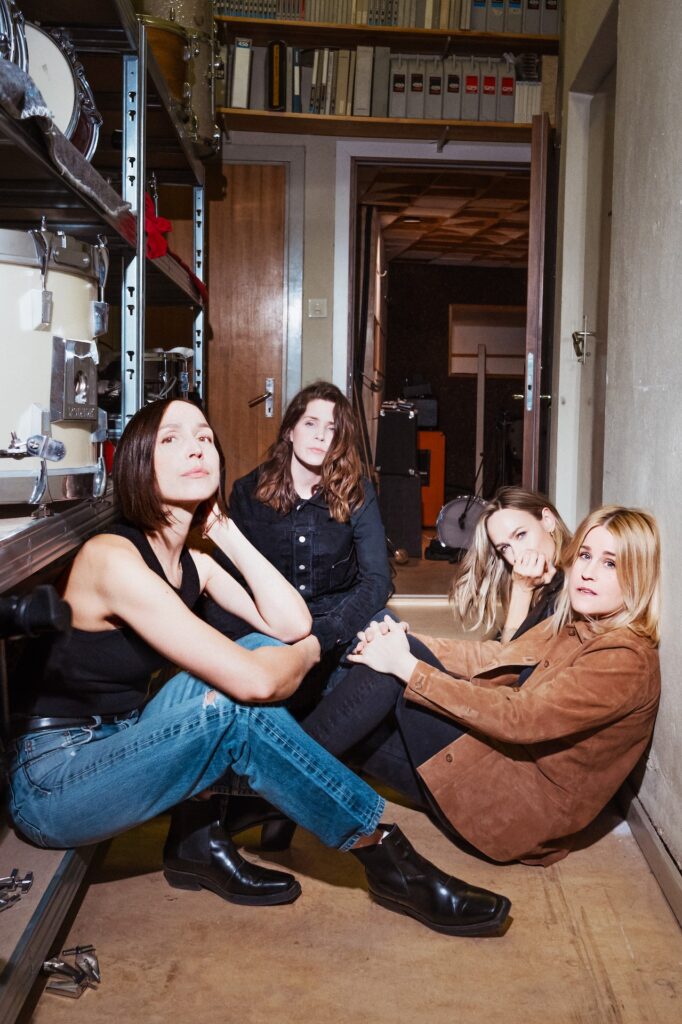
Sahara Hotnights Return With No One Ever Really Changes This spring Sahara Hotnights return with a new album shaped by live energy and reconnection. Maria Andersson reflects on creative instinct, the shift toward performance, and the idea that change is rarely as simple as it seems. Odalisque had a chat with singer and guitarist Maria Andersson about the new album.  Ulrika Lindqvist: With No One Ever Really Changes so close to release, how are you feeling right now? Are there any moments from the process that have stayed with you? Maria Andersson: Being in the studio together again really stands out. There was something grounding about it, reconnecting through the work and remembering why we started doing this in the first place. UL: Where do you find inspiration for your music? MA: Books and films are a big source for me. I often come across quotes and phrases that linger. I recently rewatched one of my favourite movies, Ordinary People. I think it’s about survival versus healing, but it’s not dramatic in a loud way. I like how it deals with grief and guilt. Lyrics also tend to appear while I’m out running in the mornings. UL: Was there a particular song that shaped the direction of the album? MA: “Brilliant Something” felt like a turning point and helped define the sound, direction, and overall theme of the record. Do you have a favourite lyric from your songs, new or old?I still love “Cheek to Cheek,” even though it was written almost twenty years ago. I can still relate to the lyrics, and it’s still great fun to play live. UL: Each of your records has felt like a reaction to the previous one. How does this album respond to Love In Times of Low Expectations? MA: When we recorded that album, we hadn’t played live for almost a decade. We needed to rediscover everything and each other, and we didn’t want to pick up where we left off. It became very much a studio record. Once we started touring again, we realised the songs wanted more energy. I see that as the starting point for No One Ever Really Changes. UL: The new record begins from a live perspective, what does that mean? MA: The songs were written with performance in mind from the outset, thinking about energy and how they would feel with the four of us on stage together. We made room for that adrenaline early in the process. UL: What’s your favourite part of making music? MA: That moment when you’ve written three quarters of a really good song and you know it’s there. UL: You have been a band since 1992, Is there a particular moment in these years that stands out as especially memorable? MA: Coming back together after a decade-long break and realizing the connection is still there was really powerful. UL: What are you most looking forward to in the coming year? MA: Playing these new songs live, seeing how they blend in with the old ones, and sharing that experience again and again and again. photography Tove Floss
Music

The Sound of Change – An Interview with L1NA

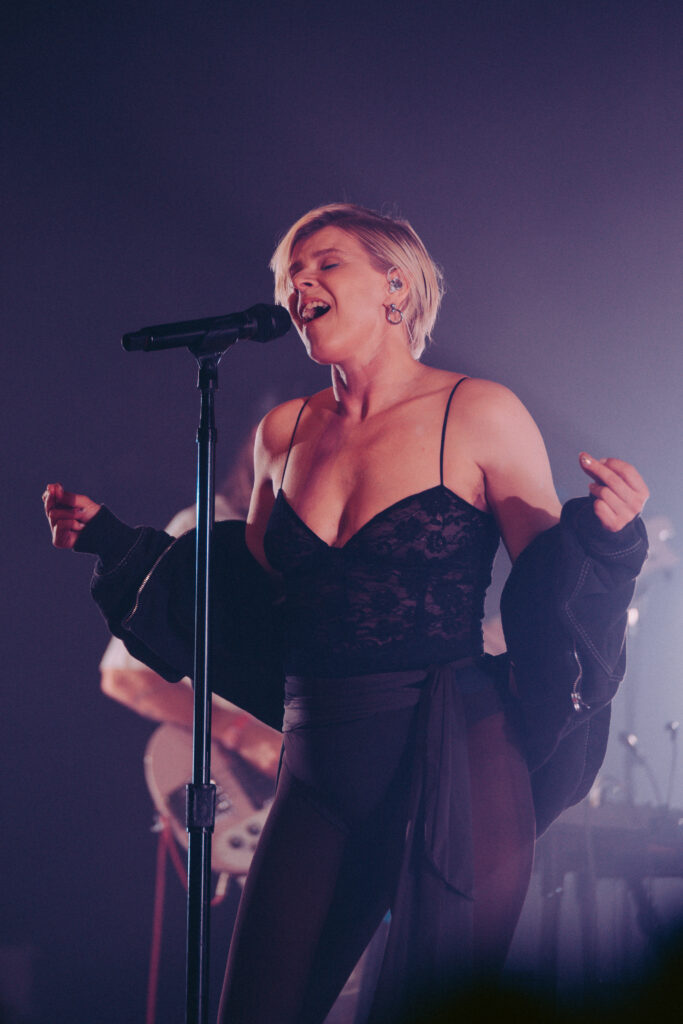
The Sound of Change – An Interview with L1NA text Sandra Myhrberg Odalisque Magazine had the pleasure of welcoming and interviewing artist L1NA, featured on our second digital cover. With an unapologetic honesty and a sound that bends genre boundaries, L1NA is redefining what Swedish hiphop sounds like. Influenced by the iconic energy of early YMCMB artists yet grounded by her personal emotional world, she creates music that’s as introspective as it is fearless. Following a Grammis nomination for her EP MP3, her debut album TNT marks a bold statement; a musical universe born from years of growth and self-discovery. Speaking with Odalisque, she reflects on her artistic journey, the transformative power of her music, and why true artistry, for her, will always come from a place of love rather than fame. photography Sandra Myhrberg fashion Maria Fehrnström  makeup  Elva Ahlbin   Sandra Myhrberg: You grew up with your mother and two brothers— how did your childhood shape you as an artist? L1NA: I’ve always told everybody that my big brother was the catalyst for my love of rap music. He’s been music interested his whole life, and around the age of when I was 13ish, he sat me down and gave me the guide to who I was supposed to listen to and not. He was big on Lil Wayne, Birdman, Drake, and basically the whole YMCMB. That really stuck with me, and I began branching out, finding new rappers/artists to listen to, and just becoming more and more interested in hip-hop culture. SM: You grew up listening to artists like Lil Wayne, Drake. How do those influences shape your sound today? L1NA: I just got the sauce; I wouldn’t say I really sound like any of them sonically, but they made me fearless as a musician. Something I admire about them both is that they are not afraid to sound different or push their artistry to the max. They’ve influenced the whole rap game, and you can tell that they do what they do solely for the love that they have for the music. They’re passionate about it, and I am too. total look Weekday hood shirt Weekday dress Kristin Svensson jacket FAYETTE / NORLING trousers Weekday gloves Weekday SM: Your debut album TNT feels like a sonic world of its own—how did you and Nisj approach crafting a sound that’s so different from the rest of Swedish hip-hop? L1NA: Both me and Nisj are the biggest music heads. I feel like when we make music together we literally go into another world, so matching the sounds with the feelings we have during it wasn’t so hard. Also, that’s one of the things I love about Nisj’s productions; it’s not just a beat. When he plays me a beat, I feel like I can see it in a way, like I’m inside it. He’s really good at capturing that in his work. We are not afraid to be different, and we don’t necessarily strive to be innovative; it’s just who we are. SM: You’ve spoken about how every song on this album changed you. In what ways do you feel TNT represents a transformation for you as an artist and a person? L1NA: As I said, I’m very passionate about what I do. And before the album I had kind of taken a break from releasing for about two years, and in those two years I progressed a lot. I was still in the studio working and collecting tracks for the album, but I think it was when we made the intro “Solsken efter regn” something just switched in me; I knew exactly what this album was. I knew that I had just set the bar for the rest of, not only the album but for my career. And every song came with a breakthrough of its own. I feel like it’s hard to explain in words; it’s more of a feeling. Top Weekday Jacket Division SM: You’ve been releasing music steadily since 2019, earning a Grammy nomination for your EP ”MP3” and now your album ”TNT”. How has your perspective on your artistry evolved since your early releases? L1NA: I’ve always had a feeling that something was missing in the Swedish rap scene, and I always knew that I wanted to be part of broadening the genre and bringing some diversity. I still feel that way. I make music for very selfish reasons; when I’m in the studio, I just want to feel something; I want to feel good, so I don’t think of it as artistry in the sense of trying to appeal to something or somebody. The idea of fame doesn’t excite me, and the music industry in itself is really underwhelming at this moment in time, but I will make music forever. My relationship to music is completely separate from what would be perceived or described as the music industry. SM: Your music blurs the lines between rap, melody, and electronic elements. Do you see yourself continuing to experiment with genre in future projects? L1NA: Absolutely. I always want to experiment with my music. It’s not fun for me if I don’t. total look Weekday SM: Finally, if someone listens to TNT for the first time, what do you hope they take away from it? L1NA: I want them to do whatever they want to with it. Live with it, cry with it, and fall in love with it. Let it be the soundtrack for your year; that’s what I do with albums I love. I try to refrain from being too literate when I talk about what my art means to me. I’ve already made this music, and I’ve had my own personal moment with each and every song. I want others to experience the same thing. So if your listening, interpret it however you’d like; it’s yours now. 
Music

Cosima Olu – Finding Light in the In Between

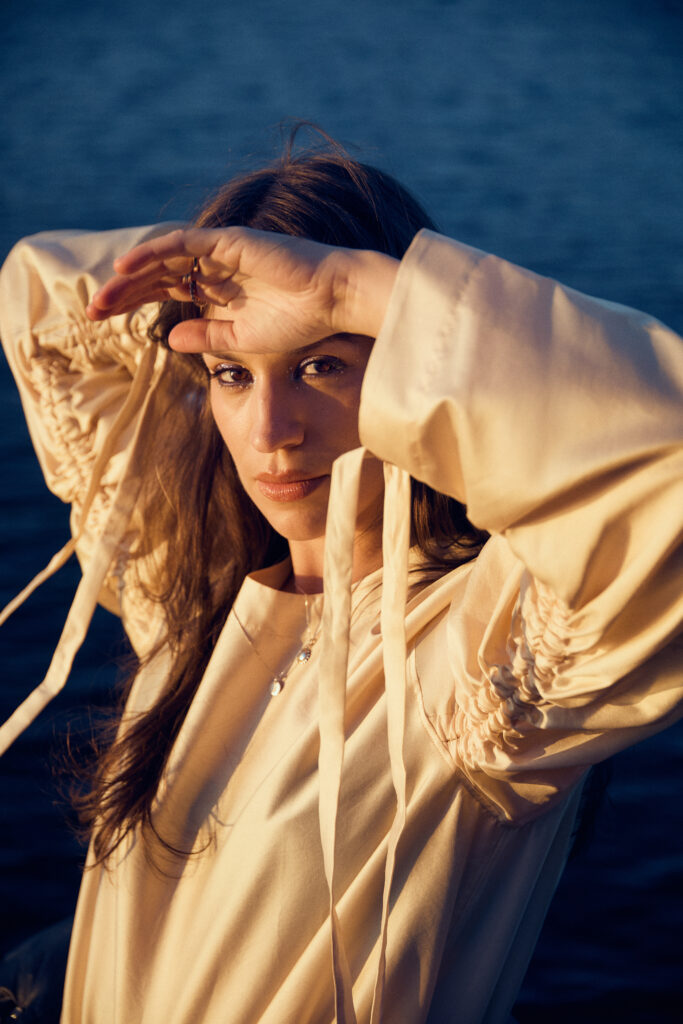
Cosima Olu – Finding Light in the In Between text Elsa Chagot photography Elvira Glänte Swedish artist, songwriter, and producer Cosima Olu has carved out a space uniquely her own; blending soulful melodies, acoustic textures, and thoughtful lyricism. With roots embedded within music and art, she approaches her craft with honesty and emotional depth. In this conversation with Odalisque Magazine, Cosima opens up about her creative journey, the personal experiences that shaped her latest album In Between, and the power of staying true to oneself Elsa Chagot: How did your journey with music begin, and how have you grown into the artist, songwriter, and producer you are today? Did it always feel like a natural step? Cosima Olu: My relationship with music has always been strong. Both of my parents were musicians – my father was a jazz pianist, and my mother was a classical pianist and musicologist. I would simply say that I’ve been privileged to have had music around me since childhood. Not only did my parents introduce me to their love of music, but also to their love of theatre, opera, art, and nature. I’ve been in the music industry for quite some time now – working, collaborating, and performing with many different artists and musicians. My craft as a musician has always felt natural to me, but taking the step forward as an artist has been something different. My main focus has been on the process of creating music, and on making music that truly makes sense to me. Although I’ve always struggled with nervousness and anxiety that strike every now and then – which isn’t always ideal as an artist, since we often focus so much on ourselves – releasing my own music has helped me be kinder to myself and more present in general. When I write, I usually describe a chapter or situation from my own experiences. I’m also a strong advocate for independent music creators – own your own music! – but there’s also a downside to it. You invest so many hours, so much effort and money into your art without any guarantee it will be heard. Many decisions must be made, which can feel quite lonely at times. But hey – at last, you finish your album, and what a huge reward that is! The creative freedom I have as an independent artist allows me to stay true to myself. EC: Your new album has been described as a blend of alternative soul, acoustic pop and progressive RnB. Do you have any particular influences, such as artists, that shaped this new sound and identity? OU: When I write music, I don’t think in terms of a specific genre. Honestly, I think we’re too obsessed with categorizing things. But of course, every form of art is influenced by many different expressions.  I’ve been a music lover from the very start and have always listened to all kinds of music. In high school, I listened a lot to 90s R&B such as Aaliyah, TLC, and Whitney Houston — but I was also a huge fan of movie music. (I even had The Lord of the Rings soundtrack in my Walkman (!!) — a true nerd, haha!)  As a singer, Donny Hathaway has always been my role model. In recent years, jazz and instrumental music have had a big impact on me — both as a listener and as a creator. After my first album Magnolia, I felt a strong urge to write and produce more acoustic, upbeat music and to embrace my love for R&B. EC: You took a break from music after a dark period in your life. How did that affect you personally, and how has it influenced your new music? OU: This period was crucial for me. Losing both of my parents within a year and a half affected me deeply as a person — and naturally, it also left a strong mark on my music, especially in the aftermath. Losing your roots affects your future. Losing control of what was happening forced me to take a step back. I had to be patient and adapt to a new state of mind. Some days were harder than others. But during that time, I also met the love of my life. It’s funny how life can offer both sadness and happiness at the same time. I believe this period made me more humble, compassionate, and perceptive. In my music, it’s important for me to stay true to who I am and where I come from. I think that comes through to my listeners, and I hope my music can radiate tenderness, hopefulness, and happiness at the same time. EC: How did you eventually find your way back to music after your break? OU: I guess it’s the pursuit of expressing myself. For me, music is a language — one that often feels easier to speak. I can use sounds and melodies to create a certain mood, or add lyrics to make the purpose of the song more direct. So, I think the break made me realize how essential it is for me to write my own music. It’s important for me to nurture my musical instinct — otherwise, I think I’d feel a bit down all the time, haha. EC: What does In Between mean to you personally? OU: It represents both an emotional state of being in between sorrow and joy, light and darkness. The album is about being present in that space — when you’re losing control and simply have to keep going. “In Between” also means staying true to my own expression. I often hear that my music is too jazzy from a pop-oriented point of view — and vice versa. I’ve been told many times that my music is hard to label and doesn’t fit neatly into a specific genre.To me, that’s a good thing. So, I’m sorry to say — In Between is not jazz, and it’s not pop. It’s not soul, and it’s
Music

ODALISQUE MAGAZINE INTERVIEWS MAGS

ODALISQUE MAGAZINE INTERVIEWS MAGS text Ruby Rose In the exhilarating lead-up to the release of her new album Herified, Danish electro-pop artist Mags shares the excitement, pride, and emotional clarity she’s found in this chapter of her life. The album’s openness and warmth, blended with intimate, emotive lyrics, resonate with the multi-faceted nature of love that Mags explores. She offers a glimpse behind the scenes of the project – from her creative process to the introspective journey it captures.  Ruby Rose: With Herified so close to release, how are you feeling about everything? Are there any moments from the process which have really stuck with you lately? Mags: Thank you for asking! I am feeling good. I find that right before a release I enter a stage where one moment I feel beyond confident, like the album is the best art anyone has ever made and then 5 minutes later I am full of crippling self doubt and wonder if anyone will ever listen to it haha. Over the past 3 years I have poured my heart and soul into this album and if I’m being honest, I have spent all of my life getting to some of the emotional realisations that I express on this album. So long answer short, I feel super proud, excited, a bit nervous but mainly super ready for people to hear it. RR: Did you approach this album differently from your previous projects? I’m curious if a track like herified set the tone or was there another song that really shaped the direction of the album? Mags: This album is a lot more cohesive thematically than my previous projects. I find that it is a reflection of how much more secure I feel in myself and my emotions at this stage in life. I knew early on that I wanted the album to be called “Herified” and that was a first for me as I usually find the title after I have finished the project. Having the title made it easier to know what songs had a place on the album and which ones didn’t. It gave direction in not a limiting but beautifully curated way. I actually cut out two songs not too many months ago because they did not feel “Herified” enough to me. RR: You reference Monet in the album blurb, the idea that there are infinite ways to view something you love. How do you feel that philosophy takes shape in your music? Mags: Writing songs about love has always been what I’ve been drawn to – and I know I am not the only one haha. Love has so many faces and stages and I am fascinated by how my love for myself has also played such a pivotal role in how I have been able to love and receive love which is what most of my songs are about. All 8 songs on this album have been written about the same love but from entirely different angles and different points in time. The same love can cause such an array of beautiful and painful feelings and I have tried to authentically portray that on the album. RR: Following on from this, the title of your album encompasses a sense of action and reclamation transforming vulnerability into power. What personal experiences have made this theme important to you? Mags: I felt vulnerable in my queerness in my early twenties. I just didn’t know how or where to place my feelings although I always knew that they were real. So being in a healthy and beautiful relationship with the woman I am and have been madly in love with has been the most incredible, transformative, honest experience I have ever felt. Leaning in and experiencing that unstoppable feeling of love has been the best thing ever. RR: How would you describe the overall musical and emotional experience of this album?  Mags: Sonically the album is an open, warm and fun listen. It takes the listener through lots of different tempos and instrumentations. Some songs are primarily guitar based and others float in fun synths. Lyrically it is full of stories of falling in love with all that it entails. Feeling insecure, feeling over the moon and ultimately in my case feeling totally herified. It is definitely a pride filled album in all the ways. RR: Your lyrics have been described as ‘diary-like’ reflecting deeply personal corners of your mind. Is there a particular message or feeling you hope stays with your audience after listening to your album? Mags: There is a sort of bridge in the second verse of the final song on the album called “one thing straight” where it says “calling you out cause you’re assuming”. It speaks to a message I hope to convey which is that in the world we live in we should strive to ask more questions rather than trying to guess the answers. We should be a bit kinder to ourselves and others both on and offline. RR: Looking back, how do you reflect on the journey you’ve been on since your first release? How has that growth influenced this new album? Mags: I think the main thing that stands out is that I know more. I know more about myself and more about the industry. This release is my first release as an independent artist and I am really proud of that. I am so grateful for the setup and people I had around me for the first few years in the music industry; however, it feels so right to me that I now own the majority of the rights to my songs and have total creative control in all aspects of my art. I am going into this release with such pride and a confidence that I did not have when I first started out. And I think you can hear that on the album. RR: What’s your favourite part of making music? Was there a particular song on the

Music

“Blurry Moon” – The New Single by Charlotte Gainsbourg

“Blurry Moon” – The New Single by Charlotte Gainsbourg French-British icon Charlotte Gainsbourg is back with a mesmerizing new single, “Blurry Moon,” out this Friday, September 19, via Because Music in collaboration with Saint Laurent. Produced and arranged by SebastiAn, the track shimmers with tender melancholy—Gainsbourg’s voice drifting through the song with haunting delicacy. The release marks a new creative chapter for both the artist and Saint Laurent, whose creative director Anthony Vaccarello makes his directorial debut with the accompanying music video. Shot against the twinkling skyline of Los Angeles, the “Blurry Moon” video follows Gainsbourg along the iconic Mulholland Drive, blending dreamlike imagery with noir-inspired aesthetics. Drawing on the surreal moods of David Lynch and Angelo Badalamenti, Vaccarello crafts a cinematic love letter to Hollywood’s illusions and desires—an elegant, intimate exploration of light, shadow, and longing. “Blurry Moon” is now available on all streaming platforms.  

Music

King, an Interview With Winona Oak

total look Tanja Vidic and Abbe Mandegar Collaborationshoes Jimmy Choo text Natalia Muntean photography Sandra Myhrbergfashion Louise Dyhrfort Winona Oak’s journey is touched by alchemy. The 30-year-old artist has taken grief, loss, self-doubt, and the pain of her childhood and transformed them into music. Through some kind of alchemy, she has turned her darkest moments into something luminous – songs that resonate with raw emotion and unflinching honesty. “Maybe water,” she says when I ask which one of the four elements would describe her career. “Because I feel like it’s just like the waves. It’s been such a journey: big waves, all the different styles I’ve been exploring. My career has been a lot like waves, too. Up and down, up and down. It’s like life itself. It takes time to grow, to find your path, and to be true to yourself.” hat Piers Atkinsondress Abbe Mandegar and Tanja Vidic Collaborationshoes Jimmy Chooring All Blues art rugs Petrus BergstrandNordenskiöld FROM THE ISLAND OF THE SUN TO THE WORLD Winona’s story begins on Sollerön, a small island in the Nordic forests of Sweden known as the “Island of the Sun.” Growing up surrounded by forests, animals, and the echoes of her grandmother’s unfulfilled dreams, Winona found solace in the simplicity of rural life. “Being around animals was my safe space,” she recalls. “We had five horses, lots of dogs, and even a rescued crow that would sit on my shoulder. I didn’t have to think about how I looked or what anyone thought of me. The horse would love me either way, even if I looked like a troll.” Her grandmother, a gifted performer, was her source of inspiration. “She had this big personality, this joy for life,” Winona says. “She encouraged me to sing, to write, to dream.” From the age of five, Winona was crafting songs, mostly about animals, and finding her voice in the stillness of the countryside. By nine, she was playing the violin and piano. “It was a wonderful childhood,” she reflects. “It taught me to appreciate the quiet moments, to find beauty in the small things.” But Winona’s dreams stretched far beyond the island. After moving to Stockholm to pursue her passion for music, she embraced creative risk, and, in 2017, joined Neon Gold Records’ songwriting retreat deep in Nicaragua’s jungle. It was there she connected with Australian electronic maestro What So Not, co-writing his next two singles, Better and Stuck In Orbit. By 2018, she stepped into the spotlight as both the writer and featured artist on his single Beautiful. That same year, her career reached a pivotal moment when she co-wrote and featured on The Chainsmokers’ hit single Hope. The track became a global success, catapulting her into the spotlight and introducing her voice to millions. “It was surreal,” she recalls. “I went from being a relatively unknown artist to performing in front of massive crowds almost overnight. But it also taught me that success isn’t linear – it’s a journey with ups and downs, and you have to keep growing.” MUSIC AS A LIFELINE In 2022, Winona experienced the most profound loss – the death of her mother. It was a loss that shattered her world and reshaped her as both a person and an artist. “She was my person, my best friend, my source of love and guidance,” she says. “I always turned to her for reassurance. Losing her felt like losing a part of myself. There’s me before, and then there’s this different version after.” Writing about her loss became a way to process the pain. “Music saved me in ways I didn’t know it could. It became the only thing I truly wanted to do. I wrote With or Without You after she passed away, and when I performed it live, people who had lost loved ones came up to me,” she says. “They related to it so deeply. It felt like we were sharing the pain. That’s the beauty of music – it connects us.” The experience transformed her perspective on life and art. “It made me realise how fragile everything is,” she says. “You can lose your world in a second, but it also made me braver. I take more risks now because I only have this one life. I’m less focused on rules and more willing to be vulnerable. The worst has already happened, and grief forces you to evolve.” blazer Pearl Octopuss.ypants and boots Abbe Mandegar and TanjaVidic Collaborationjewellery All Blues and Pearl Octopuss.y THE MANY FACES OF AN ARTIST Winona Oak. Oaks. Johanna. They are all her, yet each serves a different purpose. While her work as Winona Oak is introspective and intimate, her new project, Oaks, explores the world of dance music, her new electronic alter ego. “It’s a way to take all the pain and dilute it, like putting milk in coffee,” she explains. This duality reflects her own complexity. “Winona is fragile, introspective,” she says. “Oaks is darker, more avant-garde. It’s like this club version of me.” For Winona, the separation is essential. “I didn’t want to confuse people or mess with the music algorithms,” she says with a laugh. “But really, it’s about giving myself the freedom to explore both sides of who I am.” “I’m never satisfied,” she admits. “I always want to develop myself, and my sound, and try new things, new genres, and mix things. I never feel like it’s enough. I’m always on to the next thing.” Winona’s relationship with her fans is deeply meaningful to her, and she often receives messages from people who connect with her music on a profound level. “I’ve had people tell me my music saved their life,” she says. “That’s overwhelming, but it’s also beautiful. It’s why I do this – to make people feel seen. When I perform live and someone knows the lyrics, when they sing along, that’s when I know I’ve touched someone.” Her latest EP, Salt, was released in February, and with it, Winona Oak is stepping into a new chapter – one defined by growth, resilience, and

Scroll to Top