
V&A East: Celebrating the Power of Making and Creativity
Jutting on an imposing corner in East London’s Queen Elizabeth Olympic Park stands the newly opened V&A East Museum. Its curatorial approach differs from that of its West London counterpart, stepping away from archival collections and instead leaning into co-creation, and honouring East London’s creative pulse and emerging creatives who live, work and study in the borough.
“East London is one of the most dynamic areas of human production, culture and creativity,” says V&A East Director Guy Casely-Hayford, noting that its rich human fabric inspired the museum’s collaborative approach. “We want people to feel the presence of polyvocality in the stories that are told, in the makers and communities that are platformed, and in the sense that this is a museum still in conversation with the people around it,” says Afia Yeboah, Senior Producer for Community Partnerships and Participatory Practice.
The permanent Why We Make Galleries exhibition perfectly reflects the museum’s co-creation ethos. Developed together with the next generation of creatives from East London, their experiences re-imagine the V&A’s collection of art, design and performance as starting points for conversations about burning issues in the world today. “If people leave feeling that this is a museum that listens, evolves and makes space for them, then we are on the right path,” Yeboah exclaims.
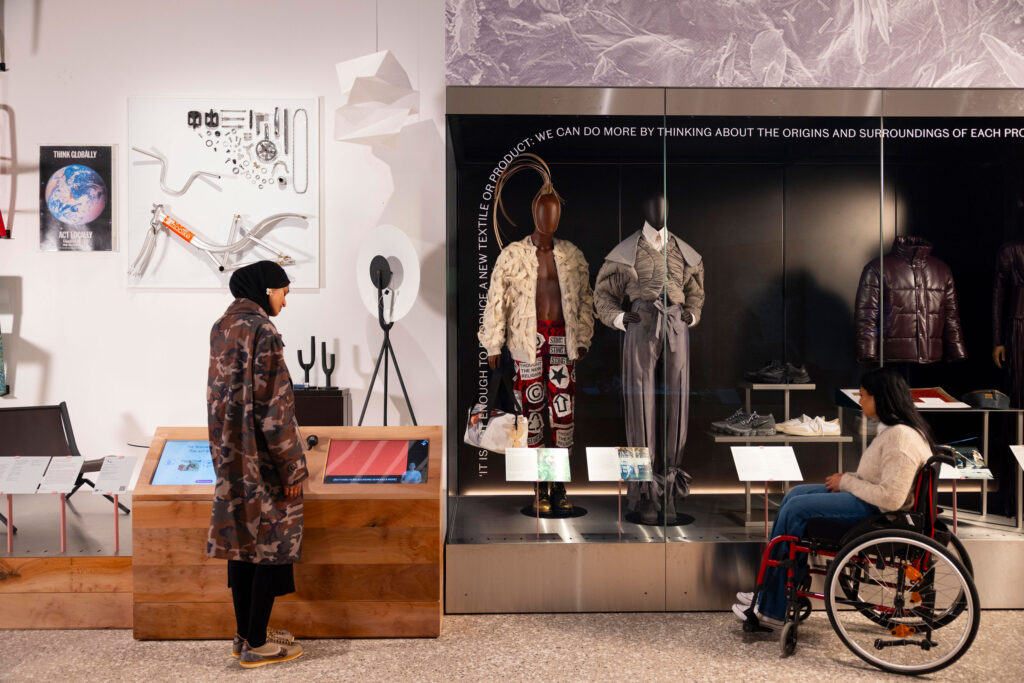
Keith Kahn carnival costume, 1988, and Hew Locke’s 1998 Spellbound from the series ‘Mercenary’, on display inside V&A East Museum’s Why We Make galleries © David Parry for the V&A
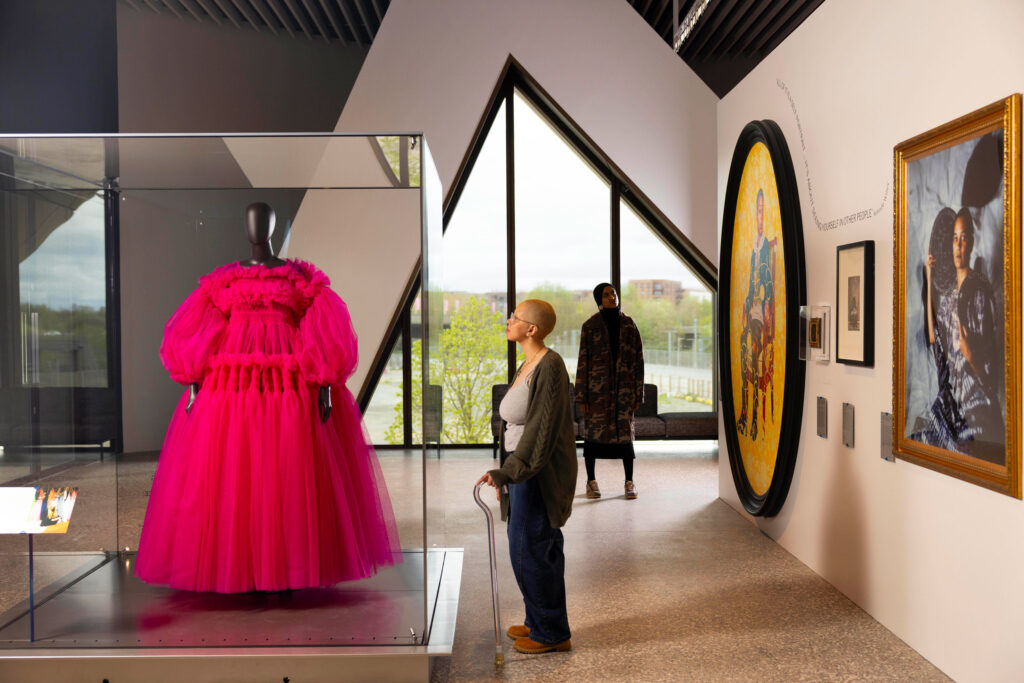
Molly Godard’s 2019 Daria dress and Maud Sulter’s 1989 Urania (portrait of Lubaina Himid), on show inside V&A East Museum’s Why We Make galleries © David Parry for the V&A
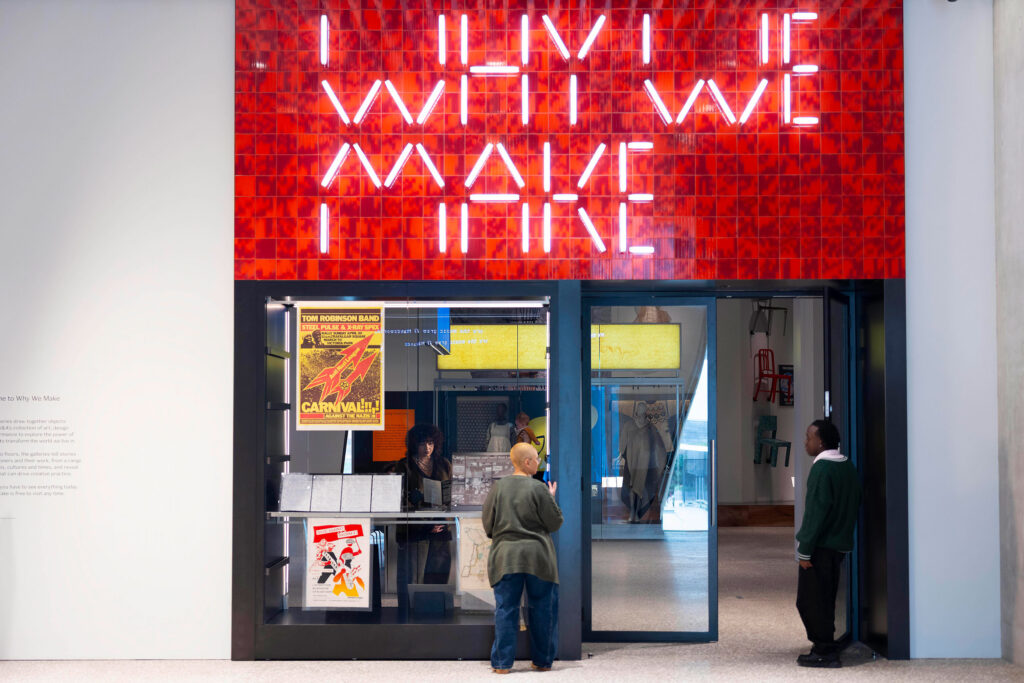
Entrance to V&A East Museum’s Why We Make galleries © David Parry for the V&A
Co-Creation at the Heart of V&A East
In an area where, historically, regeneration and investment have largely led to gentrification, co-creation serves as a trust-building exercise — a way for V&A East to introduce itself, learn from its neighbours and ensure the museum is shaped by the communities and creative environments already here, rather than imposing on them. “It has pushed us to think more seriously about whose knowledge counts, whose voice is visible and how authorship can be shared across different kinds of expertise — curatorial, artistic, lived, local and intergenerational,” explains Yeboah.
Youths, local residents, grassroots organisations, artists, educators and creative practitioners across East London share authorship and are invited to shape ideas, test approaches, challenge assumptions and influence outcomes in meaningful ways. “They have helped us move beyond a singular institutional voice towards something more expansive, where multiple perspectives can sit alongside one another and shape the character of the museum,” says Yeboah.
For Casely-Hayford, it’s about respect for the people who will be using the space and coming as audiences, as well as for the artists who have created much of what visitors see around them. “Many of the stories and narratives actually connect back to the places of origin of the communities in this area,” he says, adding that he hopes for “people coming in here feel inspired, but also see this as a place of resolution and catharsis.”
The Music is Black: A British Story
V&A East’s first landmark multisensory exhibition, The Music is Black: A British Story, is the largest ever exhibition of the voices, talent and stories of Black British music and its impact globally. “We’re travelling over 125 years,” says Africa and Diaspora Performance Curator, Jacqueline Springer, who’s responsible for telling this “beautiful, clever story about modern music.”
Through four acts, the exhibition recounts the resilience, innovation and joy that characterise ever-evolving Black British music. From British colonialism and transatlantic enslavement to the sounds of the African diaspora and present-day Afrobeats and Drill, the collection features an overflow of familiar sounds that shaped whole generations. Accompanied by a curated playlist streaming through Sennheiser headphones, it’s a beautiful sonic and visual feast that brings objects and lores to life.
True to the make-do ethos, the exhibition charts how low-tech, often the only available avenue for aspiring artists, shaped some of today’s most iconic tunes. “It makes you smile thinking how the socio-economic position of these artists was so modest that a new way of making music was sought out,” Springer says, noting the Atari computer used by pioneering drum and bass artist Goldie, or Jme’s Super Nintendo and Mario Paint game where he riffed music and melodies before founding grime collective and record label Boy Better Know with his brother Skepta. “It shows how music lives within people and burns its way out. These artists needed a way to express themselves, so they used technology — whatever that technology is,” says Springer. “It’s sheer inventiveness.”
The Music is Black: A British Story tickets are available here.
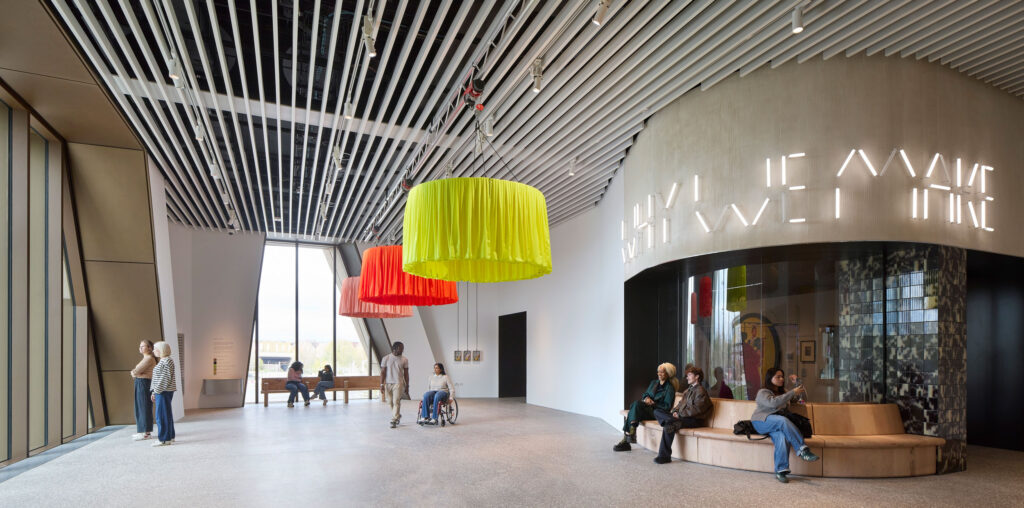
Outside V&A East Museum’s Why We Make galleries © Hufton+Crow
A Place of Refuge and Visibility
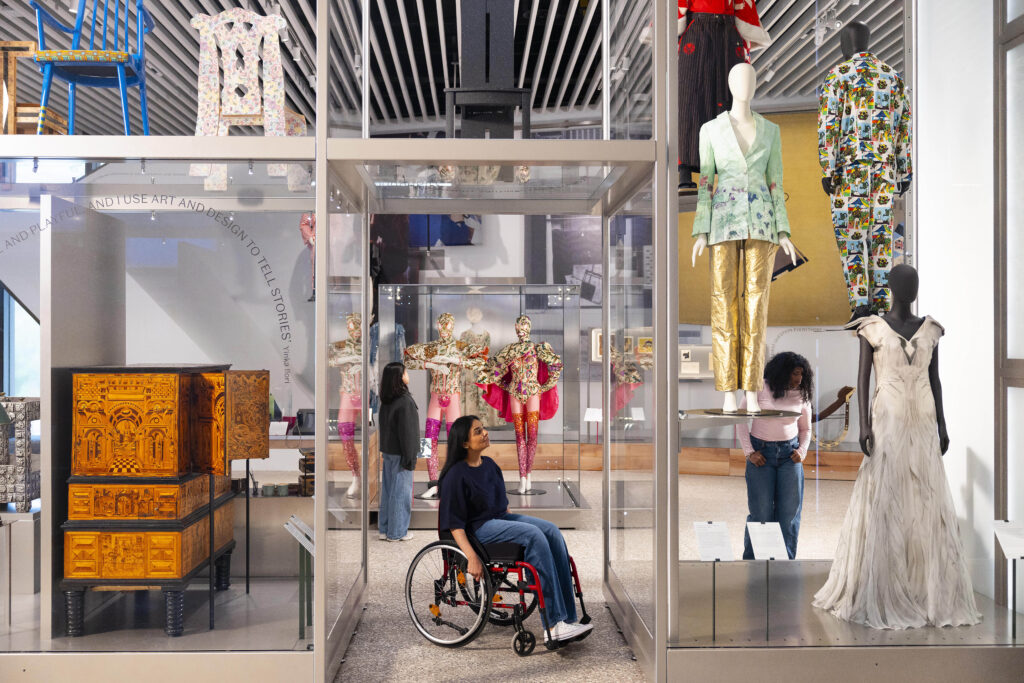
‘Crafting Stories’ section inside V&A East Museum’s Why We Make galleries © David Parry for the V&A
As visitors step through V&A East, there is a recognition of the value of its people-first lens that is less concerned about imposing a fixed narrative, rather than inviting museum-goers to engage with a fluid one. To that aim, Yeboah stresses the importance of humility: “We are not arriving into a vacuum; V&A East is entering an area with long-standing creative communities, social histories and grassroots organisations.” It is a museum that makes room for critical debate, social context and multiple voices as the museum programming evolves, she adds.
A month on since its opening, V&A East continues the exchange of culture and creativity East London is known for. Across the exhibitions, visitors are invited to partake in the culture, not only to observe it. This marks a foundational truth whereby culture exists in local stories, contemporary commissions and community narratives all around us. As Yeboah explains, “co-creation at V&A East is ongoing. It is part of the museum’s character: an iterative, responsive way of working that helps us stay relevant to East London and to future generations.”