Louis Vuitton

Opiates

Louis Vuitton Introduces New Crayon Lip Liner

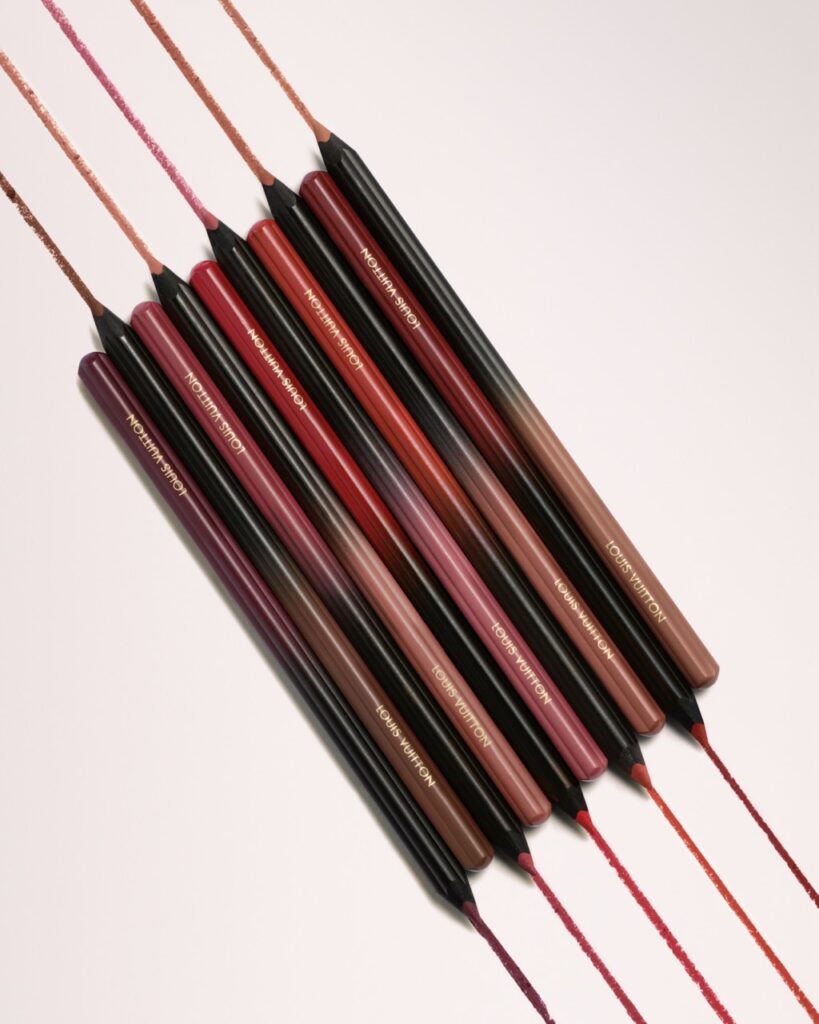
Louis Vuitton Introduces New Crayon Lip Liner The LV Crayon marks a defining new chapter in the La Beauté Louis Vuitton universe. A first-of-its-kind monogram-shaped lip liner, it was conceived by Dame Pat McGrath in direct homage to the precision technique that has defined her work on the Louis Vuitton runway for over two decades. Designed to be worn with LV Rouge and LV Baume to complement, contrast, and complete every lip look – the LV Crayon is the ultimate all-day precision tool. Featherlight, velvety smooth and powered by a high-performance formula, it delivers the definition of a power pout. The iconic LV monogram flower has been translated into the very shape of the crayon. Designed by craftsman Konstantin Grcic, this flower shape also serves to enhance application precision and control. “Every look I have ever created on the Louis Vuitton runway begins with the lip line – it is where precision becomes art. The LV Crayon is a tool that deserves to be in the hands of every woman. It’s both seamless to use and beautiful to hold.” – Dame Pat McGrath, Creative Director, Cosmetics, La Beauté Louis Vuitton.   The lipliner comes in 10 superlative shades to reshape lips for unlimited LV lip looks. The LV Crayon delivers a truly luxurious, sensorial lip liner formula. Its smooth, creamy, melting texture glides on effortlessly, powered by peptides to revitalize lips. It visibly plumps and enhances lip contours for an immediate and lasting effect.   The LV Crayon is available in-store and online now. image courtesy Louis Vuitton

Opiates

Louis Vuitton Unveils Its First-Ever Aluminum Suitcase

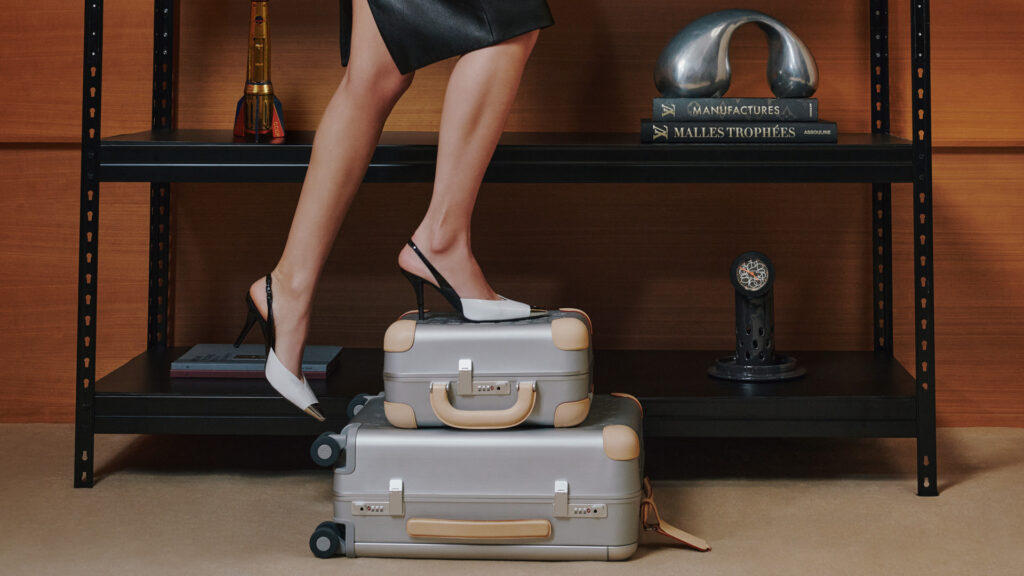
Louis Vuitton Unveils Its First-Ever Aluminum Suitcase To celebrate 10 years of collaboration with industrial designer Marc Newson, Louis Vuitton is embarking on a new chapter with the Horizon Aluminum, the House’s first aluminum suitcase.   Combining Louis Vuitton’s travel heritage with Newson’s innovative design approach, the new luggage is crafted from durable and fully recyclable aluminum, a material long associated with both the designer and the House’s historic trunks.   The Horizon Aluminum introduces several technical innovations, including a shell stamped with Louis Vuitton’s iconic Monogram motif, which also serves a structural purpose by reinforcing the suitcase. Designed with sleek, uninterrupted lines, the case features an industry-first construction with a single-piece molded shell and an ultra-thin frame system, eliminating the need for visible rivets and hinges. Accompanying the Horizon Aluminum, the Vanity Case features the same aesthetic and technical design cues.   Through its innovative engineering, clean lines and exceptional durability, the Horizon Aluminum marks a new chapter in the Louis Vuitton travel experience, redefining the modern luxury travel experience.   The price of the Horizon Aluminum is 47,500 SEK   image courtesy Louis Vuitton

Opiates

Louis Vuitton Monogram Embleme : Heritage Reimagined

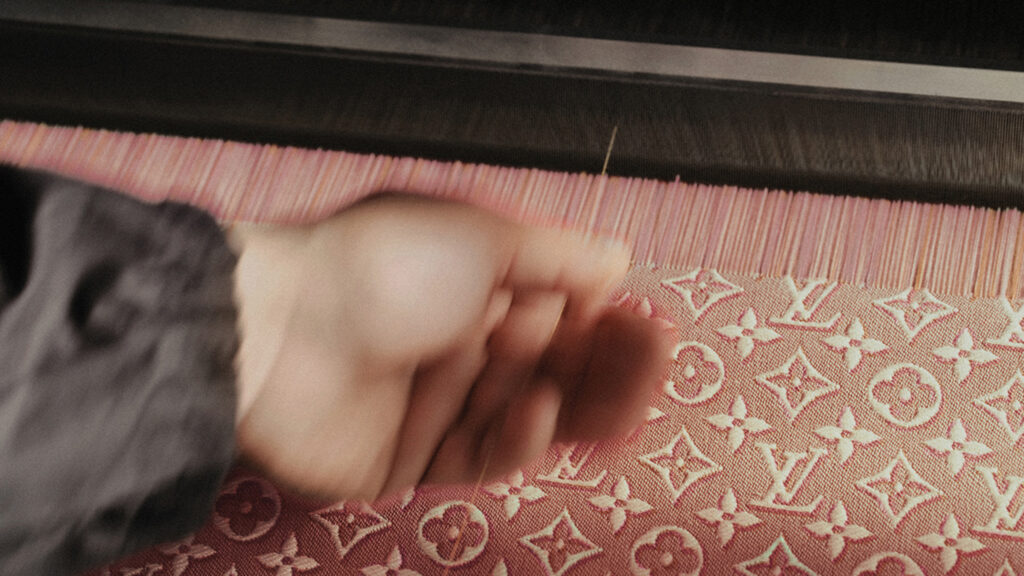
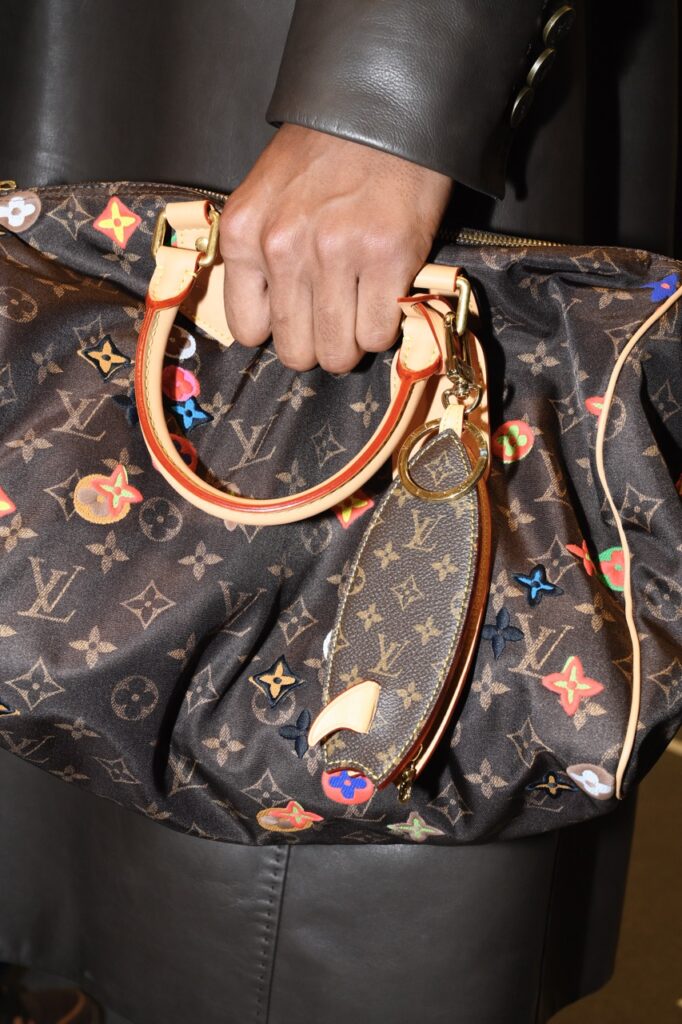
Louis Vuitton Monogram Embleme : Heritage Reimagined To celebrate the 130th anniversary of the Monogram, Louis Vuitton is set to unveil the Monogram Emblème in June 2026, a highly tactile jacquard canvas that reinterprets the iconic House signature. Monogram Emblème honours the legendary motif, drawing inspiration from the original cotton canvases that once adorned travel trunks. The jacquard is now made from a blend of GOTS-certified cotton and linen fibres to create a unique texture. This durable, water-repellent fabric is also embellished with a new, denser pattern reminiscent of embroidery. The innovative canvas comes in an array of colours drawn from the Vuittonnier– the House’s signature colour library. The textured effect is enhanced by deep tones, created using five differently coloured threads. The Pre-Fall 2026 collection, arriving in stores on 5 June, introduces new shades: Peuplier, inspired by the trunks’ wooden structure, and Rose Ruban, a tribute to theribbon detailing on historic trunk designs.   In September 2026, Monogram Bleu, taken from the 1930s register, and Vert Jura, inspired by the flora of Louis Vuitton’s native region, will be launched. Monogram Emblème adorns the House’s iconic model, including the Alma, Neverfull, Speedy, Noé and Keepall bags, as well as the Side Trunk, which reflects Louis Vuitton’s heritage as a luggage maker. The motif also appears on small leather goods, shoes and accessories, underscoring the uniqueness of this new signature.

Opiates, Uncategorized

Louis Vuitton Flight Mode 2026

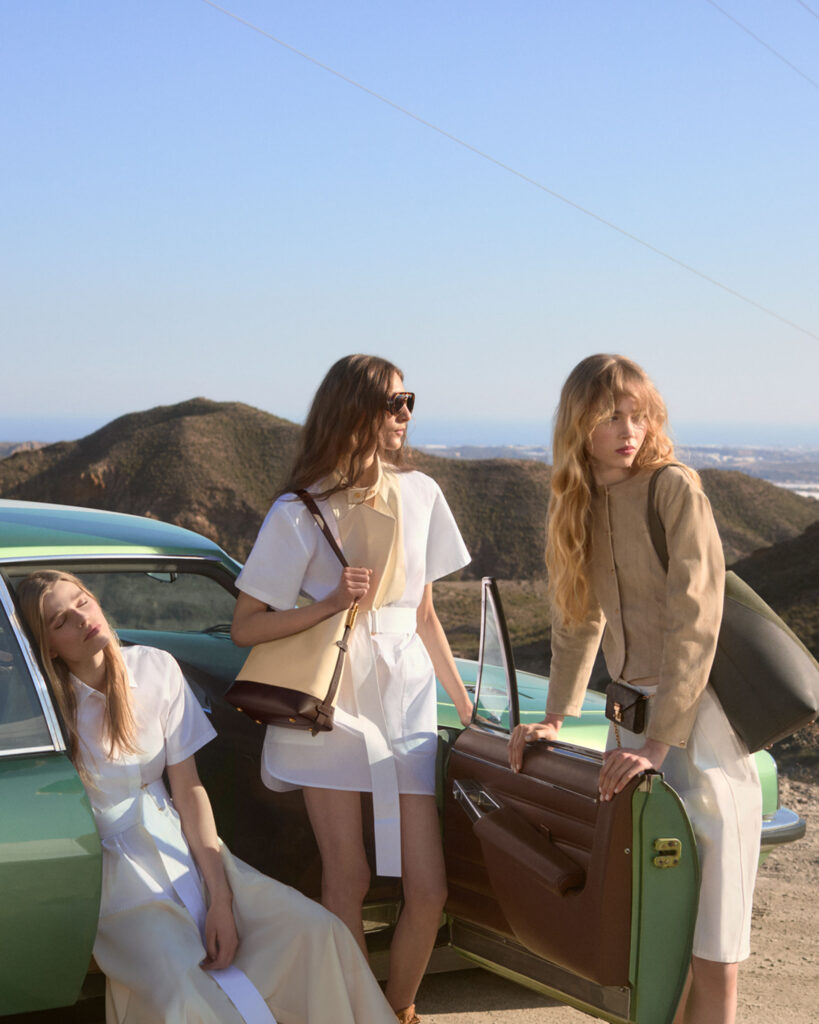
Louis Vuitton Flight Mode 2026 Louis Vuitton’s Flight Mode 2026 collection refines the Art of Travel into a wardrobe built for movement. Leather bombers, flight jackets, cardigans and gilets appear in supple, grained and velvety finishes, all in quiet neutral tones that feel both grounded and aerodynamic. Cashmere and virgin wool add softness, anchoring the collection in comfort. Denim introduces contrast through faded blue‑grey pieces reinterpreting the Brown Denim Monogram, while cotton poplin, printed taffeta and washed silk move lightly in shades of tangerine, rosé, sand, sienna and white. Two motifs define the season: the white‑and‑brown Mahina pattern and an all‑over print inspired by vintage hotel keys. Accessories extend the narrative. The Low Key bag returns in Moonstone, Quartz and Dark Fango, its minimalist hobo shape marked by a central V and gold padlock. The LV Sneakerina evolves into mule and boot versions, combining agility with a sleek, urban silhouette. Flight Mode 2026 is a study in functional elegance; pieces designed to travel lightly, move freely and carry the spirit of adventure forward. images courtesy Louis Vuitton

News, Uncategorized

Jeremy Allen White for the Louis Vuitton Speedy P9

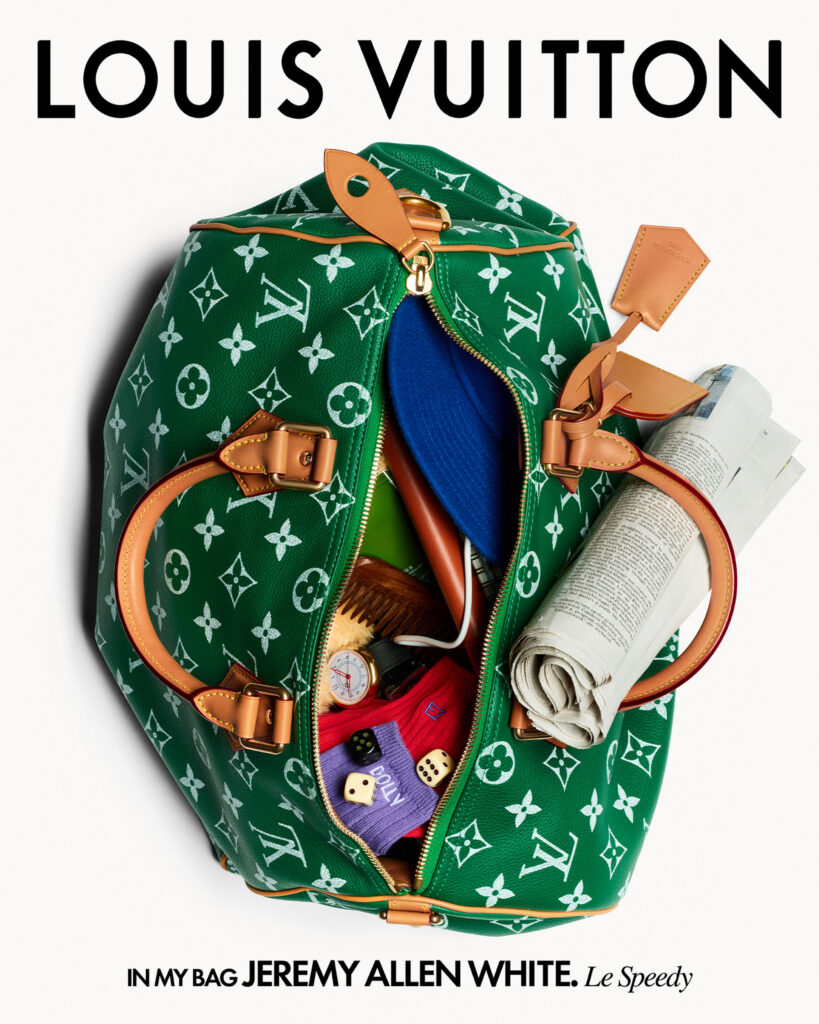
Jeremy Allen White for the Louis Vuitton Speedy P9 Louis Vuitton unveils its “In My Bag” campaign with a series of portraits centered on the Speedy P9, reimagined by Men’s Creative Director Pharrell Williams. Among the featured talents, Jeremy Allen White offers one of the most intimate glimpses into the bag’s spirit and purpose. Photographed by Thomas Lagrange, White appears with a green Speedy P9 crafted from double‑tanned, drum‑milled calfskin that gives the bag its soft, waxed texture. The portrait opens the bag to reveal the objects he carries through his day: a newspaper, a spiral notebook, a brimmed cap, a comb, a watch, a set of dice, extra socks and a charging cord. Together, they form a quiet study of routine, movement and the small rituals that shape a life. The Speedy P9 itself draws on the legacy of the original Speedy from the 1930s, reinterpreted through Williams’ lens. Named after Paris’s Pont‑Neuf, the site of his debut runway, the P9 blends heritage with a forward‑looking sensibility, turning a classic travel icon into a modern companion. In White’s portrait, the bag becomes more than an accessory. It becomes a container of habits, ideas and the understated details that define his everyday world.   image courtesy Louis Vuitton

Literature

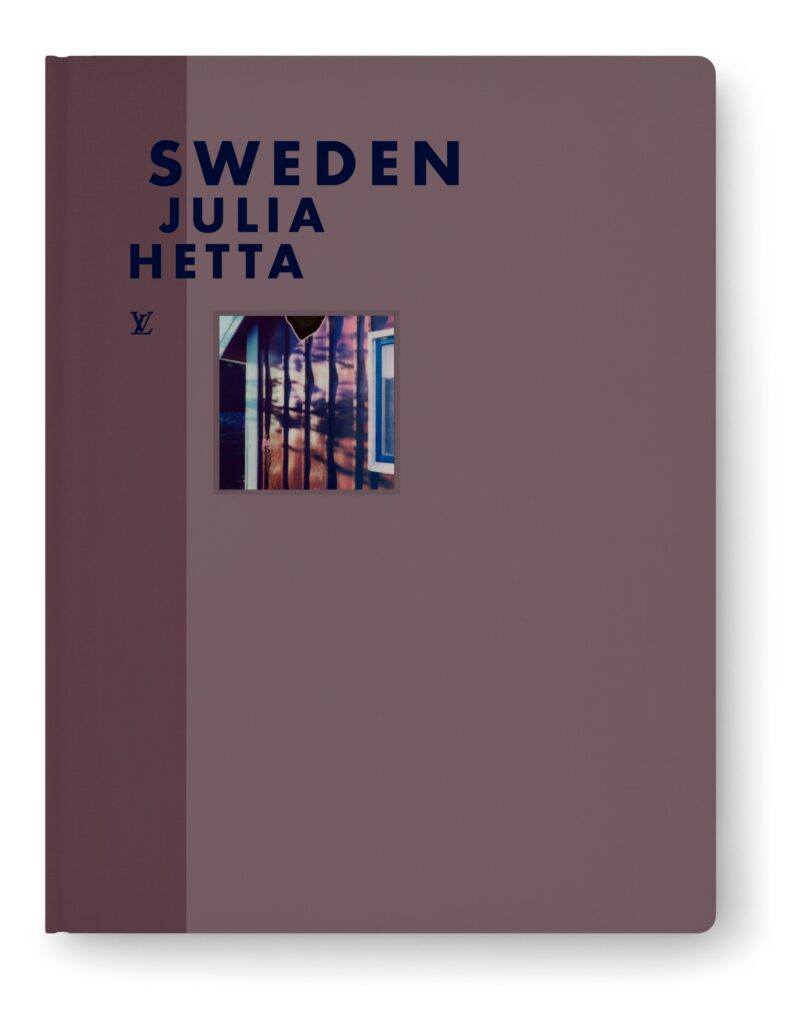
Through Her Own Lens: Julia Hetta’s Poetic Portrait of Sweden for Louis Vuitton

Through Her Own Lens: Julia Hetta’s Poetic Portrait of Sweden for Louis Vuitton Book Images courtesy of Louis Vuitton In Fashion Eye Sweden, Julia Hetta captures her home country through a deeply personal and painterly lens, using Polaroid film to trace shifting seasons, textures, and light. Created as part of Louis Vuitton’s travel-inspired series, the book unfolds as an accordion-style visual diary. An evocative sequence of landscapes and quiet moments that transform everyday life into something cinematic and poetic. Text Ulrika Lindqvist Ulrika Lindqvist: How did your relationship with photography begin? What first drew you to this medium? Julia Hetta: Well, it really started through my father, who was interested in photography, while I was interested in painting and drawing. Then we had a darkroom in the basement, so little by little I started experimenting with photography instead. UL: That cannot have been very common, having a darkroom in the basement? JH: I actually think it was. This was in the seventies. Back then people had basement living rooms and hobby spaces and so on, so I do not think it was all that unusual at the time. UL: How did this collaboration with Louis Vuitton come about? And what attracted you to the project? JH: I got an inquiry from Patrick Remy, who works on the project, and I immediately felt quite strongly that it was a very fun project, because I had been longing to work on something of my own and just have the camera and be by myself. The condition was that it would be done in Polaroids, so both the technique itself and the project as a whole were exciting to me. I also trust Patrick Remy’s judgment. UL: Had you worked much with the Polaroid format before, and how does it differ from other techniques? JH: Yes, I had. When I was younger I worked a bit with large format Polaroids, and I also did that in this project, partly in the self portraits. But apart from that I had not done it for many, many years. UL: And compared to how you usually photograph, how does the technique and the result differ? JH: It is much more spontaneous, a more spontaneous kind of photography, and that was what I liked and felt I wanted to return to. UL: What did your creative process behind Fashion Eye Sweden look like? Did you work from already existing material, or was everything created specifically for the book? JH: No, it was created specifically for this book, and it began almost like a diary project and also ended that way, because I made the self portraits at the end. But it took me a while to understand what I was going to do, because I felt it was difficult to depict your own country and how to approach that, until one day I realized that this is my life here in Sweden. I had already started doing that a little before the project, but then I developed it further. UL: I think the colors really capture Sweden and the light. JH: Oh, how nice. I think very much about colors and materials and light. Those are the three components that are very important to me in my photography. UL: How did you work with the selection of which images would be included in the book? JH: Editing is a very big part of the job for a photographer, I think. It is something I have trained myself in over the years, and also when I worked as a photo editor when I was twenty, so it is something I am very practiced in, and I think it is an important part of a photographer’s work. I had a large number of Polaroids, maybe a body of material four times as large, which I then edited down. UL: Was an editor involved, or did you make the selection yourself? JH: No, I made the selection myself, but I did discuss it back and forth with the team at Louis Vuitton and with Patrick Remy. UL: What would you say you yourself are trying to express and explore in your photography? JH: In this project, I think I was trying to explore what my perception looks like, what I see, and to be as direct as possible. More broadly, I think my photography is really about that, about somehow lifting up life, elevating life as such in some way. I am also interested in details and materials, and in what beauty is, and also darkness and light. UL: What do you want the viewer to feel when looking at your images and at Fashion Eye Sweden? JH: I hope that I have, in some way, visualized one side of Sweden, and that people abroad who either have a connection to Sweden or are interested in Sweden in some way will get a feeling for the country. Swedes living abroad are one audience, but also people who have recently arrived in Sweden. It feels interesting to present an image of the country to them as well. I also often work in a relatively poetic way, and I want it, in some sense, to be like a story about my life and a country. UL: Where did you take the pictures? Which locations did you use? JH: They are really from northern to southern Sweden, but a large part was done in and around central Sweden, around Uppsala and Stockholm, where I have my country house, but also in Norrland, where we also have a country house with my parents on an isolated island, and some of it was also shot in Skåne. So I think I really tried to stretch across the whole country. That felt right, because Sweden is so large and the landscape is so different from north to south, and I also wanted to capture the different seasons. UL: So how long did it take from when you started photographing for the book until it was finished? JH: Three years. UL: Do you have a project or an image or something within you that you would like to visualize, and if

Scroll to Top