Uncategorized

Design, Uncategorized

The Db Journey: Shaping a New Era of Travel Gear

The Db Journey: Shaping a New Era of Travel Gear Spend some time with the people behind Db and it becomes clear this isn’t just another luggage company. It’s a small group of people building things they genuinely believe in, shaped by a mix of creative curiosity and practical engineering. Vincent brings the perspective of a photographer turned designer, someone who has seen too many bags fall short when situations get unpredictable. Truls carries the mindset of a founder who believes the harder route often leads to better work. Jon keeps the whole effort aligned with a clear sense of where the brand needs to go. Around them are partners who broaden the view, including Erling Haaland and Gustav Magnar Witzøe. Their involvement isn’t about attention, it’s about pushing the idea of what the brand can become while letting the products speak for themselves. Db is shaped by honesty, trial and error, and the frustrations that eventually turned into solutions. By ideas that once seemed unrealistic and only made sense once they existed. And by the belief that if something is built to last and built so it can be repaired – people will trust it with the things that matter most. At its core, the work is simple: create travel gear that keeps up with real life rather than slowing it down. images courtesy Db Vincent Laine Jahwanna: When you started working on Ramverk Alu, what was the spark or frustration that set the design direction in motion?Vincent Lane: When I was traveling the world photographing while working toward becoming a better camera designer at Leica, I started noticing a gap in the travel market. There were not many contemporary products or brands that truly spoke to creatives, entrepreneurs, and people who see the world as their studio. People who treat their luggage as a toolbox for the things they carry between ideas, projects, and places.   I also realized that trust in a product matters on multiple levels. Functionally, it has to perform under constant movement and pressure. Visually, it becomes part of how people present themselves and move through the world.   After several situations where my gear failed during trips, I reached a point where I wanted to rethink the category from the ground up. That frustration became the starting point of my relationship with Db.   JB: You pushed away from industry standards with aluminium and custom parts. Was there a moment in the process when you thought, “This might actually be impossible” and how did you get past that? VL: The luggage market is shaped by repetition, so doing something truly new requires alignment across every part of the process, from suppliers and engineers to management and production. Eventually, you reach a threshold where all the preparation, testing, and problem solving is done, and the only thing left is to see whether the idea holds together in reality.   That was the case with the Edge Frame. At first glance it looks simple, but it is an L shaped aluminum profile engineered to wrap precisely around the front and back edges of the case. The level of precision needed to make that work consistently was significant. There was no existing component or reference point that proved it would succeed. It became a process of constant trial and error, refining every parameter until the system aligned with the original intention: improving structural integrity and protecting what is inside.   The trolley handle brought a similar challenge. It was developed from a single piece of aluminum with no visible screws, creating a more solid and trustworthy point of interaction. Most luggage handles use multiple plastic parts with exposed fasteners because they are easier to produce. We chose a more difficult path without knowing for certain if it would work until the final stages. All we could do was refine, simulate, prototype, and trust the process enough to keep moving forward. JB: Db talks a lot about meaningful travel and Scandinavian minimalism. On a personal level, how do those ideas influence the way you design? VL: What feels meaningful to someone is usually connected to what they are pursuing. When people move through the world to build, create, present, or share ideas, their focus should stay on that work rather than the friction around it. That perspective shapes how I think about design. I want to create products that feel trustworthy and dependable so people can keep their attention on what matters to them.   To make that philosophy more tangible, I often describe it as capable elegance. A product should feel refined enough to be in your living room, but strong enough to be thrown in the back of a truck. That balance between rugged and refined is where the work becomes interesting to me.   It is also where I see a more progressive interpretation of Scandinavian design emerging. Less about minimalism as a visual style and more about clarity, durability, restraint, and functional honesty.   JB: After the momentum from your earlier hard case development, what part of the luggage world still feels unexplored or exciting to you as a designer? VL: What continues to excite me is the ongoing process of sharpening the perspective Db brings to the luggage world. The most interesting products come from brands with a clear enough point of view to ignore what is not relevant to them. In a market full of noise and repetition, that clarity matters.   Once you understand a brands values and perspective, you can make more intentional decisions about what to prioritize and what to leave behind. For Db, that has meant focusing on structural quality, durability, integrity, and the emotional confidence that comes from trusting a product.   I see this as an ongoing exploration, not a finished result. It should keep evolving through the products themselves. That is what still makes the luggage category exciting to me: the chance to keep deepening a brand identity through the objects it creates.  

Cinema, Uncategorized

Future Perfect – An Interview With Lou Llobell

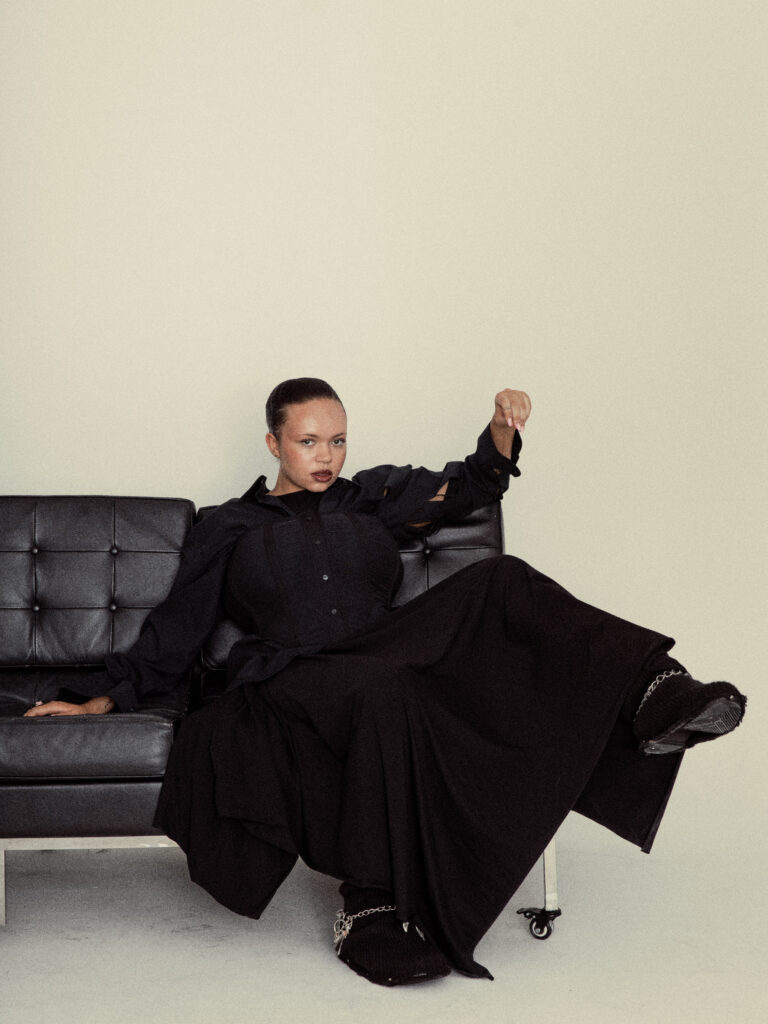
photography & direction Doma Dovgialo / Octopus Inc  fashion Fara Jane  hair Shanice Noel using Amika Haircare / Stella Creative Artists  makeup Min Sandhu using Lancome  DOP & Edit Awais Nouman in-House Production Andressa Claas special thanks The Mandrake Hotel BTS Pavel post-production Maria  lighting Ed Davies  fashion assistants Rachel Pereira and Kenya J. total look H&M gloves Dents Gloves earrings Claudia Pink Future Perfect – An Interview With Lou Llobell text Maya Avram Lou Llobell’s career is a reflection of her open mind. Taking off in the crux of the pandemic, it wasn’t long before she landed the role of Gaal Dornick, math genius and galaxy saviour in Apple TV’s Foundation. Harnessing her own tenacity to bring the character to life, she developed her onscreen alias from what was meant to be a minor role into lead four seasons running. Her quest for finding the truth, the throughline that connects her person to her characters, is what makes her so engrossing as a genre actor. Now, with the release of her new horror film Passenger, she talks about her process of stepping into character, the importance of onscreen representation and hopes for the future.   Maya Avram: You’re on set for the new season of Foundation. Can you share anything about what we can expect to see? Lou Llobell: Not too much, just that things get more exciting. The way the characters and storyline evolve is going to be really satisfying for viewers, especially after how season three ended. I think people are going to love it. total look Zhivago boots Izie MA: Originally based on Isaac Asimov’s novel of the same name, would you say that the series still carries the weight of being a book adaptation, or has it got a life of its own? LL: I think we’re past that point now, which is really nice. The throughlines between the book and the series are still there, but we’ve been able to adapt the story and evolve it into a standalone piece that is relevant to the world we live in and society as it is today, not just as it was in the ‘40s. It keeps getting better and better.   MA: Foundation is set thousands of years in the future, and follows the familiar sci-fi trope where societal constructs like race and class are not really mentioned, suggesting that society has moved beyond them. As a person of colour, how do you still express yourself authentically and stay true to your identity when that context is taken out? LL: With every project I do, I want to be able to be myself and have it be the essence of whoever I portray. At the same time, I don’t want it to be the be-all and end-all of why my characters are the way they are.   Passenger is really great because my co-star Jacob [Scipio] and I are both people of colour, but that doesn’t change anything about the script — these characters could have been played by anyone. But the fact that we are both POC and our characters find themselves in nomadic camps, Middle America, with mostly white people around them… Even though the threat isn’t spoken, you can sense it. It’s not the focal point of the film, but it does create a subtle tension that is great. It’s the same with Foundation; anyone could have played Gaal, but my doing it adds something to the story.   My identity is inherent to my work, sometimes intentionally and other times not, because that’s just life. As a person of colour, that lens is how we’re viewed and seen, so we can’t ignore it, but we don’t have to focus too much on it either. total look Agro Studio  ring Alexis Bittar MA: Speaking of Passenger, the film marks your foray into horror, a new genre than your sci-fi credits. How have you found the experience? LL: I didn’t necessarily look out to do sci-fi; it just sort of happened that way, and I do find joy in mining the truth in something so genre-heavy. I guess horror has a similar essence, and that’s why I enjoyed it; the fact that I could still find the same kind of truth in who my character is and what is happening to her.    MA: What was that truth? LL: As women, we have all experienced that eerie feeling when we’re walking in a dark parking lot. We are on the defensive, we are protective, and have an intuitive inkling where you ask yourself, ‘Am I going crazy? Am I just seeing things?’ A threat that maybe isn’t a threat.   It was interesting to work on Passenger because I didn’t realise until I started shooting that I’ve felt this way before. Not in a ‘highway demon is haunting me’ kind of way, but when you try to cover up feeling weird about something because you don’t want people to think you’re nuts or seeing things. You suppress that feeling even though your instincts are correct.   Then, in Foundation, I find truth in my character saving the galaxy. That latter part is obviously not relatable, but the way I see it, it relates to the things we can do to try to better the society we live in, you know?   total look Hector McLean shoes Izie total look Dior  stockings Calzedonia jewellery Dower & Hall MA: What about new experiences you haven’t had in real life? How do you find truth then? LL: I’ve done a lot of that on Foundation, but not to the extent that I did on Passenger. It’s a different ballgame trying to portray that you’re about to die. It triggers your body, and your body forgets that you’re acting — it just stops connecting to your mind.   MA: Zendaya previously said that filming Euphoria is physically taxing because her body doesn’t know she’s only acting as an addict. LL: That’s exactly what happened to me, and

Opiates, Uncategorized

House of Dagmar Introduces Flat Sandals

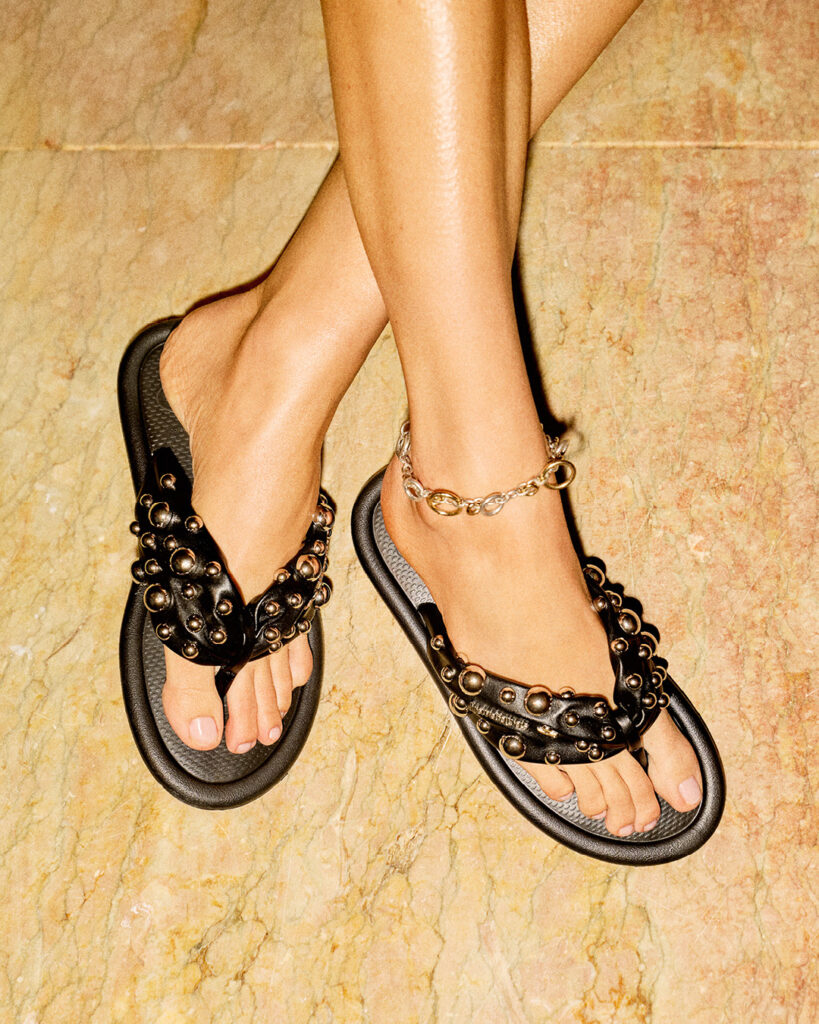
House of Dagmar Introduces Flat Sandals Dagmar introduces a new flat sandal for the season, shaped by the house’s instinct for refined minimalism. The silhouette is effortless, an easy slip on that feels both understated and intentional. Crafted in Italy from pure nappa leather, the sandal rests on a softly squared footbed and a semi matte sole, held by a mixed fabric strap that adds a subtle shift in texture. Available in cream white and black, it is a piece that moves easily between moments. Light, uncomplicated and precise, it carries the quiet confidence that defines Dagmar’s approach to modern dressing. images courtesy House of Dagmar

Fashion Editorial, Uncategorized

Let It Fall

dress Stand Studio socks Swedish Stockings scrunchies Siden denim Baum und Pferdgarten top and cape Viktoria Chan bag Filippa K shoes Keen top and dress Stine Goya trouser Filippa K shoes Keen top and shorts Lisa Yang belt Camilla Pihl shoes Keen top and shorts Lisa Yang belt Camilla Pihl shoes Keen top, bag and bag charm Camilla Pihl skirt Viktoria Chan stockings Swedish Stockings shoes Keen bandeau tops and skirt Deadwood Studios trouser Filippa K shoes Keen

Opiates, Uncategorized

Silk’n LED Face Technology

Silk’n LED Face Technology images courtesy VASS Silk’n introduces a new generation of at home treatment where LED light and intelligent stimulation work together to lift, refine and restore the skin’s natural rhythm. The mask brings multiple wavelengths into one gesture, including Near Infrared and Deep NIR, allowing the light to reach both the surface and the deeper structures beneath it. Fine lines, uneven tone and early signs of ageing are met with a treatment that feels effortless yet remarkably effective. Across the face, the light is dispersed with precision so the skin receives an even, soft glow. The deeper wavelengths move past the epidermis to the areas where age first appears around the eyes, across the forehead and along the mouth. The result is skin that feels firmer, more lifted and more awake, with clarity that builds over time. The treatment takes only ten to fifteen minutes and is designed to slip easily into daily routines. It becomes a quiet ritual, a moment of stillness where technology supports what the skin already knows how to do. Silk’n’s LED mask brings professional level light therapy into the home, offering a single movement that restores luminosity, strengthens structure and leaves the complexion subtly transformed.

Culinary, Uncategorized

Stockholm Chefs Tommy Myllymäki and Pi Le Open Liv at Slussen

Stockholm Chefs Tommy Myllymäki and Pi Le Open Liv at Slussen Stockholm’s dining scene is about to gain a bright new spark. On 19th of May, chefs Tommy Myllymäki and Pi Le open Liv, their first restaurant on Södermalm in Stockholm and a completely new creation inside the glass wrapped Mälarterrassen at Slussen. With wide views over the water and Gamla Stan, the space feels less like a traditional opening and more like the unveiling of a fresh viewpoint on Stockholm life. Both chefs already carry the kind of reputations that make food lovers lean in with interest. Tommy Myllymäki’s achievements range from Årets Kock to Bocuse d’Or medals and bestselling cookbooks, while Pi Le brings experience from the national culinary teams and his work as co-owner (together with Myllymäki) of the two starred AIRA. Together they also run Bobergs Matsal and Akvileja at NK. Liv becomes the next chapter in this shared story, but with a new kind of creative freedom at its center. That freedom is exactly what defines Liv. Instead of inheriting a room with long standing traditions, the chefs were given a blank canvas and turned it into a restaurant that feels personal and alive. It is warm without being heavy, relaxed without being casual, and clearly shaped by the playful energy of Södermalm and the steady calm of the surrounding water. The room glows with daylight. The terrace reaches out toward the quay like an invitation. You can picture long lunches that drift into the afternoon, glasses that refill just because the mood is right, and those soft Stockholm evenings when the city seems to exhale. Liv is designed for all of it. images courtesy Liv “We want Liv to feel like somewhere we would visit ourselves,” Tommy says. And that philosophy shows in every corner. This is not a place chasing strict fine dining rules. It is a restaurant built on honest food prepared with serious skill, served in a room that encourages conversation, curiosity, and staying just a little longer than planned. Pi adds, “Södermalm means a lot to us. The food scene here has really grown, and it feels fantastic to be part of it.” The creation of Liv is closely tied to Atrium Ljungberg, the developer behind the new Slussen and Mälarterrassen. The area will welcome six distinct restaurant concepts, all part of a vision to make the waterfront one of Stockholm’s next major destinations for food and community. Annica Ånäs, CEO of Atrium Ljungberg, sees the opening as a milestone. Liv, she notes, balances craft with comfort in a way that fits perfectly into the evolving story of the city. Tables will be released one month at a time through restaurangliv.se, and interest is already high. Liv opens on 19th of May. It arrives in a part of Stockholm that is being reshaped in real time, and it already feels like the kind of restaurant people will return to often simply because the room, the food, and the mood make you want to return.

Opiates, Uncategorized

Louis Vuitton Flight Mode 2026

Louis Vuitton Flight Mode 2026 Louis Vuitton’s Flight Mode 2026 collection refines the Art of Travel into a wardrobe built for movement. Leather bombers, flight jackets, cardigans and gilets appear in supple, grained and velvety finishes, all in quiet neutral tones that feel both grounded and aerodynamic. Cashmere and virgin wool add softness, anchoring the collection in comfort. Denim introduces contrast through faded blue‑grey pieces reinterpreting the Brown Denim Monogram, while cotton poplin, printed taffeta and washed silk move lightly in shades of tangerine, rosé, sand, sienna and white. Two motifs define the season: the white‑and‑brown Mahina pattern and an all‑over print inspired by vintage hotel keys. Accessories extend the narrative. The Low Key bag returns in Moonstone, Quartz and Dark Fango, its minimalist hobo shape marked by a central V and gold padlock. The LV Sneakerina evolves into mule and boot versions, combining agility with a sleek, urban silhouette. Flight Mode 2026 is a study in functional elegance; pieces designed to travel lightly, move freely and carry the spirit of adventure forward. images courtesy Louis Vuitton

Art, Uncategorized

Olga Krüssenberg on Navigating the World Between Art and Film

photography Sebastian Sanchez Olga Krüssenberg on Navigating the World Between Art and Film text Koshik Zaman 2024 Royal Institute of Art MFA graduate Olga Krüssenberg is part of a new wave of artists working across film and visual art, alongside peers such as Salad Hilowle, Victoria Verseau, Sophie Vukovic and Kasra Alikhani. Currently developing her first feature film — set in Svalbard, in the Norwegian archipelago in the Arctic Ocean — I met Olga in her studio at Korvfabriken, a former sausage factory turned studio collective and art space in Stockholm’s Meatpacking District, to talk about navigating between film and art. During a recent residency in Mexico City, Krüssenberg found herself in a state of sensory overload — a dense, shifting environment of sound, movement and social intensity that contrasted sharply with the quieter northern landscapes she often works with. Not speaking Spanish at first made her dependent on others in unfamiliar ways, but gradually learning the language changed how she moved through the city and how she related to it. At the same time, she became aware of the dynamics of gentrification in certain neighbourhoods, especially the presence of English speaking communities, and the discomfort of being implicated in those dynamics. Looking back, she sees the residency less as a defined period of production and more as something that subtly altered how she thinks about presence, attention and place; themes that continue to shape her work today. Koshik Zaman: You’re currently working on your first feature film, for which you also wrote the script, and I understand you recently began shooting on location in Svalbard. Why Svalbard—and how is the process coming along so far? Olga Krüssenberg: I first went to Svalbard in November 2019, when I was living in Tromsø during an exchange at the Art Academy. A friend asked if I wanted to join her for research for an exhibition, and without really knowing where I was going, I said yes.   Svalbard came to me first as a place of contradiction: it’s geographically remote, yet deeply entangled in global systems, whether political, ecological, or economic. I was drawn to that tension, and to the people living there in a kind of in-between state.   The process so far has been slow and somewhat fragmented, which also reflects the film itself. The project was initially conceived as a documentary, but when the main character chose to withdraw, I began to rethink the form. That shift led me toward a hybrid approach, where an actor takes on the central role. It’s not a linear narrative, but something that grows out of encounters, conversations, and situations on site. I’m still developing the script together with my partner, Andy Allen Olivar, who has been an important support in that process.   I don’t come from a background in scriptwriting, and I find the format quite resistant. In my previous films, I’ve worked more intuitively, following threads that gradually unfold during filming and editing. The film takes shape in the process, rather than being fully defined in advance. But when applying for fiction funding, you’re expected to present a finished script, and that creates a certain tension for me. photography Olga Krüssenberg photography Sebastian Sanchez K.Z: What initially drew you to film as a medium? When did you realise you wanted to incorporate it into your art practice? O.K: I think I was drawn to film through questions of memory and time. I was interested in how something can be both documented and constructed at once. I remember studying at Ölands Folkhögskola, where we worked with a different medium each week. When we were introduced to film, I immediately felt a kind of recognition, as if I had found a language that made sense to me. I was drawn to duration, and to the possibility of layering image, text, voice, and sound in a way that felt closer to how memory actually operates. Memory has also been a recurring theme in my work, perhaps more than I initially understood. Dementia runs in my family, and I carry an awareness that memory is something fragile, something that can shift or disappear. I think that awareness has quietly shaped many of my works over time. K.Z: As an artist working across both film and visual arts, what differences or similarities have you observed between these fields from the perspective of an emerging filmmaker? O.K: One clear difference is the level of structure. Film often requires a more defined production framework, with funding, timelines, and collaboration on a larger scale. In the visual arts, I’ve experienced more flexibility and openness in terms of process. At the same time, I’m interested in working in the space between these fields. I try to bring a certain openness and fragmentation from visual art into film, while also embracing the collaborative aspects of filmmaking. I am a very structured person, which helps me a lot in both fields. I spend a lot of time applying for funding, both for film and art projects, which has so far allowed me to sustain my practice after art school. What has been most rewarding about entering the film field is collaborating with very talented people, and something I would like to integrate more into my visual art practice as well. Since I didn’t attend a formal film school, these collaborations have, in many ways, become my education. I remember the first day of shooting on Svalbard with a bigger crew and an actor for the first time. I was so nervous; everyone was looking at me, waiting for me to say “action”, and I just looked very confused (yes, it was caught on camera, unfortunately). But I had decided beforehand to have a team with whom I could feel very vulnerable and lost, and they were very patient and supportive. That experience has stayed with me. It reminded me that filmmaking is not only about control, but also about trust. K.Z: You’ve already gained recognition for your films, with screenings

Opiates, Uncategorized

Zalando launches Pack for Possibilities

images courtesy Zalando  Zalando launches Pack for Possibilities Zalando introduces Pack for Possibilities, an outdoor campaign led by Norwegian pop artist Peder Elias and Oslo‑based model and writer Sara Flaaen Licius. Set against a road trip through Norway, the campaign turns a simple question into its guiding thread: what do I wear when the journey is the destination. For Peder Elias, whose creative world is rooted in writing among forests and fjords, the project becomes a natural fit. He describes Norwegian nature as an extension of his identity and speaks to the balance between the calm of home and the energy of performing for a crowd. Filming in the landscapes that shape his work felt, in his words, like a genuine pleasure. The campaign follows four friends moving through Norway’s rugged terrain, capturing unfiltered moments of weather, connection and the outdoor‑first mindset that defines the region. It reflects Zalando’s ambition to grow as a lifestyle destination, expanding its expertise in running, hiking and cycling and offering a more curated, high‑performance sports experience for Nordic consumers. Pack for Possibilities runs from April 24 to June 19 across all Nordic markets, returning in autumn through out‑of‑home, streaming and social placements.

Scroll to Top