Future Perfect – An Interview With Lou Llobell
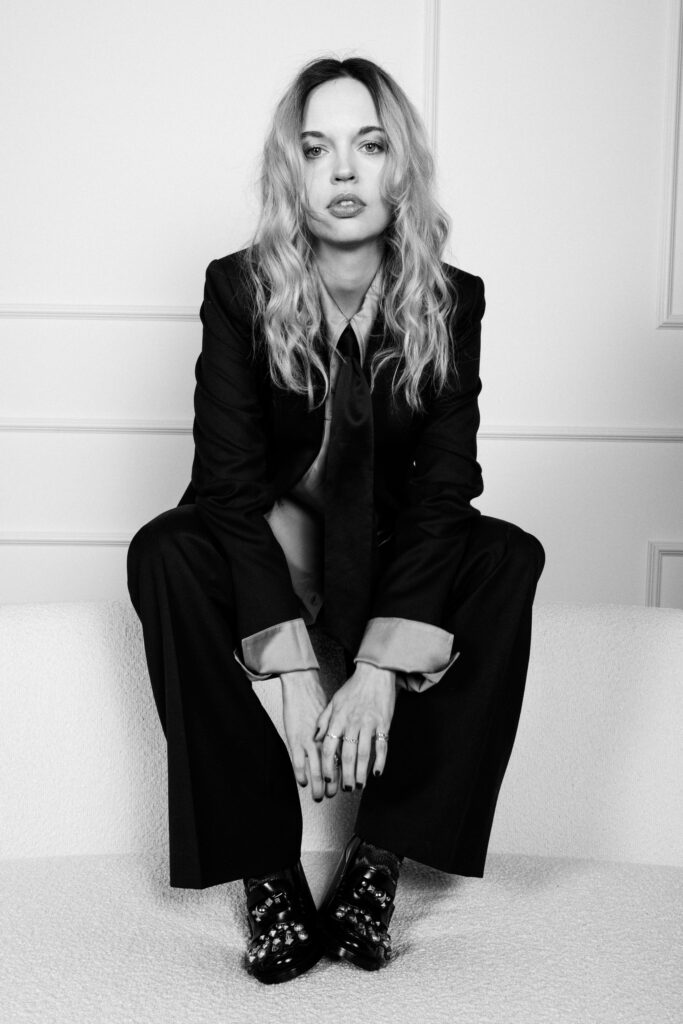
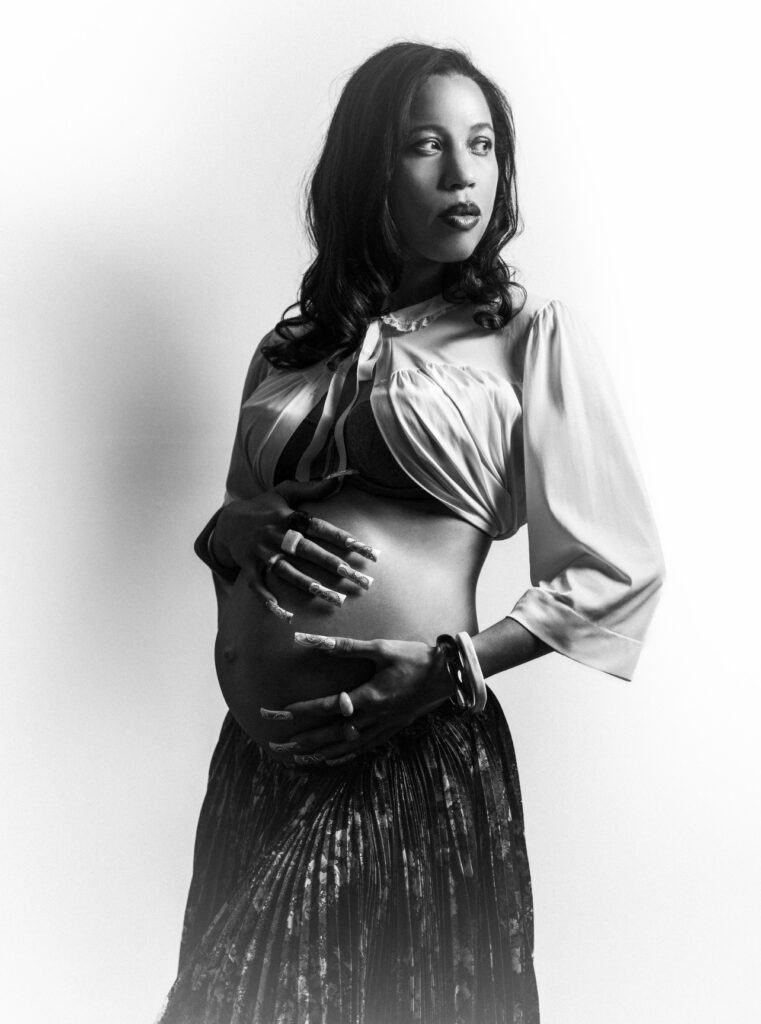
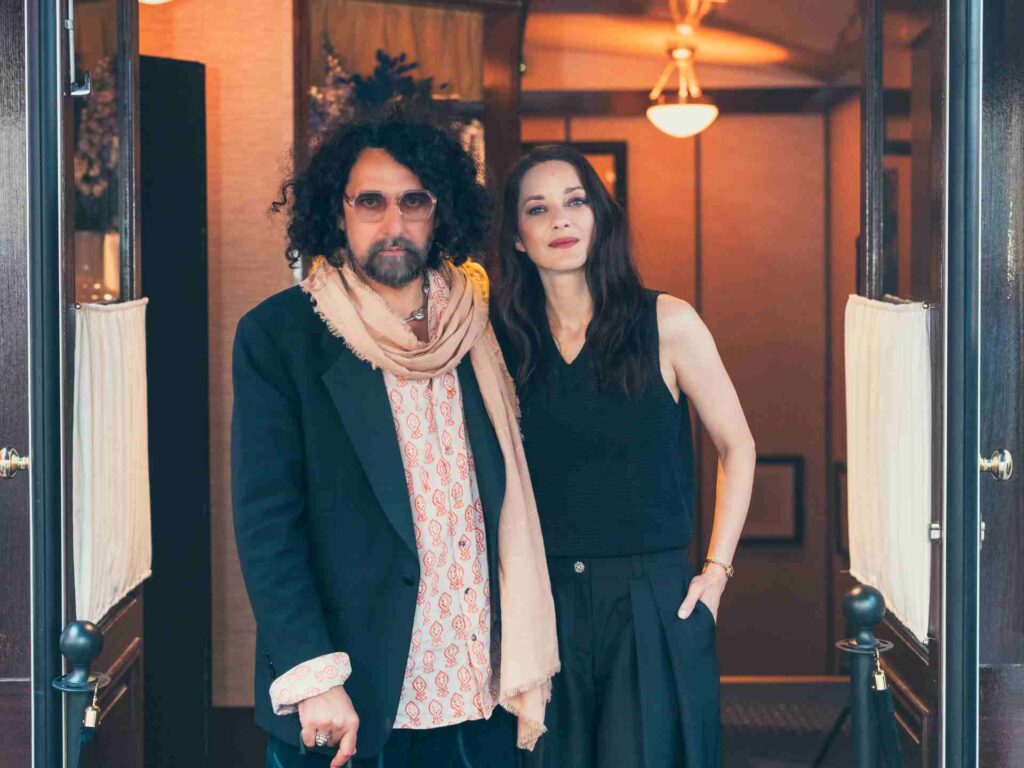
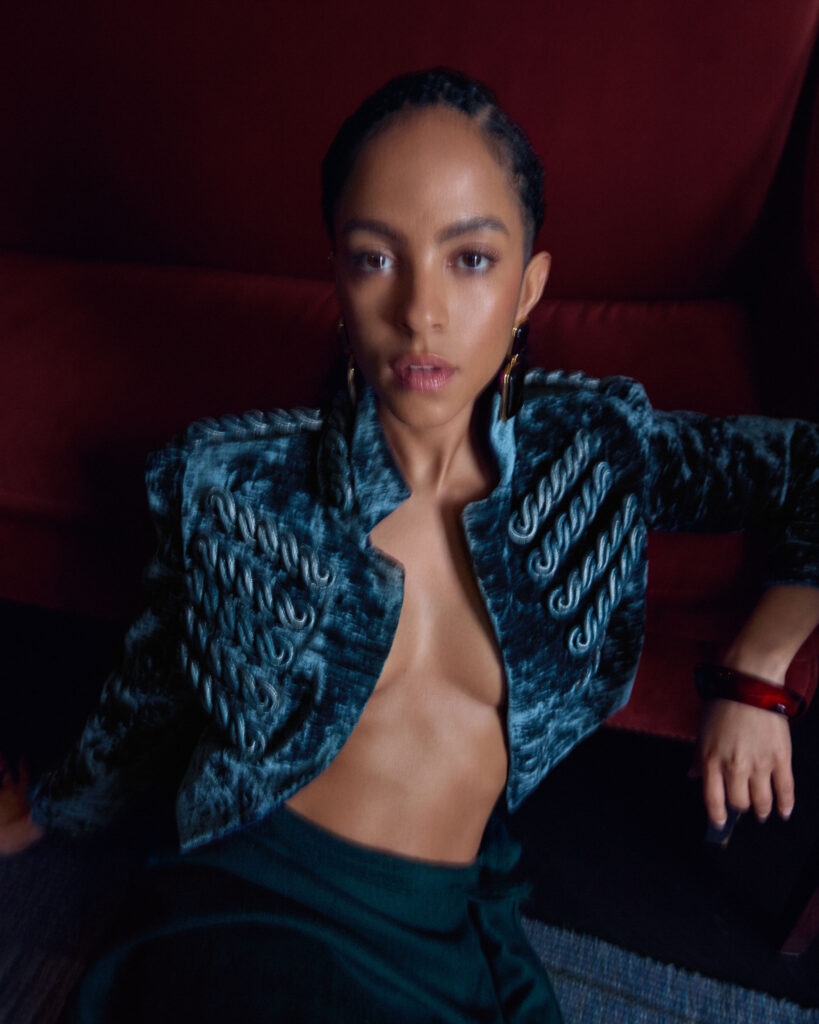
photography & direction Doma Dovgialo / Octopus Inc fashion Fara Jane hair Shanice Noel using Amika Haircare / Stella Creative Artists makeup Min Sandhu using Lancome DOP & Edit Awais Nouman in-House Production Andressa Claas special thanks The Mandrake Hotel BTS Pavel post-production Maria lighting Ed Davies fashion assistants Rachel Pereira and Kenya J. total look H&M gloves Dents Gloves earrings Claudia Pink Future Perfect – An Interview With Lou Llobell text Maya Avram Lou Llobell’s career is a reflection of her open mind. Taking off in the crux of the pandemic, it wasn’t long before she landed the role of Gaal Dornick, math genius and galaxy saviour in Apple TV’s Foundation. Harnessing her own tenacity to bring the character to life, she developed her onscreen alias from what was meant to be a minor role into lead four seasons running. Her quest for finding the truth, the throughline that connects her person to her characters, is what makes her so engrossing as a genre actor. Now, with the release of her new horror film Passenger, she talks about her process of stepping into character, the importance of onscreen representation and hopes for the future. Maya Avram: You’re on set for the new season of Foundation. Can you share anything about what we can expect to see? Lou Llobell: Not too much, just that things get more exciting. The way the characters and storyline evolve is going to be really satisfying for viewers, especially after how season three ended. I think people are going to love it. total look Zhivago boots Izie MA: Originally based on Isaac Asimov’s novel of the same name, would you say that the series still carries the weight of being a book adaptation, or has it got a life of its own? LL: I think we’re past that point now, which is really nice. The throughlines between the book and the series are still there, but we’ve been able to adapt the story and evolve it into a standalone piece that is relevant to the world we live in and society as it is today, not just as it was in the ‘40s. It keeps getting better and better. MA: Foundation is set thousands of years in the future, and follows the familiar sci-fi trope where societal constructs like race and class are not really mentioned, suggesting that society has moved beyond them. As a person of colour, how do you still express yourself authentically and stay true to your identity when that context is taken out? LL: With every project I do, I want to be able to be myself and have it be the essence of whoever I portray. At the same time, I don’t want it to be the be-all and end-all of why my characters are the way they are. Passenger is really great because my co-star Jacob [Scipio] and I are both people of colour, but that doesn’t change anything about the script — these characters could have been played by anyone. But the fact that we are both POC and our characters find themselves in nomadic camps, Middle America, with mostly white people around them… Even though the threat isn’t spoken, you can sense it. It’s not the focal point of the film, but it does create a subtle tension that is great. It’s the same with Foundation; anyone could have played Gaal, but my doing it adds something to the story. My identity is inherent to my work, sometimes intentionally and other times not, because that’s just life. As a person of colour, that lens is how we’re viewed and seen, so we can’t ignore it, but we don’t have to focus too much on it either. total look Agro Studio ring Alexis Bittar MA: Speaking of Passenger, the film marks your foray into horror, a new genre than your sci-fi credits. How have you found the experience? LL: I didn’t necessarily look out to do sci-fi; it just sort of happened that way, and I do find joy in mining the truth in something so genre-heavy. I guess horror has a similar essence, and that’s why I enjoyed it; the fact that I could still find the same kind of truth in who my character is and what is happening to her. MA: What was that truth? LL: As women, we have all experienced that eerie feeling when we’re walking in a dark parking lot. We are on the defensive, we are protective, and have an intuitive inkling where you ask yourself, ‘Am I going crazy? Am I just seeing things?’ A threat that maybe isn’t a threat. It was interesting to work on Passenger because I didn’t realise until I started shooting that I’ve felt this way before. Not in a ‘highway demon is haunting me’ kind of way, but when you try to cover up feeling weird about something because you don’t want people to think you’re nuts or seeing things. You suppress that feeling even though your instincts are correct. Then, in Foundation, I find truth in my character saving the galaxy. That latter part is obviously not relatable, but the way I see it, it relates to the things we can do to try to better the society we live in, you know? total look Hector McLean shoes Izie total look Dior stockings Calzedonia jewellery Dower & Hall MA: What about new experiences you haven’t had in real life? How do you find truth then? LL: I’ve done a lot of that on Foundation, but not to the extent that I did on Passenger. It’s a different ballgame trying to portray that you’re about to die. It triggers your body, and your body forgets that you’re acting — it just stops connecting to your mind. MA: Zendaya previously said that filming Euphoria is physically taxing because her body doesn’t know she’s only acting as an addict. LL: That’s exactly what happened to me, and