
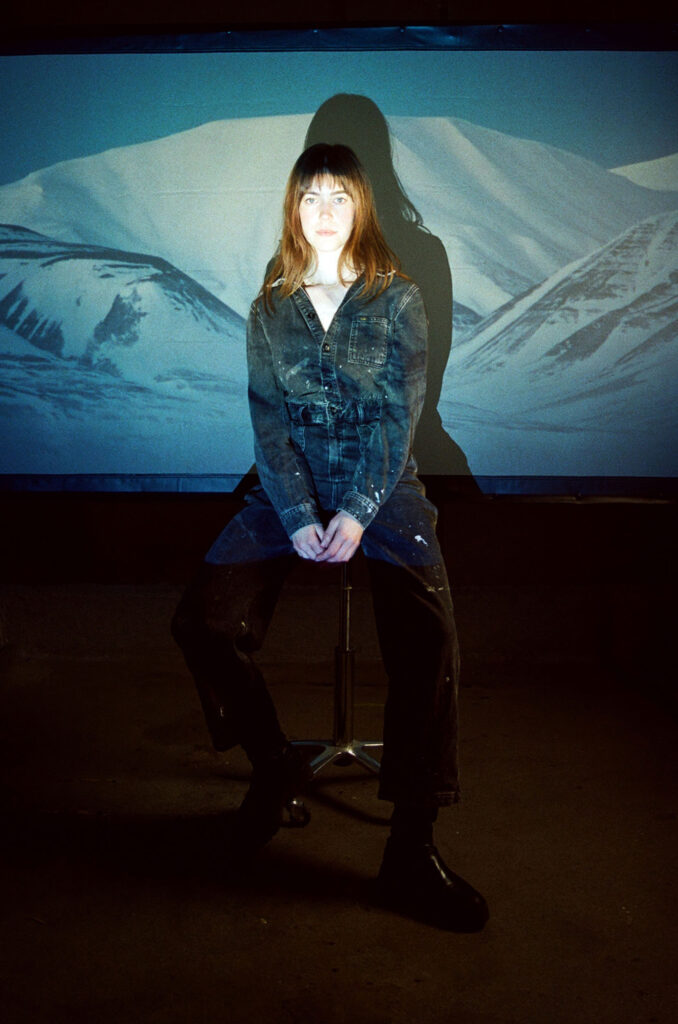
photography Sebastian Sanchez
Olga Krüssenberg on Navigating the World Between Art and Film
text Koshik Zaman
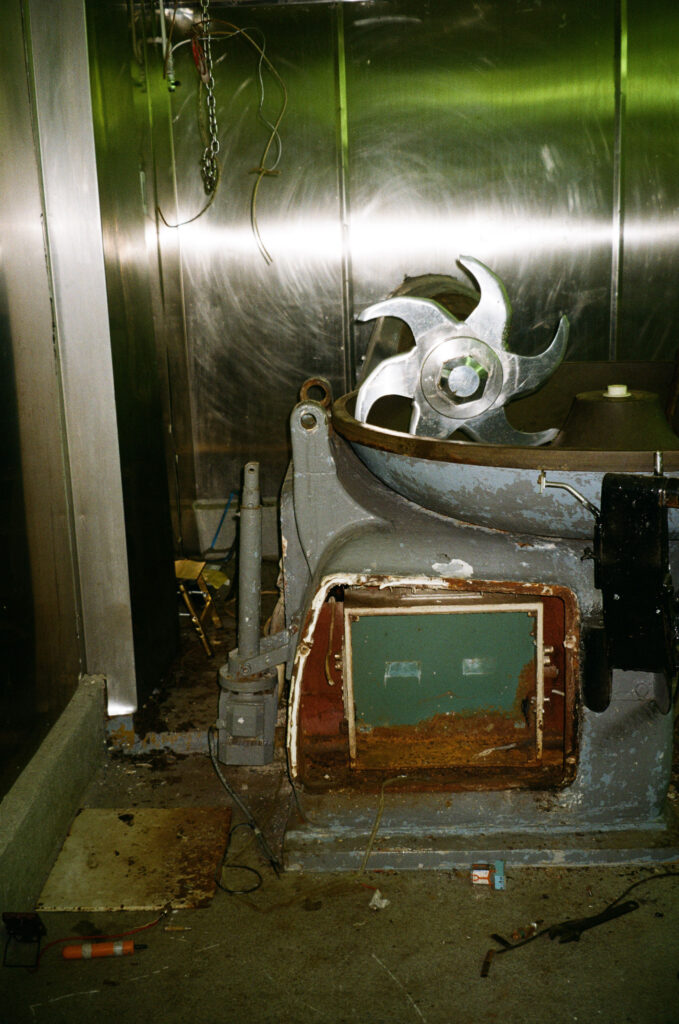
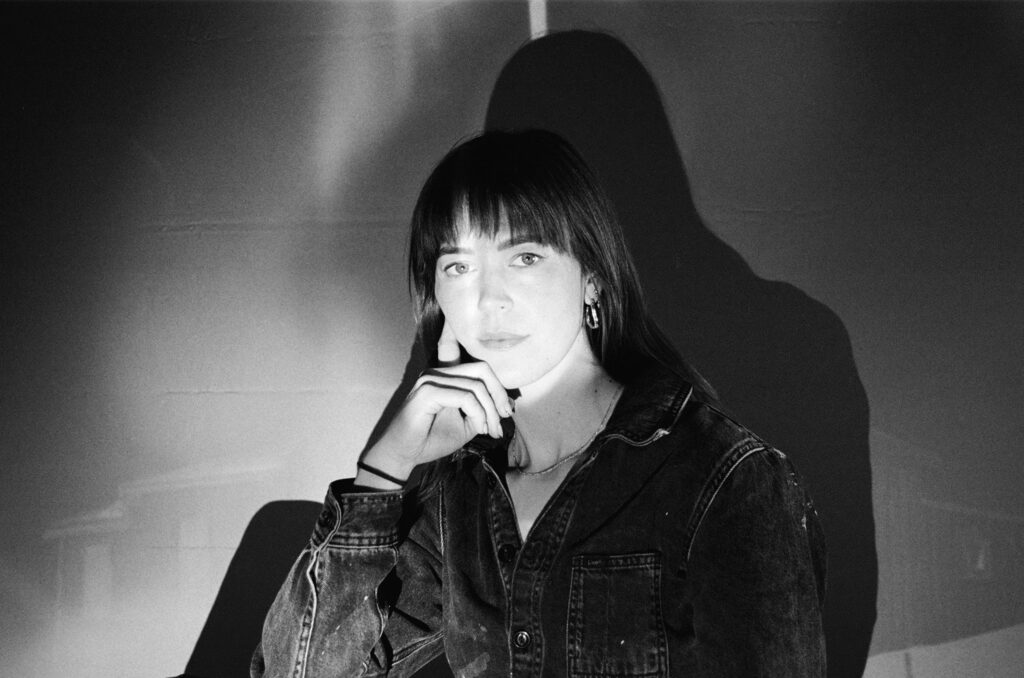
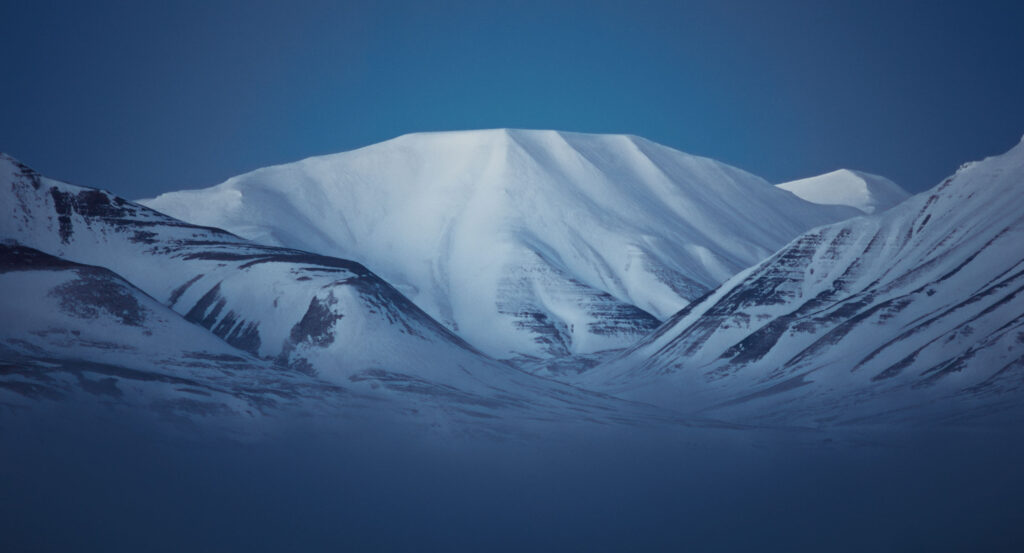
2024 Royal Institute of Art MFA graduate Olga Krüssenberg is part of a new wave of artists working across film and visual art, alongside peers such as Salad Hilowle, Victoria Verseau, Sophie Vukovic and Kasra Alikhani. Currently developing her first feature film — set in Svalbard, in the Norwegian archipelago in the Arctic Ocean — I met Olga in her studio at Korvfabriken, a former sausage factory turned studio collective and art space in Stockholm’s Meatpacking District, to talk about navigating between film and art.
During a recent residency in Mexico City, Krüssenberg found herself in a state of sensory overload — a dense, shifting environment of sound, movement and social intensity that contrasted sharply with the quieter northern landscapes she often works with. Not speaking Spanish at first made her dependent on others in unfamiliar ways, but gradually learning the language changed how she moved through the city and how she related to it. At the same time, she became aware of the dynamics of gentrification in certain neighbourhoods, especially the presence of English speaking communities, and the discomfort of being implicated in those dynamics.
Looking back, she sees the residency less as a defined period of production and more as something that subtly altered how she thinks about presence, attention and place; themes that continue to shape her work today.
Koshik Zaman: You’re currently working on your first feature film, for which you also wrote the script, and I understand you recently began shooting on location in Svalbard. Why Svalbard—and how is the process coming along so far?
Olga Krüssenberg: I first went to Svalbard in November 2019, when I was living in Tromsø during an exchange at the Art Academy. A friend asked if I wanted to join her for research for an exhibition, and without really knowing where I was going, I said yes.
Svalbard came to me first as a place of contradiction: it’s geographically remote, yet deeply entangled in global systems, whether political, ecological, or economic. I was drawn to that tension, and to the people living there in a kind of in-between state.
The process so far has been slow and somewhat fragmented, which also reflects the film itself. The project was initially conceived as a documentary, but when the main character chose to withdraw, I began to rethink the form. That shift led me toward a hybrid approach, where an actor takes on the central role. It’s not a linear narrative, but something that grows out of encounters, conversations, and situations on site. I’m still developing the script together with my partner, Andy Allen Olivar, who has been an important support in that process.
I don’t come from a background in scriptwriting, and I find the format quite resistant. In my previous films, I’ve worked more intuitively, following threads that gradually unfold during filming and editing. The film takes shape in the process, rather than being fully defined in advance. But when applying for fiction funding, you’re expected to present a finished script, and that creates a certain tension for me.
photography Olga Krüssenberg
photography Sebastian Sanchez
K.Z: What initially drew you to film as a medium? When did you realise you wanted to incorporate it into your art practice?
O.K: I think I was drawn to film through questions of memory and time. I was interested in how something can be both documented and constructed at once.
I remember studying at Ölands Folkhögskola, where we worked with a different medium each week. When we were introduced to film, I immediately felt a kind of recognition, as if I had found a language that made sense to me. I was drawn to duration, and to the possibility of layering image, text, voice, and sound in a way that felt closer to how memory actually operates.
Memory has also been a recurring theme in my work, perhaps more than I initially understood. Dementia runs in my family, and I carry an awareness that memory is something fragile, something that can shift or disappear. I think that awareness has quietly shaped many of my works over time.
K.Z: As an artist working across both film and visual arts, what differences or similarities have you observed between these fields from the perspective of an emerging filmmaker?
O.K: One clear difference is the level of structure. Film often requires a more defined production framework, with funding, timelines, and collaboration on a larger scale. In the visual arts, I’ve experienced more flexibility and openness in terms of process.
At the same time, I’m interested in working in the space between these fields. I try to bring a certain openness and fragmentation from visual art into film, while also embracing the collaborative aspects of filmmaking. I am a very structured person, which helps me a lot in both fields. I spend a lot of time applying for funding, both for film and art projects, which has so far allowed me to sustain my practice after art school.
What has been most rewarding about entering the film field is collaborating with very talented people, and something I would like to integrate more into my visual art practice as well. Since I didn’t attend a formal film school, these collaborations have, in many ways, become my education.
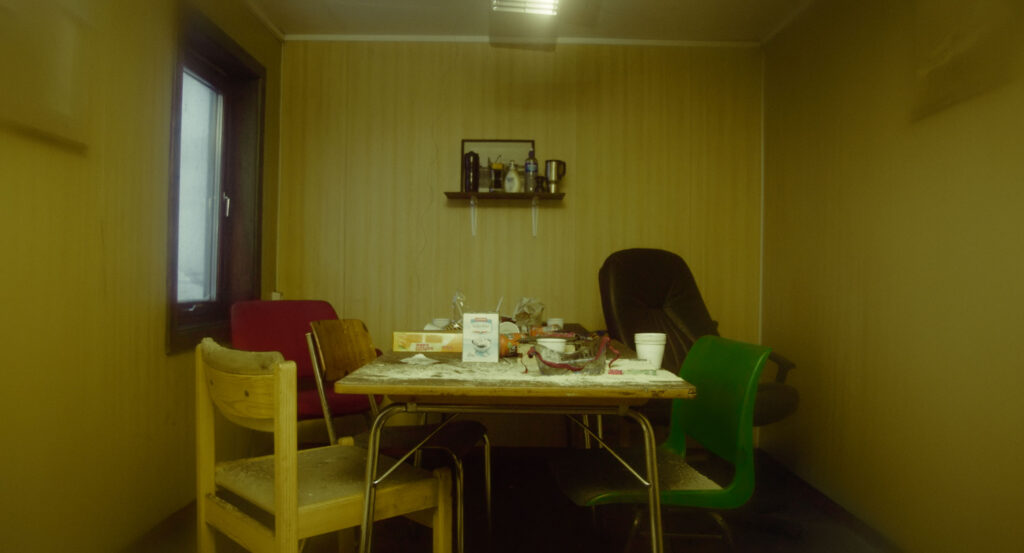
I remember the first day of shooting on Svalbard with a bigger crew and an actor for the first time. I was so nervous; everyone was looking at me, waiting for me to say “action”, and I just looked very confused (yes, it was caught on camera, unfortunately). But I had decided beforehand to have a team with whom I could feel very vulnerable and lost, and they were very patient and supportive. That experience has stayed with me. It reminded me that filmmaking is not only about control, but also about trust.
K.Z: You’ve already gained recognition for your films, with screenings at international festivals such as the International Film Festival Rotterdam and Tempo Documentary Festival in Stockholm, and participation in “Startsladden” at the Gothenburg Film Festival. What have your experiences been like presenting and pitching your work in these contexts?
O.K: It’s been both rewarding and challenging. Presenting work in these contexts often means translating something quite intuitive or poetic into a more structured format, which can feel like a reduction. At the same time, it forces me to articulate ideas that might otherwise remain quite scattered, and to make them accessible to others.
One difference I’ve noticed between film and visual art is the role of clarity. In the visual arts, ambiguity can be a strength, something generative that opens up interpretation. In film, especially in development and pitching contexts, there is a stronger demand for precision. You’re expected to define the narrative, the characters, and the intention quite clearly from the outset.
Navigating that shift has been challenging, but also useful. It has pushed me to understand my own work better and to try to find ways of communicating it without losing its complexity.
K.Z: As a cinephile myself, I’m curious – are there any films that have had a lasting impact on you?
O.K: Red Shift by Gunvor Nelson had a strong impact on me when I first saw it. I was drawn to the way she combines poetic imagery with voice, where the images and the spoken text don’t illustrate each other directly, but exist in a more associative relationship.
Each image seems to carry its own weight, while still resonating with the voice. That tension between what is seen and what is said has stayed with me and was one of the influences for my first film Långsamt rör jag mig i din riktning (2021).
Another film that has stayed with me is Eternity and a Day by Theo Angelopoulos, which my cinematographer Christine Leuhusen recommended as a reference for the Svalbard project. I was struck by how seamlessly it moves between memory and reality, without clearly marking the boundaries between them. As a viewer, you’re left in a state of uncertainty, never fully sure what belongs to the present and what emerges from memory, and that ambiguity is something I’m very drawn to.
photography Christine Leuhusen
photography Christine Leuhusen
photography Olga Krüssenberg
K.Z: You’re also one of the founders of Korvfabriken, an artist collective and exhibition space, where you share a studio with fellow 2024 Royal Institute of Art MFA graduate Nicole Khadivi. What are your ambitions for the space, and how do you see it evolving?
O.K: It has already been a ride creating and developing Korvfabriken. It started with six classmates and me looking for a studio space after graduation, and we found a Sausage Factory in Slakthusområdet in Stockholm. When we went to the viewing, they were still in operation, so we were walking around in white coats and hats, trying not to step on intestines on the floor.
When the previous tenants left and we took over the space, it wasn’t cleaned and a stench of smoked sausage was still lingering in the space, together with a bunch of rats. We spent a whole summer cleaning and renovating it, transforming it into 14 studio spaces and workshops for metal, glass, wood and mechatronics.
Over the past two years, we’ve organised exhibitions, workshops, and parties in the space, and more is planned for the near future. Our ambitions are constantly shifting, especially knowing that our lease ends in about a year and a half. For us, the most important aspect is that we can all work there based on our different practices, and that the space can adapt and shift depending on what is needed. New members have also joined the collective over time, which continuously changes the needs and direction of the space.
It’s still unclear whether the original group will continue together after the contract ends, as that will depend on whether we manage to find a new space that can accommodate all of our practices.
K.Z: Your current film project clearly demands a lot of your time, but is there anything else on the horizon for you?
O.K: A group of us from Korvfabriken are currently working on a year-long project focusing on residual materials from the steel industry, which we’ve received funding for. The project is led by Sara Ekholm Eriksson, and it’s been interesting to develop something that connects our collective practice with industrial processes and material transformation.
I’m also participating in Salong #3 at Studio Tabac in May, where I will present a work I made in Mexico. It feels meaningful to bring that material into a new context after returning from the residency.
In addition, I’ve been selected for the Nordic Film Lab at the Gothenburg Film Festival, which is a year-long talent program for emerging filmmakers from the Nordic countries. I see it as an opportunity to continue developing my practice in dialogue with other filmmakers, and to deepen the film side of my work.