Fashion Articles

Fashion Articles

Melodies & Desires, An Interview with Newkid

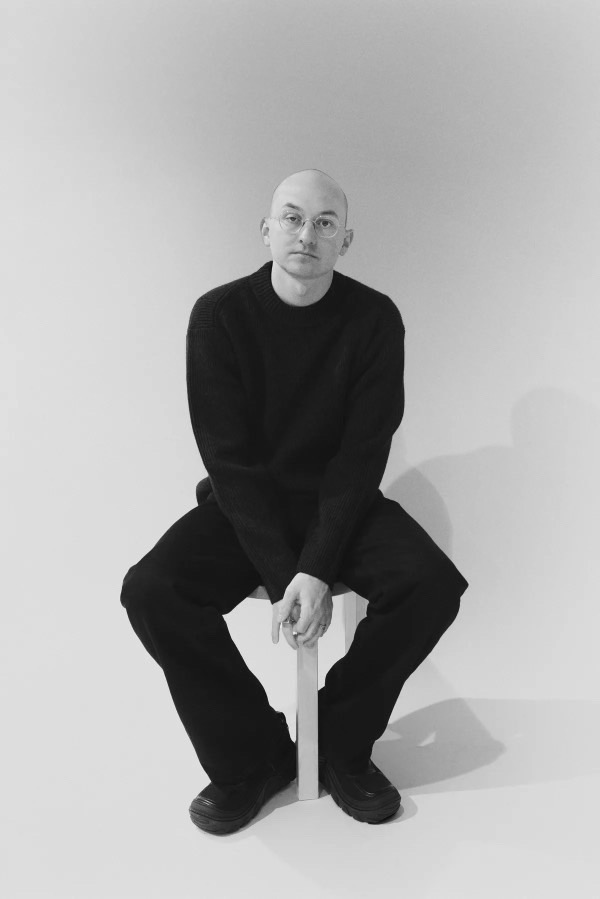
For Newkid, music is just as much about memory and emotion as it is about melody. From the first tentative piano chords to imagining the perfect live set.   Having carved out a distinct place in the Swedish music scene over the past decade, Newkid reflects on the different phases of his career, the personal experiences that have shaped his sound, and the evolution of his creative process. From club bangers to intimate power ballads, fatherhood and nostalgia.    In this conversation, he opens up about his current musical chapter, his visual expression, and the enduring passion that drives him to create. Here he presents a story about songs, synths, stagecraft, and the very human desire to make art that’s truly yours.   Elsa Chagot: You’ve been part of the Swedish music scene for a while now and gone through several phases – how are you feeling right now, where do you stand musically and personally?   Newkid: I’ve been around for quite a long time now. My first record came out in 2011, so quite a few years have passed, and during this time,  I went through different eras. You change as a person. There was a period when I was single and making a lot of club music, playing in clubs all the time. Then I had a period where I wrote a lot of break-up songs, because I’d just gone through a break-up myself. I also became a dad two years ago, and that’s a huge thing in life. It changes a lot. I think the music has been influenced by that in some way. An Interview with Newkid text Elsa Chagot coat FAYETTE / NORLING t-shirt Emporio Armani / Zalando jeans adidas Originals / Zalando sneakers New Balance  EC: Does it feel like you’re entering a new musical era compared to earlier chapters of your career?   Newkid: I call the new era my power ballad era. t’s a bit meta because I actually grew up with parents who listened to power ballads. When I was a kid, that’s the music they usually played at home. And now it almost feels like a full-circle moment.   The tempo is a bit slower as well. I’m not at the club anymore. I like gigs that happen earlier in the evening, where it’s not quite as intense. So in a way, life and music go hand in hand. I’m in a calmer stage right now, trying to figure out who this new version of me is. It’s still quite new.    EC: In that case, I have to ask, what is your all-time favourite power ballad song?   Newkid: Forever Young. It’s one of those songs that’s been with me since I was a kid, dancing to slow songs at school discos. It just has this incredible power – a really special kind of energy. I have so many memories in my life connected to that song that I can bring back whenever I hear it. I genuinely love it.   EC: In that case, I have to ask, what is your all-time favourite power ballad song? Newkid: Forever Young. It’s one of those songs that’s been with me since I was a kid, dancing to slow songs at school discos. It just has this incredible power – a really special kind of energy. I have so many memories in my life connected to that song that I can bring back whenever I hear it. I genuinely love it.   EC: When you create music, where does it usually start for you: with a feeling, a lyric, a melody, or something else entirely?   Newkid: Nine times out of ten, I start by writing the chords and the melody. I basically write all my songs on the piano first. It’s a very intuitive process; you sit down, and you’re feeling a certain way that day. I try not to think too much about it. If anything, I try to think as little as possible. I just play and sing and see what feels right. Something in it sort of pulls you in a certain direction, and you realise, okay, this is the path to follow.   Once I have the melodies and chords, I usually start figuring out the lyrics. Sometimes when you’re sort of mumbling a melody to yourself, a random word slips out, and occasionally I’ll latch onto one of those words and start building from there. I’ll ask myself: what does this song feel like, even before there are any real lyrics?  coat and jumper BOSS necklace with rose KSV Jewellery  cross necklace Talent’s own  earstud worn throughout  Talent’s own  coat FAYETTE / NORLING denim jacket MADH  jeans Levi’s sneakers New Balance EC: What are you working on right now, and what can you tell us about the project and about your release, Hurricane?  Newkid: Right now, I’m working on the songs that will be released in the autumn; the whole project will have ten tracks in total. That’s really why I’m in the studio at the moment. I’m here about three days a week. One day a week, I focus on content, which has become such a huge part of being an artist now. In recent years, it’s almost like you have to create content all the time alongside the music. We’ve started planning the summer tour and getting ready to go out and play live. I often take a song and look at it from a live perspective – if it isn’t naturally a “live-friendly” track, I think about how I can adapt it so it works on stage. How can I weave it into a set that makes sense for the era I’m in? EC: What makes a song more live-friendly, and what does meeting your audience live mean to you? Newkid: That’s a good question. Sometimes you’re in the studio, and you just think, “This is going to be amazing live.” top Brixtol Textiles coat ADNYM shirt ADNYM  trousers adidas

Fashion Articles

Celebrating Marimekko Day in Helsinki

Celebrating Marimekko Day in Helsinki text by Ulrika Lindqvist Marimekko is more than a Finnish fashion and lifestyle brand. It is a way of life. At the company’s headquarters and textile printing factory, porridge has been served to employees every morning since the company’s founding in 1951, a tradition that reflects the sense of community at the heart of the brand. We travelled to Helsinki to celebrate Marimekko Day on 22 May, and the city’s embrace of the occasion was unmistakable. The iconic Unikko flower appeared everywhere, adorning jeans, shirts and even tablecloths at cafés along the harbour, turning the city itself into a celebration of Marimekko’s unmistakable visual identity. photography Jere Viinikainen The annual Marimekko Day fashion shows took over Esplanade Park in the heart of Helsinki, where the Summer 2026 collection was unveiled across three runway presentations. Set to a live soundtrack by Ruusut, the event was hosted by Marimekko CEO Tiina Alahuhta-Kasko, Chief Marketing Officer Sanna-Kaisa Niikko and journalist Maria Veitola. Crowds gathered throughout the day, many dressed in Marimekko, dancing to the music and embracing the festive atmosphere. Even the rain during the second show became part of the experience, as colourful Marimekko umbrellas opened across the audience. The Summer 2026 collection brings together playful proportions, expressive prints and bold colour combinations. New and familiar floral motifs are paired with dynamic stripes, while Marimekko’s signature silhouettes are reimagined with a fresh perspective. Among the new floral prints are Kukasta kukkaan and Lemmitty, both designed by Erja Hirvi in 2024. The patterns extended beyond the runway as well. After the shows, guests enjoyed ice cream from the “Marimekko with Ape Gelato” carts, decorated in the vibrant Kukasta kukkaan print. “We have celebrated Marimekko Day since 1992, and it is an important tradition for us. For the Marimekko community, this day marks the beginning of summer, and it is a joy to celebrate it together with wonderful performers and our community. I hope everyone attending enjoys the atmosphere, on site, in our stores, and across our social media channels,” says Marimekko’s Chief Marketing Officer, Sanna-Kaisa Niikko. Marimekko Day is more than a fashion event. It is a reflection of the optimism, creativity and sense of togetherness that have defined the brand for decades. In Helsinki, that spirit extends far beyond the runway, becoming part of the city’s streets, its people and the beginning of summer itself. photography Ville Vappula

Fashion Articles

Where Heritage Meets Quiet Luxury: Inside Johanna Dy’s Sinta Yohané

Where Heritage Meets Quiet Luxury: Inside Johanna Dy’s Sinta Yohané text Jahwanna Berglund For Johanna Dy, Sinta Yohané is far more than a fashion label; it is an expression of identity, intention, and legacy. Guided by a minimalist sensibility yet deeply informed by heritage and representation, the brand exists at the intersection of thoughtful design and cultural narrative. What began as a search for something missing in the market has evolved into a quietly compelling statement of belonging, craftsmanship, and purpose. In this conversation, Dy reflects on the personal journey behind Sinta Yohané, the significance of its name, and her considered approach to building a brand designed to endure beyond seasons and trends. Jahwanna Berglund: What was the moment, or series of moments, that became the beginning of Sinta Yohané?   Johanna Dy: As a fashion content creator for the past eight years, I have always dreamed of creating a brand of my own – something that felt like a true extension of who I am and everything I stand for. I have always gravitated toward minimalist, neutral, and timeless fashion, so I knew that if I ever built something, it had to reflect that sense of ease, intention, and quiet elegance.   But beyond the aesthetic, Sinta Yohané came from something much deeper. Growing up, and especially after moving to the United States, I often longed for representation. As a Filipina-American, I did not always see women who looked like me represented in the fashion industry in the way I hoped to.   Years ago, I received a DM from a complete stranger. She told me, “Because of you, I can tell my daughter that she can be who she wants to be.” That message stayed with me. Since then, I have known that my purpose is to keep showing up, to keep pushing boundaries, and to create space for the next generation. JB: Could you tell us the story behind the name Sinta Yohané? What does it mean to you personally, and why did it feel right for this brand?   JD: “Sinta” means beloved, or love, in Tagalog. “Yohané” is taken from my name. Together, Sinta Yohané is deeply personal. It is a love letter to my younger self and to everyone who grew up feeling unseen. The name felt right because this brand was born from love – love for my heritage, love for the women who came before me, and love for the next generation, who deserve to feel represented, seen, and celebrated.   JB: You have spoken about quiet confidence as a guiding principle. When in your own life have you felt most quietly powerful?   JD: Growing up, I always had confidence within me, but I also struggled with feeling seen. Over time, I learned that I do not have to be the loudest person in the room to be powerful.   For me, quiet power comes from continuing to show up despite rejection. It comes from choosing to keep going even when the door has not opened yet. And if the opportunity does not exist, I have learned to create it myself. That, to me, is quiet confidence.     JB: Building a brand often reveals things about its founder. What did you learn about yourself through the process of creating Sinta Yohané?   JD: I learned that good things truly take time. Sinta Yohané took about three years to build – from branding and sampling to manufacturing and finally launching.   Through this process, I learned patience and how to enjoy every step, even the difficult ones. While this is not my first time creating a brand, Sinta Yohané feels different. Every decision had to be intentional. We did not want to rush. We wanted to learn, apply, adapt, and build something with meaning and longevity.   JB: The most personal collections often begin with something deeply private. What personal truth, memory, or emotion is woven into this debut collection?   JD: The debut collection is rooted in functionality, ease, and accessibility.   As a content creator, I am always reaching for my phone, camera, or daily essentials. I wanted to create pieces that were beautiful, but also truly practical for everyday life. That is why intentional pockets and ease of access became such an important part of the design. It is also why we called it the Essential Collection.   I have also always loved leather bags, so with Sinta Yohané, it was important for us to create pieces using premium full-grain leather while making them feel more accessible to more people, not just women. JB: Was there a moment during the journey when you questioned the direction of the brand? What ultimately brought you back to your original vision?   JD: One of the biggest moments of reflection came when we had to make decisions around manufacturing. Because Sinta Yohané is so deeply rooted in identity and intention, we wanted every part of the process to feel aligned – including the people and partners behind the product. There can sometimes be a narrow idea of what “luxury” manufacturing is supposed to look like, or where it is supposed to come from, but our experience showed us something much more expansive. Working with our partners in Hong Kong has been a reminder that exceptional craftsmanship, precision, and care exist in so many places, especially when you find the right team.   My husband, who is also my business partner, is half-Chinese, so there is a personal connection there as well. Ultimately, what brought us back to our original vision was staying true to our values, respecting the craft, and prioritizing quality above everything else.   JB: As a Filipino-American founder, how has creating Sinta Yohané deepened or changed your relationship with your heritage?   JD: It has made me even more proud. We are seeing so much momentum right now, with Filipino-American talent and creatives thriving across different industries, and it feels incredibly meaningful to be part of that

Fashion Articles

Agda Studios – the Scandi brand rethinking swimwear

Agda Studios – the Scandi brand rethinking swimwear Text by Natalia Muntean “I just want to make the best garments, because that’s what I’m best at: something that makes you feel good and sits well, with my own aesthetic,” says Caroline Beckman, founder of Agda Studios. Launched in 2023, the Swedish brand offers swimwear designed to move beyond the beach, occupying the space between swimwear and evening wear – versatile, timeless pieces made to last. Produced in small batches in a factory in Portugal, the collection spans bandeau, wrap, cheeky Brazilian, and ’90s high-leg styles, crafted from premium recycled fabrics such as ECONYL® (made from ocean waste like fishing nets) and SEAQUAL®. Beckman’s philosophy is that good garments require time and attention to detail. “I don’t push things out before they’re at 100%,” she says. Natalia Muntean: Was there a moment when you felt like the industry was missing something, and that Agda Studios would fill that gap?Caroline Beckman: I worked as a designer for many years, as a lingerie designer and a swimwear designer, and swimwear was by far the most fun and inspiring category for me. They’re small garments, but there’s a lot of expression in them. Then, when I became a mother, I started to shift how I thought about my time and energy, what I wanted to do with my life. That was definitely what made me take the step to start my own business, to create something of my own after gaining all that knowledge from years of working for other brands. NM: What is the difference between designing swimwear and other types of garments?CB: There’s a lot of expression in this small garment: colour, quality, detail, it all has to fit in. It’s also such a special garment because you’re basically naked, with this tiny piece of fabric, and you’re supposed to feel natural. You go from being fully dressed to almost naked, so it’s so important how the garment makes you feel. There are so many different styles for women to choose from, but for me it was important to design something that made women feel they could be themselves. I also think something is missing in the market: swimwear can be more than a small, colourful bikini that just speaks “resort.” It can be elegant, almost ready-to-wear. It can blend into daytime, even if that’s a bit of a design challenge.  NM: Tell me about the name – does it mean anything to you or is there a message behind it?CB: It’s very personal – it was a nickname of mine from when I was a swimwear designer, and that’s also when the idea was born that if I ever started my own brand, it would be swimwear. I didn’t want to put my own name on the brand, and I didn’t want something typically “resort” or strongly tied to swimwear, because I want to keep the brand open. I can see it growing into a little universe, maybe ready-to-wear eventually, or staying with summer pieces. I just wanted to keep it open, like a creative space.  NM: You have quite a variety of designs and silhouettes – is it different women you’re designing for, or one woman across different moments?CB: Definitely a mix of both, different women, and different moments, but all within the same aesthetic universe. Silhouette is the number one thing I work with, and I think it’s the most important thing in swimwear, because it’s what sits next to your body. It can look beautiful on a hanger, but if it doesn’t feel right on the body, you’re not going to wear it, no matter how good it looks in a photo. So I think it’s important to offer different silhouettes, because we’re all so different. NM: When you imagine that one woman, who is she?CB: I would say a strong, independent woman who follows her own path. Not necessarily super trend-driven, but she loves style and wants to feel good in what she’s wearing. She likes quality and understated luxury. NM: Where’s the line between swimwear and pieces you could wear to lunch or dinner?CB: The only thing that really separates swimwear from ready-to-wear is that it has to be technical – it has to function in water and sit properly on the body. Otherwise, I think a swimsuit can work just as well as a bodysuit, or a bikini top can work as a top under a shirt. I lean in that direction, but I never want anything to feel generic. I like pieces that feel special, that are versatile. A garment you can wear for more than one occasion is a bonus.  NM: Scandinavian minimalism is such a recognisable design language. How do you maintain that identity in a world of fast fashion and micro-trends, while still running a business that needs to turn a profit?CB: I think it comes down to the fact that I’m Swedish, and I have a certain way of designing. It’s about making sure there’s quality, proportion, and fit in place, that’s where the design lives, and it doesn’t change depending on colours or fabrics. It’s not about trend for me, it’s a focus on function, on silhouette, on a clean aesthetic, but also a lot of warm, Mediterranean feeling. Almost like Swedish meets a Mediterranean soul. So it’s more aesthetic than trend-driven. NM: How do you find the balance between wanting to turn a profit without falling into the trend cycle?CB: It comes down to believing in a slow way of creating – developing garments properly takes a long time. When I started, my vision was: begin with a few silhouettes, and if they’re received well, build them out: more colours, more qualities, rather than moving on just because a new season has arrived. Of course, I want to expand the collection over time, but every piece should be considered and have a place that’s worth it. NM: What is Agda Studios’ most successful piece?CB: I would say

Fashion Articles

Karolin Lysén Wins NK Young Talent by Beckmans with a Celebration of Modern Femininity

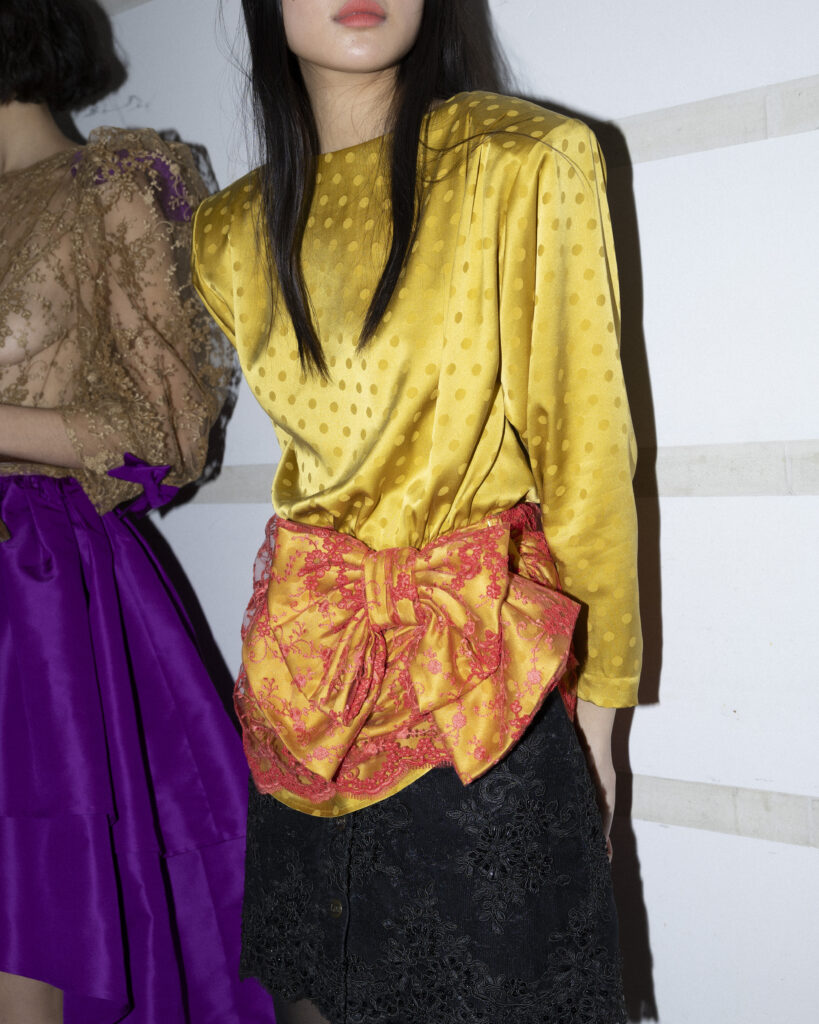
Karolin Lysén Wins NK Young Talent by Beckmans with a Celebration of Modern Femininity When Karolin Lysén was named this year’s NK Young Talent, it marked the culmination of a lifelong passion for fashion, craftsmanship and femininity. Drawing inspiration from childhood fantasies of bows, glitter and ruffles, the Beckmans graduate transformed nostalgic symbols into a confident celebration of womanhood, earning recognition for a collection that combines couture-inspired construction with a deeply personal story. Ulrika Lindqvist: Congratulations on winning the NK Young Talent award, what are your initial feelings? Karolin Lysén: I was completely shocked. This was something I really wanted to win, but I didn’t dare let myself hope for it – I didn’t want to think too highly of myself. So when it happened it just felt incredibly meaningful. Getting recognition for all the hard work, and knowing that something I created and truly stand behind resonated with someone else – that feeling was just extraordinary. UL: Please tell me a bit of your backstory, what did you study or work with before getting accepted to Beckmans? KL: I’ve wanted to be a designer ever since I was a child. As a child I was always drawing, and my grandmother taught me to sew – we made clothes for my Barbies together, and that’s really where it all started. But over the years I lost sight of that dream and tried to follow a more academic path. It wasn’t until I started making disco dance costumes that the feeling came back, and I understood that this was what I really wanted to do. At 23 I made the decision to go all in – I moved from Östersund to Stockholm, started at Tillskärarakademin and then continued at Beckmans. UL: What initially drew you to the fashion industry? KL: It was never really a conscious choice – it was more like something I kept coming back to no matter what. The joy of creating clothes, the craft behind a well-constructed garment, the way what you wear can make you feel. I’ve always been drawn to couture and the kind of detailed, considered construction that makes something truly extraordinary. That’s what pulls me in. UL: What is your inspiration behind your designs and this collection in particular? KL: This collection starts in my childhood. I used to draw myself in big princess dresses filled with bows, glitter and ruffles – a fantasy world where everything could be beautiful, playful and free. As a child my dream was to be a princess. Today my dream is to be a confident woman, and it’s in that shift that the whole collection lives. I took those childhood elements – the bow, the glitter, the ruffle – and gave them a new role. They’re no longer decorations from a girlhood dream, but design elements that highlight the feminine silhouette and put the woman’s body at the centre. UL: Can you share some insights into your creative process? KL: This is honestly the hardest question for me to answer, because for me it’s almost entirely instinct. The process always starts with finding a concept – and I can’t tell you when it comes or how it comes. What I can say is that my inspiration tends to come from things that bring me joy. A film I love, a song, an experience – or in this case, my childhood. But wherever it comes from, I need to feel genuinely excited by it. When I find a concept I really connect with, images start forming in my head almost immediately. Then I sketch. A lot. The goal is to find that first silhouette that feels right for the concept – and when I find it, I pin it to the wall. That sketch becomes my anchor, and I keep sketching from there. I can generate an enormous amount of drawings at that stage, and most of them get thrown away. I repeat that process until I know what I actually want to create. After that comes the material – and a lot of that evolves throughout the process. Things keep happening and changing all the way through the toile stage. It’s never fully resolved until it’s done. UL: What are your core values as a designer? KL: Craft, femininity and confidence. I want to create clothes that feel considered and well-made, that celebrate the female silhouette, and that give the woman wearing them a sense of ownership – over how she looks and how she feels. Clothes that let her take up space. UL: What was the biggest challenge creating this collection? KL: Time, without a doubt. I felt like I was fighting the clock the entire way through. And then there was the moment I ran out of fabric – I’d bought deadstock silk taffeta and it simply ran out before I was finished. I went back to the supplier and they had a tiny piece left, and it was exactly – exactly – enough to complete the collection.  UL: What can we expect from you in the near future? KL: I live very much in the present, and right now I’m exactly where I want to be – working as a junior designer at H&M, being part of a team and learning every day. I love the collaborative side of fashion and that’s what I’m focused on right now. As for what comes next, I’m keeping an open mind. But I’m not in a rush – I’m happy to be here. photography Mathias Nordgren

Fashion Articles

Breaking It Up with Roméo Stedman Mouras​

  Raised in the southwest of France, the French-American designer Roméo Stedman Mouras learned early that nothing is ever truly fixed. Transformation of land, of identity, of material — became both a philosophy and a practice. Working exclusively with discarded textiles and deadstock, his designs move beyond sustainability as a trend, positioning upcycling as a political, emotional, and almost spiritual act of reclamation.   Elsa Chagot: To begin, could you tell us a bit about your background and how your relationship with fashion first developed? Roméo Stedman Mouras: I’m French-American. I grew up in the southwest of France, on a farm, raised by my mother, an American artist, feminist, and someone who never really fit into systems comfortably. I was surrounded by animals, by land, by things that were constantly changing. You see birth, decay, repair, seasons shifting. Nothing is fixed. I think that understanding of transformation came very early for me. Fashion wasn’t something I decided on. It happened naturally. I used to cut into existing clothes, mostly my mother’s, which she didn’t always appreciate. I wasn’t trying to destroy them. I just didn’t see them as finished. I wanted to move things, reshape them, make them feel like mine. Before I knew what design was, I understood alteration. I understood that nothing is sacred in its original form.      EC: Having been raised in a creative and politically aware environment, in what ways has your upbringing shaped the way you view clothing, expression, and the role of a designer? RSM: Growing up in a creative and politically aware environment made it impossible for me to see clothing as neutral or purely a product. Environmental protection is fundamental to the way I work. I was raised in a place that felt protected, full of life — animals, land, ecosystems that felt almost sacred. Being surrounded by that kind of abundance creates a sense of responsibility. Using upcycled materials and deadstock isn’t a trend for me; it’s simply the only way that makes sense. It’s my way of giving something back through the act of creating. At the same time, I grew up aware of inequalities and social imbalances. When you witness injustice early on, it shapes you permanently. It creates a desire for protection, for community, for freedom of expression. As a designer, I don’t see my role as just producing garments. I see it as creating space — space for individuality, and space for those who exist and resist outside-imposed norms.    EC: Can you walk us through your creative process, from the first encounter with a material to the moment a piece is complete? How does work typically begin for you? RSM: I usually begin with research, both conceptual and historical, to build a framework around the narrative of the collection. Once that direction feels clear, I move into sourcing materials. I collect extensively, and the origin of each textile influences how I approach it. If it’s a deadstock roll, I might begin more structurally, work-ing with pattern cutting first.    If it’s a found or donated textile, I often respond more intuitively, letting its existing condition guide the process. Technically, I tend to start with a base pattern, a foundation, and then build onto it through draping and stitching. I work a lot through layering, surface manipulation, and what could be described as a habillage technique, sculpting di-rectly on a body.   EC: When you start a new piece, what usually comes first, the material, an emotion, a memory, or a concept — and how do these elements interfere throughout your process? RSM: It’s all quite spiritual, and I intentionally allow it to remain that way. The only fixed element at the beginning is the narrative — the story I write before starting a collection. That story becomes the spine. From there, I start breaking it down piece by piece, and that’s when memories, historical references, and personal associations begin to surface. The fabric doesn’t usually change the original concept, but it extends it. It adds nuance, texture, sometimes tension. It can deepen the emotional tone of a piece without redirecting it entirely. All of these elements coexist in a kind of melting pot. They don’t operate in isolation — and neither do I. My work is deeply shaped by the people around me, my community, my family. Creation, for me, is never solitary. We are constantly influencing one another. My role is to let that chaos exist, but to anchor it visually, so the garment feels intentional rather than abstract. I try not to control it completely; I try to translate it. EC: “A THEFT OF ESSENCE” could be described as being built from an act of emotional archaeology. What does that phrase mean to you personally? RSM: Indeed, that collection is about what happens when something intrinsic to you is slowly taken, not violently all at once, but through expectation, conformity and normalisation. It wasn’t about inventing something new; it’s about excavating what was always there, but buried under social structures, control, and inherited silence. The characters in the manifesto embody that tension — the stillness of submission, the suffocation of imposed identity, and the moment when something inside begins to resist. Archaeology requires care, patience, and confrontation. You uncover fragments, damaged pieces, scars. You don’t restore them to perfection — you preserve their history. In the collection, repair is not hidden. I wanted it to be ceremonial, visible, almost ritualistic, becoming proof of survival rather than an attempt to erase damage. To me, it is about the process of reclaiming one’s essence through community, art, and expressionism — not by denying what has hurt you, but by transforming it into something visible, something defiant, something shared.   EC: The pieces were created in collaboration with your grandmother. How did this intergenerational exchange influence the work, both aesthetically and emotionally? RSM: The intergenerational exchange was both aesthetic and deeply emotional. The work itself is very political, and I found myself in awe of my grandmother — not only of her technical precision, but of her willingness to involve herself so

Fashion Articles

UNIQLO × Cecilie Bahnsen: Shapes of Poetry, Worn Every Day

UNIQLO × Cecilie Bahnsen: Shapes of Poetry, Worn Every Day In Cecilie Bahnsen’s world, flowers aren’t just motifs, they’re a symbol of personal memories spent pressing blooms with her sister at their seaside house and childhood afternoons with her grandmother. The symbolistic motif has now moved into textiles; Utilising the juxtaposition of the personal with the universal, she has transformed a collection that both feels as intimate as a keepsake and as easy as a T‑shirt. That’s the paradox Bahnsen has long pursued: couture-level emotion with everyday wearability. Now, in collaboration with UNIQLO, that idea of “everyday couture,” as Uniqlo’s Yukihiro Katsuta puts it – meets LifeWear’s clarity of purpose. The seed for the collaboration was planted seven years ago, when a chance seating at the opening of Uniqlo’s first Copenhagen store brought Bahnsen and Yukihiro together. Katsuta remembers her saying she’d started her label just a few years earlier and he kept watching. What took time to mature wasn’t a moodboard match but a deeper alignment and a shared belief that clothes should serve the person, not the other way around. “Clothes shouldn’t have an attitude, so that the person creates individuality,” Katsuta says. “Different price point, different design, but the philosophy is the same.” Bahnsen’s studio is known for sculptural volume, soft light, and a devotion to craft that sits between couture and ready-to-wear. Translating that into LifeWear demanded both restraint and invention. “We chose to make everything in jersey,” she explains. “It drapes more than we normally use, but we still wanted ruffles, ruching, and movement.” The teams co-engineered fabrics like a gingham jersey with matelassé texture 3D to the eye, soft and stretching in motion preserving structure without losing ease. For Bahnsen, those “small codes” matter. Detail becomes identity: a precise flower, a line of shirring, a sleeve that lifts air. “It doesn’t take more than two small flowers on a T‑shirt, and a good jersey to make it feel personal,” she says. Working within constraints sharpened that sense of authorship: “Making a runway collection lets you do everything. Here, restraint made me more aware of what makes a piece feel Cecilie and how to carry that DNA, intact, into this Uniqlo collection.” New Collection- Shapes of Poetry and Everyday Couture, For All Ages The collection’s theme, “Shapes of Poetry,” is both a method and a statement about how the pieces are meant to live on the body and evolve over time. It’s about ideas coming together until everything feels right “It’s like when it clicks and suddenly everything makes sense,” Bahnsen says. At its core, the collection is designed for longevity and versatility: pieces are meant to be worn, restyled, and reinterpreted across different seasons rather than tied to a single moment. In the campaign, this spirit is reflected in a shared, collaborative approach with teammates layering denim under airy dresses and moving garments fluidly between looks. The campaign, shot by twin photographers Louise and Maria Thornfeldt on Shodoshima, captures this same sensibility, where the shifting sea light gives the fabrics a sense of rhythm and continuity, like punctuation across changing scenes. If Copenhagen gives Bahnsen movement- “as a Scandinavian woman, you want to live in your clothes, not be owned by them”- Japan gives continuity. It is one of her label’s largest markets; she has visited nine times since founding the brand. She admires how Uniqlo customers recombine pieces across seasons, building personal uniforms from modular parts. Here, the Venn diagram overlaps: Scandinavian ease, Japanese simplicity, and a shared dedication to craft in textiles, ceramics, furniture, and fashion. The collection normally centers around womenswear but for the first time, a children’s line has been introduced. The same signatures are featured, volume, florals, introducing a new playfulness, inspired by childlike wonder and inviting rituals of mother daughter dressing . That matters to Bahnsen, now a mother, who talks about holding onto “the joy you have as a kid, the first time you draw, the first time a dress feels like magic.” Katsuta likens great collaborations to an Iron Chef challenge: you hand the designer a new ingredient – here, jersey and watch their mastery adapt. “Her direction is so detailed and tricky,” he says with admiration, recalling multiple fittings to bring ruching, tension, and comfort into sync. The reward is dual: LifeWear that breathes with emotion, and a gateway for new fans to discover Bahnsen’s world. Walk into a Uniqlo store and you’ll see the subtle details that shift a staple into something felt: a sleeve that swells like a tide, a floral that reads as a pressed memory, a skirt that moves with Copenhagen’s easy, sunlit pace.“Small things bring big changes,” Katsuta remarked. It could be the collection’s thesis. In the end, what feels most personal becomes the most shareable: a pressed anemone for spring, a tee with two flowers, the quiet moment when, as Bahnsen says, the pin drops and you realise you can wear it every day. The collection will launch globally on Thursday, 28 May. COPENHAGEN GUIDE- THE CECILE X UNIQLO WAY  Design & ShoppingCecilie Bahnsen Boutique The designer’s poetic universe.  LOUISE ROE GalleryScandinavian design in a serene setting. UNIQLO StrogetUniqlo’s Copenhagen Flagship. TableauSculptural florals and curated design objects. CultureNya Carlsberg GlyptotekArt Museum set around a lush winter garden. Kunsthal CharlottenborgContemporary art in a historic setting.  Louisiana Museum of Modern ArtModern art by the sea, where architecture, landscape, and exhibitions flow together. CafeAtelier SeptemberCalm, sunlit café with seasonal, minimal dishes . RestaurantsEsmée Lush, design – led brasserie with a vibrant atmosphere. Locale 21Modern European dining with a relaxed, central feel. Pluto Refined sharing plates in an intimate setting. Stay1 HotelNature-led, sustainable design with Scandinavian calm in the city centre. Villa CopenhagenThe grand former post office turned into a conscious luxury hotel by Central Station.

Fashion Articles

Hannah Blitz Heyman Lets the Silver Decide

Hannah Blitz Heyman Lets the Silver Decide Text by Natalia Muntean At fifteen, Hannah Blitz Heyman stood at an archaeological site and watched a guide pull a golden earring from the earth. That moment has stayed with her ever since. Now working from Stockholm, Blitz Heyman makes jewellery that takes the long view of metal: from ore in a mountain to something worn close to the body, processed as little as possible along the way. A graduate of CRAFT! at Konstfack, her practice sits at the intersection of jewellery and object-making, the work resisting anything too smooth or too resolved. NM: What is the first piece of jewellery you remember falling in love with?HBH: I visited an archaeological site when I was fifteen, and after digging for a while with no success, the guide showed us some objects that they’d found. After looking at some cracked pots, he pulled up a shiny golden earring with a tiny winged figure on it. The earring was shiny and had marks, but it was still an earring. The time passed between the maker and me was over two thousand years, but the metal remained. This notion has thrilled me ever since. NM: And separately, do you remember the first thing you made that felt like yours, like the beginning of a language you recognised?HBH: Definitely! It’s a ring made from castings of my house key. At that point, I had been a goldsmith apprentice for a few years, meaning slow processes and lots of patience. Casting jewellery felt so liberating. It was fast and allowed more shapes to take form. The ring is super sloppy, but reminds me of the importance of exploration for my making.  NM: You say art school is where your aesthetic found its foundation, but that before that, it was hard to know where your work fit. What did “not fitting” feel like – was it the work itself, or the context, or both? And what shifted?HBH: The shift, I think, came from not working for someone else. Before art school, my time as an apprentice meant mainly producing work for my teacher and designing things reminiscent of hers. It took a while to figure out how to use the same skills for myself.  To some extent, I think I’ll always feel like I don’t fit in. It’s more of a state of mind rather than a factual reality. In the beginning, it was that my idea didn’t come across in the finished piece, and I had to develop tools of communication within my making. The feeling can be aspirational instead of defeat, because now I think that these tools are part of the Blitz Heyman expression. There will always be people who don’t connect to what I do, but I try to focus on the ones who like what I create and find spaces together with them.  NM: You describe your process as intuitive – do you ever lose a piece to the process, something that slipped away because you followed an idea?HBH: Absolutely! But I try not to look at it as something I lost. It’s more of a stepping stone to arrive somewhere else. It’s never been any piece that I’ve mourned the loss of. The sense of being in a flow state while I work feels too good, and the initial idea still exists.  Photos by Vasilissa Sadikova NM: The friendship heart necklace came from splitting a pendant at a friend’s request, almost by accident. What is it about friendship specifically, rather than romantic love or family, that feels worth marking with an object?HBH: I never meant to call it a friendship necklace. Other people have given it that name. In all of my notes, the necklace is called </3 necklace. This makes more sense to me and also opens up the idea that the necklace is for more than friendship: just any type of relationship with another person you feel connected to. But it’s lovely to make something that people share with a friend, since there are no big life events that celebrate friendship comparable to weddings. NM: Sand casting and silver seem central to your practice, but is there a material you haven’t worked with yet that you think about?HBH: I would love to work with stones. But I can’t decide if I want to sculpt large ones or if I should study to become a geologist. Hopefully, there’s time for both! NM: You talk about the wish that whoever wears a Blitz Heyman piece feels like an enhanced version of themselves, but who do you picture when you imagine that person?HBH: I’m so thankful for every person who likes what I do and is able to buy a piece. Everyone has their own reason for buying a piece made by me, so I don’t have a specific person in mind. Blitz Heyman was born organically from my making and continues to evolve together with the people who wear my jewellery.   NM: Once something is made and sold or given away, do you stay curious about where it goes and what it accumulates? Or does the piece become separate from you at a certain point? HBH: Being a jewellery lover, I know how much information can exist within a tiny object. And the amazing thing with working with precious metals is that they’ll probably outlive me. So when a piece leaves my bench, I’m like ”Bon voyage” and filled with excitement for what is to come.  Jewellery that people buy for themselves might be my favourite thing to make. They usually symbolise a big thing for that person. I’m working on a ring to celebrate a graduation that I’m super excited about! Of course, I wonder where a piece of mine ends up, but I can’t allow myself to be that sentimental about my work. Custom pieces never belong to me because the intended wearer is part of the process from the get-go. But then other pieces are harder to let go of. Usually, it’s the ones that

Fashion Articles

Kappahl Celebrates Modern Families with a Fresh Take on “We Are Family”

Kappahl Celebrates Modern Families with a Fresh Take on “We Are Family” What does “family” look like today? For Kappahl, the answer is that it does not have just one shape. In its new spring campaign, the Swedish fashion brand turns its focus to the many ways people define family in modern life, whether that is through blood, friendship, or the bonds we choose along the way. It is a natural evolution for a company that has spent more than 70 years dressing generations, but this time, the storytelling feels more personal than ever. At the heart of the campaign is a reimagined version of the iconic “We Are Family,” performed by the Swedish “dream pop duo” Genom Natten. The new rendition keeps the warmth and familiarity of the original while introducing a softer, contemporary tone, mirroring the campaign’s message that while the idea of family endures, its expression continues to evolve. Visually, the campaign plays with contrast. Classic family portrait setups are reinterpreted to include blended families, close knit friends, single parents, siblings, and chosen communities. The effect is both nostalgic and quietly progressive, an acknowledgment that tradition and change can coexist.   “For us, family is not about what it looks like, but what it means,” says Andrea Stenhamre, Kappahl’s Marketing Director. “It is about the relationships that shape us, and those are the ones we dress.” That philosophy carries through to the collection itself. The Spring 2026 line leans into versatility, with timeless silhouettes, easy layering pieces, and durable materials designed for everyday life. These are not statement pieces meant for a single moment. They are clothes meant to live in, to share, and perhaps even to pass on. While Kappahl has long focused on practicality, clothing entire families across generations, the brand now places equal weight on identity and self expression. The goal is to create garments that feel relevant not just to individuals, but to the relationships that define their lives. “In a changing world, we want to stand for something that feels safe, human, and inclusive,” Stenhamre adds. “The collection is designed to work in real lives and real relationships, no matter what a family looks like.” With this campaign, Kappahl is not just showcasing clothes. It is telling a story many people recognize. Family is not a fixed idea. It is something we create, nurture, and carry with us, in all its forms.

Scroll to Top