Stockholm Consolidates Its Role as the Nordic Fashion Hub with Fashion Week Trade
Fashion Week Trade returns to Stockholm Fashion District from 10 to 14 August, bringing together over 700 brands, thousands of buyers, a Ukrainian fashion delegation, and a conference on AI and new business models. Hosted at Stockholm Fashion District, this year’s Fashion Week Trade takes place from August 10 until August 14, welcoming over 700 Swedish and international brands alongside thousands of buyers, distributors and decision-makers. Spanning 21,000 square metres across Stockholm Showroom, Stockholm Shoe House and Nacka Strandsmässan’s two halls, in partnership with Alecta Fastigheter, the event positions Stockholm as the primary trade gateway to the Nordic market.
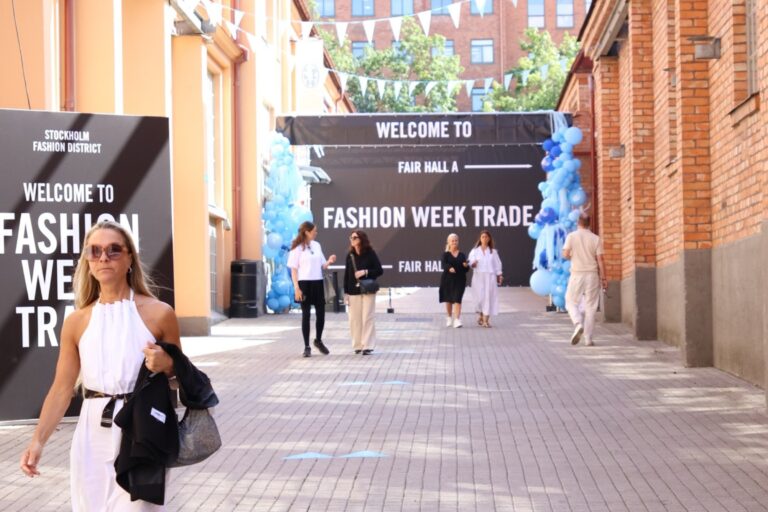
Among the brands showing are Björn Borg, GANT, Jennifer Blom, and Rock and Blue, meeting buyers from independent retailers, department stores, and e-commerce platforms. Timberland and Ilse Jacobsen are also opening permanent showrooms in the district during the week. Sweden’s fashion industry generates approximately 178 billion kronor annually, employs 41,000 people, and exports fashion worth 41 billion kronor, according to the 2025 Swedish Fashion report.

“Sweden is a fashion nation with real weight. We export fashion to the whole world, and at the same time, more and more international players are choosing Stockholm as their entry point to the Nordic market,” says Helena Waker, CEO, Trade Partners Sweden and Stockholm Fashion District.
For the first time, a selection of Ukrainian fashion companies will participate in Fashion Week Trade, with the aim of building new business connections and raising the profile of Ukraine’s fashion industry internationally. The initiative frames trade as a tool for resilience and reconstruction alongside commercial opportunity. Sweden’s Minister for Foreign Trade and Aid, Benjamin Dousa, will visit the event during the week as part of the government’s work with cultural and creative industries.
Running parallel to the trade fair is the Transformation Conference, organised by Scandinavian Mind, bringing together more than 150 decision-makers from the fashion and technology sectors to discuss AI, digitalisation, circular solutions, and new business models. “For the fashion industry, the task is to translate AI, digitalisation, and circular solutions into concrete business outcomes,” says Waker. “The Swedish fashion industry can and wants to transition, but it requires fair conditions, coordinated policy, and free trade on equal terms.”