Art

Art

“Democracy as Myth”: Lebohang Kganye on Stories, Homes, and Hidden Promises

“Democracy as Myth”: Lebohang Kganye on Stories, Homes, and Hidden Promises text Jeffe Lingier On March 6, Fotografiska Stockholm opened Le Sale ka Kgotso, a new installation created for the museum by South African artist Lebohang Kganye. The exhibition transforms the space into an immersive house-like environment where photography, sculpture, and architecture come together. At its centre are full-scale reconstructions of RDP houses, built as part of South Africa’s post-apartheid housing program introduced in 1994. For many, these homes came to symbolise hope and a new beginning. Through images, objects, oral histories, and folktales, Kganye explores the home as both a place of intimacy and a space shaped by memory and history.    photography Saskia Clarke Jeffe Lingier : The title Le Sale ka Kgotso carries a double meaning. What does it refer to? Lebohang Kganye : The phrase comes from Sesotho and roughly translates to “stay in peace.” Traditionally it is something people say when leaving someone’s home – almost like a farewell blessing. But I once heard a story from my aunt that completely changed how I understood the phrase. According to some beliefs, when someone says Le Sale ka Kgotso, they might actually be leaving behind an evil spirit in the house. When the person who stays replies “thank you,” they unknowingly accept it. That idea fascinated me – how a small shift in language can completely transform meaning. It became a metaphor for the exhibition. Sometimes what appears hopeful or peaceful on the surface can hide something much more complex underneath.   Why did you choose RDP houses as the central element of the installation? RDP houses were introduced in 1994 as part of a housing program meant to address the inequalities created by apartheid. Across South Africa they became strong symbols of hope and the promise of a new life.For me the house became a powerful metaphor. A home is a deeply personal space where memories, relationships and identities are formed. But it is also shaped by political structures and social realities. Who has access to housing and land is never neutral. By recreating these houses in the exhibition, visitors can physically move through that environment. The house becomes a space where personal histories and national narratives meet. photography Lebohang Kganye JL : Why did you choose RDP houses as the central element of the installation? LK : RDP houses were introduced in 1994 as part of a housing program meant to address the inequalities created by apartheid. Across South Africa they became strong symbols of hope and the promise of a new life.For me the house became a powerful metaphor. A home is a deeply personal space where memories, relationships and identities are formed. But it is also shaped by political structures and social realities. Who has access to housing and land is never neutral. By recreating these houses in the exhibition, visitors can physically move through that environment. The house becomes a space where personal histories and national narratives meet.   JL : Your work often begins with family archives and photographs. How did that process start? LK : It began after my mother passed away in 2010. A few years later, while studying photography in Johannesburg, I started looking through our family photo albums. I noticed that many photographs of my mother were taken when she was around the same age that I was at that moment. That created a strange sense of connection across time. Many of the clothes she wore in those photographs were still in her wardrobe, so I began revisiting the places where the images had been taken and restaging them, wearing the same clothes and recreating the scenes. That personal project eventually grew into a much larger exploration of my family history. I started tracing my surname and travelled across South Africa to meet relatives I had never met before, collecting photographs and recording their stories. Through that research I also realised that many traditional family histories focus primarily on the male lineage. In South African culture, praise poetry connected to surnames often traces the line of male ancestors. But many of the stories I was hearing came from the women in my family, especially my grandmother. They were the ones who preserved the memories, told the stories and kept the family history alive. Because of that, a large part of my work is about bringing those women back into the narrative. Their stories were often overlooked in official histories, but they are essential to understanding the past. photography Andile Buka JL : If you had to describe the exhibition in one sentence, what would it be? LK : Maybe unfulfilled promises. Or perhaps democracy as myth. For me the work reflects the tension between what societies promise and what people actually experience. After apartheid ended, South Africans were promised democracy, equality and housing. Those promises carried enormous hope, but over time people began to question whether they were truly fulfilled. The exhibition explores that gap between expectation and reality, and how those promises continue to shape the present.   JL : What do you hope visitors experience when they walk through the exhibition? LK : I hope people take their time in the space and allow themselves to enter the world the installation creates. On one level it is simply about walking through a house and encountering images and stories. But beyond that I hope it encourages reflection about the stories we inherit, the promises societies make, and how those narratives shape the way we imagine the future. If visitors leave the exhibition asking questions about their own homes, their histories and the narratives that shape their lives, then the work has done what it needed to do.    Le Sale ka Kgotso is on view at Fotografiska Stockholm from March 6 until October 18, 2026  

Art, Uncategorized

Gallerist Georgina Pound Honors Mexico’s Surrealist Female Artists

Gallerist Georgina Pound Honors Mexico’s Surrealist Female Artists text and photography Sanna Fried Mexico City Art Week 2026 was a beautiful and eventful journey of art, parties, earthquakes, and bad phone service.  Much to my delight, this year turned out to be the year of the figurative painters, with women leading the way. It was also the year to celebrate the female historical surrealist painters of Mexico City, notably Leonora Carrington, whose work I saw presented in no fewer than six galleries throughout the week.  A woman who has also been shaped by this wave of female painters sweeping across Mexico is the British gallerist Georgina Pounds. For her, the female surrealist artists, with Leonora Carrington at the forefront, have become a source of inspiration that she has carried forward and developed into a contemporary gallery rooted in Mexico’s cultural past. One of my highlights from Mexico City Art Week was meeting the ever-so-inspiring and energetic Georgina Pounds.  Mexico City is in a moment of transformation, yet Roma Norte, the area where Georgina Pound Gallery is located, continues to hold a quiet connection to its past. The Colonia’s architecture is evolving and adapting to new uses and rhythms, but when we look closely, it remains grounded in a city shaped as much by memory as by development.  When Pounds was given the opportunity to open a gallery at Casa Lamm, a large and beautiful historic building, built in 1911 as a private palace, she knew it was the right time. She had been dreaming of a project that was personal and aligned with her own history.  She decided to keep the rooms’ original names:  Frida Kahlo, Nahui Ollin, Marguerite Yourcenar and Luis Cernuda, each carrying their own symbolic presence into the new gallery. Pound also preserved the building’s original 1911 features: high ceilings, moulded detailing, and herringbone wooden floors, and in many ways, its usage and artist memory. Casa Lamm is a remarkable building, rich with history and culture. For decades, it functioned as a cultural centre, housing a library, classrooms, and a restaurant. It is said that this restaurant was a favourite of the artist Leonora Carrington.  Pounds holds a deep admiration for the women surrealist painters who lived and worked in Mexico during the first half of the 20th century. Pounds explains that the story of Leonora’s favourite restaurant being inside Casa Lamm became a meaningful and symbolic sign for Georgina to take the leap and establish her own space right there, where Carrington had her beloved meals.  During the first half of the 20th century, Mexico City became a creative hub and a sanctuary where many women felt free. Pounds sees clear parallels between the artistic circles that gathered in Mexico at that time and today’s new wave of artists and cultural practitioners. For her, women surrealists like Leonora Carrington, Leonor Fini, Remedios Varo, Dorothea Tanning, and the support they offered one another remain a key source of inspiration.  Pounds believes there are clear parallels in the connections she sees between the artistic circles that gathered in Mexico during that time and the new wave of artists and cultural practitioners from Europe and America arriving in Mexico City today. Her vision for the gallery at Casa Lamm is to reflect that same spirit of openness and artistic community, as well as to echo the building’s past as a cultural centre. She wants the gallery to be a living, welcoming space filled with movement, gatherings, and events, such as the free guided meditation she organised on International Women’s Day.   Before moving to Mexico City, eight years ago, Pounds studied architecture at The Cass in London. She believes that having an eye for architecture is imperative in Mexico City, a city where it blends seamlessly and constantly with the visual arts. The gallery’s first show at Casa Lamm, featuring British painter Vanessa Raw, solidified this idea, with Raw’s romantic and classic work speaking intimately with the architecture of the space. Spanning three rooms, Raw’s large-scale oil paintings featuring landscapes, animal or female nudes are a blend of Greek mythology, Mexican traditions and the natural world, oozing poetry, sensuality and vulnerability. Simultaneously, Casa Lamm is hosting another show, which brings together works by young painters and sculptors from Europe and Mexico, such as María Kalach, Fredrik Nystrup Larsen and Tali Lennox, with artists connected to the historical surrealist movement in Mexico City. Especially touching, Kati Horna’s photography features Carrington and serves as a reminder of the importance of sisterhood and friendship between artists. “I grew up in Sussex, in the same village where the poet and surrealist patron sir Edward James grew up”  Pounds explains with pride in her voice. James specifically supported one artist… guess who- Leonora Carrington. Perhaps it is because of Georgina’s upbringing that she has developed such a strong, lifelong connection to surrealism. Georgina’s love for Carrington’s work, an interest cultivated throughout her upbringing, became the catalyst for discovering another important figure of the Surrealist movement – Sofia Bassi. Bassi, unlike many of the artists in Mexico City’s Surrealist movement, was Mexican. Her paintings carry many layers and a sense of darkness, with many of them being produced while she was imprisoned, after being convicted of murdering her daughter’s husband.  Sofía Bassi and Kati Horna were close friends, and now in April, Georgina Pound Gallery will present works by both artists. The show will bring together voices, histories, and relationships of women who shaped Mexico’s Surrealist movement and today’s art scene.  In many ways, Georgina Pound Gallery feels like part of a larger moment in Mexico City, where history, identity, and new artistic voices are being woven together. In a city constantly shifting between past and future, Pound seems to move effortlessly between both. Her gallery is not just a space for art, but a continuation of something that has always existed here – a quiet thread of connection between artists, histories, and women who found their freedom in Mexico City. Looking back at a

Art, Uncategorized

Sheree Hovsepian is (still) Becoming

Sheree Hovsepian is (still) becoming text Natalia Muntean photography Saskia Clarke  “I never considered myself a photographer,” Sheree Hovsepian tells me. The camera is just one of the tools. Photographs, hand-shaped ceramics, string, bronze, she brings them together until they become something they weren’t on their own. Becoming is Hovsepian’s first exhibition at Carling Dalenson Gallery in Stockholm, and its title names what her practice has always been about: not arrival, but the ongoing act of taking shape.   Natalia Muntean: The exhibition is called Becoming. Can you tell me a bit more about that choice and how it reflects the body of work you’re presenting? Sheree Hovsepian: It’s from a quote by Simone de Beauvoir. “One is not born, but rather becomes a woman.” That act of transition, of being in flux, of growing into something else, felt very pertinent to my work. Because of the nature of assemblage, a few things put together that become something else, and because the core of the work is very feminine, I thought it really resonated with these pieces, with the collages in particular.   NM: Did you make new work for this exhibition, or was there a selection process?SH: All of the collages are unique, even though I reuse photographs at times. Because I’m making all of the ceramic shapes by hand, everything is different; they’re all one-of-a-kind pieces. This is from a body of work I’ve been developing for a few years. Similar work was included in the Venice Biennale four years ago. So it’s an ongoing series.The sculptures are relatively new. The first editions were made for a show I had in New York this past May. They look great in this gallery, and I’m so glad we paired them with the collages.   NM: Can you tell me a little about your process? What does a day in your studio look like? Do you go in with a plan, or do you allow yourself just to explore?SH: Lately, I’ve been fortunate enough to be working towards shows. When I’m working on the collages, I make the different pieces separately. I use my sister as a model. When she comes to visit, I’ll shoot her in the studio and make many images of her. Then I’ll choose which ones to print and make many prints from those. With the ceramics, it’s similar. I’ll make a lot of them, bring them to the studio, and then I have my string and other materials there too. When it’s time to put everything together, it’s really about play. Very hands-on, moving things around, changing them, seeing what this looks like next to that. It’s actually quite antithetical to photography in a way, but I really love this additive process of bringing things together. For me, making the collages is a bit like the idea of an exquisite corpse: building a body, assembling a figure out of disparate parts.   NM: How did you arrive at this place in your practice, working across string, photography, ceramics and sculpture?SH: I studied photography in college and grad school; that was my focus. But I never really considered myself a photographer in the traditional sense, someone who goes out into the world and takes pictures, which feels like a very subtractive process. My sensibility has always been more additive, more akin to painting or sculpture, because it’s about building something. Photography just became one of the tools I use. With ceramics, I was drawn to it because I love working with my hands, and I love the idea of making something that carries a residue, a residual effect of having been touched. There are also some interesting parallels between ceramics and photography: both can take an impression, both go through a chemical process, and both carry a threat of failure. You don’t know what you’re going to get. I’m talking about analogue photography, which is what I use for this work. I use silver gelatin paper specifically: the weight of it, the depth, the tonal range, the drama. I love the theatrical nature of it, the romance of photographing my sister in the studio, this kind of intimate dialogue between us that feels like a dance, a choreographed sequence.   NM: Why your sister specifically? You’re both the observer and the observed, in a way.SH: When you’re working with a body, so many questions come into play: whose body is it, where did you find this body, what colour is it, what’s the gender? But when you’re talking about yourself, all of that falls away. You can just focus on the self, on your own subjectivity. These works are really about how I interpret life. So it makes sense to think of them as a kind of self-portrait. I use my sister because she’s physically very similar to me. It allows me to be behind the camera and in front of it at the same time. It’s also a mediated process. It’s easier to look at her in the negatives than it would be to look at myself, which I’ve tried and rejected. You’re more critical of yourself. Using her gives me a little more freedom. And I always joke that it’s the only time she actually listens to me, when I’m directing her in front of the camera. It becomes a very special time between us.   NM: You moved from Iran to the Midwest when you were very young. How has that shaped your work and the subjects you return to?SH: I think very much, though not directly, more indirectly. Being someone in the diaspora made me very aware of my own physical presence, my physicality, the way I move through space. I grew up in the Midwest, where I lived was very homogenous, very white. There weren’t many people of colour around me when I was young, so I could always feel my difference. I think that created a hypersensitivity around my body and my presence and how I existed in that space.   NM: The half-moon shape appears throughout your work. Is that connected to

Art

The Blooming: Art and Botany at Waldemarsudde

The Blooming: Art and Botany at Waldemarsudde An interview with Karin Sidén, museum director of Waldemarsudde, on an exhibition and book that explores the relationship between art, flowers, and the cultivated landscape. Ulrika Lindqvist: Can you tell us how the idea for the exhibition came about? Karin Sidén: The exhibition The Blooming: Art and Botany is an identity project for Prince Eugen’s Waldemarsudde. Its point of departure is the relationship between art and flowering at Waldemarsudde, as well as the museum’s historic park and garden, which includes its own gardening practice and in house florist. Waldemarsudde has always been associated with both art and flowering, indoors and outdoors, but the idea behind this exhibition, which emerged several years ago, is to further highlight these connections and to expand the subject from the site specific to also include themes such as the artist’s garden as a phenomenon, flowers in relation to symbolism, the role of art in the development of botany as a science, and flowers as decoration in applied arts and as sensuous inspiration for music and poetry. UL: Could you tell us about Waldemarsudde’s connection to flowers and plant life? KS: Prince Eugen’s Waldemarsudde is a total work of art in which art, architecture, nature, park, and garden come together as a unified whole. This total work was created by the artist and collector Prince Eugen, who was also responsible for the design of the garden’s floral rooms, plantings, terraces, and the planting of trees in dialogue with the surrounding landscape, as well as with both older and newer buildings, the latter designed by the architect Ferdinand Boberg in close collaboration with Prince Eugen. Eugen acquired the Waldemarsudde estate in 1899 and immediately began transforming the site, including the garden, and he had a greenhouse for cultivating flowers built as early as 1902, before the main building was constructed between 1903 and 1905. UL: How did you decide on what to include in the exhibition, and how did the collection of the works come about? KS: The curators of The Blooming: Art and Botany are myself and the museum’s exhibition coordinator Catrin Lundeberg. We collaborated with the museum’s gardener, florist, and archivist, as well as with fifteen contemporary artists and lenders including major public art museums, other institutions, and private collectors in Sweden and abroad. The selection follows several themes: the artist’s garden at Waldemarsudde and as a broader phenomenon, floral symbolism past and present, art and botany as a science, and flowers as decoration, aesthetics, and sensuous experience. The exhibition presents historical and contemporary art, applied arts, and design from the sixteenth century to today side by side, with close to two hundred works in total.   Prince Eugen at Waldemarsudde. Image courtesy of Waldemarsudde  UL: How did you work to update the book Prince Eugen’s World of Flowers twelve years after its first release? KS: In connection with the exhibition, Waldemarsudde has produced an extensive publication of more than three hundred pages, richly illustrated and featuring essays by leading experts in art history, book arts, botany as a science, and garden history. There are also earlier publications, including a book on the garden at Waldemarsudde written by our gardener in 2014, and the so called Flower Book from the same year, produced together with the museum’s florist Kristina Öhman. UL: Were there any other exhibitions that served as inspiration for this one? KS: Several exhibitions have explored the theme of art and flowers, but none with exactly our approach. The exhibition at Waldemarsudde is entirely produced in house. The exhibition Language of Flowers at the Nationalmuseum in 2005 has been an inspiration. Shortly after our opening, we also saw that the Ashmolean Museum in Oxford had opened an exhibition on the same subject, which suggests that the theme is very much of the moment. UL: The book also discusses the Waldemarsudde pot. What is the story behind it? KS: The Waldemarsudde pot was designed by Prince Eugen in two sizes in 1915 in what is known as contra Jugend style. It was initially produced at the Gustavsberg porcelain factory and used in the home at Waldemarsudde, but was also given as gifts to family and friends. Since the 1950s, after Eugen’s death in 1947, it has been produced in additional sizes. In recent years, we have also developed versions in different colors and in glass, the latter in collaboration with the Reijmyre glassworks. UL: Do you have the pot at home, and what do you usually fill it with? KS: Yes, I love the Waldemarsudde pot and have several at home in different sizes, both the classic white versions, the anniversary color, and in glass. I use them for both potted plants and cut flowers. UL: The book covers the different seasons of the year. What are you most looking forward to this spring? What do you plan to grow or decorate with? KS: All seasons are beautiful at Waldemarsudde, both outdoors in the park and garden and indoors in the reception rooms of the main building. At home, I look forward to decorating in spring with beautiful varieties of tulips and narcissus in my Waldemarsudde pots. UL: Waldemarsudde is known for its beautiful tables and settings. If you could invite any four guests for dinner, who would they be? KS: I would invite Prince Eugen, although he passed away in 1947, the contemporary artist Cecilia Edefalk, the writer Paul Auster, and the pianist Roland Pöntinen. It would have been a fascinating dinner conversation.   Image courtesy of Waldemarsudde Roland Persson “Head of Medusa” Photography Sara Appelgren 

Art

I have longed to move away, but it’s spring, Matthias Garcia at Gerdman Gallery

I have longed to move away, but it’s spring, Matthias Garcia at Gerdman Gallery Text by Natalia Muntean Matthias Garcia lives near Versailles and spends a lot of time in its gardens, the excess of flowers and nature’s abundance finding its way into everything he creates. His studio is in his apartment, and he doesn’t keep fixed hours when it comes to his work. Painting, for him, equates with free-flow writing, following stories as they come to his imagination. “I start by creating the background, and while I am doing it, another story is coming,” he says about his process. The son of a philosophy teacher and a painter, Garcia found his art around seventeen, after years of resistance. He trained at Les Beaux-Arts de Paris and spent a year on exchange in Kyoto, an experience that left a visible mark on his work. The figures in his paintings, often modelled on himself or on his friend, the Réunion-born model Raya Martigny, “painted with a very thin black line, almost tracing back the movement,” are linked directly to Japanese drawing. The fairy tales of Hans Christian Andersen became his literary compass early on, carried alongside manga and painters like Unica Zürn, Odilon Redon and Hieronymus Bosch, a variety of references that coexist in his canvases.  The paintings in his first Stockholm show, on display at Gerdman Gallery until April 30th, are dense with flowers and detail. Dreamlike and lascivious in the way fairy tales can be, they pull you in to try to decipher their secrets. A nymph drifts underwater, another peels away a mask; in some works, an intense, almost electric blue dominates, the boundaries between reality and fantasy blurring completely. Portrait by Vincent Thibault Andersen’s Little Mermaid runs like a red thread through the work, “she wanted to have a soul, she wanted to become human,” Garcia mentions,  alongside The Princess and the Pea, and a self-portrait of sorts: Garcia standing between worlds, protecting what is within. “If you want to have a big imaginary world inside, you have to accept the real world, because if you are in a fight, one of them will destroy the other.” The title, borrowed from Welsh poet Dylan Thomas and completed by Garcia, is defined by the same duality. Spring arrives regardless. “You want to die,” he said, “and then, oh, it’s spring. I don’t want to die anymore.”

Art

Stockholm Art Week Returns 21–26 April

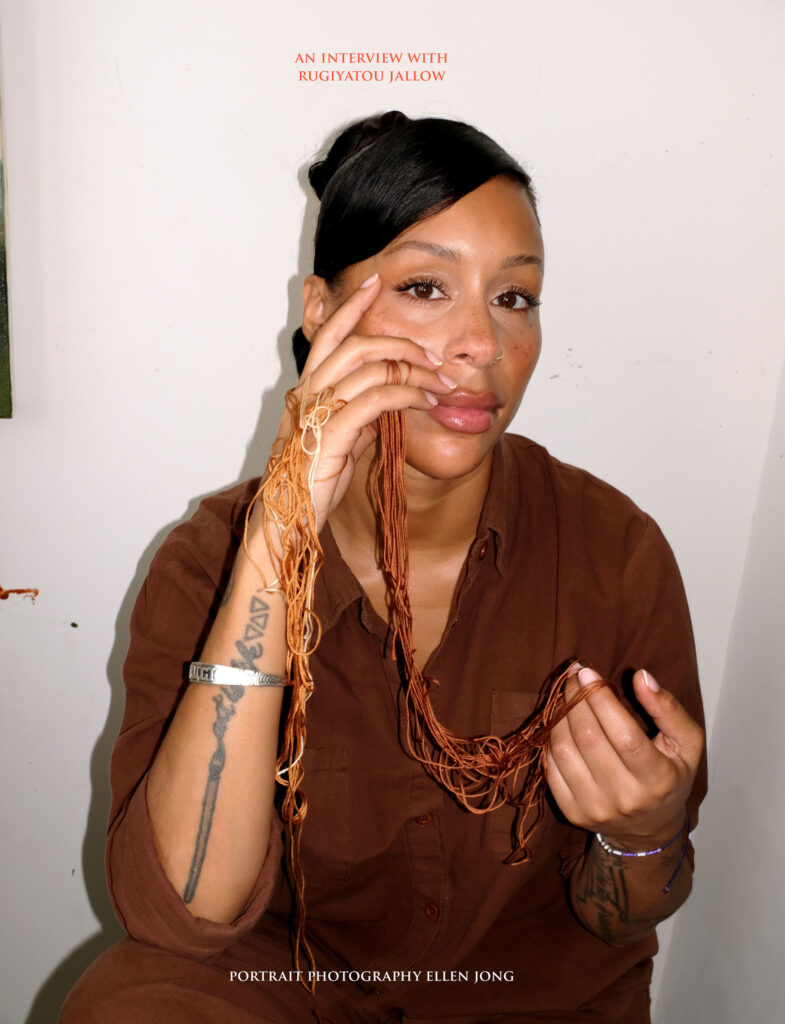
Stockholm Art Week Returns 21–26 April Stockholm Art Week returns for its 2026 edition from 21 to 26 April, with an opening event at Moderna Museet on 20 April. The week draws together the full breadth of Stockholm’s art scene, from major institutions and commercial galleries to artist-run initiatives and temporary public interventions, under a single programme designed to position the city as an international destination for contemporary art. Two of the Nordic region’s most significant art fairs mark milestone anniversaries this year: Market Art Fair and Supermarket Art Fair, both celebrate their 20th editions. Market moves to a new venue, Magasin 9 in Frihamnen, while Supermarket takes place in Slakthusområdet. IASPIS also marks its 30th anniversary during the week. Among the institutional highlights, Moderna Museet opens Anna Casparsson – The Isle of Bliss, and Fotografiska presents I Am Everything, a new exhibition by Lotta Antonsson. In public space, Italian artist Davide Rivalta inaugurates a new sculpture at Mynttorget in central Stockholm, and Statens konstråd presents Träet talar. Kummelholmen opens to visitors for a single day. The programme includes artist talks at venues across the city, among them Petra Lindholm at Galleri Magnus Karlsson, Sara-Vide Ericson at the Royal Institute of Art, Filippa Arrias at Färgfabriken, and Diana Orving at Millesgården. A private viewing of Mark Dion’s installation The Classroom is held at the Stockholm School of Economics. On Saturday, an open Gallery Breakfast Tour takes in galleries in Östermalm and around Hudiksvallsgatan. Younger and emerging voices are well represented: 25 Konstfack students present work in the group exhibition Schvung, and Parallel Collective hosts an opening night. Private home exhibitions are presented by Misschief in Vasastan and Eva Livijn in Östermalm. Special projects include a collaboration between Porsche and sculptor Anders Krisár, presenting a purpose-made Art Car, and A Day’s March launches a tote bag and Stockholm Art Week’s official overshirt, developed with artist Rugiyatou Ylva Jallow in collaboration with Mack Art Foundation. “Stockholm Art Week is an opportunity to experience the entire city’s art scene within one week, from museums and established galleries to artist-run initiatives and temporary projects in the urban space,” says Joanna Sundström, Founder, Stockholm Art Week. The full programme is updated continuously at stockholmartweek.com.

Art, Uncategorized

Noah Beyene’s Sweetish: A Yellow Reconstruction

photography CFHILL Noah Beyene’s Sweetish: A Yellow Reconstruction March 6, — April 2, 2026 Sweetish marks Noah Beyene’s Swedish gallery debut. In this new body of work, Beyene revisits the imagery that has long defined Sweden’s national self‑portrait: sun‑drenched summer scenes, rural idylls, and the familiar motifs of Larsson, Nyström, and Zorn. But in his hands, these symbols are bathed in an intense yellow light that both softens and destabilises them, creating a space where nostalgia and unease coexist. Through these paintings, Beyene examines how images of Sweden have been constructed, circulated, and mythologized; and how they continue to shape who feels included in the national narrative. The result is a series that is affectionate yet critical, intimate yet expansive, and deeply attuned to the shifting cultural moment Sweden finds itself in. As he presents Sweetish in the very country whose visual identity he is questioning, Beyene reflects on childhood memories, the politics of nostalgia, and the complicated experience of being “Swedish.” photography CFHILL Sweetish is your Swedish gallery debut. What does it mean to present this work in Sweden, the very country whose imagery you are revisiting and questioning? Sweetish is in dialogue with shifts that are taking place in Sweden, though many of those shifts are happening across the Western world more broadly. I didn’t begin the project knowing it would be shown in Sweden, but I’m very glad that what happened. It feels like the work has landed within a moment where these questions are particularly present in a Sweden with an identity crisis.   How do you hope Swedish audiences will read this work differently from international viewers? It’s hard for me to say. When I set out to make work I try not to think too much about who will engage with it. I do like to think about how to implicate viewers, but that’s based more around my own experiences and feelings that arise as I’m making the work. I suppose, to some extent, my main focus is to make work that is engaging for myself first and foremost.   But I suppose for international audiences the work might play more directly on the idealised brand Sweden has built around itself. At the same time, the project connects to a longer conversation that has been going on in the arts for a long time, particularly in the UK and the US. That dialogue certainly exists in Sweden as well, though to me it sometimes felt quieter. photography CFHILL photography CFHILL Artists like Carl Larsson, Jenny Nyström, and Anders Zorn helped shape the visual mythology of Sweden. Which aspects of their imagery feel most present in your work, and which did you want to challenge? I became interested in the role artists have played in constructing a sense of national identity. I grew up surrounded by these images, especially Larsson’s work. As a child I never questioned them, and I’m not sure I would have if it hadn’t been for the ways they have been mobilised in nostalgic ideas of nation-building. The work went from a neutral part of the past, peripheral, to centre stage.   When I think about the state-sanctioned Swedish cultural canon, I read it as a project that aims to reinforce nostalgia while leaving little to no room for new voices to be heard. Many of those images idealise rural traditions that didn’t necessarily represent the whole nation even at the time they were created.   Part of this project was about claiming those images, to say that they belong to me as much as anyone else, while also exploring how they begin to feel when they are appropriated by politicians, and how that can shape who feels included.   Was there a specific childhood image or memory that became the emotional starting point for this series? Many of Larsson’s motifs hung in my grandmother’s country house. My summers were built around reconstructions of these scenes that almost mirrored those paintings: crayfish parties, long lunches in the sun. That felt like a natural starting point because it’s something I know.   Your paintings are bathed in an intense yellow light that almost dissolves boundaries. Where does that light come from, conceptually or emotionally? I was thinking about Nordic summer light, when the sun barely sets. Yellow became a way of approaching that atmosphere.   It’s also a fascinating colour because it has a very narrow tonal range compared to most other colours. I started thinking about children’s drawings, how instinctively we reach for yellow when drawing the sun. I wanted to utilise childlike intuition to illustrate the absurdity of what is going on.   As the work developed, the yellow became a way to build a kind of exaggerated harmony, where subject and background almost melt together. The project deals with invisible forces—histories and ideas that shape how a nation imagines itself. Painting the environment in yellow became a way of visualising that atmosphere, and within that space I paint myself using colours closer to life. I stand out not because I exaggerate my own features, but because the surrounding idea of the nation has been pushed into this almost symbolic yellow.   The scenes feel both affectionate and slightly over-saturated, as if the idyll is about to crack. How do you use beauty to reveal tension? The project examines the idyllic. I wanted the paintings to feel almost weightless. Much of the paint is applied in very thin, transparent washes of oil, almost like watercolour.   That creates a sense of fragility, as if the image could dissolve at any moment. And if it does, the question becomes: what remains? Like a dream that becomes less vivid every time we try to remember it. photography Noah Beyene photography CFHILL Your work revisits historical Swedish imagery through painting, a medium closely tied to that tradition. What does painting allow you to do with these images that other media wouldn’t? It’s a difficult thing to be a painter. I can’t think of many human activities with a longer

Art, Uncategorized

Molten Glass Memories: Härkomst ~ Hågkomst by Sarah Yasdani

photography Olivia Huerta Bratteng  Molten Glass Memories: Härkomst ~ Hågkomst by Sarah Yasdani text Kaat Van Der Linden “I hope viewers encounter the exhibition through their own sense of loss and longing. I believe we all carry lost spaces within us – places and people we can no longer return to,” says Swedish‑Persian artist Sarah Yasdani about Härkomst ~ Hågkomst. Currently on view at Galleri Glas in Stockholm, the exhibition runs from February 19 until March 19th, 2026 and explores ideas of inherited memory and the physicality of remembering. Yasdani construct what she calls a “hestorical house“”; a dreamlike structure built from fragments of her foremothers’ lives. “What matters is the quiet knowledge that memory lives in the body as much as in the mind.” photography Olivia Huerta Bratteng To bring her “herstorical house” to life, she needed a material that could, over time, fuse with an object and everything it has ever held. A need that ultimately led her to glass, through which she began exploring questions of heritage and memory. “When I first got in touch with the material, I was carried away by the sense that glass remembers,” says Yasdani. “I came to realise that the quality of glass echoed what I was already drawn to in my conceptual practice. Glass holds traces and mirrors the way heritage and memory are carried: altered by time, yet never erased.” When her grandmother passed away, each family member was asked what they wished to inherit from her now‑lost home. Yasdani was the only girl among all the grandchildren, but she was the one who had spent her childhood in the studio with her grandfather. So when they were allowed to choose something to take with them, she already knew what she wanted: “I immediately thought of the tools my grandfather and I used together. But when I arrived at the house, the tools were gone. It made me both angry and sad, because to me they carried so many memories.” Unable to take one of her grandfather’s tools, Yasdani searched for another meaningful object to bring home. Eventually, she decided to remove a threshold from the doorframe, which she later kiln-cast in glass. That threshold became the first element of Härkomst ~ Hågkomst. That threshold now holds more than just the memory of her grandmother’s house: “To me, the threshold holds time and space sealed within an in-between – where no one passes anymore, in a house that both exists and does not. Generations of movement and lived time are embedded in its surface, carrying the weight of countless footsteps. The threshold became for me both an object and a passage: a site where my origin and my memory could meet.” photography Olivia Huerta Bratteng photography Julia Nesterenko photography Julia Nesterenko photography Olivia Huerta Bratteng Using memory as a material is therapeutic for Yasdani, enabling her to keep her cultural history alive. It allows her to remain in the past while still moving forward, to inhabit what has been while shaping what is to come. “Memory is a generous material because it is endless. I never reach the bottom of the keepsake casket. Each object I open contains another layer, another echo, another fragment asking to be held. Even absence offers substance. What is missing becomes as important as what remains.” The story of her two grandmothers, who never met, forms the emotional core of the work. Their absence becomes a generative force, shaping both how and why Yasdani works. “Absence does not signify loss alone, but the possibility of an imagined connection. My grandmothers are finally able to meet; I am rippling on their waters.” Her culture lives not only in her genetic inheritance, but also in the materials she is drawn to; in what she collects, casts, shapes and preserves. Rather than trying to resolve her identity, Yasdani uses the exhibition as a way to hold it. “I grew up with Persian gestures, scents and sensibilities present in a Swedish landscape. One heritage was carried in the body: the other shaped the ground beneath my feet. In the exhibition, they move into one another.” Working on this exhibition hasn’t changed how she relates to her heritage; it has deepened it. The process has felt like moving closer to the source, like tracing her hand along the grain of something ancient and recognising it as her own. Härkomst ~ Hågkomst takes viewers through parts of Sarah Yasdani’s past, but for the artist, it also marks a transition toward something new. “While glass has always been my chosen medium, I’ve recently felt drawn to wood carving. Glass carries the presence and memories of my grandmothers, whereas wood connects me to my grandfather, who was a woodcarver. Embracing this new chapter feels like finding a way to be closer to him.” photography Julia Nesterenko photography Julia Nesterenko

Art

Klara Wirsén Suchowiak Feels Owned

Klara Wirsén Suchowiak Feels Owned text by Natalia Muntean “The things you own end up owning you,” says Klara Wirsén Suchowiak about ÄGD, her solo exhibition at WAY Gallery in Stockholm. Wirsén Suchowiak is known for her tactile, sculptural explorations of the body as both site and narrative. Trained at Beckmans College of Design, Gerlesborg School of Fine Art and Nyckelviksskolan, has previously shown at venues such as Liljevalchs Spring Salon and Värmlands Museum. Opening on March 5th, the exhibition looks at experiences of parenthood, desire and vulnerability and turns them into unsettling, seductive and humorous encounters that invite both emotional and physical engagement. Natalia Muntean: The title ÄGD (OWNED) is very powerful and direct. Can you talk about the decision to use this word?Klara Wirsén Suchowiak: I am owned. Owned by life, owned by the artistic process, owned by my paycheck, owned by the social structures, owned by capitalism, owned by the gender roles, owned by my family life, owned by my children.  NM: The exhibition highlights the “contradictory experiences of parenthood”, desire, care, vulnerability and excess. How do you balance these opposing forces in a single work or installation? Was there a specific piece where this paradox was most challenging to capture?KWS: In my latest work, “My sister’s milk,” I have been working with real breast milk that I’ve collected from different people. The milk sprays out from sculpted breasts and a baby’s mouth, in a large fountain placed on a dining table.Breastfeeding is like dynamite; it’s a subject everyone has strong feelings and opinions about, even if they might not dare to admit it. The body is political, especially bodies that do things like lactation. In this work, I have explored and wrestled with the many different emotions and positions that come with breastfeeding itself. On the walls around the fountain, tongues are sticking out. They are artworks that stand on their own, but they can also be interpreted as observers. In the piece, I have a combination of materials that present a discrepancy. The milk is beautiful, white, and frothy. The breasts and the baby’s mouth are cast in a smooth stone composite, and the fountain itself is made of fibreglass and epoxy. The colour and texture of the fibreglass make me think of some kind of toxic boat construction, something you don’t want close to your skin, something you don’t want to touch. Yet the baby and the breasts lie there in the middle, gurgling and spraying. On March 5th, at 16:00, everyone who is breastfeeding is welcome to help me inaugurate the fountain by spraying their milk into it. We’ll see if anyone later dares to drink from it. NM: You work with a wide range of materials, from stone to textile to found objects. Could you give an example of how a specific material was essential to express an emotion in ÄGD? KWS: For a long time, I’ve had a vision of creating an artwork where the feeling should be like the sensation you get when a hair is caught in your throat. You pull out something fuzzy, invasive, from your glossy, gagging mouth. That feeling inspired me to create the works called “:P,” which are several tongues of different materials and sizes sticking out from the walls. Some of the tongues are smooth and glossy, others are filled with lots of small objects – babies, metal pieces, etc. And some of the tongues are covered with textile fibers so they are hairy and soft like velvet. The tongues hang next to each other like trophies, or perhaps like spectators in the room. So in this installation, the encounter between different materials was important. I wanted to create a clash between shapes and materials that gives me a physical reaction. NM: You mention the viewer as a “recipient.” What is it that you hope viewers will receive from this installation?KWS: I hope that those who encounter my works feel something. What that feeling is, I don’t want to control. NM: You mention using found objects in your practice. Are there any incorporated into ÄGD? If so, what was the story or previous life of that object, and how does its history resonate with the themes of the exhibition?KWS: The sculpture “Domestic” is like a large body, but also a house at the same time. The house is furnished with countless dollhouse furniture, toys, and small things I’ve collected throughout my life. Together, these objects create a house where the parents have lost control, it’s incredibly messy, and no child is sleeping; all the kitchens are on fire. The house and the body have become one, and it is very heavy to carry. The objects in the house come from many different places: from my own old toys, flea markets, my parents’ home, travels, dumpsters and some I’ve been given because people know I collect things. The searching and collecting is something I see as part of the process. And as we know, the things you own end up owning you, and I will probably end up as a hoarder like the ones you see on TV. NM: You’ve created several public artworks with your mother, Stina Wirsén. How does that intergenerational collaboration influence your approach to themes of parenthood and the body? KWS: I have been creating for as long as I can remember, next to my siblings and parents. That’s how we spend time together and how we communicate best, by making. Other families might play soccer or sing or cook; we have always sat next to each other with pen and paper. So, making art with my mother wasn’t really something new; the only new things were the scale, the materials, and the fact that the works would be received by others. Our artworks deal with themes like family, body, care, and vulnerability, but in a public space. How can we make forms radiate those qualities? That’s what we are working on. We made our first sculptures a few months after I

Art

Sally von Rosen

“Feel First, Think Later”: Sally von Rosen on contradictions, her creatures, and the power of objects text Natalia Muntean Sally von Rosen’s work is a study in contradictions – beauty and grotesque, violence and tenderness, familiarity and alienation. Her sculptures, often described as “creatures,” evoke visceral emotions, inviting viewers to feel first, think later. “I want people to experience contradictory emotions,” she says, “to feel both the desire to care for the work and the urge to run away.” Drawing on her background in philosophy and aesthetics, von Rosen explores the political ecology of objects, treating them as active participants in human interactions. “Objects have their own intentions, their own ‘thing power,’” she explains, referencing Jane Bennett’s theories. From her early egg-like forms to her latest monumental outdoor sculptures, von Rosen’s work is a continuous evolution, blurring the lines between the past, present, and future. This ethos is central to the group exhibition Feel First, Think Later at Andréhn-Schiptjenko Gallery in Stockholm, where von Rosen’s hybrid creatures take centre stage. Alongside works by Annika Elisabeth von Hausswolff, Dev Dhunsi, and Minh Ngọc Nguyễn, the exhibition explores how intuition and emotion can precede intellectual interpretation. Von Hausswolff’s The Blind Woman (1998) serves as a symbolic portal into the act of letting go and trusting one’s senses, while Dhunsi and Nguyễn examine themes of tension and cultural identity. Together, the artists create a space where materiality and emotion converge, challenging viewers to engage with art on a deeply intuitive level. From von Rosen’s early egg-like forms to her latest monumental outdoor sculptures, her work is a continuous evolution, blurring the lines between the past, present, and future. Natalia Muntean: The title Feel First, Think Later comes from one of your quotes about how you want your work to be perceived. Could you expand on this idea and how it ties into the exhibition? Sally von Rosen: It’s about the transference of emotions – from me spending time with the object to someone else experiencing it in an exhibition. I remember a visitor in 2021 who looked at one of my creatures, the ones with claws and sharp tips, and said, “I want to take care of it, but I also want to run away from it.” That’s exactly the point. It’s about feeling contradictory emotions first, before intellectualising them. Art becomes interesting when it comes from intuition: the shapes, forms, and materials that feel right. Then, of course, there’s theory to apply. I have a background in philosophy and aesthetics, and I grew up surrounded by art – my mother was a ballet dancer, my father was an opera singer, and my grandfather a painter. Art has always been part of my life. NM: You mentioned the transference of emotion. Can you tell me about your emotions while making Offsprings and Ananke’s Playbunnies? SvR: These works are part of an evolution. The first ones were like eggs with claws, but they weren’t standing on their tips. At the time, I didn’t think much, I just worked with the material. Later, I realised I made these eggs during a time when my body wasn’t functioning well – I didn’t have my period, and it felt like these eggs were locked in my body. I only realised it a year later when my period returned. These creatures started as eggs, then grew bigger, and I flipped them so they had legs. They started to look more like creatures, part human, part animal. They evolved into a herd, and in 2023, I created a large installation with 60 sculptures climbing on top of each other during Berlin Art Week. The sculptures in Feel First, Think Later refer to that exhibition. My work often evolves in steps, like the evolution of a species. It’s about something that looks like it’s from the future or the past, raising questions about time and existence. NM: Do these creatures have a life of their own after you create them? SvR: Yes, once I’ve done my part, they exist on their own, often in exhibitions. This ties into the title Feel First, Think Later. I also research theories that resonate with my work, like Jane Bennett’s Vibrant Matter. She writes about how objects can have their own intentions, their own “thing power.” This idea gives meaning to how I think about my sculptures. NM: Do you work intuitively, or do you have a plan when creating these creatures? Do connections emerge during the process, or do you start with a clear vision? SvR: It’s different each time. It often begins with an image – shapes or forms. I start experimenting and realise, “Okay, this means that.” The visual aspect usually comes first, and then I tap into my mental library, thinking about how things relate. It all makes sense in the end. Sometimes, I dig into my foundation, like a “bad archaeologist,” as I once called myself. For example, I made some fragile sculptures that looked like they were sleeping, but the material was strong. I cast them in fibreglass and resin, then broke the mould to get the sculpture out. It’s a violent process, but something beautiful comes out. NM: It sounds cathartic, in a way – hammering it down and then having this newborn, so to speak. SvR: Sculpting can feel violent sometimes. You have to use a lot of power, especially with certain materials. For example, when I work with bronze, I use heavy tools and a 1000-degree flame to shape the surface. Then I throw acid on it. It’s all very violent and uncomfortable, but something beautiful comes out. It’s interesting how that process works. NM: Tell me more about you playing with the duality of things. Like beauty and grotesque, or violence and creation? And how do you balance them? SvR: I think those contradictions are where it gets interesting. How can a sculpture be both of these things? It’s not about balancing them intentionally. It’s about the tension between contradictions; something can be

Scroll to Top