Nathalia Edenmont: “I’m nostalgic for future artworks”
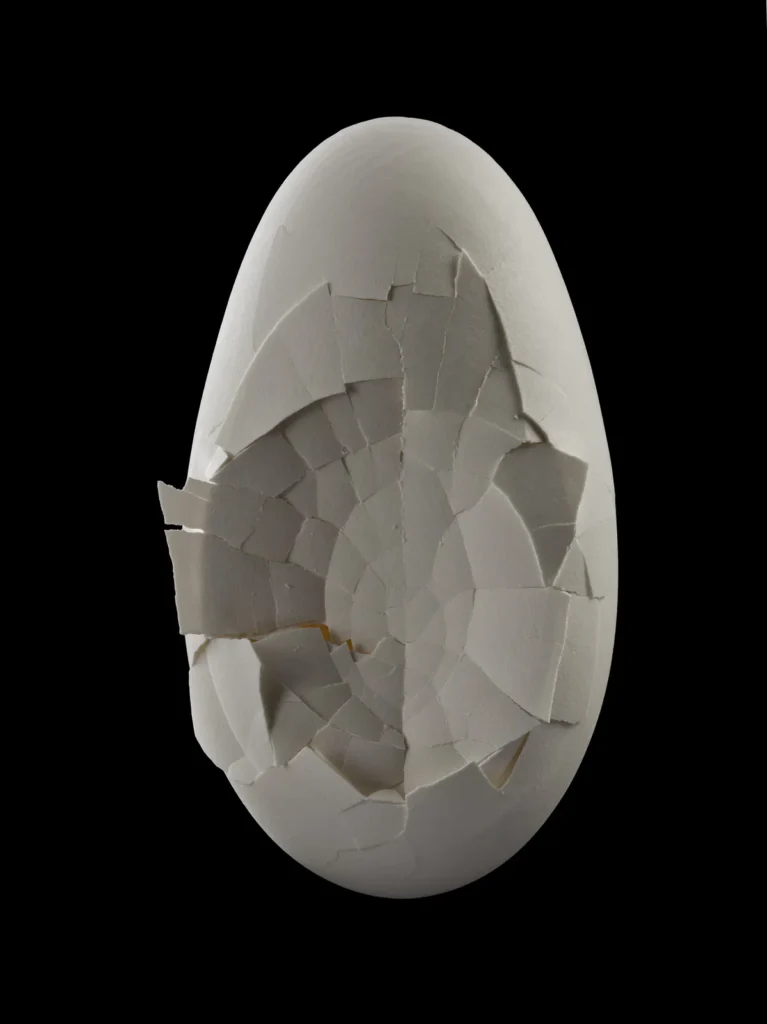
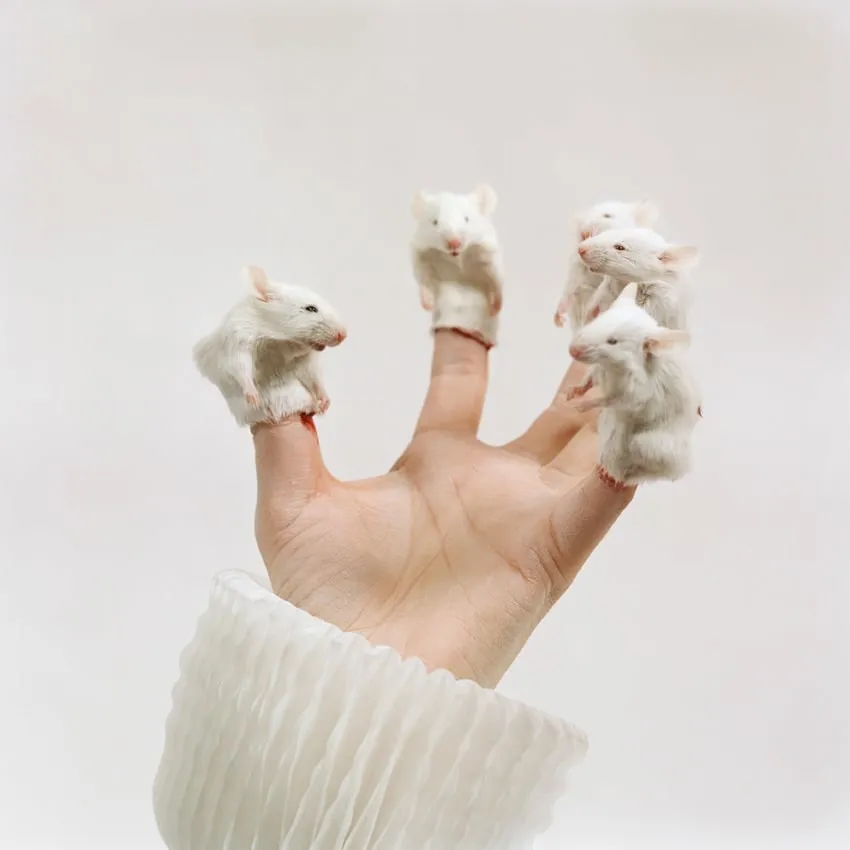
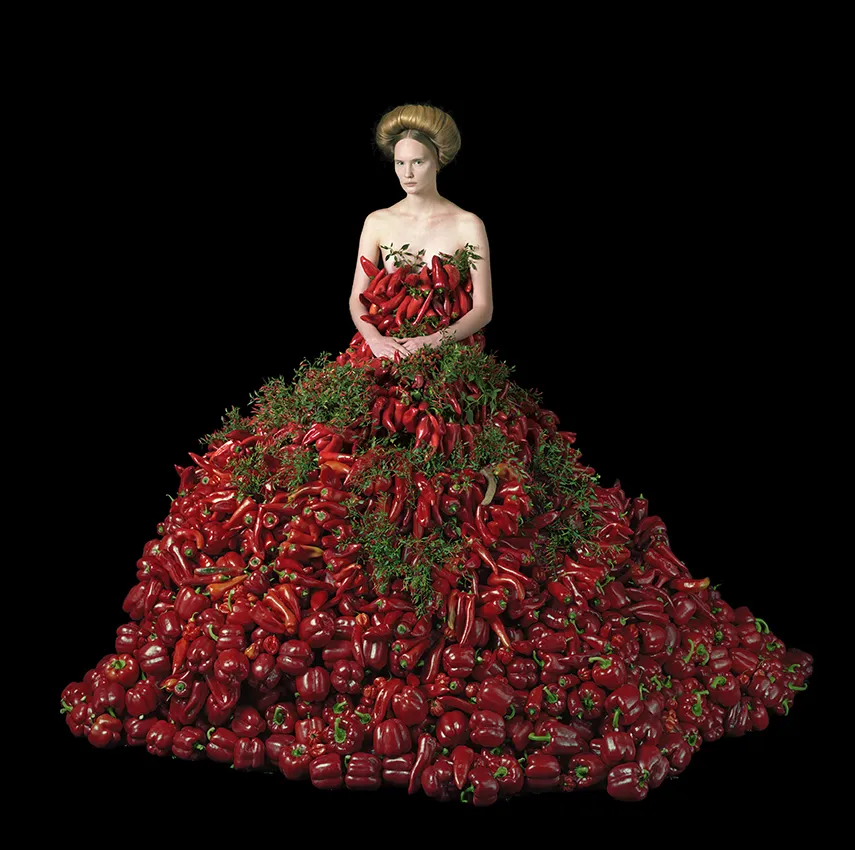
Nathalia Edenmont was born in Yalta, Crimea, in 1970 and left the Soviet Union in January 1991, at 20. Thirty-five years later, Wetterling Gallery is showing Here I Am, a survey of 24 years of her work: early photographs and portraits, the butterfly works assembled from thousands of wings, pieces involving eggs and, most recently, sculpture in Carrara Statuario, black Belgian marble and pink Portuguese marble. Edenmont has built her work around life, death, beauty and fertility, and has addressed subjects such as menstruation and miscarriage. Her work is in collections including the Moderna Museet in Stockholm. She doesn’t look back at it. When we spoke, she was already on to bronze, oil paintings and a full-length figure she would only describe as “one me, and another one not me.”
It was personally interesting for me to talk to someone who shares my name and, in a way, my cultural background, as we grew up in the Soviet and post-Soviet system. Edenmont is direct and economical with words, and she doesn’t elaborate where she doesn’t see the need. I recognise that trait in myself, and wonder if it might be a post-Soviet inheritance. It still threw me a little to meet it from the other side of the table, and I came away with a clearer sense of how she works. Her parting advice: “Don’t care about anyone. The more you dream, the more you can succeed. The more risk you take, the more you can do something really special. Never ask for advice. And never listen to your brain.”
Natalia Muntean: The exhibition brings together more than 20 years of work. What was it like to see your early photographs and the new sculptures together?
Nathalia Edenmont: All artists are different. There is no recipe for how to create art, how to feel, how to do what. All artists are unique. I’m an artist who doesn’t like to look back. All my energy and focus are on the next project, on the next work. For me, it’s painful to look back – so many memories, so many feelings. I feel that’s kind of unnecessary, because I need all my feelings and all my energy for the present, very heavy, complicated projects. For example, now you can see the white mountains in the background. It’s the marble. And yesterday I even started the bronze production. So all my energy and focus are on the new projects.
I almost close my eyes when I see the old works, but when I open my eyes a little bit, I can see it’s an amazing combination: the old and the new. Of course, it’s the same artist. But when I think about the 24 years, they just flew by like 24 hours.
NM: So you finish a body of work, and then you let it go?
NE: Every project is like giving birth to a child. I don’t have children, but it takes so much energy from me. I need all my energy and focus now for all the extremely heavy projects, so I don’t like to take even a single moment from my present. I’m always in the future.
NM: Why did you choose the title, and why have the exhibition now?
NE: I work intuitively. They asked me, can you suggest the title? And I thought, well, it’s all my work. It’s all about my feelings, a lot biographical. So, well, it’s Here I Am.
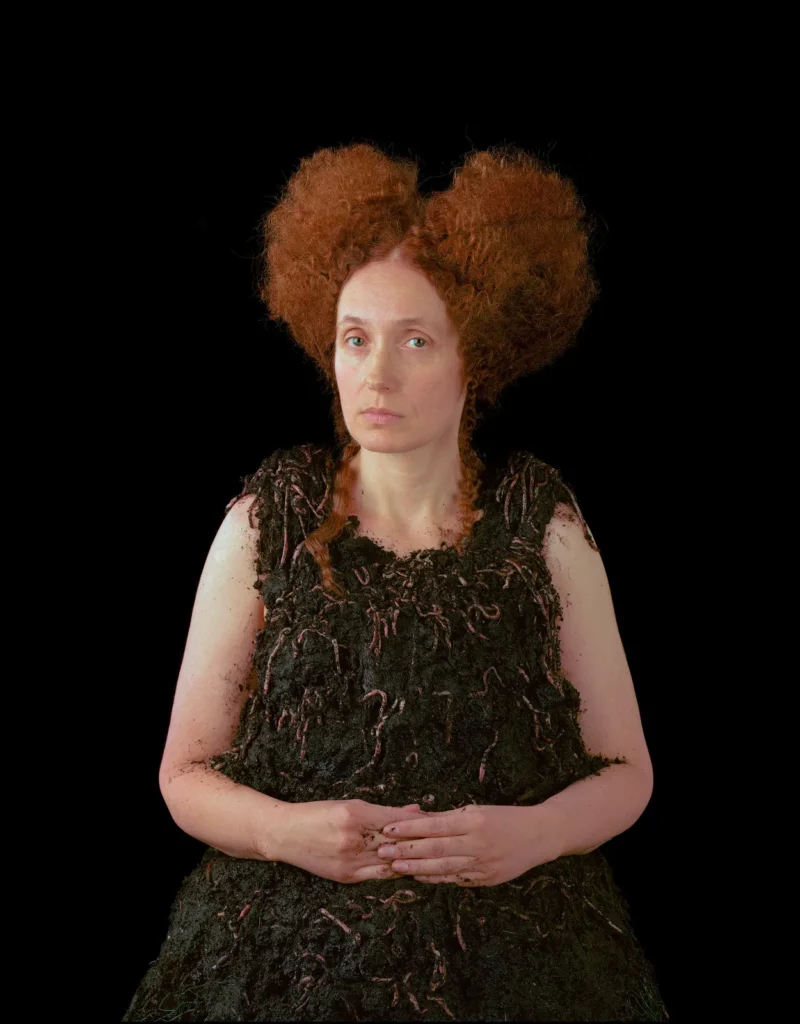
And I didn’t choose the timing. It was the gallery. I didn’t choose the works. Why should I care about my old works, and the date, and the presentation? I care only about my present, extremely complicated projects, and the future exhibitions. The other professionals can take my work, choose as they like, and put on the walls they like, while I am creating new masterpieces. If I worked with my old work, the new masterpieces would never arrive.
NM: Are you a nostalgic person?
NE: Yes, I’m nostalgic for some songs my mother sang, or something my mother cooked for me, or an old friend I have not seen for a long time. But in my work as an artist, I’m very much nostalgic for the future artworks. It’s reversed. I can’t wait to see them, and I can’t wait to create them.
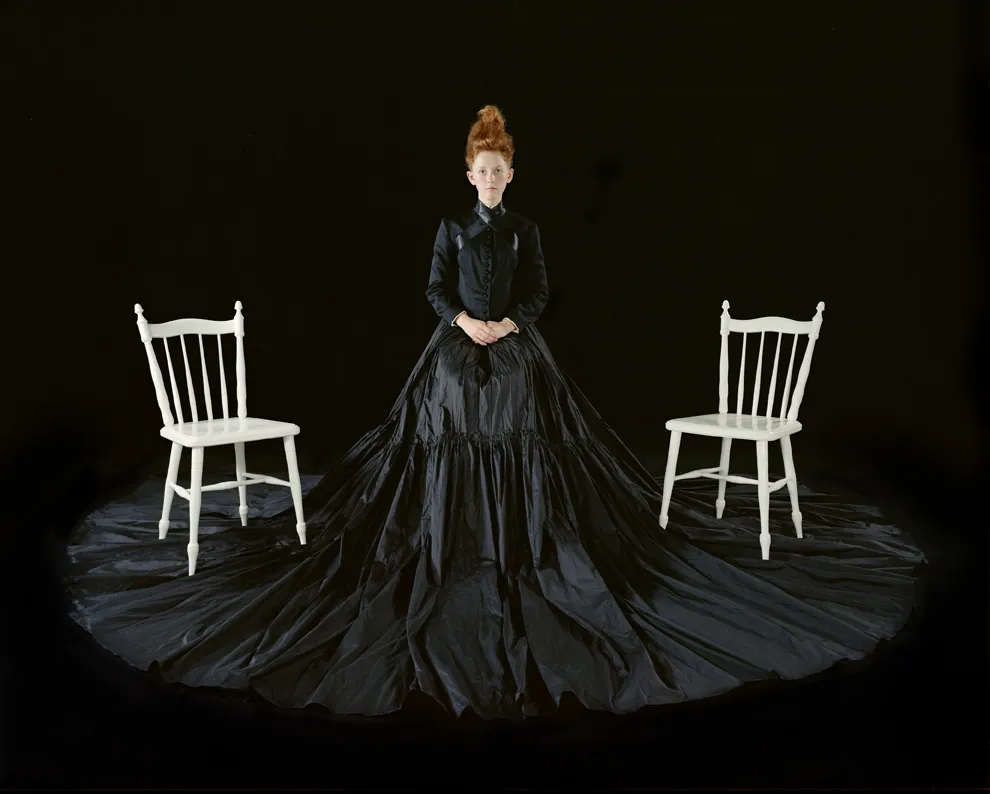
NM: When you finish a piece, do you feel sadness because it’s over?
NE: No, every time it’s a relief, and I feel, wow, this is amazing. Every project starts from the imagination in my head, and to take the imagination out of my head and realize it, to make it physical, it’s a wow feeling. This is what excites me, and then I go next and next and forward, and more complicated.
NM: On your website there’s a text from 2002 where you describe being born in a country that no longer exists and believing in its ideals without any doubt. Does that early belief still shape your work?
NE: No, it doesn’t shape it; it doesn’t affect it at all. But I’m sure all of us who grew up in the Soviet Union were trained in school: work hard, and be the best, and focus, and believe in what you focus on. In kindergarten, in school, everywhere. So of course it shaped us. The big projects, the complicated ones, and the competing – I have that from school. We were taught that if we work hard, we would get great results.
NM: How was it to arrive in Sweden?
NE: I was happy to see so much food in the shops because we didn’t have food. Actually, this is why I moved to the West, only because of food. But with my good education from the Soviet Union, the only work I could get was cleaning. I had three jobs. I started at five o’clock in the morning, and I went to bed after twelve. The goal was to get the Swedish passport. I did that for three years until I got it, and in between I was going to Swedish school. I didn’t have any choice. I wanted the passport and then a better job and a better life.
NM: You’ve said you don’t sketch, that the image is complete in your mind. Does a work ever surprise you at the end?
NE: No. Sometimes it can be even better than I imagine, but usually it’s how I imagine. I control everything; I work hard for it. And if the universe helps with some lucky things, it can become even better. This is the way I work.
NM: Your work has beauty and unease side by side. Where is the line between seduction and discomfort?
NE: I don’t see the line. It all comes at the same time. For me, the happiness and the sadness always happen at the same time. Yesterday I got happy news about future exhibitions and some sales, and then other news about a person very important to me who is very heavily sick. I jumped with happiness, and one hour later I cried. It’s all at the same time. What can we do? It’s life.
NM: You’ve addressed menstruation, fertility and miscarriage. Why were these subjects important to you?
NE: Because it personally affected my life. I have very strong memories of these experiences.
NM: How has the public reacted?
NE: Mostly women react because they have strong personal experiences, but men often do too. Once, a woman over 70 came to my exhibition and cried. I tried to comfort her… Sometimes men whose wives have experienced multiple miscarriages speak to me. They understand the pain differently from women, but they are still deeply affected. I’m not a unique human being in that way. Unfortunately, many people have a similar experience, but they keep it inside and cry. When they see an artist put up a picture about that, they feel they are not alone.
NM: Do you work with these experiences to process them?
NE: I don’t talk; I work with it. And no, I want nothing. I simply see the image in my head and do exactly as I see it. There are no goals. The goal is to bring the image out and make the artwork. I’ve been doing that for 24 years, and it still excites me very much, more and more, actually. When people ask what it is about, I try to explain, but if I don’t speak, I’m happier because I’m not good at speaking. I’m good at creating.
NM: You draw on your own life. Was it always like that?
NE: When I was five, in kindergarten in Yalta, I told the other kids, let’s escape and go for a walk by the sea. We climbed the chicken wire, and in the end the police caught us. I always had strange ideas. I remember one time when my mother left me alone because of working long hours; I took a hammer and hit the apartment’s walls because I was searching for treasures inside them. Every time I hit, the sound was different, and I thought there must be a special sound for the treasure. When my mother came back, the whole apartment was full of holes. Or the refrigerator: what if I rip off the rubber gasket on the door? How would the door close? I’m curious about new materials, how it will all be. I base my work on my own experiences because it’s easy. I know all about it. I don’t need to research. How can I work with something I don’t know?
NM: Isn’t it vulnerable to expose yourself like that?
NE: I understand the question, but when I started, I didn’t think about exposing myself. I was doing it for myself. I don’t care about the public and what people think or say. Every project, I do it for myself. I know some people don’t like my art, but why should I care? I also don’t like other people’s art, or food, or weather, or politics, and nobody cares what I like or don’t like. I’m very much in my own bubble and do what I want. I came for freedom, to do what I want, and I think Sweden is very good for me. The art I do in Sweden, I could never have created in the Soviet Union.
NM: Would you have chosen this life?
NE: If I hadn’t escaped, I would probably have children and grandchildren now. Sometimes I wish I had a simple life and a family, because I never wanted the life I have now. But life takes us to places we did not plan, and makes us work with things we never thought we would do. I never thought I would be in Italy working with heavy sculptures, tons of marble, and now bronze. But maybe I would also not be good enough for a normal life, because you see, at five years old I was escaping to go for a nice walk by the sea, or searching for treasure. Maybe I’m so different that it doesn’t suit my personality. I don’t see myself as an easy personality.
NM: Were you told as a child that you were difficult?
NE: Yes, my mother did. I had a tough Soviet Union upbringing.
NM: Do you think that affected your work or life choices?
NE: I don’t think so, but I don’t know. In the Soviet Union, we grew up without a culture of smiling. I remember nobody smiled. When I first visited Poland, they asked me, why don’t you smile? And they taught me to smile, and I came back; I was 19, and everybody looked at me like, what happened to you? Are you crazy? Are you sick? And my parents never told me they loved me. No hugs, no words about love. I spoke with a few friends, and they have the same experience. The culture was not to show affection.
NM: If a visitor spends only 10 minutes in the exhibition, what would you want them to take away?
NE: Everyone is free to take away whatever they want, or nothing at all, and think whatever they want. Why should I care? I have other things to think about.
NM: What are you working on now?
NE: The next is always a secret. Let’s see if I succeed, and then I’ll tell you. But maybe a little hint: I’m painting in oil on canvas, and at the same time working in bronze and marble, and I also started with the figure in sculpture, in both bronze and marble.