Theresa Traore Dahlberg: "Anything Can Become Anything"
Text by Natalia Muntean
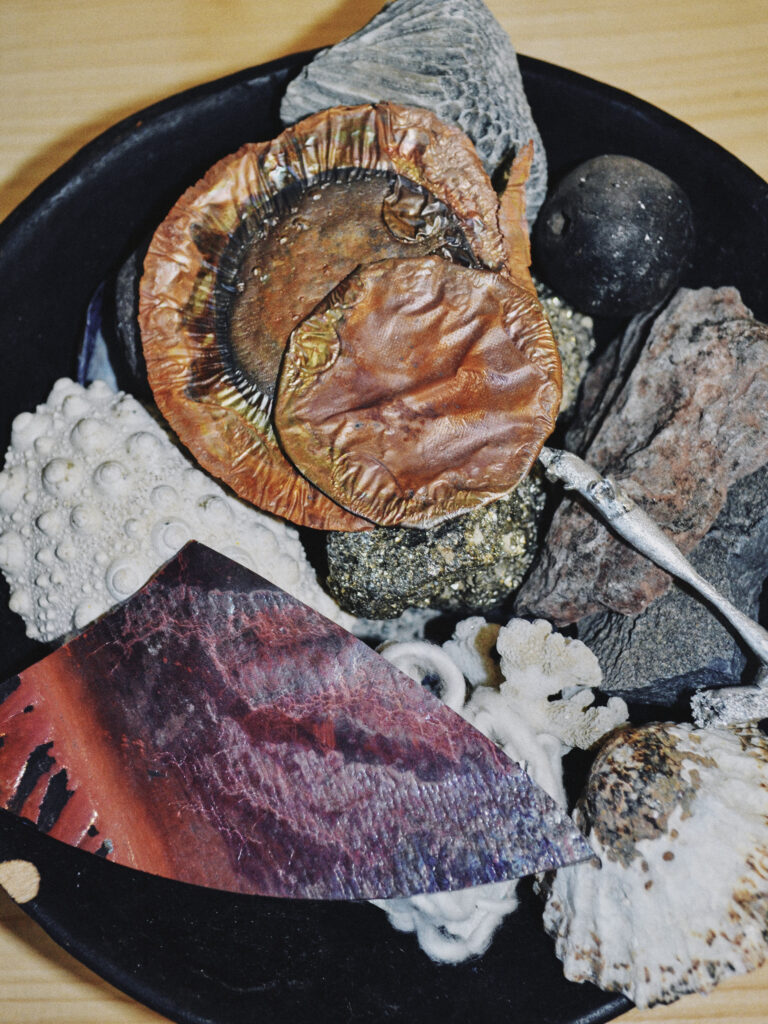
Theresa Traore Dahlberg says she always needed to collect, but starting art school and becoming a mother made her take the time to go further and look at what she collected from different angles. Stones, fabrics, photos, metal – she brings them home and finds a place for them in her works. Anything can become anything if you put the time into it and you stay with it,” says the artist, who grew up between Sweden and Burkina Faso and works across sculpture, installation, and documentary film. Her films, among them Ouaga Girls and The Ambassador’s Wife, have screened at Toronto, Berlin, and the Hammer Museum; her sculptures transform decommissioned industrial materials into what she calls Lings: new beings emerging from old, sometimes violent, matter. Traore Dahlberg is currently one of eight artists in Earthly Bodies Born of Love at Verket, the historic ironworks in Avesta, curated by Karolina Aastrup and Sona Stepanyan and on display until 20 September 2026. She is also at work on a major public commission in Gothenburg, due in 2029.
Natalia Muntean: Tell me about Signals Beyond 2025, the body of work you’re exhibiting at Avesta Art, as part of the Earthly Bodies Born of Love exhibition.
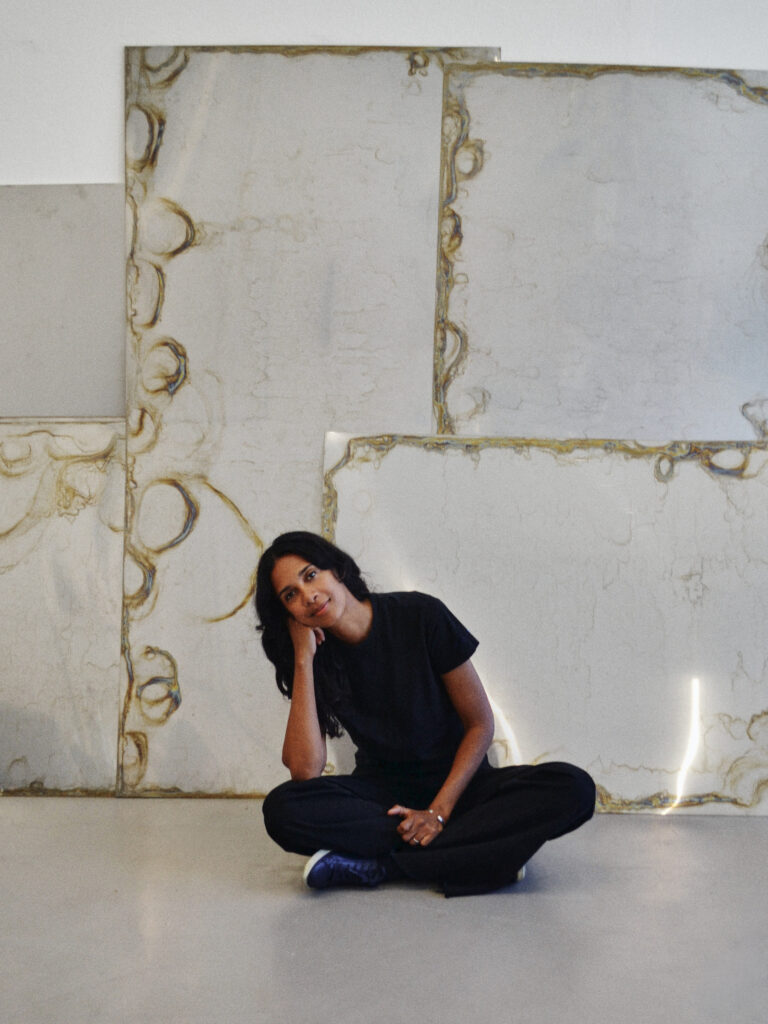
Theresa Traore Dahlberg: It started with the curator, Sona Stepanyan, who saw an exhibition I was part of at Liljevalchs, Stockholm Cosmologies, and asked me to participate. I had actually exhibited parts of this material the summer before, at the Helsinki Biennial, with a body of work called Signals Beyond 2025. And it’s material I usually work with, copper cards from a circuit factory that keep coming back in different forms. For Helsinki, they asked me to come up with a work made specifically from materials sourced in Finland, so I started working with these silver cards, material from the shift between 3G and 4G, that had been used in communication cards, radio, and all kinds of communication infrastructure. The Biennial’s theme was non-human agencies, so for me it became about using these cards to build very abstract bird-and-place forms. I call these formations Lings, like a fledgling. Octavia Butler wrote about fledglings, when a bird is born but can’t fly yet. But for me, these aren’t necessarily birds, but beings that are coming up, new, open to the world. There’s an interaction between them, but they’re also coming out of this landscape of old material. So it’s about transformation – new narratives coming out of old, sometimes violent, material.
NM: Does working on a group exhibition with people from such different countries influence your perspective on your own work?
TTD: There were a lot of monumental installations, so we had to find the balance where each work gets the light it needs, but still works together. It’s such a fine difference because with my piece, when it’s a little darker, it becomes gold; a little lighter, it becomes silver. I try to find the balance where it feels almost like a water surface and like the material is breathing.
NM: How does the Avesta Art space itself affect the work?
TTD: Avesta Art is a remarkable post-industrial space, so there is already a dialogue between the architecture and the materials I work with. The materials often originate from industrial processes, and in a way, they return to an industrial environment. The scale of the building, its high ceilings, the light, and the surrounding atmosphere all become part of the work. I also like to keep the materials in the space for a while before the installation is finalised, allowing them to absorb something of the environment. They almost marinate in the space until they feel as though they belong there.
NM: The exhibition’s title, Earthly Bodies Born of Love, feels very different from that industrial, data-economy framing. Did you know the title beforehand?
TTD: No, I didn’t. I really like the title; it’s very poetic. It comes from one of Petra Hermanova’s song titles, and she performed at the opening, and it influenced the curators and the whole exhibition.
NM: What was installing the piece actually like?
TTD: Those old industry buildings have a special kind of rawness. It was freezing when I installed, although it was a sunny spring week. But it was completely quiet except for some birds that had moved in during winter. And I think that exhibiting there makes a big difference – showing something that’s not just in a white cube, that comes with its own history.
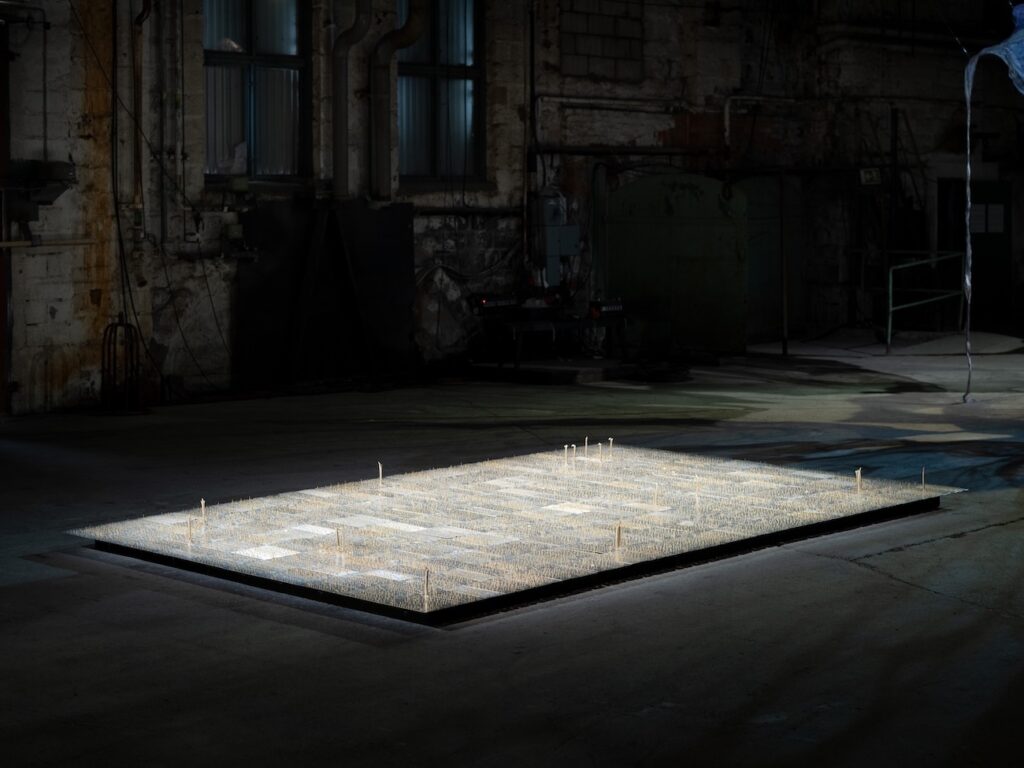
NM: This body of work has now travelled through several different spaces: Helsinki, Liljevalchs, Avesta Art. Are they a continuation or separate works in dialogue?
TTD: I see them as chapters, but not as a linear progression. Some installations grow out of the previous one. I like to return to it and discover new layers. The Lings are a continuation of a sculpture I made called Hakili the Hare, which has been nominated for the High Line Plinth in New York. It is a public competition for the 2029–2030 commissions, and the selected work will be on view to about eight million visitors.
NM: If we could go back to the beginning – where do you think this need to collect things comes from?
Theresa Traore Dahlberg: I think it all begins with curiosity. As a child, I was fascinated by the shape and texture of things. Today, that curiosity often begins with a material. Take the cotton I’m working with now; I’m interested not only in its history, but also in the people who have worked with it and the lives it has passed through. It becomes a way of exploring together with the material itself. What first appears to be a simple material gradually reveals layers of history, politics, and personal stories. My practice is driven as much by curiosity as by intention. I rarely know where a work will end up; instead, I follow the material and the questions it raises, allowing it to reveal its own direction.
NM: So you let the material lead you?
TTD: Yes, and sometimes I take control, too. But I never know completely what to expect. I suggest, and the material answers me back, more like a dialogue.
And that’s actually how I work with film as well. Some people say it’s such different mediums and in one way, they are. But the way I film is very much like the way I work with other materials – I come with. For example, with The Ambassador’s Wife (screening now in New York Times OP-docs), I spent three days with her; she showed me what she usually does in her everyday life, and I filmed what I saw, framed it, and did the sound design as it felt to me. Listening and answering back and forth
NM: But you never have the impulse to direct your characters?
TTD: I do a lot of second takes. If something happens and I see it and I would like to keep it, I can ask the person to do it again, even somewhere else. That’s a way of directing, too, but it’s not putting words in someone’s mouth or asking them to feel something they wouldn’t agree with or haven’t said. At least that is how it has been in my previous films. But now I am writing fiction, which will be different.
NM: Do you have a ritual when you start working?
TTD: I’m actually in that phase right now. After every exhibition, it feels like I’m starting over completely. It’s a process of recalibrating: Who am I today? What is occupying me now? What did I begin that I never had time to continue? What’s happening in the world, around me, and what’s happening within me?
At the beginning, it’s never obvious whether I’m going to make work again. I’m quite tactile, so ideas usually emerge through encounters with materials or memories rather than from sitting in an empty studio waiting for inspiration. My process has always been very organic. I might be hearing, feeling a certain scent or picking something up that feels special, and that object becomes the starting point for something else. Almost all the materials I work with have entered my practice as I encountered them in my everyday life.
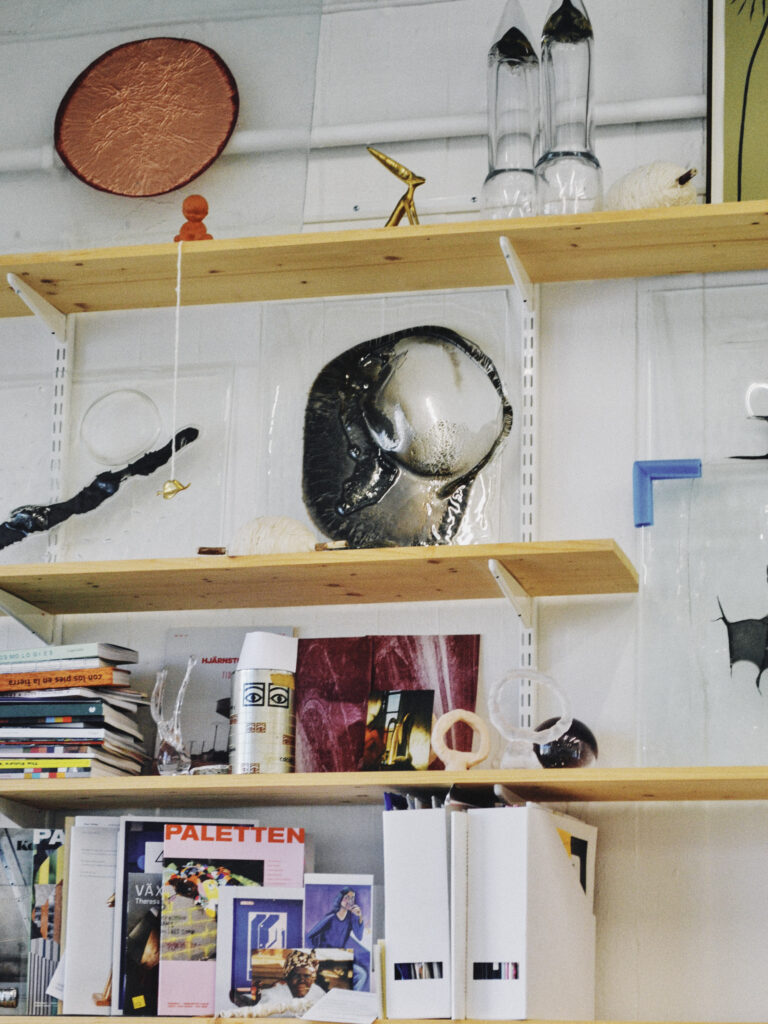
So I don’t really have one fixed way of beginning. I try to return with an open mind. I meditate, which is one constant, but then I spend time looking at everything in the studio as if I’m seeing it for the first time. But also when I leave the studio, sitting in the subway or when meeting people. I also go back through my notebooks. I write down ideas, dreams, fragments of conversations, anything that catches my attention. I even have notebooks from last year that I still haven’t read through, and thousands of photos on my phone waiting to be rediscovered.
I actually enjoy not knowing where a work is going to end up. In a way, it’s more disappointing if it becomes exactly what I imagined from the beginning. If I could simply write down the idea and execute it exactly as planned, there would be no room for surprise. For me, that’s where the magic happens, in allowing the work to become something I couldn’t have predicted.
NM: You said after every exhibition, you feel like you’re starting over. Is that feeling exciting or overwhelming?
TTD: Both. It can be stressful, especially if there’s already a deadline waiting. But it’s also a period of introspection, a time to recalibrate. There are these two opposing feelings at once: on the one hand, it feels like anything is possible; on the other, I can be filled with doubt and wonder, Does the world really need this right now? But once I begin working, that uncertainty usually fades. The process itself convinces me.
NM: All your works have quite plain names, close to the material: the copper, the cotton. Why?
TTD: I like it when people can meet the work on their own terms. I’m not trying to convince anyone of anything, and I really appreciate when people can have their own interpretation, their own connection. I don’t want to take that away.
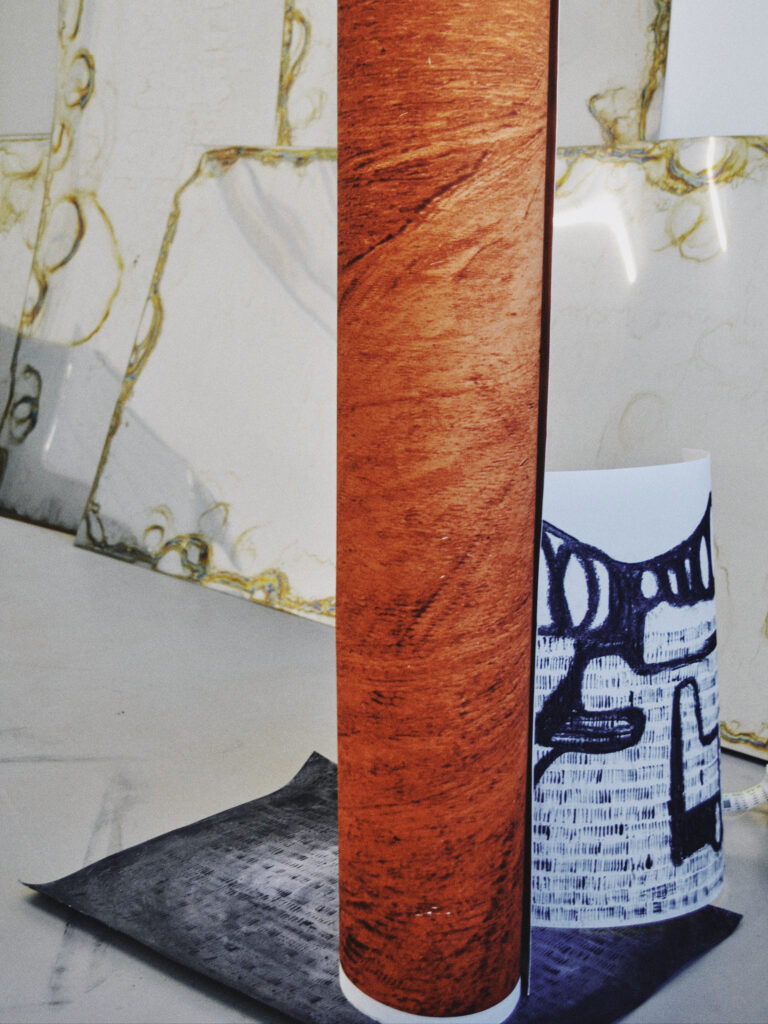
That said, there are layers. With the sourcing of the cotton, for example, I think it’s interesting that the women producing it were excluded and found an alternative way to live outside of what was expected. I find that encouraging, but I’ve also been very cautious about not framing it as something specifically “from Burkina Faso,” because it’s about exclusion, and also about finding alternative ways, and I think that’s something that’s everywhere. It’s not one isolated situation, but something you can see in every society.
NM: What do you think growing up between Burkina Faso and Sweden gave you, or maybe took away from you?
TTD: I think the notion that there’s not just one truth. There’s not one way to do anything; things can coexist, and if it doesn’t work this way, there could be other ways. Not just following expectations and structures, but trying to encompass others, and I think that’s easier when you don’t fully believe this is the only way to do one thing. I feel connected, but also very much an alien wherever I am. Growing up, we were an exception in Sweden, and we were an exception in Burkina, so I always feel a bit misunderstood since people like to frame others, and some people get insecure when they don´t know what box to put you in.
I lost someone very close to me when I was young, and I think that gave me an early awareness of how fragile life can be. Perhaps that’s also why I’ve always felt compelled to preserve moments and traces. Every year still feels a little unexpected, which has made me deeply grateful. I don’t take the morning coffee, the birds, or simply being here for granted.
NM: I can imagine that, as a seven-year-old, seeing someone your age die, that left a big impact.
TTD: Definitely. In Burkina Faso, but also in old Swedish mythology, birds are often seen as moving between different realms. I’ve always been drawn to the idea that the living and the dead aren’t separated by a fixed boundary, but exist alongside one another. I think sculptures carry something of that as well. At some point they stop feeling like objects I’ve made and begin to exist on their own, somewhere in between.