Amine Habke: The Garden of Intimacy, Repairing Masculinity
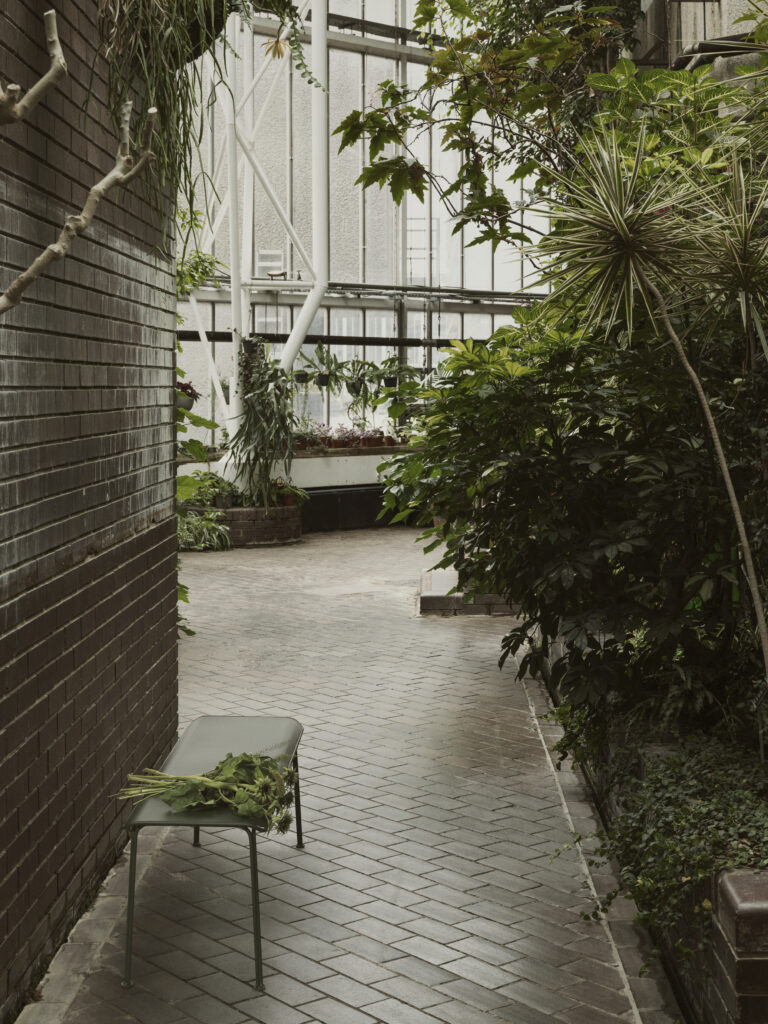
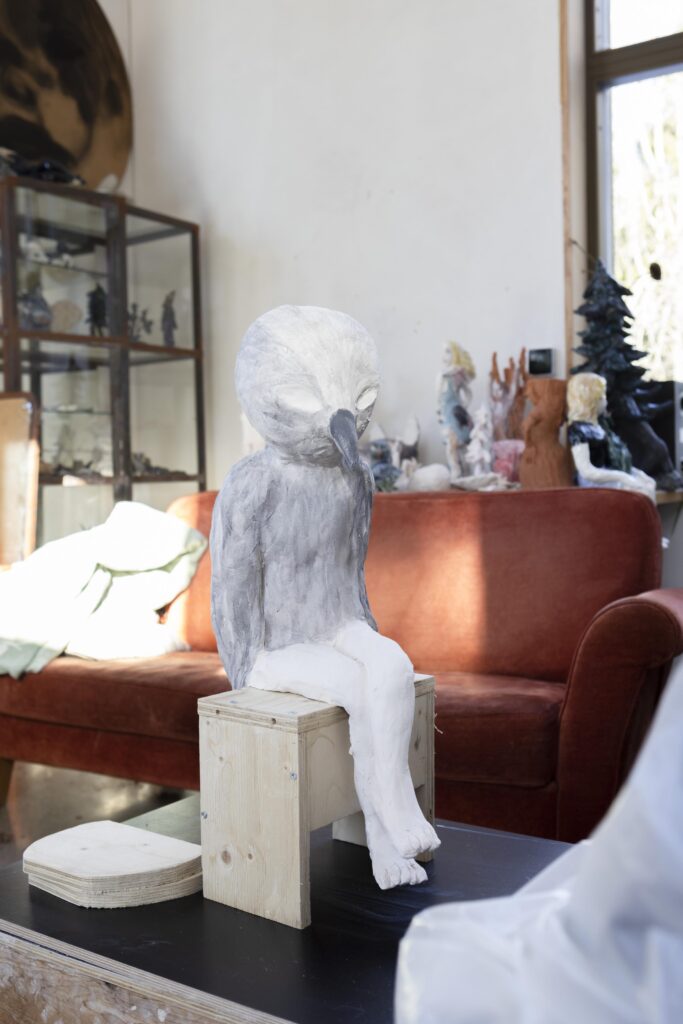
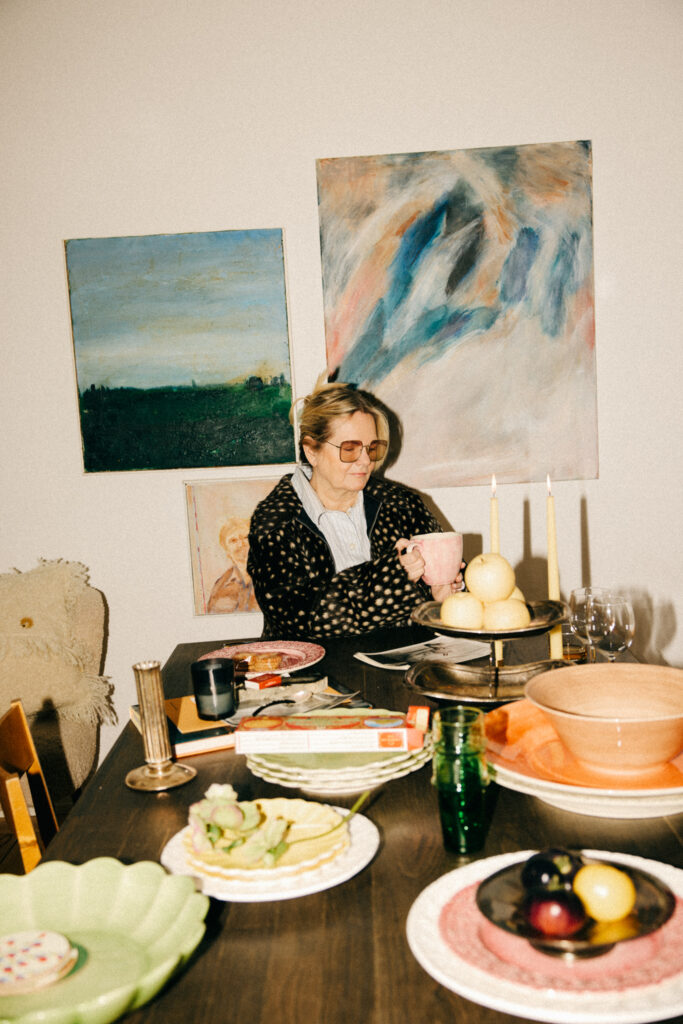
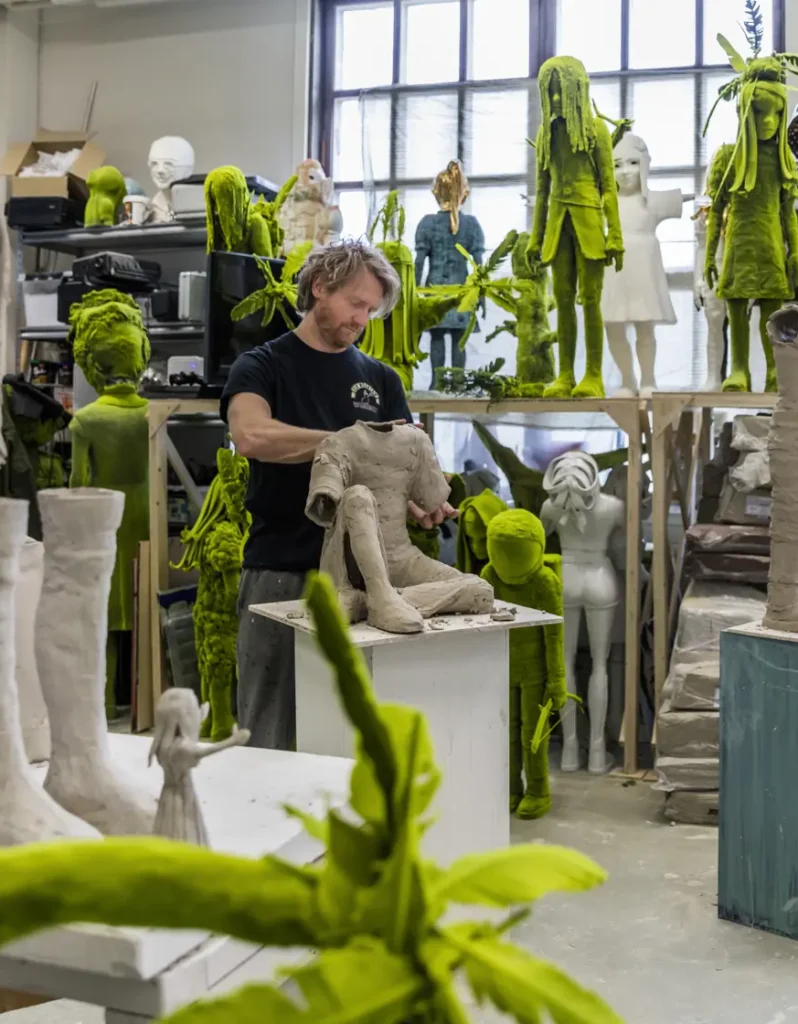
Amine Habke: The Garden of Intimacy, Repairing Masculinity text Natalia Muntean In the delicate, deliberate stitches of Amine Habki’s textile works, a new language of masculinity is being woven. For his first solo exhibition in the Nordic region, I Will Sew Up All the Petals of Your Garden, the French-Moroccan artist transforms the Andréhn-Schiptjenko Gallery in Stockholm into a meditative interior where softness is strength and vulnerability becomes a form of resilience. Drawing on the visual heritage of Islamic ornamentation, European Romanticism, and the diasporic experience, Habki’s practice, spanning embroidery, painting, and sculpture, cultivates a space where the body and the botanical merge. “I don’t have any memories where I wasn’t an artist,” he reflects, “I felt obligated to be an artist and to live by my art.” Natalia Muntean: Can you elaborate a little bit about the meaning behind the title of the exhibition?Amine Habke: The title, I think, represents the energy and the entire mission of the show. The idea of a garden, for me, represents the area of intimacy, an inner world. But at the same time, the garden is famous in the iconography of romantic paintings. For this show, I was really inspired by The Garden of Earthly Delights by Bosch. The idea of the show is also to talk about the idea of rehabilitation. I am trying to repair an image of what masculinity is. NM: Why is it important for you to challenge these ideas about masculinity through art?AH: This is not about changing something for the world; it’s just for me. It’s a quest for me to take care of this image, of this body. I like the idea of doing a new vision, a new iconography, just for my own healing, just to feel kinder, more connected to what I want to look like. This is a little poetic way to talk about this, and it really helps me, and I think this also helps other people. NM: What are you looking for in this connection to your work?AH: I’m looking for more liberty to represent masculinity, to represent romance, to represent love, vulnerability and fragility. NM: Your practice spans embroidery, painting, and sculpture. How did you begin?AH: I started with a lot of drawing, but I wasn’t really fulfilled because I was trying to find a volume and to have more relief. So, embroidery was a way to give more shapes and three-dimensionality to my drawings. Embroidery also comes as a visual heritage. My family has a lot of tapestries. I feel connected to these objects. The houses of my grandma and my aunties were places of something soft, domestic, warm, and resilient. I was trying to incorporate this aesthetic onto bodies that are generally represented outside, in heavy material, in big forms. The media often destroys the non-white body, centralising some communities and cultures while excluding others. For me, this is a way to make an opposition to Orientalism. Orientalism destroyed our culture and our heritage. When you’re born in the third generation of Moroccan diaspora, you have certain expectations, but then you discover the reality is more complex. I think exploring these objects and the story of civilisations helps. NM: The slow process of embroidery – does it influence the narrative of your work?AH: In my studio, I have a lot of drawings on the wall, and I also write a lot of poems. Sometimes poems give me images, and some images give me poems, so it’s a mutual dialogue. I start by selecting one of the drawings, and I go to the shop for textiles and fabrics. The element of chance comes in because sometimes I can be obsessed with one fabric, and I think, “Okay, it could match with this drawing, with these colours”. Then I create the image. But there’s a lot of improvisation and freestyle. I have the idea and the concept, but I never strictly know what colours I will use, or if I will add extra things. NM: You incorporate found objects into your textile works. What is their role?AH: I think they can symbolise an idea. For example, one piece in the Stockholm show features a lace fabric with flowers already on it. I add painting and embroidery to put a spotlight on, and to make a combination with what I want to symbolise. Found objects are also a way to make more funny combinations. I think this is more the fun and spontaneous aspect of my practice. NM: You get inspired by the ornaments in Islamic art, transforming arabesques into living patterns. How does your French-Moroccan heritage inform your visual style?AH: I’m really inspired by the ornamentation, like the grotesque. I discovered that this is not a well-known or celebrated form because, for many people, grotesque is just like minor art; it’s not a major form. I like this idea of putting a spotlight on a minor form. For me, ornamentation is the beginning of surrealism. You have a lot of different motifs and patterns, and sometimes it can look like something real. The grotesque embodies that by mixing humans with animals, with flowers. You also see this phenomenon in some Islamic cultures, for example, the zellige tiles, where the symmetry and repetition make human or body shapes appear. This is the ornamental aspect that inspired me. I’m also really inspired by my French background, like the Surrealism of Magritte. I like Romantic artists like Friedrich. At the same time, I also like Persian miniatures. It’s a mix of the Mediterranean area. ‘Still Dirty’ ‘Body Guard’ NM: The flower is a recurring symbol. Beyond beauty, what does the flower represent for you?AH: Flowers have different meanings. I tried to show that it can also be a trap. I did some pieces with men holding flowers; it can be a really soft object, but also really dangerous at the same time. Flowers are present in mythology, like Ovid’s Metamorphoses, and also in the poetry of Mahmoud Darwish. I like the idea of the flower as a