Beauty Articles

Beauty Articles

REPEATS, the Nordic Gummy Brand Built on Repetition

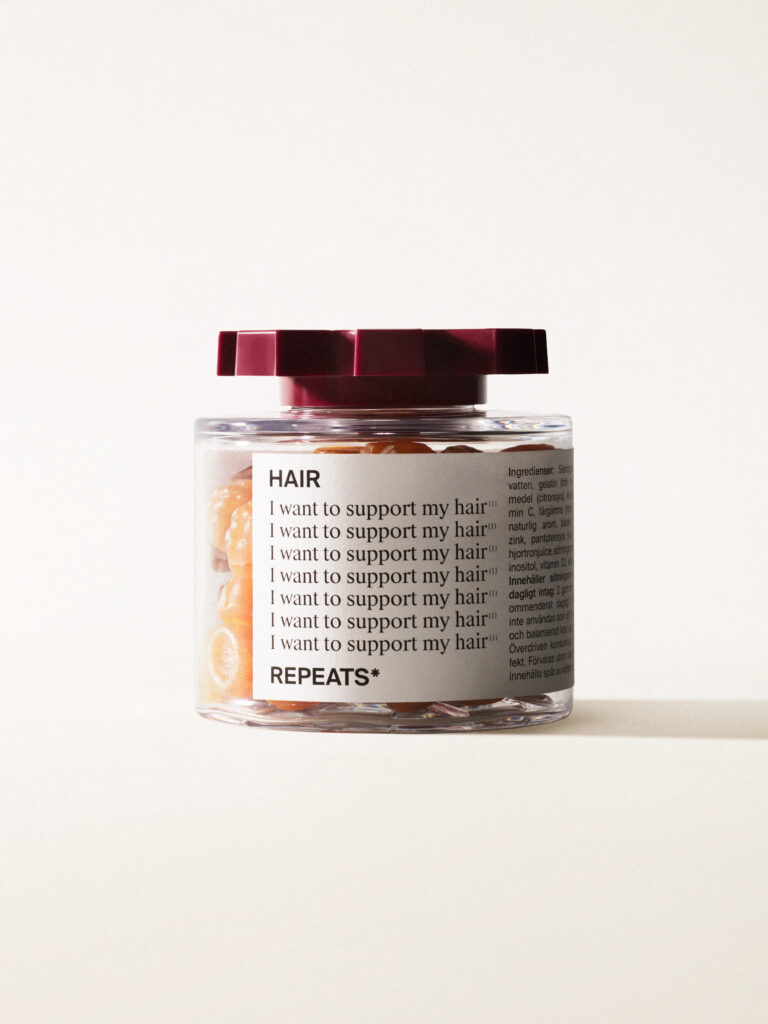
REPEATS, the Nordic Gummy Brand Built on Repetition Text by Natalia Muntean “The name REPEATS comes from a simple belief: real progress doesn’t come from what we do once in a while, but from the small things we repeat consistently over time. We wanted to build a brand around that idea and make health easier to turn into an everyday habit,” says Vanessa Lindblad, co-founder of REPEATS, a new brand of gummies at the intersection of beauty and health. The philosophy behind the brand is that, ultimately, it should make it easier for people to acquire good habits and maintain them. With an emphasis on consumer experience, the founders of REPEATS, André Kvamme and Vanessa Lindblad, are trying to bridge the gap between traditional supplements and a new generation of wellness offerings. “Our ambition is to combine high-quality, carefully considered formulations with products that are easy to understand, enjoyable to take and designed to fit naturally into everyday life,” thinks Lindblad. REPEATS launches on September 3 as a dedicated gummy brand, with the ambition to take a clear position at the intersection of health, beauty and lifestyle. “We are seeing a clear shift, with the gummy segment growing faster than the supplements category as a whole,” says Kvamme, CEO and co-founder. “There are already many great supplements on the market, but in Europe, the gummy format has yet to achieve the same established position or level of credibility as traditional formats. That is the position we are building REPEATS to take, with carefully developed formulations, high-quality and products that make it easier to create healthy routines that last over time.” REPEATS launched with seven different formulas: Her Daily, Skin, Hair, Immune, Night, Pregnant and D3/K2, that are very much just the beginning, the founders assure us. The number seven is also at the core of the brand, being rooted in manifestation. Lindblad shares that they wanted to start with a range that really represented what REPEATS is about and covered different needs and moments in everyday life. “We didn’t want to launch with everything at once,” she says. “We wanted a first collection that felt considered, relevant and easy to understand. That said, these seven are very much the beginning. People won’t have to wait too long before the REPEATS family starts growing.” André Kvamme and Vanessa Lindblad Each formula carries its own Nordic berry: arctic raspberry, cloudberry, gooseberry, and so on. “Taste is of course an important part of it,” Lindblad says. “If something tastes genuinely good, it becomes easier to look forward to taking it every day, and making well-being easier to turn into a consistent routine is a big part of our mission. But the Nordic berries also represent something bigger for us. We are very proud of our Nordic roots and the way we approach health and wellbeing here: quality first, thoughtful choices and no unnecessary compromises. There is already a strong perception of the Nordics internationally when it comes to quality, health and design, and as we build REPEATS beyond the Nordic region, that is something we want to carry with us rather than move away from.” That same logic shapes the ingredients. Astaxanthin, which appears in both the Skin and Immune formulas, is a natural version from AstaReal®, backed by more than 38 years of research and used in over 85 human clinical studies, including in skin and immune health, it was also named Ingredient of the Year – Beauty from Within at the NutraIngredients Asia Awards in 2023. “We don’t want to include something simply because it’s trending,” Lindblad says. “We want ingredients with real science and quality behind them. For us, that combination of extensive research, documented quality and a long track record makes it a very exciting ingredient and a natural fit for REPEATS.” The choice of gummies over pills follows the same principle. “The format is closely connected to the idea behind REPEATS: if something is easier and more enjoyable to take, it is also easier to make it part of your daily routine,” Lindblad says. “More than three in ten people struggle with swallowing pills, so gummies can remove a very practical barrier. At the same time, we never wanted to choose gummies at the expense of quality. Our principle throughout development has been that if we can’t create a gummy that is at least as good as the capsule or tablet alternative, we won’t make it. Taste and experience can help create the habit, but the formulation and active ingredients always come first.” Asked which gap in the wellness and vitamin market REPEATS is hoping to close, Lindblad points to the space between two extremes. “We saw an opportunity between traditional supplements, which can often feel quite clinical and functional, and a new generation of wellness products that put much more emphasis on the consumer experience. We don’t think people should have to choose between the two.” “Right now, the focus is on establishing REPEATS in Sweden and building a strong foundation around our first seven products,” Lindblad says. Ultimately, the goal is for REPEATS to extend beyond just the products, but to become a community and a movement that makes “health feel simpler, more accessible and more inspiring.”

Beauty Articles

In the Garden Where It All Began – Visiting Yves Rocher’s Roots in La Gacilly

In the Garden Where It All Began – Visiting Yves Rocher’s Roots in La Gacilly text Sandra Myhrberg Sitting on a hillside between La Gacilly and Cournon, the La Grée des Landes Eco-Hôtel & Spa opened its doors in 2013 as Brittany’s first fully ecological hotel. I had the chance to experience its offerings while tracing Yves Rocher’s roots in La Gacilly, an area directly tied to the brand’s founder, where a young Yves Rocher once wandered, picking the wild plants and flowers that would later shape his life’s work. The hotel’s twenty-nine rooms are floored and panelled in oak from sustainably managed forests. The restaurant, Les Jardins Sauvages, grows its own organic, locavore produce. And I must mention the spa that runs entirely on Yves Rocher’s plant-based rituals. I also visited Yves Rocher’s birthplace, where, in the 1950s, a teenage Yves Rocher, following a healer’s recipe for a hemostatic ointment made from lesser Celandine, hand-mixed his very first batches of cream after losing his father. That ointment, made and sold from his own home, was the seed of everything that followed. Yves Rocher founded his company in 1959 on an idea that ran against the grain of its time: that plant biology and dermatology could be brought together to create skincare that actually worked. To deepen the science, he partnered with dermatologists. He founded CERCO, the Centre d’Études et de Recherches Cosmétiques, laying the groundwork for what the brand now calls dermobotany, skin physiology and plant knowledge treated as a single discipline. In the town of La Gacilly, there is also the Maison Yves Rocher, the brand’s immersive museum. Its five rooms walk visitors through the company’s story, sense by sense. images courtesy Yves Rocher Into the Living Laboratory That founding conviction is easiest to see at Yves Rocher’s pilot centre in agroecology, just outside La Gacilly, a working botanical garden that doubles as a research station. The site serves three purposes, its resident agronomist and botanist, Cécile L’Haridon, explained as we walked the plots. The first is production: growing the brand’s own plants organically, then processing them into the active ingredients that give its formulas their effect. The botanical garden itself is almost a manifesto, a visible, walkable version of the belief that plants belong in the cosmetics business, not just in its marketing. The second is innovation. ‘We try to imagine what tomorrow’s plants inside our cosmetics will be’, L’Haridon said, not just which new actives to develop, but which plants will even be possible to grow as the climate shifts. Nothing here is irrigated. Crops are chosen for drought resistance from the outset, and water is given only in narrow windows, just before blooming, in small amounts, if a heatwave threatens the flower itself. The third goal is harder to name in English. L’Haridon called it ‘influence’, but it’s closer to community: partnerships with local farmers, naturalists, and academic researchers, built on shared observation and shared science. Agroecology, she said, is too complex to figure out alone. photography Sandra Myhrberg Between the rows of plants destined for cosmetics, other crops such as phacelia and buckwheat are deliberately sown as living soil cover, plants that will never end up in a bottle. They pull different nutrients from the ground and then return them, building fertile, water-retentive soil that lets the ‘real’ crops survive a dry summer. Hedgerows thick with oak are managed the same way as corridors that let biodiversity move through the farm and give beneficial insects somewhere to nest, insects that then protect flowering crops like marigold and cornflower from disease. Two colleagues were at work in one plot, marking test rows with orange stakes and recording plant behaviour that will later become the statistical case for exactly how much a cover crop helps the cash crop growing beside it. ‘When we work on a new plant’, L’Haridon said, ‘we want a strong active with strong benefits for skin, and we want the plant to be able to manage present ecological pressures. Commitment and efficacy – these are our two goals’. A Walk Through the Garden The garden holds surprises even for a genus as familiar as chamomile. Yves Rocher grows both German and Roman chamomile side by side – visibly different plants – and the German variety, prized as a strong soothing agent, is what goes into skincare and makeup. From a single flower, L’Haridon’s team extracts three distinct botanical actives depending on the method: oil, supercritical CO2, or a botanical water, each pulling out different compounds. ‘It’s so rich’, she said. ‘A never-ending story’. photography Sandra Myhrberg Nearby grows the ice plant, Mesembryanthemum crystallinum, its leaves studded with water-filled vesicles. It can survive drought, salt, and blistering sun by shifting its metabolism, synthesising energy at night and adjusting output as conditions change. ‘If you can live in the desert, you are the future plant’, L’Haridon said. It’s the base of the brand’s anti-ageing Lift range. Its close relative, edulis, does something different: its water- and osmolyte-rich leaves make it a powerful moisturiser, the base of the Hydra range, which claims to hold skin hydration for 100 hours. The team even developed a specific cultivation method, which L’Haridon called a ‘technical itinerary’, to increase leaf surface area and boost the concentration of active compounds inside it. Cornflower shows how differently the same plant can be treated depending on its end use. Machine-harvested, the stem and leaves come with it; picked by hand, it’s flowers only, and it takes four hours of hand-picking to gather a single kilo, destined for the brand’s Pur Bleu cleansing range. Marigold follows a similar logic: sown after a season of soil-building cover crops specifically to concentrate its potency, with the surrounding hedgerows and plant covers studied for their direct effect on how powerful the resulting active turns out to be. Ask L’Haridon for a favourite, though, and she doesn’t reach for any of the showier plants. ‘Have you heard of phacelia?’ Modest-looking and little known outside the industry, it’s
Beauty Articles

CPHFW SS27: Inside the Mind of Legendary Hair Stylist Eugene Souleiman at Collina Strada

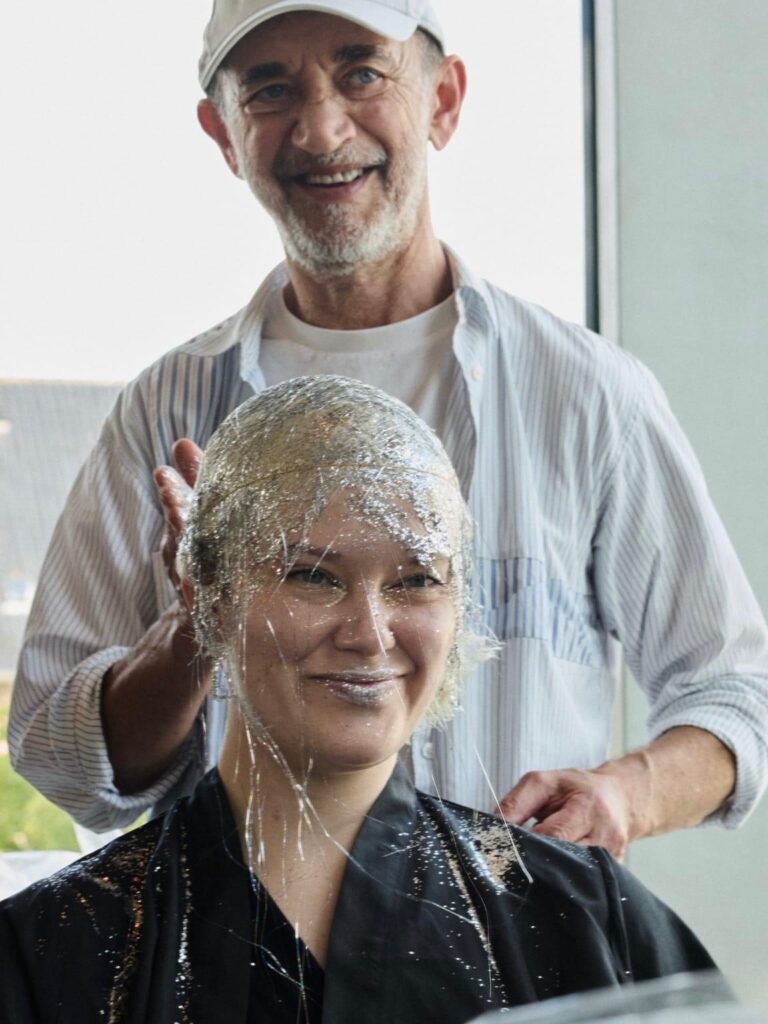
CPHFW SS27: Inside the Mind of Legendary Hair Stylist Eugene Souleiman at Collina Strada text Christine Deckert For Collina Strada’s Copenhagen Fashion Week show, Eugene Souleiman treated hair less as styling and more as material. Working withKEVIN.MURPHY, he wove in tinsel, shine and repurposed fabrics, creating looks that felt celestial, unruly and entirely deliberate. One of the most influential hairdressers working today, Souleiman’s runway work spans Prada, Alexander McQueen, Maison Margiela, Yohji Yamamoto, Celine and Chanel, alongside long-term collaborations with Madonna, Lady Gaga and, most recently, Charli XCX for British Vogue. It is a fitting collision of worlds: Collina Strada’s playful surrealism meets Souleiman’s instinct for imperfection, individuality and a quiet resistance to rules. Backstage, Odalisque spoke with him about beauty beyond perfection, creative accidents, social media, and why curiosity still matters: Christine Deckert: How did you translate Collina Strada’s visual language into hair for this particular collection? Eugene Souleiman: The first thing was understanding Hillary’s world rather than thinking about a hairstyle. There is always this tension in Collina Strada between fantasy and reality, beauty and something slightly strange, nature and technology. I wanted the hair to have that same contradiction. We treated the hair almost as another textile. We brought in tinsel, shine and pieces of fabric from previous collections, so there was this idea of transformation and giving existing materials another life. It became something quite celestial and chaotic, but still very deliberate. The hair had to feel as though it could only belong to this collection. CD: How do you create a runway hairstyle that feels conceptually strong, yet still allows each model’s individuality to remain visible? ES: I think the mistake is believing that a strong concept means making everyone identical. For me, the concept should be strong enough to survive interpretation. I look at the person in front of me, their face, their natural texture, their proportions, their attitude, and then work out how that individual fits into the world we are creating. You establish the language of the show, but each model becomes a different character within that language. That is much more interesting to me than twenty versions of exactly the same hairstyle. images courtesy Collina Strada photography Vic Lentaigne makeup Zenia Jaeger skincare Monastery hair Eugene Souleiman fashion Joel Traptow CD: This is your first time working at Copenhagen Fashion Week. Do you see a distinct creative attitude here compared with Paris, Milan, London, or New York? ES: Yes, there is a lightness and freedom here that I really enjoy. Copenhagen feels very comfortable with individuality. There is creativity and experimentation, but it doesn’t feel burdened by having to prove itself. Every fashion city has its own rhythm. Paris has extraordinary refinement, Milan has glamour, London has always had this rebellious energy, and New York has a kind of immediacy. Copenhagen feels playful and progressive. There is also a very natural conversation here around sustainability and responsibility, rather than it feeling like something that has been added afterwards. It feels open, and creatively, that is quite liberating. CD: After decades of shaping some of fashion’s most memorable runway images, what still excites or surprises you when developing a new hair concept backstage? ES: The unpredictability. You can arrive with a very clear idea, but fashion is collaborative, and things change when everything comes together. You see the clothes on the person rather than on a rail; you meet the models; you see the space, the light, the movement, and suddenly you notice something you hadn’t considered. Some of the best ideas come from those moments. An accident, a material behaving differently than you expected, somebody’s natural hair doing something beautiful. I think curiosity is what keeps the work exciting. The moment you believe you already know exactly what you’re going to do, you probably stop discovering anything new. CD: How has your understanding of beauty changed throughout your career, and what feels beautiful to you now? ES: I’m much more interested in character than perfection. When you’re younger, I think there can be a temptation to control everything, to make something technically perfect. Over time you realise that the imperfections are often what make somebody memorable. When you’re younger, I think there can be a temptation to control everything, to make something technically perfect. Over time you realise that the imperfections are often what make somebody memorable. Now I’m interested in finding what is already individual about somebody and amplifying that rather than correcting it. There is something incredibly beautiful about allowing people, and hair, to have their own personality. CD: With fashion increasingly shaped by social media and instant imagery, has the way you design hair for a runway show changed? ES: The speed has certainly changed. An image can be everywhere before the show has even finished, and naturally you are conscious that the hair will be seen from every possible angle, very close up and often completely out of the context of the show. But I don’t think you can start by designing something for Instagram. You have to begin with an idea.  A strong runway image should work in movement, from across the room, backstage, in a photograph and in detail. If you start chasing the image rather than the idea, I think the work can become quite superficial. The technology has changed enormously, but the creative question is still the same: does it say something? CD: What part of yourself do you think appears in your work, even when you are creating someone else’s vision? ES: Probably curiosity, and a certain resistance to rules. I’ve always been interested in taking things apart and putting them back together differently. Sometimes that means questioning what is considered beautiful; sometimes it is using a product or material in a way it was never intended to be used; and sometimes it is knowing when to leave something alone. Ultimately, you are there to serve somebody else’s vision, but you can only interpret that vision through your own instincts and

Beauty Articles

Byredo’s Future Memories Captures the Moment Before It Slips Away

Byredo’s Future Memories Captures the Moment Before It Slips Away Written by Jahwanna Berglund image courtesy Byredo With its intriguing new fragrance, Byredo turns vanilla into a meditation on presence, intimacy and the traces we leave behind.With its intriguing new fragrance, Byredo turns vanilla into a meditation on presence, intimacy and the traces we leave behind. Some memories arrive as complete pictures. Others return only as fragments: light moving across skin, the outline of a landscape, or the lingering scent of someone who has just left the room. It is this elusive space between experience and recollection that Byredo explores with Future Memories, its new Eau de Parfum. Composed by perfumer Quentin Bisch, Future Memories is less concerned with nostalgia than with the present moment. It draws our attention to the fleeting instant before life settles into memory. Its premise is quietly philosophical: what we choose today will shape what we carry with us tomorrow. At the centre of the fragrance is vanilla, although not in its most familiar form. Rather than leaning into enveloping sweetness or uncomplicated comfort, Bisch examines the ingredient with precision. Here, vanilla feels luminous and restrained. It is recognisable, but viewed from an unexpected angle. The fragrance opens with the crisp verdancy of galbanum essence and a tart blackcurrant accord. Aldehydes introduce a cool, polished clarity, creating an initial impression that feels almost mineral. It is a vivid beginning, a flash of awareness that calls the senses firmly into the present. As the composition develops, its pace begins to soften. Orris butter and labdanum lend texture and controlled depth, while orange blossom brings a delicate radiance. A white vanilla accord appears at the heart, offering the first suggestion of warmth without disturbing the fragrance’s elegant restraint. In the base, vanilla liquor accord meets Madagascar vanilla CO₂, Ambrofix and musks. The result is not an overtly gourmand trail, but a subtle glow on the skin. Its sweetness is tempered and diffused, leaving behind something more atmospheric. It recalls a feeling that remains long after its details have begun to blur. “Future Memories is about the scent you wear today becoming the memory others keep of you,” Bisch explains. The fragrance’s structure mirrors that idea beautifully. There is the initial brightness of an experience, followed by its gradual settling and, finally, the trace that endures. It considers perfume not simply as an accessory, but as an intimate form of authorship. Scent becomes a way of quietly shaping how a moment, or a person, may one day be remembered. This contemplation continues in the accompanying campaign, photographed by French photographer and director Arnaud Lajeunie in and around Cape Town, South Africa. Rather than following a conventional narrative, Lajeunie captures sensations: shifting light, suspended gestures and landscapes glimpsed through the haze of recollection. At its centre are Marina Ontanaya and Louis Baines, a married couple in real life. Their natural intimacy gives the imagery an emotional immediacy as they move through shared rituals and spontaneous moments without an obvious destination. The journey itself becomes the story. Studies of flowers, poised somewhere between bloom and decay, extend this meditation on impermanence. They preserve beauty at the very moment it begins to change, reflecting the fragile nature of memory itself. Future Memories Eau de Parfum is available in 50ml and 100ml bottles from Byredo stores, byredo.com and selected international retailers.
Beauty Articles

Lenoites’ Laila Högfeldt on Clean Beauty, Confidence and What’s Next for the Brand

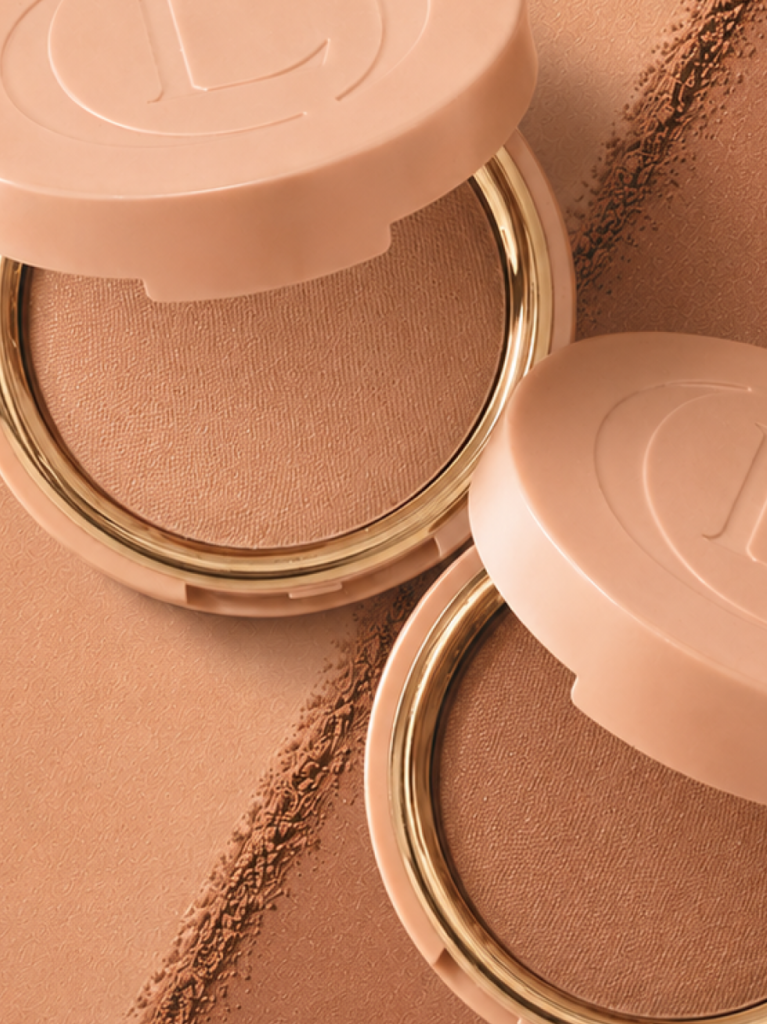
Lenoites’ Laila Högfeldt on Clean Beauty, Confidence and What’s Next for the Brand Laila Högfeldt has a simple test for whether a beauty product is any good. “You use it,” she says. Not saved for a special occasion, but reached for every morning. Since founding Lenoites in Borås in 2021, that conviction has taken the brand from direct-to-consumer sales to shelf space with some of Scandinavia’s biggest retailers, with formulas that can take years and over ten rounds of samples to get right.  Natalia Muntean: You started as an influencer before founding Lenoites in 2021. What gap in the market did you feel wasn’t being addressed?Laila Högfeldt: I noticed I’d split my products into two piles. The beautiful, high-performing ones were expensive, so I saved them for special occasions — they’d sit on my shelf barely touched. Then there was everything I actually reached for every day, which was cheaper, uninspiring to use, and didn’t really deliver. It struck me how backwards that was. Why should the products you use most be the ones that bring you the least joy? Lenoites exist to close that gap, something that performs, feels special, and still earns its place in your everyday routine. NM: What does “age-independent” beauty mean in practice when you’re developing a product?LH: It means we formulate for the concern, not the age on the label. Take a powder designed not to settle into fine lines, blurring the skin and enhancing your features: mature skin benefits from that most, but a 25-year-old isn’t worse off — if anything their makeup looks better for it, because the product lays down more evenly and smoothly than most. The need is what guides us, not a birth year. So much of beauty is marketed as “anti-age” or “for young skin,” and that framing quietly tells people what they’re allowed to buy. We’d rather just make something that works, and let you decide if it’s for you. NM: The Silky Blurring Powder Bronzer uses a baking process rather than pressed powder. Why was that technique important enough to build a product around?LH: Because you can feel the difference the second it touches your skin. Baking gives you a powder that behaves like a cream — it’s lighter, silkier, and melts into the skin instead of sitting on top of it. You get that soft-focus, blurred finish and a natural warmth, never the flat, powdery look pressed formulas can leave. It also means it flatters skin rather than settling into texture or lines. It’s a slower, more expensive way to make a bronzer, but the payoff is right there on your face. We think the result earns it. NM: The setting spray came out of “close dialogue” with your community. What does that dialogue actually look like in practice?LH: Honestly, our community is in the room far earlier than people assume. The setting spray started because so many customers asked us to make one — so instead of just doing it, we asked them what they were missing. Two things came back again and again. Either a spray held their makeup all day but left their skin dry, broke them out, and felt awful by evening. Or they’d chosen a “kinder” formula that was gentle on the skin but didn’t actually keep the makeup in place. They were being forced to pick. On top of that, alcohol-free and fragrance-free really mattered to them. So we built one that does both — it holds all day and is genuinely good for your skin, with no alcohol and no fragrance. That’s the gap we closed. When the same request keeps appearing, that’s not noise — that’s a brief. NM: Both products lean on “clean” formulas. How do you decide where to compromise, if you do, between clean formulation and performance?LH: Performance is non-negotiable — full stop. Clean is the goal, but a clean product that doesn’t perform isn’t clean, it’s just useless. So we start with what actually works, then push to make it as thoughtfully formulated as possible. And I mean push — a single product can take years to develop, with samples going back and forth more than ten times. We don’t settle until it’s exactly right. When a cleaner option performs just as well, it wins every time — but it has to earn its place first. NM: Do you see physical retail as the next phase of growth or will Lenoites primarily remain direct-to-consumer?LH: We’re already both, and that’s deliberate. You’ll find us in Kicks, Åhléns, Lyko and Matas, to name just a few, alongside our own direct channel. Selling direct lets us stay genuinely close to our customers — it’s where we learn the most. Retail gives them something online never can: the chance to touch it, feel the texture, test the shade, or simply pick it up on the spot. You need the intimacy of one and the tangibility of the other to build something that lasts — so it was never really an either/or for us. NM: FSC-certified, recyclable packaging is a stated commitment. Where has that been hardest to deliver without pushing up cost or changing the product experience?LH: When I started, I wanted packaging with no plastic at all — that was the dream. But retail taught me it’s not that simple. Some stores need a window in the packaging so the customer can see the product, otherwise you lose your place on the shelf. So we’ve had to meet both our customers and our retailers halfway on certain products. The hard part is refusing to let those compromises pile up. It would be easy to end up with packaging that’s either sustainable but feels cheap, or premium but wasteful, and we won’t accept either. It often means longer development and higher cost on our side. But I’d rather fight for every detail than pretend the trade-offs don’t exist. NM: Lenoites’ messaging ties beauty closely to self-confidence and well-being rather than just appearance. Is that solely a

Beauty Articles

It’s Going to Be a Hot Hot Summer — And CAIA Is Bringing the Glow

It’s Going to Be a Hot Hot Summer — And CAIA Is Bringing the Glow Every summer has its own mood.   This one feels sun-soaked, carefree, and filled with the kind of spontaneity that makes the best memories.   On June 11, as Europe settles into rooftop evenings, beach escapes, and long golden nights, CAIA unveils Hot Summer, a limited-edition collection that captures the feeling we spend the rest of the year chasing.   Not perfection. Not polish. A memory.   The kind of summer that lives somewhere between nostalgia and fantasy. The soundtrack is Aserejé better known as The Ketchup Song. The air smells of sunscreen and saltwater. Plans are made in the moment, beauty routines happen in taxi mirrors, and every sunset feels like the beginning of something.   With Hot Summer, CAIA taps into an unmistakably European mood. Inspired by the carefree energy of early-2000s Mediterranean holidays, the campaign celebrates a time when days felt endless, beauty was effortless, and the biggest decision was whether to stay for one more drink by the beach or head off to a villa party.   Which is exactly why the collection feels so timely. Beauty is moving towards ease, glow, and skin-first confidence. CAIA’s latest launch is an ode to uncomplicated radiance. At the heart of the collection are two limited-edition essentials designed to move with the season: the new Sun Glaze Drops Bronzing Gel, delivering natural sun-kissed warmth without shimmer or heaviness, and the Sun Filter Duo Palette, a marble-effect compact that recreates the flush and luminosity usually reserved for the final days of a holiday.   These are products made for real summer moments. Smoothed on before rushing out the door. Touched up between the beach and dinner. Tossed into an oversized tote and carried from city weekends to island escapes.   Because the best summer beauty is never overthought.   It’s lived in.   More than a collection, Hot Summer feels like an invitation. To say yes to last-minute plans. To chase sunsets. To stay out longer than intended. To embrace spontaneity. And, of course, to glow a little more. image courtesy CAIA Arriving on June 11, just as the summer social calendar begins in earnest, Hot Summer lands as both a beauty collection and a state of mind. A reminder that the most memorable summers are rarely the perfect ones.   They are the ones where you lose track of time, follow the moment, and let yourself enjoy it.   And if this season is set to be a hot one, CAIA may have just delivered its official beauty uniform.
Beauty Articles, Opiates

Charlotte Tilbury Launches the Exagger-Eyes Easy Eyeshadow Sticks

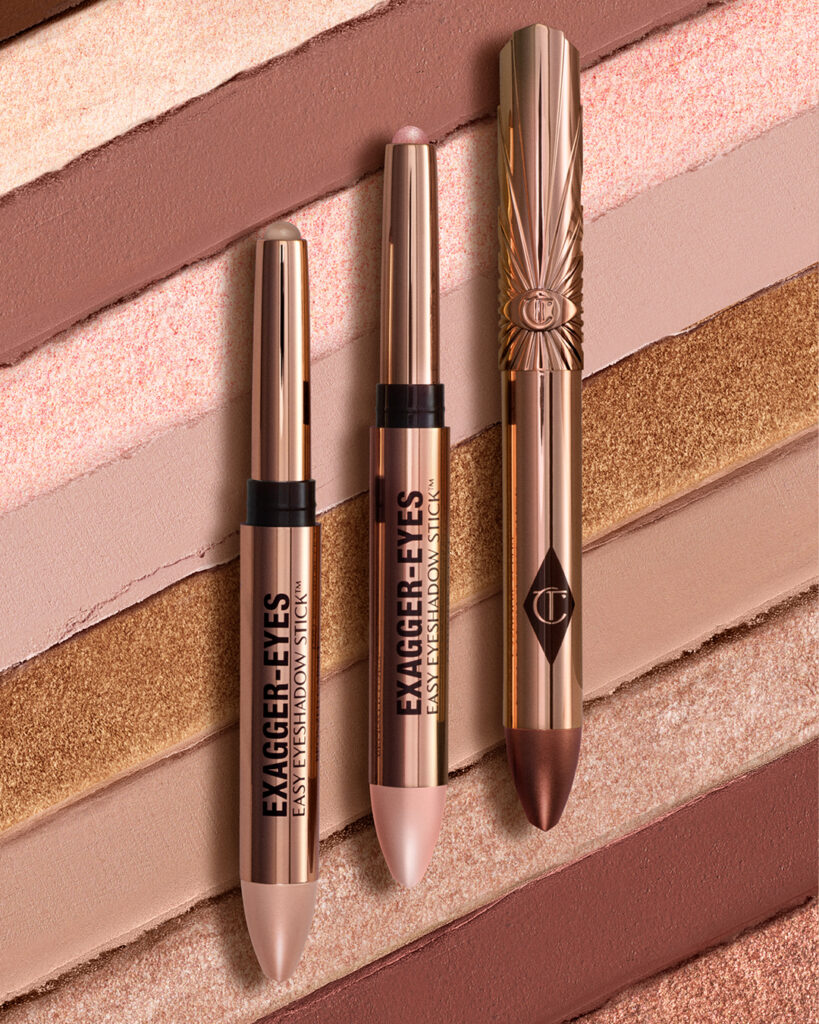
Charlotte Tilbury Launches the Exagger-Eyes Easy Eyeshadow Sticks Charlotte Tilbury has expanded its Exagger-Eyes franchise with a new product: the Exagger-Eyes Easy Eyeshadow Sticks. The format is built around simplicity, with a dome-tipped stick that glides across the lid, stays crease-proof, waterproof, and transfer-proof throughout the day. The formula can also be used on the waterline. The range launches in 12 shades split across two finishes: six Matte Blur shades for depth and definition, Nude Sculpt, Cashmere Sculpt, Mink Sculpt, Desert Sculpt, Cocoa Cherry Sculpt, and Chestnut Sculpt, and six Satin Glow shades for lift and highlight, including Satin Diamonds, Ballet Quartz, Oyster Twilight, Amber Haze, Bronzed Garnet, and Astral Topaz. The shades are designed to be worn alone or paired, with six curated looks, from Pretty & Fresh to Smokey Eye ‘Til I Die, as a starting point. “I wanted to create the perfect solution: something that glides on like a dream, gives you time to play, then sets to stay,” says Charlotte Tilbury MBE.  The sticks are applied by scribbling across the lid and blending with a fingertip or brush, finishing with the Exagger-Eyes Volume Mascara. The Self-Priming Pigments in the formula mean no separate primer is needed. In consumer testing, 93% agreed the product doesn’t crease and gives bigger, brighter-looking eyes in seconds. The Exagger-Eyes Easy Eyeshadow Sticks are available now at charlottetilbury.com.
Beauty Articles

MERIT: Where Minimalism Meets Modern Skin Care

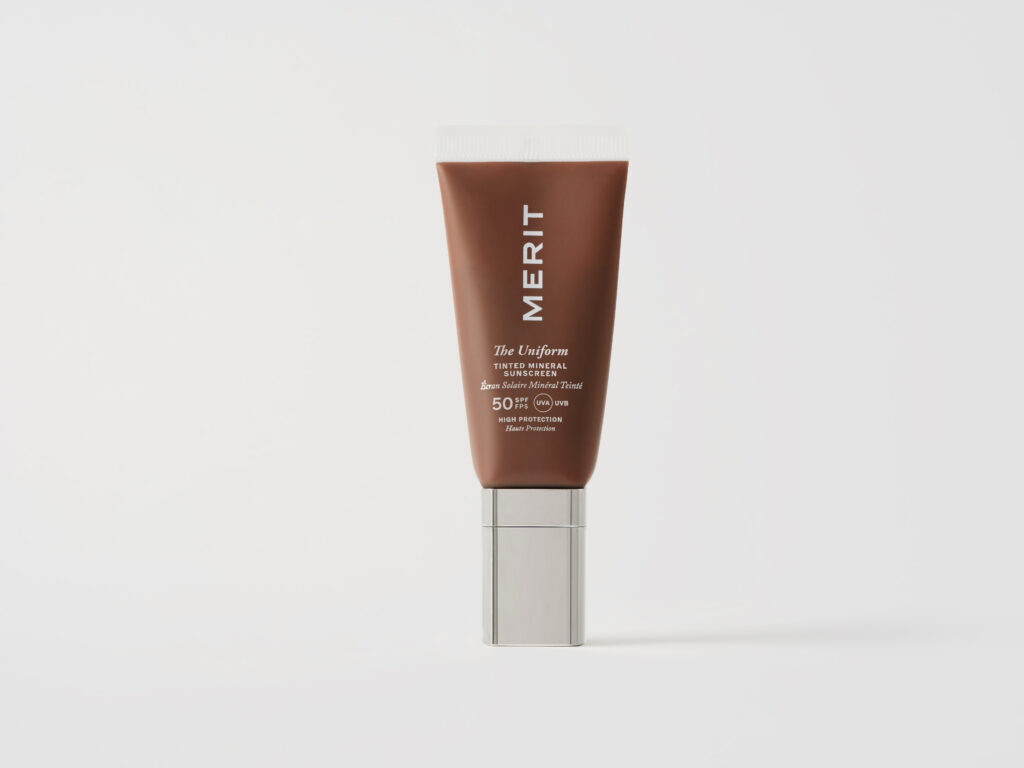
MERIT : Where Minimalism Meets Modern Skin Care As a makeup artist, I’m constantly drawn to products that don’t just perform—but simplify the entire experience. MERIT is one of those brands that keep me interested. Since its launch in 2021, it has built its identity around a clear philosophy: makeup should be effortless, intuitive, and enhance the skin rather than cover it. The aesthetic is clean, modern, and rooted in a “less is more” approach.  Many of the products are multifunctional, vegan, and designed to fit into a minimal routine. It’s everyday makeup with a refined, elevated feel—something I value both personally and in my work with clients. Their newest launch, The Uniform – a tinted lightweight mineral sunscreen has quickly become a staple in my kit. Formulated with non-nano zinc oxide, it delivers mineral broad-spectrum (UVA/UVB) protection. What I love most is how it feels on the skin. It gives a very sheer, even coverage that lets the skin show through, it looks alive and very natural. And the SPF 50 is a major plus – sun protection is non-negotiable. The texture is smooth and breathable, almost like a second skin. It delivers a healthy glow without feeling greasy or heavy, and importantly, it doesn’t leave that typical SPF film on the surface. On days when I want a bit more coverage, it builds beautifully without ever looking heavy. The shade range is thoughtfully designed, making it easy to match a wide variety of skin tones—something that’s essential in my work. With 20 shades to choose from, it offers enough flexibility and nuance for nearly everyone to find a match. What keeps me drawn to MERIT is their consistent philosophy: skin first, makeup second. Everything is designed to create a fresh, modern look that feels as good as it looks. And for me, who loves skincare, this fits perfectly. The Uniform is the perfect reflection of that—effortless, skin-focused, and exactly what modern beauty should be. By Sanna Image courtesy of Merit 

Beauty Articles

L’AURA: A New Swedish Premium Wellness Brand for Women

L’AURA: A New Swedish Premium Wellness Brand for Women L’AURA is a new Swedish premium brand focused on women’s health, created for those seeking quality, clarity, and modern wellness routines. Founded by Elin Mendola, L’AURA offers simpler, more effective supplements for women, developed with clinically studied ingredients, advanced liposomal technology, and clean formulations. The goal is to make wellness both simple and beautiful. Products are designed to look stylish in your bathroom or kitchen, with easy pipette dosing. All L’AURA products are developed in collaboration with experts and manufactured in a GMP certified facility in the UK. Formulations are vegan, gluten free, non GMO, and free from fillers or unnecessarily complex blends. Designed to accompany women throughout their lives. The first two products, Cycle Flow and Glow Elixir, will be followed by additional supplements tailored to different life stages, always liposomal, science backed, simple, and purpose driven, explains Elin Mendola. Women’s health is one of the fastest growing categories in wellness today. Interest in hormonal balance, energy, skin health, and how women’s needs change through life is increasing steadily. At the same time, more consumers are seeking cleaner products with clear benefits, a philosophy where fewer, better choices take priority. This is the space where L’AURA steps in. The brand focuses on liquid liposomal formulations, often hailed as the next generation of supplement delivery due to improved absorption, clean ingredients, and easy everyday use. While L’AURA primarily targets women aged 35 to 65, its approach appeals to anyone seeking a thoughtful, modern relationship with their health. “L’AURA started with a simple insight: women deserve clearer, more thoughtful supplements. After years of complicated routines, many products, and confusing information, it was clear the market lacked an option that was both science based and easy to understand. I wanted to create a cleaner format, science backed and simple enough to use every day,” says Elin Mendola, founder of L’AURA. Cycle Flow for Supporting Your Natural RhythmA liposomal liquid supplement designed to support women’s natural rhythm throughout the month. The formula contains vitamin B6, vitamin B12, zinc, and maca, carefully selected ingredients that contribute to normal hormonal activity, energy, and reduced fatigue. Modern and simple to use daily, with a refreshing lemon and ginger flavor. Price 499 SEK (recommended dose 60 ml / 2 ml per day). Glow Elixir for Skin, Hair, and NailsA liposomal beauty supplement in liquid form combining biotin, vitamins C and E, zinc, hyaluronic acid, and lycopene. These ingredients support the body’s natural processes for skin, hair, and nails, and help protect cells against oxidative stress. The formula supports normal skin function and daily balance, with a light lemon and ginger taste. Price 449 SEK (recommended dose 60 ml / 2 ml per day). L’AURA products are available from February 2026, exclusively online at www.mylaurahealth.com, through Meds.com, and at VANA SPA in Vasastan.

Beauty Articles

On Building Better Beauty: A Conversation with Andrea Rudolph

On Building Better Beauty: A Conversation with Andrea Rudolph text Natalia Muntean Rudolph Care has always moved at its own pace. Since the beginning, the vision has been clear and uncompromising, even as the beauty industry around it has accelerated at lightning speed. “Our vision remains the same,” Andrea Rudolph says. “To demonstrate that it’s possible to create something truly effective and sensorial, while also taking care of your health, nature and the future. But it is a very long and difficult journey.” Founded in 2009, Rudolph Care was built on the conviction that luxurious skincare does not have to come at the expense of responsibility. The Danish journalist set out to prove that quality, safety and respect for life could coexist with high performance and pleasure. That conviction still guides the brand today. “Rudolph Care has never been about rushing or launching countless new products,” she explains. “From the very beginning, we chose to do things properly.” Looking out at the wider landscape, Andrea Rudolph notes how quickly the beauty industry continues to expand, with an ever-growing flow of new products and trends. Against that backdrop, Rudolph Care has remained committed to its original principles, focusing on depth rather than speed, and on long-term responsibility rather than rapid growth. That long-term thinking has shaped every aspect of the brand – from its deliberately slow international expansion to its lasting relationship with the Amazon. The discovery of the açai berry came during a trip to Brazil while Rudolph was pregnant with her first daughter, a moment she remembers as almost serendipitous. “Everything was just falling into place,” she recalls. The ingredient’s powerful properties, combined with visual inspiration drawn from the violet and matte colours of a nocturnal moth, formed the foundation for what would grow into one of the most recognisable Danish brands. “That just became kind of meaningful.” Nearly two decades later, açai remains central, not only as an ingredient, but as a philosophy. Rudolph Care continues to collaborate with around 200 local families in the Amazon, supporting education and protecting the wild forest land. “The more we sell, the more we protect,” Rudolph says. “Harvesting the berries is a way to give peace to this place and not cut down the trees.” Today, nearly 20 years after Andrea Rudolph had the idea for Rudolph Care, she remains both pragmatic and hopeful. “I really hope there will be more brands like ours so we can lift together,” she says. “We need an international voice when it comes to responsibility.” And despite the frustrations, giving up has never been an option. “I cannot stop,” she admits. Natalia Muntean: You launched Rudolph Care in 2009. How has your vision of the brand evolved since then?Andrea Rudolph: Actually, the vision hasn’t changed much. Rudolph Care’s vision has never been about rushing or launching countless new products, we chose to do things properly from the very beginning. There is a constant stream of new products and trends entering the market, especially targeting children and young people. Products filled with plastic, chemicals and lacking proper certification. Our vision remains the same. To demonstrate that it’s possible to create something truly effective and sensorial, while also taking care of your health, nature and the future. It is a long and challenging journey, and it has never been about quick money. NM: Tell me a little bit about the focus or the star of your brand, the açai berry.AR: It was a long time ago. I was pregnant with my daughter, and we were in Brazil. Around that time, Greenpeace had asked me to join a campaign where they tested people’s blood, and I thought I would do very well because I felt healthy and grew up with organic food. I was shocked because it turned out that I was the one with the most chemicals in my blood, and far more of the harmful ones. I realised then that so much of it comes from beauty products, and I started looking for the right ingredients because I wanted something that truly works, but at the same time, I wanted it to be safe. We were sitting on the beach in Brazil, eating açai ice cream – a frozen blend of the açai berry that is really tasty. As we talked about the berry, someone said, “Oh yeah, this fruit is so amazing. It has these benefits and so many antioxidants.” I began exploring the berry more deeply, discovering the documented effects of its unique properties on the skin, results that can be seen and felt. And then, everything was just falling into place. We had another magical moment where we saw a beautiful moth, like a butterfly that is awake at night, and its colours became an inspiration for how the product packaging was going to look; the violet, rose and grey – and the matte finish. NM: That just became kind of meaningful.AR: Exactly. And the açai is really powerful. What we have now is a collaboration for almost 20 years with 200 local families in the Amazon. It’s a community out in the Amazon wild; it’s not harvested from a plantation. Harvesting the açai berries every year is a way to bring peace to this place and not cut down the trees and the forest. The more we sell, the more we protect. We protect quite a big area. We produce the açai oil close to its source and then bring it to Denmark. All our products are made in Denmark, and all packaging is sourced from Europe. We work closely and do a lot of things with this community. We support the local school for the kids, we made a new roof, bought new furniture and books. We really want the girls and all the kids to go to school. NM: You mentioned expanding into several markets. Were there some markets more difficult to convince about your vision?AR: I think for me, it’s been important that we grow in a slow, natural way

Scroll to Top