Author name: Elsa Chagot

Opiates

Stine Goya Featured in “Emily in Paris”

Stine Goya Feautured in “Emily in Paris” images courtesy of Stine Goya Stine Goya, the Copenhagen-based fashion house celebrated for its expressive prints and playful sophistication, unveils an exclusive capsule collection created for the hit series Emily in Paris. Designed especially for the show’s protagonist, Emily Cooper, the capsule centres on a white silk set adorned with delicate black dots — a reimagined version of one of the brand’s most recognisable signatures. Tailor-made for the series, the look balances effortless elegance with a modern sensibility, reflecting both the character’s evolving style and Stine Goya’s refined approach to femininity. Crafted in luxurious silk, the dotted ensemble brings a sense of understated glamour to Emily’s on-screen wardrobe, seamlessly fitting into the show’s romantic European backdrop. The limited capsule collection launches on 18 December and will be available in selected stores and at stinegoya.com

Fashion Editorial

Frostbite

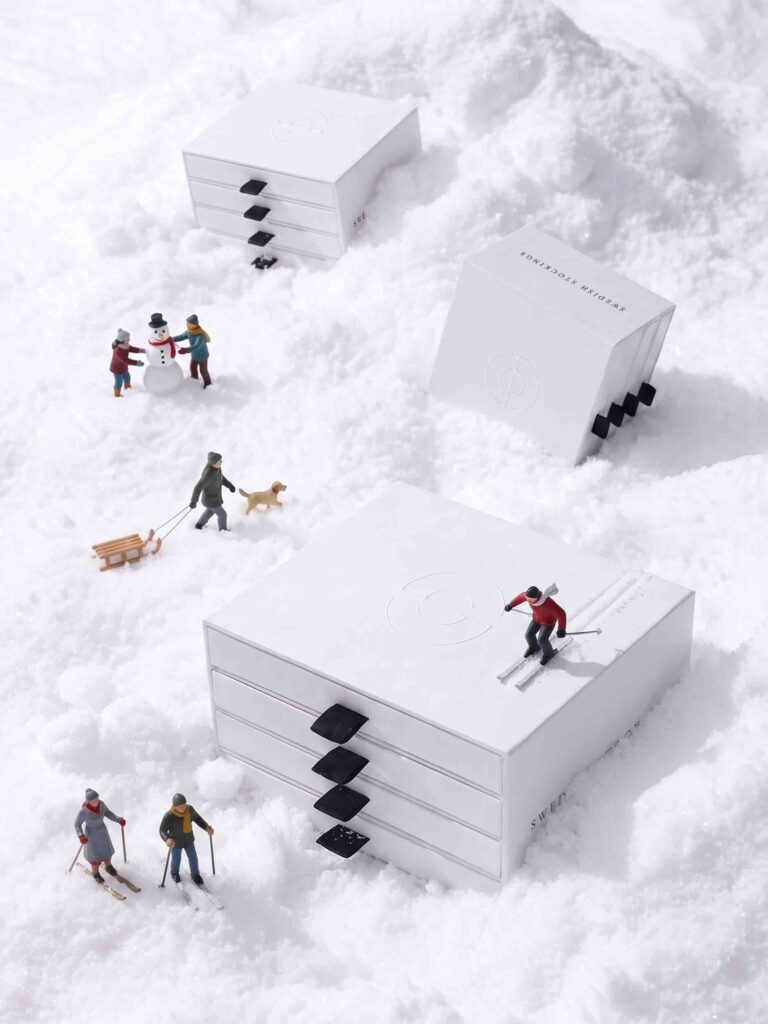
Frostbite photography Jasko Bobar fashion Clara Liisberg  makeup Vilde Feste  model Vigga Lindvig / Unique Models jacket Celine stockings Swedish Stockings shoes Celine skin MAC Studio Radiance Face And Body Radiant Sheer Foundation MAC Glow Play Cushiony Blush color Totally Synced eyes MAC Vanilla Pigment  lips MAC Dazzlelips Crayon Color Spaced out jacket Karl Lagerfeld at Zalando skin MAC Studio Radiance Face And Body Radiant Sheer Foundation MAC Glow Play Cushiony Blush color Totally Synced eyes MAC Vanilla Pigment  lips MAC Dazzlelips Crayon Color Spaced out skin Bobbi Brown Vitamin Enriched Face base  MAC Studio Radiance Face And Body Radiant Sheer Foundation lips MAC Retro Matte Liquid Lipcolour Dance with me  MAC Powder Kiss Liquid Lipcolour MACSmash total look Chanel skin MAC Studio Radiance Face And Body Radiant Sheer Foundation LH Cosmetics Infinity glass eyes MAC Pro Longwear Fluidline Eye Liner And Brow Gel  lips MAC Squirt Plumping Gloss Stick Color Jet turtleneck Tiger of Sweden skirt Herskind skin Bobbi Brown Vitamin Enriched Face base  MAC Studio Radiance Face And Body Radiant Sheer Foundation lips MAC Retro Matte Liquid Lipcolour Dance with me  MAC Powder Kiss Liquid Lipcolour MACSmash  turtleneck Hermés skirt Hermés skin MAC Studio Radiance Face And Body Radiant Sheer Foundation MAC Glow Play Cushiony Blush color Totally Synced eyes MAC Vanilla Pigment  lips MAC Dazzlelips Crayon Color Spaced out skin MAC Studio Radiance Face And Body Radiant Sheer Foundation MAC Glow Play Cushiony Blush color Totally Synced Eyes MAC Vanilla Pigment  earrings Kindraden skin MAC Studio Radiance Face And Body Radiant Sheer Foundation LH Cosmetics Infinity glass eyes MAC Pro Longwear Fluidline Eye Liner And Brow Gel  lips MAC Squirt Plumping Gloss Stick Color Jet dress Cecilie Bahnsen gloves Agnelle at Zalando poncho By Malene Birger skirt By Malene Birger bracelet Agmes skin Bobbi Brown Vitamin Enriched Face base MAC Studio Radiance Face And Body Radiant Sheer Foundation lips MAC Retro Matte Liquid Lipcolour Dance with me  MAC Powder Kiss Liquid Lipcolour MACSmash Dress, Tove at Zalando Earrings, Bottega Veneta Skin MAC Studio Fix Powder Plus Foundation Eyes MAC 3D Silver GlitterLips TOM Ford Sunlit Rose Lip Balm shirt Anine Lykke Smed skirt Herskind stockings Swedish Stockings pumps Miista at Zalando skin MAC Studio Fix Powder Plus Foundation eyes MAC 3D Silver Glitter lips TOM Ford Sunlit Rose Lip Balm Skin MAC Studio Fix Powder Plus Foundation Eyes MAC 3D Silver Glitter Lips TOM Ford Sunlit Rose Lip Balm fur By Malene Birger earrings, David Andersson skin Bobbi Brown Vitamin Enriched Face base MAC Studio Radiance Face And Body Radiant Sheer Foundation lips MAC Retro Matte Liquid Lipcolour Dance with me  MAC Powder Kiss Liquid Lipcolour MACSmash turtleneck Tiger of Sweden skin Bobbi Brown Vitamin Enriched Face base  MAC Studio Radiance Face And Body Radiant Sheer Foundation lips MAC Retro Matte Liquid Lipcolour Dance with me  MAC Powder Kiss Liquid Lipcolour MACSmash dress Cecilie Bahnsen earrings Moschino at Zalando skin MAC Studio Fix Powder Plus Foundation eyes MAC 3D Silver Glitter lips TOM Ford Sunlit Rose Lip Balm

Art

This Woman’s Work – An Interview With Lynne Tillman

Ulrika Lindqvist: You first released Weird Fucks in the magazine Bikini Girl in 1980. How has the response, both critically and from readers, shaped your perception of the novel over time? Lynne Tillman: In 1980, “Weird Fucks” was published in a pink magazine called BIKINI GIRL, edited by Lisa Baumgardner. Lisa and Bikini Girl were associated with Club 57, a punk place. Weird Fucks, in manuscript was 62 pp in manuscript but it was printed in 7 pt type on very wide pages, so it almost disappeared in the mag. Very disappointing. It didn’t circulate well, maybe 500 or 1,000 copies. No one really saw it. So I’d say it wasn’t published, in a way. I gave readings from it, so if people knew about it, that’s how, and not from reading it themselves. Other people did artist or limited editions, I’d call them; Jim Haynes did one from Paris. Again, no visibility or distribution in the usual sense. In New Her- ring Press (2014), a small, indie press, published it in its correct form, that is, with a few changes I made. Artist Amy Sillman did the amazing cover and all the illustra- tions – a beautiful book, but again in a limited edition. So, there was little to no response to Weird Fucks until Peninsula Press published it in 2022. Oddly, it became a bestseller, which amazed me. Then responses came, reviews, social media, emails, the lot of it. Artist Hilary Harkness’s cover, based on her Stein/Toklas series of paintings were also amazingly helpful to the book. Wild and fascinating and gorgeous. So, responses, yes, finally. I had little perception, in the way you mean, before then. I believed it could appeal to contemporary readers. I wrote it with an eye to univer- sals, and by that I mean, things and events that happen again and again in people’s lives. In 1980, maybe, maybe fewer guys would have read it. Now, it’s a novel that has crossed over that arbitrary, highly gendered border. Thankfully. UL: What a journey Weird Fucks has had! Also,the cover is really amazing. I think Weird Fucks is very contemporary, it aligns with authors like Sally Rooney, Ottessa Moshfegh and Emma Cline, but you wrote it so long before. Maybe that tells of the timeless troubles of being a young woman? Or just a young human? LT: Of being human, and young, and a young woman, and a man who has sex with a woman, maybe one he’s just met, etc. Sex is universal. There are different ways to do it, and queer women and men also relate to Weird Fucks, because the weird is the situations and conditions of encounters around sex. What’s most important, I think, is the style of Weird Fucks. It took me two years to write it, my first longish thing, and every word was considered closely. Style was very important. I wanted it to be tough and also lyrical. I mostly left room for readers. UL: Now that Weird Fucks is being translated and reaching entirely new audiences more than 50 years after its original release, what is it like to witness the novel take on this second life? LT: It’s really having its first life. UL: And finally, that is! You have written several other novels – No Lease on Life was a finalist for the National Book Critics Circle Award in fiction. Have these other novels started living their first lives earlier, and how does that experience differ from the one with Weird Fucks? LT: Let’s see, I’ve written six other novels, starting with Haunted Houses and, most recently, Men and Appari- tions, which is very much about young men. Peninsula Press is giving them life in the UK, and I hope other foreign presses will consider them. And they all had first lives in the US, and a few were published in the UK in the early 1990s, but they had a very small impact, very few readers. Weird Fucks became a bestseller. None of the others have…yet. photography Craig Mod UL: What was the inspiration behind Weird Fucks? Did any particular events, ideas, or themes inspire you more during the writing process? LT: The sexual revolution, the pill, feminism, questioning gendered roles, these were changing — and still are — and I didn’t see fiction that, to my mind, took on what was happening, how girls, women, boys, men were being affected. The novels that did represent young women’s lives were, for me, not interesting formally, as writing, and were usually too sentimental, and too much about women as victims of the changes. The birth control pill was revolutionary, when you realise that over millennia, women couldn’t control their pregnancies. Having unwanted babies enslaved women to their bodies. We couldn’t talk at all about gender without the pill allowing women this very urgent freedom. UL: That’s really a big change for women, in society as well as in personal lives. Do you have any artists or authors whose work inspire you? LT: Oh, too many to mention, really. In fiction, most important, Jane Bowles, her stories and her one and only novel, Two Serious Ladies. Reading it openedup a uniquely written world in which her girls and women characters stretched the bounds of female representation. Her writing is stark, unsentimental, and often hilarious. Bowles is very smart, very different — her dialogue, no one writes anything close to its unusual brilliance. Bowles’ mind, her language, her way of seeing human beings… Kafka, Thomas Mann, Colette, Jean Rhys, Joseph Roth, Flaubert, again, too many. Visual artists, four going back into history, Caravaggio, Velázquez, Courbet, and Matisse. dead contemporary painters: Peter Dreher, Susan Rothenberg… I’ll leave it there. And there’s installation and sculpture and video…. Photography: Diane Arbus, Robert Frank; Pictures Generation, including Cindy Sherman, Barbara Kruger, Laurie Simmons, Stephen Shore, and newer photographers, etc. Film: Ozu, Hitchcock, Chantal Akerman, Agnes Varda, Fassbinder, Suzanne Bier, many others. I haven’t even mentioned doc filmmakers. Warhol radically

Fashion Articles

Benjamine Cadette – An Interview With the Designer

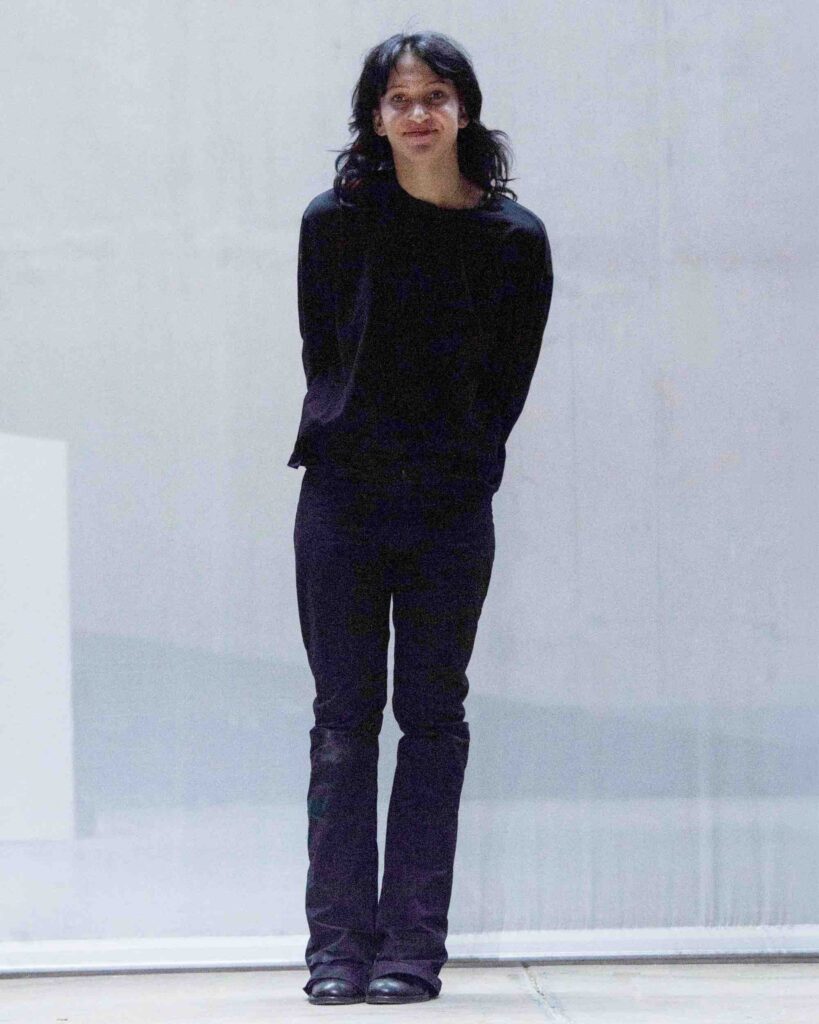
Benjamine Cadette – An Interview With The Designer text Elsa Chagot photography Viktor Tägt Ring images courtesy of Benjamine Cadette Moving between Seoul, Paris, Seattle and now Stockholm, designer Hyoung Ook Choi has shaped his brand, Benjamine Cadette, as a world built on dualities; organic emotion and architectural structure, instinctive expression and refined restraint. His practice is guided not by trend or reference, but by observation: the behaviour of plants, the rhythm of cultural landscapes, and the subtle ways a garment can align with its wearer rather than impose upon them.  In conversation with Odalisque Magazine, Choi reflects on the evolution of his aesthetic, the layered meanings behind his two collections, and the philosophy that anchors his approach to design. Elsa Chagot: Tell us about your journey toward becoming a designer – how that path began and evolved for you. And following that, how did Benjamine Cadette come to life and develop into the brand it is today? Hyoung Ook (Benjamin) Choi: I grew up in the countryside, where I spent much of my childhood with plant and animal encyclopedias open in front of me, observing nature closely. I was fascinated by why certain plants grew only in specific environments and how small living organisms negotiated space with one another. These early observations shaped my eye for structure and planted a deep sense of sensory curiosity. My years in Paris expanded that sensitivity in a new direction. Realizing that what I found beautiful could evoke the same emotion in others was a quiet but important confirmation. For the first time, I felt that the way I see the world could become more than personal taste — it could evolve into a kind of language. When I returned to Korea, I wanted to bring together the sensibilities and experiences I had accumulated over the years. From that flow, Benjamine Cadette was born. Later, when I moved to the United States, my work shifted once again. Living closer to nature and collaborating frequently with local creatives, I often found moments where my clothing blended effortlessly into the surrounding landscape. This harmony gave me confidence that my aesthetic was not tied to a single place — it could find its place naturally in new environments. Looking back, becoming a designer was never the result of a single decision. It was built from layers of observation nurtured by nature, sensibilities gifted by different cities, and the traces left by moving through cultures and environments. All of these accumulated to form who I am today. Benjamine Cadette continues to grow through understated emotion and restrained beauty. The layers of time I have lived — the nature, the cities, the people — remain quietly embedded in the shapes and textures of the clothes. E: What specific experiences or influences have most profoundly shaped your personal aesthetic or the way you perceive fashion? B: No, I didn’t get inspired by other designers or whatever, just my lifestyle. And yeah, I think a lot of myself, what I want. E: Your journey spans Seoul, Paris, Seattle, and now Stockholm. How have these diverse cultural environments shaped not only your aesthetic, but also the way you understand fashion as a cultural language? B: Experiencing life across Seoul, Paris, Seattle, and now Stockholm has given me one clear understanding: the more diverse the cultural landscape becomes, the more fashion — as a cultural language — demands a pure form of expression. Just as people can misunderstand each other even while speaking the same verbal language, fashion can also be misread within the same culture. These experiences taught me that sincerity, emotional honesty, and expressing what feels truly ‘mine’ are what allow fashion to communicate clearly across cultural boundaries. portrait photography Sandra Myhrberg métier moment moment The more I moved between cultures, the more external decoration and explanation lost their power. Instead, I learned that raw, instinctive, and original expression carries a deeper resonance. Whenever I worked from that place of honesty, the reactions to my clothes felt warmer, more human, and more profound. Ultimately, this journey made one direction very clear to me: to express myself more purely, more truthfully, and more in alignment with who I am. I believe that is the cultural language of fashion that remains authentic, even when the culture shifts. E: How do you balance individual creativity and expression with the practical, commercial realities of building a collection?  B: In the early stages of running my brand, I naturally adapted to the commercial realities of the business. However, as time went by, I realized that if my personal creativity is not fully expressed, the brand’s character and identity can begin to fade. That is why I actively propose and pursue various collaborations, and especially through the Métier line, I am able to express my creativity in a deeper and more meaningful way. By finding this balance between practical considerations and creative expression, I ensure that the brand continues to grow without losing its essence. E: When looking at your collections Métier and Moment, I see two distinct yet connected worlds. Métier with its emotional lightness and organic, more nature-driven femininity, and Moment with its more structured, architectural approach.  What guided you in defining these collections as separate expressions within the brand? And how are these identities evolving as you move into the next collection – what can we expect to see? B: The name Benjamine Cadette is built on dualities; each word holds two meanings. Benjamine can sound like a masculine name while also meaning “youngest sister.” Cadette refers to an aristocratic soldier going to war for the first time, but in its feminine form also means “younger sister.” These layered meanings naturally shaped the structure of the brand. Métier is the line that expresses the brand’s essence in its most vivid and raw form — where nature and my cultural roots appear most clearly. Moment refines the same sensibility and philosophy into the language of everyday life — a world that moves quietly

Art

Between Surrealism, Memory and the Female Gaze – An Interview With Sanna Fried

Between Surrealism, Memory and the Female Gaze – An Interview With Sanna Fried text Elsa Chagot photography Sandra Myhrberg In her paintings, Sanna Fried moves between worlds; the commercial imagery of her former fashion career, the emotional intensity of female surrealism, and the lived realities of women who stand outside narratives. Speaking with Odalisque Magazine, she reflects on returning to fine art, the women who shaped her visual language, and the ongoing project that challenges the ways society interprets female autonomy and desire. Elsa Chagot: You began your career in fashion before fully turning to painting. How has that background shaped the way you approach art today? Sanna Fried: Although painting has always been my deepest passion, and I went to a foundation art school, Nyckelviken, in Stockholm, at 23 my focus shifted towards fashion. Unexperienced, barely speaking English, but with a determination, I moved to New York City to fulfill my dream to work as a fashion editor. Suddenly a formative decade had gone by, working with clients such as Vogue, Vera Wang, Cartier, and Missoni but I felt something was missing me- the art! The beginning of the pandemic became a turning point for me and I felt the call to return to fine art. I spent the first part of the pandemic on a beach in Costa Rica where I spent my time studying art and practicing, painting oil on canvas but also murals. In my search for what is my artistic voice I found inspiration in the female surrealist movement and artists like Remedios Varo, Dorothea Tanning and Leonor Fini together with masters of expressional portraiture like Mary Cassatt, John Singer Sargent and Diego Rivera. The inspiration I found in the history of art began to intertwine with my greatest influences from fashion photography. I’m deeply inspired by Paolo Roversi’s portraits- how a single image can hold an entire story, and by Richard Avedon’s In the American West– where he in portraits reveals the soul of his subjects using no more context than a white backdrop. Like Warhol, my years in the commercial industry eventually led me back to the path of creating fine art, now deeply influenced by the language of commercial visual storytelling, and fashion photography. This foundation continues to impact my painting, inform my compositions and my curiosity in challenging what an image can be. EC: You cite artists like Remedios Varo, Dorothea Tanning, and Leonor Fini as influences. What draws you to these female surrealists? SF: In the later part of the pandemic I moved to Mexico City and ended up being Mexico bound for about 2 years. There, an entirely new visual world opened up to me — shaped by Mexico’s centuries-old cultural heritage and its long traditions of visual and artisanal arts, and reflected so clearly in the city’s many museums and cultural institutions. One of the first things I noticed was Mexico’s tradition of honoring female craftsmanship. Because of this, female contemporary artists have, in a very organic way, been given the spotlight they deserve. Discovering women artists who are barely mentioned in European and American art books — yet in Mexico are considered part of the country’s most important contemporary heritage — was extremely liberating for me. The women you mention were the ones who spoke to me the most: female artists working during modernism, going their own way. Using the bold colors of fauvism, blending rich detail with surreal elements, and bringing forward their most personal thoughts and emotions without censorship or fear — through their art. art Sanna Fried My own art has always been about not trying to satisfy the audience, but instead addressing the subjects that matter to me — and mental health is one of the most important among them. These women all had roots in Europe, yet each of them found her artistic identity through Latin America. I relate to that. I’m a woman from Europe, a context where female artists have always been, and still are, underrepresented. Finding my own artistic voice in Mexico, I discovered in these women not only new inspiration, but also a new sense of confidence as an artist. EC: You’ve drawn interest from both the fashion industry and female surrealists. What happens internally when those two worlds meet; the commercial and the surreal, the stylized and the raw? SF: For me, those two worlds meet very naturally. Fashion taught me to think in images — how a single frame can communicate mood, narrative, and identity with clarity and intention. Female surrealism, on the other hand, opened the door to everything that doesn’t need to be explained: symbolism, intuition, and the emotional layers beneath the surface. So internally it’s not a clash, it’s a dialogue. Fashion and commercial brings structure, composition, and a trained eye for detail; surrealism brings freedom and experimentation. One part of me builds the image carefully- the other part pushes me to let go a bit and let something unexpected in, or sometimes even something uncomfortable. In that overlap my work starts to feel honest to me and I find the balance between control and instinct. EC: I’ve heard artists describe their works as their children. What’s your personal take on that idea when it’s applied to your own art? SF: I can relate to that idea. My paintings do feel like my children in many ways.  Creating a painting is a slow process where you give something of yourself in order to bring something new into the world. There’s care, time, frustration, joy- and then a moment when the work no longer belongs to you, but has a life of its own. EC: You lead community workshops combining art and hospitality. Can you tell us more about that and its effect? SF: I started to shape my creative workshops during the first half of the pandemic, when I was living between Costa Rica and Tulum- two places with strong spiritual communities. I needed to find a way to support myself, and

Beauty Articles

BLEU DE CHANEL L’EXCLUSIF

BLEU DE CHANEL L’EXCLUSIF text Elsa Chagot   images courtesy of CHANEL  A colour beyond colour, a blue like no other. Intense, infinite, and elusive, BLEU DE CHANEL L’EXCLUSIF marks a new chapter for the House’s most iconic masculine fragrance. More than a scent, it is a statement: an exploration of boundless vision and the power of beginnings. With this creation, Olivier Polge, CHANEL Parfumeur, redefines the codes of modern masculinity. The fragrance unveils an amber-woody accord of remarkable depth, where majestic sandalwood meets the leathery warmth of cistus labdanum. It is a scent of strength and sensuality; rich, complex, and magnetic. At its heart lies a rare sandalwood extract from Maré, New Caledonia, sustainably cultivated through CHANEL’s dedicated supply chain. This meticulous process ensures both ethical sourcing and the preservation of the ingredient’s natural intensity. The result is a fragrance that feels alive, enveloping, mysterious, and timeless. The bottle, a study in chiaroscuro, captures this same duality. Its pure, architectural lines reveal a blue so deep it borders on black – a radical hue that reflects the infinite horizon of possibility. Fronting the campaign, Timothée Chalamet embodies the spirit of the fragrances: audacious, uncontainable, and in constant motion. His energy mirrors the fragrance itself: a convergence of instinct, curiosity, and fearless creativity. With BLEU DE CHANEL L’EXCLUSIF, the House pushes its legacy to new heights. It is not only a reinterpretation, but a reimagining of what a masculine scent could be. 

Music

Cosima Olu – Finding Light in the In Between

Cosima Olu – Finding Light in the In Between text Elsa Chagot photography Elvira Glänte Swedish artist, songwriter, and producer Cosima Olu has carved out a space uniquely her own; blending soulful melodies, acoustic textures, and thoughtful lyricism. With roots embedded within music and art, she approaches her craft with honesty and emotional depth. In this conversation with Odalisque Magazine, Cosima opens up about her creative journey, the personal experiences that shaped her latest album In Between, and the power of staying true to oneself Elsa Chagot: How did your journey with music begin, and how have you grown into the artist, songwriter, and producer you are today? Did it always feel like a natural step? Cosima Olu: My relationship with music has always been strong. Both of my parents were musicians – my father was a jazz pianist, and my mother was a classical pianist and musicologist. I would simply say that I’ve been privileged to have had music around me since childhood. Not only did my parents introduce me to their love of music, but also to their love of theatre, opera, art, and nature. I’ve been in the music industry for quite some time now – working, collaborating, and performing with many different artists and musicians. My craft as a musician has always felt natural to me, but taking the step forward as an artist has been something different. My main focus has been on the process of creating music, and on making music that truly makes sense to me. Although I’ve always struggled with nervousness and anxiety that strike every now and then – which isn’t always ideal as an artist, since we often focus so much on ourselves – releasing my own music has helped me be kinder to myself and more present in general. When I write, I usually describe a chapter or situation from my own experiences. I’m also a strong advocate for independent music creators – own your own music! – but there’s also a downside to it. You invest so many hours, so much effort and money into your art without any guarantee it will be heard. Many decisions must be made, which can feel quite lonely at times. But hey – at last, you finish your album, and what a huge reward that is! The creative freedom I have as an independent artist allows me to stay true to myself. EC: Your new album has been described as a blend of alternative soul, acoustic pop and progressive RnB. Do you have any particular influences, such as artists, that shaped this new sound and identity? OU: When I write music, I don’t think in terms of a specific genre. Honestly, I think we’re too obsessed with categorizing things. But of course, every form of art is influenced by many different expressions.  I’ve been a music lover from the very start and have always listened to all kinds of music. In high school, I listened a lot to 90s R&B such as Aaliyah, TLC, and Whitney Houston — but I was also a huge fan of movie music. (I even had The Lord of the Rings soundtrack in my Walkman (!!) — a true nerd, haha!)  As a singer, Donny Hathaway has always been my role model. In recent years, jazz and instrumental music have had a big impact on me — both as a listener and as a creator. After my first album Magnolia, I felt a strong urge to write and produce more acoustic, upbeat music and to embrace my love for R&B. EC: You took a break from music after a dark period in your life. How did that affect you personally, and how has it influenced your new music? OU: This period was crucial for me. Losing both of my parents within a year and a half affected me deeply as a person — and naturally, it also left a strong mark on my music, especially in the aftermath. Losing your roots affects your future. Losing control of what was happening forced me to take a step back. I had to be patient and adapt to a new state of mind. Some days were harder than others. But during that time, I also met the love of my life. It’s funny how life can offer both sadness and happiness at the same time. I believe this period made me more humble, compassionate, and perceptive. In my music, it’s important for me to stay true to who I am and where I come from. I think that comes through to my listeners, and I hope my music can radiate tenderness, hopefulness, and happiness at the same time. EC: How did you eventually find your way back to music after your break? OU: I guess it’s the pursuit of expressing myself. For me, music is a language — one that often feels easier to speak. I can use sounds and melodies to create a certain mood, or add lyrics to make the purpose of the song more direct. So, I think the break made me realize how essential it is for me to write my own music. It’s important for me to nurture my musical instinct — otherwise, I think I’d feel a bit down all the time, haha. EC: What does In Between mean to you personally? OU: It represents both an emotional state of being in between sorrow and joy, light and darkness. The album is about being present in that space — when you’re losing control and simply have to keep going. “In Between” also means staying true to my own expression. I often hear that my music is too jazzy from a pop-oriented point of view — and vice versa. I’ve been told many times that my music is hard to label and doesn’t fit neatly into a specific genre.To me, that’s a good thing. So, I’m sorry to say — In Between is not jazz, and it’s not pop. It’s not soul, and it’s

Design

Mizetto Launches Modular Sofa Cargo in Sweden

Mizetto Launches Modular Sofa Cargo in Sweden text Elsa Chagot With roots in Småland and a string of design awards, Swedish brand Mizetto is now launching its  modular sofa, Cargo, designed by the Kalmar-based studio ADDI. Following acclaimed debuts at NeoCon in Chicago and New York Design Week, Cargo was introduced to the Swedish market on September 9, 2025. Founded in 2004 by Malin and Richard Muskala, Mizetto has grown from a small storage-solutions company in Småland to an internationally recognized design brand with showrooms in Stockholm, Hamburg, and Chicago, as well as collaborations with global fashion houses including Gucci, Chanel, and Jacquemus. Cargo represents a bold step into the sofa segment. Inspired by the cube, its modular design allows endless layouts, from large open spaces to narrow passages. The backrest doubles as an interactive architectural element, while attachable tray tables add flexibility, turning Cargo into a workstation, meeting hub, or relaxation spot. The design of Cargo also emphasizes sustainability. Mizetto’s mostly local production in Kalmar, close relationships with nearby suppliers, and short transport chains ensure better quality and promotes sustainability. Fabrics are removable and replaceable and all components are designed for repair, reuse, or recycling, which ensures longevity as well as aesthetic durability.

Scroll to Top