Rethinking Retinol at ZO Skin Health — An Interview with Raffi J. Balian
A percentage can be persuasive. Printed on a skincare bottle, it offers a seemingly simple way to judge strength, compare formulas and decide what might work. But for Raffi J. Balian, Head of Research & Innovation at ZO Skin Health, the number tells only part of the story. His focus is on what happens to retinol beyond the label: how it is protected within a formula, then released and delivered to the skin.
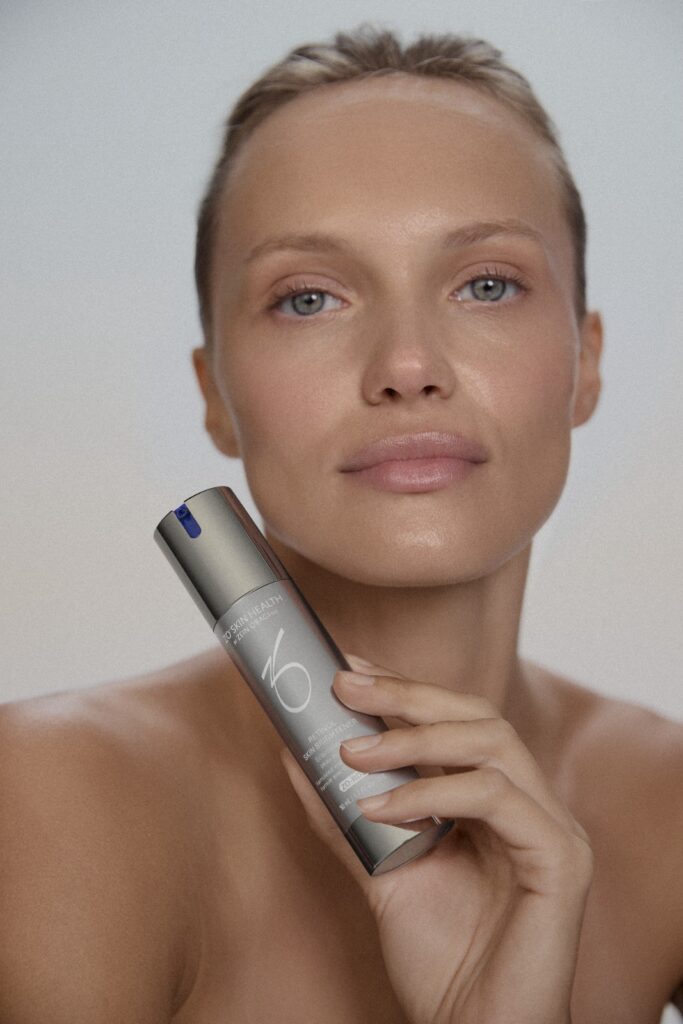
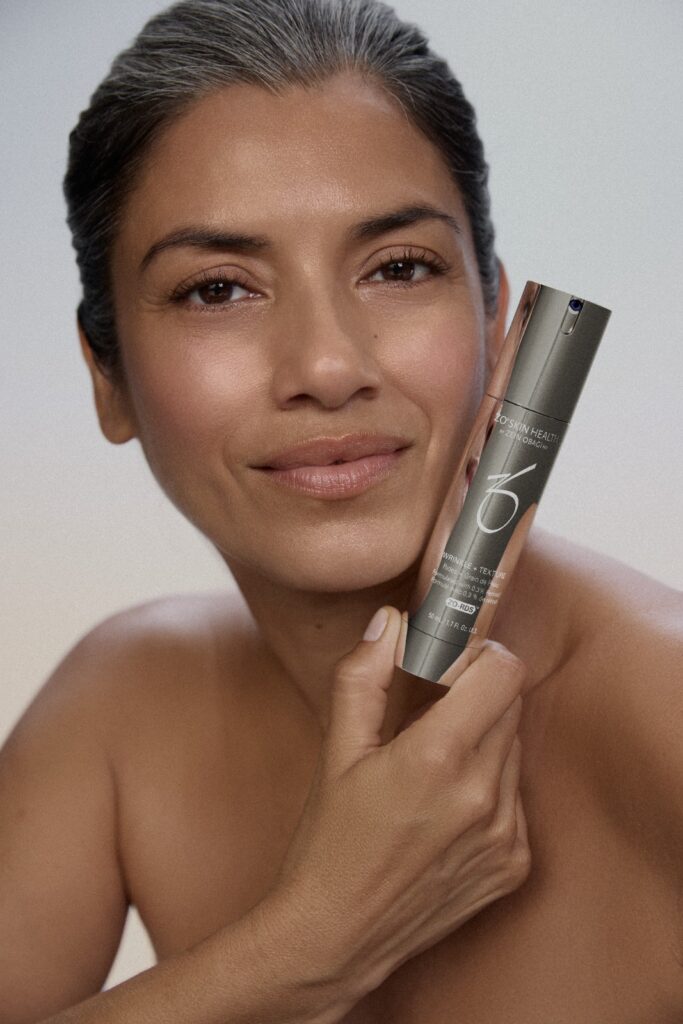
That thinking underpins the brand’s reformulated Wrinkle + Texture, Retinol Skin Brightener and Clear Renewal, each containing 0.3% retinol and the new ZO-RDS delivery system. Balian describes the ambition as doing more with less, maintaining performance while improving tolerability. It also raises a question familiar to anyone who has persevered through redness or peeling: how much discomfort have we come to accept as proof that skincare is working? We spoke with Balian about looking beyond concentration, what the brand’s clinical studies can, and cannot, tell us, and why a more comfortable retinol experience begins with the formulation.
Maura Van den Borre: The reformulation began with a change in EU regulations. What did that push you to rethink beyond the percentage of retinol?
Raffi J. Balian: Yes, the change in EU regulations was one of the drivers behind the reformulation, but it was certainly not the only one. At ZO, we are constantly looking for opportunities to improve our products and technologies. We don’t believe in resting on past success, as great as that success might be. Science is continually evolving, and so is our understanding. We continuously evaluate new tech, study data, challenge existing assumptions, and test new hypotheses to determine where meaningful improvements can be made. That is one of the things I find most exciting about science: not every question has been answered, and there is always more to learn. Most importantly, we allow the results to dictate the direction. We don’t determine the narrative first and then look for data to support it. We develop a hypothesis, test it, analyze the results, and let those findings guide what we do next. That commitment to scientific rigor, curiosity, and continuous improvement is fundamental to how we approach innovation at ZO and, I believe, is a key point of differentiation for the brand.
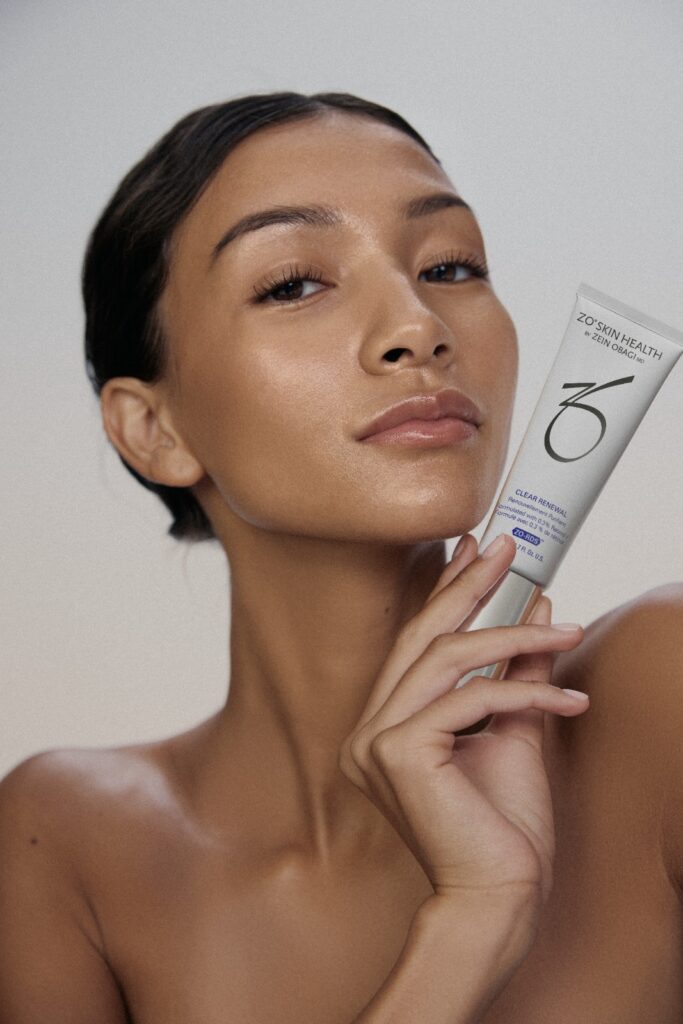
image courtesy ZO Skin Health
MVDB: Many consumers see a higher retinol percentage as a sign of a stronger, more effective product. What does that number tell us, and what does it leave out?
RJB: Retinol percentage tells you how much retinol is in the formulation, but it doesn’t tell you the whole story. Just as important is how efficiently that retinol is protected, delivered, and made available where it needs to act in the skin. I often use the analogy of trying to carry water in your hands across a distance. You may start with a lot of water, but how much actually reaches the destination? How much spills along the way? How much is lost before you get there? Retinol presents a similar formulation challenge because it is inherently susceptible to degradation.
Starting with a higher percentage doesn’t necessarily tell you how much remains intact and available to the skin. Our approach is to continually ask whether we can do more with less. Can we better protect the retinol from degradation? Can we enhance delivery? Can we get more of the ingredient to where it needs to go intact and in a form that can be utilized effectively? Ultimately, the goal is not simply to maximize concentration. It is to maximize performance. There is another important benefit to that philosophy, if we can achieve the desired efficacy through smarter formulations and more efficient delivery rather than simply increasing the concentration, we also have an opportunity to improve tolerability and minimize some of the irritation associated with retinol use. Put very simply, what we’re continually striving for is get all the gain without the pain.
MVDB: How does the new ZO-RDS delivery system work, and what makes it different from the technology used in your previous formulas?
RJB: ZO-RDS represents an evolution in how we think about retinol delivery. Rather than focusing solely on how much retinol we put into a formula, we focused on how we protect it, how we release it, and how efficiently we deliver it to where it is intended to act. Retinol is inherently sensitive, so maintaining its stability and integrity throughout that journey is extremely important. ZO-RDS uses an advanced encapsulation approach designed to protect the retinol and provide a more gradual, controlled release. This helps minimize premature degradation and allows the retinol to remain intact and available where it is intended to perform and maximize efficacy.
Our previous delivery technologies served us very well and helped establish a high benchmark for our retinol portfolio. ZO-RDS builds on that foundation by giving us greater control over delivery and release. The technology is engineered for size, morphology, deformability, and surface modifications of the encapsulate, which allow us to be much more purposeful in how the retinol is delivered. Ultimately, the goal is efficiency. We want to protect more of the retinol from degradation, control its release, and maximize its ability to perform in the skin. That allows us to think differently about the relationship between concentration and performance. Our proof-of-principle work demonstrated that a lower concentration using ZO-RDS could achieve performance comparable to our existing higher-retinol formulation. For us, that was an important validation of the concept and has changed the landscape of what is possible in our future offerings.

MVDB: You say the new formulas achieve the same results with significantly less irritation. What testing supports that comparison?
RJB: We approached that question in two stages. First, we conducted a proof-of-principle study directly comparing the new 0.3% retinol formulation using ZO-RDS with our existing 0.5% Wrinkle + Texture formulation. We felt we the best way to know if you are levelling up your technology was to put our own product to the test. What was important to us was not simply demonstrating that a lower percentage could work, we wanted to see whether improving the way retinol is stabilized, protected, and delivered could maintain performance while improving the tolerability. In that comparative study, both formulations produced statistically significant improvements in the appearance of fine lines and wrinkles, crow’s feet, skin texture, skin firmness, and overall appearance at Weeks 2, 4, 8, and 12. Visible Skin sagging also improved significantly at Weeks 8 and 12.
Importantly, there was no statistically significant difference between the two products overall, supporting efficacy parity between the 0.3% ZO-RDS formulation and the existing 0.5% retinol formulation. We then took the new 0.3% Wrinkle + Texture formulation into a separate 12-week, independent third-party clinical study involving 34 women, ages 40 to 65, with Fitzpatrick Skin Types II through IV. The product was used once daily during the first week and twice daily thereafter. That study gave us an opportunity to look not only at efficacy, but also very closely at tolerability over time. The efficacy results were very strong. Expert grading showed that 100% of subjects demonstrated improvement in overall appearance in as little as four weeks, 100% showed improvement in skin texture appearance at Weeks 8 and 12, 91% showed improvement in visible global facial lines at Week 12, and 85% showed improvement in the appearance of fine lines at Week 12.
What was particularly encouraging was the clinician-assessed tolerability. Across the measured timepoints, expert assessments recorded zeros for erythema, edema, dryness, and flaking, as well as itching, stinging, burning, tingling and tightness. That is especially meaningful to us because irritation should not be the measure of whether retinol is working. Our goal is to maximize the biological and visible benefits of retinol while minimizing unnecessary reaction. I do think it is important to put that result in the proper scientific context. ‘Zero’ describes what clinicians observed in that study, under that specific protocol and within that study population. It doesn’t mean that no individual can ever experience a reaction to retinol. So, we are careful not to turn a very strong clinical result into an absolute promise. Taken together, the studies support the principle behind ZO-RDS: efficacy is not simply a function of putting more retinol into a formula. By protecting retinol, controlling its release, and using more precise delivery, we can make more efficient use of the retinol that is there. For us, that is where the science gets exciting: maintaining high performance while improving the experience. Ultimately, we’re trying to achieve all the gain with less of the pain.
MVDB: The Wrinkle + Texture study reported improvement in every participant after four weeks, without irritation. How large was the study, and what counted as an improvement?
RJB: The Wrinkle + Texture study was a 12-week, independent third-party clinical study involving 34 women between the ages of 40 and 65 with Fitzpatrick Skin Types II through IV. The participants presented with moderate wrinkles, fine lines, and discoloration, among other evaluated parameters. When we say 100% showed improvement at four weeks, it is important to be specific about what that means. At the four-week evaluation, expert clinical grading showed improvement from baseline in overall appearance in 100% of the study participants. It does not mean that every measured parameter had reached its maximum result by four weeks. The improvements continued to develop over the course of the study. For example, by Weeks 8 and 12, 100% of participants showed improvement in visible skin texture.

At Week 12, 91% showed improvement in the appearance of global facial lines and 85% showed improvement in the appearance of fine lines. That progression is important because retinol is not an overnight ingredient. We are looking at how the skin responds and improves over time with continued use. The tolerability data were equally encouraging. At the measured timepoints of Weeks 4, 8 and 12, clinician assessments recorded zero scores for erythema, edema, dryness, and flaking, as well as itching, stinging, burning, tingling and tightness. That is a particularly meaningful result for us because our objective with ZO-RDS is not simply to reduce the amount of retinol, it is to use stabilization, controlled release, and more efficient delivery to maintain high performance while improving the overall retinol experience. At the same time, we are careful with the phrase ‘without irritation.’ Those zero scores describe what clinicians observed under the conditions of this study. They should not be interpreted as a guarantee that an individual using retinol could never experience a reaction. That distinction is important to us because, as scientists, we want the data to tell the story exactly as it was observed.
MVDB: Some people associate redness and peeling with retinol “doing its job.” What would you like to change about that understanding?
RJB: I wouldn’t try to change that understanding entirely. Redness, dryness, and peeling can be part of the skin’s response to retinol, particularly as it adjusts to treatment. What I would challenge is the assumption that the severity of those visible reactions is somehow a measure of how effectively the retinol is working. More irritation does not necessarily mean more efficacy. Our objective with ZO-RDS is not to take the activity out of retinol, it is to maximize the beneficial activity while minimizing some of the secondary reactions that can occur at the skin’s surface. Retinol is inherently susceptible to degradation, so how we protect it, stabilize it, and control its release becomes very important. We want as much of that retinol as possible to remain intact and available to perform as intended, rather than degrading prematurely and potentially contributing to surface-level reactivity without delivering the maximum benefit. That is really the philosophy behind the technology: preserve the activity we want, improve the efficiency of delivery, and reduce unnecessary reaction where we can. We’re not trying to make retinol less active; we’re trying to make its activity more purposeful and efficient.
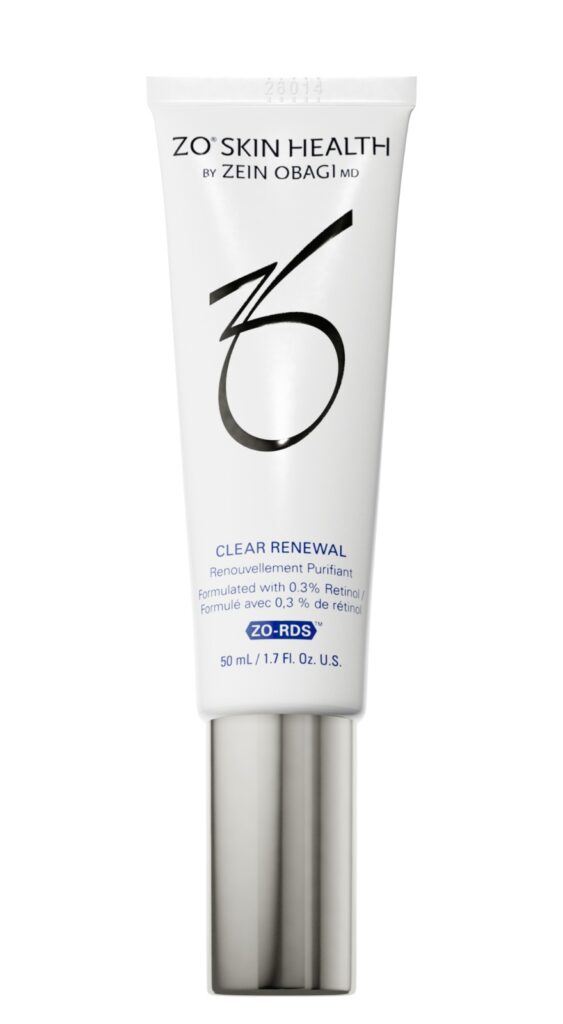
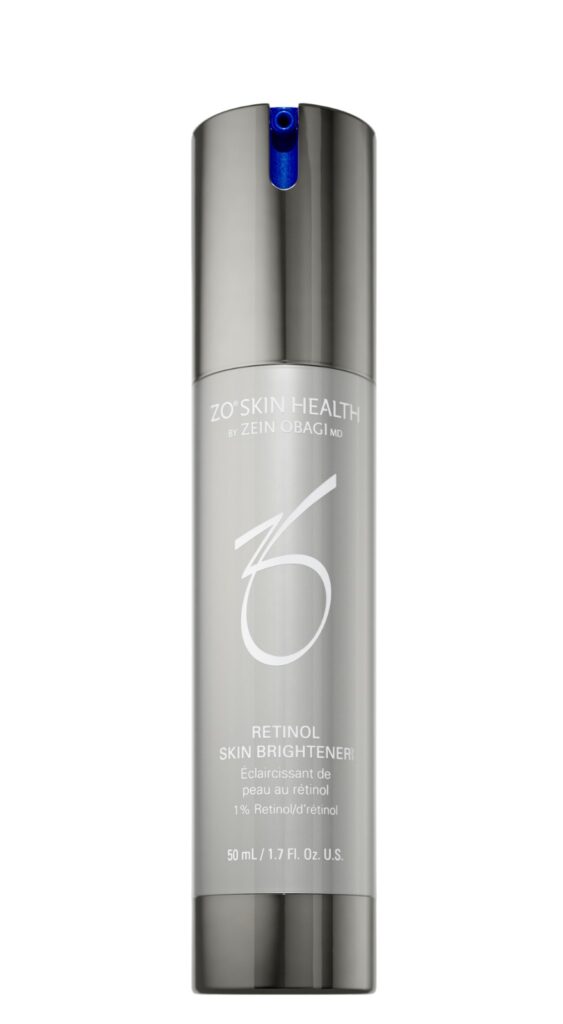
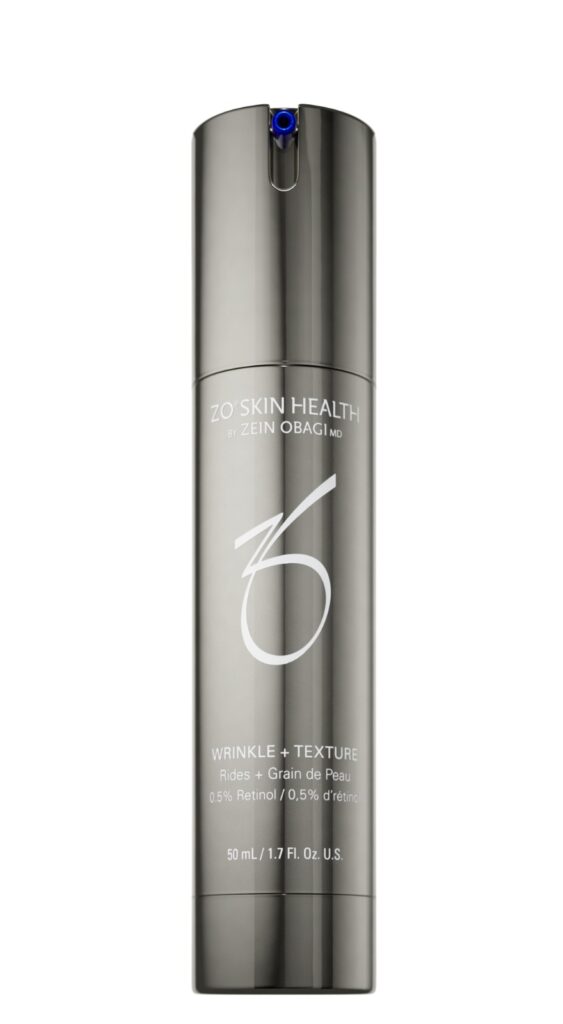
MVDB: With all three products containing 0.3% retinol, what makes each formula suited to a different skin concern, and how should someone choose between them?
RJB: What’s important to understand is that the 0.3% retinol is only one part of each formula. All three products use ZO-RDS to protect the retinol and provide controlled, precise delivery, but each has a different supporting cast of ingredients designed around a specific skin concern. So, the decision should really begin with what you are trying to accomplish with the skin, rather than simply looking at the retinol percentage. Wrinkle + Texture is our age-focused formulation. It is designed for concerns such as rough texture, fine lines and wrinkles, and loss of firmness and elasticity. The supporting technologies, including ZCORE and ZPRO, complement the retinol by focusing the formula more broadly on skin resilience, suppleness, and the visible signs of aging. So, if your primary concern is how the structure and texture of the skin are changing with age, that is where I would look.
Retinol Skin Brightener takes that same 0.3% retinol foundation but surrounds it with a very different supporting system because the primary target is uneven tone and discoloration. It includes a multi-modal brightening complex, along with ingredients such as N-acetylglucosamine, glutathione and bakuchiol, plus sunflower sprout extract and bisabolol. Here, retinol-driven renewal is working within a formula specifically designed to visibly brighten the complexion and improve uneven tone and the appearance of pigmentation irregularities.
Clear Renewal is designed for blemish-prone, oily, or congested skin. In addition to 0.3% retinol, the formula contains 1% salicylic acid, along with supporting technologies designed to address excess surface oil, congestion, the appearance of breakouts and post-blemish marks while supporting the skin barrier. So here again, the retinol is important, but the rest of the formulation determines the specific job the product is designed to do.
I like to think of retinol as the lead performer, but as we all know, a lead performer in a play can only do so much. The supporting cast matters when striving to develop a complete and effective production. Wrinkle + Texture surrounds retinol with technologies supporting visible age-related changes, Retinol Skin Brightener surrounds it with a multi-modal approach to discoloration, and Clear Renewal combines it with ingredients selected for blemish-prone and congested skin. Same retinol concentration, same advanced delivery philosophy, but three very different formulation strategies. The correct product chosen is based on the skin concern you are trying to address and ideally with guidance from a skincare professional.

MVDB: For someone who has previously stopped using retinol because of irritation, what should they consider before trying these new formulas?
RJB: The first thing I would say is that everyone’s skin is different. Individual tolerance to retinol can vary considerably and that fact is important to take account of. Retinol is a biologically active ingredient, so some degree of redness, dryness, tightness, or flaking can occur as the skin adjusts. That doesn’t mean someone should simply push through significant irritation, but it does mean that an individual’s previous experience should be considered when introducing retinol again. It is also important to understand that these formulas contain actual retinol. There are many ingredients within the broader retinoid family, and they are not all the same molecule or necessarily supported by the same body of evidence. We made a deliberate choice to continue working with unadulterated true retinol and to focus our innovation on how we protect it, stabilize it, and deliver it more efficiently.
For someone who knows they have reactive or sensitive skin, I am a strong believer in starting cautiously. Personally, as a scientist, I have evaluated tens of thousands of formulations over my career, and to this day I will test a new product on a small, localized area, such as the inner forearm, before putting it on my face. A localized test does not guarantee how facial skin will respond, but it can provide a useful first indication of individual tolerability. We’ve also evaluated these formulations through Human Repeat Insult Patch Testing, or HRIPT. All three products passed this testing, which involves repeated application to the same area and helps assess irritation and sensitization potential under the conditions of the study.
Ultimately, I would encourage someone who previously stopped retinol because of irritation not to think of tolerability as all or nothing. Start gradually, understand your own skin, pay attention to how it responds and, particularly if you have sensitive or compromised skin, work with a skincare professional to determine an appropriate regimen. Our goal with ZO-RDS is not to make retinol biologically inactive, it is to deliver real retinol more intelligently, with controlled delivery designed to preserve efficacy while reducing unnecessary reactions.
MVDB: Four weeks is the headline from your study. What changes can users realistically expect within that time, and which results take longer?
RJB: Four weeks is an exciting milestone because it demonstrates that you don’t necessarily have to wait multiple months to begin seeing meaningful change. In our 12-week independent clinical study of Wrinkle + Texture 0.3%, 100% of participants showed improvement in overall appearance by Week 4 based on expert clinical grading. But I think it is equally important to explain that four weeks is the beginning of the story, not the end. Retinol works through biological processes that occur over time, so different skin concerns improve at different rates. In our proof-of-principle work, we were already seeing statistically significant improvements in the appearance of fine lines and wrinkles, crow’s feet, skin texture, firmness and overall appearance at Weeks 2 and 4, and those improvements continued through Weeks 8 and 12.
Visible Skin sagging was a later-moving parameter, reaching statistically significant improvement at Weeks 8 and 12. That progression was also evident in the full clinical study. By Weeks 8 and 12, 100% of participants showed improvement in the appearance of skin texture. By Week 12, 91% showed improvement in the appearance of global facial lines and 85% showed improvement in the appearance of fine lines. So, I would tell someone to think about retinol as a continuum. Four weeks tells us the skin is responding and visible improvement is underway. Eight and twelve weeks allow some of the more complex changes to continue developing. Consistency is incredibly important. We want consumers to be excited by what they see early but also understand that the biology doesn’t stop at four weeks. We live in a time of immediate gratification, and I am thrilled that we are delivering results quickly as this will encourage continued use that will at the end deliver a maximal benefit and a happy user.