Author name: Ulrika Lindqvist

Music

Sahara Hotnights Return With No One Ever Really Changes

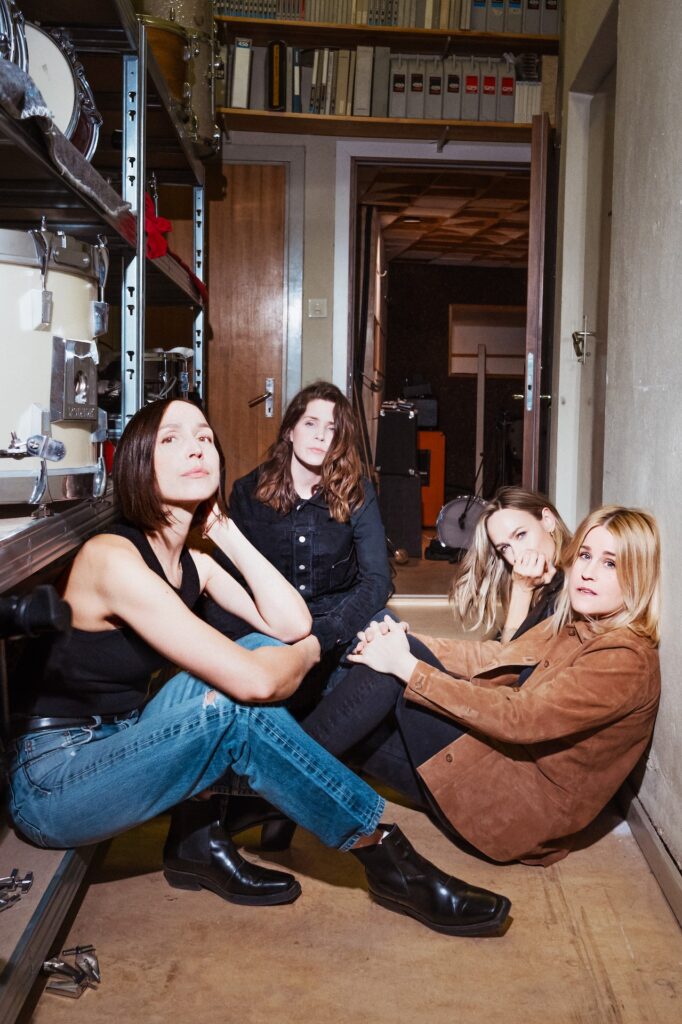
Sahara Hotnights Return With No One Ever Really Changes This spring Sahara Hotnights return with a new album shaped by live energy and reconnection. Maria Andersson reflects on creative instinct, the shift toward performance, and the idea that change is rarely as simple as it seems. Odalisque had a chat with singer and guitarist Maria Andersson about the new album.  Ulrika Lindqvist: With No One Ever Really Changes so close to release, how are you feeling right now? Are there any moments from the process that have stayed with you? Maria Andersson: Being in the studio together again really stands out. There was something grounding about it, reconnecting through the work and remembering why we started doing this in the first place. UL: Where do you find inspiration for your music? MA: Books and films are a big source for me. I often come across quotes and phrases that linger. I recently rewatched one of my favourite movies, Ordinary People. I think it’s about survival versus healing, but it’s not dramatic in a loud way. I like how it deals with grief and guilt. Lyrics also tend to appear while I’m out running in the mornings. UL: Was there a particular song that shaped the direction of the album? MA: “Brilliant Something” felt like a turning point and helped define the sound, direction, and overall theme of the record. Do you have a favourite lyric from your songs, new or old?I still love “Cheek to Cheek,” even though it was written almost twenty years ago. I can still relate to the lyrics, and it’s still great fun to play live. UL: Each of your records has felt like a reaction to the previous one. How does this album respond to Love In Times of Low Expectations? MA: When we recorded that album, we hadn’t played live for almost a decade. We needed to rediscover everything and each other, and we didn’t want to pick up where we left off. It became very much a studio record. Once we started touring again, we realised the songs wanted more energy. I see that as the starting point for No One Ever Really Changes. UL: The new record begins from a live perspective, what does that mean? MA: The songs were written with performance in mind from the outset, thinking about energy and how they would feel with the four of us on stage together. We made room for that adrenaline early in the process. UL: What’s your favourite part of making music? MA: That moment when you’ve written three quarters of a really good song and you know it’s there. UL: You have been a band since 1992, Is there a particular moment in these years that stands out as especially memorable? MA: Coming back together after a decade-long break and realizing the connection is still there was really powerful. UL: What are you most looking forward to in the coming year? MA: Playing these new songs live, seeing how they blend in with the old ones, and sharing that experience again and again and again. photography Tove Floss

Opiates

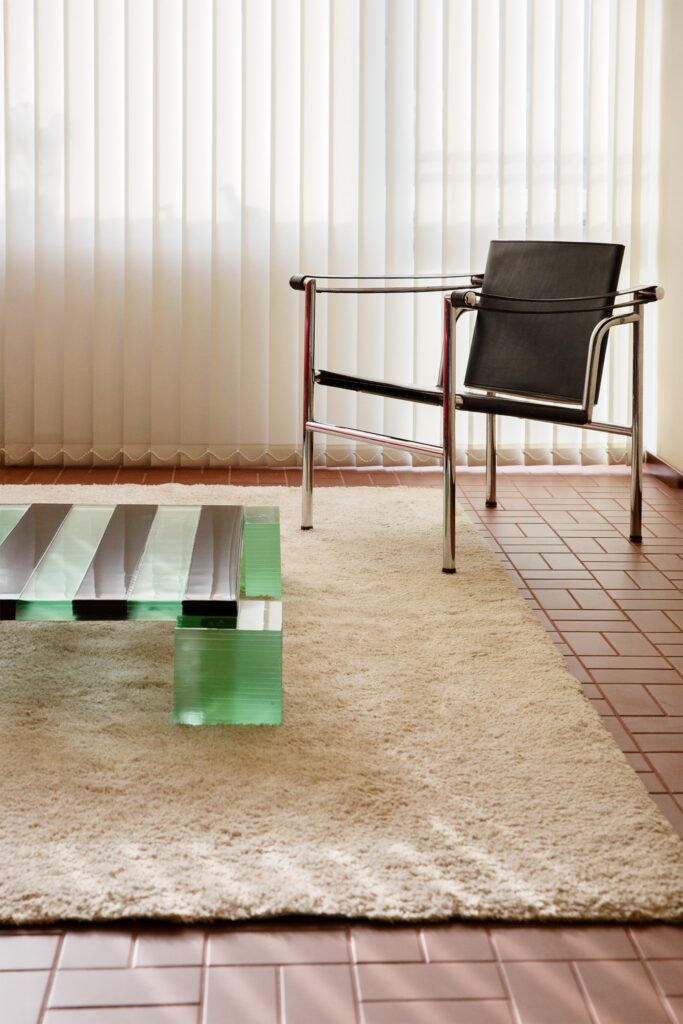
Navet Introduces Stacked, A Study in Glass, Weight and Form

Navet Introduces Stacked, A Study in Glass, Weight and Form With Stacked, NAVET continues its exploration of material driven design, presenting a series of objects in solid glass where construction and perception become inseparable. Comprising two tables and a set of candlesticks, the collection places emphasis on weight, transparency and the process through which form is built. The tables are defined by distinct graphic expressions, one striped, the other checkered. These patterns emerge through layers of flat glass that are stacked and fused into solid blocks, allowing the material itself to generate visual complexity. As light passes through the glass, the surfaces shift, creating a sense of depth that evolves with its surroundings Positioned between craftsmanship and serial production, the project challenges scale as much as technique. By applying a method typically reserved for smaller objects to larger forms, NAVET brings a detailed, hands-on process into a more architectural context. The result is furniture that approaches the sculptural, where each piece holds both precision and presence. The candlesticks extend this logic on a smaller scale. With clear geometries and considered proportions, they create contained spatial moments, reinforcing the relationship between object and environment. As part of the studio’s ongoing focus on small scale production and material exploration, Stacked reflects an approach where the properties of glass guide the outcome. Each layer becomes visible within the final form, turning process into expression and positioning the objects somewhere between design and artifact. Find the Stacked collection here  photography Marcus Palmqvist

Opiates

Jil Sander and Oliver Peoples Launch First Eyewear Collaboration

Jil Sander and Oliver Peoples Launch First Eyewear Collaboration The first drop of the collaboration between Jil Sander and Oliver Peoples introduces a shared vision rooted in contrast, where opposing forces are resolved through clarity of form. Presented in Milan, the collection approaches eyewear as an exercise in balance, bringing together the angular and the organic, the industrial and the tactile. This duality is expressed through material. Titanium and acetate are used with restraint, creating frames that feel both streamlined and sensorial. Branding remains understated, integrated into functional elements such as temples and nose pads, reinforcing a design language where visibility is secondary to experience. Crafted by hand in Japan and fitted with glass lenses made in Italy, the collection emphasizes precision and longevity. Across both titanium and acetate styles, silhouettes range from sharp and architectural to more sculptural and voluminous, unified by a focus on proportion and detail rather than excess. The campaign, photographed by Walter Pfeiffer in Hamburg, reflects this tension. The directness of the imagery contrasts with a sense of ease, mirroring the collaboration itself, where the Californian roots of Oliver Peoples meet the modernist restraint of Jil Sander. Rather than prioritizing statement, the collection builds its identity through nuance. It is an approach that aligns both brands around a shared idea of timelessness, where function, craftsmanship and form exist in quiet equilibrium. Find the collection here  Photography Walter Pfeiffer

Art

The Blooming: Art and Botany at Waldemarsudde

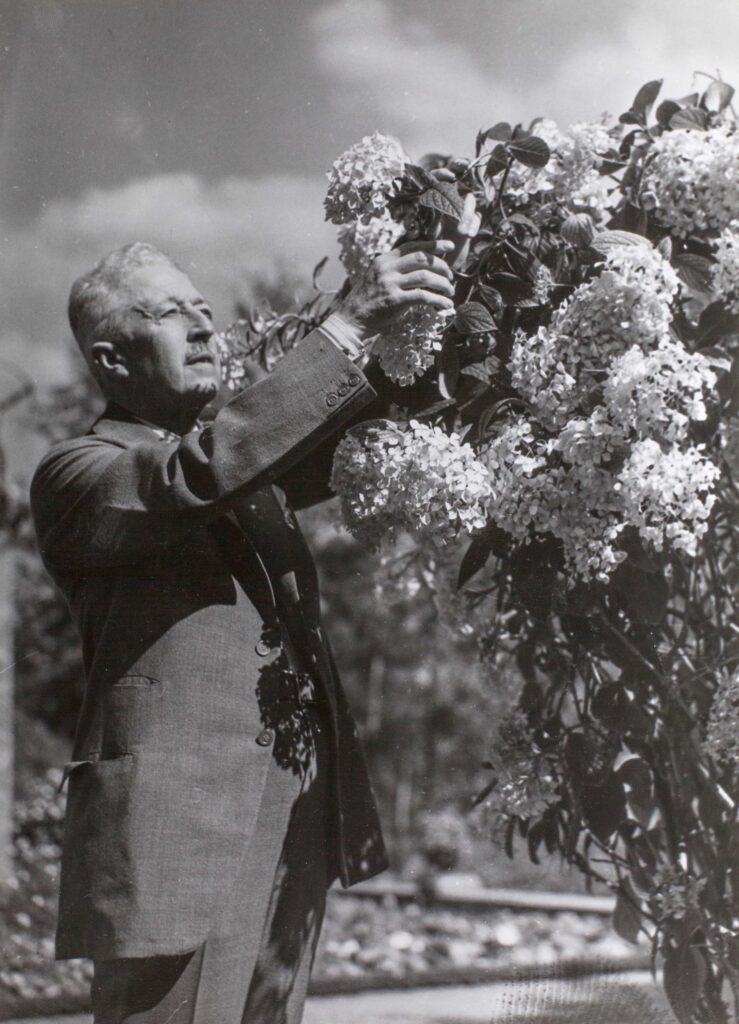
The Blooming: Art and Botany at Waldemarsudde An interview with Karin Sidén, museum director of Waldemarsudde, on an exhibition and book that explores the relationship between art, flowers, and the cultivated landscape. Ulrika Lindqvist: Can you tell us how the idea for the exhibition came about? Karin Sidén: The exhibition The Blooming: Art and Botany is an identity project for Prince Eugen’s Waldemarsudde. Its point of departure is the relationship between art and flowering at Waldemarsudde, as well as the museum’s historic park and garden, which includes its own gardening practice and in house florist. Waldemarsudde has always been associated with both art and flowering, indoors and outdoors, but the idea behind this exhibition, which emerged several years ago, is to further highlight these connections and to expand the subject from the site specific to also include themes such as the artist’s garden as a phenomenon, flowers in relation to symbolism, the role of art in the development of botany as a science, and flowers as decoration in applied arts and as sensuous inspiration for music and poetry. UL: Could you tell us about Waldemarsudde’s connection to flowers and plant life? KS: Prince Eugen’s Waldemarsudde is a total work of art in which art, architecture, nature, park, and garden come together as a unified whole. This total work was created by the artist and collector Prince Eugen, who was also responsible for the design of the garden’s floral rooms, plantings, terraces, and the planting of trees in dialogue with the surrounding landscape, as well as with both older and newer buildings, the latter designed by the architect Ferdinand Boberg in close collaboration with Prince Eugen. Eugen acquired the Waldemarsudde estate in 1899 and immediately began transforming the site, including the garden, and he had a greenhouse for cultivating flowers built as early as 1902, before the main building was constructed between 1903 and 1905. UL: How did you decide on what to include in the exhibition, and how did the collection of the works come about? KS: The curators of The Blooming: Art and Botany are myself and the museum’s exhibition coordinator Catrin Lundeberg. We collaborated with the museum’s gardener, florist, and archivist, as well as with fifteen contemporary artists and lenders including major public art museums, other institutions, and private collectors in Sweden and abroad. The selection follows several themes: the artist’s garden at Waldemarsudde and as a broader phenomenon, floral symbolism past and present, art and botany as a science, and flowers as decoration, aesthetics, and sensuous experience. The exhibition presents historical and contemporary art, applied arts, and design from the sixteenth century to today side by side, with close to two hundred works in total.   Prince Eugen at Waldemarsudde. Image courtesy of Waldemarsudde  UL: How did you work to update the book Prince Eugen’s World of Flowers twelve years after its first release? KS: In connection with the exhibition, Waldemarsudde has produced an extensive publication of more than three hundred pages, richly illustrated and featuring essays by leading experts in art history, book arts, botany as a science, and garden history. There are also earlier publications, including a book on the garden at Waldemarsudde written by our gardener in 2014, and the so called Flower Book from the same year, produced together with the museum’s florist Kristina Öhman. UL: Were there any other exhibitions that served as inspiration for this one? KS: Several exhibitions have explored the theme of art and flowers, but none with exactly our approach. The exhibition at Waldemarsudde is entirely produced in house. The exhibition Language of Flowers at the Nationalmuseum in 2005 has been an inspiration. Shortly after our opening, we also saw that the Ashmolean Museum in Oxford had opened an exhibition on the same subject, which suggests that the theme is very much of the moment. UL: The book also discusses the Waldemarsudde pot. What is the story behind it? KS: The Waldemarsudde pot was designed by Prince Eugen in two sizes in 1915 in what is known as contra Jugend style. It was initially produced at the Gustavsberg porcelain factory and used in the home at Waldemarsudde, but was also given as gifts to family and friends. Since the 1950s, after Eugen’s death in 1947, it has been produced in additional sizes. In recent years, we have also developed versions in different colors and in glass, the latter in collaboration with the Reijmyre glassworks. UL: Do you have the pot at home, and what do you usually fill it with? KS: Yes, I love the Waldemarsudde pot and have several at home in different sizes, both the classic white versions, the anniversary color, and in glass. I use them for both potted plants and cut flowers. UL: The book covers the different seasons of the year. What are you most looking forward to this spring? What do you plan to grow or decorate with? KS: All seasons are beautiful at Waldemarsudde, both outdoors in the park and garden and indoors in the reception rooms of the main building. At home, I look forward to decorating in spring with beautiful varieties of tulips and narcissus in my Waldemarsudde pots. UL: Waldemarsudde is known for its beautiful tables and settings. If you could invite any four guests for dinner, who would they be? KS: I would invite Prince Eugen, although he passed away in 1947, the contemporary artist Cecilia Edefalk, the writer Paul Auster, and the pianist Roland Pöntinen. It would have been a fascinating dinner conversation.   Image courtesy of Waldemarsudde Roland Persson “Head of Medusa” Photography Sara Appelgren 

News

COS Unveils SS26 in Seoul, Balancing Structure and Fluidity

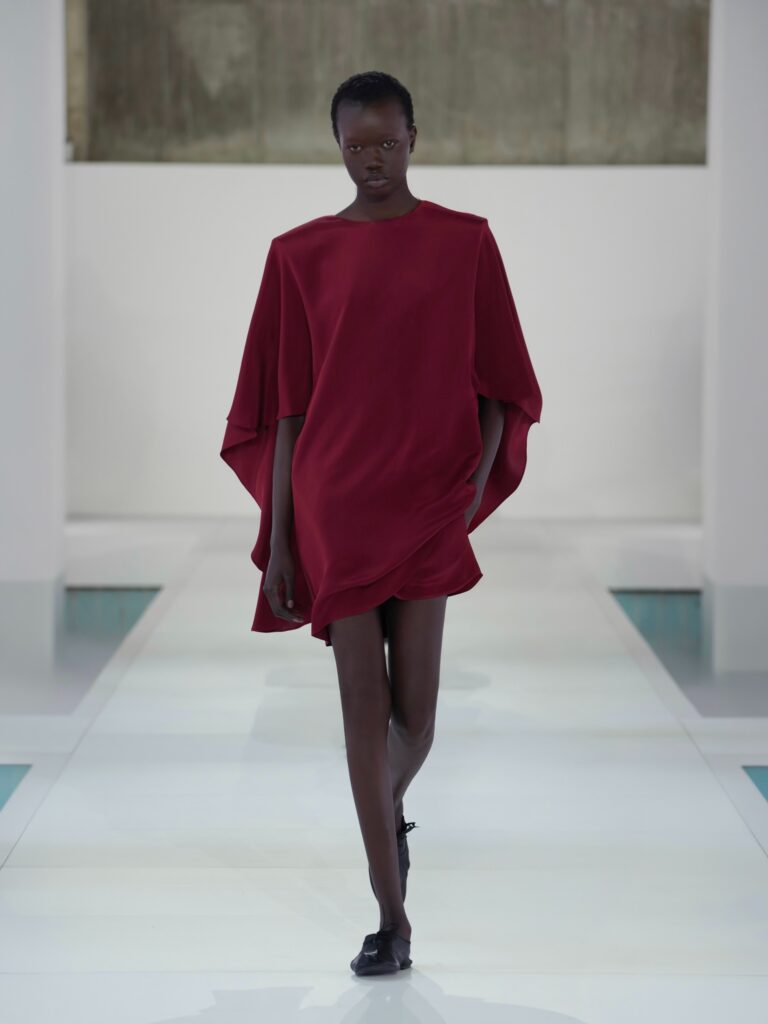
COS Unveils SS26 in Seoul, Balancing Structure and Fluidity Presented on March 25,  COS’ Spring Summer 2026 show marks the brand’s first runway presentation in South Korea. Staged in Seoul after several seasons across Europe and consecutive appearances at New York Fashion Week, the show signals a continued expansion of COS’s global presence while refining its evolving design language. Set within a brutalist space on the outskirts of the city, the scenography established a stark and geometric atmosphere. Empty swimming pools formed a surreal architectural landscape, while a soundscape inspired by the Seoul subway system grounded the show in the city’s rhythm. The result was an environment where structure and movement coexisted, mirroring the collection itself. Across forty looks, the palette remained controlled and cohesive. Slate grey, warm browns, cream and white created a sense of tonal harmony, punctuated by accents of blue and deep oxblood to introduce depth. The effect was one of quiet uniformity, where variation emerged through nuance rather than contrast.  Materiality played a central role. Leather and technical fabrics were combined with precision to shape sculptural silhouettes and deliberate draping. Linen introduced texture, while sheer and transparent layers revealed the body in motion. Light, airy fabrics moved freely, softening the collection’s architectural foundation with a sense of ease. In this balance between rigidity and fluidity, COS continues to explore a space where minimalism becomes expressive. The Seoul show does not disrupt the brand’s identity, but rather sharpens it, suggesting that its future lies in the careful negotiation between structure, sensation and movement. A selection of the garments are available in COS stories and at their website.  Images courtesy of COS

Opiates

Gant Reimagines Occasion Dressing for Everyday Moments

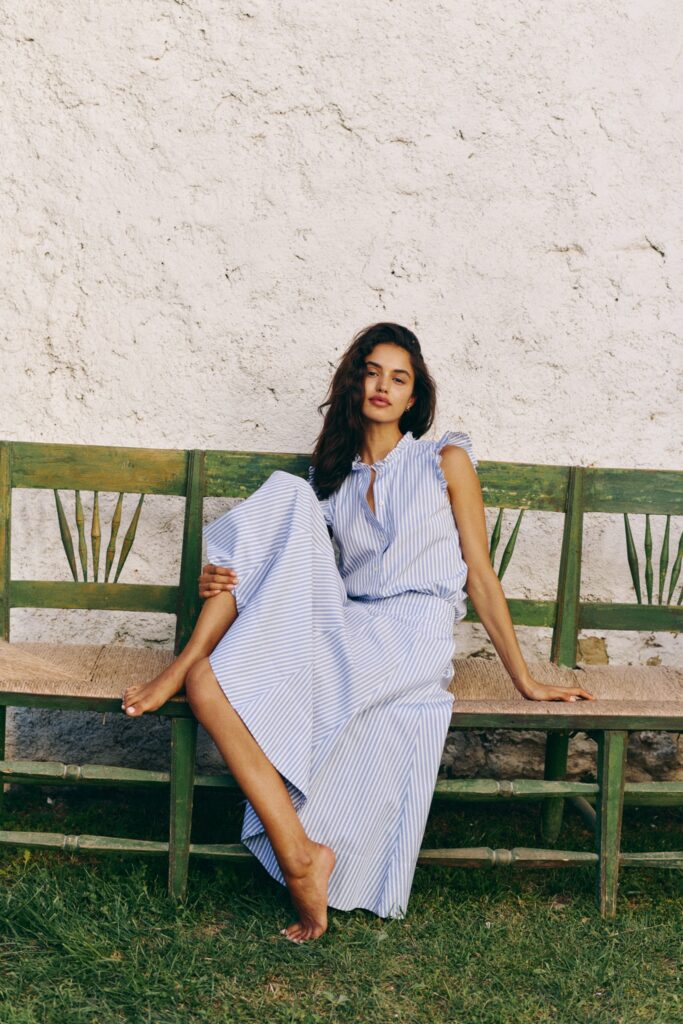
Gant Reimagines Occasion Dressing for Everyday Moments With For Every Invite, Gant approaches occasion dressing through a lens of effortlessness rather than formality. The collection brings together light linen tailoring, soft color palettes and fluid silhouettes, proposing a wardrobe that moves naturally between daytime gatherings and more elevated moments. What emerges is a redefinition of occasionwear, one that prioritizes adaptability over strict codes. Pieces are designed to shift with the rhythm of the day, allowing the wearer to navigate different settings without the need for transformation. Tailoring is softened, dresses are relaxed, and the overall impression is one of quiet confidence rather than overt statement. The campaign reinforces this perspective. Set within a sunlit garden, it captures an intimate gathering shaped by familiarity and ease. At its center is chef Erika Blu, joined by her mother, as they prepare a seasonal meal. Their presence introduces a sense of continuity, where heritage and personal expression intersect. This narrative extends into the collection itself. Just as recipes evolve across generations, so too does style, carried forward through reinterpretation rather than reinvention. Clothing becomes part of a shared experience, shaped by context, memory and connection. Rather than dressing for the occasion as a fixed concept, For Every Invite suggests something more fluid. It is about responding to moments as they unfold, with pieces that feel considered yet unforced. In this space between casual and elevated, Gant proposes a version of sophistication that is lived in, personal and quietly assured. Find the collection here from April 2nd Image courtesy of Gant 

Opiates

Extending Luca: Mille Notti and Eva Schildt Refine the Bedroom Landscape

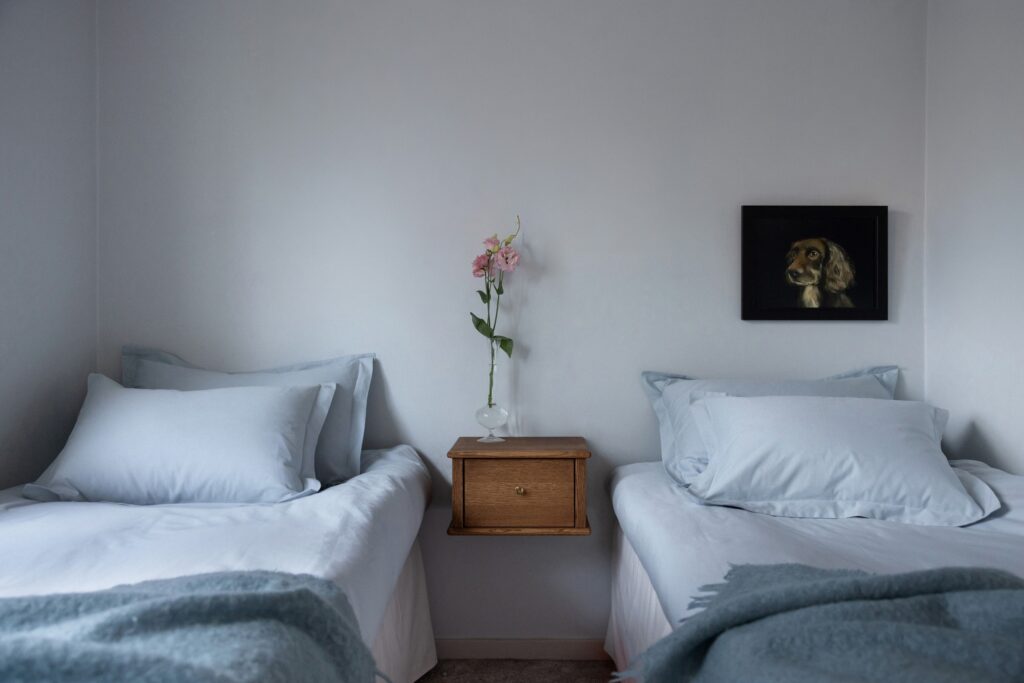
Extending Luca: Mille Notti and Eva Schildt Refine the Bedroom Landscape With the continued collaboration between Mille Notti and Eva Schildt, the Luca series evolves beyond its original scope, moving closer to a fully articulated bedroom environment. The introduction of a bed bench and a wall mounted bedside table extends the collection’s visual and functional language, reinforcing a sense of cohesion across furniture and textiles. This progression feels inherent to Mille Notti’s identity. Long defined by a textile driven approach where material, proportion and tactility guide design, the move into furniture continues that same philosophy in a more spatial form. The aim is not to separate objects, but to create a unified atmosphere where each element supports the whole. Eva Schildt’s contribution remains central to this balance. Known for navigating the space between the robust and the refined, her approach to proportion and materiality continues to shape Luca’s character. The series is defined by its distinct upper volume resting on slender legs, a deliberate contrast that gives the pieces both presence and lightness. In the new additions, this interplay is further refined. The wall mounted bedside table introduces a sense of openness by lifting the form from the floor, creating a lighter and more fluid spatial expression. Its generous depth and solid wood drawer integrate functionality without disrupting the overall calm. The bed bench, placed at the foot of the bed, is conceived with equal restraint. Its proportions are carefully calibrated to relate to the bed without overwhelming the room, offering a stable and enduring presence. The absence of storage shifts focus toward construction and line, while a subtle brass knob introduces a quiet point of detail. Produced in Småland using solid materials selected for longevity, the pieces continue to emphasize durability as part of their design language. Rather than adding complexity, these new elements deepen the Luca series’ core identity, suggesting that a complete bedroom is not built through excess, but through consistency, balance and a considered relationship between form and function. Image courtesy of Mille Notti

Fashion Articles

Through Her Own Lens: Julia Hetta’s Poetic Portrait of Sweden for Louis Vuitton

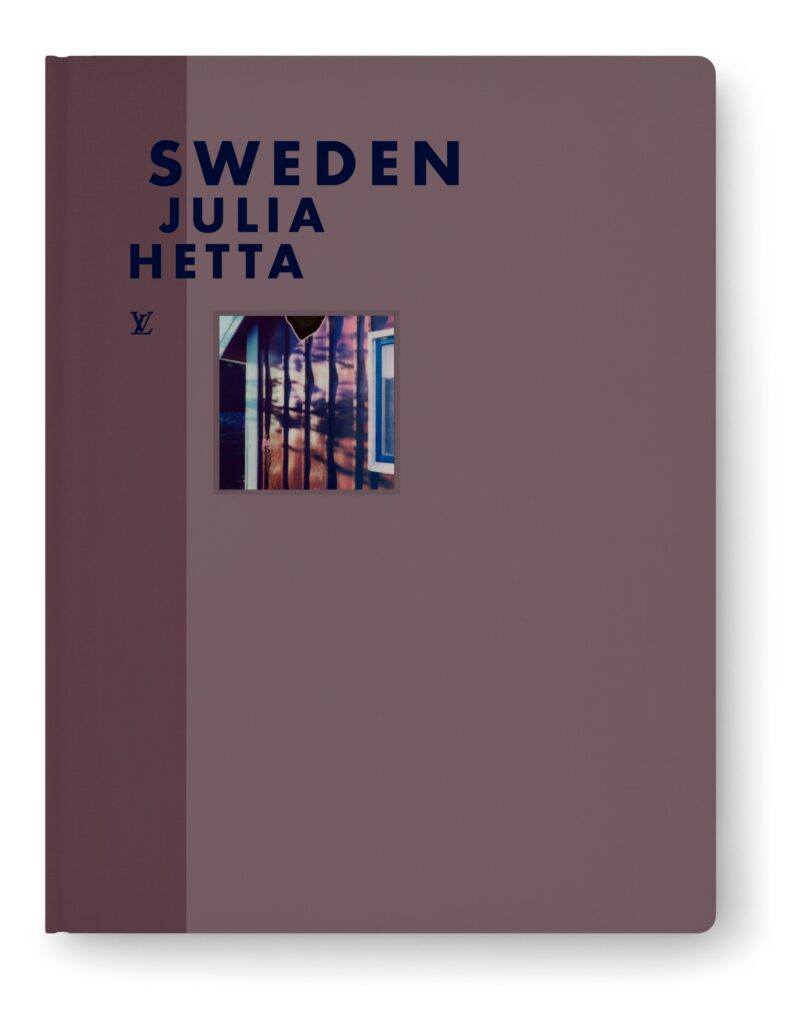
Through Her Own Lens: Julia Hetta’s Poetic Portrait of Sweden for Louis Vuitton Book Images courtesy of Louis Vuitton In Fashion Eye Sweden, Julia Hetta captures her home country through a deeply personal and painterly lens, using Polaroid film to trace shifting seasons, textures, and light. Created as part of Louis Vuitton’s travel-inspired series, the book unfolds as an accordion-style visual diary. An evocative sequence of landscapes and quiet moments that transform everyday life into something cinematic and poetic. Text Ulrika Lindqvist Ulrika Lindqvist: How did your relationship with photography begin? What first drew you to this medium? Julia Hetta: Well, it really started through my father, who was interested in photography, while I was interested in painting and drawing. Then we had a darkroom in the basement, so little by little I started experimenting with photography instead. UL: That cannot have been very common, having a darkroom in the basement? JH: I actually think it was. This was in the seventies. Back then people had basement living rooms and hobby spaces and so on, so I do not think it was all that unusual at the time. UL: How did this collaboration with Louis Vuitton come about? And what attracted you to the project? JH: I got an inquiry from Patrick Remy, who works on the project, and I immediately felt quite strongly that it was a very fun project, because I had been longing to work on something of my own and just have the camera and be by myself. The condition was that it would be done in Polaroids, so both the technique itself and the project as a whole were exciting to me. I also trust Patrick Remy’s judgment. UL: Had you worked much with the Polaroid format before, and how does it differ from other techniques? JH: Yes, I had. When I was younger I worked a bit with large format Polaroids, and I also did that in this project, partly in the self portraits. But apart from that I had not done it for many, many years. UL: And compared to how you usually photograph, how does the technique and the result differ? JH: It is much more spontaneous, a more spontaneous kind of photography, and that was what I liked and felt I wanted to return to. UL: What did your creative process behind Fashion Eye Sweden look like? Did you work from already existing material, or was everything created specifically for the book? JH: No, it was created specifically for this book, and it began almost like a diary project and also ended that way, because I made the self portraits at the end. But it took me a while to understand what I was going to do, because I felt it was difficult to depict your own country and how to approach that, until one day I realized that this is my life here in Sweden. I had already started doing that a little before the project, but then I developed it further. UL: I think the colors really capture Sweden and the light. JH: Oh, how nice. I think very much about colors and materials and light. Those are the three components that are very important to me in my photography. UL: How did you work with the selection of which images would be included in the book? JH: Editing is a very big part of the job for a photographer, I think. It is something I have trained myself in over the years, and also when I worked as a photo editor when I was twenty, so it is something I am very practiced in, and I think it is an important part of a photographer’s work. I had a large number of Polaroids, maybe a body of material four times as large, which I then edited down. UL: Was an editor involved, or did you make the selection yourself? JH: No, I made the selection myself, but I did discuss it back and forth with the team at Louis Vuitton and with Patrick Remy. UL: What would you say you yourself are trying to express and explore in your photography? JH: In this project, I think I was trying to explore what my perception looks like, what I see, and to be as direct as possible. More broadly, I think my photography is really about that, about somehow lifting up life, elevating life as such in some way. I am also interested in details and materials, and in what beauty is, and also darkness and light. UL: What do you want the viewer to feel when looking at your images and at Fashion Eye Sweden? JH: I hope that I have, in some way, visualized one side of Sweden, and that people abroad who either have a connection to Sweden or are interested in Sweden in some way will get a feeling for the country. Swedes living abroad are one audience, but also people who have recently arrived in Sweden. It feels interesting to present an image of the country to them as well. I also often work in a relatively poetic way, and I want it, in some sense, to be like a story about my life and a country. UL: Where did you take the pictures? Which locations did you use? JH: They are really from northern to southern Sweden, but a large part was done in and around central Sweden, around Uppsala and Stockholm, where I have my country house, but also in Norrland, where we also have a country house with my parents on an isolated island, and some of it was also shot in Skåne. So I think I really tried to stretch across the whole country. That felt right, because Sweden is so large and the landscape is so different from north to south, and I also wanted to capture the different seasons. UL: So how long did it take from when you started photographing for the book until it was finished? JH: Three years. UL: Do you have a project or an image or something within you that you would like to visualize, and if

Opiates

Eton’s Wool Cashmere Dream Capsule Centers Dressing Around Sensation

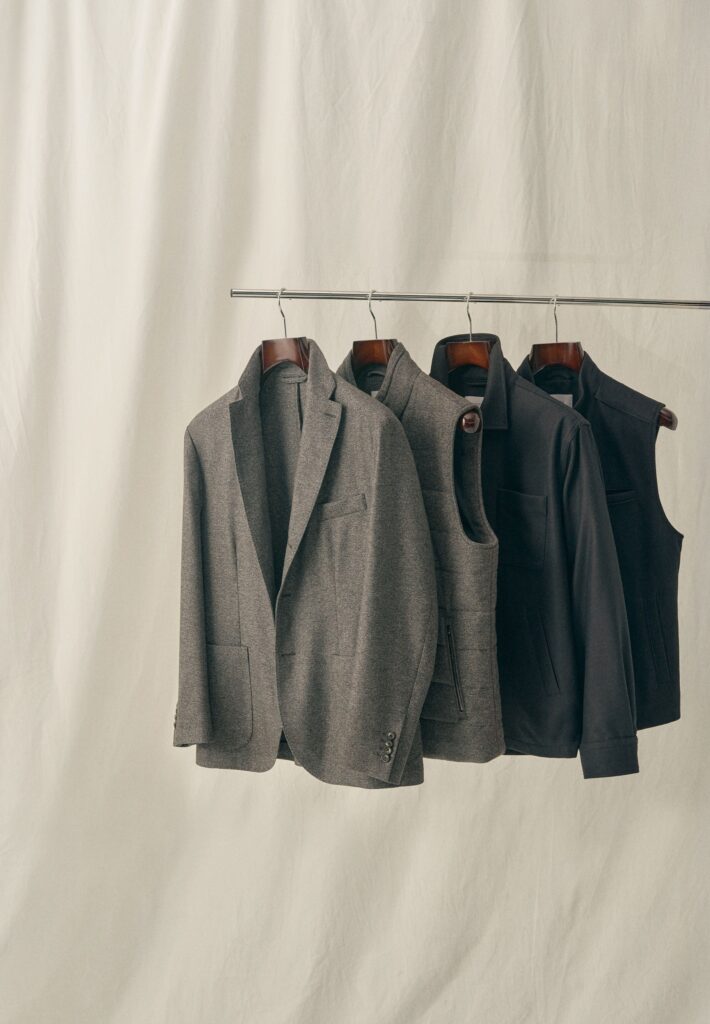
Eton’s Wool Cashmere Dream Capsule Centers Dressing Around Sensation With the Wool Cashmere Dream Capsule, Eton turns attention toward one of fashion’s most understated luxuries: how a garment feels in wear. Comprising four pieces, the capsule is defined less by visual excess than by texture, weight and the intimate experience of material against the body. At the center of the release is an exclusive wool cashmere fabric developed for the brand, woven in Como and finished in Biella. These details place the capsule within a tradition of Italian textile craftsmanship, while also reinforcing its emphasis on refinement through process rather than display. What distinguishes the collection is its focus on sensation as a design principle. Rather than building its identity around statement or occasion, the capsule proposes tactility as its core value. The garments are conceived around touch and feel, suggesting a quieter approach to luxury in which comfort, softness and material presence become the defining features. In that sense, Wool Cashmere Dream reads as an exercise in restraint. It is a capsule shaped by fabrication and finish, where the experience of wearing the garment becomes central to its appeal. Rather than asking to be noticed at a distance, it invites appreciation at close range, through texture, movement and the subtle intimacy of clothing made to be felt. Find the collection here       Image courtesy of Eton

Opiates

Marimekko’s Kukasta kukkaan Brings a New Floral Rhythm to SS26

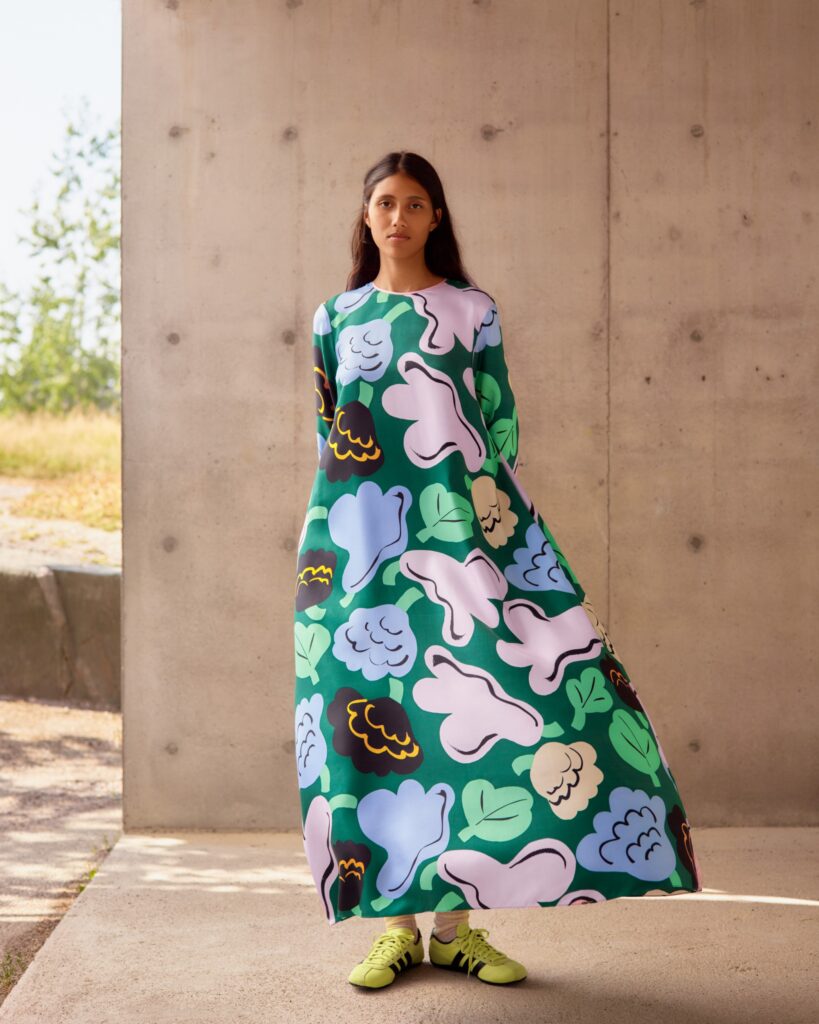
Marimekko’s Kukasta kukkaan Brings a New Floral Rhythm to SS26 For Spring Summer 2026, Marimekko returns to one of its most enduring strengths: the expressive power of print. Framed by the seasonal theme The Art of Pattern, the collection draws attention to the craft behind the brand’s printmaking heritage, using it as the foundation for a wardrobe that feels both spirited and composed. At the center of this new chapter is Kukasta kukkaan, a floral pattern by Finnish print designer Erja Hirvi. Created during a period of intense creative immersion at a summer retreat, the print channels the movement and abundance of the season. Its name, translating to from flower to flower, evokes the drifting path of bumblebees among blooms, giving the pattern a sense of motion as well as play. This interplay between energy and structure runs throughout the wider collection. Floral prints meet bold stripes, while playful proportions are balanced by composed silhouettes, creating a visual language that blends femininity with pragmatism. It is an approach that feels distinctly Marimekko, where joy is never separate from utility, and decoration is always anchored by design logic. Kukasta kukkaan appears across a range of garments, from silk dresses, skirts and tops to more classic cotton dresses and shirts, allowing the print to shift across different textures and forms. In this way, it becomes more than a seasonal motif, functioning instead as a through line within the brand’s broader narrative. The collection reinforces the idea that print, in Marimekko’s world, is never static. It moves, adapts and lives in dialogue with the person wearing it. Find the Kukasta kukkaan here Image courtesy of Marimekko

Scroll to Top