Author name: Ulrika Lindqvist

Opiates

Extending Luca: Mille Notti and Eva Schildt Refine the Bedroom Landscape

Extending Luca: Mille Notti and Eva Schildt Refine the Bedroom Landscape With the continued collaboration between Mille Notti and Eva Schildt, the Luca series evolves beyond its original scope, moving closer to a fully articulated bedroom environment. The introduction of a bed bench and a wall mounted bedside table extends the collection’s visual and functional language, reinforcing a sense of cohesion across furniture and textiles. This progression feels inherent to Mille Notti’s identity. Long defined by a textile driven approach where material, proportion and tactility guide design, the move into furniture continues that same philosophy in a more spatial form. The aim is not to separate objects, but to create a unified atmosphere where each element supports the whole. Eva Schildt’s contribution remains central to this balance. Known for navigating the space between the robust and the refined, her approach to proportion and materiality continues to shape Luca’s character. The series is defined by its distinct upper volume resting on slender legs, a deliberate contrast that gives the pieces both presence and lightness. In the new additions, this interplay is further refined. The wall mounted bedside table introduces a sense of openness by lifting the form from the floor, creating a lighter and more fluid spatial expression. Its generous depth and solid wood drawer integrate functionality without disrupting the overall calm. The bed bench, placed at the foot of the bed, is conceived with equal restraint. Its proportions are carefully calibrated to relate to the bed without overwhelming the room, offering a stable and enduring presence. The absence of storage shifts focus toward construction and line, while a subtle brass knob introduces a quiet point of detail. Produced in Småland using solid materials selected for longevity, the pieces continue to emphasize durability as part of their design language. Rather than adding complexity, these new elements deepen the Luca series’ core identity, suggesting that a complete bedroom is not built through excess, but through consistency, balance and a considered relationship between form and function. Image courtesy of Mille Notti

Fashion Articles

Through Her Own Lens: Julia Hetta’s Poetic Portrait of Sweden for Louis Vuitton

Through Her Own Lens: Julia Hetta’s Poetic Portrait of Sweden for Louis Vuitton Book Images courtesy of Louis Vuitton In Fashion Eye Sweden, Julia Hetta captures her home country through a deeply personal and painterly lens, using Polaroid film to trace shifting seasons, textures, and light. Created as part of Louis Vuitton’s travel-inspired series, the book unfolds as an accordion-style visual diary. An evocative sequence of landscapes and quiet moments that transform everyday life into something cinematic and poetic. Text Ulrika Lindqvist Ulrika Lindqvist: How did your relationship with photography begin? What first drew you to this medium? Julia Hetta: Well, it really started through my father, who was interested in photography, while I was interested in painting and drawing. Then we had a darkroom in the basement, so little by little I started experimenting with photography instead. UL: That cannot have been very common, having a darkroom in the basement? JH: I actually think it was. This was in the seventies. Back then people had basement living rooms and hobby spaces and so on, so I do not think it was all that unusual at the time. UL: How did this collaboration with Louis Vuitton come about? And what attracted you to the project? JH: I got an inquiry from Patrick Remy, who works on the project, and I immediately felt quite strongly that it was a very fun project, because I had been longing to work on something of my own and just have the camera and be by myself. The condition was that it would be done in Polaroids, so both the technique itself and the project as a whole were exciting to me. I also trust Patrick Remy’s judgment. UL: Had you worked much with the Polaroid format before, and how does it differ from other techniques? JH: Yes, I had. When I was younger I worked a bit with large format Polaroids, and I also did that in this project, partly in the self portraits. But apart from that I had not done it for many, many years. UL: And compared to how you usually photograph, how does the technique and the result differ? JH: It is much more spontaneous, a more spontaneous kind of photography, and that was what I liked and felt I wanted to return to. UL: What did your creative process behind Fashion Eye Sweden look like? Did you work from already existing material, or was everything created specifically for the book? JH: No, it was created specifically for this book, and it began almost like a diary project and also ended that way, because I made the self portraits at the end. But it took me a while to understand what I was going to do, because I felt it was difficult to depict your own country and how to approach that, until one day I realized that this is my life here in Sweden. I had already started doing that a little before the project, but then I developed it further. UL: I think the colors really capture Sweden and the light. JH: Oh, how nice. I think very much about colors and materials and light. Those are the three components that are very important to me in my photography. UL: How did you work with the selection of which images would be included in the book? JH: Editing is a very big part of the job for a photographer, I think. It is something I have trained myself in over the years, and also when I worked as a photo editor when I was twenty, so it is something I am very practiced in, and I think it is an important part of a photographer’s work. I had a large number of Polaroids, maybe a body of material four times as large, which I then edited down. UL: Was an editor involved, or did you make the selection yourself? JH: No, I made the selection myself, but I did discuss it back and forth with the team at Louis Vuitton and with Patrick Remy. UL: What would you say you yourself are trying to express and explore in your photography? JH: In this project, I think I was trying to explore what my perception looks like, what I see, and to be as direct as possible. More broadly, I think my photography is really about that, about somehow lifting up life, elevating life as such in some way. I am also interested in details and materials, and in what beauty is, and also darkness and light. UL: What do you want the viewer to feel when looking at your images and at Fashion Eye Sweden? JH: I hope that I have, in some way, visualized one side of Sweden, and that people abroad who either have a connection to Sweden or are interested in Sweden in some way will get a feeling for the country. Swedes living abroad are one audience, but also people who have recently arrived in Sweden. It feels interesting to present an image of the country to them as well. I also often work in a relatively poetic way, and I want it, in some sense, to be like a story about my life and a country. UL: Where did you take the pictures? Which locations did you use? JH: They are really from northern to southern Sweden, but a large part was done in and around central Sweden, around Uppsala and Stockholm, where I have my country house, but also in Norrland, where we also have a country house with my parents on an isolated island, and some of it was also shot in Skåne. So I think I really tried to stretch across the whole country. That felt right, because Sweden is so large and the landscape is so different from north to south, and I also wanted to capture the different seasons. UL: So how long did it take from when you started photographing for the book until it was finished? JH: Three years. UL: Do you have a project or an image or something within you that you would like to visualize, and if

Opiates

Eton’s Wool Cashmere Dream Capsule Centers Dressing Around Sensation

Eton’s Wool Cashmere Dream Capsule Centers Dressing Around Sensation With the Wool Cashmere Dream Capsule, Eton turns attention toward one of fashion’s most understated luxuries: how a garment feels in wear. Comprising four pieces, the capsule is defined less by visual excess than by texture, weight and the intimate experience of material against the body. At the center of the release is an exclusive wool cashmere fabric developed for the brand, woven in Como and finished in Biella. These details place the capsule within a tradition of Italian textile craftsmanship, while also reinforcing its emphasis on refinement through process rather than display. What distinguishes the collection is its focus on sensation as a design principle. Rather than building its identity around statement or occasion, the capsule proposes tactility as its core value. The garments are conceived around touch and feel, suggesting a quieter approach to luxury in which comfort, softness and material presence become the defining features. In that sense, Wool Cashmere Dream reads as an exercise in restraint. It is a capsule shaped by fabrication and finish, where the experience of wearing the garment becomes central to its appeal. Rather than asking to be noticed at a distance, it invites appreciation at close range, through texture, movement and the subtle intimacy of clothing made to be felt. Find the collection here       Image courtesy of Eton

Opiates

Marimekko’s Kukasta kukkaan Brings a New Floral Rhythm to SS26

Marimekko’s Kukasta kukkaan Brings a New Floral Rhythm to SS26 For Spring Summer 2026, Marimekko returns to one of its most enduring strengths: the expressive power of print. Framed by the seasonal theme The Art of Pattern, the collection draws attention to the craft behind the brand’s printmaking heritage, using it as the foundation for a wardrobe that feels both spirited and composed. At the center of this new chapter is Kukasta kukkaan, a floral pattern by Finnish print designer Erja Hirvi. Created during a period of intense creative immersion at a summer retreat, the print channels the movement and abundance of the season. Its name, translating to from flower to flower, evokes the drifting path of bumblebees among blooms, giving the pattern a sense of motion as well as play. This interplay between energy and structure runs throughout the wider collection. Floral prints meet bold stripes, while playful proportions are balanced by composed silhouettes, creating a visual language that blends femininity with pragmatism. It is an approach that feels distinctly Marimekko, where joy is never separate from utility, and decoration is always anchored by design logic. Kukasta kukkaan appears across a range of garments, from silk dresses, skirts and tops to more classic cotton dresses and shirts, allowing the print to shift across different textures and forms. In this way, it becomes more than a seasonal motif, functioning instead as a through line within the brand’s broader narrative. The collection reinforces the idea that print, in Marimekko’s world, is never static. It moves, adapts and lives in dialogue with the person wearing it. Find the Kukasta kukkaan here Image courtesy of Marimekko

Opiates

Birkenstock Steps Into Beauty With a Nail Polish Collection

Birkenstock Steps Into Beauty With a Nail Polish Collection With the introduction of its first nail polish collection, Birkenstock extends its long standing focus on feet into a new category, bringing beauty into dialogue with care. As part of the brand’s Care Essentials range, the launch builds naturally on a philosophy rooted in comfort, function and the idea of walking as nature intended. Rather than treating nail colour as separate from wellbeing, the collection frames it as an extension of foot care itself. In doing so, Birkenstock positions the foot not only as functional, but also expressive, deserving of attention that moves beyond support and into ritual. The result is a category expansion that feels less like departure than continuation. The formulas reflect this balance between design and responsibility. Vegan and plant based, the polishes are developed with an emphasis on both performance and safety, using natural ingredients such as sugar beets and cane where possible. This approach aligns the collection with the brand’s broader values, translating practicality into a beauty context without losing coherence. Comprising five shades, from muted neutrals to more vivid tones, the range is designed to complement the brand’s open toe silhouettes across both seasonal and permanent styles. A base coat, top coat and nail polish remover enriched with sweet almond oil complete the offering, turning the collection into a full at home routine rather than a standalone product. What emerges is a playful yet considered addition to the Birkenstock universe. By pairing colour with care, the brand suggests that utility and self expression need not exist in opposition, and that even the most grounded essentials can make room for a lighter, more expressive gesture. Find the collection here  Image courtesy of Birkenstock

Opiates

OLAPLEX No.3PLUS Bond Repair

OLAPLEX No.3PLUS Bond Repair With No.3PLUS Complete Repair Treatment, OLAPLEX brings its bond building technology into a faster, more streamlined format, shaped around the demands of contemporary routines. Positioned as a pre shampoo treatment, the launch reflects a broader shift in haircare, where professional level repair is expected to work not only effectively, but efficiently. At the center of the treatment is the promise of transformation in three minutes. Using OLAPLEX’s patented Bond Building Technology and its new Damage Defense Cationic Complex, No.3PLUS is designed to repair hair from cortex to cuticle, targeting all three bonds within the hair structure: disulfide bonds, salt bonds and hydrogen bonds. What distinguishes the treatment is its emphasis on total repair rather than surface level improvement. By addressing both previous and existing damage while helping protect against future stress, No.3PLUS presents itself as a comprehensive response to the realities of damaged hair. The language is clinical, but the intention is practical: stronger, softer and healthier looking hair in a format that fits easily into everyday life. The results underline this positioning. After one use, hair is described as visibly improved, with clinically proven claims of being three times stronger and three times softer. In that sense, No.3PLUS continues OLAPLEX’s long standing focus on structural repair, while adapting it to a beauty culture increasingly defined by speed, simplicity and immediate payoff. Find the N0.3PLUS here  All images courtesy of OLAPLEX

Opiates

Casall Reclaims Sport Core for SS26

Casall Reclaims Sport Core for SS26 With its SS26 collection, Casall turns to the past to reframe the present, drawing on the visual language of 90s sport core while grounding it in the realities of modern movement. The result is a collection that positions everyday training and wellbeing as something considered, structured and quietly expressive. At the intersection of motion, function and design, the collection is built through deliberate material choices and precise construction. Each piece is developed to support the body without restricting it, balancing technical performance with a sense of ease. There is an emphasis on detail that does not demand attention, but instead reveals itself through wear. The aesthetic reflects this restraint. Clean silhouettes are layered with both technical and tactile materials, creating depth without excess. Subtle detailing anchors the collection in a minimalist framework, while still allowing for a bolder, more defined presence. It is a reinterpretation of 90s references that feels distilled rather than nostalgic. Structured around different modes of movement, the collection adapts to varied rhythms of training and daily life. Running is approached through a cooling comfort concept, where lightweight materials and functional elements respond to intensity. Studio shifts toward a softer, more fluid expression, with layered textures enabling both personal styling and freedom of movement. Gym focuses on durability and support, merging functionality with design to allow for full range of motion. Athleisure extends these principles beyond training, introducing a refined interpretation of everyday wear where elegance and utility coexist. Rather than separating performance from lifestyle, Casall brings them into alignment. SS26 suggests that movement today is not confined to a single space or purpose, but exists across contexts, shaped as much by how we live as by how we train. Find the collection here    Image courtesy of Casall

Opiates

The North Face and Cecilie Bahnsen presents their third collaboration

The North Face and Cecilie Bahnsen presents their third collaboration In their third collaboration, The North Face and Cecilie Bahnsen move further into a shared language that resists definition. First introduced during Bahnsen’s Spring Summer presentation at Paris Fashion Week, the collection proposes a softer approach to performance wear, where adaptability becomes both function and feeling. At its core is modularity. Garments are designed to shift throughout the day, not as a technical novelty but as an intuitive extension of how clothing is lived in. A jacket transforms into a vest, trousers into shorts, silhouettes into something less fixed. The emphasis is not on transformation as spectacle, but on quiet evolution. This season, that evolution leans toward lightness. Technical fabrics are reinterpreted through a gentler lens, with ripstop surfaces carrying floral motifs and embossed textures that echo Bahnsen’s established codes. Romance enters the equation not as decoration, but as a counterbalance to utility, creating pieces that feel precise yet personal. Accessories continue this dialogue. Structured forms are softened, while delicate elements are introduced into otherwise functional objects. A reworked duffel takes on an architectural presence, while a translucent clutch suggests fragility within durability. Even footwear, in the form of a hybrid sandal shoe, reflects this tension between grounded practicality and expressive detail. The collection marks a subtle departure from earlier iterations. Less anchored in alpine references, it shifts toward something more atmospheric, where performance is still embedded but no longer dominant. What remains is wearability, now paired with a lighter, more fluid sensibility. Set against the landscape between Bergen and Finse, the accompanying campaign reinforces this in-between state. It frames clothing not at the peak of action, but in the moments that precede it, where anticipation, stillness and transition shape the experience as much as the destination itself. Rather than resolving the contrast between mountaineering heritage and contemporary femininity, this collaboration continues to explore it. In doing so, it suggests that the most compelling expressions of function today may lie not in extremes, but in the space between them. Find the collection here       Images courtesy of The North Face and Cecilie Bahnsen

Fashion Articles

Sézane introduces their SS26 Collection

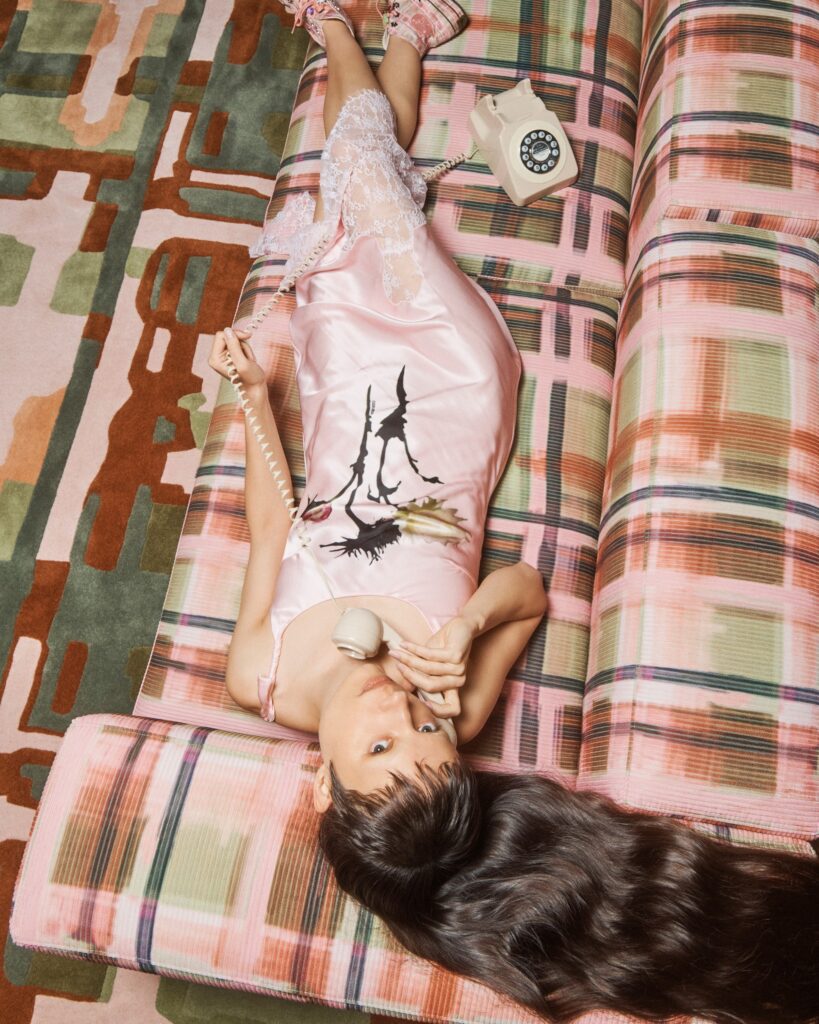
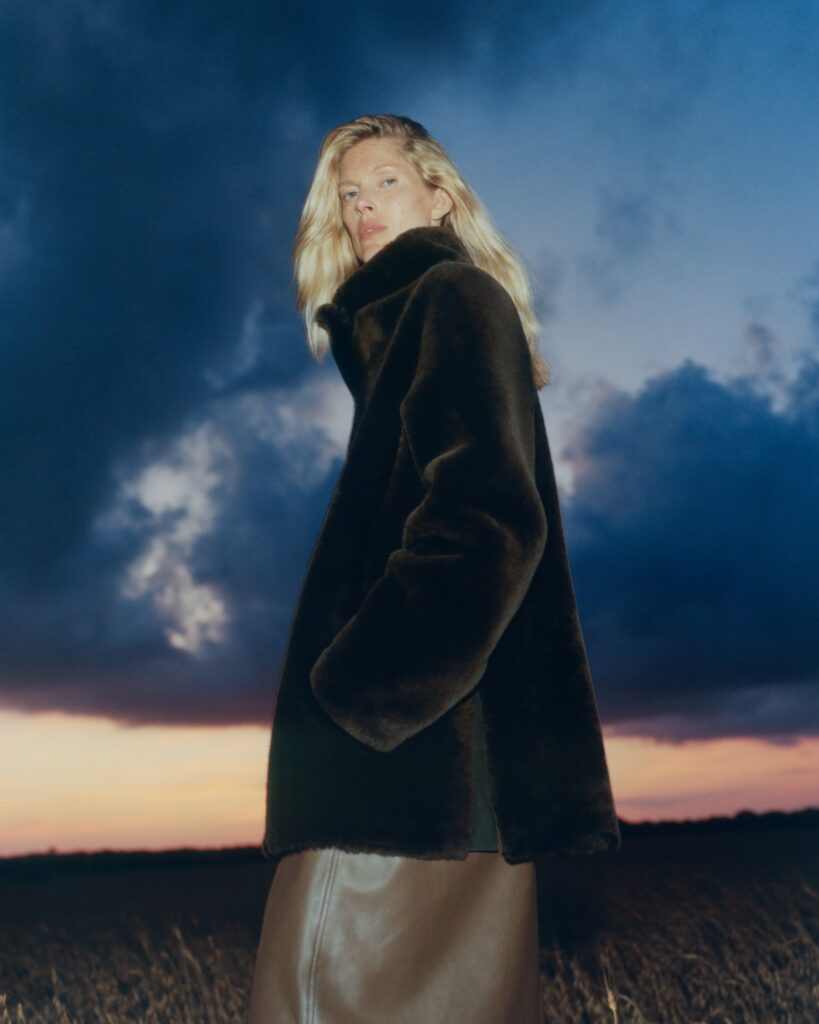
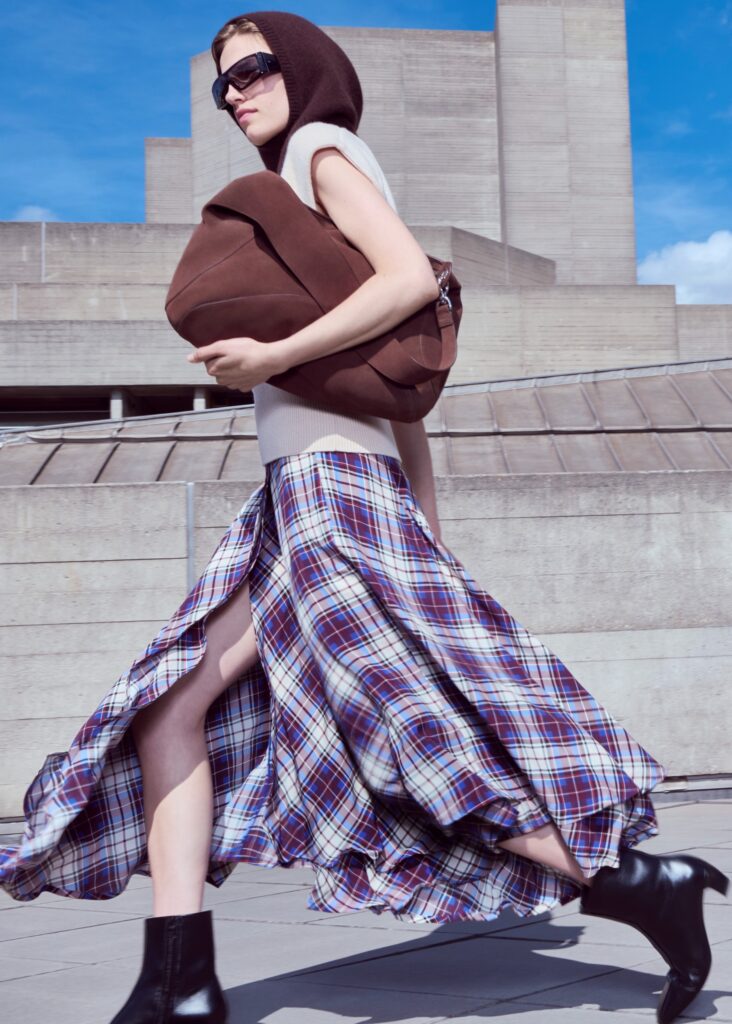
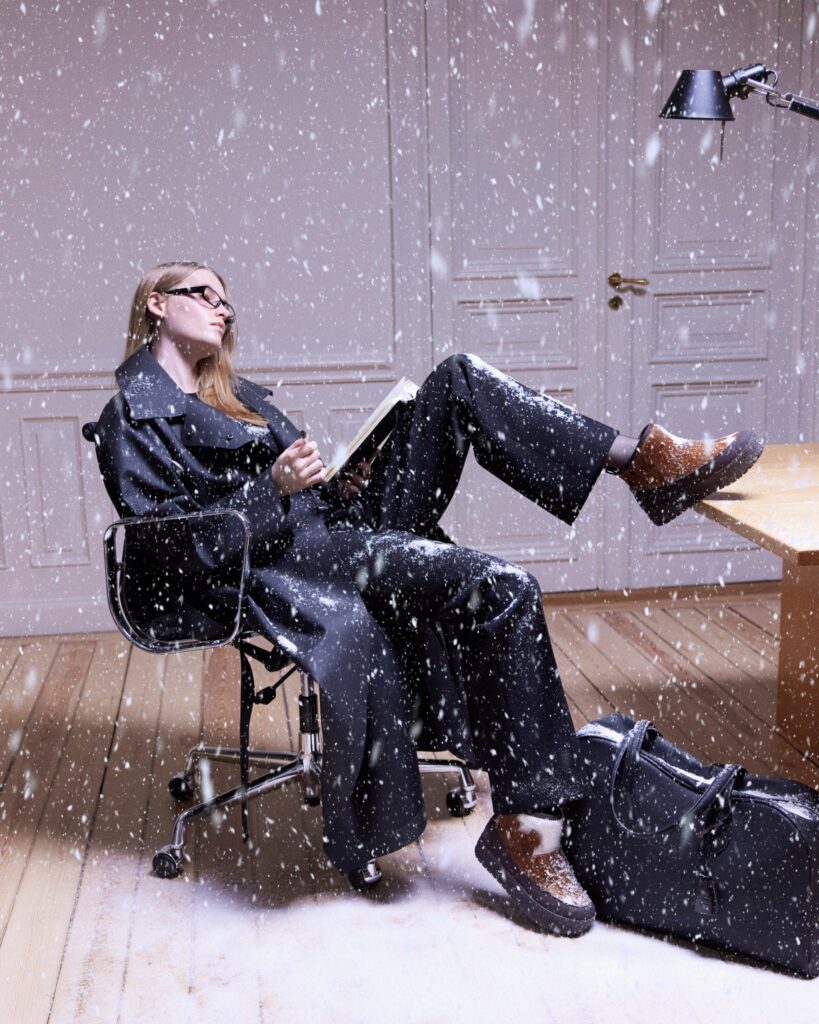
Sézane introduces their SS26 Collection All images courtesy of Sézane Spring, in the language of Sézane, is less about arrival and more about atmosphere. Light shifts, color re-emerges, and with it comes a wardrobe that leans into softness rather than statement. The new collection unfolds through embroidery, muted tones and considered detailing, creating pieces that feel quietly animated. There is a balance between the familiar and the new, where timeless essentials are revisited alongside updated silhouettes. Flowing dresses sit לצד more structured forms, while shaped tops and coordinated sets suggest an ease that does not compromise on intention. What defines the collection is its adaptability. Clean lines and subtle design choices allow each piece to move across contexts, worn as part of a layered whole or standing on its own. It is clothing designed not for a moment, but for continuity, extending naturally beyond the season itself. Accessories remain central to this vision. Long embedded in the brand’s identity, they carry the same lightness, with jewelry, shoes and leather goods reflecting a shift toward brightness and wearability. These are objects made to accompany, to be revisited and retained over time. Rather than chasing transformation, the collection stays close to Sézane’s core. It proposes a version of spring that is lived in gradually, where renewal is found in nuance, and where getting dressed becomes an extension of the season’s quieter return.

Opiates

CELINE introduces The Little Half Moon Bag

CELINE introduces The Little Half Moon Bag This spring, CELINE introduces  The  Little Half Moon, a new addition to the Soft Triomphe line launched with the Spring 2026 collection, Michael Rider’s first collection for CELINE. With the introduction CELINE continues to refine its visual language through restraint rather than reinvention. First revealed during the Printemps show marking Michael Rider’s debut for the house and later reiterated in the Été presentation, the bag signals a subtle shift toward ease, where structure softens without losing intent. At a glance, the Soft Triomphe resists overt branding. Its magnetized closure, a reduced and integrated version of the Triomphe emblem, moves away from prominence and toward quiet recognition. This scaled down signature suggests a broader recalibration within the house, where identity is carried through proportion, material and gesture rather than statement hardware. Crafted in supple lambskin, the bag balances fluidity with construction. The sewn back technique, rooted in the house’s leatherworking tradition, allows the form to remain both lightweight and durable, preserving its tactile quality over time. It is a study in controlled softness, where each curve feels considered rather than decorative. Offered in two silhouettes, the rounded Besace and the more elongated Half Moon, the line leans into versatility without overcomplication. Both shapes adapt easily to the body, worn crossbody or on the shoulder, aligning with a rhythm of movement rather than occasion. Find The Little Half Moon here  Image courtesy of CELINE

Scroll to Top