jahwanna berglund

Beauty Articles

Odalisque Magazine Interviews Louise Hjelmqvist – Co founder of MELA

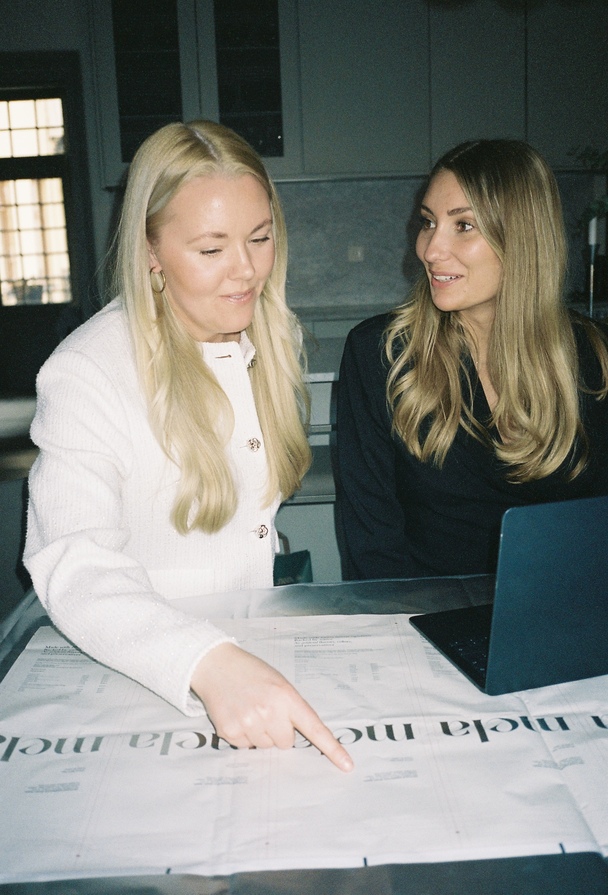
Odalisque Magazine Interviews Louise Hjelmqvist – Co founder of MELA text Jahwanna Berglund images courtesy of MELA When two women found themselves navigating the often chaotic roller coaster of hormonal imbalance, they did not stop at finding a personal solution, they built one. Founded in 2023 by Louise Hjelmqvist and Rebecka Leirup, Mela was created with a mission to redefine the narrative around hormonal balance for women. The co-founders transformed their own experiences into a wellness brand built around a focused range of products: Hormone Support capsules, a Hormone Support multivitamin with added gut support, Hydrate Electrolytes, and Restore Triple Magnesium. The brand’s promise lies in science-backed formulations, Swedish manufacturing, and a subscription model designed for modern routines. We spoke with Louise about the story behind Mela, her perspective on women’s health, the changes she hopes to see in the wellness space, and what lies ahead.  JB: Louise: tell us about that moment when you realised you wanted to build Mela. What were the signs/symptoms that led you into “hormonal health” territory?LH: For me, Mela began with my own body telling me something was wrong. I struggled with severe PMS for years, the kind that left me feeling depressed, anxious, and unlike myself for almost two weeks every month. It was incredibly isolating.I went to multiple healthcare providers, and the solutions I was offered were the usual ones: antidepressants, birth control. Both made things worse for me, not better. I felt like I was being treated as a set of symptoms rather than a whole person. It wasn’t until I explored a more holistic approach with nutrition, targeted supplements, lifestyle changes that things finally began to shift. For the first time, I felt a sense of balance and clarity, and I realized just how many women were going through the same thing without real support or guidance. That experience became the seed of Mela. JB: What did you each bring in terms of backgrounds, skills, passions that made this partnership possible? LH: I’ve spent over a decade in creative and marketing agencies, helping brands grow through storytelling and a deep understanding of their customers. My strength has always been in translating complexity into something relatable, something people can understand and feel. I’m passionate about creating brands that matter, and women’s hormonal health is the most meaningful challenge I’ve ever taken on.JB: How did you move from personal discovery into product development? Was there a first “prototype” or early version of the product range? LH: I had personally been taking many vitamins, minerals, and probiotics separately for a long time, because they genuinely helped my own health. At some point, I thought: Why isn’t there a simple, all-in-one product for women like me? Something high-quality, science-backed, and easy to take every day. That idea became the foundation of Mela, and our first product, Hormone Support. From there, we started working with Dr. Ehiphani Simmons, PhD, who joined us as a scientific advisor, helping ensure the formula was both effective and rooted in research. Before launching, we invited over 400 women to test the product for free in exchange for self-assessments. Women were reporting better energy, improved digestion, fewer PMS symptoms, and a sense of feeling more balanced. That was the moment we knew we had to move forward. JB: The wellness & supplements market is crowded, what sets Mela apart? LH: A three-pillar ecosystem: Products, Community, Education.Mela is not just supplements. It’s: Products designed for real effectiveness. Communities, like our “Wellness Wednesday” meetups, have become a “third home” for many women. Education, giving women knowledge to understand and navigate their hormonal health. Coming back to health isn’t just taking a supplement; if that were the case, no one would have issues. We aim to support the whole woman, not just her symptoms.JB: You list “scientifically formulated”, “premium ingredients”, “Swedish made” among your brand pillars.  Can you walk us through how you selected your ingredients and your manufacturing partners?  LH: Quality isn’t just a value for us, it’s a non-negotiable.We evaluated more than 20 manufacturers before choosing a Swedish partner who could uphold the safety, traceability, and purity standards we wanted. Ingredients are chosen based on clinical research, bioavailability, and relevance. JB: The visual identity and packaging feel very design-led. How important is aesthetics to your brand? LH: We believe aesthetics shape behavior. If something is calming, intentional, and beautiful, you’re more likely to make it part of your daily routine. We wanted Mela to feel like an object you choose to keep on your kitchen counter. Good design is also a form of self-care. 😉 JB: The wellness space is increasingly intersecting with sustainability, circular economy, clean beauty, etc. How does Mela engage with those trends?   LH: We try our best to be as gentle on the planet as possible. We deliberately removed all outer packaging from our jars to cut unnecessary material waste. We minimize plastic wherever possible; you won’t find a single plastic wrapper in our shipments, and we’re actively working toward refill systems so that each glass jar can be reused again and again. We also work with Swedish manufacturing partners, which allows us to maintain strict production standards, ensure ethical working conditions, and reduce transportation emissions.   JB: You focus on hormonal balance for women,  do you see (or plan) offerings for men, or for more gender-neutral products?   LH: Right now, our mission is very clear: to elevate women’s health. Women have been underserved and overlooked in this space for far too long, and we feel a strong responsibility to stay focused and go deep rather than broad. That said, some of our formulations are naturally universal, and we already have male customers who love products like Restore and Hydrate. We’re always listening and learning, but our priority is, and will continue to be, building a trusted ecosystem for women’s well-being. JB: As founders, how do you maintain your own balance?LH: I try to live in alignment with the principles we built Mela around.
News

The Water Blueprint – A Quiet Revolution

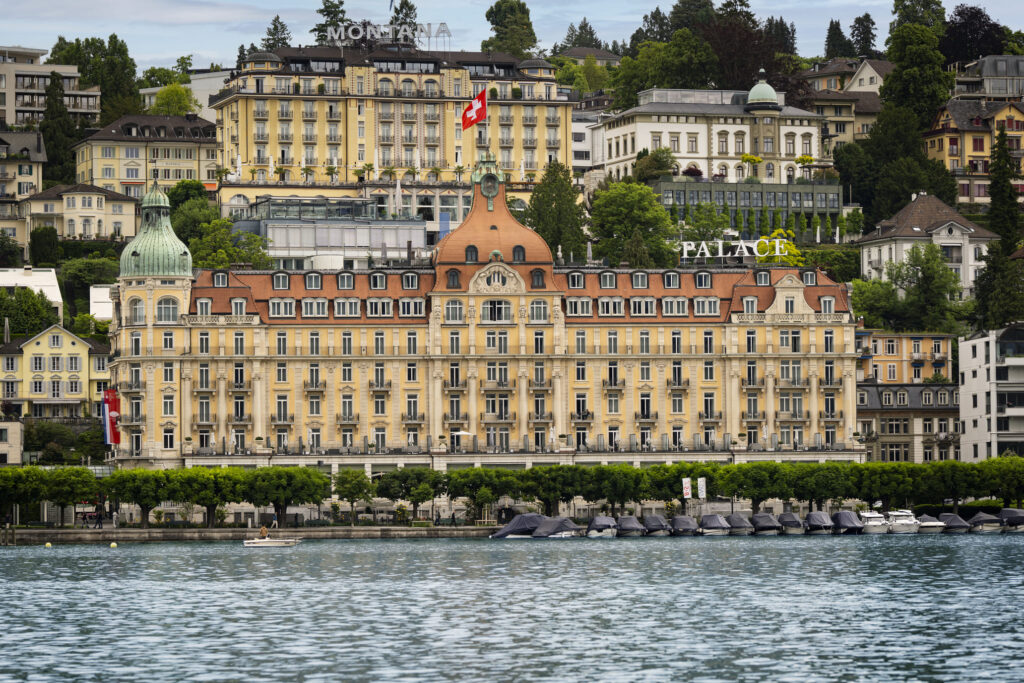
The Water Blueprint A Quiet Revolution text Jahwanna Berglund This is the story of the world’s most advanced AI water system, and the hotel that is quietly redefining what luxury can mean from within. There’s quiet poetry in water. It slips through our hands, reflects our skies, and sustains our bodies. And yet, despite being the most essential element of life, we have turned it into one of the most disposable. Every minute, a million plastic bottles are sold. Most will never be recycled. They will outlive us—in oceans, in landfills, even in our own bloodstreams. It is within this paradox that Nordaq, a Swedish water company backed by entrepreneur Carl Douglas and led by group CEO Johanna Mattsson, is writing a different story. Their idea is deceptively simple: stop transporting water over water. Instead, purify it at the source, and in doing so, strip away the absurdity of shipping a resource that already flows beneath our feet. This vision is embodied in Nordaq’s most advanced invention to date, the NQ600, an AI-powered water system making its global debut at the Mandarin Oriental Palace, Luzern. At first glance, it looks like nothing more than filtered water served in elegantly weighted glass bottles. But beneath that surface lies a blueprint that could reshape not just hospitality, but how we think about water itself. The NQ600 filters down to 0.03 microns, removing microplastics, bacteria, and contaminants while preserving essential minerals. More than a purification system, it is an intelligent collaborator: equipped with IoT sensors, it detects errors before they happen, geotags each bottle cap, and eliminates the need for transporting millions of plastic bottles. For the guest, it appears as simple as a carafe at the bedside. For the planet, it is transformative. “In luxury, sustainability has too often been treated as a compromise, a quiet afterthought to grandeur,” says Mattsson. “What if sustainability could be the upgrade?” Here, it becomes an invisible design woven seamlessly into the guest experience. photography Kristian Phol / Zap PR The choice of Mandarin Oriental Palace, Luzern as the debut site is no accident. Nestled between the Alps and Lake Lucerne, the hotel represents both the tradition of European luxury and the future of discreet innovation. In its suites, restaurants, and spa, water becomes more than hydration. It becomes a ritual. A pairing with fine dining. A companion to wellness. A gesture of care. This is not just about a hotel. It’s about a shift in the narrative of luxury itself. When hotels, airlines, and industries adopt Nordaq’s model, the ripple effect extends to urban developments, cruise ships, and beyond anywhere water scarcity and sustainability converge. In 2024 alone, Nordaq systems helped eliminate 139 million plastic bottles. Since 2010, the total exceeds 5.8 billion. Luxury has always been a mirror of society’s values. Today, it is no longer defined by excess, but by intention. By clarity. By systems that work beautifully and quietly. As Nordaq shows, progress doesn’t always announce itself with disruption; it sometimes flows, like water, into every part of our lives until it feels inevitable. When luxury shifts, the world listens. What happens in Lucerne may ripple far beyond toward cities, industries, and communities where clean water is not just service, but essential. The question is no longer whether we can afford to change, but whether we can afford not to. Not just in how water is served, but in how sustainability is seen: not as compromise, but as craftsmanship. And that, too, is luxury.

Scroll to Top