

Copenhagen

Travel

A Greenhouse in the City: Staying at Manon Les Suites During Copenhagen Fashion Week

A Greenhouse in the City: Staying at Manon Les Suites During Copenhagen Fashion Week text Sandra Myhrberg and Christine Deckert Copenhagen Fashion Week has a rhythm of its own, streets full of new faces, calendars packed to the hour, everyone moving toward the next show. My friend Christine Deckert, Odalisque’s Beauty Editor, and I checked into Manon Les Suites in the middle of it, and within an hour the pace of the week outside felt like it belonged to a different city entirely. Guldsmeden Hotels built this property, as they build all of their properties, around a conviction that sustainability isn’t a feature to advertise. It’s simply how a decision gets made, whether that decision is about a bed frame, a tomato, or a light bulb. A Suite Built to Slow You Down The design in our room was gorgeous, warm wood, soft textures, nothing sharp or cold about it. But it was the bed that undid us both. It felt like it belonged to another world entirely, deep and enveloping in a way that made the rest of the day disappear. Guldsmeden works with ProLana on its bedding, natural, fair trade materials that include rubberized coconut and wool from camels, yaks, and sheep rather than synthetic fill. The furniture throughout leans on bamboo, teak, and recycled wood. None of it announces itself as sustainable. It just quietly is. A Rainforest Instead of a Pool Downstairs, the pool sits inside a light flooded atrium, green tiled, ringed with day beds, and hung with so much monstera and trailing vine it barely reads as Copenhagen anymore. The water is warm, almost bath warm, and the air is thick and humid in a way that makes the whole room feel like a rainforest rather than a hotel amenity. Manon Les Suites is adults only, which makes sense the moment you’re in it, this isn’t a pool you want to share with a lobby full of noise. It’s disorienting for a moment, in the best way. You forget you’re a ten minute walk from a Fashion Week venue. image courtesy Manon Les Suites Mornings and Evenings Above the City The restaurant sits up on the roof, and you get to choose your version of the evening: a seat beside the spa, low light and quiet, or a table looking straight out over the city skyline. Guldsmeden holds the Golden O label for organic food and drink, and the kitchen’s produce is close to entirely organic across the group’s hotels. Nothing about the menu felt like it was trying to prove a point. It just tasted like it had been grown properly and cooked with care. Breakfast is served in the same rooftop restaurant, and it carried the same conviction as dinner. Long tables of greens, herbs, and vegetables alongside the bread and the eggs, all organic, nothing there just to fill space on the buffet. It set the tone for the day before we’d even left the hotel, the same sensibility from the evening menu simply shifted a few hours earlier. Sustainability as a Sensibility, Not a Selling Point Guldsmeden Hotels was founded in 1999 by Sandra and Marc Weinert, who opened their first hotel on Guldsmedgade in Aarhus, the street the group takes its name from. Manon Les Suites came later. The building itself dates back to 1883, and Guldsmeden took it over in 2016, reopening it as Manon Les Suites the following year. Everything from the four founding ideas that still run through every property, luxurious simplicity, happy hostmanship, an unpretentious atmosphere, and uncompromising sustainability, was simply carried into a much older building. Since the beginning, sustainability has been an integral part of how the company makes decisions and runs its operations, not an add on. Manon Les Suites became Green Globe certified back in 2009, and the group has since added Green Key certification, joined the GoGreen Denmark community in 2010, and moved to fully renewable energy from Natur Energi. Food and drink across the hotels sits close to 100 percent organic, even the stationery is climate friendly and recycled. None of this is printed on a placard in the lobby. It shows up instead in the weight of a duvet, the warmth of a pool, the produce on a rooftop menu. During a week built entirely around what’s new, staying somewhere built entirely around what lasts felt like the more interesting story. In Conversation with Astrid Kolle Oestergaard, Marketing and Sustainability Strategist Sandra: What does “intentional hospitality” actually look like day to day here, beyond the certifications?Astrid: For us, it is really about making conscious choices in everything we do. It is reflected in how we source our food, the products we place in our rooms, how we work with suppliers, how we reduce waste, and how we treat both our guests and colleagues. The certifications are important, as they help keep us accountable and inspire us to keep improving, but the philosophy has to be visible in everyday experience. S: Walk me through the materials in the suites, where do they come from and why those choices?A: We focus a lot on natural materials, craftsmanship and things that age well. You will see a lot of wood, natural textiles, handmade details and furniture with character, rather than very polished, mass-produced interiors. Much of the interior you see throughout the hotel is either something we have upcycled or something we have designed ourselves. The idea is to create spaces that feel warm, tactile and personal, while choosing materials and products that make sense from both a quality and environmental perspective. S: Is there a detail in the hotel most guests walk past without noticing, but that took real thought to get right?A:There are probably many. A good example is all the small choices around what we choose not to put into the hotel. We deliberately avoid a lot of unnecessary single-use products and excessive packaging. Guests may not consciously notice what is missing, but those decisions have a
Art

Enter Art Fair Copenhagen: At the Eyecandy Shop

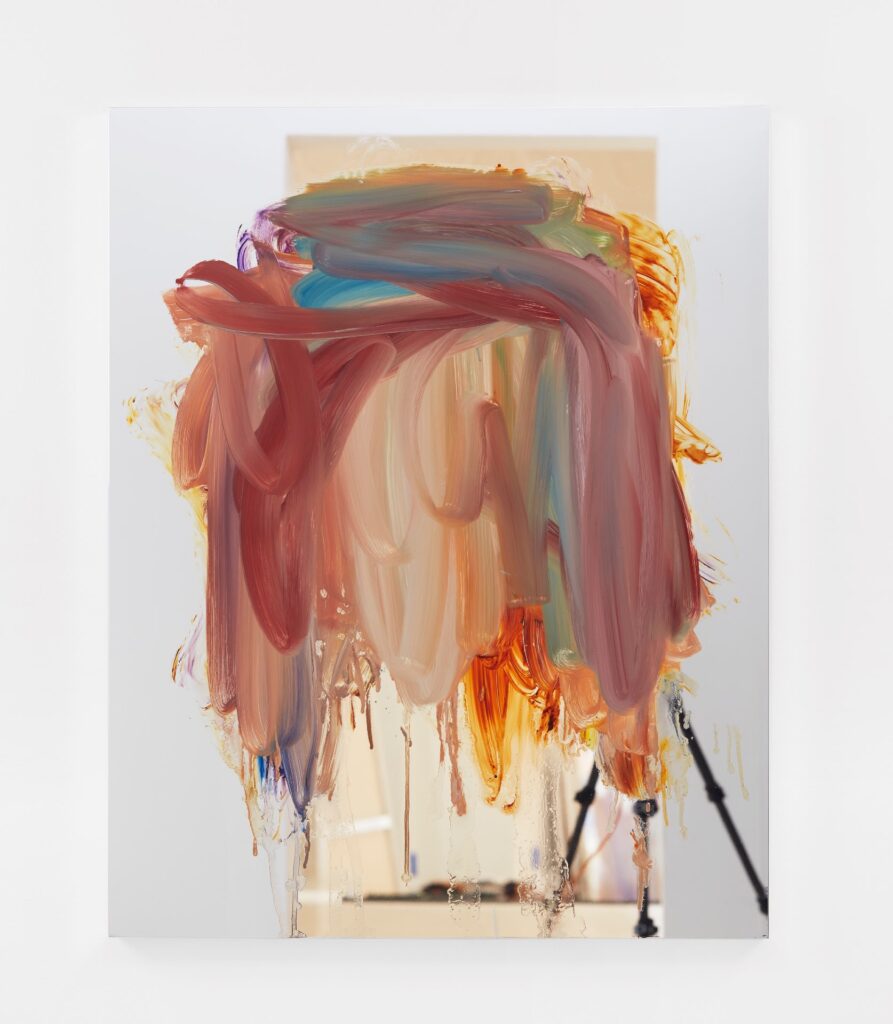
Enter Art Fair Copenhagen: At the Eyecandy Shop text Jens Bülskämper Anyone wandering through the Enter Art Fair in Copenhagen this weekend can only come to one conclusion: Mission accomplished, Julie Leopold – it’s done. Copenhagen now has the international art hub it was clearly missing. It all started at her kitchen table in 2019, and today some 90 galleries from around the world are eager to come to Copenhagen; the Enter Art Fair, conceived by Leopold, has firmly established itself. Spontaneously, one is tempted to attribute every artistic merit to the Danish metropolis and its creative figures; strolling through the city, everyone and everything looks so good – is there really anything left to push forward? But a look at the Chart art fair, taking place simultaneously in Copenhagen, at the Kunsthal Charlottenborg, reveals that while the Nordic scene gathers here, it tends to keep to itself, a gathering of Scandinavian galleries. image courtesy ENTER Art Fair “I’m happy to go over there,” says Robert Morat from Berlin, who is exhibiting at Enter for the first time with his gallery. He’s just as curious about Chart as he is about Enter, since there he can discover artists from the North who he might otherwise miss, but he believes that Enter is more exciting for the Copenhagen audience. Here, in an intimate setting, you can get to know galleries from New York to Tokyo. Morat is happy, things went great right from the preview, which is no surprise given his perfectly staged one-woman booth with Jessica Backhaus. image courtesy Neudeutsch photography Tim Sonntag Backhaus’s images openly flirt with the audience, triggering an immediate desire to possess them. Under the radiant sun of Nice, Morat explains, the artist arranges, collages, and composes colorful papers, which she then photographs. The result is exceptionally delightful color palettes and sophisticated compositions, and it doesn’t take much imagination to picture how these candy-like works are capable of transforming even the most reluctant observers into collectors. Small-format paintings are still available and can be taken home for a pickup price of 4,000 euros, frames included. Karlijn Bozon from the Amsterdam gallery Homecoming is also in good spirits. This is her first time on board as well, and she admits that she still finds the Danes hard to read. Yet her eyes sparkle tellingly, she, too, seems rather optimistic that she’ll figure them out. That shouldn’t really be a problem with Sophie Crichton: The young painter, barely 30, comes across as the wild, emotional granddaughter of Cy Twombly. She lets a gestural power play of unrestrained brushstrokes sweep across the canvas in a style all her own. Backhaus and Crichton are prime examples of the art at the fair: Enter is the ultimate eye-candy fair. It showcases what people actually want to see on their walls at home. And before the perennial mockers and skeptics chime in: Art can take many forms, manifest itself in various ways, and that’s a good thing. It’s also allowed to provide a sense of well-being and comfort, to be a form of wellness for the eye. As a school of sensitivity, art is political by its very nature, even if it doesn’t explicitly say “war is evil.” image courtesy Homecoming Gallery Those willing to dig deeper into their pockets can pick up a piece of Larry Poons’ intuitive abstraction at the Wetterling Gallery from Stockholm, though that’ll set you back 180,000 euros. I ask founder Björn Wetterling whether paintings in this price range are actually harder to sell. “Good heavens, no,” is his reply. That painting over there, the gallerist points to a small-format piece that’s relatively affordable by his standards, is much harder to sell than his two large Poons, which are already drawing a crowd of interested viewers. He doesn’t even have that many of them left, even though the artist, though advanced in age, is still producing work. image courtesy Wetterling Gallery Those looking for quality art in the mid-price range may find what they’re seeking at Martin Asbæk from Copenhagen. Among other works, the gallery features Peter Bondes’s wild, gestural paintings on mirror foil. It’s wonderful how these paintings offer a razor-sharp reflection of the fair’s atmosphere, how the colorful hustle and bustle of the art world in front of the paintings is revealed, only to be crisscrossed and painted over by powerful brushstrokes, before suddenly flashing back into view. Priced at around 13,000 euros. And then, at the Ruttkowski;68 gallery, there he is, just sitting there: Henrik Vibskov. Musician, fashion designer, artist, and who knows what else. How is it possible to be so prolific, to work in so many disciplines and media? On the table in front of him lie three hefty publications: all about his work. The exhibition at Ruttkowski;68: all by him. The sofa he’s sitting on: also his work, a one-of-a-kind piece, still available for 16,000 euros. The table the books are on: also by him. Plus sculptures, drawings, tapestries for 8,000 euros, all the rugs have been sold. So that’s what Enter can also be: chilling with Henrik Vibskov. image courtesy Martin Asbæk Gallery photography Morten Kamper Jacobsen The unofficial center of gravity, however, is the “Neudeutsch” project by trend scout, curator, and jack-of-all-trades Julian Daynov. Anyone who hasn’t fallen for his charm needs to see a doctor right away: Julian Daynov is a powerhouse of a communicator, somehow able to hug ten people at once, greet them, introduce them to one another, familiarize them with his various collaborations, hand out goodies, and whirl through his booth, the largest at the fair – while everyone is thrilled. His “Neudeutsch” concept, and it’s absolutely spot-on and important, is to thoroughly dust off the image of contemporary German design and give a platform to the many fresh voices. Daynov’s credo is also to let the disciplines flow into one another: art, design, fashion – for him, it’s all a mutually inspiring cosmos, mix-and-match; he can’t stand academic highbrow pretentiousness. Art is for everyone

Fashion Articles

UNIQLO × Cecilie Bahnsen: Shapes of Poetry, Worn Every Day

UNIQLO × Cecilie Bahnsen: Shapes of Poetry, Worn Every Day In Cecilie Bahnsen’s world, flowers aren’t just motifs, they’re a symbol of personal memories spent pressing blooms with her sister at their seaside house and childhood afternoons with her grandmother. The symbolistic motif has now moved into textiles; Utilising the juxtaposition of the personal with the universal, she has transformed a collection that both feels as intimate as a keepsake and as easy as a T‑shirt. That’s the paradox Bahnsen has long pursued: couture-level emotion with everyday wearability. Now, in collaboration with UNIQLO, that idea of “everyday couture,” as Uniqlo’s Yukihiro Katsuta puts it – meets LifeWear’s clarity of purpose. The seed for the collaboration was planted seven years ago, when a chance seating at the opening of Uniqlo’s first Copenhagen store brought Bahnsen and Yukihiro together. Katsuta remembers her saying she’d started her label just a few years earlier and he kept watching. What took time to mature wasn’t a moodboard match but a deeper alignment and a shared belief that clothes should serve the person, not the other way around. “Clothes shouldn’t have an attitude, so that the person creates individuality,” Katsuta says. “Different price point, different design, but the philosophy is the same.” Bahnsen’s studio is known for sculptural volume, soft light, and a devotion to craft that sits between couture and ready-to-wear. Translating that into LifeWear demanded both restraint and invention. “We chose to make everything in jersey,” she explains. “It drapes more than we normally use, but we still wanted ruffles, ruching, and movement.” The teams co-engineered fabrics like a gingham jersey with matelassé texture 3D to the eye, soft and stretching in motion preserving structure without losing ease. For Bahnsen, those “small codes” matter. Detail becomes identity: a precise flower, a line of shirring, a sleeve that lifts air. “It doesn’t take more than two small flowers on a T‑shirt, and a good jersey to make it feel personal,” she says. Working within constraints sharpened that sense of authorship: “Making a runway collection lets you do everything. Here, restraint made me more aware of what makes a piece feel Cecilie and how to carry that DNA, intact, into this Uniqlo collection.” New Collection- Shapes of Poetry and Everyday Couture, For All Ages The collection’s theme, “Shapes of Poetry,” is both a method and a statement about how the pieces are meant to live on the body and evolve over time. It’s about ideas coming together until everything feels right “It’s like when it clicks and suddenly everything makes sense,” Bahnsen says. At its core, the collection is designed for longevity and versatility: pieces are meant to be worn, restyled, and reinterpreted across different seasons rather than tied to a single moment. In the campaign, this spirit is reflected in a shared, collaborative approach with teammates layering denim under airy dresses and moving garments fluidly between looks. The campaign, shot by twin photographers Louise and Maria Thornfeldt on Shodoshima, captures this same sensibility, where the shifting sea light gives the fabrics a sense of rhythm and continuity, like punctuation across changing scenes. If Copenhagen gives Bahnsen movement- “as a Scandinavian woman, you want to live in your clothes, not be owned by them”- Japan gives continuity. It is one of her label’s largest markets; she has visited nine times since founding the brand. She admires how Uniqlo customers recombine pieces across seasons, building personal uniforms from modular parts. Here, the Venn diagram overlaps: Scandinavian ease, Japanese simplicity, and a shared dedication to craft in textiles, ceramics, furniture, and fashion. The collection normally centers around womenswear but for the first time, a children’s line has been introduced. The same signatures are featured, volume, florals, introducing a new playfulness, inspired by childlike wonder and inviting rituals of mother daughter dressing . That matters to Bahnsen, now a mother, who talks about holding onto “the joy you have as a kid, the first time you draw, the first time a dress feels like magic.” Katsuta likens great collaborations to an Iron Chef challenge: you hand the designer a new ingredient – here, jersey and watch their mastery adapt. “Her direction is so detailed and tricky,” he says with admiration, recalling multiple fittings to bring ruching, tension, and comfort into sync. The reward is dual: LifeWear that breathes with emotion, and a gateway for new fans to discover Bahnsen’s world. Walk into a Uniqlo store and you’ll see the subtle details that shift a staple into something felt: a sleeve that swells like a tide, a floral that reads as a pressed memory, a skirt that moves with Copenhagen’s easy, sunlit pace.“Small things bring big changes,” Katsuta remarked. It could be the collection’s thesis. In the end, what feels most personal becomes the most shareable: a pressed anemone for spring, a tee with two flowers, the quiet moment when, as Bahnsen says, the pin drops and you realise you can wear it every day. The collection will launch globally on Thursday, 28 May. COPENHAGEN GUIDE- THE CECILE X UNIQLO WAY  Design & ShoppingCecilie Bahnsen Boutique The designer’s poetic universe.  LOUISE ROE GalleryScandinavian design in a serene setting. UNIQLO StrogetUniqlo’s Copenhagen Flagship. TableauSculptural florals and curated design objects. CultureNya Carlsberg GlyptotekArt Museum set around a lush winter garden. Kunsthal CharlottenborgContemporary art in a historic setting.  Louisiana Museum of Modern ArtModern art by the sea, where architecture, landscape, and exhibitions flow together. CafeAtelier SeptemberCalm, sunlit café with seasonal, minimal dishes . RestaurantsEsmée Lush, design – led brasserie with a vibrant atmosphere. Locale 21Modern European dining with a relaxed, central feel. Pluto Refined sharing plates in an intimate setting. Stay1 HotelNature-led, sustainable design with Scandinavian calm in the city centre. Villa CopenhagenThe grand former post office turned into a conscious luxury hotel by Central Station.

Scroll to Top