A Greenhouse in the City: Staying at Manon Les Suites During Copenhagen Fashion Week
text Sandra Myhrberg and Christine Deckert
Copenhagen Fashion Week has a rhythm of its own, streets full of new faces, calendars packed to the hour, everyone moving toward the next show. My friend Christine Deckert, Odalisque’s Beauty Editor, and I checked into Manon Les Suites in the middle of it, and within an hour the pace of the week outside felt like it belonged to a different city entirely. Guldsmeden Hotels built this property, as they build all of their properties, around a conviction that sustainability isn’t a feature to advertise. It’s simply how a decision gets made, whether that decision is about a bed frame, a tomato, or a light bulb.
A Suite Built to Slow You Down
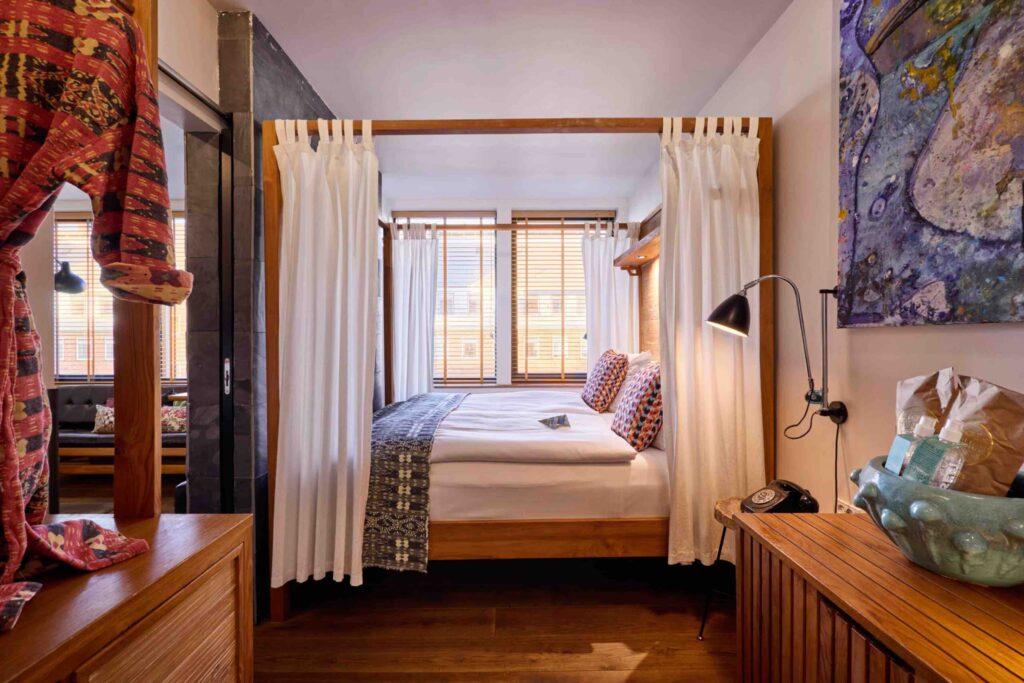
The design in our room was gorgeous, warm wood, soft textures, nothing sharp or cold about it. But it was the bed that undid us both. It felt like it belonged to another world entirely, deep and enveloping in a way that made the rest of the day disappear. Guldsmeden works with ProLana on its bedding, natural, fair trade materials that include rubberized coconut and wool from camels, yaks, and sheep rather than synthetic fill. The furniture throughout leans on bamboo, teak, and recycled wood. None of it announces itself as sustainable. It just quietly is.
A Rainforest Instead of a Pool
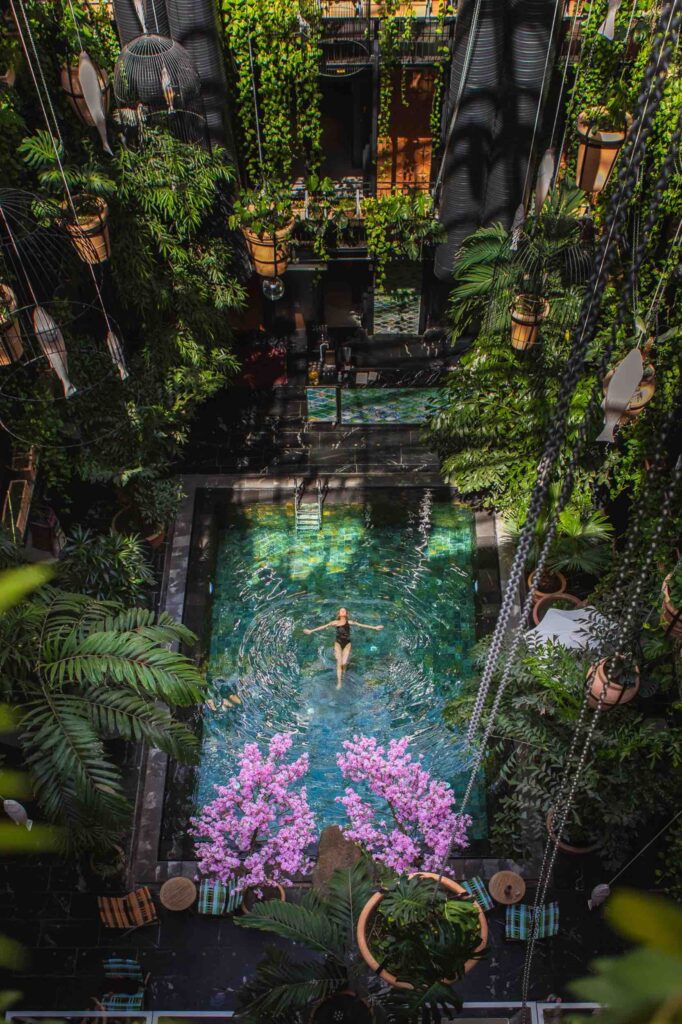
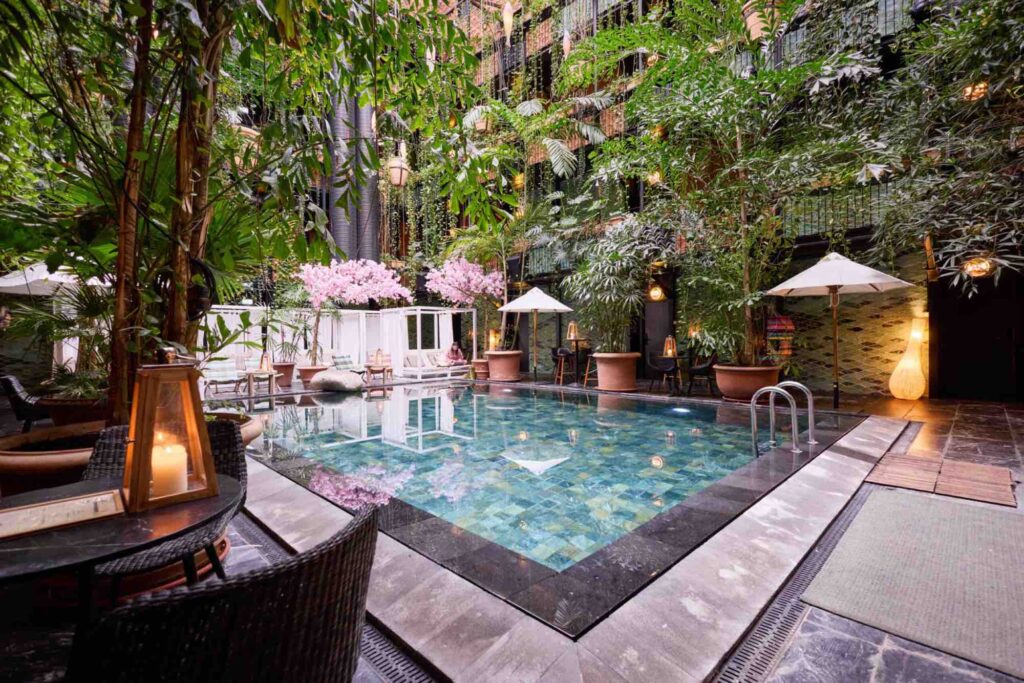
Downstairs, the pool sits inside a light flooded atrium, green tiled, ringed with day beds, and hung with so much monstera and trailing vine it barely reads as Copenhagen anymore. The water is warm, almost bath warm, and the air is thick and humid in a way that makes the whole room feel like a rainforest rather than a hotel amenity. Manon Les Suites is adults only, which makes sense the moment you’re in it, this isn’t a pool you want to share with a lobby full of noise. It’s disorienting for a moment, in the best way. You forget you’re a ten minute walk from a Fashion Week venue.
Mornings and Evenings Above the City
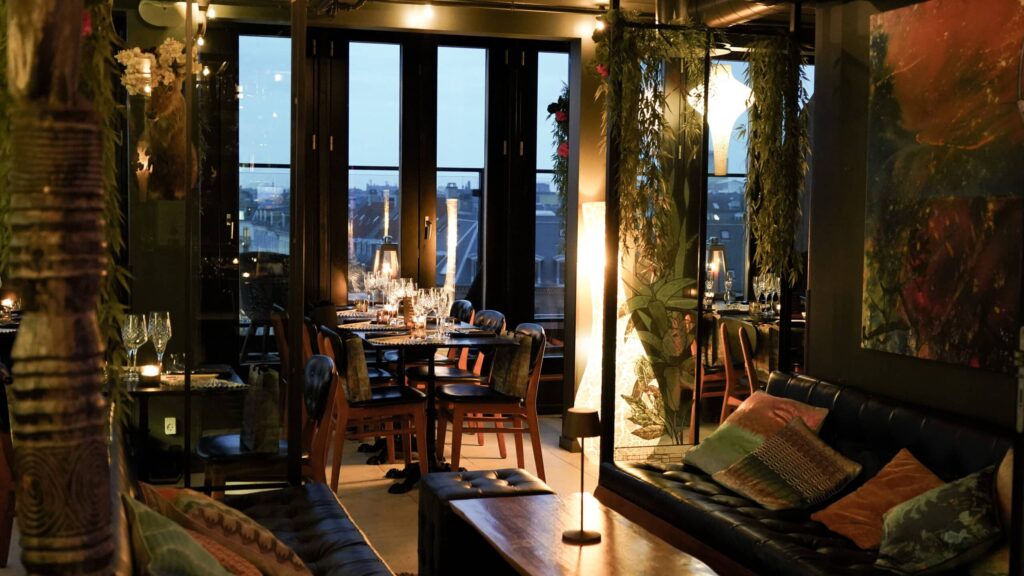
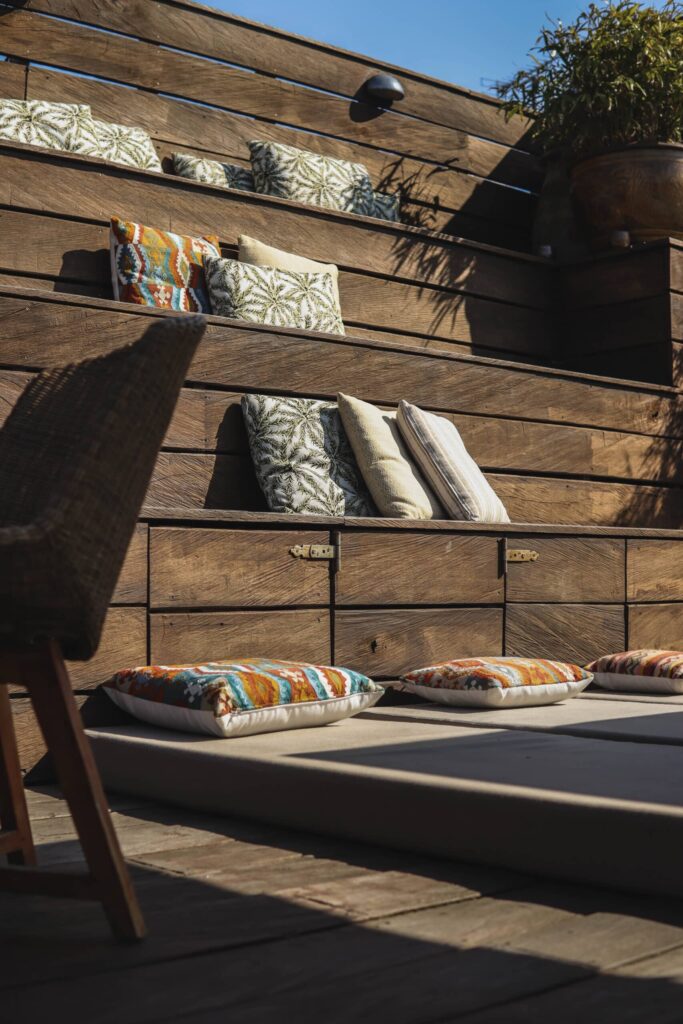
The restaurant sits up on the roof, and you get to choose your version of the evening: a seat beside the spa, low light and quiet, or a table looking straight out over the city skyline. Guldsmeden holds the Golden O label for organic food and drink, and the kitchen’s produce is close to entirely organic across the group’s hotels. Nothing about the menu felt like it was trying to prove a point. It just tasted like it had been grown properly and cooked with care.
Breakfast is served in the same rooftop restaurant, and it carried the same conviction as dinner. Long tables of greens, herbs, and vegetables alongside the bread and the eggs, all organic, nothing there just to fill space on the buffet. It set the tone for the day before we’d even left the hotel, the same sensibility from the evening menu simply shifted a few hours earlier.
Sustainability as a Sensibility, Not a Selling Point
Guldsmeden Hotels was founded in 1999 by Sandra and Marc Weinert, who opened their first hotel on Guldsmedgade in Aarhus, the street the group takes its name from. Manon Les Suites came later. The building itself dates back to 1883, and Guldsmeden took it over in 2016, reopening it as Manon Les Suites the following year. Everything from the four founding ideas that still run through every property, luxurious simplicity, happy hostmanship, an unpretentious atmosphere, and uncompromising sustainability, was simply carried into a much older building. Since the beginning, sustainability has been an integral part of how the company makes decisions and runs its operations, not an add on. Manon Les Suites became Green Globe certified back in 2009, and the group has since added Green Key certification, joined the GoGreen Denmark community in 2010, and moved to fully renewable energy from Natur Energi. Food and drink across the hotels sits close to 100 percent organic, even the stationery is climate friendly and recycled. None of this is printed on a placard in the lobby. It shows up instead in the weight of a duvet, the warmth of a pool, the produce on a rooftop menu. During a week built entirely around what’s new, staying somewhere built entirely around what lasts felt like the more interesting story.
In Conversation with Astrid Kolle Oestergaard, Marketing and Sustainability Strategist
Sandra: What does “intentional hospitality” actually look like day to day here, beyond the certifications?
Astrid: For us, it is really about making conscious choices in everything we do. It is reflected in how we source our food, the products we place in our rooms, how we work with suppliers, how we reduce waste, and how we treat both our guests and colleagues. The certifications are important, as they help keep us accountable and inspire us to keep improving, but the philosophy has to be visible in everyday experience.
S: Walk me through the materials in the suites, where do they come from and why those choices?
A: We focus a lot on natural materials, craftsmanship and things that age well. You will see a lot of wood, natural textiles, handmade details and furniture with character, rather than very polished, mass-produced interiors. Much of the interior you see throughout the hotel is either something we have upcycled or something we have designed ourselves. The idea is to create spaces that feel warm, tactile and personal, while choosing materials and products that make sense from both a quality and environmental perspective.
S: Is there a detail in the hotel most guests walk past without noticing, but that took real thought to get right?
A:There are probably many. A good example is all the small choices around what we choose not to put into the hotel. We deliberately avoid a lot of unnecessary single-use products and excessive packaging. Guests may not consciously notice what is missing, but those decisions have a significant impact when you multiply them across thousands of stays.
Another good example is how we approach our breakfast buffet. Everyone knows that buffets can be a significant source of food waste, so we have made a number of conscious choices to reduce this. We use smaller plates, so guests cannot put as much on their plate at once and can instead go back for more if they want to. We also offer smaller portions of croissants, pastries and other sweet breads, allowing guests to try a little bit of everything without taking more than they will eat.
We also have the message “Love Food, Hate Waste” printed on our napkins. It is a small and subtle reminder that hopefully makes guests think about food waste and the choices they make during their stay.
S: During a week like Copenhagen Fashion Week, does the pace change how the hotel operates, or does the philosophy stay fixed regardless of who’s staying?
A: The pace definitely changes and the hotel becomes much more energetic, but the philosophy stays the same. We may have more events, collaborations and international guests, but we do not suddenly change what we stand for. We still want the experience to feel personal, relaxed and grounded, even when the hotel is very busy.
S: What’s a sustainability decision you made that guests pushed back on, and how did you handle it?
A: Sometimes the sustainable choice is not automatically the most familiar choice for guests. Removing single-use products or changing traditional hotel routines can initially create questions. Our approach has always been to explain why we do it, but also to listen. Sustainability should not feel like a punishment for the guest, so we continuously look for ways to make the responsible choice feel comfortable and intuitive.
S: Where do you see the hotel or Guldsmeden’s approach heading next?
A: I think the next step is about going deeper rather than simply adding more initiatives. We want better data, more transparency in our supply chain, stronger partnerships with suppliers and even more focus on circularity, food, energy and resource consumption. At the same time, wellbeing is becoming an increasingly important part of how we think about hospitality.
Christine: If you could change one thing about the way people think about luxury travel today, what would it be?
A: For me, sometimes it feels like the idea of a luxury stay has become a little too focused on excess. More is not necessarily more luxurious. I think true luxury is about how something makes you feel – being somewhere beautiful, comfortable and thoughtful, where you can see the quality in the details. It does not have to be flashy to be luxurious.
Christine: Luxury has traditionally been associated with excess. Do you think the definition of luxury is shifting toward restraint, wellbeing and a sense of meaning instead?
A: I think the definition is shifting, but I don’t think excess is necessarily going away. There will always be a place for indulgence in luxury travel. What is changing is what people see as worth indulging in. It might be an incredible meal, a beautifully designed space, natural and well-crafted materials, a really good night’s sleep or simply having the time and space to slow down. I think luxury is becoming more about quality, thoughtfulness and the feeling an experience gives you, rather than simply having more.
For us, that also means making conscious choices about what we put into our hotels and how we operate. We want the experience to feel beautiful and special, while still having a sense of purpose. I think luxury is becoming more personal and less about proving that something is expensive.