art

Fashion Articles

UNIQLO × Cecilie Bahnsen: Shapes of Poetry, Worn Every Day

UNIQLO × Cecilie Bahnsen: Shapes of Poetry, Worn Every Day In Cecilie Bahnsen’s world, flowers aren’t just motifs, they’re a symbol of personal memories spent pressing blooms with her sister at their seaside house and childhood afternoons with her grandmother. The symbolistic motif has now moved into textiles; Utilising the juxtaposition of the personal with the universal, she has transformed a collection that both feels as intimate as a keepsake and as easy as a T‑shirt. That’s the paradox Bahnsen has long pursued: couture-level emotion with everyday wearability. Now, in collaboration with UNIQLO, that idea of “everyday couture,” as Uniqlo’s Yukihiro Katsuta puts it – meets LifeWear’s clarity of purpose. The seed for the collaboration was planted seven years ago, when a chance seating at the opening of Uniqlo’s first Copenhagen store brought Bahnsen and Yukihiro together. Katsuta remembers her saying she’d started her label just a few years earlier and he kept watching. What took time to mature wasn’t a moodboard match but a deeper alignment and a shared belief that clothes should serve the person, not the other way around. “Clothes shouldn’t have an attitude, so that the person creates individuality,” Katsuta says. “Different price point, different design, but the philosophy is the same.” Bahnsen’s studio is known for sculptural volume, soft light, and a devotion to craft that sits between couture and ready-to-wear. Translating that into LifeWear demanded both restraint and invention. “We chose to make everything in jersey,” she explains. “It drapes more than we normally use, but we still wanted ruffles, ruching, and movement.” The teams co-engineered fabrics like a gingham jersey with matelassé texture 3D to the eye, soft and stretching in motion preserving structure without losing ease. For Bahnsen, those “small codes” matter. Detail becomes identity: a precise flower, a line of shirring, a sleeve that lifts air. “It doesn’t take more than two small flowers on a T‑shirt, and a good jersey to make it feel personal,” she says. Working within constraints sharpened that sense of authorship: “Making a runway collection lets you do everything. Here, restraint made me more aware of what makes a piece feel Cecilie and how to carry that DNA, intact, into this Uniqlo collection.” New Collection- Shapes of Poetry and Everyday Couture, For All Ages The collection’s theme, “Shapes of Poetry,” is both a method and a statement about how the pieces are meant to live on the body and evolve over time. It’s about ideas coming together until everything feels right “It’s like when it clicks and suddenly everything makes sense,” Bahnsen says. At its core, the collection is designed for longevity and versatility: pieces are meant to be worn, restyled, and reinterpreted across different seasons rather than tied to a single moment. In the campaign, this spirit is reflected in a shared, collaborative approach with teammates layering denim under airy dresses and moving garments fluidly between looks. The campaign, shot by twin photographers Louise and Maria Thornfeldt on Shodoshima, captures this same sensibility, where the shifting sea light gives the fabrics a sense of rhythm and continuity, like punctuation across changing scenes. If Copenhagen gives Bahnsen movement- “as a Scandinavian woman, you want to live in your clothes, not be owned by them”- Japan gives continuity. It is one of her label’s largest markets; she has visited nine times since founding the brand. She admires how Uniqlo customers recombine pieces across seasons, building personal uniforms from modular parts. Here, the Venn diagram overlaps: Scandinavian ease, Japanese simplicity, and a shared dedication to craft in textiles, ceramics, furniture, and fashion. The collection normally centers around womenswear but for the first time, a children’s line has been introduced. The same signatures are featured, volume, florals, introducing a new playfulness, inspired by childlike wonder and inviting rituals of mother daughter dressing . That matters to Bahnsen, now a mother, who talks about holding onto “the joy you have as a kid, the first time you draw, the first time a dress feels like magic.” Katsuta likens great collaborations to an Iron Chef challenge: you hand the designer a new ingredient – here, jersey and watch their mastery adapt. “Her direction is so detailed and tricky,” he says with admiration, recalling multiple fittings to bring ruching, tension, and comfort into sync. The reward is dual: LifeWear that breathes with emotion, and a gateway for new fans to discover Bahnsen’s world. Walk into a Uniqlo store and you’ll see the subtle details that shift a staple into something felt: a sleeve that swells like a tide, a floral that reads as a pressed memory, a skirt that moves with Copenhagen’s easy, sunlit pace.“Small things bring big changes,” Katsuta remarked. It could be the collection’s thesis. In the end, what feels most personal becomes the most shareable: a pressed anemone for spring, a tee with two flowers, the quiet moment when, as Bahnsen says, the pin drops and you realise you can wear it every day. The collection will launch globally on Thursday, 28 May. COPENHAGEN GUIDE- THE CECILE X UNIQLO WAY  Design & ShoppingCecilie Bahnsen Boutique The designer’s poetic universe.  LOUISE ROE GalleryScandinavian design in a serene setting. UNIQLO StrogetUniqlo’s Copenhagen Flagship. TableauSculptural florals and curated design objects. CultureNya Carlsberg GlyptotekArt Museum set around a lush winter garden. Kunsthal CharlottenborgContemporary art in a historic setting.  Louisiana Museum of Modern ArtModern art by the sea, where architecture, landscape, and exhibitions flow together. CafeAtelier SeptemberCalm, sunlit café with seasonal, minimal dishes . RestaurantsEsmée Lush, design – led brasserie with a vibrant atmosphere. Locale 21Modern European dining with a relaxed, central feel. Pluto Refined sharing plates in an intimate setting. Stay1 HotelNature-led, sustainable design with Scandinavian calm in the city centre. Villa CopenhagenThe grand former post office turned into a conscious luxury hotel by Central Station.

Cinema, Uncategorized

Aggy K. Adams on Channelling ‘Chaos’ and Learning to Let Go of Control 

Aggy K. Adams on Channelling ‘Chaos’ and Learning to Let Go of Control “There’s nothing better than putting your lived experience into an art form” photography Jason Jude talent Aggy K. Adams / CLD Communications Ltd fashion Rachel Davis / ONE REPRESENTS makeup Dani Guinsberg fashion assistant Lauren Glazer production Ignas Kelpsas suit Bella Freud shirt Rejina tie Bella Freud PYO @Couveture & the Garbstore shoes Burberry ring Ruha suit Bella Freud shirt Rejina tie Bella Freud PYO @Couveture & the Garbstore shoes Burberry ring Ruha shirt Rejina tie Bella Freud suit trousers Bella Freud socks Missoni ring Ruha With several shorts and featured roles under her belt, Polish-born British actress Aggy K. Adams joined Netflix’s hit drama series The Witcher (2019) for its third season in 2023 and is on a booming career trajectory, pursuing independent film. In conversation with ODALISQUE, Adams breaks down the early stages of her acting career, how she got into character for The Witcher, and tells us about her upcoming indie film debut.      Ella Nelson: When did you first realise you wanted to pursue acting as a career, or has being an actor always been the goal?  Aggy K. Adams: The first thought of acting came to me as an impulse – I must’ve been around 10 years old, and I did some acting classes, which I really loved. I remember receiving a lot of praise from my teacher and classmates, too, which made me feel that I was good at it.    Realising later on in life that I wanted to pursue it as a career has always been a negotiation between that pure moment of love, joy and creativity, and crippling doubts in my mind. I am learning that perhaps one wouldn’t exist without the other.    EN: That can be a hard balance to navigate. Was there someone in particular whom you looked up to when it came to acting while you were growing up?  AA: I remember watching Julia Stiles in Save the Last Dance and Angelina Jolie in Girl, Interrupted. I really looked up to them both, especially Angelina. She had that sensitivity and rawness I was mesmerised by. For example, in that intro scene where she rules the psych ward – I just couldn’t look away.  EN: You trained at the Royal Central School of Speech and Drama in London. Did you have any drama or acting experience prior to attending? What were those early experiences like?  AA: I had very little experience at that time. Whatever I heard from teachers when I was 18-19 years old, I took it extremely seriously and as ‘the truth’. I didn’t realise at the time that teachers are also humans with their own journeys and flaws. I was lucky to work with great teachers at Central, but also not so lucky later on with other ones.    EN: Great teachers can truly have such an impact! Was there a particular teacher, moment, or lesson that left a lasting impression on you – something you still carry with you in your work today?  AA: The person who helped me the most with confidence and craft was Alexa Lipworth, who runs an English-speaking theatre company in Paris called ‘Acting Ensemble’. I spent a lot of time in Paris training with her during and after COVID. She dug me out of the hole of insecurity that previous teachers helped me enter. She is busy directing plays now, but we still work together when we can.    EN: You’ve worked in both film and TV. How do you approach these two formats as an actor? Do you find your process changes between them? AA: I have been lucky enough to work in TV for the last four or five years, and this year I wanted to focus more on independent film. The approach between film and TV is very different. In film, I feel a lot more agency and co-creation. The formats and scripts are shorter; I can approach them more with the entire context in mind and then try to work out how best my character can serve the story. TV is a much longer process, often without a single visionary, and the scripts and episodes are always changing. I feel ready to take on a new TV show now though, and I have read some incredible scripts recently!  cardigan Toga skirt Ray Chu pulla @Couveture & the Garbstore  dress Milo Maria shirt A Jane tights Tabio boots Huishan Zhang EN: In 2023, you joined the cast of The Witcher as Iskra – an elven member of the notorious gang of teenage fugitives known as The Rats – for the series’ third season. What was it like joining a show that already had so much momentum and such an established fanbase?  AA: It was tricky at times because there was a lot of attention on us already. But that pressure came with some benefits, and doors have opened as a result.    EN: How did you prepare for the role of Iskra?  AA: She was a great character to prepare – very physical! Firstly, training how to fight with the Wakizashi (shorter Katana) sword was a very thrilling and challenging experience too. The prosthetics, hair and costume were a large part of the preparation for an elf character in the fantasy world. Shoutout to the incredible Megan Thomas, who did my hair, makeup and ears every day!    EN: Was there a particular aspect of her character you were especially drawn to explore? And in what ways, if any, do you see yourself reflected in Iskra, and vice versa? AA: I wanted to make Iskra a little like a Harley Quinn character. I’ve worked towards complex, unpredictable and chaotic energy, high intellect and emotional instability. I definitely have some chaos in me, so it was about tapping into it and bringing it out to the surface. She is also bubbly, fun-loving and witty – that, I say, we share somewhere too.

Art, Uncategorized

Molten Glass Memories: Härkomst ~ Hågkomst by Sarah Yasdani

photography Olivia Huerta Bratteng  Molten Glass Memories: Härkomst ~ Hågkomst by Sarah Yasdani text Kaat Van Der Linden “I hope viewers encounter the exhibition through their own sense of loss and longing. I believe we all carry lost spaces within us – places and people we can no longer return to,” says Swedish‑Persian artist Sarah Yasdani about Härkomst ~ Hågkomst. Currently on view at Galleri Glas in Stockholm, the exhibition runs from February 19 until March 19th, 2026 and explores ideas of inherited memory and the physicality of remembering. Yasdani construct what she calls a “hestorical house“”; a dreamlike structure built from fragments of her foremothers’ lives. “What matters is the quiet knowledge that memory lives in the body as much as in the mind.” photography Olivia Huerta Bratteng To bring her “herstorical house” to life, she needed a material that could, over time, fuse with an object and everything it has ever held. A need that ultimately led her to glass, through which she began exploring questions of heritage and memory. “When I first got in touch with the material, I was carried away by the sense that glass remembers,” says Yasdani. “I came to realise that the quality of glass echoed what I was already drawn to in my conceptual practice. Glass holds traces and mirrors the way heritage and memory are carried: altered by time, yet never erased.” When her grandmother passed away, each family member was asked what they wished to inherit from her now‑lost home. Yasdani was the only girl among all the grandchildren, but she was the one who had spent her childhood in the studio with her grandfather. So when they were allowed to choose something to take with them, she already knew what she wanted: “I immediately thought of the tools my grandfather and I used together. But when I arrived at the house, the tools were gone. It made me both angry and sad, because to me they carried so many memories.” Unable to take one of her grandfather’s tools, Yasdani searched for another meaningful object to bring home. Eventually, she decided to remove a threshold from the doorframe, which she later kiln-cast in glass. That threshold became the first element of Härkomst ~ Hågkomst. That threshold now holds more than just the memory of her grandmother’s house: “To me, the threshold holds time and space sealed within an in-between – where no one passes anymore, in a house that both exists and does not. Generations of movement and lived time are embedded in its surface, carrying the weight of countless footsteps. The threshold became for me both an object and a passage: a site where my origin and my memory could meet.” photography Olivia Huerta Bratteng photography Julia Nesterenko photography Julia Nesterenko photography Olivia Huerta Bratteng Using memory as a material is therapeutic for Yasdani, enabling her to keep her cultural history alive. It allows her to remain in the past while still moving forward, to inhabit what has been while shaping what is to come. “Memory is a generous material because it is endless. I never reach the bottom of the keepsake casket. Each object I open contains another layer, another echo, another fragment asking to be held. Even absence offers substance. What is missing becomes as important as what remains.” The story of her two grandmothers, who never met, forms the emotional core of the work. Their absence becomes a generative force, shaping both how and why Yasdani works. “Absence does not signify loss alone, but the possibility of an imagined connection. My grandmothers are finally able to meet; I am rippling on their waters.” Her culture lives not only in her genetic inheritance, but also in the materials she is drawn to; in what she collects, casts, shapes and preserves. Rather than trying to resolve her identity, Yasdani uses the exhibition as a way to hold it. “I grew up with Persian gestures, scents and sensibilities present in a Swedish landscape. One heritage was carried in the body: the other shaped the ground beneath my feet. In the exhibition, they move into one another.” Working on this exhibition hasn’t changed how she relates to her heritage; it has deepened it. The process has felt like moving closer to the source, like tracing her hand along the grain of something ancient and recognising it as her own. Härkomst ~ Hågkomst takes viewers through parts of Sarah Yasdani’s past, but for the artist, it also marks a transition toward something new. “While glass has always been my chosen medium, I’ve recently felt drawn to wood carving. Glass carries the presence and memories of my grandmothers, whereas wood connects me to my grandfather, who was a woodcarver. Embracing this new chapter feels like finding a way to be closer to him.” photography Julia Nesterenko photography Julia Nesterenko
Art

Gianni Politi: Paintings from the Cave

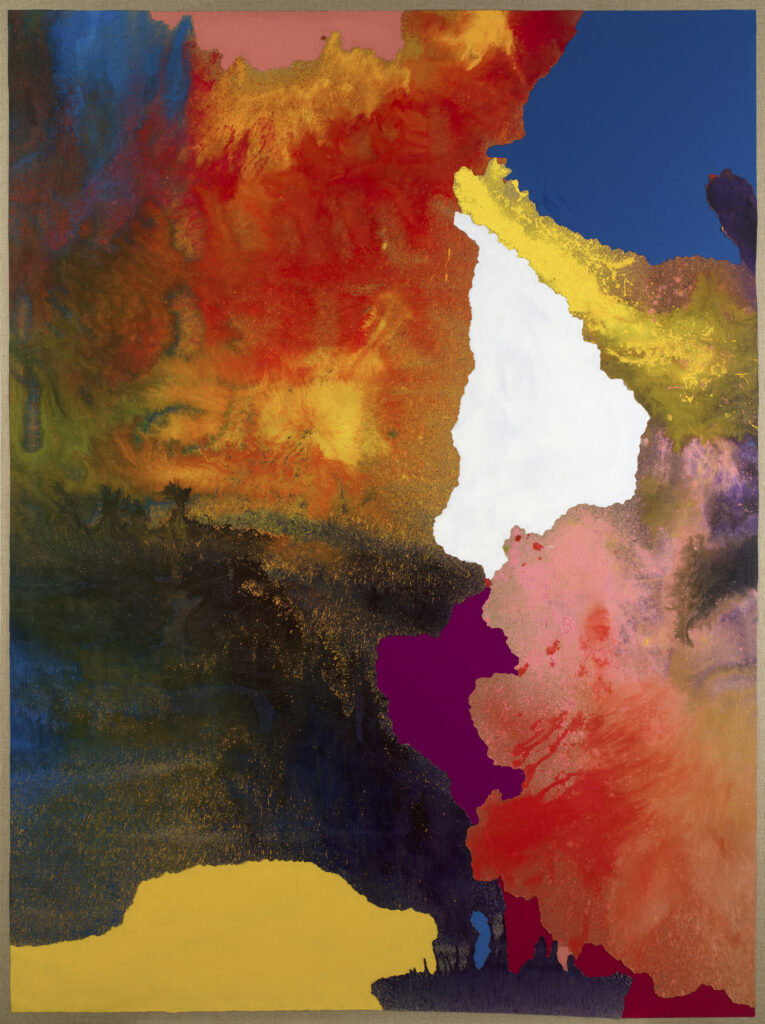
Gianni Politi: Paintings from the Cave For his second exhibition in Sweden, Paintings from the Cave, currently on view at Gerdman Gallery in Stockholm, Roman artist Gianni Politi presents a body of work created in self-imposed exile. Politi describes a studio practice nurtured in darkness and symbiosis with scorpions, whose venom, he claims, is a necessary catalyst. We spoke with Politi about the necessity of this exile, and why he questions those who choose the comfort of the “condominium.” Natalia Muntean: “Paintings from the Cave” inverts the idea of the artist in the Ivory Tower. Is this “cave” a physical space, a state of mind, or a philosophical stance for you?Gianni Politi: My studio looks almost like a cave. A single entrance and a secret exit, but of course, the idea of the cave comes from Plato and his myth. We all start our lives from the cave, and we try to reach the truth, to finally see the sunlight. NM: Why is a dark, humid cave a better place to make art than a bright, clean studio?GP: It is better for me. I like the idea of a secluded, secretive studio. A very private place where the struggle of working can be fully embodied in a daily challenge. NM: You describe the scorpion’s sting as a vital engine for your work. What does this venom represent metaphorically? GP: For me, the sting of the scorpion is a figurative adrenaline shot. It reminds the artist to be fully focused on his own practice. It is neither painful nor stressful, but it is a condition, a timer, a reminder. The scorpions inhabiting the artist’s studio are his personal alarm clock. NM: Your large abstracts are born from slashing and cutting existing works, then reassembling them into new “battles.” Can you walk me through this ritual of destruction?GP: More than a ritual, it is the only way I authorise my painting to exist. I personally find it impossible for me to paint a still image, no difference between abstract and figurative, and these collages of previously painted works have become for me a way of layering material like the floor of a painter’s studio. NM: You talk about the “struggle of being a contemporary painter.” What is the biggest part of that struggle for you right now?GP: I cannot paint a single picture and find it interesting, neither for me nor for the world. NM: You end your statement with a pointed question: “I have always questioned artists who rent a space inside the Ivory Tower condominium.” What do you believe is lost when an artist chooses the “condominium” over the “cave”?GP: Artists who have chosen the condominium have aligned their routine with a world that doesn’t accept them as an anomaly. They put themselves in a condition that doesn’t really work around them to fully understand them. They may be great artists or still make great art by working in the condominium, but what I think is that in the end, conforming to your own public will be damaging for the work. NM: What do you hope the audience takes away from Paintings from the Cave? What is the one feeling or idea you hope they leave with?GP: I made the show for myself. I never intend to leave a message, but I am interested in telling my story, explaining my point of view as an Italian artist working with the medium of painting. A small story, but maybe relatable, maybe a good example or a bad one. I have never made any work with the intention of guiding the viewer anywhere.

Scroll to Top