INNER CHILD: an exhibition about the joy of childhood at Artipelag
Text by Natalia Muntean
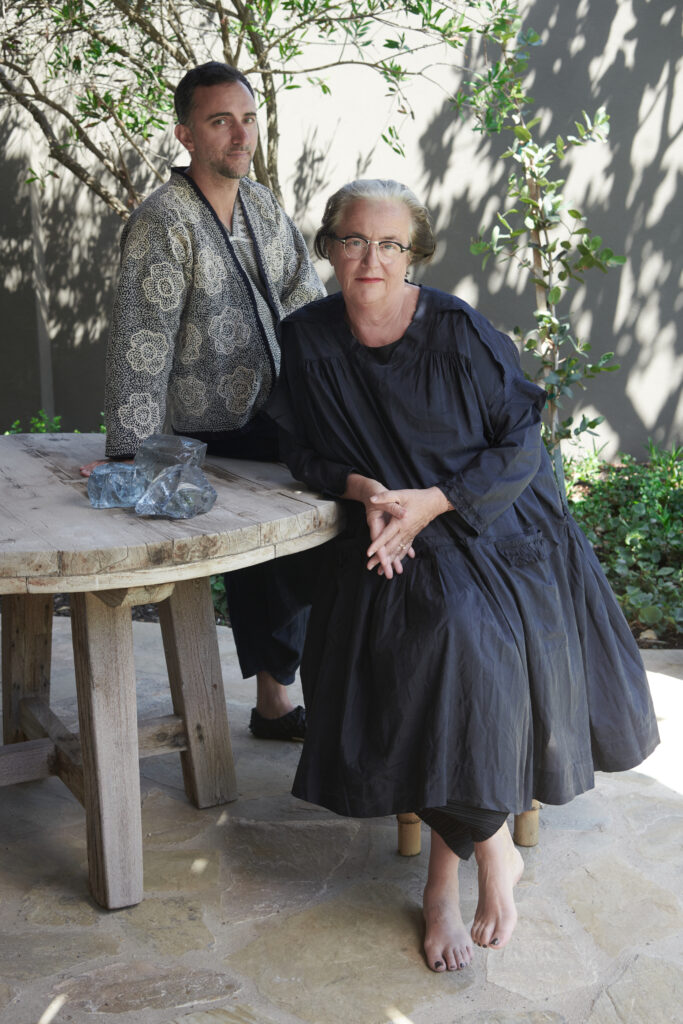
“It’s never too late to have a happy childhood,” reads one of the messages on the walls of INNER CHILD: Playing with Design at Artipelag in Stockholm. Curators Lidewij Edelkoort and Philip Fimmano see designers turning to play as an answer to AI, anxiety and screens. “Having joy during difficult times can become a form of activism,” Edelkoort says. Made exclusively for Artipelag and on view until 11 April 2027, the exhibition brings together 100 designers from more than 20 countries, including Maarten Baas, Front, Yinka Ilori, Gustaf Westman and Pierre Yovanovitch, across eight thematic chapters.
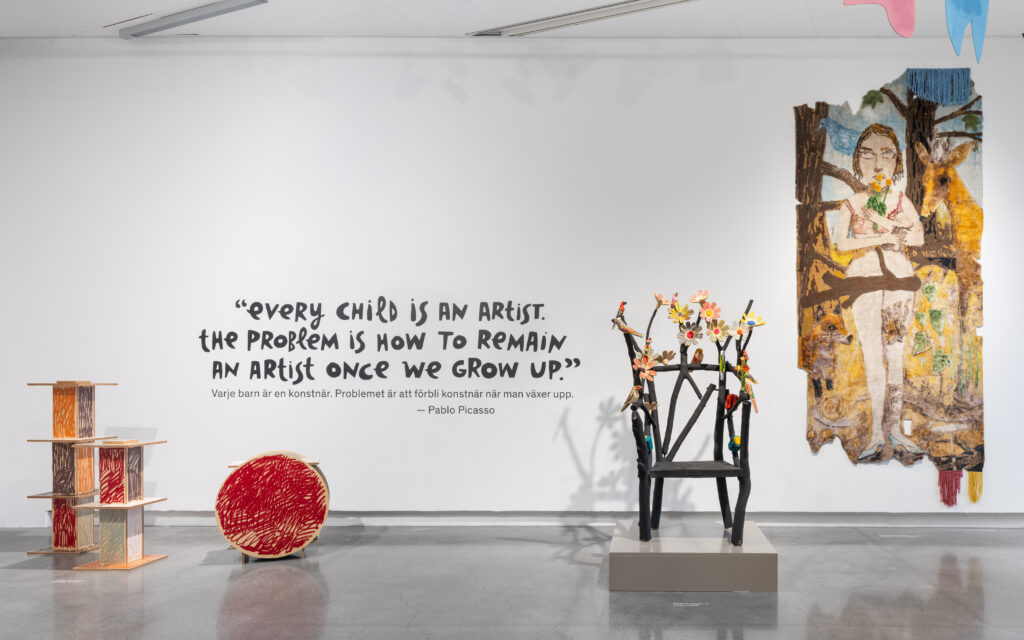
The accompanying book, Inner Child, traces that impulse back through archaeology and history. “The Greek word for child means someone who plays,” Edelkoort writes in her essay “The Untold Toy Story”, adding that archaeological studies have “only recently woken up to the joyous lives of children.”
Natalia Muntean: Why do you think it is so important to reconnect with childhood in contemporary design?
Lidewij Edelkoort: It is something that has been happening for a while. We witnessed it and vaguely understood that something was going on. Now we realise that there is really a movement towards a more naïve, simple, straightforward and joyful direction in design, and also in fashion. We connected with the museum because it was built with income from BabyBjörn. It felt appropriate to give the baby back to the company, in a way. The owners came to see the exhibition with us and were overjoyed. They really appreciated it because it was joyful for them too. Joy is one of the main ingredients. We believe joy can help fight the moroseness, pain, anger, aggression and fear of war that we are experiencing today. The exhibition is like a remedy.
The timing became increasingly important while we were working on it. At first, we wanted to explore how designers use techniques that help us reconnect with our hands, rewire the brain and re-humanise ourselves after living in such a digital age. Because of the backlash against technology, especially AI, the analogue side of the exhibition became even more important. Of course, the designers use technology in their work, but their ideas come from imagination and from experimenting with their hands, tools and art supplies, doing all the things that children do.
NM: During the presentation, you also spoke about how children throughout history played with similar toys and told similar stories. What did you discover by researching the history of childhood and the things that drive human creativity?
LE: In archaeology, the lives of children were completely ignored for a very long time. Only recently has there been a renaissance of interest. Partly, this was because people believed children died early and were brought up within the family using the same tools as adults. They assumed there was nothing specifically childish. But there is. There isn’t yet a huge amount of data, but researchers are getting there.
We can see very serious play in all categories: play-acting, fighting and many other activities. The evidence appears in texts, drawings on vases and murals, and especially in toys. I came to the conclusion that kids are kids. Our children are children, and people have been doing the same things from the beginning. Children have always had a beloved object, such as a doll or an animal. Animals could also become little flutes, allowing children to make bird sounds. There were toys connected to everyday household activities, as well as simple games. Children played dice using an animal’s knucklebone, for example.
There are so many wonderful stories. It warms my heart to know that, as humanity, we have been alive in similar ways for thousands of years and have built a shared culture of play. We believe that the culture of play is now returning. Adults are especially enthusiastic about cuddly objects and teddy bears. Family play is also returning through card games and board games. There is a real revival of analogue play.
Philip Fimmano: Play defines our behavioural patterns. Childhood behaviour patterns have been embedded in who we are for centuries, even for thousands of years. From an anthropological point of view, our behaviour includes instincts to role-play, communicate and care for others. Play is always a learning process. From a very young age, everything a child does is, in some way, a form of education within the play they are engaged in. This became much more important to me through the research.
NM: Returning to the idea of joy, why do you think joy is a meaningful response to the anxieties of contemporary life? How can design or art help us navigate them?
LE: We are very connected to world affairs now, and it can feel overwhelming. Many people feel powerless because they cannot influence what is happening nearby or on the other side of the world. They may also feel unable to change people’s mindsets in relation to racism and divisive politics. Having joy during difficult times can become a form of activism. Hope, optimism and joy are not simply happy words anymore; they can also be political words. Standing up for human rights or for the ability to laugh and enjoy life can be meaningful. Even in places experiencing extreme hardship, people sometimes turn towards play and happiness as a survival mechanism. Joy can therefore be a kind of protest. When designers use joy in their work, they are thinking about these possibilities. For designers, it is also about enjoying what they do for a living and not taking life too seriously. Having fun can almost become a luxury. There is an optimistic movement, even though it is not what one might expect in the current climate.
NM: I agree that radical optimism may be the most appropriate response to the time we live in.
LE: The word “radical” is important. If you simply conform to the idea that “it is what it is”, you cannot create action or have a response.
NM: You also discussed AI, analogue processes and making things by hand. What is at stake in preserving the tactile experience of making?
LE: It is vital. The more screens we use, the more our fingers are asking for touch. This is why materials today are often irregular, grainy or soft. Even soap and plastic bottles now frequently have some kind of structure. We need to give new life to our fingers. We have created our own competition in AI, and it is a very powerful competition. Some people say we can use it for our own good, but it is already surpassing what we ask of it. Perhaps we will integrate some AI into society, but on our own terms. The important question is how we preserve what makes us human.
NM: You spoke about the importance of curiosity and making mistakes. What do adults lose as they become more experienced, and how can designers help recover a childlike openness?
LE: It is about inspiration, instinct and insight when finding new ways of doing things. We all have these abilities, but we do not always listen to them. As people grow older, they increasingly believe that they already know everything and that there is nothing new to learn. We need to remain curious every day and use the forms of knowledge we all possess. It requires concentration on what you see, hear and observe. It is really about observation, and sometimes instinct. Occasionally you suddenly understand what is happening around you.
PF: When children play with blocks or Lego, they learn how to start again when something falls down. Today, everything appears perfect in social media and photography, and the pressure not to fail is greater than it was in the past. It is important to return to the lessons we learn as babies and toddlers: accidents happen, and we can find different solutions by beginning again. Another important word that emerged during the project was “vulnerability”. Children are vulnerable and need to be cared for, but they are also free agents because everything is new and possible. Children can take risks easily because they have little to lose. As adults, we become frightened and comfortable, so we avoid risk. Vulnerability is important when taking risks because it can help us lose fear and find courage.
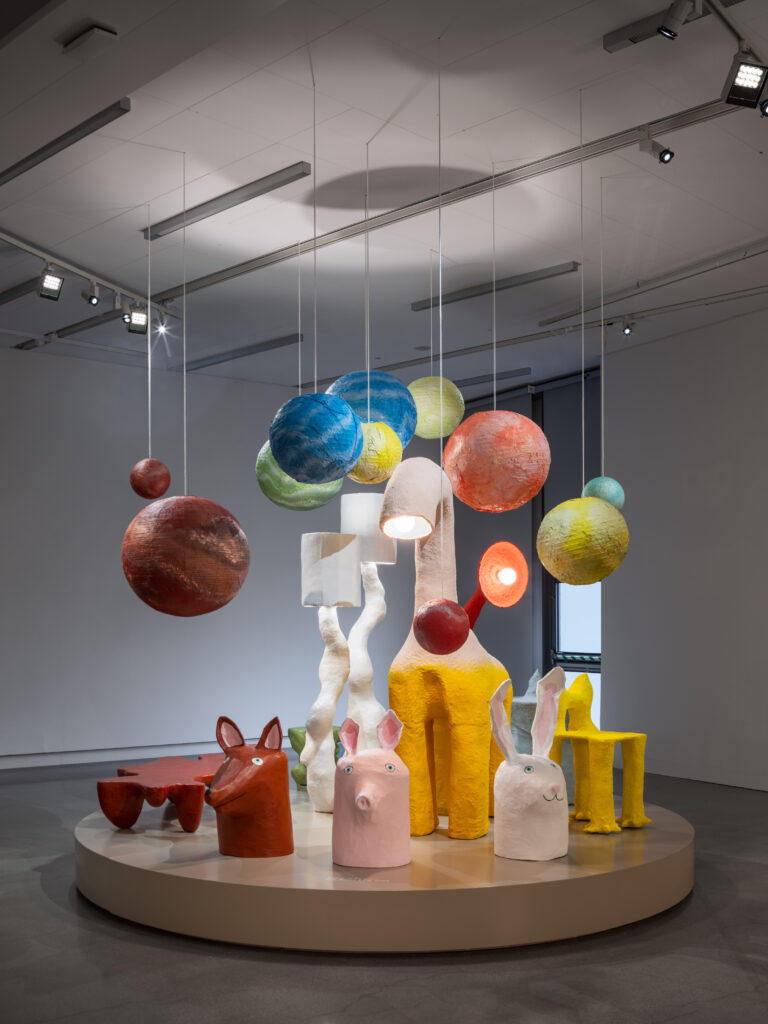
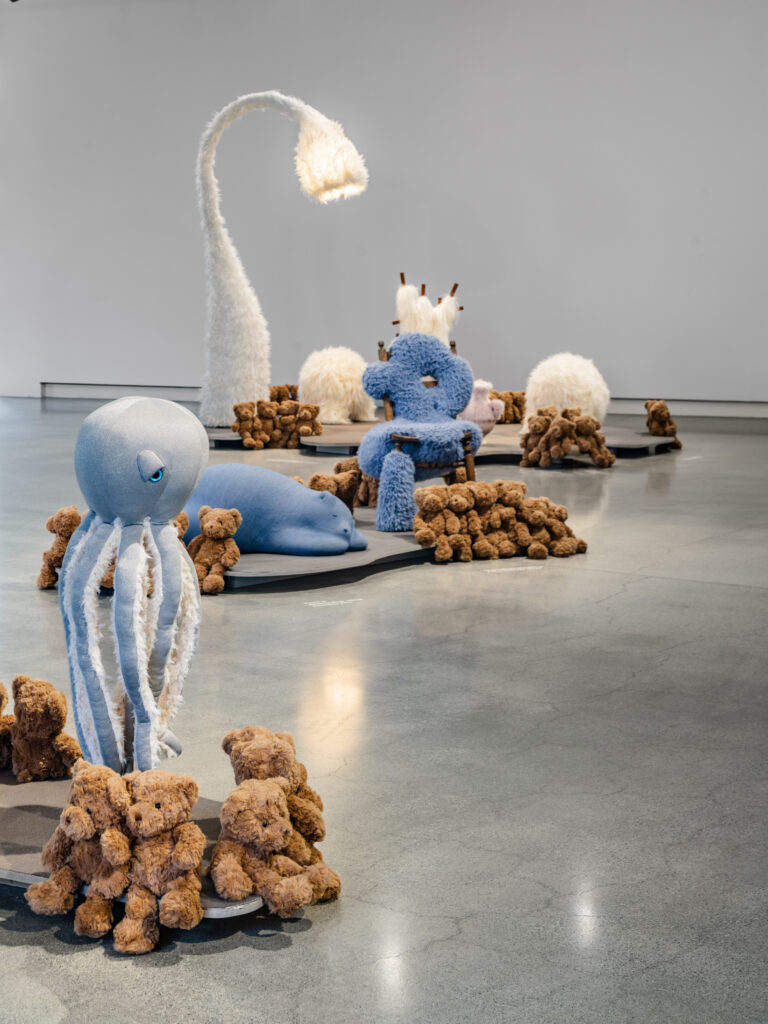
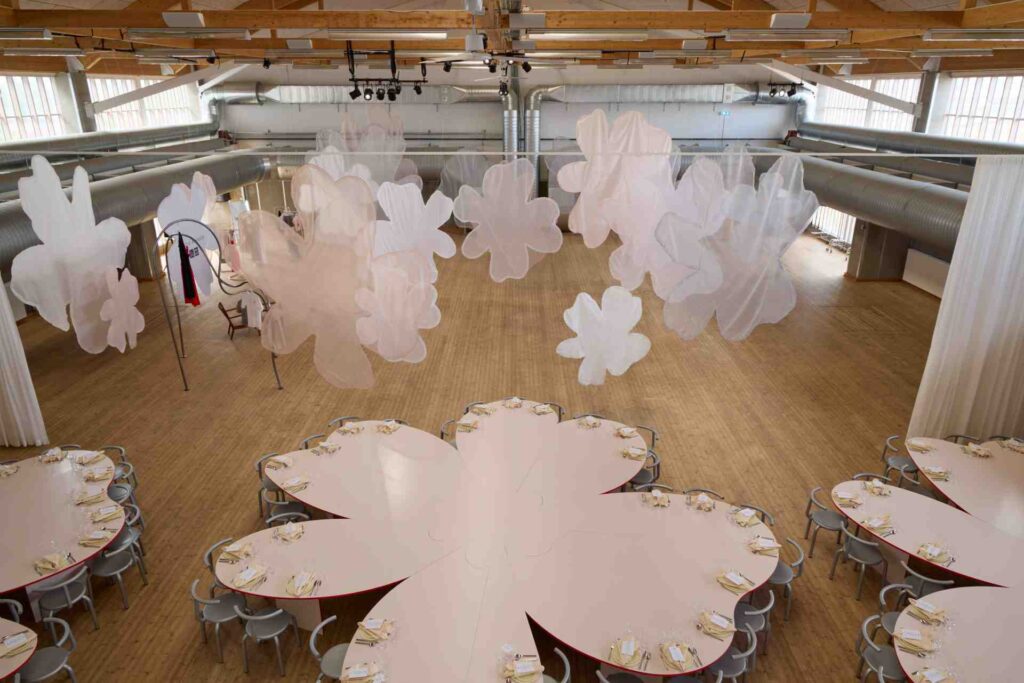
NM: The scenography was developed with Kiki van Eijk, Joost van Bleiswijk and their children. You mentioned that you had to make room for the children’s instincts and that their instincts gave the exhibition a different character. What did you have to unlearn as curators?
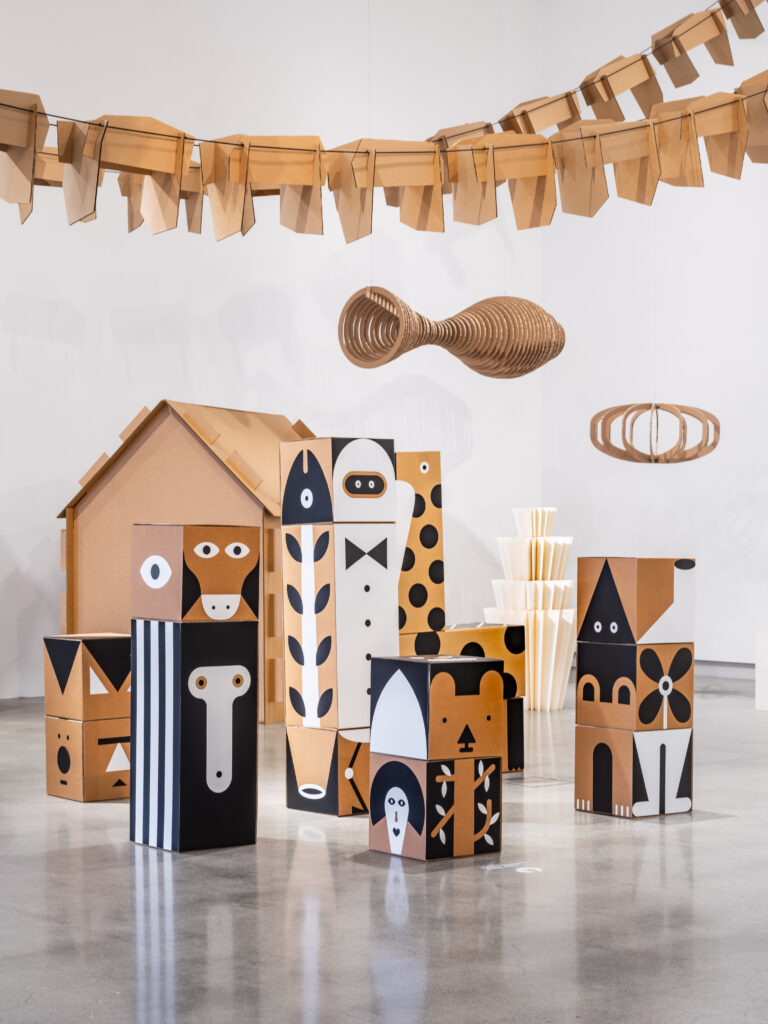
PF: Normally, in a situation like this, adults would step in and stylise or adapt children’s ideas, transforming them into something more practical. What was important was that we trusted the children’s instincts immediately. When children brainstorm, they have ideas straight away and do not question them. They have no self-doubt. The planetarium and Cuddle-topia were ideas the children had instantly. They had been briefed, had seen the exhibition objects and responded with their first gut feeling. We tried to respect their ideas completely and not question or change them. Listening to the children was the major learning curve, especially for curators who are usually very precise about presentation and perfection.
It was liberating to let go. The interventions, the garlands and the elements in the other rooms are powerful because we trusted the children completely. If we had intervened, the result would not have been as strong. For all creative people, the lesson is to do things completely. Do not filter, compromise, or worry about being too practical. Follow imagination, joy and creativity, and put creativity first.
NM: The exhibition includes cardboard furniture, handmade objects and a wide variety of works. What interests you about the space between functional design and art? What makes an object both useful and inviting to imagination?
LE: The exhibition moves from simple forms, such as colour blocks and cardboard constructions, towards more expressive work. The boundary between design and art is disappearing. You can no longer always tell whether something is an art object or a design object. Many artists use functional houses, rooms, objects and textiles. It is liberating for both fields because there are no longer strict limits. A person can be a designer one day and make art the next. The objects in this exhibition are also less expensive than the collectible design we used to show. I do not necessarily want to call this democratic, because people sometimes think that means cheap. The objects are artistic, creative and art-like, but they are also connected to everyday life. Many of the designers work with simple materials and simple forms of production. There are no large bronze or marble pieces in this exhibition. Perhaps this kind of work also requires a greater sense of humour.
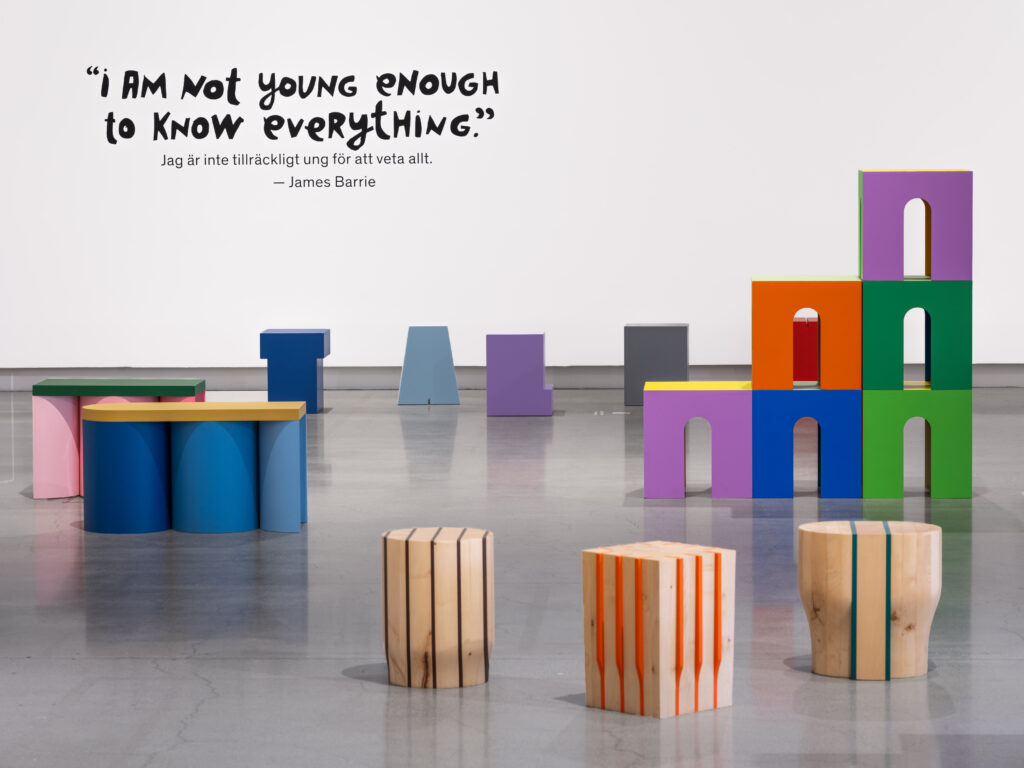
NM: I really liked the messages on the walls, especially the one that said, “It’s never too late to have a happy childhood.” What would it mean practically for an adult to rediscover that sense of freedom and imagination?
LE: Older people can return to childhood by rediscovering the pleasure of taking time, discovering things, and having fun without taking life so seriously. Many adults are beginning to do things with their hands. Cooking classes and ceramics are becoming very popular. Loom weaving and simple weaving are returning as well. People may decide to learn tap dancing or another form of dance. They follow a sense of curiosity and say, “I want to learn this.” Doing so can change life and be genuinely helpful. We are in a phase of discovery.
NM: Would you say the exhibition is more for children or adults? I assume children cannot touch anything.
LE: The museum’s public is primarily adults, although they may bring children to the restaurants and exhibitions. The exhibition is open to everyone who usually visits Artipelag, but it was conceived mainly for adults. In fact, it is often adults who complain that they cannot touch the objects. This can be more frustrating in a design exhibition than in an art exhibition because people normally sit on or use objects like these. Children will enjoy seeing it, but I think adults may have even more fun because they have the perspective of time. They have memories and nostalgia. A philosopher who contributed to the book suggested that people only appreciate childhood when they can look back on it. For children, childhood is simply their ordinary life; they do not experience it as a nostalgic period.
The exhibition comes alive for adults because they connect it with their own memories. Memory is therefore an important part of experiencing the show. For children, it may be less about the “inner child” and more about their inner selves.
PF: On the surface, the exhibition may look like fun and games, but the cultural and anthropological meanings give it greater importance. They help people take the subject seriously and understand that we need to listen more to this part of our lives and identities.