Art

Art

Gavin Gleeson’s Partial Parade Offers a Playful Pause

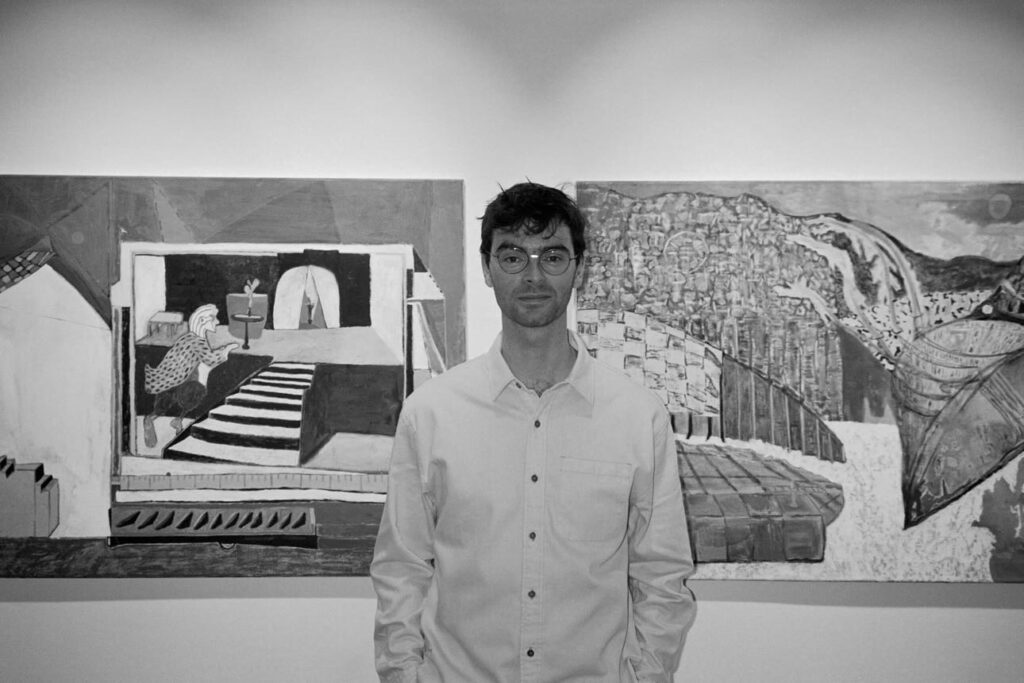
Gavin Gleeson’s Partial Parade Offers a Playful Pause Written by Natalia Muntean “Too far Jacob” Gavin Gleeson found painting at twenty-seven. Or perhaps, painting found him. “I was in Paris, working a remote job, and I had taken a few drawing classes, but I just decided to pick up some paint for the first time and did a little watercolour. That was really the first time I painted,” he says. Born to Irish parents and raised in Kentucky, Gleeson grew up between worlds. “Growing up as a first-generation Irish American definitely gave me a sense of feeling a little bit abnormal,” he says. What began as a peek into painting became a path of its own, leading him away from business and into an intuitive studio practice where, he explains, “I like coming into the studio as if it’s an improvisation session.”  He never imagined it would carry him as far as a master’s degree at the Royal College of Art. Now presenting his first solo exhibition, Partial Parade, at Saskia Neuman Gallery in Stockholm, Gleeson translates how he experiences the world into canvases, inviting the viewer to join him in a “playful pause.”  Muntean Natalia: You picked up a brush at 27, and at 30, you have your first exhibition?Gavin Gleeson: I’m pinching myself, definitely! Growing up, my next-door neighbour was a lawyer by day but painted in his spare time. I would see him paint or make sculptures, so I was aware of it, but I didn’t think anybody painted full-time.  NM: But was there something that made you pick up the brush?GG: Honestly, boredom. I wouldn’t start work until the afternoon and just wanted something to do, so I signed up for a class. Later, back in Ireland, I reached out to a second cousin who’s a painter. He told me what to buy, a few basic colours, and I started painting in my Nana’s garage, using old bottles and family photos as references.Eventually, I found a one-year course at the Burren College of Art, a tiny village on Ireland’s West Coast. When 250 Ukrainian refugees moved in during the war, the population doubled overnight. I would drive past the playground, the kids playing, the women smoking, against this bleak, windy landscape. That contrast between playfulness and heaviness really stuck with me. There was also a Ukrainian artist at the school, in his seventies. We would talk through Google Translate. His work filled whole walls – huge pieces. Even without understanding the words, I could feel the weight of them. It taught me that emotion can be grasped through marks and strokes alone. Portrait by Pelle Nisbel Fjäll NM: Let’s talk about your show, Partial Parade – what does this moment mean for you? And how did you land on that title?GG: It’s very exciting because I waited so long to get started. The show came together at a good time because it can be tough when you’re coming out of your master’s degree, a bit aimless, and you’re just making work to have a portfolio and get by. When it comes to the title, it came from its dual meaning – partial as in incomplete, and partial as in biased. It felt cheeky. Is it a parade or a protest? I like that ambiguity. Humour is a big part of my Irish culture. It’s an invitation to improvise, to question. I ask myself, where am I being partial? Coming from business, from a place of privilege, there are a lot of questions we’re all facing. NM: And does painting give you the answers?GG: Maybe just better questions. A place of refuge and questioning. I think art’s inherently political. I think it’s a really important time for art and painting. For me, it’s a reflection of what’s going on. I feel proud to be a painter right now. I very much feel like a member of a choir more than someone trying to prove a point. And I think that’s really important to me: one of many. NM: Do you have a routine? Is it like a nine-to-five for you?GG: I wish. That’s the goal. It’s a balancing act in London. Initially, it was part-time jobs, jumping in the studio when I could. Now I work full-time and come in on weekends or an evening. I have the attention span of a puppy in the studio, which is good and bad. But with that excitement of, “Oh my god, there’s so much to paint,” it feels like I could keep going, which is a nice feeling. I’m quite a prolific painter. When I go to the studio, I get my painting clothes on and listen to music very loudly. There’s a getting stoked aspect, like getting psyched up for a game. It becomes like a spiritual practice, searching for truth from the unknown. My mantra is “trust the hands.” They’ll lead you where you need to go. “Timorous Machination” “Red Rover” NM: What role does playfulness have in your process?GG: Coming into the art world, I found it overwhelming with all the rules. Then you see a kid with a sketchpad just doing their own thing. My cousin, for example, has autism and is an amazing artist with no agenda. We had this moment of communication through art when we drew one of his cartoon characters. That was right before art school, and that started from play, as so many ideas do. Things get legs on their own.  NM: Who or what influences you the most?GG: Music. My brother’s a musician, my dad works in music now, and my best friend back home is one too. When we were younger, he’d be looping tracks in one room while I drew in another; we would feed off each other’s energy. That rhythm and spontaneity are what I try to capture when I paint. Growing up in Kentucky also shaped me. There’s a strong punk and DIY culture there – that “just make it” attitude. It taught me not to

Art

Alexandra Karpilovski Is Knocking at Her Door 

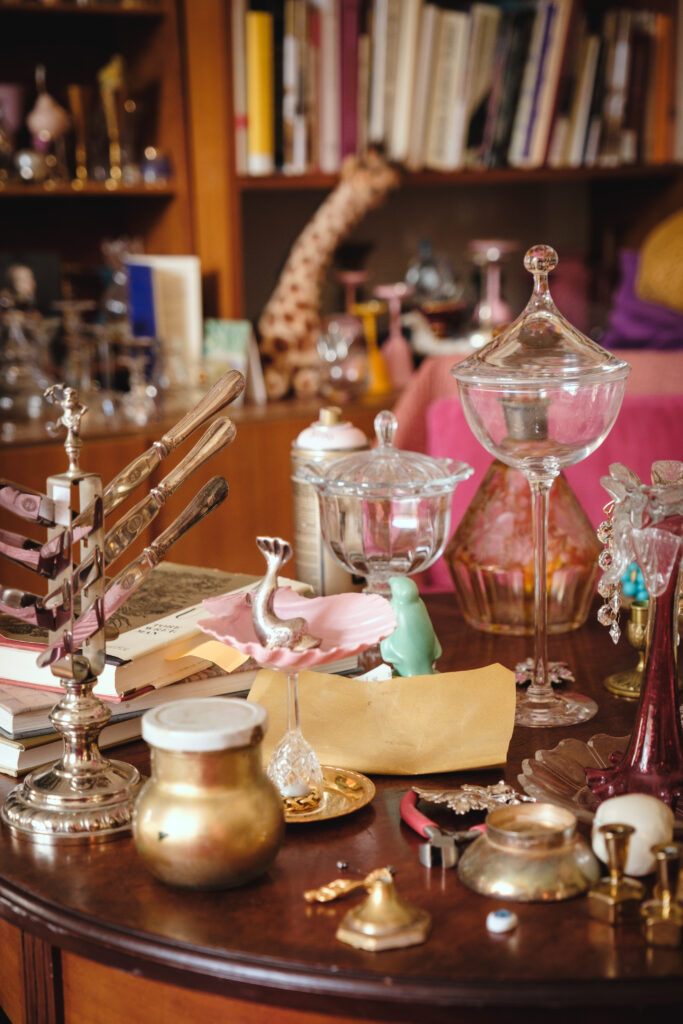
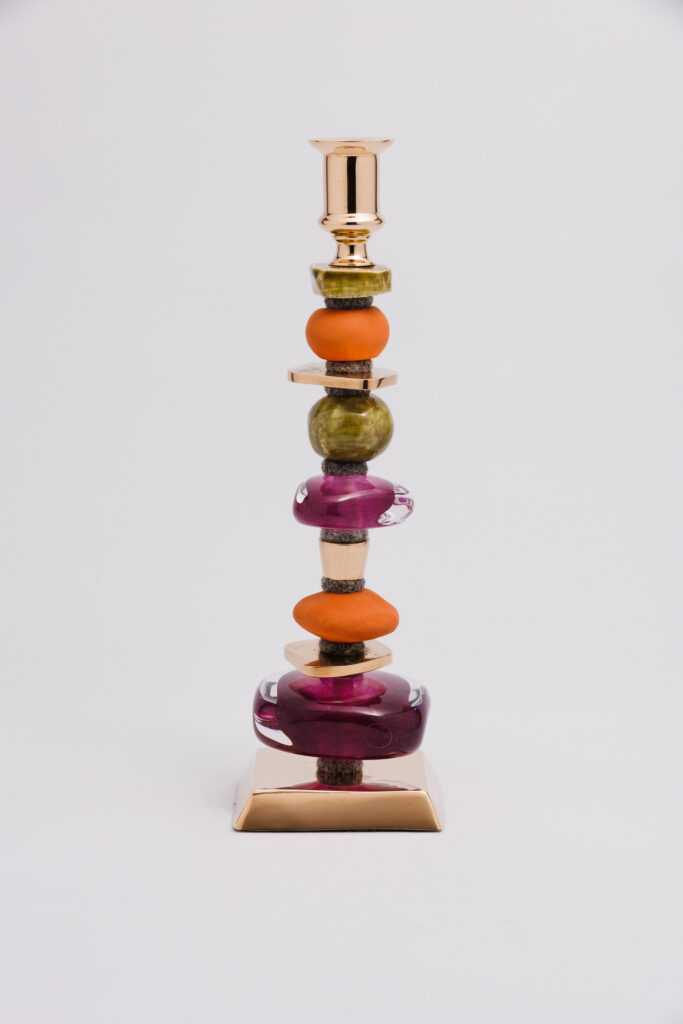
Alexandra Karpilovski is knocking at her door Written by Natalia Muntean Photo by Elvira Glänte “It’s about looking for yourself, trying to find your place,” says Swedish artist Alexandra Karpilovski. I met her amid the creative chaos of building her show’s universe, Howling to My Window and Knocking at My Door. My initial impression of chaos gave way to certainty: she knew exactly what she wanted to do. “I make a plan during the process, but it usually comes quite late,” Karpilovski tells me. Her process rests on intuition – a belief that each impulse carries its own reason. “I have things I want to make, and then maybe something else along the way evolves into something different. It’s very intuition-based and from my own heart.”  The title itself sounds like an instinct, something raw, almost animalistic. It began, she explains, with a painting she made years ago, Howling to My Window, that she never showed. After a period when life was intense and took another turn, she added Knocking at my door. Karpilovski keeps a mental archive of words and fragments until they find a place in her art. “The part I added really spoke to me because it’s like I’m knocking at my own door,” she says.  The show’s DNA grows from her paintings, words, painted lamps, and fabrics, but equally from the small objects she’s gathered across her life: pieces from her grandparents’ estate, her travels, or secondhand shops. When she began preparing for this show, life had unmoored her, and she didn’t quite know how to begin again. Her way back into work was simple, almost ritualistic. “My daily thing was just walking,” she says. “I would go to a thrift store and just find things I feel a small connection to, even without knowing why. But then they somehow fall into place.”  Tenderness runs through Karpilovski’s process – in the way she collects and arranges, giving space to what might be overlooked. In a poignant contrast to the visceral title, the act of choosing becomes a quiet conversation between what remains and what’s been lost.  “They may seem silly, but then they become special. They accompany the works for me. They bring a physical, human touch because somebody had them before.” For Alexandra, exhibiting her work is about finding connection: “I think this is what we all want.” The works, she notes, represent different emotional states, her brushstrokes navigating the space where humour and gravity meet. “I take things from myself, but I think there are a lot of universal things that people can connect to.”  The exhibition is on view October 10–19, 2025, at Doubble Space, a venue housed in a former gasworks with raw concrete walls and dramatic light, a setting both industrial and ghostly. “You have to embrace it as it is,” Alexandra says. She saw the space as a psychological ‘alley,’ a journey that starts airy and moves toward the heavier emotions, creating a sense of flow where visitors wander through different states of mind. The works, she explains, act “like windows, looking into people’s different situations.” To complete the experience, a forty-five-minute sound composition threads through the exhibition, made with her friend Danilo Colonna for their music project, Private Parts. “I wanted to create a gathering place, a moment of joy,” she says.  Born in 1988 in Kyiv, Karpilovski says she doesn’t remember drawing much as a child, but recalls a defining moment at seventeen when she saw Marie-Louise Ekman’s Hello, Baby, a work that sparked something in her. She later studied at the Gerrit Rietveld Academie in Amsterdam and spent several years abroad. Now, returning to Stockholm feels like a homecoming after years of movement.  Alexandra’s wish for those who see Howling to My Window and Knocking at My Door is simple: “I hope they leave with a sense of openness – to feel more, relax and loosen up. And maybe they might go on their own journey within themselves.” Recreating spaces, stages and scenes.  Through shifting states, we walk this way, where lines will blur and drift away.
Where in meets out, and ends begin, where dreams and choices lie within. There’s clarity, a trace of might, 
Long sleepless hours before the light. 
We watch, we walk, we let things go, we dare, we reach, we let it show Alone is where we once were two 
Just for a moment — something true. Alexandra Karpilovski

Art

The Art of Resistance: A Conversation with Carouschka Streijffert

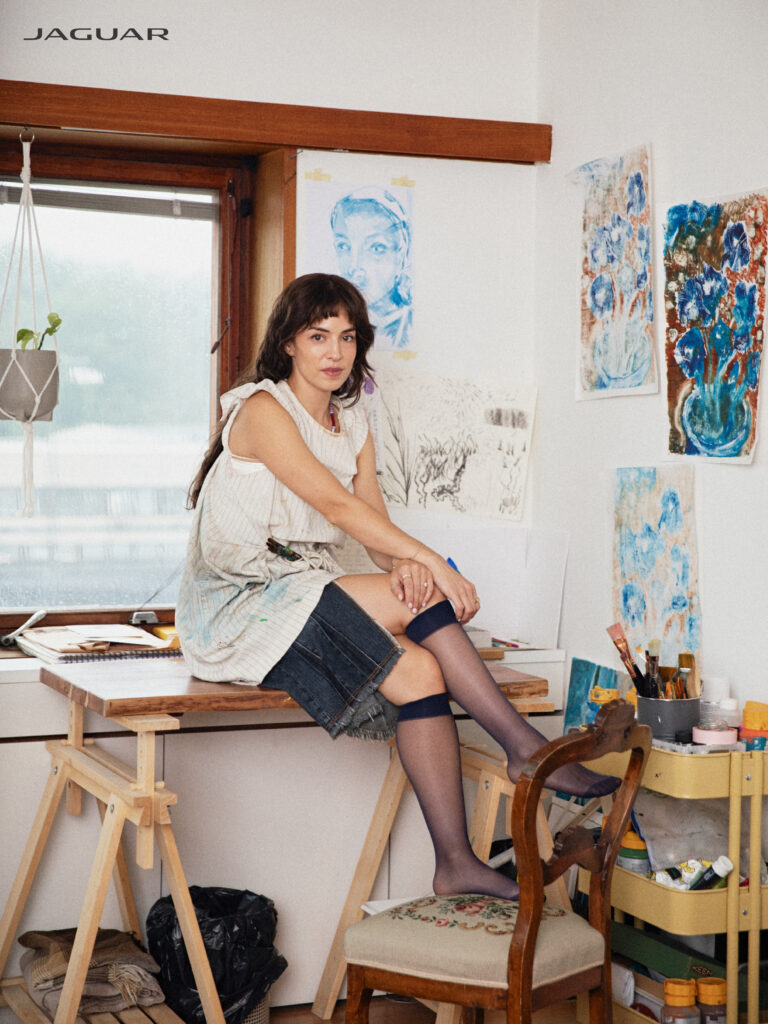
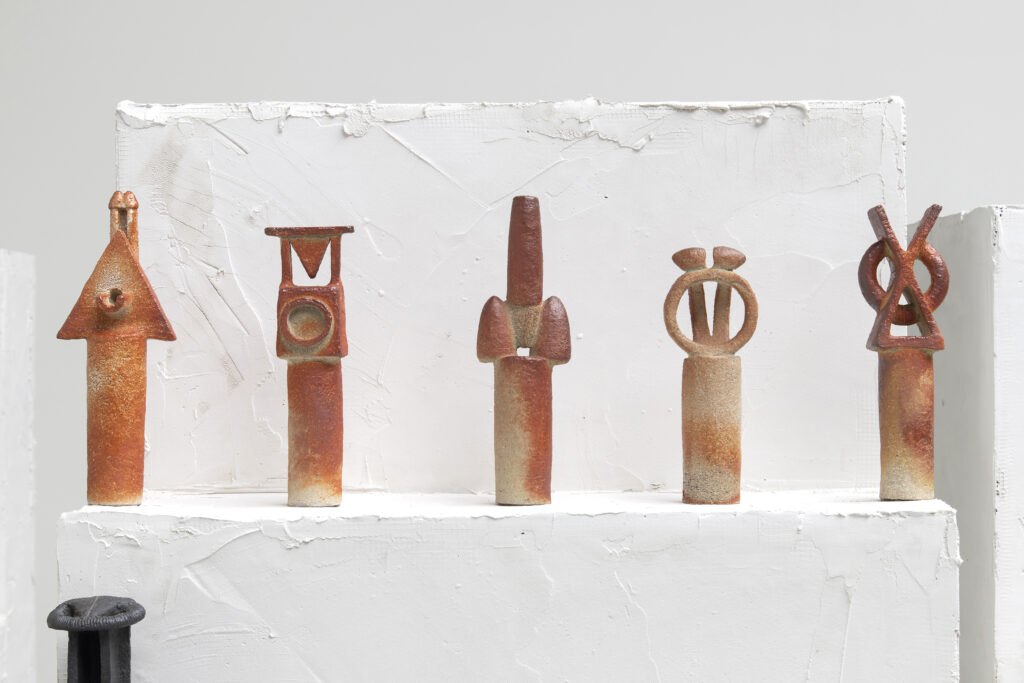
The Art of Resistance: A Conversation with Carouschka Streijffert For over five decades, artist Carouschka Streijffert has made her mark within the Swedish art scene, working at the intersection of sculpture, architecture and scenography. In a world saturated with the new and the digital, Streijffert’s practice is a testament to the poetry of the discarded. She does not simply reuse materials; she listens to their history, taming cast-off fragments of metal, wood, and paper into objects, giving them new meaning. As Drivkraftens seger över motståndet (The Victory of Urge over Resistance) opens at RAVINEN Kulturhus, we talked to an artist for whom creation is a vital, almost philosophical act. The exhibition is titled “The Victory of Urge over Resistance.” What does “resistance” mean to you in your creative process? Is it a physical property of the materials, a mental state, or both?It is in the psychological resistance that creativity arises. It is in the friction, in the complexity, that the work grows, takes shape, is born, and comes into being. To eliminate resistance is to embrace laziness, and then the result becomes polite and empty. To create is presence – a driving force that shows direction. You are alive. You exist. For over five decades, your work has centred on reclaimed and found objects. What is the “call” you feel from a discarded piece of metal, wood, or paper? What makes you know an object has a place in your art?The world is flooded with used-up material, and it’s hard to ignore. I choose to see the possibilities in the discarded, details of beauty, regardless of the material’s properties. My aesthetic brings together the fragments, a dialogue between the hand and the gaze. The feeling of holding and weighing the discarded in my hands, of not wasting matter already charged with obscure experiences. I tame and shape the cast-off into an existence in the present. A collage. A sculptural object. The passion reflects my feelings, experiences, and memories. Portrait taken by Thoron Ullberg Your practice spans art, architecture, and scenography. How does your thinking about space and environment influence the individual objects you create, and vice versa?I create for the person who inhabits the spatial environment. It’s about proportions, the individual in the space. What is the room going to be used for? Here, function is the guiding factor. The financial framework, the size of the surfaces, and the amount of light entering. Is it a permanent room? A temporary room? A scenographic design has the task of framing or enhancing a drama. Scenography is meant to help the actor in the performance and give the viewer, the audience, a visual enhancement. Here, there are no boundaries. Architecture is a form of mathematics, logical analysis. The building, its function, reflects the volume of the rooms and how they interact with each other. The façade and the interior are in dialogue. The visual and functional expression of the materials should strengthen the human presence in the architectural space. Your work is described as both “raw” and “precise.” How do you balance intuitive, raw expression with the technical skill and precision of a craftsperson?A determined skill of interaction between my hands and a sharp eye. The visual must constantly speak to me. Analogue work has been performed by humanity since our beginnings. That talent must not be destroyed or erased. Intuition and skill arise and are maintained through constant practice, and then the difficult becomes a certainty of precision. The simple, bare, and obvious can be interpreted as rawness. Something that is not hidden or disguised by external cosmetics is automatically natural beauty, a form of truth that speaks to us. Much of your work feels like a preservation of memory and history. Do you see yourself as an archivist of sorts, giving a new life to the fragments of our time?Humour and playfulness are constantly connected to the seriousness of my artistry. Valuation and selection are continuously applied in my search for why and how to transform the urban waste into a new existence. This pursuit and stewardship are similar to an archivist’s logical sorting of the past. I house my finds in self-built archives, with a structure based on the qualities, colours, and properties of the materials. It is in these collections that I can repeatedly pick and replenish from the treasure trove of lost and found objects, year after year. The creation is endless. It becomes my own decay that will eventually bring a brutal end to the creativity of documentation. In an age of mass production and digital saturation, why do you believe your analogue, hands-on approach feels so relevant and urgent to contemporary audiences?The movements of the hand, the tempo, create reflection, not nostalgia, but trust. Craftsmanship requires time, a tactile substance. Not like our world’s clicking in front of glaring screens, where we are bombarded and slip off the rapid-fire impressions we rarely can avoid. This makes us blind and deaf to actual reality. Mass production and endless online shopping of unnecessary products will deteriorate our mental health and the Earth’s resources. Thousands of massive cargo ships float daily in our oceans, filled to the brim with newly manufactured “trash.” Why? Humanity has forgotten that the hand is our best tool. Working analogue today is not a retreat but a direction forward.

Art

Carsten Höller’s “Stockholm Slides” invite you to a controlled fall from Moderna Museet

Carsten Höller's "Stockholm Slides" invites you to a controlled fall from Moderna Museet text Natalia Muntean A new large-scale art installation transforming the facade of Moderna Museet is more than a slide. It is a physical exercise in surrendering control. “Stockholm Slides,” a pair of spiral slides by internationally renowned artist Carsten Höller, opened to the public last week. The artwork consists of two identical, mirror-image slides, each 39 meters long, allowing two people to ride simultaneously in what the artist describes as a “mirrored choreography.” But for Höller, the core of the experience lies in the psychological state it induces. “In a slide, you must give up everything to do with your own control.” Höller elaborates on the unique tension of the ride: “You know exactly what is going to happen. There is no surprise… But you cannot do anything during the process between the beginning and the end.” This regulated loss of control is, for the artist, the source of a powerful and contradictory sensation, finding this duality fascinating, placing the rider “on two extremes simultaneously. You have hard joy and fear.” When asked if the work, a literal controlled fall, relates to the contemporary feeling of political or environmental free-fall, Höller acknowledged the metaphor while also emphasising the openness of art. “It’s an artwork, which means we cannot say it means this or that. It means many things. And I think that’s the great thing about art, that it’s not just one thing, but many, many, many things.” This perspective aligns with Höller’s history of creating what he calls “influential environments” – installations designed to provoke specific states of mind like disorientation, doubt and exhilaration. “Stockholm Slides” invites visitors to physically release control, challenging the traditional passive museum visit, and exploring what it means to fall and to let go.

Art

Gerdman Gallery Debuts with Johnny Höglund’s Digital Memories

Gerdman Gallery Debuts with Johnny Höglund’s Digital Memories text Natalia Muntean “My hope is to contribute to Stockholm’s ever-growing gallery landscape by presenting artists of my own generation, both from across Sweden and internationally, working in a variety of media,” says Peter Gerdman, founder of the newly opened Gerdman Gallery in the heart of Stockholm. This clear vision defines the new space, which enters the scene with a collaborative and curatorial approach. “I want to grow alongside the artists I work with,” Gerdman explains, “so beyond the strength of their practice, it’s important that we share values and goals.” His strategy is both focused and expansive. “My approach is to look broadly, starting in Sweden, then across the Nordics, and more widely as the gallery develops.” While an artist’s career stage is a key factor, the final selection is ultimately a personal one. “It’s also a matter of taste,” Gerdman explains. “I follow my conviction in an artist’s practice, trusting that belief as the foundation for what is presented.” This philosophy is reflected in the gallery’s inaugural exhibition, “What is Gathered is Not Memory” by Johnny Höglund. Gerdman has been tracking Höglund’s artistic journey for some time, but it was the body of work showcased during Annual, Malmö Art Academy’s yearly exhibition, that ultimately convinced him. “I immediately sensed that his work would be ideal for the gallery’s first presentation. His practice not only stands strongly on its own, but also conveys the kind of visual vocabulary and conceptual qualities I want people to come to expect from Gerdman Gallery,” says Gerdman. Höglund’s paintings capture the anonymous, everyday moments frozen by our screens. In his hands, these fleeting digital fragments are metabolised through the slow, physical labour of oil painting on large-scale canvases. Höglund’s works are an invitation to challenge the speed of the scroll, inviting us to pause and reconsider what we gather and what we truly remember. Portrait taken by Hannes Östlund Natalia Muntean: The exhibition title suggests a difference between collecting information and creating memories. In your art, what do you collect and what becomes a true memory in your paintings? Johnny Höglund: I base my selection of images on the fact that they have, in some way, managed to capture my attention enough for me to take a screenshot. It can be anything to me; the content does not matter. It happens almost unconsciously. There is something in the image that appeals to me, but I don’t necessarily know what it is or understand when I begin working with it. For me, it’s not about preserving a specific image or memory, but about understanding why it appears in my feed, and, by extension, becomes part of an autobiographical narrative, without becoming a self-portrait in the traditional sense. NM: You slow things down when you paint, going from a quick digital move to a slower physical one. When does a small piece of a digital image stop being just a random part and become something that shows your personal touch? JH: I believe it does the minute the brush touches the canvas. At that moment, I’m fully invested in the image. The process beforehand is slow and takes several days. I build my own stretchers, then I put down two layers of glue, followed by three layers of gesso. Every layer needs a light sanding and time to dry. During this process, I’m already thinking of the image that I will be painting onto that canvas. But there’s still time to have second thoughts. Time to even discard the image and use another screenshot (because the image still needs to work as a painting). So I would say that from the first brush stroke onwards, that’s when my hand is present and the image becomes an extension of myself. NM: You use classic materials like linseed oil on canvas to show digital experiences. Is this a choice about lasting quality, or do the paints help show what digital images are like? JH: I think working with our hands is becoming increasingly more important. And to let the human hand show through in its work is so important. It has so much inherent feeling with all its so-called imperfections in contrast to the very clean and crisp digital image. A brush stroke can contain so much emotion in its simplicity. But painting is, above all, a way of processing. It is not about illustrating something that already exists, but about allowing something to take shape through doing. And once complete, the painting holds its ground in real space. It cannot be scrolled past. NM: You explore a “collective memory shaped by algorithms.” As an artist, are you trying to rebuild what was lost in the digital screenshot or make a new story through painting? JH: The collective memory of the screenshot. A collective memory which is shaped not only through what we save and send forward, but also through all those images we scroll by, which are pre-cognitively imprinted in our memories. I see this fragmented timeline as something more poetic than prosaic. Connected as autobiographical material shaped through the algorithm, and then processed by hand. The saved image is saved to our tangible reality. I place it back into the world on new terms, inviting the viewer to experience it through their whole body.   NM: The large scale of the works implies a physical, bodily engagement for both you and the viewer. How does this physical act push back against the feeling of just scrolling on a screen? JH: The scale of the paintings demands attention differently compared to that of the feed. You cannot scroll or swipe. You move around in the room as a viewer, not the image. With a painting of this size, the body has to adjust, to move closer or further away, to stand still for a longer moment. It creates a different temporality, one where the image doesn’t vanish but instead insists on staying with you. For me, this

Art

Picasso’s female muses at Artipelag

Picasso’s female muses at Artipelag photography Jean-Baptiste Beranger This autumn, Artipelag presents The Muses Who Inspired and Challenged Picasso; a major exhibition highlighting eight women whose creativity and artistic vision deeply influenced one of the 20th century’s most significant artists, Pablo Picasso. Bringing together 150 works, the exhibition explores how these women; writers, dancers, photographers, and visual artists — not only inspired but also challenged Picasso throughout his career. From Gertrude Stein and Fernande Olivier during the early Cubist period, to Dora Maar and Lee Miller in the Surrealist era, and Françoise Gilot and Suzanne Ramié in his later years, the exhibition reveals the mutual artistic exchange that shaped Picasso’s evolving style. Spanning from early 20th-century Paris to the postwar years on the French Riviera, The Muses Who Inspired and Challenged Picasso sheds new light on the creative dialogue between Picasso and the women who helped define modern art. The exhibition is active at Artipelag from October 4, 2025, to February 8, 2026.

Art

Barcelona Gallery Weekend Returns for its 11th Edition 

Barcelona Gallery Weekend Returns for its 11th Edition Photo courtesy of Barcelona Gallery Weekend Barcelona Gallery Weekend is back from September 18 to 21, 2025, marking the start of the city’s art season. Organized by the ArtBarcelona. Galeries association, the event will feature exhibitions in 24 contemporary and modern art galleries; 22 in Barcelona and 2 in L’Hospitalet de Llobregat, showcasing works by more than 50 artists from Spain and abroad. For the first time, the programme will include FLASH, a section of nine short-lived exhibitions running only during the four days of the event. Alongside the main exhibitions, visitors can enjoy a packed schedule of free activities, including guided tours, performances and other special gatherings. A key element of Barcelona Gallery Weekend is its Acquisitions Programme, which encourages companies, foundations, and private collectors to purchase works from participating galleries. By fostering new acquisitions, the initiative strengthens the local art market and supports the long-term sustainability of the cultural ecosystem. By connecting artists, collectors, institutions, and the public, Barcelona Gallery Weekend underscores the essential role of galleries as spaces for experimentation, knowledge, and cultural exchange. See more at https://www.barcelonagalleryweekend.com 

Art

Reclamation, Reconstruction, and Roses: Exploring Ludmila Christeseva’s Project of Feminist Empowerment

Reclamation, Reconstruction, and Roses: Exploring Ludmila Christeseva’s Project of Feminist Empowerment Written by Ruby Rose With her project Ties of Married Men, Roses of Unbound Women: Feminist Reclamation and the Reconstruction of Power, Ludmila Christeseva invites the audience into a space of collective female empowerment. Through the medium of craft, she has built a community of women reclaiming their histories and transforming them into symbols of strength. Ludmila reflects on the inspiration behind the project, its remarkable growth and the liberating power of community. Ruby Rose: Tell me about your project Ties of Married Men, Roses of Unbound Women: Feminist Reclamation and the Reconstruction of Power. What sparked the initial idea? Ludmila Christeseva: This project was born out of conversations with men who reacted to my collection of ties with jealousy: “Are these all your lovers?” Transforming ties into roses became a way to confront those projections and recast the material as emblems of female desire. The tie, long a marker of male authority, turned into a metaphor for fleeting encounters where women’s voices are rarely heard. By collecting and reshaping them, I claimed these symbols of masculinity and remade them into trophies of female agency. What began as a provocation has since grown into a collective practice, asking: what shifts when women not only hold but actively transform the symbols of patriarchy into their own? RR: Elements of craft have often featured in your previous projects. What inspired you to use these techniques to explore themes of female reclamation and empowerment? LC: Craft has never been a true source of economic independence for women. Traditionally, it functioned as a dowry – a way to shape and sustain a home, carry forward family values, and preserve memory. I find this both meaningful and problematic in feminist contexts. With this project, I want to preserve these intimate practices while reframing them as a powerful manifestation of visibility, empowerment, and sisterhood. By reworking forgotten ties through craft, I invite women to transform personal and collective histories into symbols of strength. RR: Did the physical process of making these roses deepen your emotional connection tothe project? LC: Yes, absolutely. I enjoy the process deeply, and when other women join me, it becomes even more meaningful. Working together strengthens my connection to the project and allows me to learn from their stories, perspectives, and ways of making. The shared act ofcrafting turns a personal ritual into a collective experience of exchange, empowerment, and discovery. RR: Why did you choose the tie as your material for this project? Did your relationship to it evolve throughout the process? LC: I chose the tie because it embodies both a forgotten trace of fleeting encounters and a entry point into new ones, infused with the presence and scent of those who wore it. The soft silks that once adorned men are reshaped into roses that adorn women, shifting power intofemale hands. This act is not merely a transformation of one object into another, but a dialogue between two gendered forms: the tie and the brooch. Masculine-coded power is softened through the delicacy of craft, while feminine-coded ornament is politicized. Over time, my relationship to the material evolved from provocation to reflection – the tie became not just a relic of the encounter, but a medium for reimagining power, memory, and desire. RR: Roses are often seen as powerful symbols. What significance does the rose hold for you personally, and how did you incorporate that meaning into your work? LC: The rose unfolds as a metaphor for the female body, particularly the vulva, its layered petals evoking intimacy, sensuality, and fertility. Soft yet defended by thorns, it mirrors the resilience of womanhood – delicate, yet enduring. Where the tie constricted, the brooch blossomed, revealing affect, identity, and relational meaning. Like petals unfurling, it resists control while binding stories, memories, and shared experiences into a delicate yet unbreakable network of connection. RR: Did you anticipate that the Roses of Ties project would grow beyond its original form? How did it develop into an expanding community? LC: I could not have imagined that something so simple – a small gesture, a modest transformation – could resonate so deeply. The project has developed organically throughthe participation and stories of the women involved. What began as a symbolic gesture with ties and brooches has grown into a space where people can share personal experiences, express identity, and explore emotions. RR: What does it mean to you for these pieces to bring private rituals into the public sphere and to do so through the energy and support of female collaboration? LC: For me, the project reveals the hidden dynamics of gender and social roles. Ties of Married Men and Roses of Unbound Women explore the delicate balance between duty, care, and personal freedom. By bringing these private rituals into the public sphere, I open a space where constraint and intimacy, order and desire, can be witnessed, reflected upon, and questioned. The energy and support of female collaboration magnify this effect – through sharing stories, experiences, and creative expression, women transform private gestures into collective narratives of resilience, resistance, and connection. RR: What kind of experience do you hope for the viewers to have with this project? What impact do you hope it leaves with them? LC: This project traces the invisible choreography between duty, care, and the yearning for freedom. I invite the audience to condemn, reflect, adore, or be stirred in any way that this shared constellation of resilience, rebellion, and connection may provoke. In the act of making, I learn from other women – and perhaps, in turn, they learn from me – woven together in a delicate, unfolding exchange of insight, strength, and shared experience. RR: Looking ahead, what do you imagine as the future of this project? Are there ways you would still like to see it evolve? LC: As an artist, it is profoundly moving to witness my seed grow and blossom. Roses of Ties highlights the unpaid, gendered labor of craft as an act of care, remembrance, and resilience. The women involved create to heal, connect, and resist. Looking ahead, I hope the project continues to expand, blossoming with more roses, gestures, and connections, evolving

Art

Between Touch and Tension: A Conversation with Anna Camner

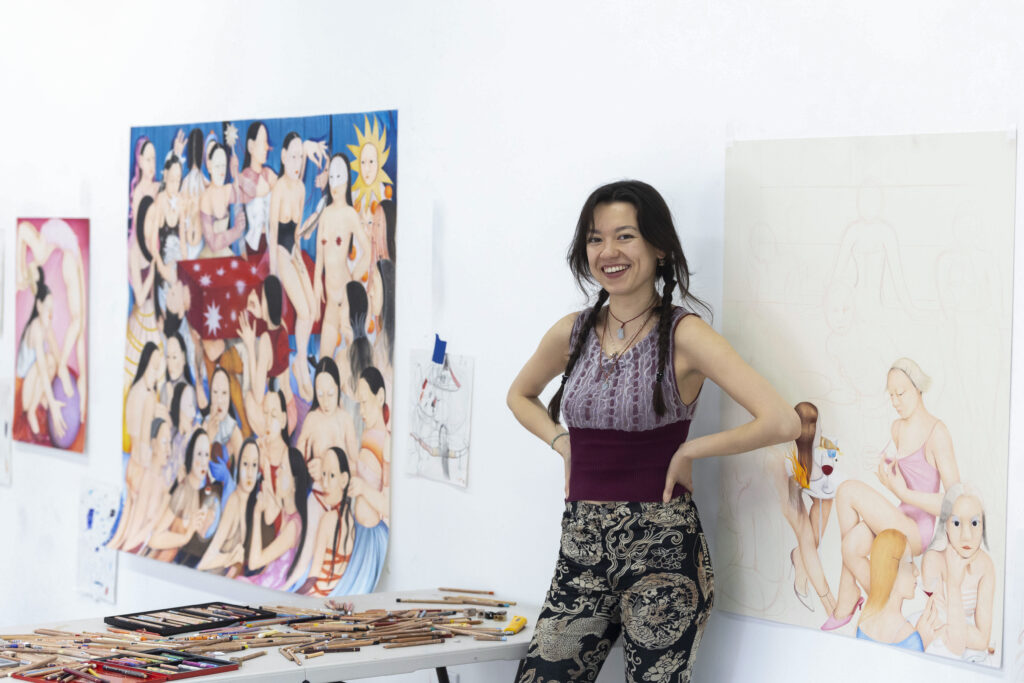
Between Touch and Tension: A Conversation with Anna Camner text by Natalia Muntean “I’m not a creative person, I just like to paint,” says Anna Camner. A paradoxical statement that is bound to raise eyebrows, considering how Camner’s work vibrates with tension. For Camner, painting is an act of continuous distillation, of “narrowing it down to what feels meaningful,” the Swedish artist obsessing over miniature details and labouring until “there are no question marks anywhere.” While Camner believes “it’s a human need to be creative,” her process is far from effortless. Even after decades, it remains “extremely frustrating,” demanding monastic focus, a surrender to a “trance-like state of mind” she achieves through music. Camner’s canvases are defined by contradictions – control and abandonment, the synthetic and organic, the weight of light and the lightness of touch – a duality she will explore in her 2025 exhibition, ‘Weight of Light.’ Natalia Muntean: Early in your career, you painted hyper-detailed Gothic flora and fauna – bats, rats, poisonous plants. Now, your work is more abstracted, almost scientific. Was this shift intentional, or an organic shedding of layers? And what has it taught you about your artistic identity?Anna Camner: Shedding of layers captures it very well. I always had this urge to paint, but when I was young, it was more difficult. I didn’t have my voice yet, so I painted what was around me. I grew up outside Stockholm and spent a lot of time in the forest by the house, walking around, looking at little plants and stuff. For the first years I started painting, I was painting zoomed-in little leaves, plants and details of things happening in nature. With time, old patterns and art historical baggage have gradually fallen away, and I am going in a more personal direction. Now I like to look forward, into the future. I’m much more curious about the future than looking back into my childhood, or art history, or what other artists have done. Over the past twenty years, the process has become less about arriving at a fixed identity, I guess, and more about allowing things to evolve. Patterns emerge, but they do so slowly and without any set destination. NM: Why and when did this shift happen?AC: I’m not sure. I started to sneak in plastic at some point into the nature images – little bits of used plastic, or used condoms, into nature. I realised it was more interesting. Then I started doing plastic with bits of nature on it, like it had been lying outside and had little things stuck to it. It was a gradual transition, and I’m not sure why. It’s just a lot more interesting to try and figure out what’s going to happen in the future, especially with things changing so fast. NM: Where do you get inspiration?AC: The work itself is like an ongoing dialogue with myself. It’s continuous, a little bit like one painting after the other. Sometimes I always go back, like 10 paintings, and I want to return to certain topics, certain patterns. I like it when it’s more chaotic, I guess. But with some sort of a sense of order. But you can never predict what that order would be like. I’ve done those patterns every two years, maybe. Sometimes I return to some themes I’ve always been working with, and sometimes I find new directions. NM: Why do you think you go back to themes you’ve explored and to older paintings?AC: I don’t feel like I’m done. I can keep exploring it because I still find it interesting for the same reasons I always have. NM: Do you feel you need to excavate it until there’s nothing more to find?AC: No, I can build on it. I can keep building on it. NM: You work with this tension, the relationship between natural and synthetic materials – do these materials serve as a metaphor for human emotions or desires?AC:The layers on the bodies and faces amplify or hide gestures and expressions. I like to try to hide the obvious and expose the hidden. Hopefully, the viewer wants to fill in the blank spaces with their interpretations. Due to some sensory differences, the contrast between textures has become a bit of a fixation for me, and this finds its way into my work. When I paint, I often imagine the feeling of touching them. It’s like an obsession, especially with plastics and soft materials. I want to observe and show the different types openly and without assumptions. For me, materials are equal, with no hierarchy between natural and synthetic. It’s all part of the same world. NM: You also explore touch, both as sensation and communication. How do your paintings translate the intangible experience of touch into visual form?AC: A painting often starts with imagining how it would feel to touch a material. The layers of different materials become an intensified skin, offering a boosted sense of connection. I play a lot with gloves because hands are very expressive. Facial expressions can be a little overwhelming, but gestures with hands and body language are quite expressive. Especially with gloves, because if you drape something and have layers on the face or body, it’s both hiding parts but also enhancing gestures. NM: Do you paint your own hands, hands that you know or do you just imagine them?AC: Often my own. I have gloves of different materials in my studio – soft gloves, latex, different colours and some masks. I work with that. NM: After avoiding painting during Art School, what made you return to it?AC: In school, the noise of opinions made it hard for me to stay grounded. Painting requires a kind of vulnerability, and the criticism at school felt too intrusive at the time, so I stopped painting entirely. But I did lots of other stuff – animation, video, everything else but painting. As soon as I graduated, I started doing it again. And then I had to kind of start from the beginning because it was five years of not painting at all, and I had

Art

Times Like These

Times Like These Written by  Janae McIntosh In her debut novel, The Ministry of Time, Kaliane Bradley blends history, science fiction, and an inti-mate exploration of migration and belonging. The novel follows time-travellers displaced from their respective eras, thrust into modern Britain, and forced to navigate their new reality under the watchful eye of a mysterious government ministry. In thisconversation with Ulrika Lindqvist, Bradley discusses the emotional heart of her novel, the complexities of language, and the personal inspirations that shaped her storytelling. From British polar exploration to generational trauma, and even her admiration for Terry Pratchett, Bradley offers insight into her writ- ing process, the themes that drive her work, and what we can expect from her next book. Ulrika Lindqvist: The Ministry of Time covers time- travelling and early on in the book, the narrator states that we don’t need to know how thisworks, is that a way for you to not go into the sci-fi elements or physics too much?Kaliane Bradley: Exactly, so even though I was very interested in the sci-fi tropes it was important to me that the book was understood as someone’s emotional journey. So I wanted to foreground the emotional journey of time travellers rather than the physics of time travel and the kind of hard sci-fi prospects of time travelling. And that’s not because I don’t enjoy reading about that but I think it wasn’t what I wanted to focus on for this book. And so, it’s a slightly cheeky way to signalto the reader early on “Sorry this isn’t straight science fiction, you’re getting a mixture of genres here”. UL: There are so many themes going through this novel but one that stood out to me was linguistics. A big discussion is what to call the migrants, which is the word used in the Swedish translation. KB: That’s so interesting! In the English version, they’re called expats, which is a very politically loaded word. It’s generally applied to people from very privileged backgrounds in the sense that they can move wherever they want and return anytime they want, often in the UK it’s applied to white British people. Whereas there’s a conversation very early on in the book where they start arguing about the word refugee, one of the characters describes the time travellers as refugees, not expats because they can’t go home again. They have to stay here, they’re being pulled out of their culture, out of the life they had, and they have to assimilate – they’re refugees. And the ministry is very keen to make these people feel like no matter the time period they’re in, they’re British. And so, they’re only ever expats. It’s propaganda to persuade them to assimilate and to persuade them to accept 21st-century Britain as their home. UL: That’s what is really unique with this novel, often you can tell how important language has been to the author but in this novel, the language is actually discussed within the story. Another thing I found interesting is when Commander Graham Gore realises that his private correspondence has been read by the ministry and feels uneasy about that, what inspired this storyline?KB: I started writing the original version of The Ministry of Time for some friends. During lockdown, I got very interested in British polar exploration. And because of the lockdown, I couldn’t go anywhere, I couldn’t research and so I found this online group of people who were also polar exploration enthusiasts and we all followed a TV show called The Terror about British polar exploration and they were so generous, they shared their research with me and really made me feel welcome, so I started writing the book as a sort of playful gift to them. So, the very first version of the novel was written for people reading the private correspondence of these polar explorers or their diaries. One of the first things I was given was a scan someone had taken of a polar explorer’s diary and it’s just so strange to have that level of access to people – to be able to see someone at so many points in their life, confessing to things so privately, different letters to different people. In life, when you meet someone you don’t have that level of access. But the level of access that the ministry is given when it comes to Graham is incredibly unusual and makes him feel like he’s being studied because it’s weird for someone to have read your private correspondence that’s being exhibited in a museum. I think we felt both romantically about that but also maybe guilty. It’s a strange feeling; historical and biographical research. Feeling so close to the person you’re studying but they will never know you. It’s one of the frictions in the ministry that I try to convey in the book, that it can be almost depersonalising, alienating to study someone who feels intimate but you don’t know them intimately if you’re just studying their old letters because you’re not trying to connect with them. UL: Graham is the only character in the book that’s based on a real person, and I found myself googling a lot. I think a lot is commonly known in the UK but as a Swede, I didn’t know of the Franklin Expedition, for example. Is it widely known internationally? KB: I think it’s not so widely known anymore. It is one of those Victorian embarrassments that may have recededinto the past. By contrast, I think it’s very well known in Canada because the wreck is there. Margret Atwood apparently is a huge Franklin Expedition fan. When I do book events in the UK, I get a real mix of people who are interested in the idea of a sci-fi book or romance book but don’t know about the expedition and then I had someone come to my event in Edinburgh wearing a badge that said “ask me about polar exploration”. UL: Did you consider basing the other expats on historical characters or did you want to create them based on historical research?KB: I just wanted to

Scroll to Top