Author name: Sandra Myhrberg

News

BYREDO Introduces Virasaat Jumbo & Mini

BYREDO Introduces Virasaat Jumbo & Mini An Inheritance of Form Byredo continues its exploration of personal ornamentation with Virasaat Jumbo & Mini, two limited-edition expressions that reconsider proportion while preserving the collection’s totemic language. Named after the Hindi word for “inheritance,” Virasaat evolves through expansion and reduction, allowing familiar forms to be perceived anew. Crafted in Italy from 925 sterling silver and gold-plated vermeil, Jumbo and Mini retain the structural codes of the permanent Virasaat line while shifting their relationship to the body.  Form is constant.                               Proportion transforms meaning.   This collection introduces: Jumbo Pieces – Sculptural, architectural expressions scaled up to occupy space with clarity and weight. Rings, necklaces, bracelets, and earrings read as structures rather than adornments. Mini Pieces – More intimate interpretations of the same forms, scaled down to engage through proximity, restraint, and precision. The collection is housed in a new Virasaat jewellery box, crafted and finished with kantha stitching. Designed as a secondary architecture, it extends the collection’s values of material integrity and permanence beyond the object itself.   Virasaat Jumbo & Mini presents jewellery as structure, space, and inheritance shaped by form, defined by proportion, and completed  by the wearer.   images courtesy of BYREDO From February 19, 2026, the collection will be available on byredo.com and through a curated selection of Byredo stores worldwide.

Opiates, Uncategorized

Christian Louboutin Presents its Summer 2026 Collection

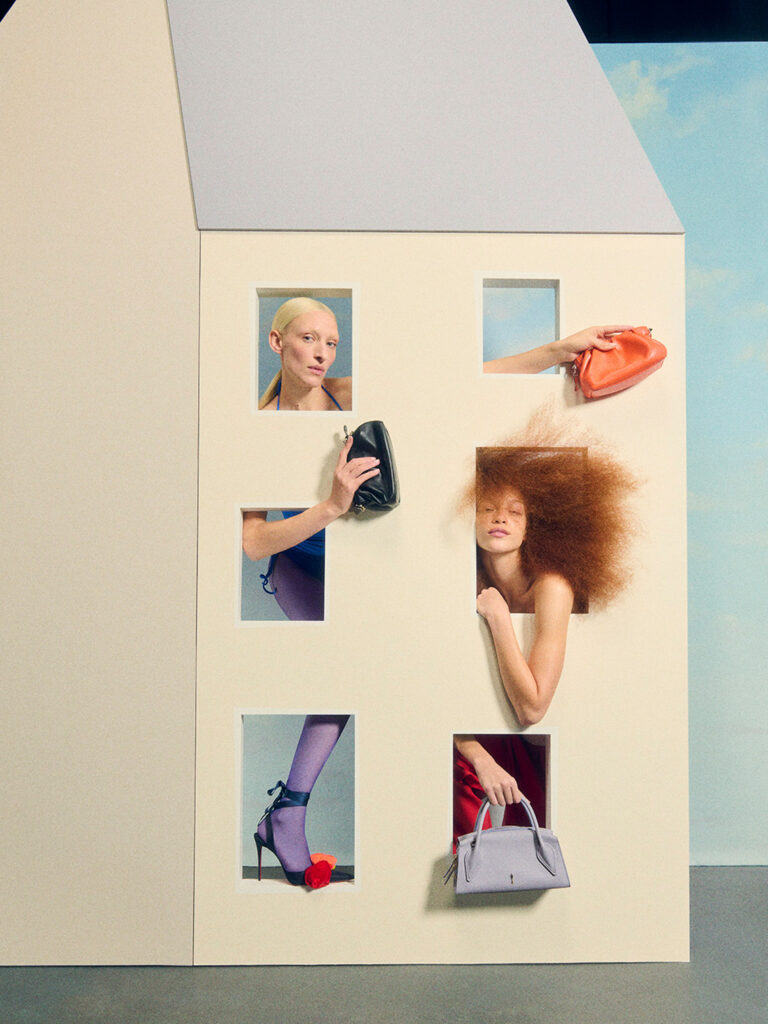
images courtesy Christian Louboutin Christian Louboutin Presents its Summer 2026 Collection Christian Louboutin opens the season with a collection shaped by the world of performance, silhouettes that move with the freedom and extravagance of the stage. At its center is Venus, a line of bags named for the goddess of love. Tote, shoulder, baguette, mini cross‑body; each one carries the quiet detail and craftsmanship that define the house, balancing luxury with ease. For high summer, the story continues with the Mulazee, a kitten‑heeled mule in soft taffeta, tied with a ton‑sur‑ton knot that frames the décolleté. Alongside it, the Cassia mule and Pavolva ankle boot push the evening mood further, appearing in smooth leather, silver nappa or crepe satin. The collection closes with a return to two classics, Chambelimoc and Chambelimonk, reimagined in burgundy calf patine embossed to resemble crocodile. A timeless finish for a season built on movement, texture and a touch of theatre.

Fashion Articles, Uncategorized

Inside Camilla Pihl’s Universe of Modern Femininity

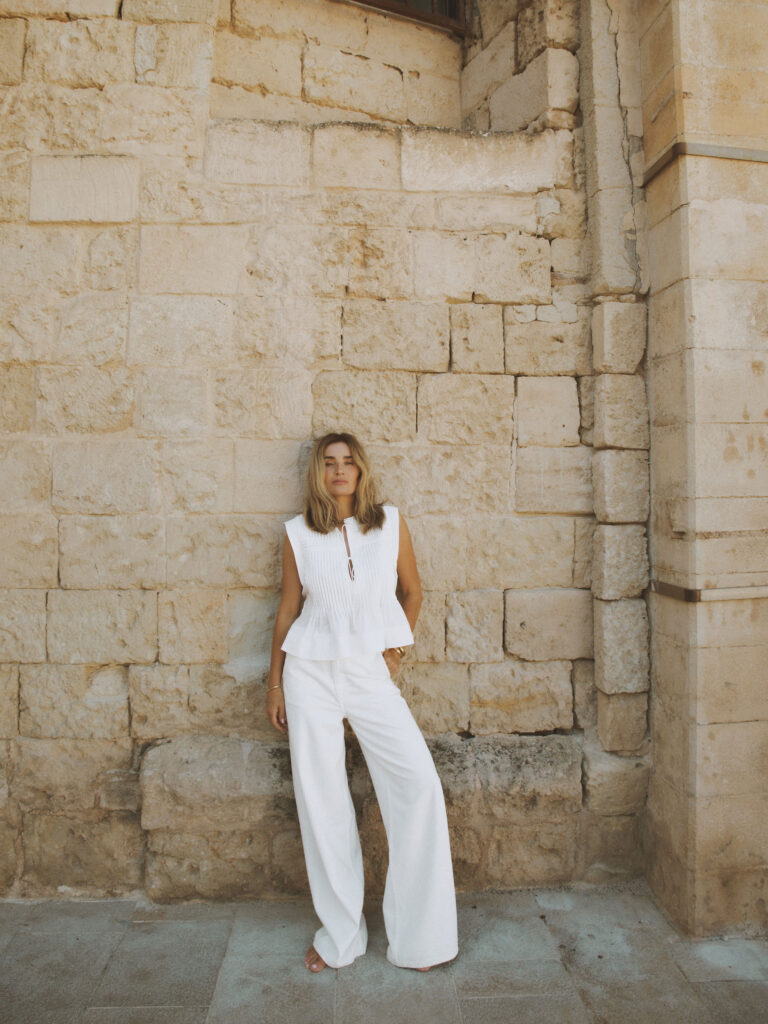
Inside Camilla Pihl’s Universe of Modern Femininity image courtesy Camilla Pihl From digital tastemaker to creative director, Camilla Pihl has built a brand rooted in timeless design, conscious choices and a calm, confident approach to style.   Intimate is perhaps the best way to describe the atmosphere when Camilla Pihl was welcomed onto the Swedish market. With close to 60 guests from across Scandinavia gathered to celebrate, the moment felt both personal and significant, a reflection of a brand that has grown from a digital presence into a recognized name in modern Nordic fashion and beauty.   Founded in 2018, CAMILLA PIHL has become synonymous with effortless femininity, understated confidence and a lifestyle that extends beyond clothing. Odalisque Magazine sat down with Camilla to talk about her journey from influencer to entrepreneur, the philosophy behind her brand universe and what continues to inspire her creative direction.   What originally inspired you to launch CAMILLA PIHL back in 2018? The idea grew quite naturally over time. After many years working with fashion from the outside, I felt a strong need to create something more permanent – a brand built on values I truly believed in. I wanted to design clothes I personally missed in my own wardrobe: timeless pieces with a feminine, effortless feel that could last beyond seasons. “I wanted to design clothes I personally missed in my own wardrobe.” You started as a blogger and model before becoming an entrepreneur and designer, how did that journey shape you? It gave me a very holistic understanding of the industry. I’ve seen fashion from many angles – creative, commercial and personal – and that experience has shaped how I build the brand today. It also taught me the importance of authenticity and long-term thinking.   Nordic simplicity and effortless femininity are core to the brand. How do you translate those values into tangible design decisions? Through clean lines, thoughtful proportions and subtle details. We focus on pieces that feel easy to wear but still refined – nothing overdone. It’s about balance: softness and structure, femininity and functionality. “Nothing overdone. It’s always about balance.” You describe CAMILLA PIHL as more than just a fashion brand, a whole “universe.” What does that universe represent to you personally? It represents a lifestyle and a mindset. A calm, confident way of dressing and living. For me, it’s about creating something that feels cohesive and personal – where fashion, beauty and atmosphere all connect naturally.   Can you walk us through your creative process from concept to final product? It often starts with a feeling rather than a specific reference – something intuitive. From there, we develop silhouettes, fabrics and colors, always keeping wearability in mind. The process is very collaborative, but I’m closely involved from the first idea to the final fitting.   How do you choose materials and fabrics, especially those that reflect both quality and sustainability? Quality is always the starting point. We aim for materials that feel good, wear well and last over time. We work continuously to make good choices – even when it means slower development or tougher decisions.   Have you faced any challenges when integrating sustainability into a young, fast growing brand? Yes, absolutely. It’s complex, especially as a growing brand. Sometimes the right solution isn’t immediately available. But we see it as a responsibility to keep pushing forward and improving step by step. “Our customers influence the brand more than people might think.” Which item from your current collection has the most personal meaning to you? It’s often the most versatile pieces – the ones I reach for again and again. Items that feel like they naturally become part of everyday life are usually the most meaningful to me.   How do you nurture a community around your brand, and what role do your customers play in shaping it? Our customers are incredibly important. Their feedback, loyalty and way of styling our pieces influence the brand more than people might think. We try to stay close to them and build something that feels inclusive and real. What has been the most surprising part of expanding from fashion into areas like Atelier Camilla Pihl and Camilla Pihl Cosmetics? How natural it felt. It confirmed that the brand universe translates well beyond fashion, as long as it’s done thoughtfully and stays true to our core identity.   What do you see as the core identity of the “CAMILLA PIHL woman,” and how has that changed over the years? She is confident, modern and grounded. She dresses for herself, not for trends. Over time, she’s perhaps become more self-assured and that evolution mirrors my own journey as well. “She dresses for herself, not for trends.” What designers, artists or cultural moments influence you most right now? I’m often more inspired by atmosphere and culture than specific designers: architecture, art, travel and the way women actually live and move today. And music! Music is maybe my biggest inspo!   The brand has grown rapidly, with boutiques and international distribution. What strategies have been key to that growth? Staying focused and not expanding too fast. We’ve been careful about choosing the right partners and markets, and about building a strong foundation before scaling.   What is next for the brand, any exciting future categories or collaborations you can share? We’re continuing to grow the universe in a thoughtful way. There are exciting things ahead, but always with the same focus: quality, longevity and staying true to who we are.

Culinary, Uncategorized

A Visit to Allegrine by Danyel Couet, Stockholm

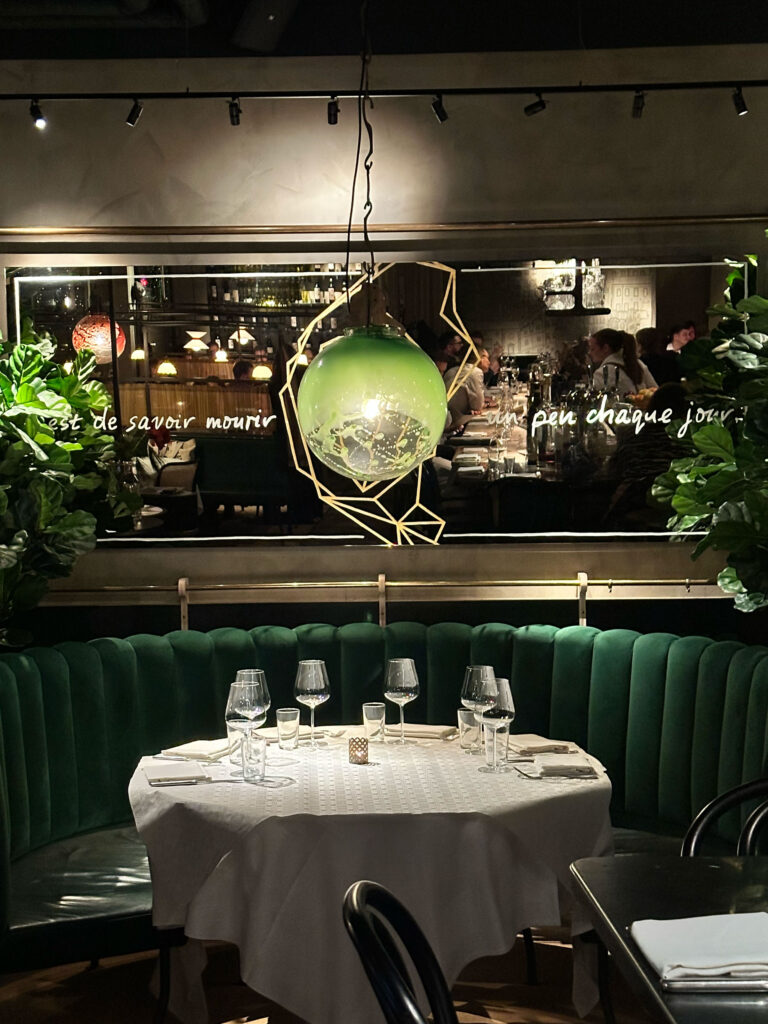
A Visit to Allegrine by Danyel Couet, Stockholm Allegrine, or the Art of Taking Your Time photography Stefan Anderson I always choose the front row. Not for attention, but for closeness. To the hands. To the silence between movements. To the quiet focus that exists just before something becomes finished. At Allegrine, that closeness feels essential. This is not a place to observe from afar. It asks you to lean in. Allegrine is Danyel Couet’s Parisian inspired refuge in Stockholm, though refuge might be the wrong word. It feels less like an escape and more like a return. A return to warmth, to rhythm, to the unhurried pleasure of being exactly where you are. From the moment you step inside, the world outside softens. Time loosens its grip. The room is generous, but never overwhelming. There is space to breathe, yet everything feels personal. Like a favorite brasserie you have known for years, even if this is your first visit. Conversations drift softly between tables. Laughter settles into the walls. The atmosphere holds that rare balance. Elegant without being distant. Intimate without being precious. Though the soul of Allegrine carries the light and ease of the south of France, it is unmistakably Stockholm that surrounds it. Water glimmers beyond the windows, replacing any imagined coastline. The contrast feels intentional. A reminder that identity is not about imitation, but interpretation. The name Allegrine suggests cheerfulness, but here it carries something far quieter and deeply personal for Danyel. It was the name of his grandmother. A presence that lingers, not through grand gestures, but through feeling. Through rhythm. Through care. You sense it in the way the restaurant moves. Nothing is rushed. Nothing needs to be explained. A meal that is allowed to take its time, much like the moments that matter most. From the room to the drinks, everything feels considered, almost tender in its restraint. Even the presence of Kronenbourg on tap becomes a small act of honesty. A beer that does not try to be more than it is, and in doing so becomes exactly enough. The meal begins without spectacle. Gaufrette potatoes, crisp and delicate, topped with bleak roe from Kalix (Sweden’s equivalent to caviar)  and sour cream. A small opening gesture. Confident in its restraint. It sets the tone for everything that follows. This is French cooking filtered through a Scandinavian sensibility. Clear, precise, respectful of ingredients. Steak tartare arrives dressed in richness, foie gras, truffle croutons, a whisper of Sauternes. Yet it never weighs you down. Each element knows its place. Rödräka is served clean and direct, as if to remind you that complexity is not always the goal. Then comes the agnolotti. Warm, grounding, quietly generous. The kind of dish that holds a meal together without asking to be remembered, and therefore is. The escargot pauses time. Removed from their expected shell and tradition, the snails meet mushrooms, pancetta, and a soft touch of balsamico. Familiar flavours, rearranged. Reimagined without force. The mushrooms linger. Earthy. Comforting. They stay with you long after the plate is cleared, like a thought you do not rush to replace. When the fish arrives, it is accompanied by an elderflower beurre blanc. Floral, light, almost fleeting. It lifts rather than leads, adding perfume instead of weight. Dessert follows the same unspoken rule. Nothing unnecessary. A yuzu pavlova with fresh blackberries. It is winter, yet the flavours feel honest and alive. Choosing restraint here feels generous. Seasonal. Almost radical. Allegrine is not a place for performance. It is a place for presence. For the joy of craft, of detail, of sharing something made with care. French gastronomy meets Scandinavian clarity, but what lingers most is not a dish or a flavour. It is a feeling. Of calm. Of intention. Of having been exactly where you were meant to be, for just long enough.

Art

Sally von Rosen

“Feel First, Think Later”: Sally von Rosen on contradictions, her creatures, and the power of objects text Natalia Muntean Sally von Rosen’s work is a study in contradictions – beauty and grotesque, violence and tenderness, familiarity and alienation. Her sculptures, often described as “creatures,” evoke visceral emotions, inviting viewers to feel first, think later. “I want people to experience contradictory emotions,” she says, “to feel both the desire to care for the work and the urge to run away.” Drawing on her background in philosophy and aesthetics, von Rosen explores the political ecology of objects, treating them as active participants in human interactions. “Objects have their own intentions, their own ‘thing power,’” she explains, referencing Jane Bennett’s theories. From her early egg-like forms to her latest monumental outdoor sculptures, von Rosen’s work is a continuous evolution, blurring the lines between the past, present, and future. This ethos is central to the group exhibition Feel First, Think Later at Andréhn-Schiptjenko Gallery in Stockholm, where von Rosen’s hybrid creatures take centre stage. Alongside works by Annika Elisabeth von Hausswolff, Dev Dhunsi, and Minh Ngọc Nguyễn, the exhibition explores how intuition and emotion can precede intellectual interpretation. Von Hausswolff’s The Blind Woman (1998) serves as a symbolic portal into the act of letting go and trusting one’s senses, while Dhunsi and Nguyễn examine themes of tension and cultural identity. Together, the artists create a space where materiality and emotion converge, challenging viewers to engage with art on a deeply intuitive level. From von Rosen’s early egg-like forms to her latest monumental outdoor sculptures, her work is a continuous evolution, blurring the lines between the past, present, and future. Natalia Muntean: The title Feel First, Think Later comes from one of your quotes about how you want your work to be perceived. Could you expand on this idea and how it ties into the exhibition? Sally von Rosen: It’s about the transference of emotions – from me spending time with the object to someone else experiencing it in an exhibition. I remember a visitor in 2021 who looked at one of my creatures, the ones with claws and sharp tips, and said, “I want to take care of it, but I also want to run away from it.” That’s exactly the point. It’s about feeling contradictory emotions first, before intellectualising them. Art becomes interesting when it comes from intuition: the shapes, forms, and materials that feel right. Then, of course, there’s theory to apply. I have a background in philosophy and aesthetics, and I grew up surrounded by art – my mother was a ballet dancer, my father was an opera singer, and my grandfather a painter. Art has always been part of my life. NM: You mentioned the transference of emotion. Can you tell me about your emotions while making Offsprings and Ananke’s Playbunnies? SvR: These works are part of an evolution. The first ones were like eggs with claws, but they weren’t standing on their tips. At the time, I didn’t think much, I just worked with the material. Later, I realised I made these eggs during a time when my body wasn’t functioning well – I didn’t have my period, and it felt like these eggs were locked in my body. I only realised it a year later when my period returned. These creatures started as eggs, then grew bigger, and I flipped them so they had legs. They started to look more like creatures, part human, part animal. They evolved into a herd, and in 2023, I created a large installation with 60 sculptures climbing on top of each other during Berlin Art Week. The sculptures in Feel First, Think Later refer to that exhibition. My work often evolves in steps, like the evolution of a species. It’s about something that looks like it’s from the future or the past, raising questions about time and existence. NM: Do these creatures have a life of their own after you create them? SvR: Yes, once I’ve done my part, they exist on their own, often in exhibitions. This ties into the title Feel First, Think Later. I also research theories that resonate with my work, like Jane Bennett’s Vibrant Matter. She writes about how objects can have their own intentions, their own “thing power.” This idea gives meaning to how I think about my sculptures. NM: Do you work intuitively, or do you have a plan when creating these creatures? Do connections emerge during the process, or do you start with a clear vision? SvR: It’s different each time. It often begins with an image – shapes or forms. I start experimenting and realise, “Okay, this means that.” The visual aspect usually comes first, and then I tap into my mental library, thinking about how things relate. It all makes sense in the end. Sometimes, I dig into my foundation, like a “bad archaeologist,” as I once called myself. For example, I made some fragile sculptures that looked like they were sleeping, but the material was strong. I cast them in fibreglass and resin, then broke the mould to get the sculpture out. It’s a violent process, but something beautiful comes out. NM: It sounds cathartic, in a way – hammering it down and then having this newborn, so to speak. SvR: Sculpting can feel violent sometimes. You have to use a lot of power, especially with certain materials. For example, when I work with bronze, I use heavy tools and a 1000-degree flame to shape the surface. Then I throw acid on it. It’s all very violent and uncomfortable, but something beautiful comes out. It’s interesting how that process works. NM: Tell me more about you playing with the duality of things. Like beauty and grotesque, or violence and creation? And how do you balance them? SvR: I think those contradictions are where it gets interesting. How can a sculpture be both of these things? It’s not about balancing them intentionally. It’s about the tension between contradictions; something can be

Opiates, Uncategorized

Re:DECO

image courtesy Re:DECO Brings together vintage boutiques, artisans, artists, designers, and creators in video and photo production under one roof at Linnégatan 4 in Stockholm. 500 sqm of creative space.   For collaborations: regardingdeco@gmail.com Website: https://www.regardingdeco.com/ image courtesy Re:DECO

Opiates, Uncategorized

Dior Introduces the Diorly Bag

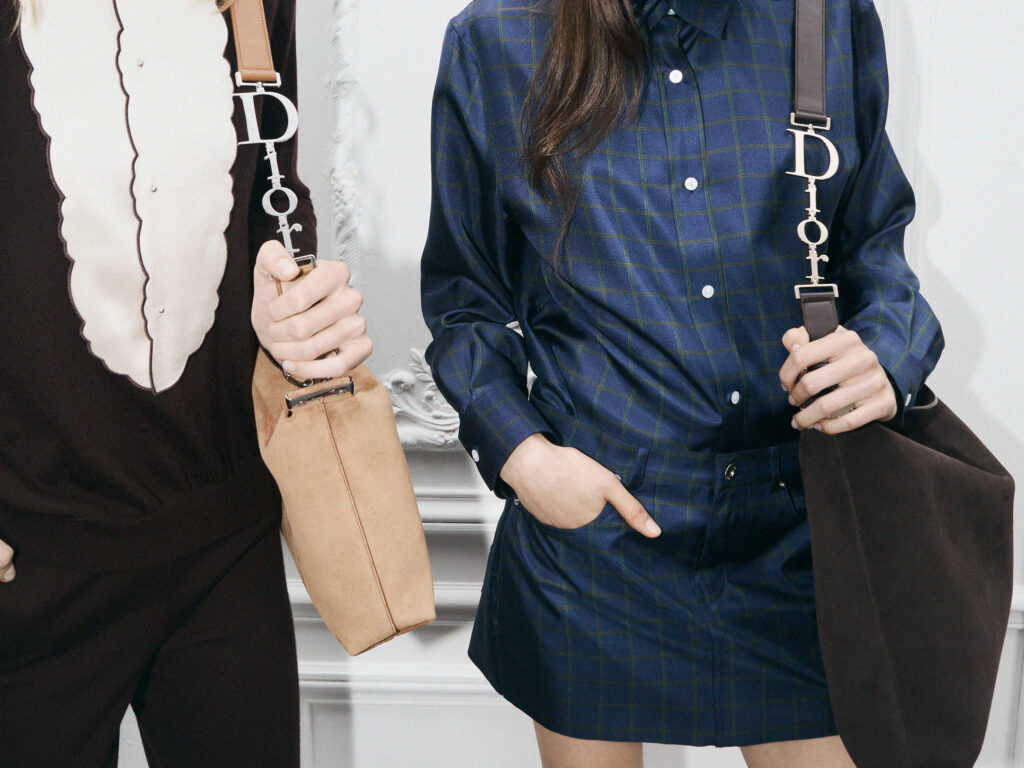
image courtesy Dior Dior Introduces the Diorly Bag Dior presents the Diorly bag, a new silhouette by Jonathan Anderson shaped with a freer, more relaxed attitude. Supple and soft, it carries a subtle vintage touch through its construction and fine finishing. The bag appears in two materials, smooth leather traced with cannage lines, or delicate suede,  each one highlighting texture in its own way. An adjustable shoulder strap, finished with a metallic “Dior,” lets it fall naturally against the body. Available in medium and large, the Diorly is embossed with the house signature and finished with an interior zipped pocket and double flap. A practical companion with an easy elegance.

News

Below Zero, Beyond Ordinary: When Electric Performance Meets Winter Golf in Åre

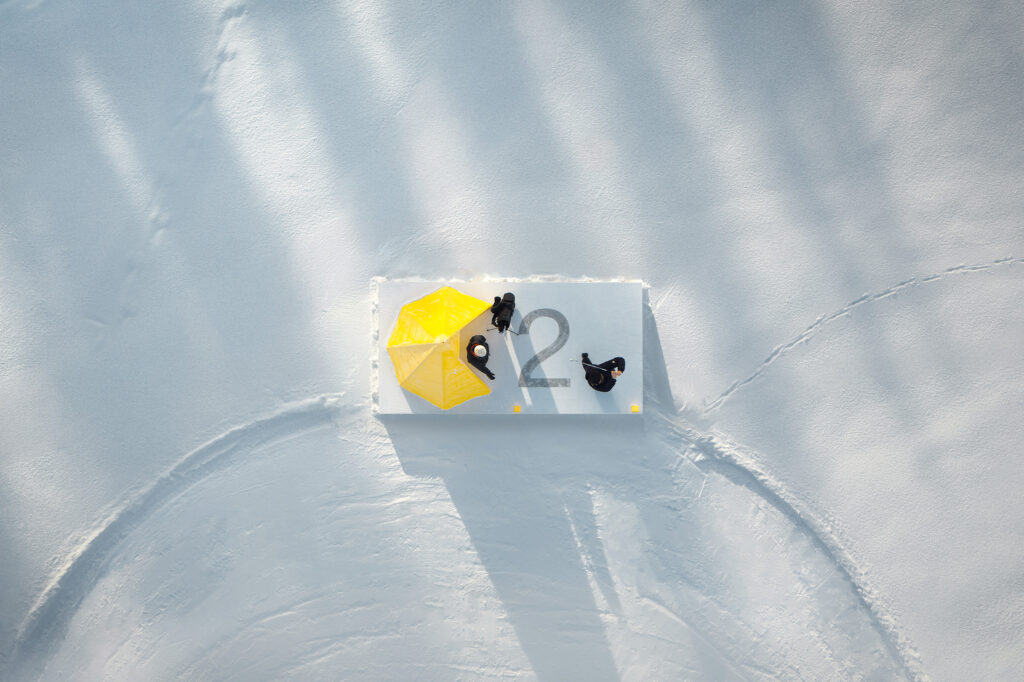
Below Zero, Beyond Ordinary: When Electric Performance Meets Winter Golf in Åre There is a certain silence in Åre during the winter that comes after snowfall. When the world feels, sculpted, almost curated. In that stillness, the idea of combining electric performance cars and golf might sound improbable, yet that is exactly where Polestar’s latest concept finds its charm. Drive below zero is not presented as a traditonal car event, but as a winter experience that blends movement, design, and play in a setting shaped by Nordic winter itself. At the heart of it is a simple but clever parallel. Golf is a sport of precision, patience and control. Winter driving in Scandinavia asks for the same qualities. Small inputs matter. Focus matters. The relationship between human and machine becomes more visible when conditions are demanding. images courtesy Polestar 3 Rather than talking about winter capability in abstract terms, Polestar places drivers in an environment where those qualities can be felt. Their vehicles are engineered and refined in real Nordic winters, where ice, snow, and deep cold are part of everyday testing. The result is a driving experience designed to feel composed and predictable, even when the rroundings are not. The winter golf element adds a layer of personality. A temporary course carved into the snowy landscape turns a test drive into something memorable. It invites curiosity. It slows people down. Between swings and drives, visitors move through the landscape in a more conscious way, noticing the terrain, the quiet, and the contrast between nature and technology. There is also an underlying design philosophy at play. The course is minimal, intentional, and temporary, echoing Scandinavian ideas of restraint and harmony with the environment. It reflects a mindset where luxury is not about excess, but thoughtfulness and experience. In many ways, Drive below zere feels less like a campaign and more like an invitation. An invitation to see performance in a different context, to connect sustainability with experiences, and to associate innovation with something human and playful. Perhaps that is wat makes it memorable. Not just the cars or the concept, but the feeling of seeing something familiar, like winter in Åre, interpreted in a new way. A reminder that innovation can be playful, and that even in the coldest settings, new ideas can feel warm and inviting.

Scroll to Top