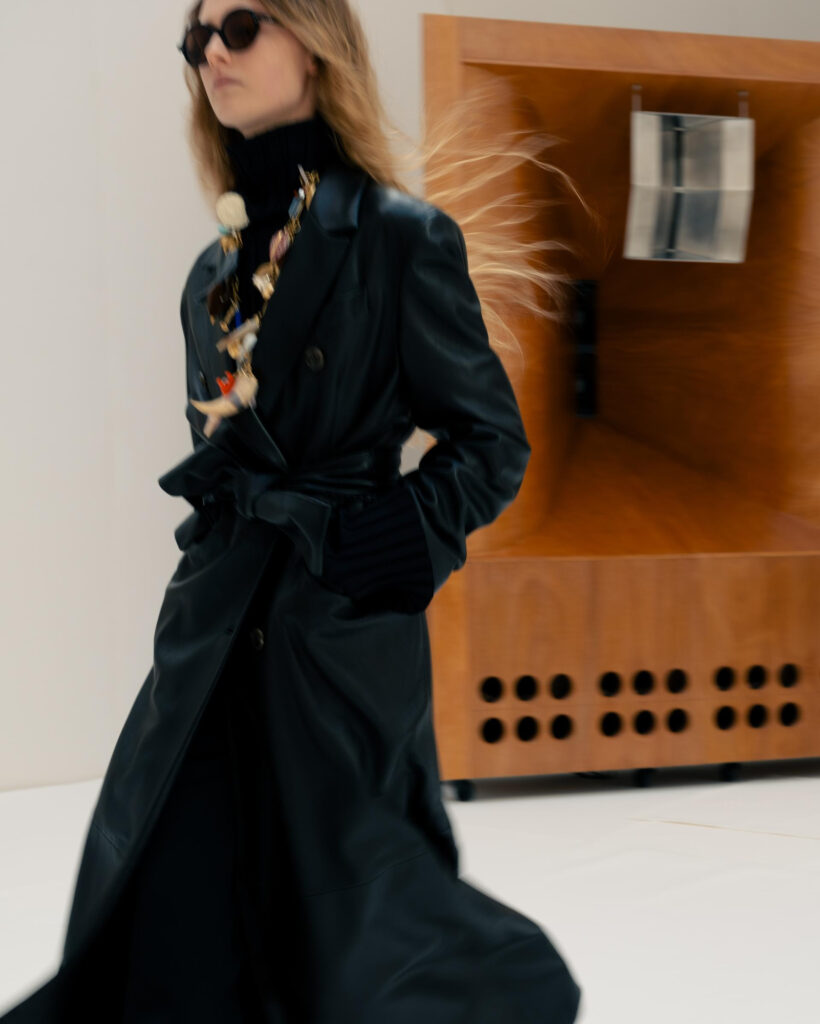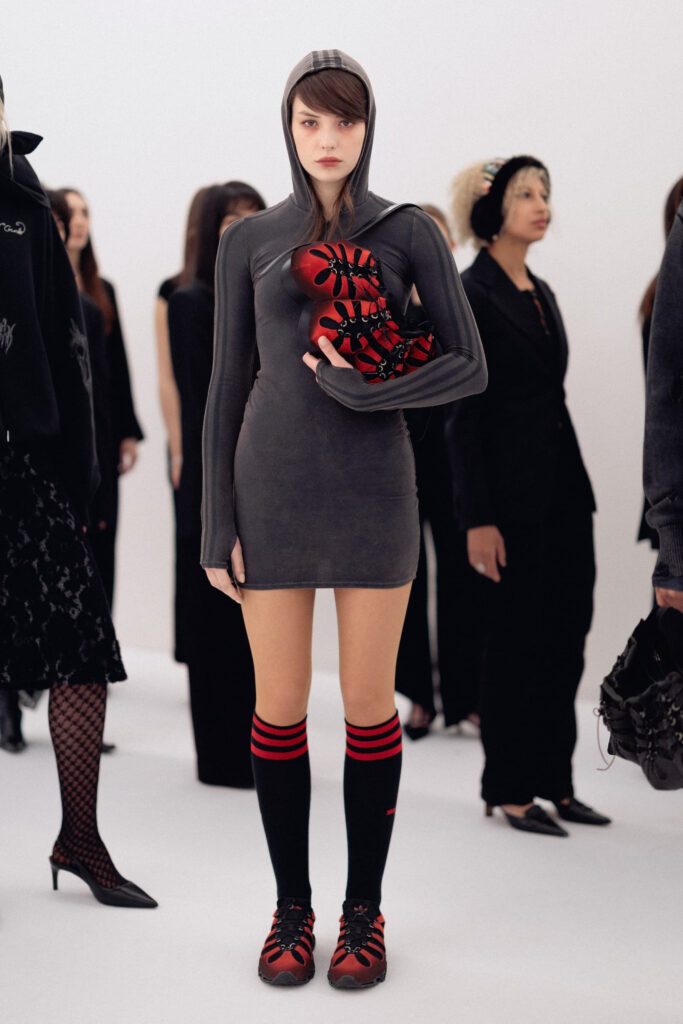
Avavav present the new FW26 collection
Avavav present the new FW26 collection The Female Gaze images courtesy Avavav


Avavav present the new FW26 collection The Female Gaze images courtesy Avavav
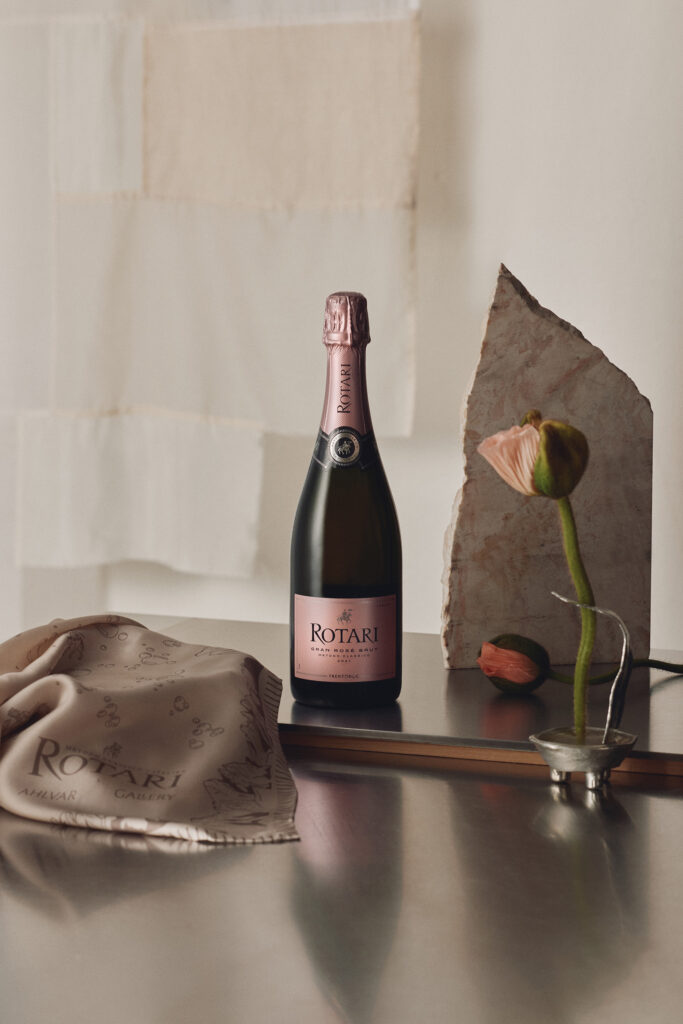
Rotari x Ahlvar Gallery: Italian Heritage Meets Scandinavian Silk photography Rotari x Ahlvar Gallery When Italian winemaking meets Swedish design, the result is more than a collaboration — it becomes a dialogue between two distinct craft traditions. On March 26, 2026, Rotari and Ahlvar Gallery unveil an exclusive limited edition silk scarf, produced in just 100 pieces. Designed by Frida Ahlvarsson, the piece weaves together Rotari’s signature bubbles, the silhouette of the Italian Dolomites, and a historical reference to King Rotari. All elements are interpreted through Ahlvar Gallery’s poetic and timeless design language. Crafted from 100 percent silk, the scarf measures 65 x 65 cm and features a refined twill structure with hand rolled edges. Designed as a unisex accessory, it transitions effortlessly across seasons and is equally suited for everyday wear and evening occasions. The piece is priced at 995 SEK and will be available exclusively via ahlvar.com. The collaboration highlights a shared dedication to craftsmanship. Rotari’s sparkling wines from TrentoDOC are produced using the traditional method with extended lees aging, while Ahlvar Gallery has made silk its signature since 2013, defined by uncompromising quality and modern Scandinavian elegance. To celebrate the launch, Odalisque Magazine invites you to take part in an exclusive competition to win one of the coveted silk scarves, valued at 995 SEK. A rare piece where Italian heritage meets Nordic design in perfect harmony.
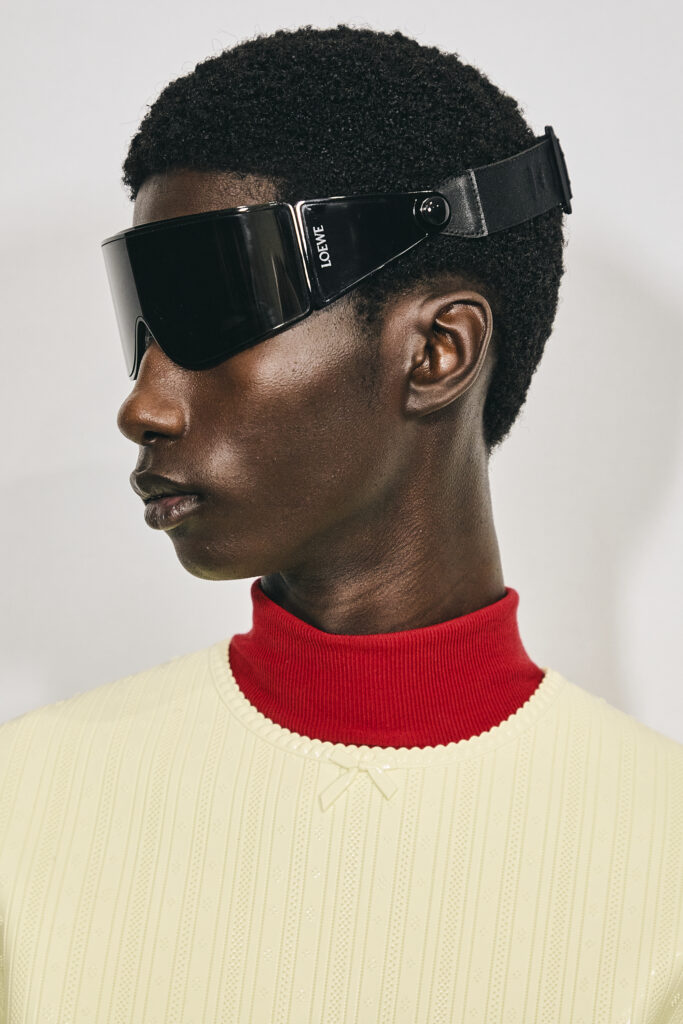
LOEWE – Paris Fahsion Week – Backstage photography LOEWE

Acne Studios Presents Women’s Fall Winter 2026 Collection text Acne Studios images courtesy Acne Studios “I have a library in my mind of things that I circle around. It represents the different historic moments, music references or cultural inspirations that feed the collective creation of the brand. Ahead of this show, I was thinking back to 2010, when we made a runway through Lord Snowdon’s apartment in Kensington Palace; it felt disruptive and captured a mood. There’s a gloomy feeling to the interiors today. But then there’s an attitude to these women – who breathe new energy into clothes that began as classic – that highlights our hopeful point of view. Since 1996, many of my obsessions have shaped the world of Acne Studios, yet its heritage represents all of us, and we carry this forward.” – Jonny Johansson. Now in its 30th year, Acne Studios reflects on legacy, less as a fixed construct than a perspective on time that is worn, questioned and remixed. Within a setting conceived like an enfilade of salons, aristocratic notions of dress meet a certain form of minimalism. As boundaries between counter-culture and establishment continue to blur, and past eras resurface in new ways, the collection taps into preppy and polished codes, interpreted with youthful sensibility. Acne Studios embraces, reaffirms and revisits its signatures throughout the collection. There’s the leather biker or aviator jacket, mainly cropped, fitted and in punchy hues; jeans are slim and tapered, and the classic 1996 cut is revived; tailored jackets are sharp and can be slung across the body; knits are coordinated as preppy sets. A specific approach to layering puts these garments in conversation. The silhouette is convertible and unrestrictive yet anchored by moments of precision. A particular skirt – traditional in shape and length – becomes a character in itself, an emblem of intellectual femininity made contemporary. Traditional patterns are destabilised. Prince of Wales checks shift in scale, placement and colour – from dusty to darker tones; hortensia motifs in technical satin resemble tapestry and animal patterns are abstracted. Elegant silk scarves are now playfully extra-long in classical motifs and collaged prints. The larger-than-life faces are from Paul Kooiker’s portrait series of art school students, presented at Acne Paper Palais Royal last year. A reminder that Acne Studios is anchored in the idea of creative collective. The bent pointy toe defines pumps and stretch boots in suede and leather that climb up the legs, some with furry accents. Eyewear puts a streamlined slant on vintage styles with lenses in vivid tones that accentuate the composite character of these women. A new bag shape is structured with a single handle for an eccentric tilt, and the Camero returns in weekender size. From one room to the next, the show signals memory as architecture, the portals marking what has come before, and what might follow. The soundtrack by Portishead unfolds slowly, the lyrics of Roads from an earlier time echoing with melancholy and defiance, gradually building with the energy of The Rip. Here, heritage is not a celebration of the past for its own sake, but a bridge to the future classics of Acne Studios.
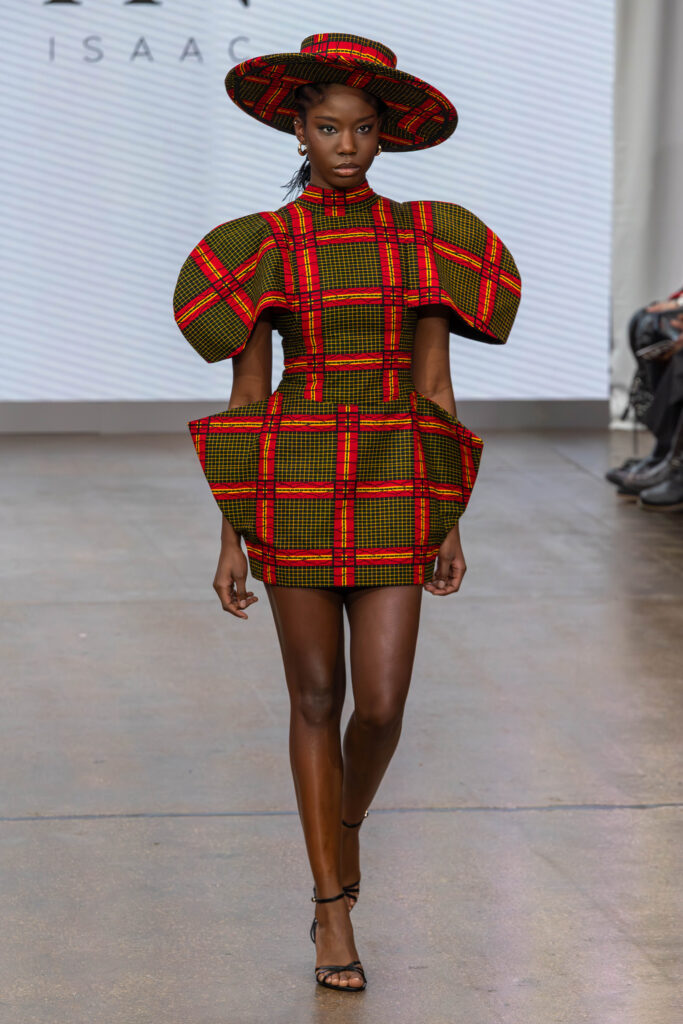
London Fashion Week AW26 – Twin By Tare Isaac images courtesy Twin By Tare Isaac
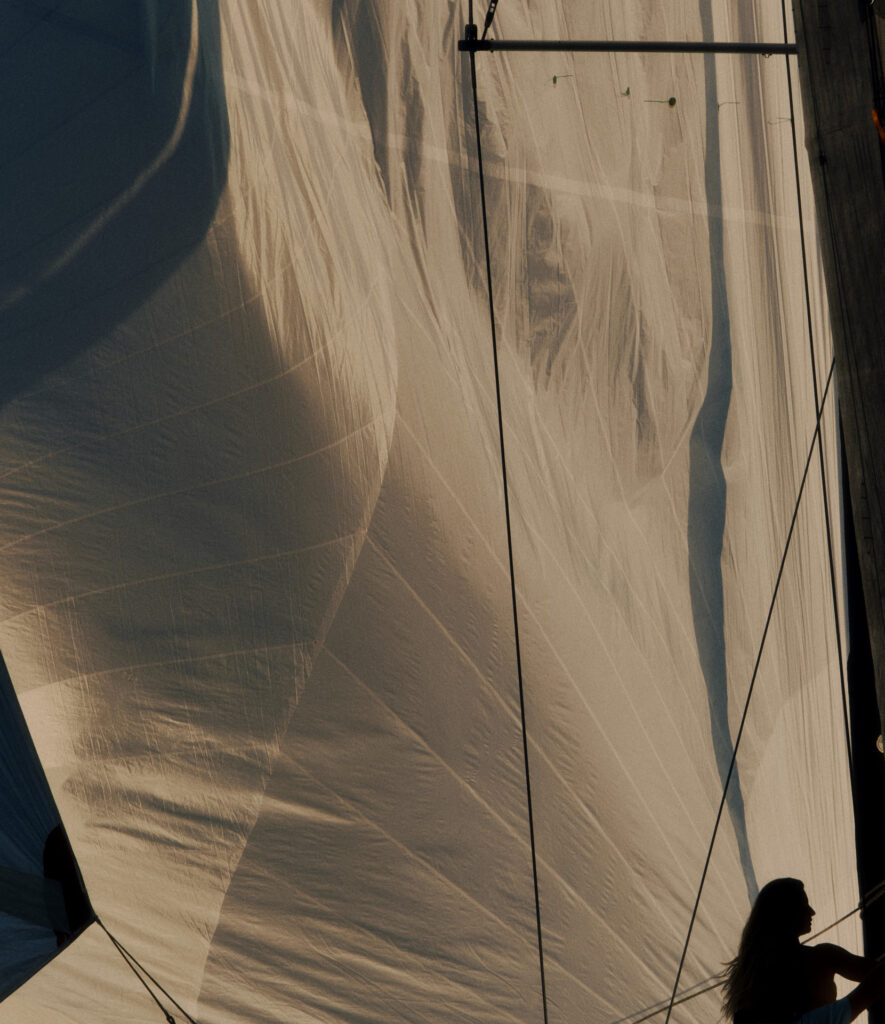
An Icon Needs Icons – Chanel J12 text Chanel images courtesy Chanel Some objects do not seek relevance. They become it through endurance, restraint, and purpose. The Chanel J12 has always been a part of that rare category. A statement beyond the hour, it’s a feeling, a texture, a philosophy worn on the wrist. Unisex by design, it transcends conventional boundaries, meant for anyone who understands the subtle power of presence. With its new campaign, Chanel once again reminds us that true strength does not need to announce itself. It reveals itself over time, appearing wherever confidence meets enduring presence. But how do you bring an icon to commercial life again? How do you make it feel relevant today and resonate as it once did? You simply need icons! I couldn’t think of a better fit than Gisele Bündchen starring in this campaign. Her connection to the house goes back to the 1990s, during Karl Lagerfeld’s era, a time when femininity was being reimagined as powerful, assured, and instinctive. She has always embodied that balance: commanding presence without force, authority without hardness. She does not perform strength; she simply lives it. It is no surprise, then, that she is at the heart of this campaign alongside Clément Chabernaud. His steady presence anchors the story in a modern take on masculinity, and this campaign speaks softly but resonates deeply. It invites reflection—on material, on movement, on the kind of strength that does not need armor. I keep coming back to the J12 because it moves through time with a kind of effortless presence. Softness can be radical. Elegance can be resilient. Icons endure, not by trying to follow the moment, but by staying true to themselves. Watching Gisele and Clément together, it feels as if they are in a deep sea conversation where time has paused. Not contrasts, but parallels. That is what makes it resonate. It is not about gender or spectacle, but about shared values and a sense of inner calm. The new J12 signature, In the Greatest Strength Lies Softness, feels deeply aligned with the object itself. Ceramic that is smoother than silk yet stronger than steel—resistant to time, wear, and expectation. There’s a certain poetry in how the watch reconnects with its original element: water. Calm on the surface, immense beneath. It mirrors the people chosen to wear it. More than twenty-five years on, it still feels contemporary, not because it chases the moment, but because it was created to endure. Perhaps that is its true appeal: it asks nothing of us but to notice, to feel, and to consider what lasting presence really means.
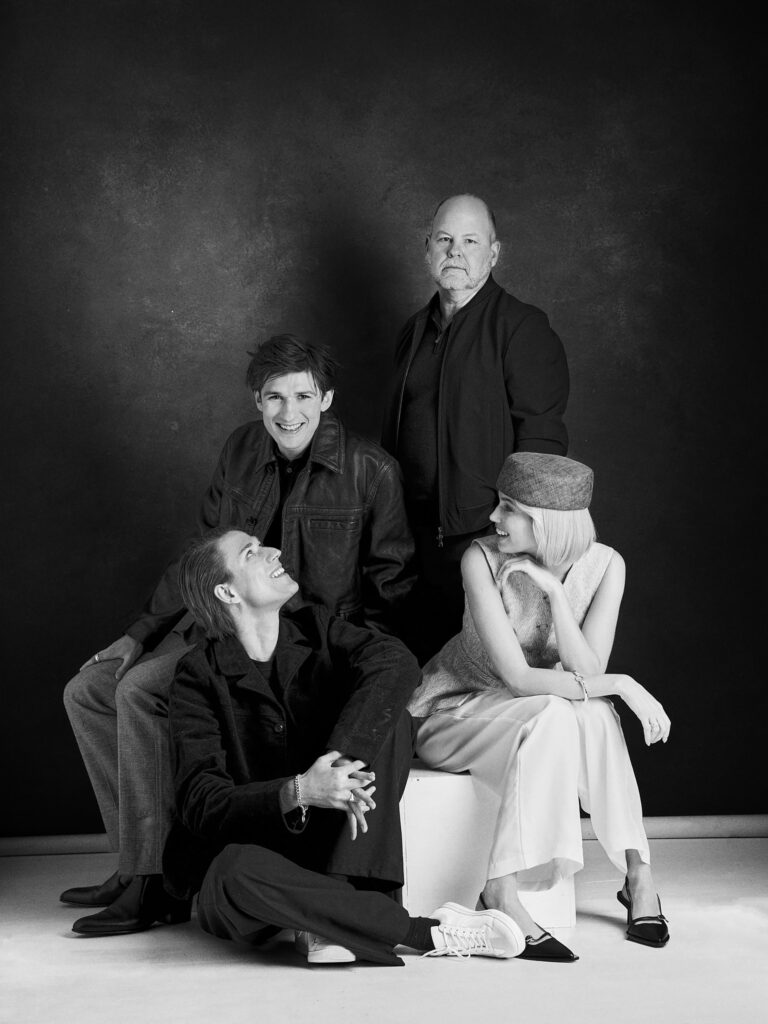
The New Doktor Glas, A Century Later text Natalia Muntean Christian wears jacket Jeanerica t-shirt Oscar Jacobson trousers HOPE Isac wearsleather jacket HOPE trousers Tiger of Sweden knit underneath and boots Oscar Jacobson Thea wears hat Jeanerica top Malina trousers Lisa Yang earrings and bracelet Maria Nilsdotter heels ATP “I felt very comfortable failing,” says Christian Fandango about filming the new adaptation of Hjalmar Söderberg’s Doktor Glas. Premiering in Swedish cinemas at the end of February, the film, reimagined by screenwriter and actor Isac Calmroth and directed by Erik Leijonborg, brings Söderberg’s 1905 novel into the present day. It reframes the classic moral dilemma: who has the right to judge, and who decides what is justified? The priest becomes a celebrated writer, private shame collides with public image, and Helga gains an agency largely denied to her in the original text. What remains unchanged are the questions at the story’s core: Who is guilty? Who controls the narrative? And how far can moral conviction go before it turns destructive? Natalia Muntean: Dr Glas has been interpreted for over a century. When you started working on this version, was there something you all agreed needed to be very different from earlier adaptations, and maybe from the book? Christian Fandango: We all agreed that we wanted it to be a modern take. Isac Calmroth: And you can’t really help it. Everything changes when it’s modern, because it’s 100 years later. Even if sometimes we wanted to go back to the book and tried to, it doesn’t really work. Erik Leijonborg: When Söderberg wrote it, it was very contemporary and really on the edge of moral questions, both for society and for the individual. Those questions are still exactly relevant today. If you want to take the temperature of Stockholm and the people living here, you can read that book at any time. For example, can I help a woman who has been raped? Can I take the life of the rapist? Is that morally correct? Is abortion morally right? In 1905, these boundaries were defined by strict, often oppressive laws. Today, we have the consent law. These questions will keep being asked as long as we’re human beings trying to figure out where the boundaries are. And then there’s the contemporary life we live – social media, being a public figure. These aspects felt very relevant to us. Thea wears hat Jeanerica brosch Ole Lynggaard, top Malina trousers Lisa Yang earrings Maria Nilsdotter Erik wearstotal look Oscar Jacobson NM: So you brought some of your own experience into the characters? Thea Sofie Loch Næss: Maybe. But I think one obvious thing when writing something in 2025, compared to the book, is Helga’s agency. I remember when I was reading the original, I was looking for Helga, thinking, “Where is she?” She’s only viewed through the men’s eyes. She doesn’t really have agency. At that time, that was just how it was. You’re married, the man is king. In this new version, she’s afforded much more agency, and we see her as a real person. Even though times have changed, and you can do whatever you want, there are still grey zones. Especially when you’re public people. When you scroll social media, you think, “Wow, amazing, happy lives.” But what’s actually going on inside a relationship? Sometimes it’s even harder to talk about because you’re protecting this perfect image. What’s more important to protect – your real self or the public persona? NM: Do you think you have answered the question of who is guilty or who is the bad guy in this trio? IC: I think we do and we don’t. TSLN: We also all have different opinions, because we are portraying the characters. As an actor, I have to defend Helga at all costs to portray her in a real way. And so does Isac, and so does Christian. According to my character’s life, I’m doing everything right. So I believe that. I think for us, playing the characters, we all have this strong belief in our own character. IC: Everybody wants a simple answer to who’s guilty and what actually went down. But the truth is probably very complicated. NM: When choosing to portray the novel as a psychological thriller rather than a period drama – what did that shift unlock, maybe emotionally or morally? IC: It really came when I reread the book and suddenly had this idea of doing it in a modern way. I called Erik and Christian, and later we called Thea, and we all agreed on this take. CF: One of the big things was changing my character’s profession; he is not a priest but a writer. Once we nailed that, it kind of unlocked everything. IC: In the original, the priest is the holy figure of that century. Today, we “pray” to celebrities instead, so we changed that. And then everyone was involved in the script. As a man writing, even though I wanted to create Helga as a complex character, I somehow still ended up with a version where she didn’t even have a job, so Thea came in with a lot of material and ideas. Everybody contributed. NM: Thea, what else did you have to change from Isac’s script when it came to writing your character? TSLN: I think it was more about finding nuances. Like, why is she still in this relationship? Does she have any friends? What is her inner life in a way that lets us understand and follow what leads her to do all these things? Writing it in a modern way also gives you a lot of freedom, because this is a classic Swedish novel that people hold very close and have strong opinions about. If we had tried to do it exactly the way the book is written, I feel like people would have focused more on how faithful it is to the book instead of the story. But when you move it
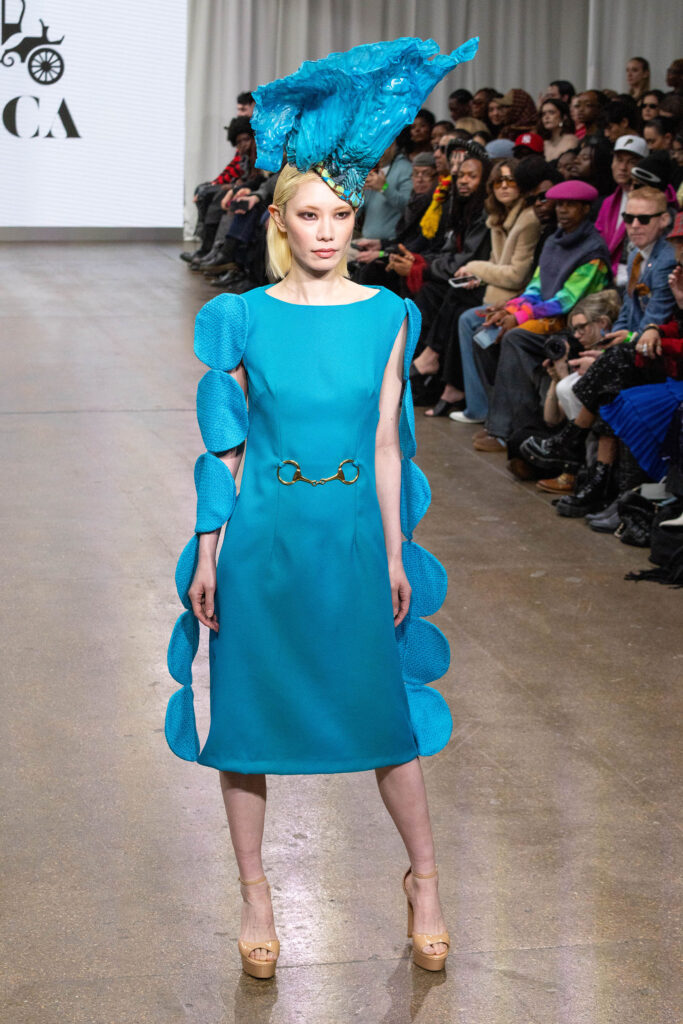
London Fashion Week AW26 – Tayameaca photography Jason Jude
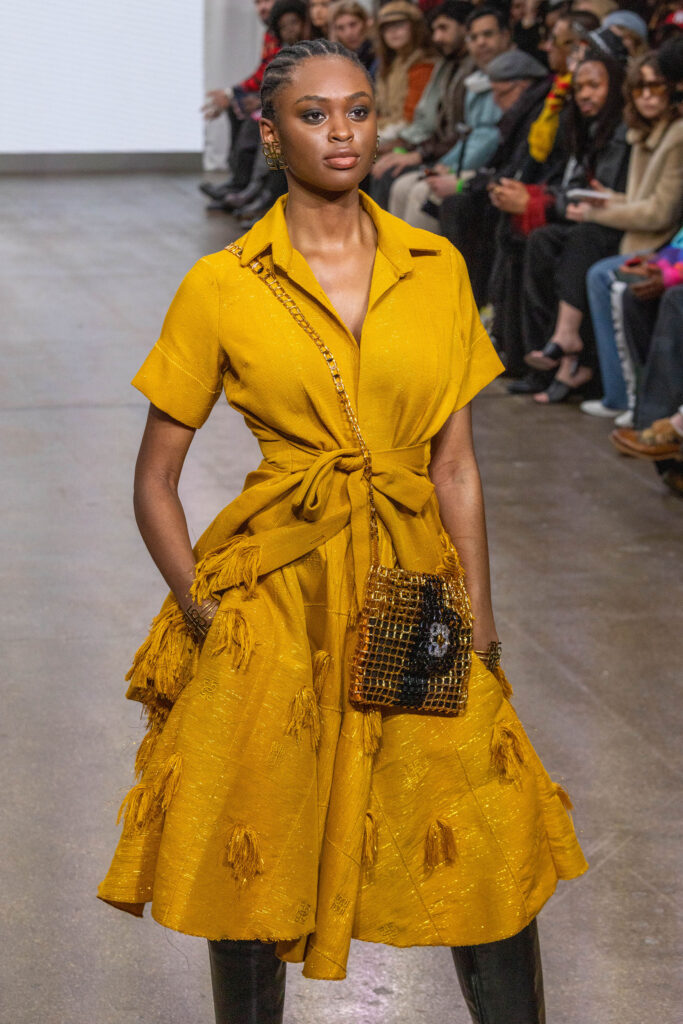
London Fashion Week AW26 – Jermaine Bleu photography Jason Jude