Author name: Odalisque

Art

Stockholm Art Week: An Interview With Mark Frygell

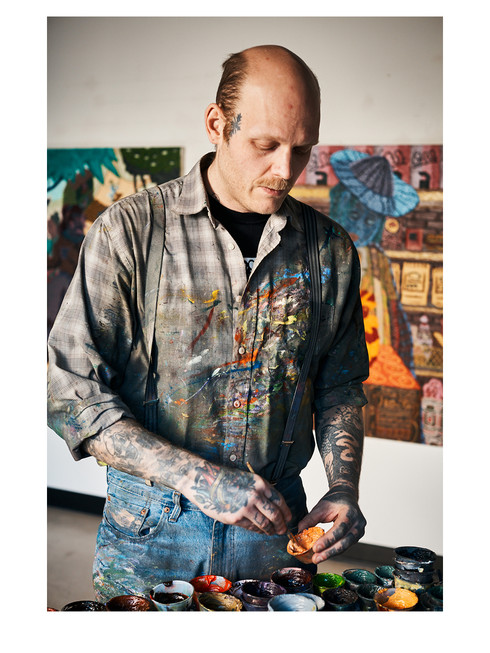
Stockholm Art Week: An Interview With Mark Frygell text Zohra Vanlerberghe Mark Frygell’s art thrives in the liminal space between the grotesque and the playful, where ambiguity sparks open-ended narratives. Born in Umeå’s punk scene and shaped by years as a tattooist, his paintings, vibrant, textured, and teeming with surreal characters, invite viewers into a world where fantasy collides with the uncanny. From Renaissance graffiti to surreal memes, his influences are as eclectic as his output: a testament to a practice driven by curiosity rather than convention. Natalia Muntean: Your work often blends the grotesque with the playful, exploring ambiguity and fantasy. How do you approach creating these contrasting elements, and what do you hope viewers take away from your art? Mark Frygell: I hope that what the viewer is taking away is very subjective. To a large extent, when you grow as an artist, you drift further and further away from designing an artwork to have a certain effect on the world and, instead, the outcome of your process becomes something you trust the viewer will find its way in relationship to. Nowadays, we are so used to having things packaged and served to us and, in that sense, artistic work is more important than ever to break that habit and help us see things for what they are. It’s a “shields down” kind of approach, I suppose. In the studio, I am most interested in experimenting and discovering where it leads and what the outcome might be. Then, of course, I have my background, taste and hang-ups that colour the aesthetics of what I do. I rarely think too conceptually about what a piece should be or what is good or bad, a failure or a success. Curiosity and interest in the medium, whichever that is, are what drive me to the studio every day. I have some sort of obsession with the imaginative and grotesque that colour my work, not as an intention but more as a consequence. I have thought about it a lot and there is something in it that feels transgressive and limitless. Ever since I was a kid, I have had a huge interest in the wonky, weird, and odd. From Garbage Pail Kids and Weirdo Comics to underground roleplaying game illustrations, renaissance graffiti, the Neue Sachlichkeit of the early 20th century, and even the surreal memes created by teenagers in Blender, I am drawn to unconventional forms of expression. A couple of years ago, I discovered that the word “grotesque” originates from “grotto-esque,” an aesthetic trend from 15th-century Italy. This trend started when a farmer fell through a hole and found a hidden festive building built by Emperor Nero, with walls adorned by surreal paintings of plants, animals, and humans. Initially, these images were seen as strange and fantastical, but over time, the word began to take on a negative connotation of “ugly,” influenced by conservative views seeking to uphold the status quo. NM: Growing up in Umeå’s alternative music scene and working as a tattoo artist, how have these diverse experiences influenced your artistic style and multidisciplinary approach? MF: It has shaped everything I do! One of the advantages of being part of the alternative music scene is its small size, which encourages participation. This creates an environment that is very supportive of creativity. Even if you’re young and inexperienced, you receive a lot of encouragement to explore your talents. As far as tattoos go, I think it has coloured my work less. When I started working professionally with tattooingvaround 2011, the “wild style” was quite new, and adopting a more artistic approach was an interesting way to work. In that sense, the art coloured the tattooing more than the other way around. Around 2015, I was also very lucky to become friends with Emil Särelind (Frogmagik) of Deepwood Tattoo in Stockholm. He had studied at Konstfack and was very dedicated to working in a similar vein. It was an interesting time when most other studios focused on traditional tattoos, while the entire scene began to feel stale. He played a significant role in shaping the tattoo landscape in Sweden that we have today, particularly by consistently inviting tattoo artists with similar ideas from all over the world for the past 10 years. NM: During your residency with the Mack Art Foundation in NYC, how did the city and its art scene influence your creative process, and what was the most memorable part of that experience? MF: It’s an amazing city, very inspirational, and many people are extremely dedicated to what they are doing in a way that just boosts your creativity. I spent a lot of time walking around all over Brooklyn, Manhattan and Long Island. This is my favourite thing to do in general when I am travelling. You see so much and a new interesting discovery is just a corner away. Of course, it is a luxury to be able to see amazing art shows, alternative music scenes and all the awesome food but it all pales in comparison to just exploring the streets in a city of this magnitude. It maintains its universe somehow. Mack Art is also a fantastic residency that was so supportive and made my day-to-day life and work very easy. Christine who runs it is a super active person who just makes things happen. NM: You’re collaborating with A Day’s March and have a unique relationship with clothing. How does fashion intersect with your art, and what can we expect from this collaboration? MF: I have a terrible fashion sense myself. Most of the time I just dress in things I have stumbled upon. I don’t really go shopping, and I think most of my clothes are basically memorabilia from my travels, printed shirts that friends have made, and sportswear because it’s comfortable. Plus, I tend to mess up my clothes with paint and stuff anyway. With that said, I love looking at people and how they express themselves, and in my paintings I like to come
Art

YOU’VE GOT THE LOVE, An Interview with Liselotte Watkins

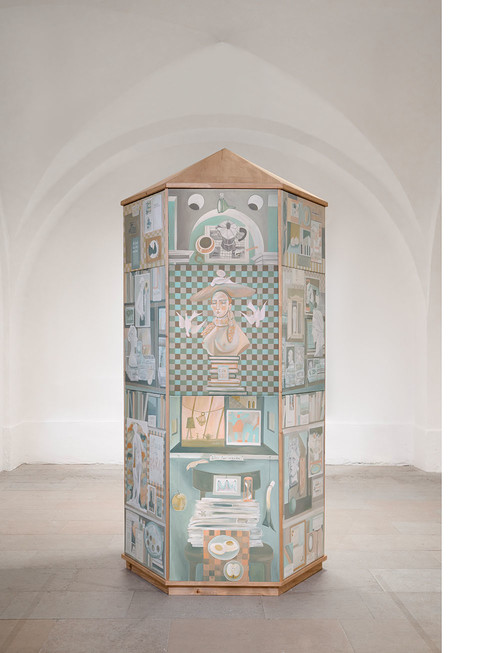
YOU’VE will come. GOT THE LOVE, An Interview with Liselotte Watkins  text Natalia Muntean images courtesy of Liselotte Watkins and CFHILL “I am a kiosk,” says Liselotte Watkins. For Watkins, a kiosk is more than a nostalgic nod to the disappearing newsstands of Italy, it’s a metaphor for her art, a space where history, memory, and everyday objects collide to tell stories that bridge the past and present. Her need to see new things and experience new places has taken her from a small town in Sweden to Texas, New York, Paris, Rome and now Tuscany. “Moving around has shaped me,“ she says. “I’m like a treasure hunter. I collect experiences, and they come back to me years later.” Watkins says that challenging herself in new environments has done her good and that she enjoys diving into the culture wherever she finds herself. “When I came to Tuscany, I wanted to learn everything about the Renaissance, the Medici, Florence. I immerse myself in it, and that expands my world,” she says. In her latest exhibition, Edicola, at CFHILL Gallery in Stockholm, Watkins tells stories, of which she has many, all kept in “a bank of memories” she draws from. She weaves together fragments of art history, personal narratives, and pop culture into a tapestry that is as thought-provoking as it is visually stunning. In Edicola, stories both old and new are confronted, engaged in dialogue, creating a bridge between what has been, what is and what YOU’VE will come. Natalia Muntean: You started as an illustrator, working with big names like Vogue, Prada, and Marimekko. What led to your transition from illustration to becoming an artist?Liselotte Watkins: When I moved to New York, I was just surviving. Fashion was exciting in the ’90s, and I got my first job at Barneys. I didn’t know much about fashion, so I studied everything: designers, editors, history. Knowing my stuff helped me a lot. But over time, fashion became less about knowledge and more about being part of the “cool” crowd. I got bored. I’ve always drawn and painted, so the transition felt natural. I didn’t think, “Now I’m an artist.” It just happened. The discipline I learned as an illustrator still helps me – I get up in the morning and go to the studio. That’s what I’m used to. NM: What happens when you get to your studio and there’s no inspiration?LW: Inspiration doesn’t just come. You have to work for it. If you’re constantly working, thinking, and immersed in it, it’s more about curiosity. If my curiosity ever faded, I’d be really upset. If I woke up and felt like, “Oh, I don’t want to know or see or think about anything today,” that would be sad. But inspiration… I don’t even know what that is. I can feel inspired to clean the he house, but inspiration to paint? That’s just what I do. NM: You don’t see it as something that randomly visits you. It’s more like a muscle that you train.LW: Of course! I don’t think any artist would say it just comes and visits like a muse. It’s not like the old Greeks, where you’d pray to the Muses and hope they’d show up. You have to put that idea aside. If you start thinking like. that, you’ll just sit there and do nothing. Nothing’s going to come if you wait for it. No one’s going to knock on your door and say, “Hi, I’m your muse.” And I think that’s depressing for some people to hear because they think artists just sit around and wait for inspiration. I can’t speak for everyone, but I don’t think it works that way. By doing, you make things happen. NM: Do you have any rituals to get you in the mood to work?LW: I drink coffee, and I need to have some quiet time. I take walks with my dogs and think about what I need to do that day: what’s a priority, what can wait. But when I’m in my studio, it’s my little bubble. NM: Do you usually have a plan for what to work on, or is it more intuitive?LW: Everything is planned. Even if the plan doesn’t always go accordingly, I have an idea. I research, think, do more research, and have different projects going. I also try to have a project that involves other people so I don’t isolate myself completely. You have to include people in your work. It’s better to share and collaborate because if you keep everything to yourself, it can be hindering. NM: Are you comfortable with feedback?LW: Yes, but that’s something I learned as a commercial illustrator. You get harsh feedback sometimes, and it taught me not to take it personally. Now I’m more stubborn because my work is more personal. I argue more. Now I think, “Why don’t they get it?” But you have to stop that. The people I work with now are young, and they know so much about today. You have to be open to that. I can’t sit here thinking I’m some kind of veteran. NM: What is your earliest memory of creating something, or painting?LW: I didn’t grow up in a very creative home. My mother was a dog trainer and painted dogs for other people. She was quite good at it, but it wasn’t a creative environment. We didn’t have art books or go to exhibitions. But I was always drawing. In a very Swedish way, in the 70s, nobody acknowledged it. It was just something you did. I always had the highest grades in drawing, but no one said, “Oh, you’re really good at it.” It was like, “Everybody’s equal. Don’t make anyone feel special.” That’s kind of why I went to the States. I needed a break. I knew I was good at drawing, not a genius, but it made me feel good. It was a big part of finding out who I was. I explored myself through drawing. It was a place where I felt good about myself. I didn’t even know it was something you could

Fashion Editorial

Third Eye

dress Annakikishoes Pradaearrings Balenciagagloves Norma Kamali dress Annakikishoes Pradaearrings Balenciagagloves Norma Kamali skin M.A.C Cosmetics face & body foundation Fenty Beauty match stix matte skinstickeyes Danessa Myricks color fix matte blackoutlips M.A.C Cosmetics lipglass clear skin M.A.C Cosmetics face & body foundationFenty Beauty match stix matte skinstickeyes Sweed Lashes painted with NYX sfxcreme colour face & body paintlips M.A.C Cosmetics lipglass clear bow tie Merrfer skin M.A.C Cosmetics face & body foundation Fenty Beauty match stix matte skinstick eyes Weleda skin food lips M.A.C Cosmetics lipglass clear total look Louis Vuitton shoes and bow tie Merrferpanties Filippa Kgloves Norma Kamali dress GUDUshoes and earrings Merrferscarf Stylist’s Own dress Nadya Dzyakbikini Filippa Kshoes By Far jewellery Pearl Octopuss.y skin M.A.C Cosmetics face & body foundation Fenty Beauty match stix matte skinstickeyes Sweed Lashes painted with NYX sfx creme colour face & body paintlips M.A.C Cosmetics lipglass clearearrings Pearl Octopuss.y dress Nadya Dzyakbra Calvin Kleinpanties Cristiano Burani shoes Vivienne Westwoodearrings Pearl Octopuss.y skin M.A.C Cosmetics face & body foundationFenty Beauty match stix matte skinstickeyes Weleda skin foodlips M.A.C Cosmetics lipglass clearhands Charlotte Tilbury the beautyverse palette limited edt xmas 2023 nails Obayaty off black blouse Cristiano Buranitights Merrferearrings Pearl Octopuss.y total look Cristiano Burani dress Nadya Dzyakbra Calvin Kleinpanties Cristiano Buranishoes Vivienne Westwoodearrings Pearl Octopuss.y     photography Ellen Simone / LBFfashion Levi Sebastian Martinezmakeup Emike Szantohair Linnéa Hellbom / MIKAs LOOKsmodel Josefin Tran / MIKAs Stockholmfashion assistants Rodrigo Hyago & Oyunsuren Tunsugmakeup assistant Ugla Snorradóttir
Opiates

TwoJeys x Havaianas

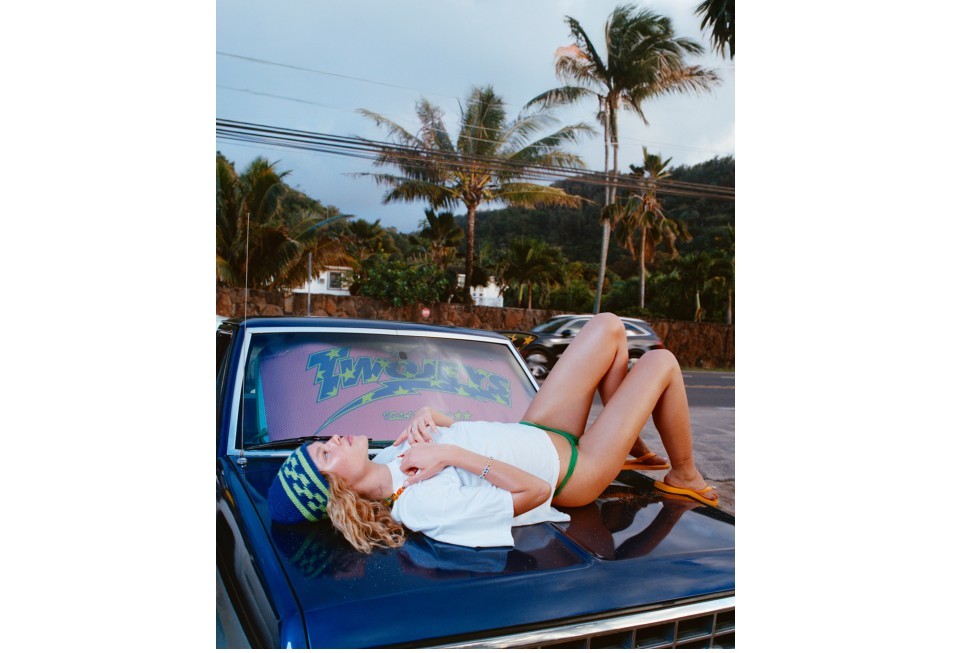
TwoJeys x Havaianas text Natalia Muntean A Mediterranean spark meets tropical heat. Barcelona-based jewelry provocateurs TwoJeys join forces with Havaianas, the Brazilian icon of barefoot ease, for their first-ever collaboration: a limited three-piece flip-flop collection that channels the irreverence of both brands into something tactile, sun-drenched, and sharp-edged. Each pair is a reimagining of the classic Havaianas Top — in black, green, and yellow — punctuated with TwoJeys’ metallic star pins in clashing duos of yellow-green or blue-red. The mood is bold but effortless, leaning into color and contrast, utility and glamour. An homage to both brands’ visual languages, but also a subtle revolt: beachwear made for asphalt, for night, for movement. The campaign, lensed by Aidan Cullen and fronted by Alika Mock and Margo Millen, takes place somewhere between memory and mirage — a blurred place where Brazilian roots meet Barcelona’s industrial elegance. It’s less a lookbook than a state of mind. This isn’t just a summer release — it’s a signal: that the beach can bleed into the city, that classics can be recoded, and that the flip-flop still has stories left to tell. Read more at www.havaianas.com 
Art

As Above, So Below” – Klara Lilja and Royal Copenhagen create a dreamy universe with their new collaboration

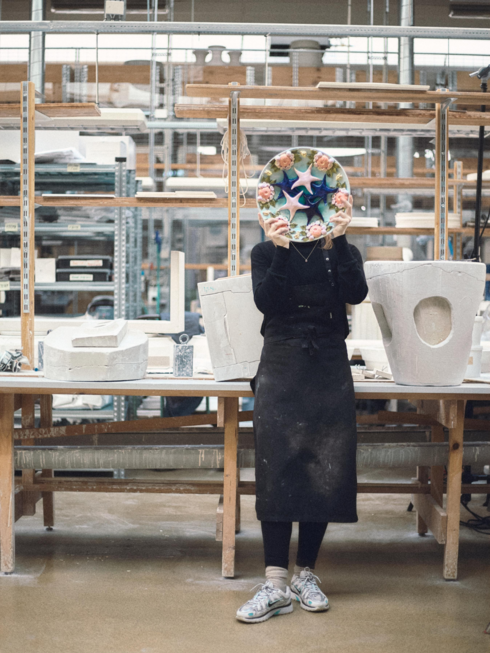
As Above, So Below” – Klara Lilja and Royal Copenhagen create a dreamy universe with their new collaboration text Natalia Muntean “The idea comes from the French court in the 16th century, where they made platters that weren’t meant for eating but had various decorative elements on them. I really wanted my identity to be visible in these pieces, so even in 50 years, there would be no doubt about who made them,” says Danish sculptor Klara Lilja about ‘As Above, So Below’, her freshly launched collaboration with Royal Copenhagen. The imaginative collaboration marks the continuation of Royal Copenhagen’s rich legacy of elevating artists, inviting them to share their unique interpretations of porcelain.Klara Lilja’s 25 platters delve into themes closely connected to nature. Each platter features 120 to 180 meticulously handcrafted details, creating an organic narrative that highlights flora and fauna. “My style is quite lush and wild, whereas Royal Copenhagen has a very perfectionistic approach. But common for us is that we value quality over quantity. The works we have created I’ve made as complex as I possibly could because I knew the porcelain factory’s craftsmen could handle it. I wanted to push them as well as myself,” says Klara Lilja. Each piece also incorporates historical references to Royal Copenhagen’s artistic heritage, with elements such as starfish, butterflies, snails, and flowers adding an enchanting dimension. The collection comprises three sections: Ocean, Land and Air, with each platter being unique. “From the very beginning, you could feel Klara’s genuine passion, and it’s been exciting to see how our craftsmen have been able to take her more daring expressions and create their version of them. Klara Lilja is clearly present in the pieces, but at the same time, they showcase our craftsmen’s exceptional skills,” says Jasper Toron Nielsen, Creative Director for Royal Copenhagen. Klara Lilja X Royal Copenhagen launched on the porcelain factory’s 250th anniversary, May 1st. The artworks will be displayed in Royal Copenhagen’s flagship store in Amagertorv in Copenhagen from May 2nd to the beginning of August 2025.
Design

Lorenza Luti on Kartell’s legacy of continuous Innovation

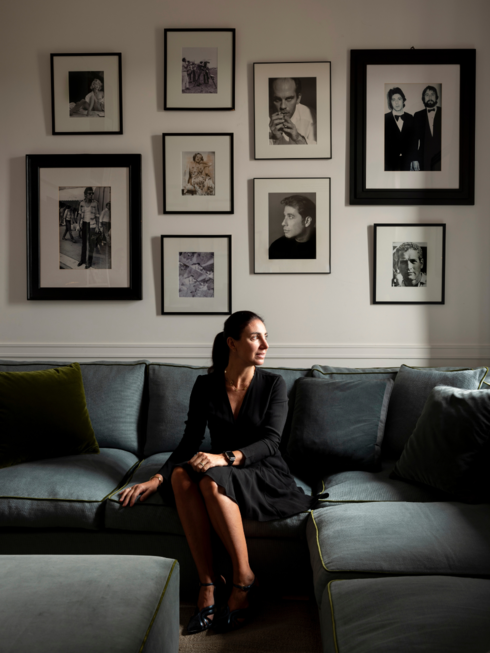
Lorenza Luti on Kartell’s legacy of continuous Innovation text Natalia Muntean For Kartell, innovation isn’t just a strategy, it’s genetic. As the granddaughter of the brand’s founder, Lorenza Luti, Marketing and Retail Director at Kartell, has spent a lifetime watching plastic transcend its industrial roots to become sculptural, sustainable, and even visual poetry. Today, she steers the iconic Italian design house into the future, with every piece produced by Kartell telling a story. In this interview, Luti reveals how Kartell balances heritage with disruption, why sustainability demands ‘revolutionary materials, not just green gestures,’ and how a family business thrives when it treats design as ‘a spark, not a formula.’ Natalia Muntean: How do you see Kartell evolving over the next decade, and what role do you envision yourself playing in that evolution?Lorenza Luti: Our creativity and purpose of always innovating will not stop in the future. Kartell has always worked, above all, in the logic of innovation, carrying on simultaneously creativity with impossible challenges never realised before. We will continue strengthening the brand through the expansion and diversification of the sales network with a very specific global retail policy that guarantees strong brand recognition. Today, as in the future, Kartell aims to be not just a furniture product but a real lifestyle brand. This is the path that was traced first by my grandfather, followed by my father up to now, and certainly, my brother Federico and I will continue on this path, carrying forward this legacy. NM: How do you honour Kartell’s legacy while pushing for innovation? What challenges have you faced as a leader in a family-owned business, and who has inspired your leadership style?LL: Being part of a family business like Kartell is wonderful, even if it requires a lot of commitment because the private and professional spheres inevitably overlap. But it is rewarding to be part of a great story, one that has been going on since the generation of my grandparents and continues today with mine and my brother’s commitment, alongside my father. Since I was a child, Kartell has been part of my life. I carry within me the passion and commitment that I have seen in my father when he follows the birth of every single project and finds the right idea to transform a creative intuition into a market success. Nohing stimulates me and gives me more satisfaction than attending meetings between him and the designers. It is a back and forth of ideas, a continuous exchange of working hypotheses and new discoveries, always going further. NM: What has been the most rewarding aspect of your career at Kartell so far, and what lessons have you learned along the way?LL: There is no design without emotion and this has been our inspiration. A design piece must tell a story, going beyond the product itself. I firmly believe that this is the direction in which we need to go: to excite by creating not a series of objects but a transversal and versatile lifestyle. A complete proposal that knows how to arouse something, in which the products enter into dialogue with each other and in relation to the living spaces, creating personal solutions. It is the vision of design that is always on the move, in which a style becomes strong and recognisable precisely because it can highlight the living room, the different contexts and cultures with which it is mixed. NM: Can you elaborate on some of the key initiatives Kartell has undertaken to become more sustainable? How do you balance the need for innovative design with the increasing demand for sustainable products?LL: Our commitment to sustainability and environmental protection has always been a priority at Kartell. The passion for excellence, that has guided Kartell’s development since its origins, has led us to focus on environmental responsibility and attention to good sustainability practices. For us, each item we create is a timeless product, developed with respect for the environment and designed to occupy museum spaces and collectors’ assets at the end of its function. Kartell’s commitment to implementing and increasingly improving the environmental management system is guaranteed by adherence to International certification protocols. that characterise Kartell. It is a dynamic and enriching process, which inspires and motivates me every day. NM: What do you think will be the most significant shifts in consumer behaviour over the next few years, and how is Kartell preparing for them?LL: Our strategy is based on online and offline multi-channel. Today, in its expansion process, stores are becoming increasingly larger, so we had to rethink our spaces both to create a story capable of making our bestsellers communicate with the latest product news but also to convey Kartell’s renewed ability to offer total living proposals in which sofas are set with armchairs, rugs, side tables and lights as well as tables and chairs, thanks to the expansion of the range and the inclusion of products and product families that allow us to represent an overall vision and also satisfy a very broad market demand. This, without forgetting our vertical display, which is becoming even more elegant. E-commerce is the other Kartell distribution channel, together with Retail, which for us remains our core business. In 2014, we were the first in the furniture sector to open a direct e-commerce that we have continued to develop and enrich, becoming a real relationship platform with our customers. The site is not only a commercial digital showcase but is a global platform for corporate storytelling. Furthermore, we are increasingly working towards harmonising the showcase campaign, which is now the same for both the digital and traditional retail parts. This is immediately visible starting from the home page, where there are not only showcase launches but also editorial or cultural content that give a well-rounded vision of our brand. NM: What emerging trends in the furniture and design industry are you most excited about, and how is Kartell positioning itself to capitalise on these trends?LL: Our philosophy is to create emotion through our products to achieve what we call the Kartell lifestyle or the
Fashion Articles

Felix von Bahder on Deadwood’s PS26: “Beauty in the Breakdown”

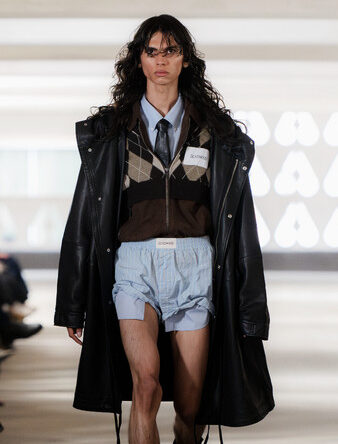
Felix von Bahder on Deadwood’s PS26: “Beauty in the Breakdown” text Ulrika Lindqvist Ulrika Lindqvist: Please tell us about the process of creating the PS26 runway show? Felix von Bahder: I started with a question: What does it feel like to land in a city that’s pulsing faster than your own heartbeat? Or to face a technology so alien that it makes you feel completely free and completely lost at the same time? From there we put together a mood-board of late-night escalators, neon-tinged rain, cords and cables forming an electric mess. We built the show like a mixtape: eclectic, raw and personal. Actually, the whole process for this collection was anchored in music. Guess it always is for us. Lately a lot of goth, new romance and industrial stuff from the 80’s and early 90’s. UL: How did you choose the location for the runway show? FvB:Stockholm’s Parkaden parking house is a concrete cathedral six stories above street noise, a brutalist icon by Hans Asplund and one of those buildings that, once you notice it, can never be unseen. We wanted to create a tranquil, almost sacred space for the audience, an oasis smack in the heart the city’s buzz. Perfect for a story about disorientation and underground salvation. UL: What does the PS26 collection represent and what was the main inspiration for this collection? FvB:It’s a love letter to outsiders who arrive in the metropolis and get swallowed by its circuitry. It’s also a cautionary tale of the seduction of technology and its dubious promise of liberation. We wanted to capture the allure of the big city, both the glitz and the gritty. Black leather, patch-worked from some past collections. Re-cut vintage tees worn underneath exaggerated faux fur pieces. Sensual snake lace next to scuffed denim. I wanted to take the collection into the comfort of basement venues where the misfits find each other, and the lights are always red. Ulrika Lindqvist: What was the biggest challenge creating your PS26 collection? FvB: Time. Joining Stockholm Fashion Week was not really our plan, but when we got asked, we simply could not resist a homecoming! But what were we going to show? We were already doing SS26 in Copenhagen in August, and we couldn’t present the same stuff twice! So, we figured we had to create a brand new chapter to the story in just under 2 months. Pushing our up-cycling methods to the limit, which means hunting, cutting, and re-aligning many pieces into a few coherent silhouettes, the studio was a creative chaos! But it all worked out in the end! UL: What is your approach to showpieces, how much of the show is showpieces? FvB: Normally, Deadwood garments are made to be worn and loved. But sometimes we like to drive home an idea or a concept with one-off showpieces, who’s main purpose is to ask questions or provoke emotions. But from the PS26 show I’d say all looks will make it into production, although some in pretty small numbers. Some of the vintage-tee concepts will be tweaked to make them more producible at scale. That’s it. UL: How would you describe the Deadwood customer FvB: Deadwood is for music lovers, however genre-fluid. Age, gender, passport stamps, none of that matters. We’re a group of humans that value things that last, and celebrate scars that tell stories. Ulrika Lindqvist: What can we expect from Deadwood in the future? FvB: More risk, same conviction. We’re doubling down on circular and next-gen materials, breathing some new life in our mycelium project, and plotting a few pretty cool collaborations. The second chapter of this collection, which we will present in Copenhagen, dives deeper into that existential thin-ice space where mankind and machines collide. I’ve been looking forward to this one for a long time now. After that, I’m going sailing or something, haha.
Art

Stockholm Art Week: Iria Leino: An Interview With Darren Warner & Peter Hastings Falk

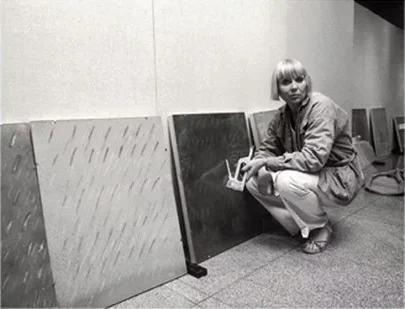
Stockholm Art Week: Iria Leino: An Interview With Darren Warner & Peter Hastings Falk text Zohra Vanlerberghe The late Finnish-American artist Iria Leino (1932–2022) lived a life of radical reinvention, from a 1950s Parisian fashion icon to a reclusive New York painter whose vibrant abstractions remained hidden for decades. Now, her work is being rediscovered as a vital missing link in postwar abstraction, blending the intensity of the New York School with the depth of Buddhist philosophy. On the occasion of her dual presentations during Stockholm Art Week, at Market Art Fair and a solo takeover of the former Galerie Nordenhake space, Darren Warner, from Larsen Warner Gallery in Stockholm, and curator of the Iria Leino Trust in New York, Peter Hastings Falk, discuss her extraordinary legacy and life. Natalia Muntean: What inspired you to bring Iria Leino’s work into the spotlight now? Darren Warner: Iria’s story is fascinating; she was born in Helsinki in 1932, moved to Paris around 1955 and became an iconic model for Christian Dior and Pierre Cardin. She abandoned acclaim in Paris to move to New York in 1964 to fulfil her lifelong desire to become an artist, working in near solitude for over 50 years. In her lifetime, Leino rarely engaged with galleries, instead, Leino opted for an existence devoted to her studio practice and her faith in Buddhism, and much like pioneering artists such as Hilma af Klint, saw her work as a means of spiritual enlightenment rather than a commercial endeavour. Leino’s experimentation and manipulation of acrylic pigments during the ’60s and ’70s is of particular significance; alongside her peers in the second wave of the New York School such as Helen Frankenthaler, Keneth Noland and Larry Poons, Leino was a pioneer in the development of a more lyrical abstraction, an antidote to the more gestural abstract expressionism that had come before. After she died in 2022, there were over 1000 paintings and works on paper left within her Soho loft; an extraordinary time capsule of works of exceptional quality that helps broaden the story of 20th century abstract painting in a powerful way. NM: Leino abandoned a successful modelling career for a secluded life of painting – how did this shift influence her artistic voice? How did her faith shape her creative process? Peter Hastings Falk: Iria never intended to become reclusive. She wanted to be as much a star in the art world as she had become in the fashion and modelling world. While in New York, major dealers, such as the legendary Leo Castelli, visited her and liked her work very much but she was impatient about waiting in line and always wound up turning them off. Throughout her life, she battled many demons and struggled at times with bouts of bulimia and anorexia. She had countless boyfriends, and at least four of them proposed marriage to her but she rejected all of them. To her, men were like children, requiring too much work, and they would get in the way of her painting time. Iria was full of contradictions. But through her conversion to Buddhism in 1968, she found a consistent philosophy and a way to focus on her art. This allowed her to express herself authentically and compellingly, as she was not a follower of the New York Abstract Expressionist painters and not derivative of her more famous peers. Her use of colour and techniques often came to her from dreams, which she recorded consistently in her journals. Even the spiral sgraffito in her colour field paintings were not just decorative elements, they had deep life meanings. NM: Why did you choose to present the Colour Field and Buddhist Rain series, and what do they reveal about her evolution as an artist? DW: In Leino’s work, you are swept into an ethereal world where the artist’s abstract manifestations skillfully capture the spiritual dimensions of our inner selves. Favouring the contemplative nature of pure colour and its sensuous immediacy over the spontaneous intensity of gestural abstraction, Leino dedicated several years to developing dozens of immersive colour fields and lyrically abstract paintings. The Colour Field and Buddhist Rain series are the first two collections that ignited Leino’s lifelong exploration of the viscosity of acrylic paint across various styles. Each series embodies key elements of Iria’s practice and serves as an ideal introduction to her extensive body of work, which includes many definitive series. NM: Why was Stockholm the right place to launch Leino’s work in Scandinavia, especially during Art Week? DW: Iria had a long-held relationship with Sweden and Stockholm in particular. She had learned Swedish and made many Swedish connections through her time at the Swedish Girls School in Helsinki. Iria’s journals start in 1955 but she made many references to spending her summers working in Stockholm as a waitress, this would have been from around 1950 through to 1954. Market Art Fair and Stockholm Art Week provide a perfect platform to present Iria’s groundbreaking painting to a Swedish audience for the first time in nearly 50 years. Iria was included in the exhibition ‘Finsk bild: aktuell skulptur, måleri och grafik at Liljevalchs Konsthall in 1977 where she showed a selection of works from her Buddhist Rain series so the idea that we could present her work within the same space nearly 50 years later felt like a wonderful full circle moment. During this period, Stockholm emerges as a central hub for the broader Scandinavian art community. This makes it an ideal moment to pay tribute to and spotlight an important yet under-recognised Scandinavian painter, who we believe is one of the most significant Svandinavian artistic discoveries of the last 50 years.
Fashion Articles

Shake It Out

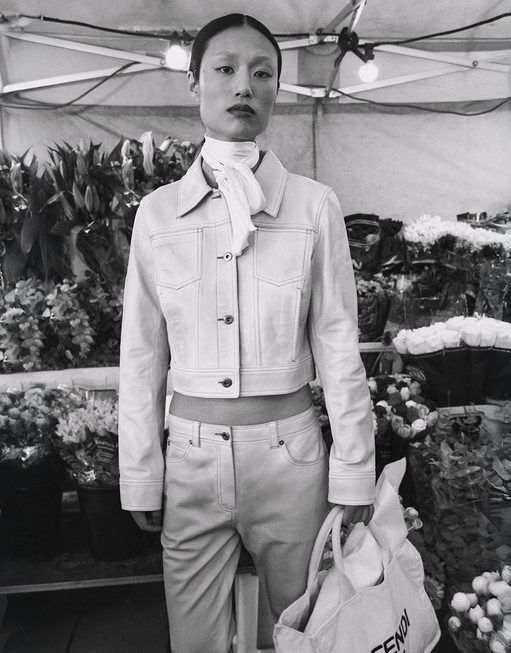
necklace Izabel Display photography Sandra Myhrberg fashion Jahwanna Berglund hair and makeup Elva Ahlbin an interview withVinchy Chan textMaya Avram While creative talent and a discerning eye are stable stakes to succeeding in fashion, strategy is equally crucial to establishing a sustainable career — and one most industry players unfortunately lack. One reason is that fashion designers are becoming increasingly individualistic, and consequently, reluctant to ask for support. This starts as early as fashion school, where educators encourage emerging talent to see themselves as bitter competitors rather than potential collaborators; it goes on to impact small-scale businesses who can’t seem to handle their admin (cult-favourites like Y/Project, Christopher Kane and The Vampire’s Wife have been forced to shut down in recent years.) garment by’s premise, therefore, is a simple yet promising one: entrust the business side of things to the startup’s co-founders, former Strategy Consultant Vinchy Chan and Operations Officer Ana Ciobanu, and focus instead on designing the ‘Icons’, the platform’s range of timeless clothing essentials. Each Icon piece is created with consideration of research data and insight, and ethically produced by garment by’s network of vetted suppliers and manufacturers in China. The result? A thoughtful collection of bespoke garments meant to last a lifetime. I caught up with Chan ahead of the spring launch of the ‘Love Shirt’, celebrating the noblest emotion of all. MA: What does your development process look like, and how does it challenge those systems? VC: One of the biggest problems of the current system is overstock. Stock is planned and produced usually a year ahead, and at the six-month mark, you need to put in orders with your sourcing and production partners, which many brands do without any insight or data. So they often overproduce and create merchandise that is killing their business. 70 per cent of designer labels’ cash gets tied up in stock they never know if they’ll be able to sell. That cost is priced in for consumers — ever wonder why a designer shirt costs £800? Imagine if we didn’t have to pay that premium. You could shave 30 to 50 per cent off the buying price, which is great for consumers in this economic downturn. Not to mention that stock is the biggest environmental polluter, with 30 per cent of overstock going to landfill. Consumers nowadays are more and more aware of those issues and the impact of their buying behaviours. That’s why we adopted an on-demand model, to empower designer labels to only produce what’s sold. We are now able to deliver the product within four weeks, but hopefully, with tech and data innovation, we will eventually be able to deliver it within two weeks. Maya Avram: This issue’s theme is ‘Alchemy of Fates,’ or how we break down conforms to build something new that realigns us with the right path. Do you feel that resonates with garment by’s mission? Vichy Chan: 100 per cent. As an outsider to fashion, I see things with a fresh perspective, including practices that don’t serve us anymore. I respect that big brands have to make sure, in this downturn, that they can protect their revenue in line with the matrixes they know are going to sell, but that is just adhering to conform. It tells us that fashion is about creativity, but also that there are many implicit rules. As a business, garment by is ready to break away from those rules and those legacy systems that don’t serve us anymore. MA: How do you find the designers you work with? VC: There’s an urgency to our mission because the whole idea was to create a business infrastructure to help designers create core collections. We targeted designers who sadly had to close down their businesses in recent years but whose respective communities are craving for their comeback. Our ultimate goal, though, is to engage a bigger pool of designers, whether it is an emergent designer or a more established designer, award-winning designers or household names. We are ready to connect. MA: How did you come to create the Icon collection? VC: The Icon collection came from market insight. We are looking into each clothing category and finding that offering gap; whether it is a product feature, a style, the wearer’s experience or the pricing. And through that data, you ensure the commerciality and practicality of the clothes before you even go into production. When we talk to designers, they really appreciate that insight because they often lack the bandwidth to think about what can sell that also intersects with what they enjoy designing. MA: Is there an active dialogue between you and the designers? How much of the relationship is a push-pull? VC: We come from a very consumer insight-driven background and try to bring that value to the designers and co-create those pieces together. Before even going to production, we make sure that we have good enough learning, and keep building upon it. After we created the first iteration of our first Icon [a lush wool and cashmere blend coat — MA], we realised the fabric we sourced didn’t meet the needs of our consumers. So we quickly iterated a second version using a new fabric because we knew there was an unmet need there. This way of working was anchored in when I worked in product innovation but lacked in fashion. When the orders came through they all fit that exact persona, which was a nice surprise, but we still have a lot to do to understand them in a more nuanced way. Our on-demand model is quite new to this target audience, and we are still on a journey to make this the norm to shop good quality, unique designer items, and scale it to more audiences that could buy with us in the future. MA: Would you say you’re on a constant learning curve? What lessons have you learnt from the Icon coat launch, and what questions are still left unanswered? VC: The most important thing we learnt from the launch was

Scroll to Top