ODALISQUE MAGAZINE INTERVIEWS Alyson Eastman
text Jahwanna Berglund
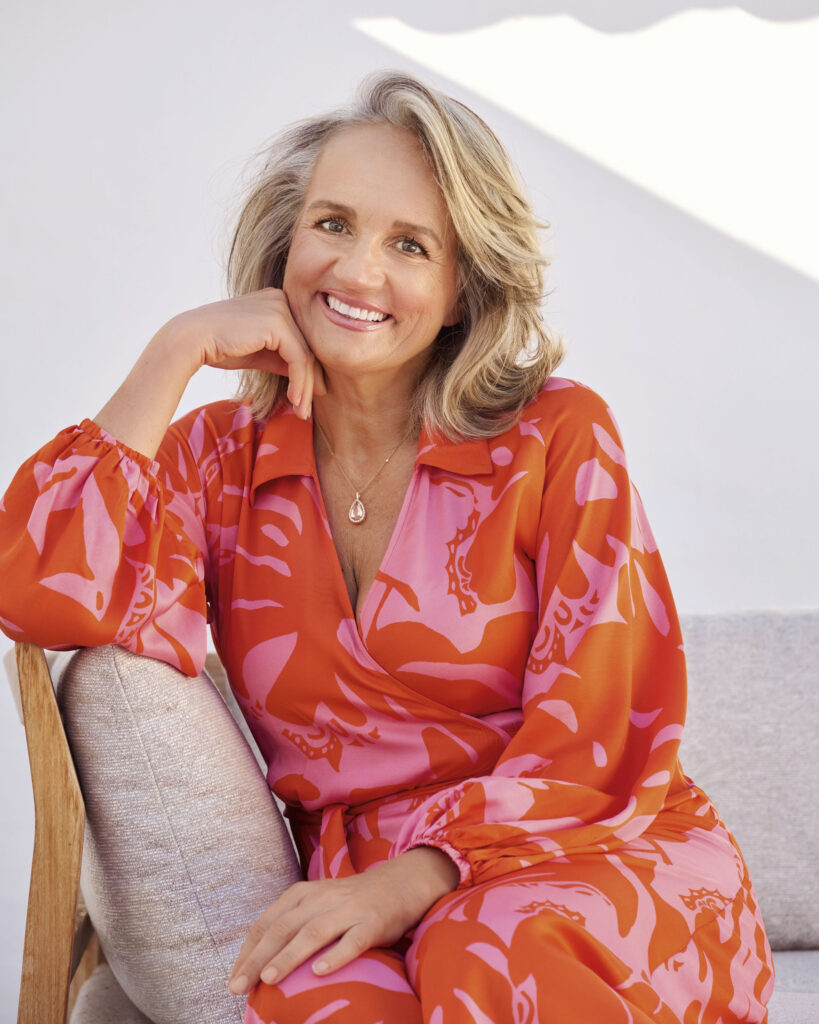
Growing up surrounded by forest in rural Washington, Alyson Eastman learned to look closely at the changing colours of moss, the texture of bark and the way light moved through the seasons. That instinct followed her to Paris and New York, where she founded her namesake label in 2016. She wanted to make the clothes she struggled to find herself: thoughtfully made, distinctive pieces that didn’t cost thousands. Today, that personal involvement remains central to her work, from choosing every button to imagining how a woman might make a garment her own.
Jahwanna Berglund: For those discovering your work for the first time, how would you introduce the world of Alyson Eastman? When you founded the label in New York in 2016, what did you want to offer that you felt was missing from fashion?
Alyson Eastman: When I started Alyson Eastman, I wanted to make high-quality pieces that felt unique, were made responsibly from considered materials and didn’t cost thousands.
I kept looking for clothes that felt as though they had been made by someone who actually cared. Where the designer was touching every piece, choosing every button and every zip, and producing in smaller quantities with real consideration. It was almost impossible to find. Not because good clothes didn’t exist, but because the values behind them were rarely being communicated.
JB: Your life has taken you from rural Washington to some of the world’s fashion capitals. What from those early years still shapes your eye today?
AE: I was an only child growing up on 20 acres in rural Washington, so I learned very early to entertain myself outside. I grew up with llamas and a goat, surrounded by forest, and I think that’s where my eye was formed.
The forest was never just green. It was an entire colour story that shifted with every season: different light, different textures, bark, moss, leaves and fleece. I spent hours just noticing.
I took that same way of seeing into cities. In Paris, I’d find myself stopping to look at the scaffolding on a building or the carved detail on one of those enormous doorways. Things most people walked straight past. In museums, I pay attention to the small details in a painting or an unusual combination of colours.
Last season, I drew a scarf design by hand, inspired by a flower carving I found on a door in Paris. That’s probably the most honest answer I can give you about what still shapes my eye.
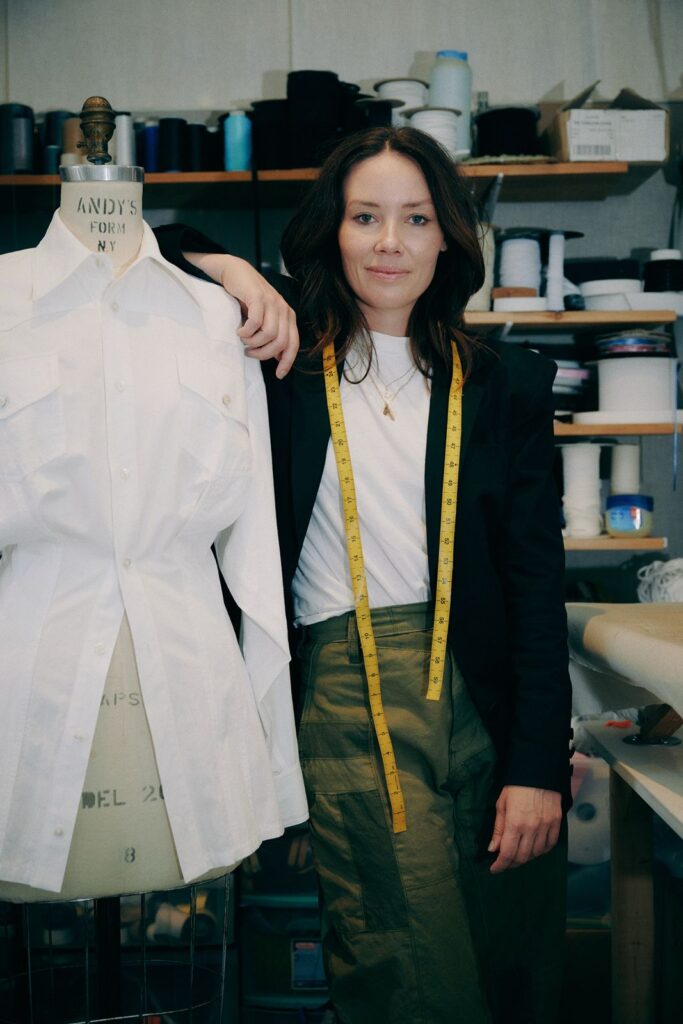
There is a sense of memory in your work, as vintage denim, military cloth and repurposed domestic textiles are given a new life. What draws you to materials with a history, and how do you approach making them your own?
I’ll be honest: my reasons are less romantic than you might expect. Fabric made in the past tends to be of far better quality than what we can source today, and that’s really what draws me to it.
The older materials I work with are often entirely natural fibres, without synthetic blends, and the weaves are frequently superior too. A thick cotton denim that has been worn for years becomes something entirely different from what it was on the bolt. The softness, the way it moves, the way it feels on the body: you can’t replicate that in production. Time does it.
So when I work with these materials, I’m not really preserving their history in a sentimental sense. I also like the fact that I can only source a limited amount of a particular material. Once it’s gone, it’s gone, which makes every garment or production run unique.
Whether a material finds you or you find it, how do you know what it wants to become?
It really depends on the material. A lot of the time, I start from a simple place: I make what I’d want to wear myself.
But getting there means spending time with the material first. Feeling how it drapes, how it moves and what it wants to do on its own, especially with deadstock, vintage textiles or leather sourced from the food industry, where there’s already a character to work with.
Those materials don’t always behave the way you expect, so I let that inform the shape. In the end, it’s a bit of both: I know what I want to wear, and the material tells me how to get there.
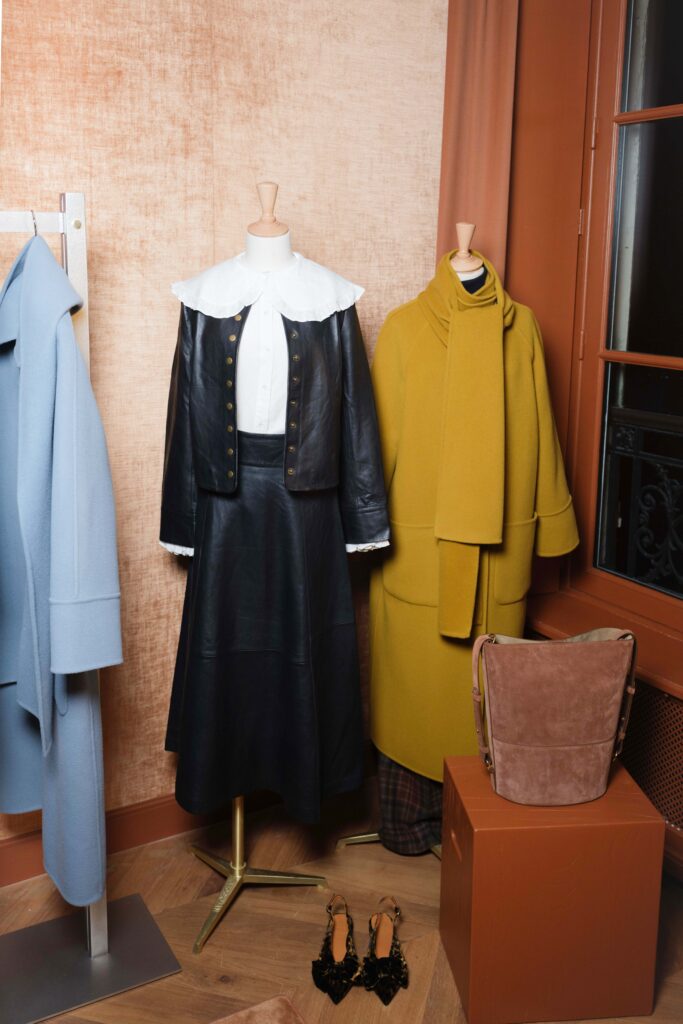
For Autumn/Winter 2026, you bring together 1950s military remnants and recycled denim with hair-on-hide leather, lambskin and shearling. What was the emotional starting point for the collection, and who is the woman you imagine wearing it?
The starting point was contrast. The 1950s military remnants carry a sense of discipline and utility, almost like armour, and I wanted to place that alongside something soft and instinctive: shearling, lambskin and hair-on-hide leather. Materials that feel more like a second skin than a uniform.
The recycled denim brings it back to something worn and lived in, so nothing feels precious or untouched.
Emotionally, it’s about a woman who can hold both things at once: structure and softness, discipline and ease. She’s not choosing between being armoured and being tender. She’s both, depending on the day. I imagine her moving through a world that asks her to be sharp, without giving up warmth.
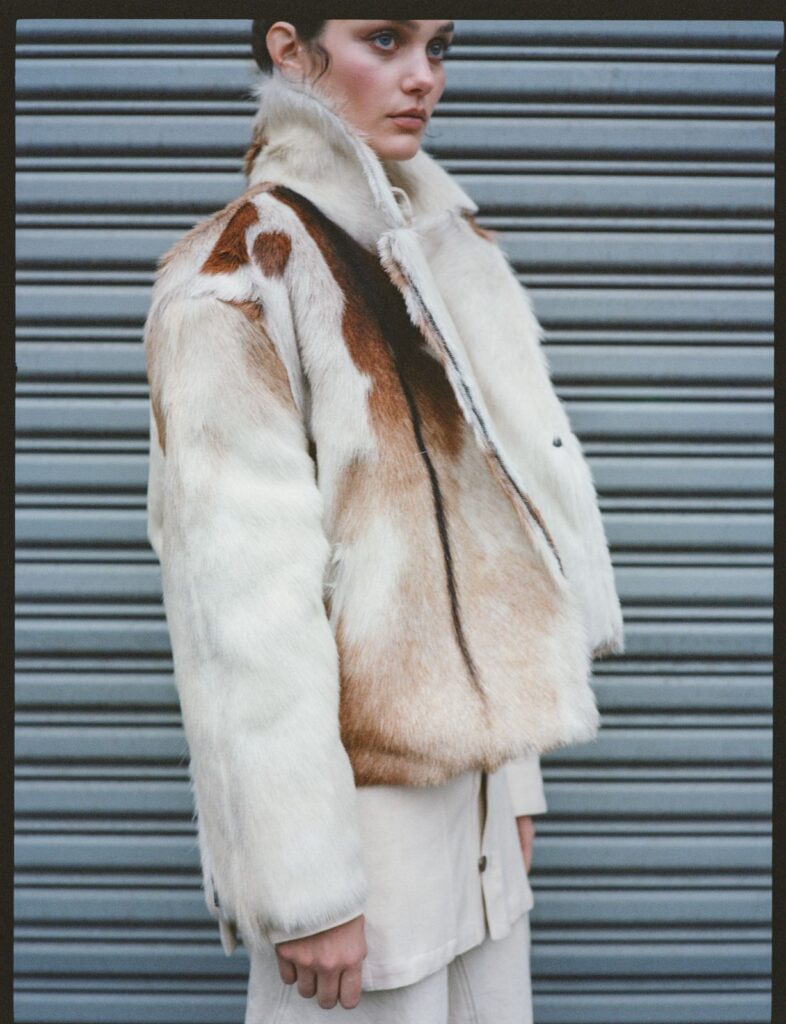
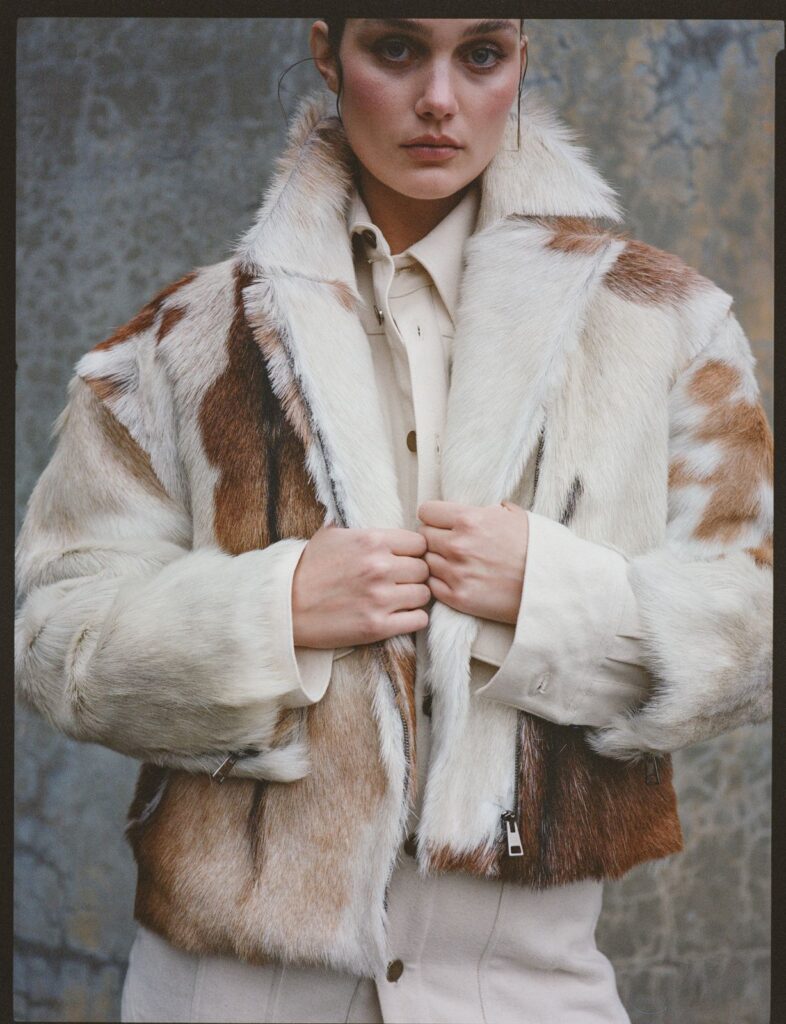
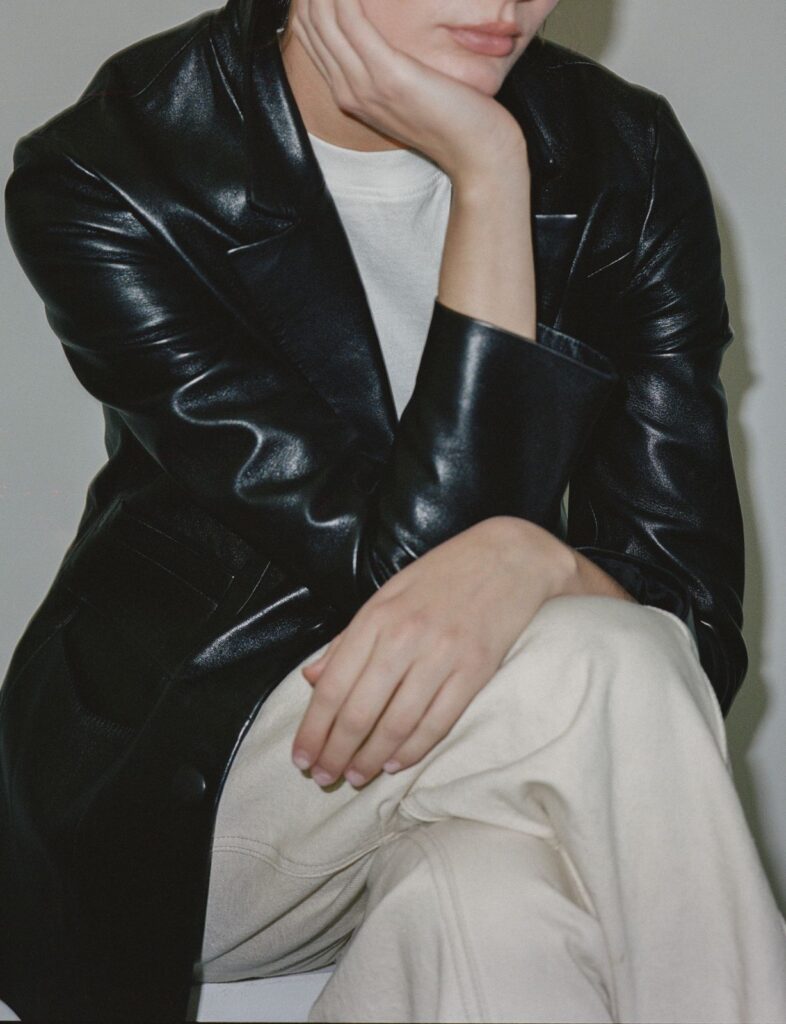
Leather remains central to your work, sourced as a by-product of the food industry and crafted in Italy. As the meaning of luxury is reconsidered, how do you balance desire, responsibility and longevity? What must a leather piece possess to earn a lasting place in someone’s wardrobe?
Honestly, it all comes down to the quality of the leather. There’s a lot of junk out there, and much of what makes leather responsible or lasting is decided long before it reaches the design table.
The craftspeople I work with in Italy have a family history in leather and fur that goes back more than a hundred years, and they produce for some of the top luxury houses. They know where to source leather and how to distinguish real quality from something that simply looks good on the surface. That expertise is the foundation.
The leather we use is a by-product of the food industry, so we’re taking a material that already exists and giving it the craft it deserves. That’s where responsibility and desire come together for me. People can tell when a piece has been made by someone who understands the material.
Longevity means a piece earns its place in a wardrobe by holding up. Construction that doesn’t fail, leather that retains its substance and quality that reveals itself over the years. The garment gets better with time.
The question I really ask is whether she’ll still want to reach for it in a decade. If the answer is yes, then I think I’ve done my job.
Your collections are made across New York, Los Angeles and Italy. How does each place leave its mark on the finished garment?
Italy is where the leather comes to life. The pieces are made by craftspeople whose family experience in leather and fur spans more than a hundred years. That generational skill shows up in every seam. It’s very special to work with them and witness their craftsmanship.
Los Angeles is where I source the deadstock and vintage materials, and where the denim is made. There’s a rawness to LA, an instinct for finding the right piece of history in a bolt of deadstock fabric. The workwear energy of the denim production gives the pieces real texture and a distinctive feel.
New York is where it all comes together. This is where I make the patterns and sew the silk and cotton pieces. It’s the most personal part of the process. The patterns carry my point of view directly, and having those fabrics constructed here means I can be hands-on with the fit and finishing.
Each place contributes something different: Italy brings inherited craft, LA brings history and rawness, and New York brings precision and my point of view.
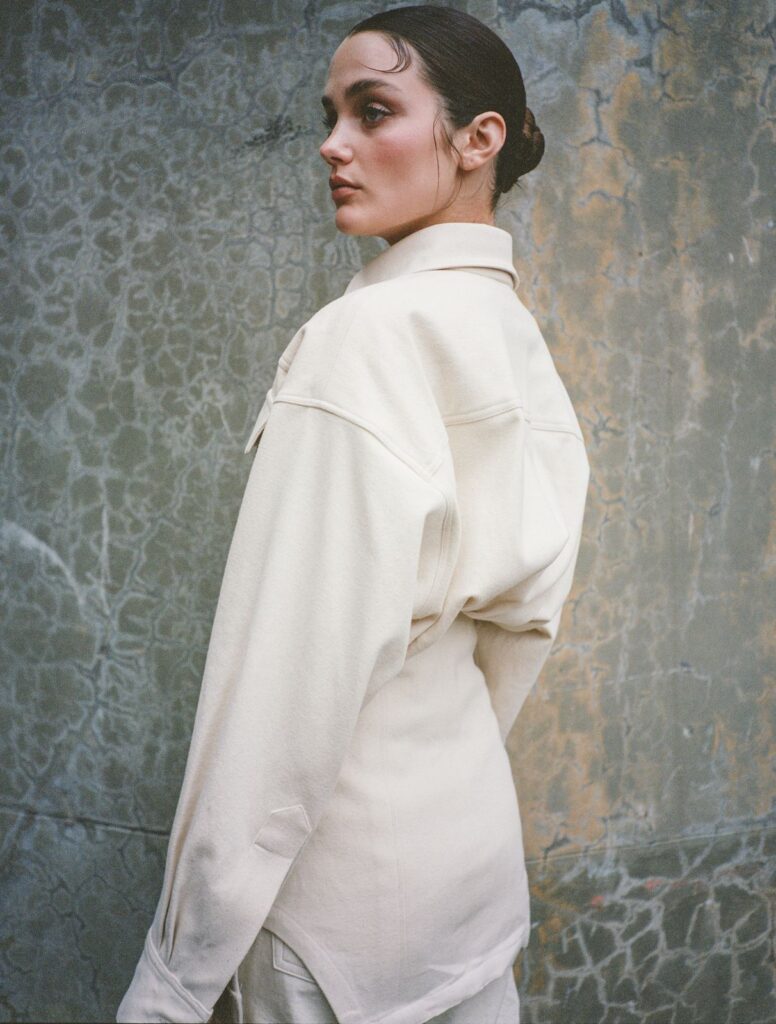
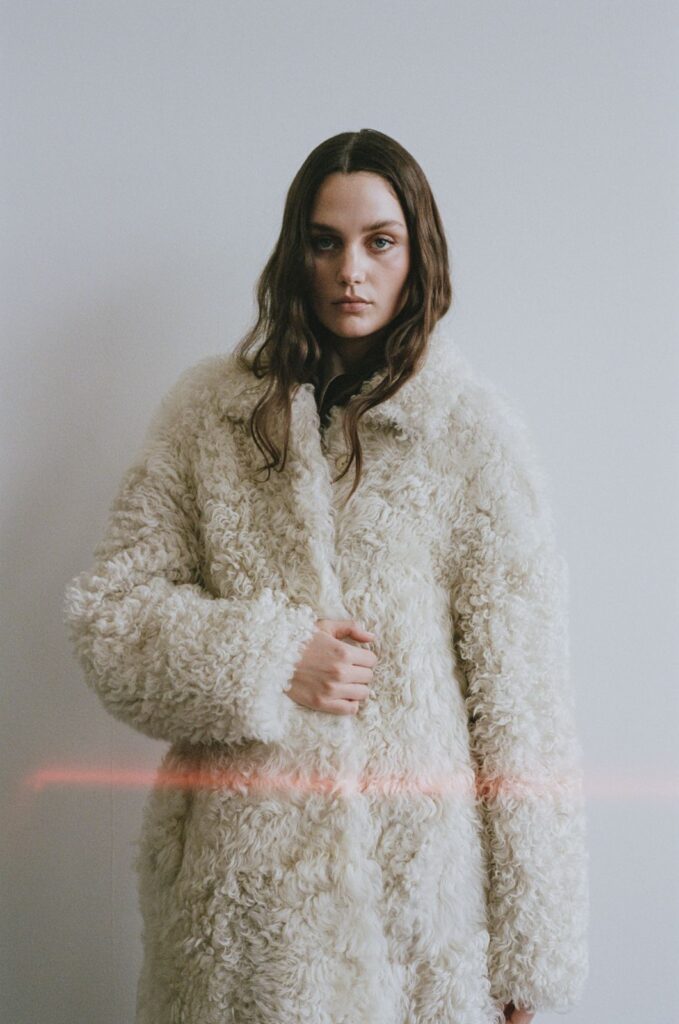
Your designs have been worn by Kate Moss and Zendaya, women with distinct and instinctive personal styles. What interests you about the moment a garment leaves your hands and becomes part of another woman’s life? What can she bring to it that you could never design yourself?
This is honestly the most important part for me, and the reason I became a designer in the first place. I love creating garments, but they don’t really come alive until they leave my hands and become part of a woman’s wardrobe.
Watching how she wears something, how she styles it in a way I would never have thought of, and how she feels when she wears it is the whole point.
Someone like Kate Moss or Zendaya brings an instinct I could never design for, and that’s exactly what makes it interesting. I can build the structure, choose the material and make every decision about how a piece is constructed. But how she moves in it, what she pairs it with and the attitude she brings to wearing it are entirely hers.
It becomes part of her identity in a way I couldn’t have predicted. That transformation, from a garment into something personal, is what I’m chasing every time I make something.