When the Night Unravels, An Interview with Juan Carlos Mesa
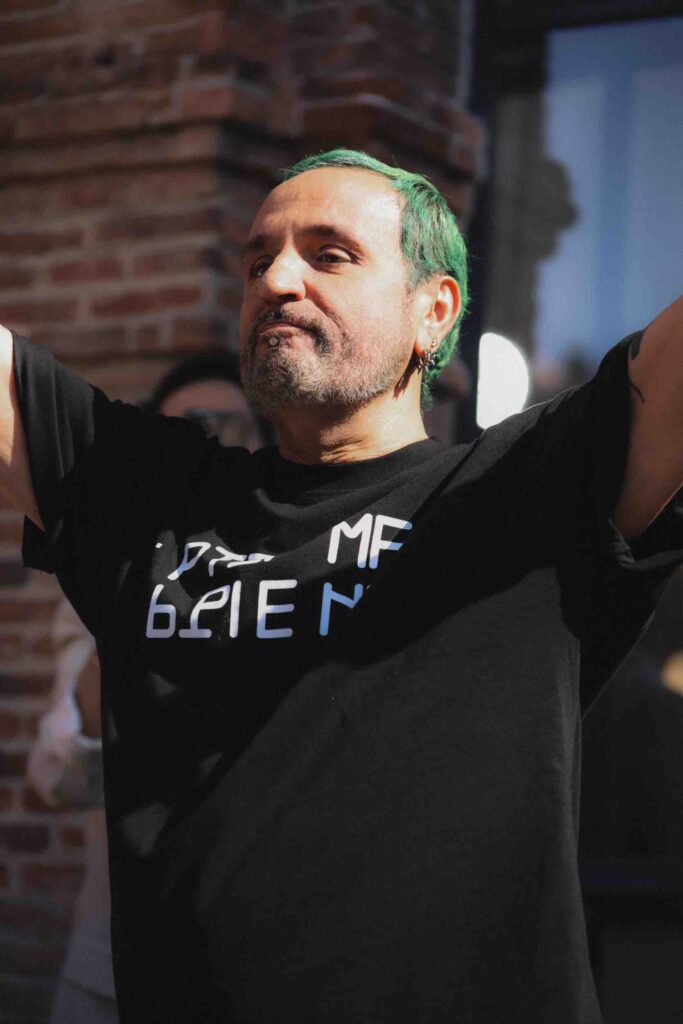
image courtesy Madrid Fashion Week
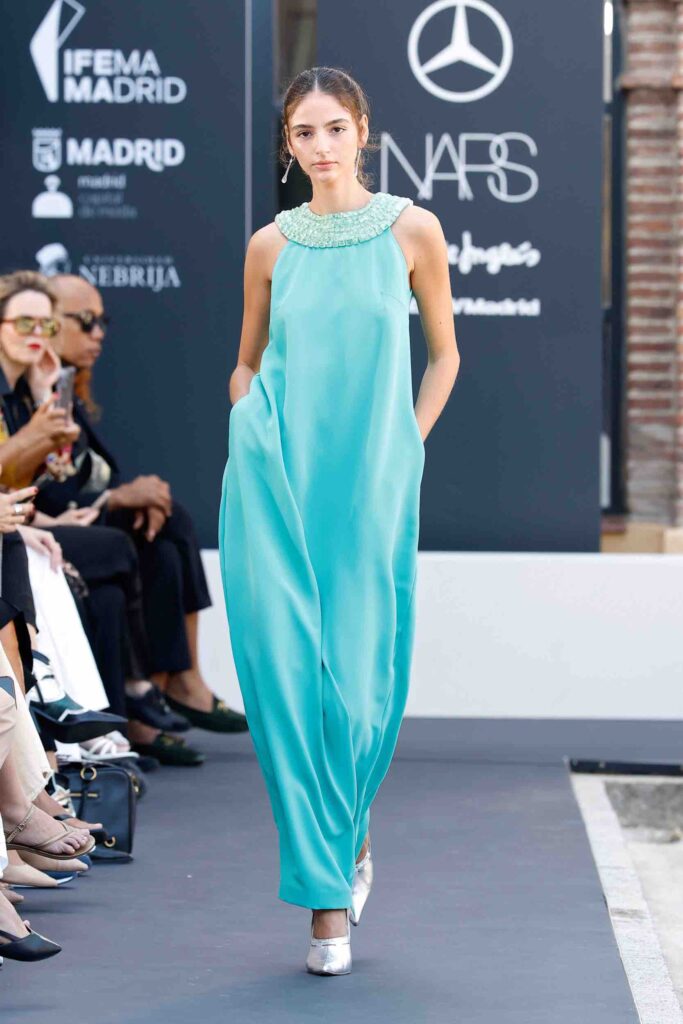
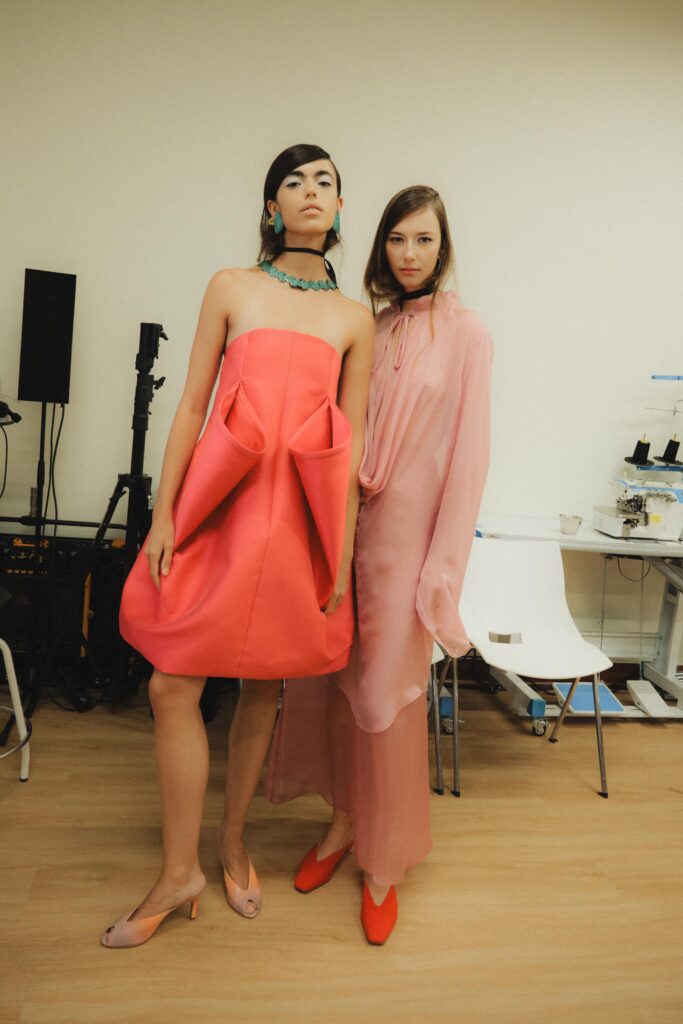
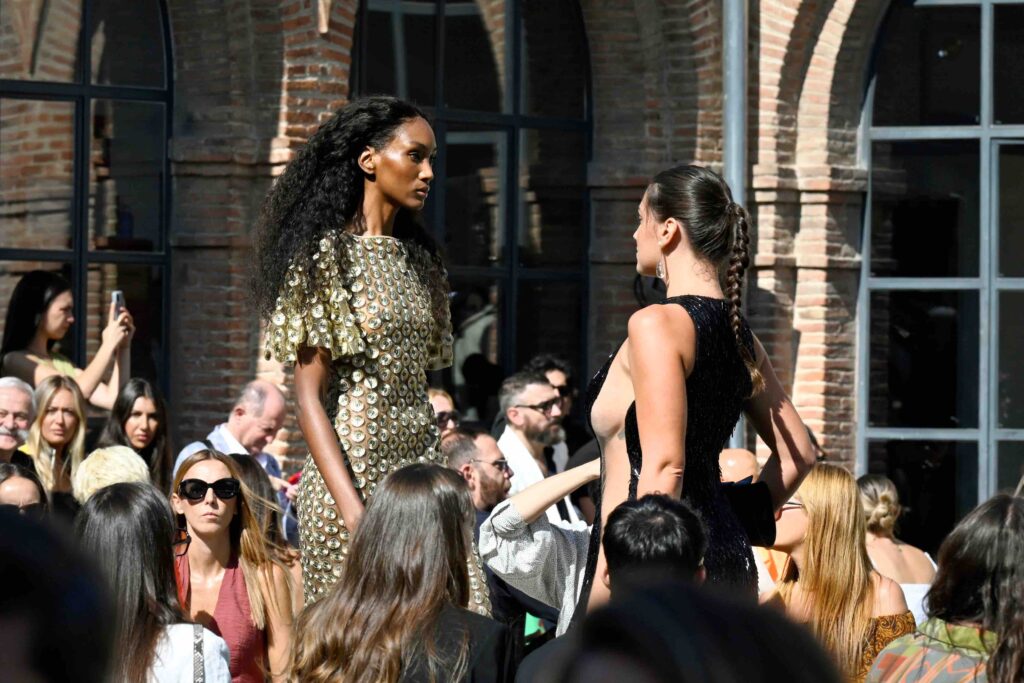
A night rarely ends as beautifully as it begins. Clothes loosen, bodies tires and the carefully composed image we left the house with begins to give way to something less composed, maybe even more honest. For Juan Carlos Mesa, it is precisely this point. It is this space between glamour and fatigue where Maison Mesa finds the starting point for their new collection Last Dance at the Grand Hotel, a set of looks that imagine the grand hotel as a place of celebration, friendship and the freedom found as the conventions of everyday life begin to fall away.
Arriving as Maison Mesa prepares to celebrate its tenth anniversay, Last Dance at the Grand Hotel continues the exploration of sentimentality of memories and the gatherings and celebrations to which they give rise. Here, Maison Mesa lifts the final curtain on a trilogy of spectacles that see the designer return to the well of his own life to mine the emotional power of gestures and memories. In our conversation, Mesa speaks of finding beauty in flaws, the sense of liberation that comes with shedding convention and why, more than thirty years into his career, he continues to crave lessons.
Sandra Myhrberg: What was the starting point for Last Dance at the Grand Hotel, and how did the idea develop into this collection?
Juan Carlos Mesa: Last Dance at the Grand Hotel began as the third chapter of an emotional trilogy we wanted to develop throughout September, a very special month for us, as it marks Maison Mesa’s tenth anniversary.
The first part of the trilogy was Emotional Fashion, a retrospective exhibition looking back at our journey and reflecting on how emotion has been part of our work from the very beginning. The second was The Beautiful Hours, the collection we presented as part of Madrid es Moda at Mario Sandoval’s restaurant, Coque. It explored the time we spend together around a table, celebration, friendship, and the emotions that arise when we gather with the people we love.
We felt that the spring/summer collection we were presenting at Mercedes-Benz Fashion Week Madrid should complete that journey. While the exhibition looked back at our past and The Beautiful Hours explored the emotions we share over a meal, Last Dance at the Grand Hotel centres on another deeply human ritual: dancing.
The collection imagines a grand hotel as a meeting place, a place where you come to see your friends, celebrate life, and immerse yourself in the experience of spending time with those you love most. It is a story of friendship, freedom, and the emotional intensity of an unforgettable night, told through fashion.
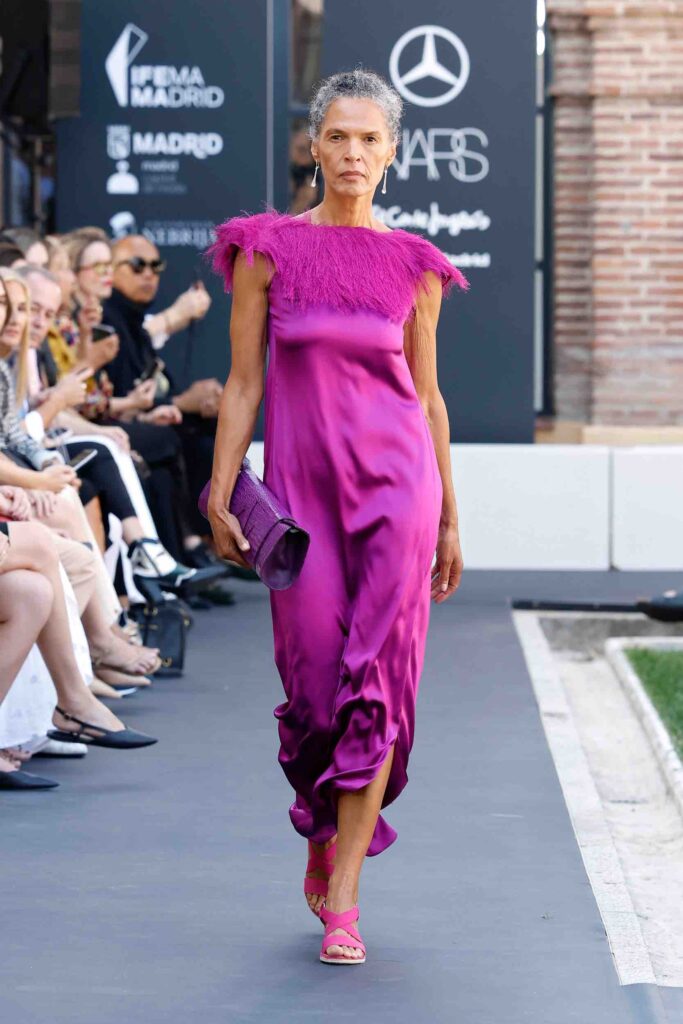
S: There is a sense of glamour in the collection, but also exhaustion and imperfection. Why was that contrast important to you?
JCM: Contrasts have always been central to the way I approach creation. I believe nothing is truly beautiful without imperfection as a point of reference, just as we cannot fully understand what is good without also having known its opposite. Life rarely unfolds at absolute extremes; we constantly inhabit a space in between, which allows us to compare, put things into perspective, and appreciate our experiences. That idea is very much present in my work. Even when I move towards minimalism, I need an element of exuberance; when I work with darkness, I look for a point of light; and when light dominates a collection, I am interested in introducing some shadow so that it can shine more intensely. Those contrasts bring depth and truth to the work.
That is why it was important for glamour and exhaustion, sophistication and imperfection, to coexist in Last Dance at the Grand Hotel. A great night of celebration is more than a flawless image; it is also made up of emotion, tiredness, movement, and all the little traces that the experience leaves behind. Introducing those nuances was a way of bringing the collection closer to reality and keeping it from becoming an idealised fantasy. For me, beauty is always more interesting when it reveals something authentic and human.
S: The collection explores what happens when conventions and social rules begin to disappear. How did you express that sense of freedom through the garments?
JCM: When conventions and social rules begin to disappear, a more authentic version of ourselves tends to emerge. That idea has always interested me, and it is probably why I have been so drawn to eveningwear. During the day, we tend to move within more structured settings, shaped by work and certain social expectations. The night, however, offers a different space, one that feels more intimate and freer, where we spend time with people close to us who know and accept us as we are.
That is exactly what happens in the world of Last Dance at the Grand Hotel. As the night unfolds, barriers begin to dissolve. Dancing, celebration, and the closeness between friends create a kind of ritual in which we allow ourselves to let go, express ourselves more freely, and reveal more of who we really are.
I wanted to translate that feeling into the garments through pattern cutting and the construction of the silhouettes. As the collection progresses, the shapes become more fluid, more expansive, and more generous in volume. The fabrics play an essential role, both following the body’s movement and creating a constant dialogue with it. I wanted the garments to allow people to dance, move, and enjoy themselves, but also to become a means of expression, amplifying the gestures and emotions of the person wearing them.
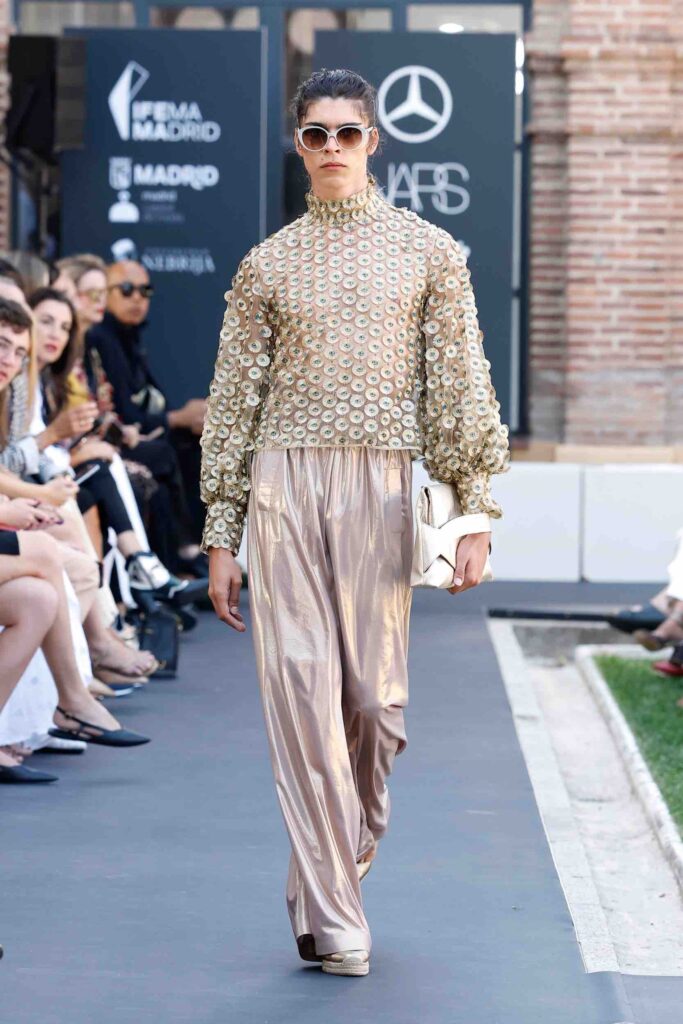
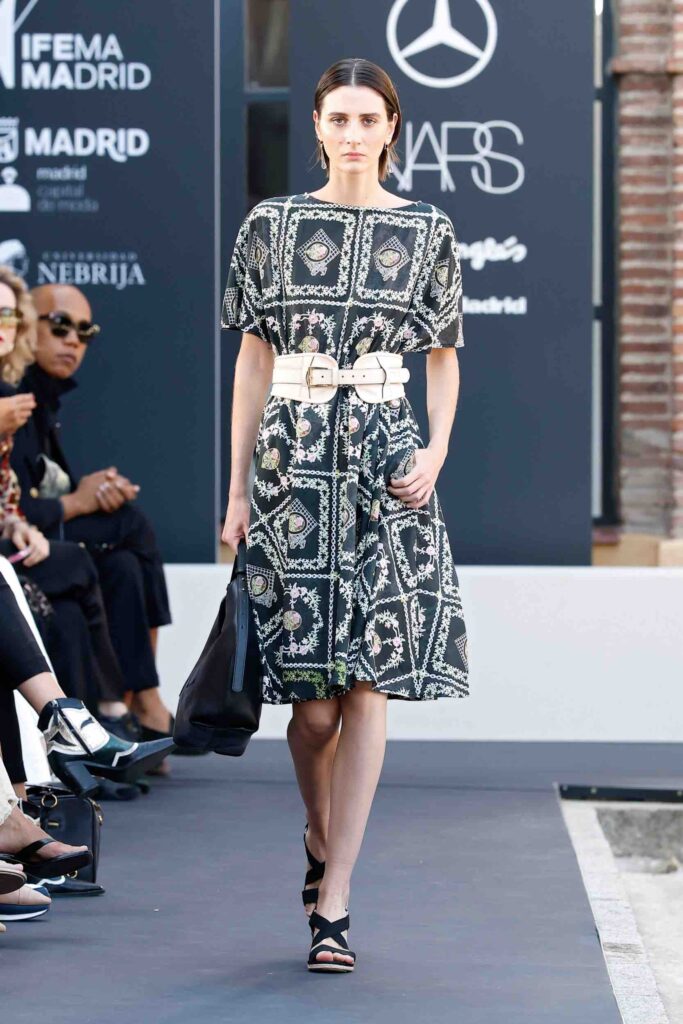
S: Fashion, theatre, dance and performance often intersect in your work. How important is storytelling when you begin developing a collection?
JCM: For me, the relationship between different artistic disciplines is fundamental. Theatre, dance, performance, painting, and music are different languages that allow us to express the same idea from complementary perspectives. Collaborating with artists and creatives from other fields has always helped me enrich a collection’s message and communicate it to the audience with greater depth and clarity.
I have also been fortunate to work across many of these disciplines throughout my career, and that has shown me that every creative process shares a common essence. Beyond the tools or formats we use, we artists share a similar way of looking at the world. When there is a shared vision, connections emerge very naturally.
That is why, for me, storytelling is never something added after the collection; it is part of it from the beginning. Every decision from the clothes to the music, the set design, and the staging should help build a coherent world.
With Last Dance at the Grand Hotel, for example, it was particularly exciting to work with Mr. Lodevik on the soundtrack for the show. We wanted music that would speak to the history of the venue and our own cultural references, while also feeling fully contemporary.
Incorporating elements of chotis and copla into a contemporary electronic and techno framework created precisely the meeting of past and present that interested us so much.
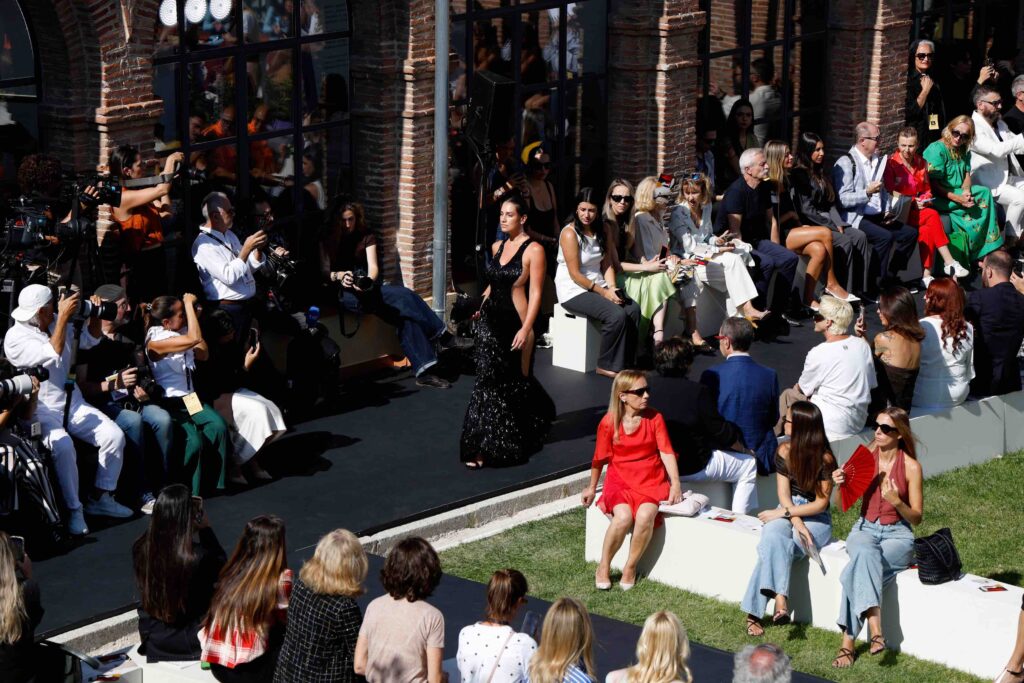
Presenting the collection in the cloister of Nebrija University made that conversation between tradition and modernity even more meaningful. The music helped reinforce the sense of collective celebration, shared memory, and friendship, evoking songs and emotions that are part of our shared cultural imagination. Together, these elements allowed the collection’s message to come across in a fuller, more immersive, and more emotional way.
S: After more than three decades working in fashion, what still gives you the desire to experiment and approach each collection differently?
JCM: After more than three decades in fashion, learning is still what drives me forward. Creativity is about exploring possibilities, questioning established solutions, and remaining open to discovery. Fashion also has the ability to reflect the times we live in, so every collection becomes an opportunity to grow and find new ways of expressing the present.
For me, storytelling is fundamental from the very beginning of a collection. Theatre, dance, performance, painting, and music are different languages that can enrich the same idea. Every element, from the clothes to the music, set design, and staging, should contribute to building a coherent world.
With Last Dance at the Grand Hotel, working with Mr. Lodevik on the soundtrack allowed us to connect tradition and modernity. Combining chotis and copla with electronic and techno elements helped reinforce the collection’s sense of shared memory, celebration, and friendship.