Odalisque x Oatly, An Interview with Petra Fagerström on Fashion and Flavour
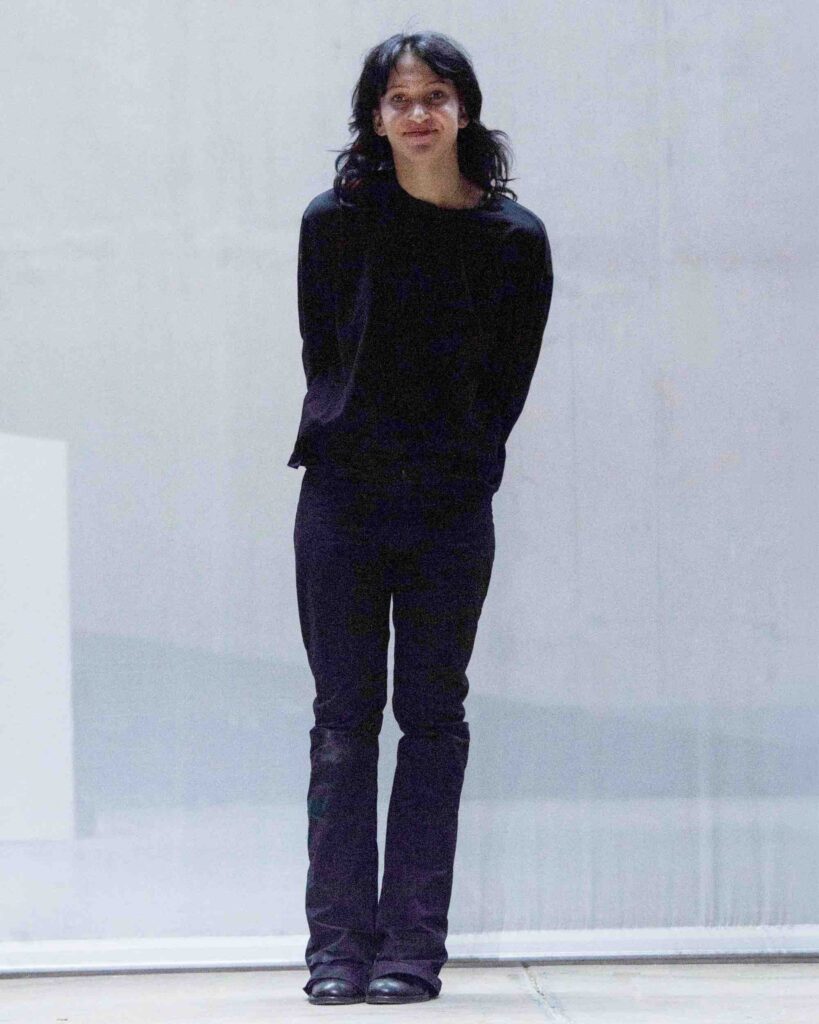
Before the pleats, the glitches and the almost digitally rendered surfaces, there was a figure-skating dress. Born in Gothenburg, Petra Fagerström used to create and decorate her costumes as a kid, before discovering her passion for fashion through Tumblr and Nicolas Ghesquière’s Balenciaga. After working at Acne Studios and Balenciaga, she set out to create her own practice, one that is personal, occasionally strange but always centered on clothes that women can wear and feel at home in.
That philosophy now manifests itself in a kind of language of contradictions: femininity without nostalgia, traditional craftsmanship next to digital approaches and designs that are both functional and flamboyant. The latest London Fashion Week offering sees the brand collaborating with Oatly, interpreting elements of the collection in the form of flavour. In our conversation, Fagerström talks about finding her own language, contradictions that continue to inspire her and the importance of growing without losing touch with one’s personal instincts.
Fagerström’s first garments were made for the ice. As a competitive figure skater in Gothenburg, she decorated and made her own dresses long before fashion became a career. “In all honesty, I think the main thing I’ve taken with me is a love for sparkle,” she says. “I can’t help myself but to make a sequin dress each season.” Her real interest in fashion came later, via Tumblr. “I discovered Nicolas Ghesquière’s Balenciaga and I was hooked.”
image courtesy Petra Fagerström
Sandra Myhrberg: You worked at both Acne Studios and Balenciaga before developing your own label. What did those experiences teach you about the kind of designer and brand you wanted to become?
Petra Fagerström: I think it especially taught me a lot about the product. To me the most exciting part about fashion is thinking about how I want to feel and show up as a woman, and working at other houses didn’t really allow me to do that, which led me to pursue my own practice in the end.
S: “My design is critical, melancholic and practical,” you once told ELLE. Was there anything in the larger houses you consciously set out to challenge when you started your own label?
P: I think working within larger fashion houses made me realise how important it is for me to protect the more personal and critical side of my practice. My design can be quite melancholic and strange, but I also want it to be practical and wearable. With my own label, I’ve wanted to create space for those things to exist together rather than feeling that a garment has to fit into one clear category. It’s about keeping the point of view very personal while still making clothes that women genuinely want to live in.
S: Femininity is one of the central themes in your work. How do you explore and define femininity through garments?
P: I’m interested in femininity as something that can hold contradictions. I don’t want it to be defined only through softness, purity or nostalgia. I’m much more interested in a woman who has agency and presence, and in taking familiar feminine codes – florals, fitted silhouettes, glamour – and shifting them into something stranger, sharper or more powerful.
S: “Glitchifying” is a word you’ve used to describe your process. What does it mean to you, and where do we see it in the clothes?
P: The glitch is my method of breaking the codes of conservative archetypes in fashion. Through the “glitch” I can change the attitude of the garment and by that also how the woman wearing it feels.
S: Your lenticular pleating has become almost synonymous with your work. What is it about this technique that continues to fascinate you?
P: What fascinates me is that it allows a garment to hold more than one image or reality at the same time. Hundreds of pleats are constructed by hand, but when the wearer moves the surface shifts almost like a digital animation or hologram. I love that contradiction – something incredibly labour-intensive and physical producing an effect that looks almost digitally generated.
S: Hundreds of pleats made by hand, and a surface that looks “almost digitally generated.” That tension seems to run through all of your work. What draws you to it?
P: That tension is really central to my work. I use digital tools conceptually, but I never want the final garment to simply feel digital. I start digital, but then the idea goes through painting, pleating, construction and hours of handwork. I like when you can’t immediately understand where the digital ends and the human begins.
She is less convinced by the current wave of AI. A year long research project with the Swedish company Substorm AI explored how AI tools could protect IP and genuinely help creativity, but the conclusion was sobering. “What I did conclude was that the most helpful is actually admin support,” she says. “Generative AI is rather useless when it comes to originality.
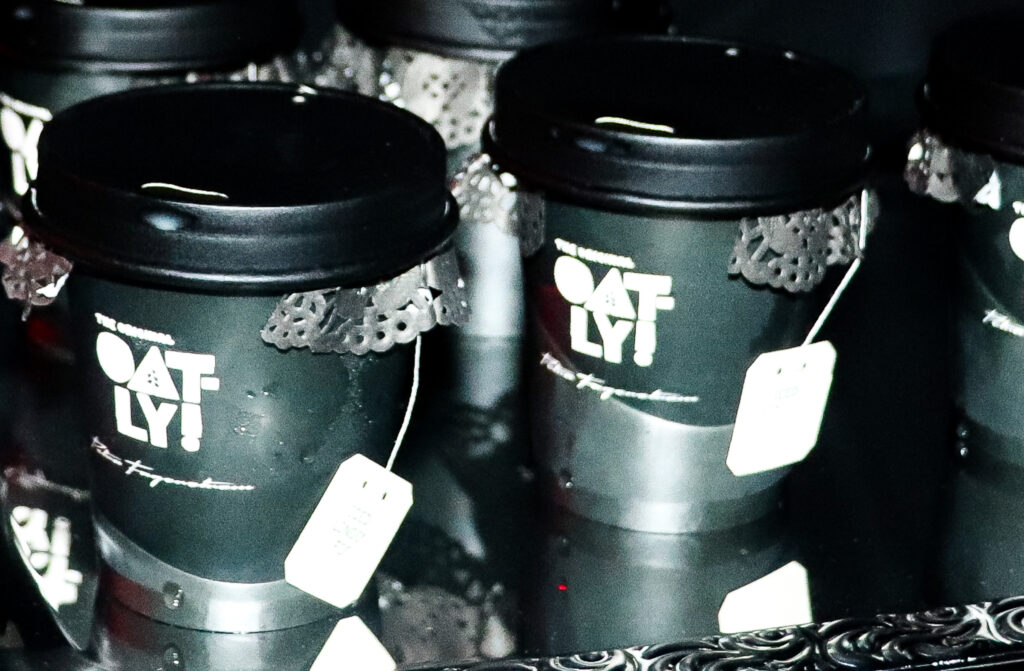
S: Your creative vision extends beyond the clothes themselves. How do you think about translating your aesthetic and ideas into other parts of an experience, from fashion to food and beverages?
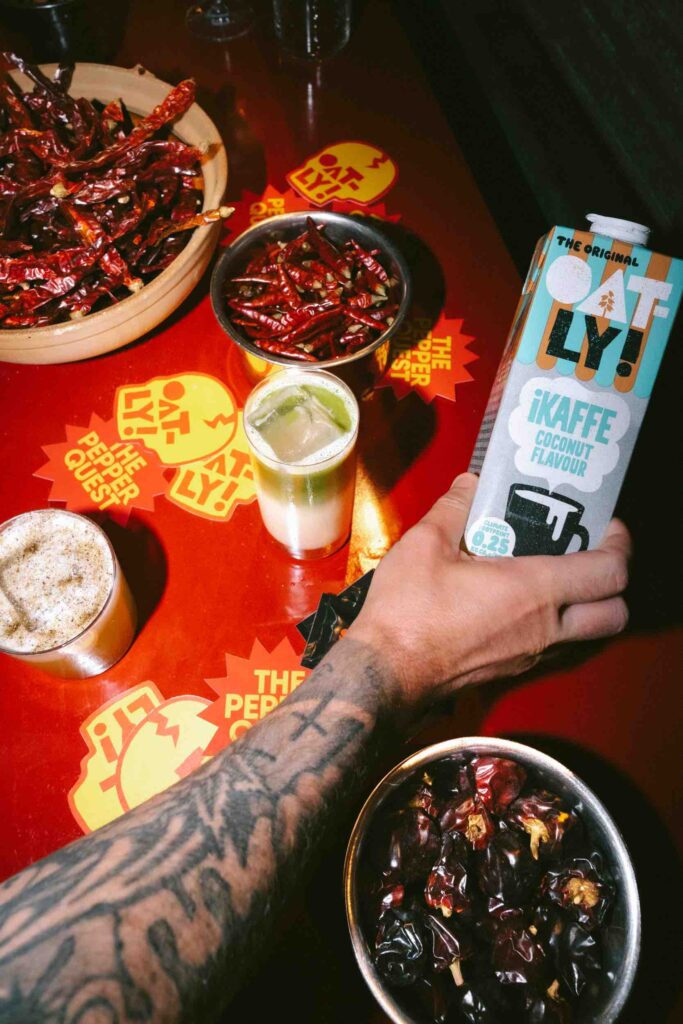
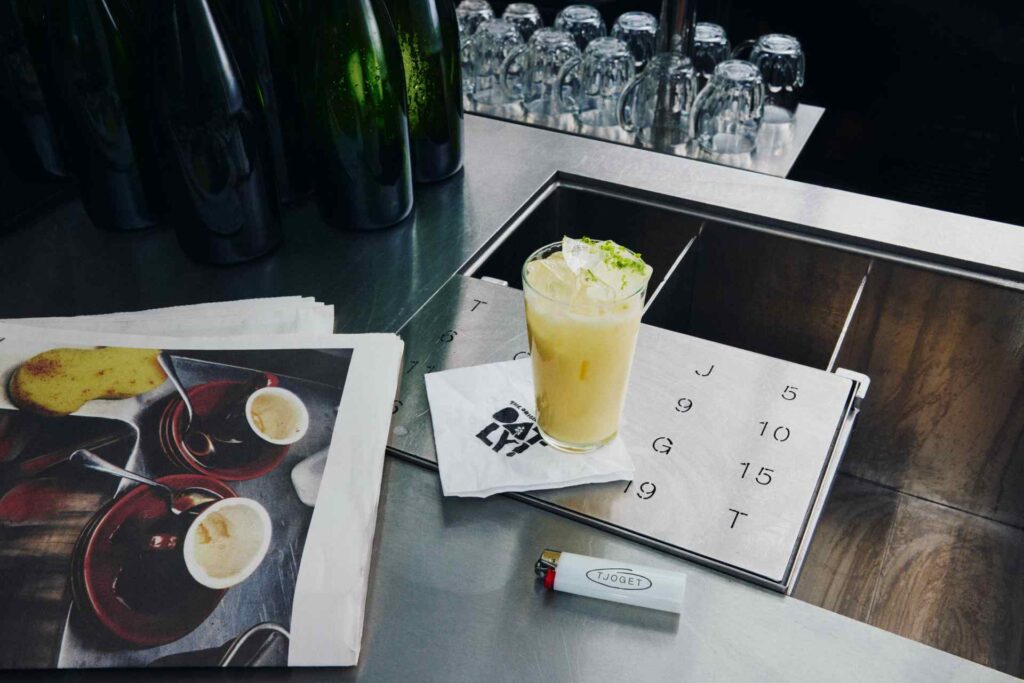
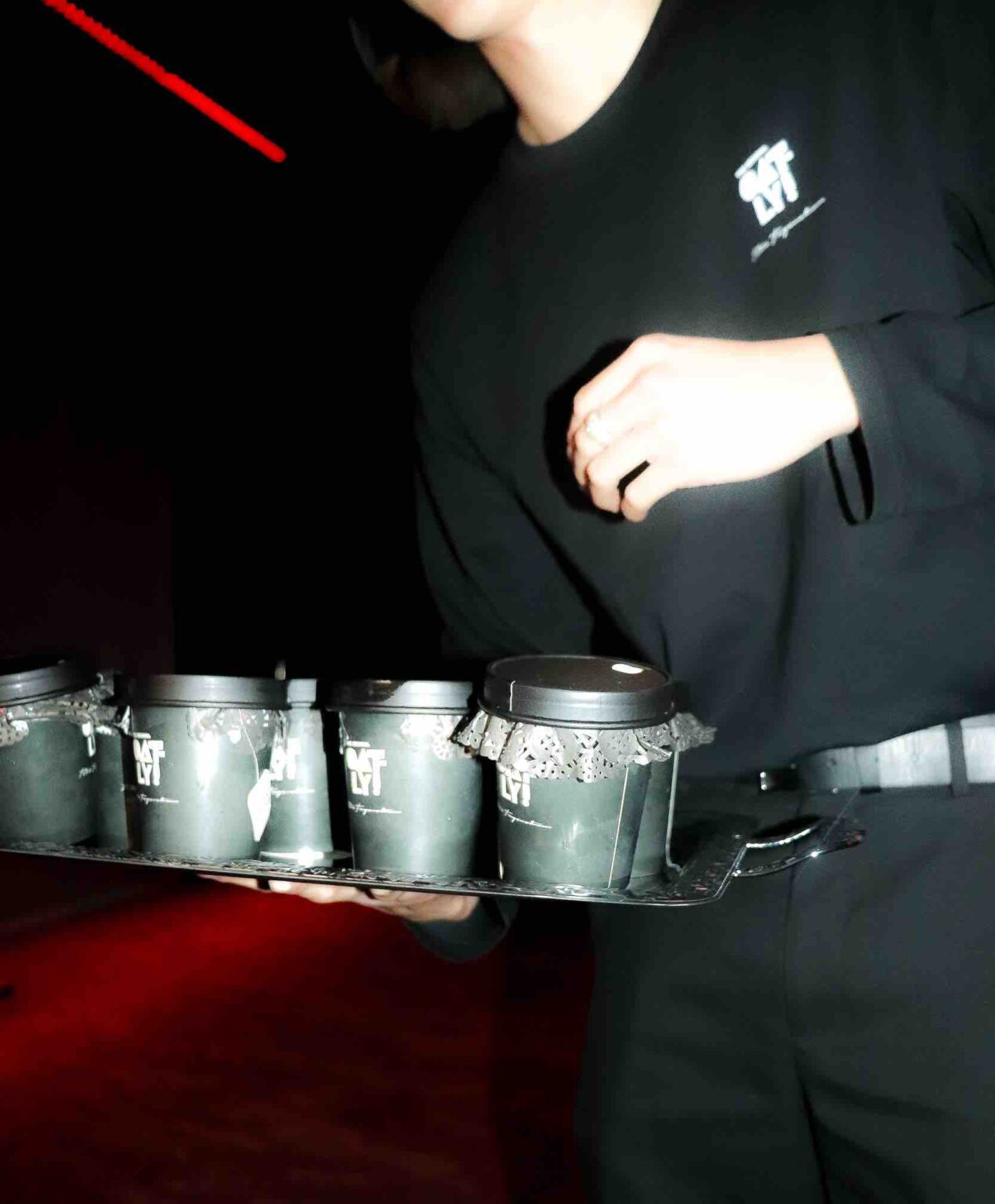
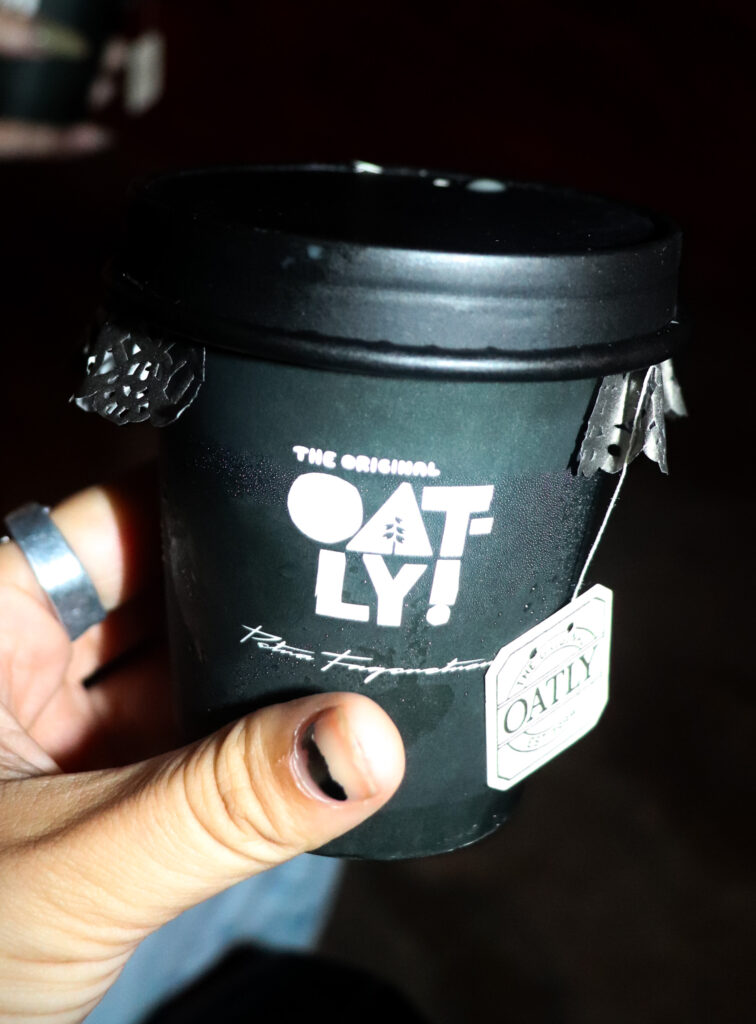
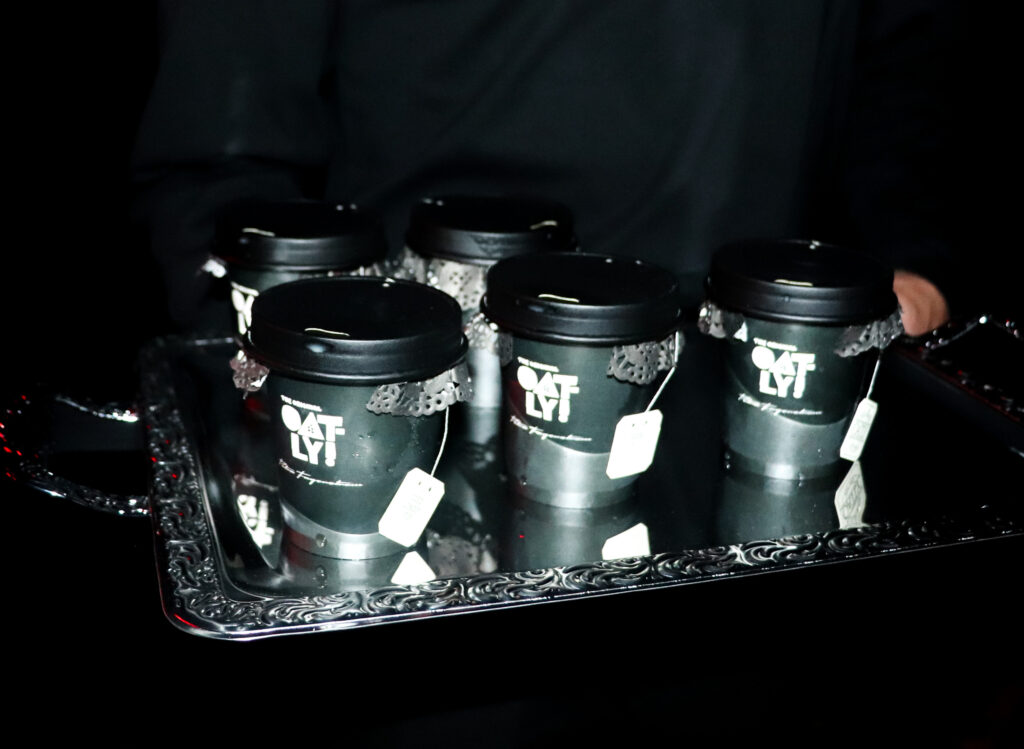
P: For me, a fashion show is about creating a complete world around the collection, where everything from the space and sound to what guests are served can contribute to the experience. Working with Oatly feels like a natural extension of that. They have such a strong and creative way of thinking about their brand and how they communicate, which makes the collaboration feel like a creative exchange. I also really like the idea of bringing a Swedish brand with such a distinct creative identity into the London fashion scene.
S: You describe a show as “a complete world around the collection.” What does a brand from outside fashion bring to that world, and to your own practice?
P: I think collaborations are most interesting when the two sides come from different creative worlds. With Oatly, there is obviously a shared Swedish connection, but both brands have also developed internationally and have quite distinct visual identities. I like the idea of bringing those worlds together in London and thinking about the collaboration as part of the whole experience, rather than simply putting a logo on something. Oatly’s creative approach and the fact that they come from outside fashion also open up a different way of thinking about how the brand, the collection and the experience around the show can come together.
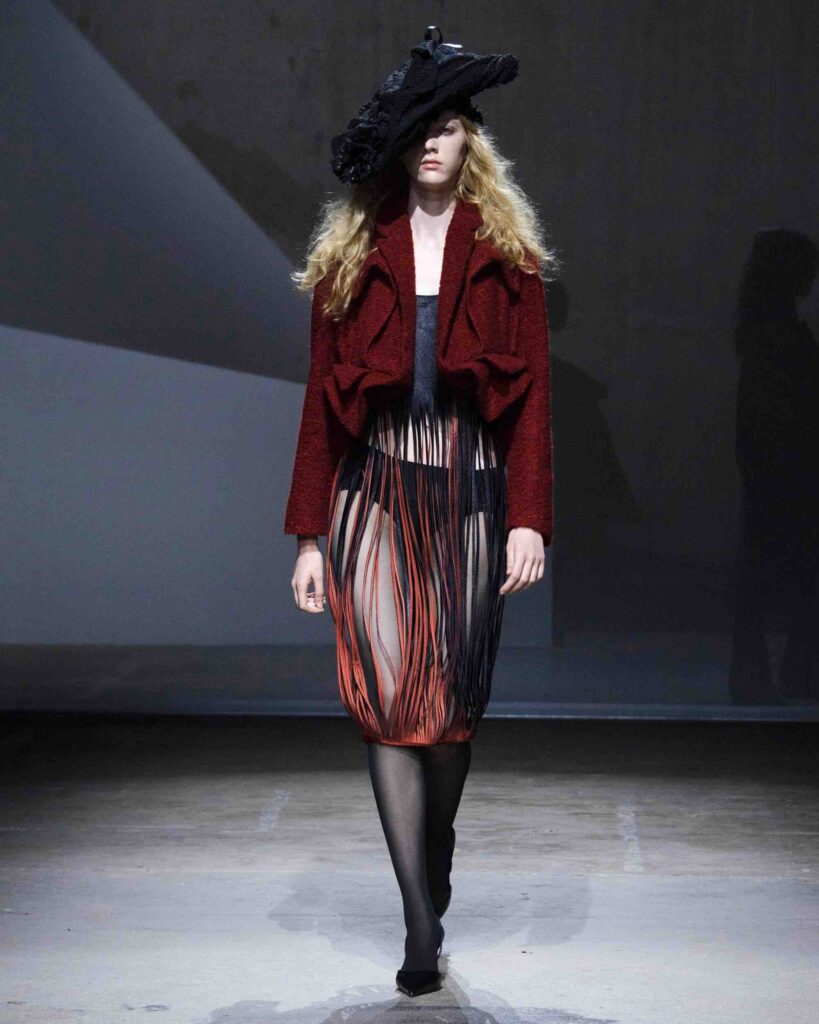
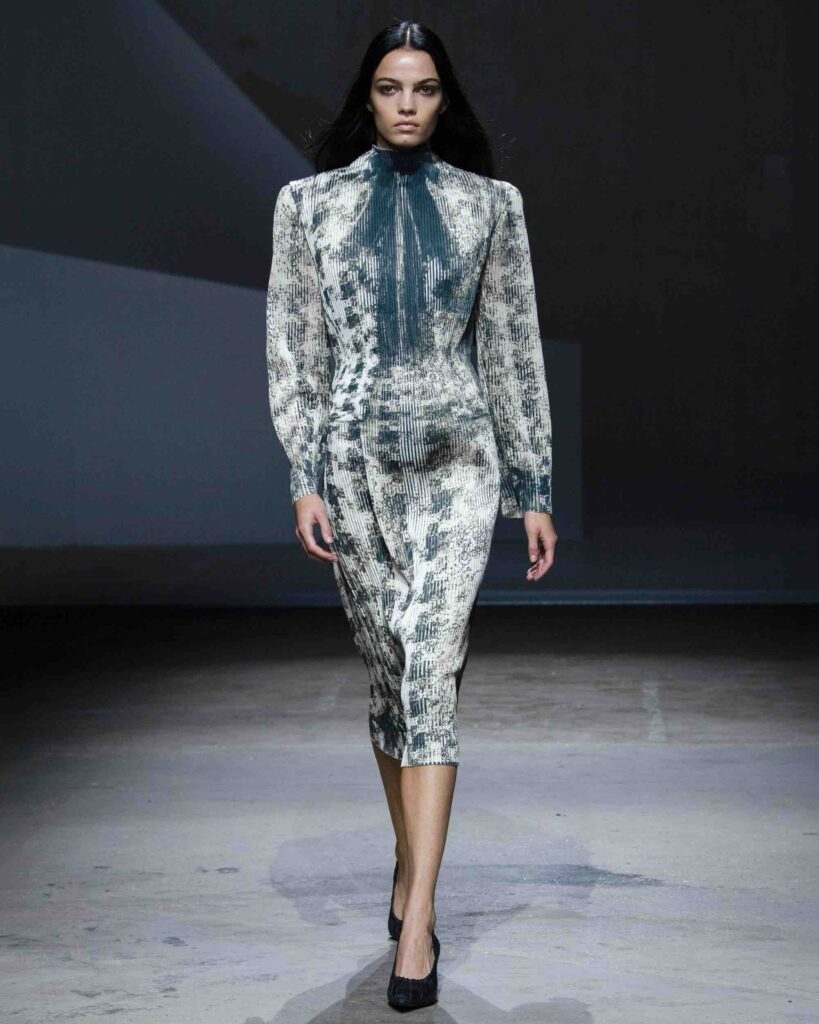
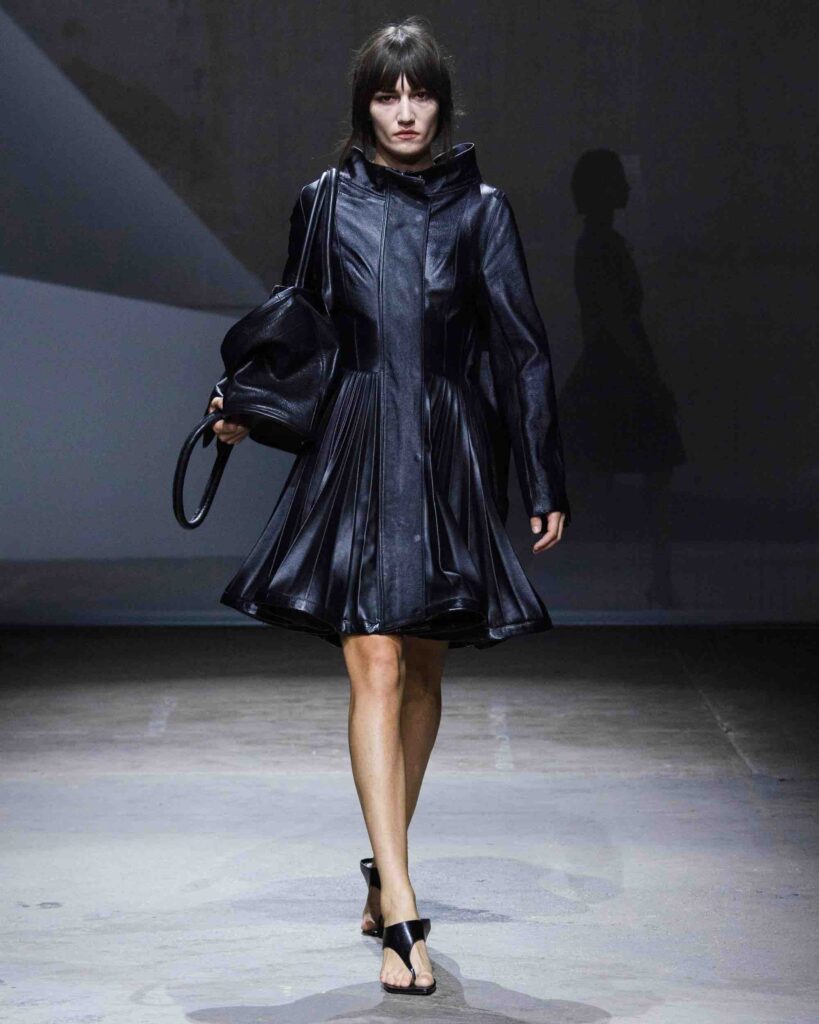
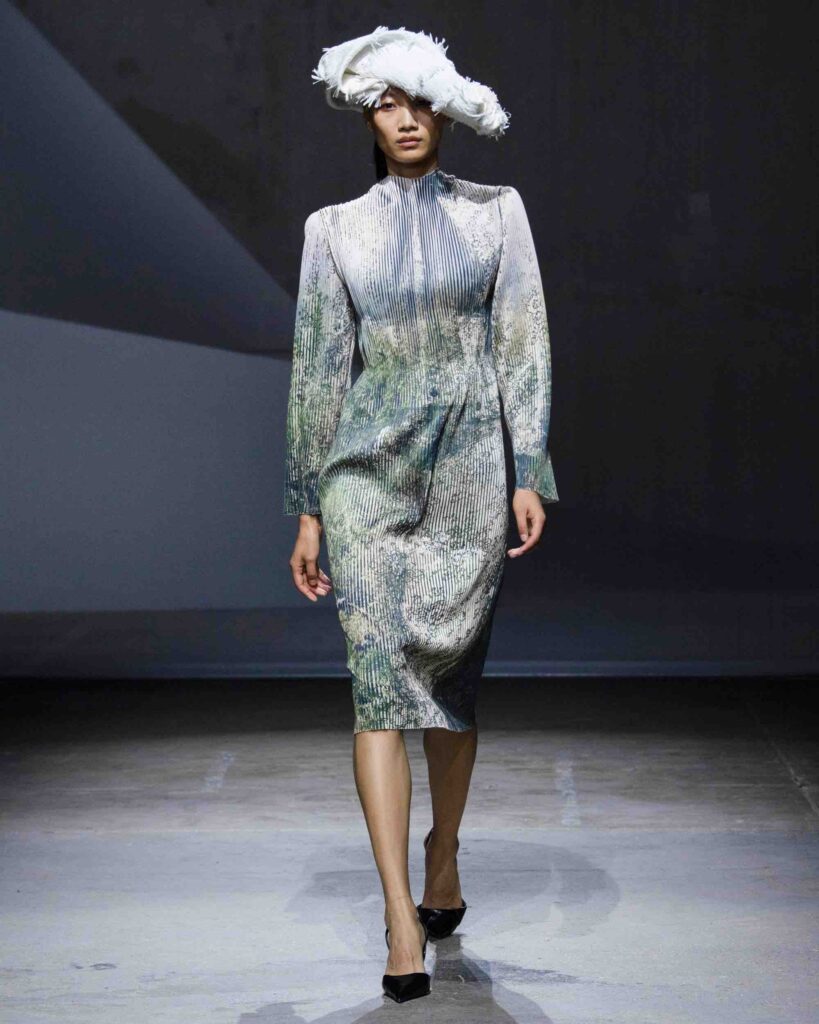
S: Soft and powerful, handmade and almost futuristic, a language of contradictions. What do you hope people remember about your work?
P: I hope people remember the feeling of the work more than anything else. That there was something familiar but also slightly strange about it, and that it made them look at femininity, clothing or themselves in a different way. I want to make clothes that can hold contradictions, something that can be soft and powerful, practical and extravagant, handmade and almost futuristic at the same time. And ultimately, I hope the woman wearing my clothes feels like she can take up space in her own way, rather than having to fit into an idea of what femininity should look like.
The next step
Her on schedule London Fashion Week debut in February 2026 was one step in a steady climb. “I think that every step we take as a brand shows us what the next step should be.” The show that followed felt like an even bigger leap. “It felt very right, and like we truly did justice to the clothes and the women we design for.” Growth, she insists, has to serve the work. “The creative side will always be at the core of what I do, so it’s important that decisions around growth feel right for the brand rather than simply being about getting bigger. The goal is to grow in a way that gives me more possibilities creatively, rather than limiting them.”