
Rewriting History, Claiming the Self: Elin Cullhed on Euphoria, Eurydice’s Night and the Female Voice
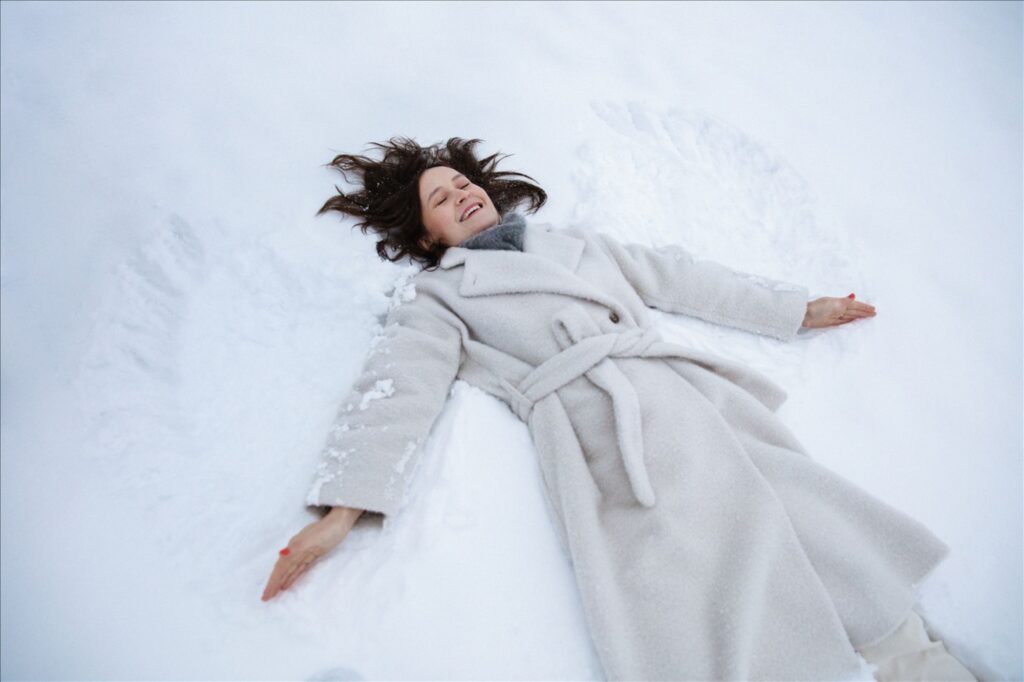
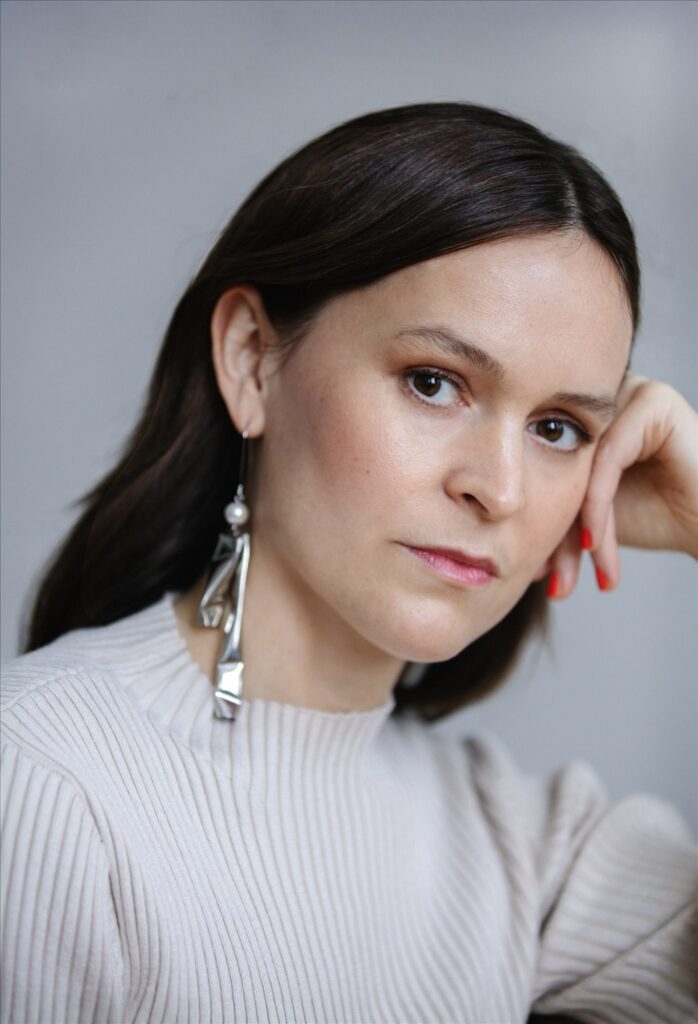
photography Elisabeth Toll
Following the international success of Euphoria, August Prize winner Elin Cullhed returned with Eurydice’s Night, a novel about love, trauma, myth and the struggle to protect one’s own voice. In this conversation with Ulrika Lindqvist, Cullhed reflects on the dream that led her to Sylvia Plath, the challenges of recognition, and why writing remains the one space she refuses to give away.
Ulrika Lindqvist: What first inspired you to write Euphoria? Was there a particular event or question that led to it?
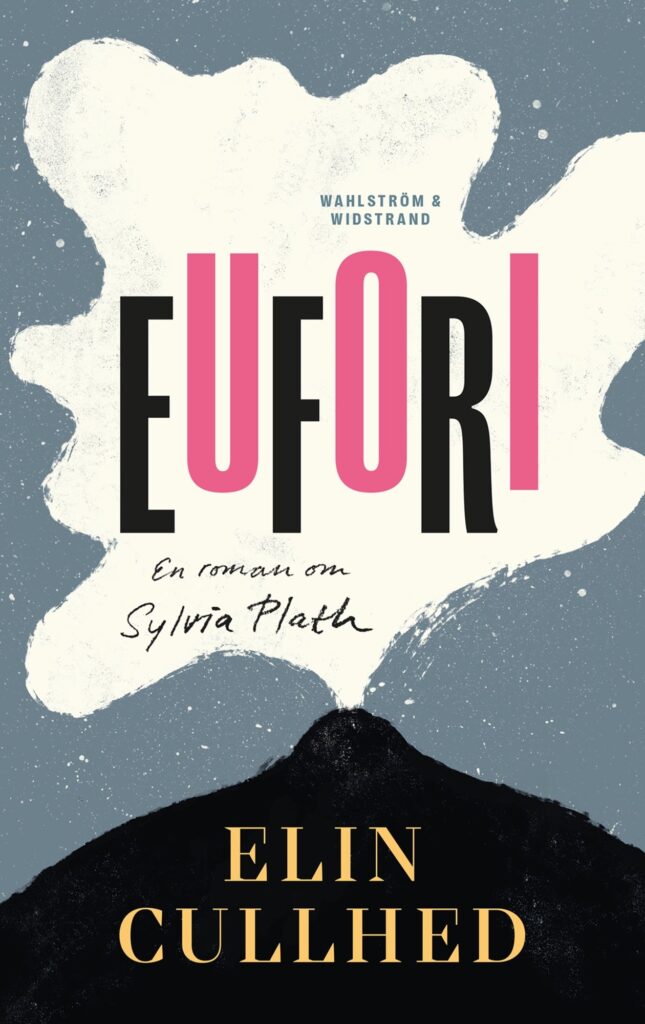
Elin Cullhed: It came completely unexpectedly. I never imagined I would write a novel about Sylvia Plath. In early 2019, I had a dream that I had written one. When I woke up, I knew I had to begin. Looking back, many things had come together. The day before, I had run into the boyfriend I was with when I first discovered Sylvia Plath at twenty. At the same time, I had spent three years working on a very personal novel that constantly referred to Plath. That became the groundwork for Euphoria. Somehow my subconscious was telling me that everything I needed was already there. I just had to start.
When I began writing, I felt I had found a powerful voice. Everything clicked.My own life also echoed the period of Plath’s life I was writing about. I had a nine-month-old baby. It was winter, everything felt frozen, and I was exhausted. When I reread Plath’s work and revisited her life, I began to understand her differently. I saw not only the literary icon, but also a lonely, overwhelmed mother who had just published her first novel. I could understand the exhaustion surrounding her final months in a way I never had before. Finding that voice through Euphoria remains one of the strongest experiences of my life.
UL: Your description reminds me of A Ghost in the Throat by Doireann Ní Ghríofa. Have you read it?
EC: Yes, and I love that comparison. I really recognised her creative process. I don’t like the word “obsessed,” but it is probably the only word that fits. I wasn’t obsessed with Sylvia Plath herself. I was obsessed with rewriting history. That became my self-appointed task. What fascinated me about Ní Ghríofa’s book was how honestly she wrote about her own life, her marriage, her children and motherhood.
UL: Ní Ghríofa tells her own story alongside the historical one. Did you ever consider doing that?
EC: No. I never wanted to include a contemporary version of myself. I wanted readers to feel they were inside Sylvia’s reality. That was very important to me. It was possible because I had carried Sylvia with me since I was young. I felt such a deep connection to her that, in a way only someone in their twenties can, I almost felt I knew her personally.
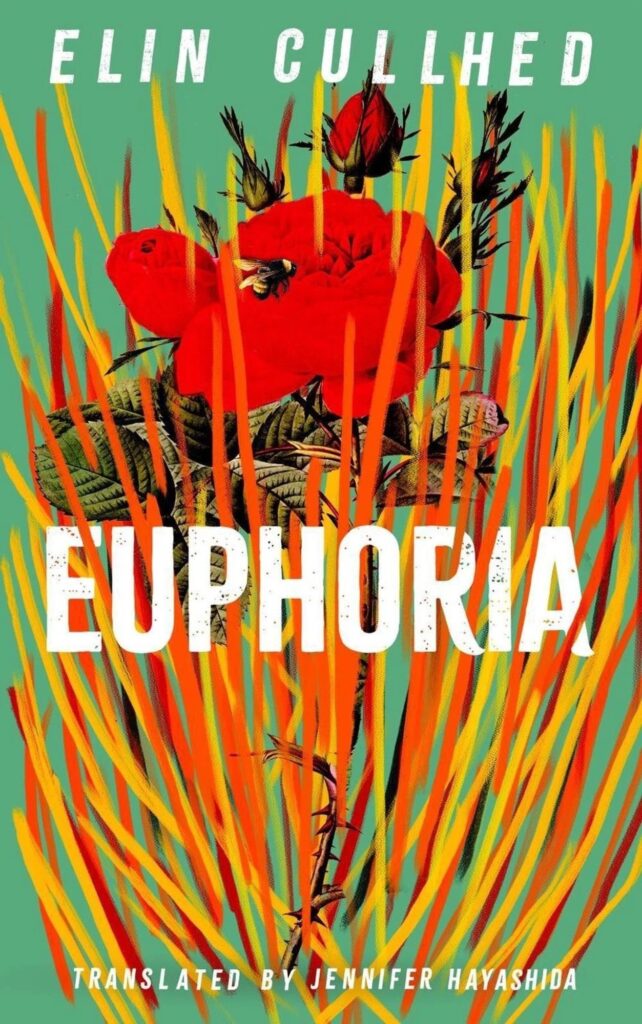
UL: Euphoria received attention almost immediately. It won the August Prize, and the English translation was shortlisted for the Bernard Shaw Prize. How did that recognition affect you, especially now that you have written your third novel?
EC: It was also nominated for the Premio Strega in Italy and the Prix Médicis in France, and it found many readers, especially in France and Spain. I sometimes think it connected with feminist conversations that were unfolding differently there. Many readers also discovered Sylvia Plath through the book, which was incredibly rewarding.
Writing has always been my private space. It is the one room I protect. The challenge was never living up to expectations; it was protecting that space. I promised myself that I would never let writing become driven by pressure or performance. The hardest part was the personal change that came with recognition. Fame changes your life, and I had to come to terms with becoming a professional author. At first I wanted to return to the person I had been before, the mother quietly writing while raising young children. Eventually I realised there was no going back. I had to move forward and figure out who I was becoming.
UL: How do you write with expectations on you, especially after your first novel was so well received?
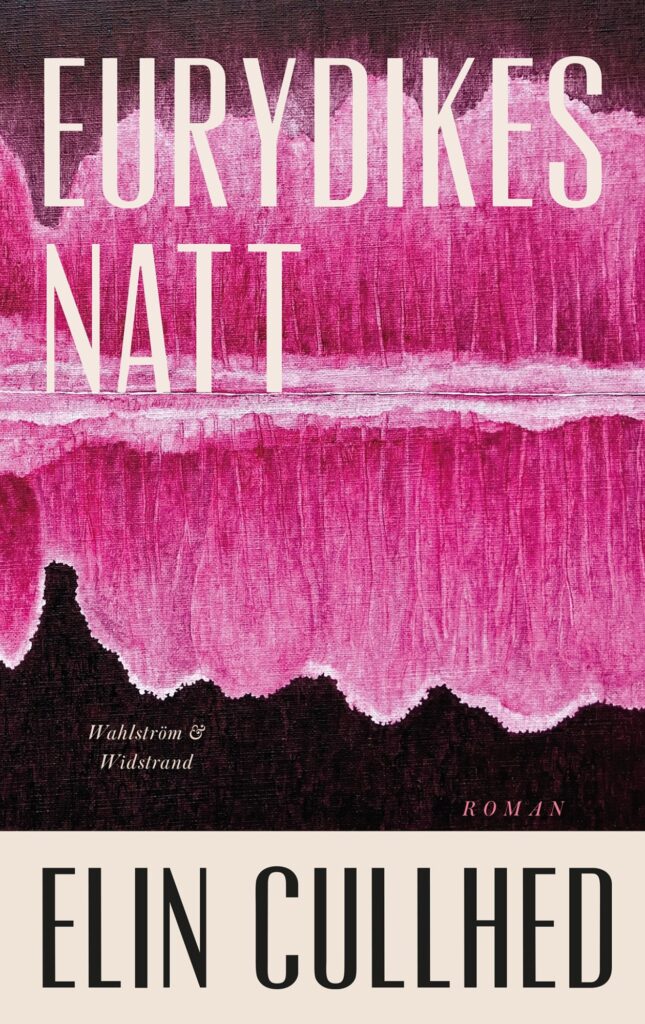
EC: Everything changes. You know your next book will be reviewed instead of wondering if anyone will notice it. At first I was terrified. I wanted to disappear and pretend none of it had happened. Eventually I realised the success was a gift that writing had given me. Once I accepted that, I understood that it gave me the freedom to write the books I had always wanted to write, knowing people would read them. That changed everything, and I’m grateful that I had the courage to write Eurydice’s Night.
UL: Eurydice’s Night is also a brave book. I loved it, but I also found it difficult to read. I told a friend that anyone who has ever felt trapped would feel their pulse rise.
EC: I’m glad to hear that. I had known for years that I needed to write this book. I must have tried twenty times before I found the right way into it. Looking back, I think it could only have happened now. The process was completely different from Euphoria. That novel came from an overwhelming creative energy. Writing Eurydice’s Night felt like thawing something frozen—as if the story already existed beneath the surface and I had to slowly uncover it. At times I wasn’t sure I would reach it.
The language also demanded something different. Because the novel moves between Alfred and Karin through an omniscient narrator, I needed a more classical and universal voice while still writing in my own style.That is also why I turned to the myth of Orpheus and Eurydice. It is a shared story about love and loss. Love belongs to all of us, which makes it both difficult and beautiful to write about. The myth gave the novel a common foundation.
UL: Why did you choose that particular myth?
EC: It is one of the greatest love stories because it can never truly be resolved. It has continued to challenge us for thousands of years. I became especially interested in Eurydice. We often focus on Orpheus looking back, but I wanted to ask: why is Eurydice in the underworld in the first place? Why has she died? She has only just begun to love him when everything is taken away. That made me think of the myth almost as a story about how dangerous love can be for a woman. Love makes you vulnerable. You trust someone and lower your guard, and suddenly catastrophe arrives. That idea stayed with me. Women are often taught to be careful, to protect themselves, but eventually there comes a point where you want to stop living cautiously and simply live. That is what interested me about Karin. What happens when she lets her guard down? And when she meets Alfred, is it really love she feels, or is it that someone finally sees her while she is in a state of shock? Those boundaries are fascinating because someone who has never truly been seen can become incredibly receptive to even the smallest act of recognition.
I don’t think Alfred means to harm Karin. He is a teenage boy who doesn’t fully understand the forces he is part of. He wants to help her and get close to her, but he also represents something larger. That was one reason I returned to the myth of Orpheus and Eurydice. We focus so much on the moment when Orpheus looks back, but I became interested in what happens before that, why Eurydice dies. The myth asks what happens when a woman allows herself to love. She becomes vulnerable. She trusts someone. And then something destroys that possibility. I think many women recognize that tension: the desire to live freely, while also being taught to protect yourself. Eventually you reach a point where you think: this is my life.
That question—what happens when Karin stops guarding herself—was central to the novel.
UL: It is also unsettling that the assault is what makes her visible to him.
EC: Yes, but I don’t think that is unusual. People are often drawn to someone because they want to comfort them, care for them or feel needed. When you are young, dramatic events often bring people together. I originally imagined the story as an adult couple looking back on a traumatic experience from the woman’s youth. But after a while it felt too conventional. I wanted to stay with the young couple and explore what happens in that moment, without framing it through later memories.I wanted to go directly into the experience itself,to stay with these two vulnerable, exposed people as they are.
UL: What is your own relationship to writing?
EC: I think a woman’s inner room is something others often want to claim. In Eurydice’s Night, someone almost takes Karin’s innermost self from her, the place that is truly hers. I find that deeply fascinating. I see something similar in Sylvia Plath’s life. As she was becoming more powerful as a writer, Ted Hughes sensed that she was about to surpass him, and then he left. There are many forces that work against female literary genius. That is something I explore in both Euphoria and Eurydice’s Night.
As a woman writer, it takes time to fully claim your work and say: “I wrote this. This matters.”
I sometimes wonder if that comes down to sexism. There can be a tendency to treat a brilliant work by a woman as something to consume and then move on from. Once it has been read, attention shifts to the next woman rather than expecting a continuing body of work.I think that is a strange way to view authorship.
UL: I also feel that Eurydice’s Night is very much about class, both cultural and economic. That theme also appears in Euphoria. Is it something you consciously return to?
EC: I think every good story is about class in some way. As writers, we become very sensitive to how class shapes people and how difficult those structures are to escape.
In Eurydice’s Night, I didn’t want to overturn those dynamics just to make a point. Alfred comes from a family with economic and cultural capital. Karin does not. She feels invisible, her family struggles financially, and she still has to claim her own dignity. That felt more truthful than trying to smooth out those differences. At the same time, their relationship is shaped by curiosity. Alfred is drawn to Karin because she represents another way of living and seeing the world. Her background becomes something he wants to understand.
That is also what makes Sylvia Plath and Ted Hughes so interesting to me. There is class tension between them in both directions. Sylvia sees Ted as rough and working class, while Ted sees Sylvia as polished American middle class. Those conflicts are fascinating. I also think writers are a kind of class traveller. Not in the traditional sense of making a class journey, but because they move between different worlds and can belong, at least temporarily, in many places.
UL: Clothing is another way you define your characters. Sylvia’s blue sweater, Karin’s white clothes. Was that a conscious narrative choice?
EC: I’ve never really thought about it before. I have noticed that shoes appear in all my books, but not clothing.Now that you mention it, clothes are a huge part of how we present ourselves and how we understand other people. Public life is almost like a stage where we are constantly shaping how we appear.I have always been very aware of that. Clothes are such an everyday part of our lives that we almost stop noticing how much meaning they carry.
UL: Finally, what are you working on now? Is there an idea you particularly want to explore?
EC: What I love about writing is that every book changes the way you think. You have to take the risk of finishing and publishing a work in order to reach the next stage, where new questions appear. I think I may already have started something, although it could take years before I understand what it is. Right now, I’m interested in truth. When you write novels, you are searching for truth within a story. You are trying to understand the inner nature of a narrative: who the characters really are, what motivates them, what lies beneath everything.
But lately I’ve become more interested in my own truth.I kept a diary from the age of six until I was twenty five. That was really my writing school. I learned to write by constantly describing my life. I haven’t done that since, but recently I’ve found myself writing directly again.It is not exactly diary writing. It is more immediate, more direct, and perhaps closer to the centre of things.
I don’t know what it will become, and I’m happy with that. I’m not writing a novel at the moment. I’m exploring and laying the groundwork for whatever comes next.