Written by: Jahwanna Berglund A year after his debut, Matthieu Blazy’s Spring Summer 2027 collection deepens his conversation with Gabrielle Chanel, finding a contemporary wardrobe in the many lives of one woman.
To imagine the past reincarnated in all its lived forms is to allow it to move. At Blazy’s Chanel, history still has something intimate to say about how we dress and who we become.
A year after his debut for Spring Summer 2026, Blazy returns to the conversation he began with Gabrielle Chanel. That first collection made an assured entrance, approaching the house through the practical and personal foundations of her wardrobe. Shirts developed with Charvet, masculine tailoring and a crushed, cherished 2.55 suggested clothes and objects already inhabited. There was pleasure in seeing Chanel with the familiarity of something worn, loved and carried through life.
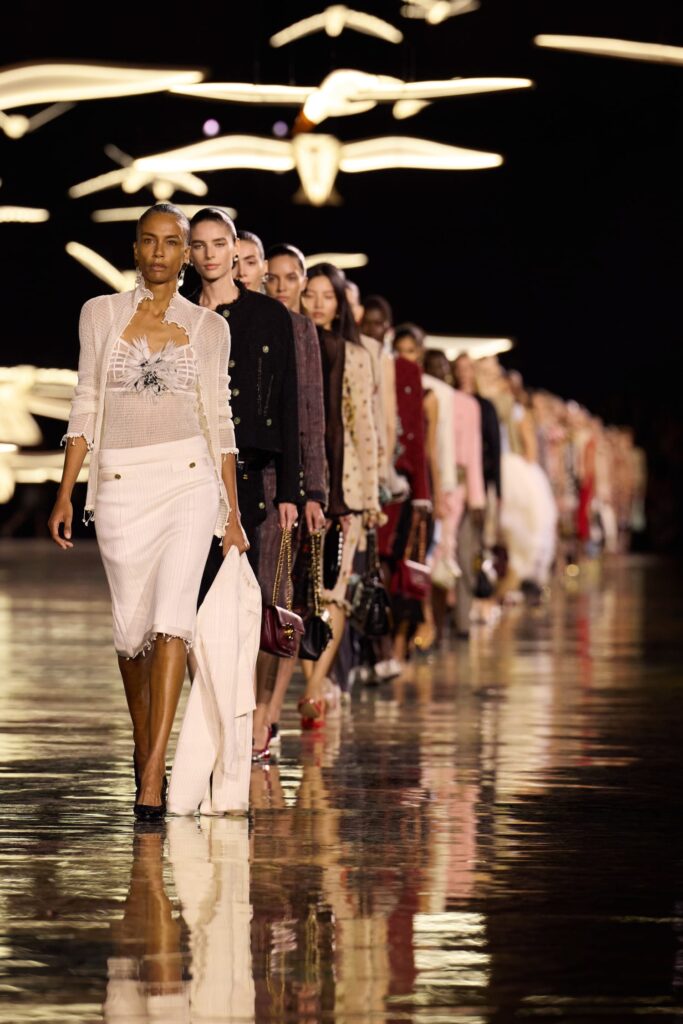
For Spring Summer 2027, that familiarity becomes more complex. The third part of his conversation considers the many selves within a woman, following Gabrielle from her beginnings through the identities she assumed, challenged and eventually made her own. Looking at the collection, I found myself thinking about the versions of ourselves we continue to carry: the younger woman, the working woman, the person we once imagined becoming. A wardrobe can hold traces of all of them.
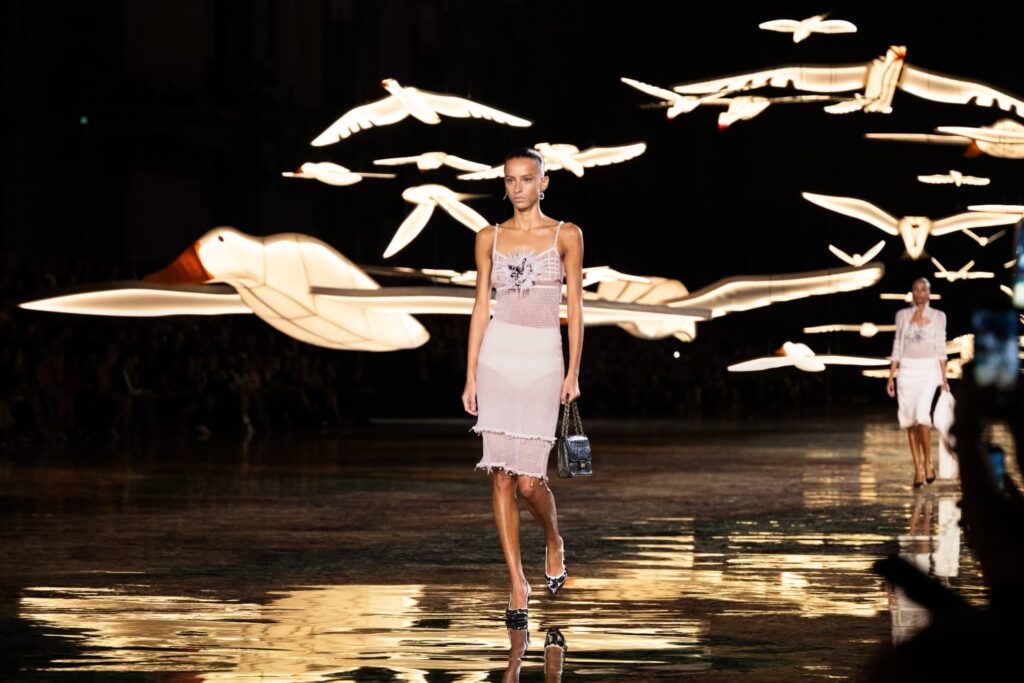
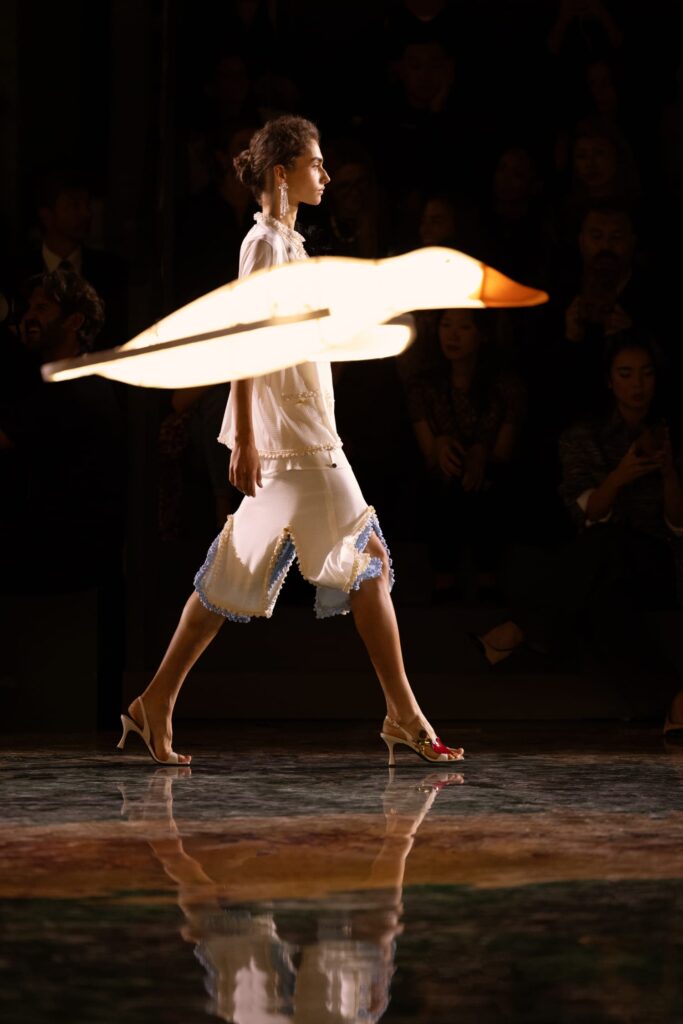
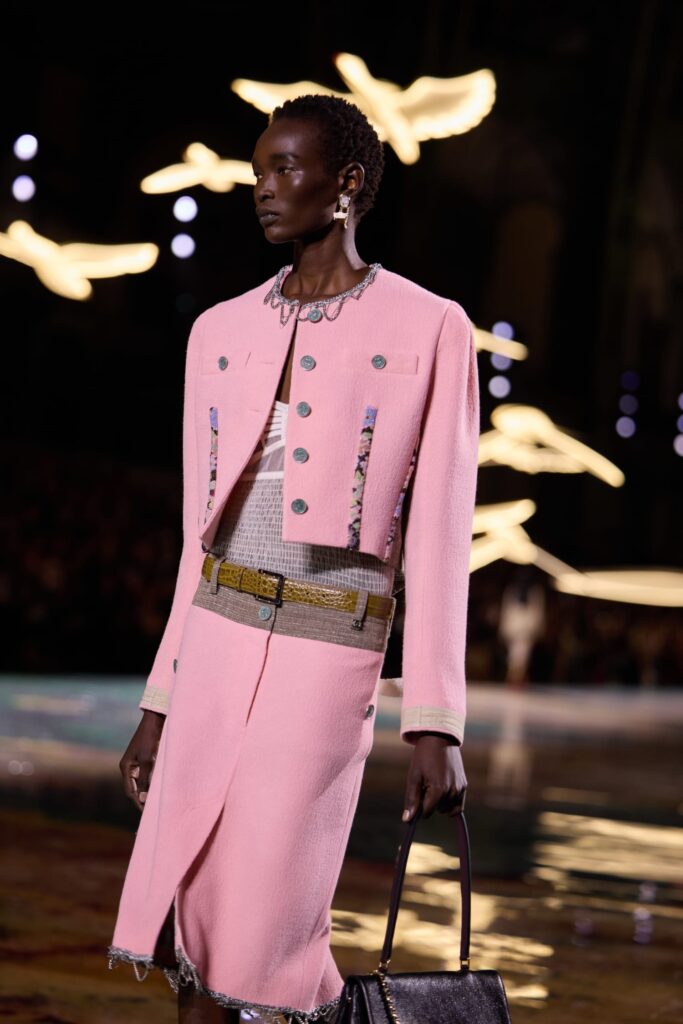
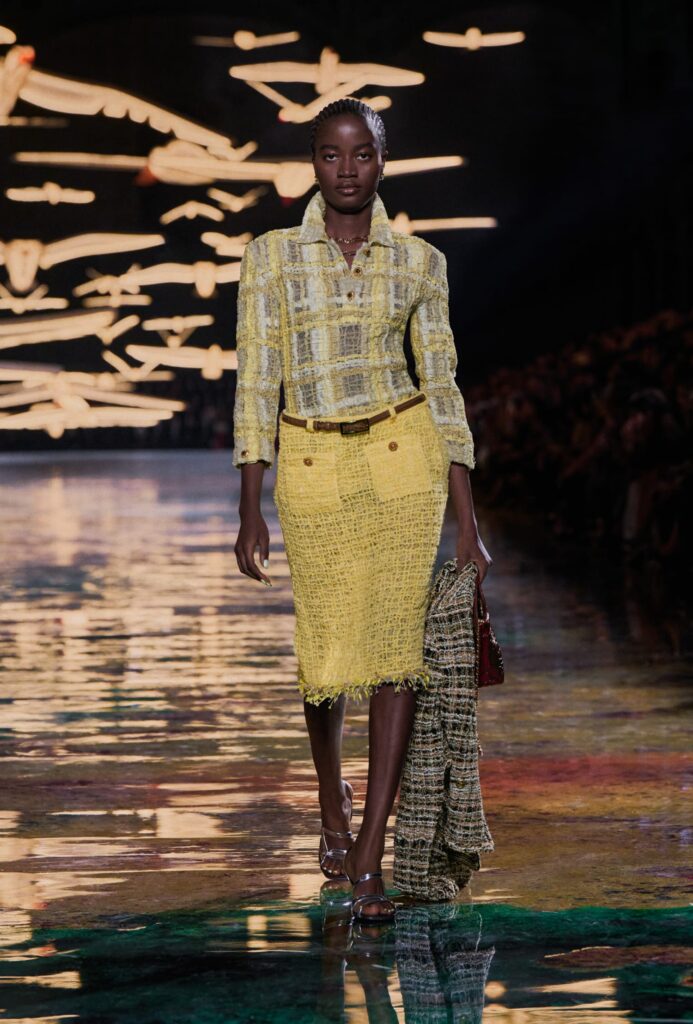
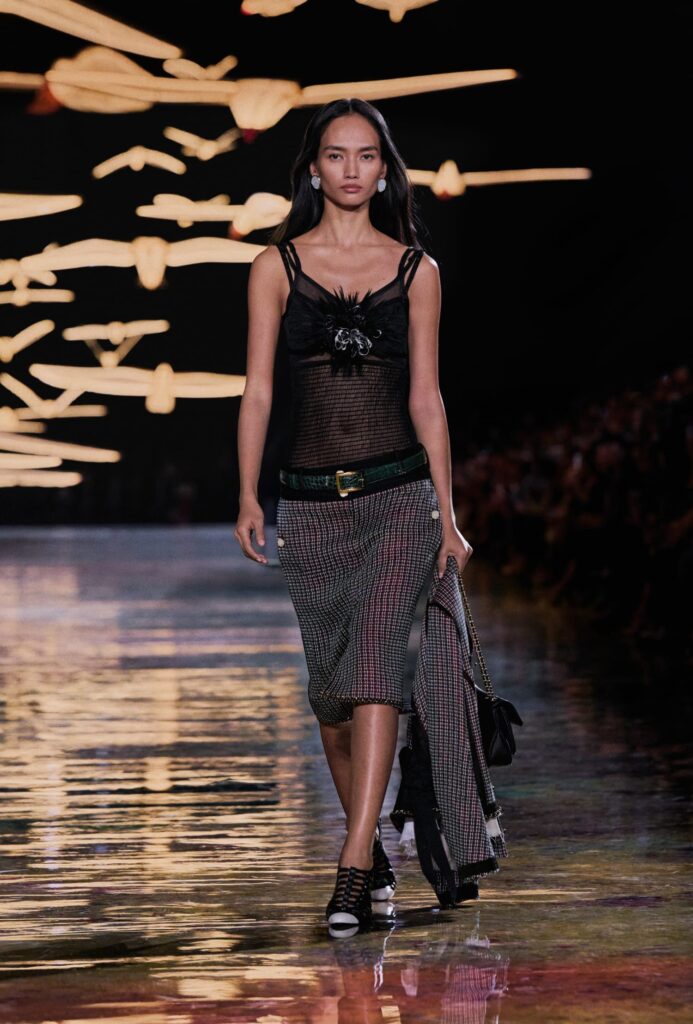
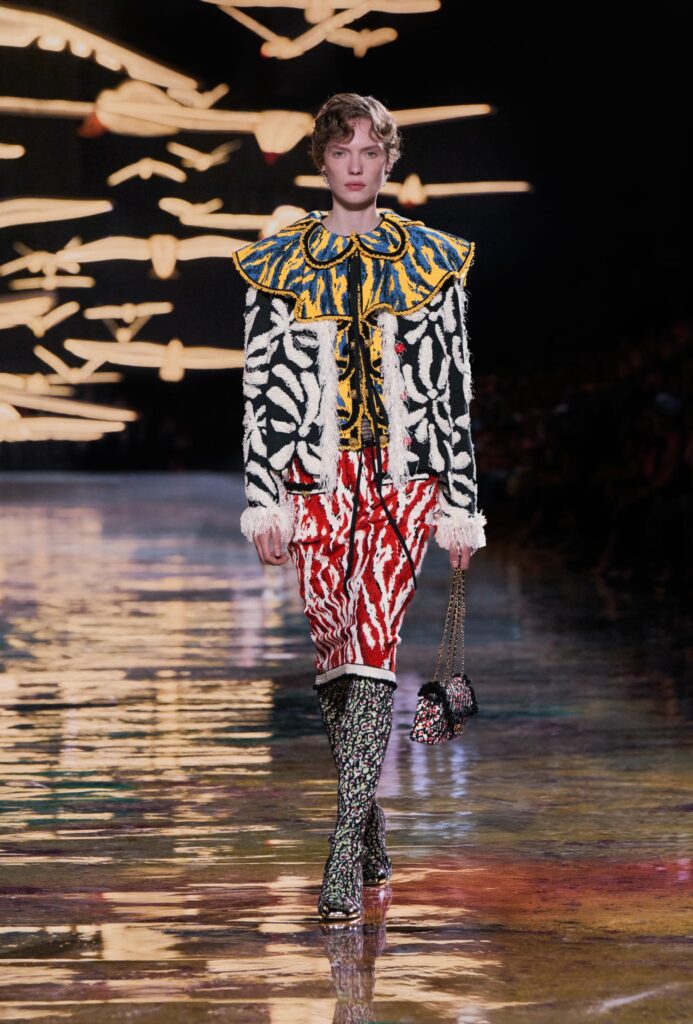
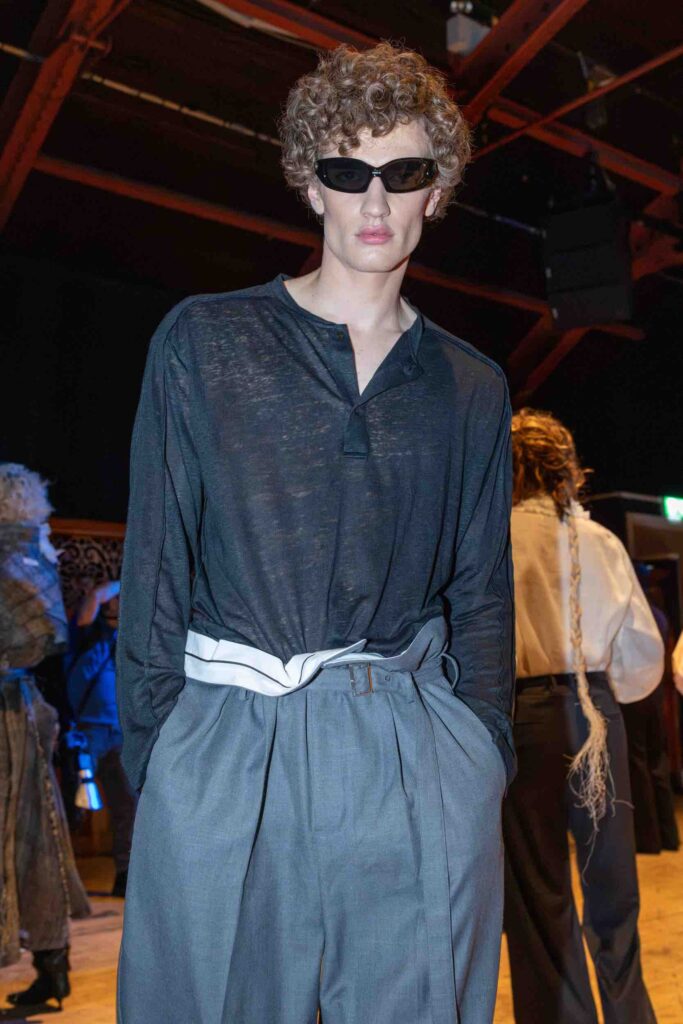
Blazy gives those traces a physical form. The memory of corsetry remains in shadow boning, the curve of a bodice or the flourish of a peplum. Raw edged tailoring recasts men’s formalwear as gilets and pencil skirt suits. There is a sense of transformation in progress, as structures loosen and familiar shapes acquire another possibility. The past survives in the cut, even as the body gains room to move.
Through the thoughtful details and precise tailoring, Gabrielle, the woman with whom it all began, suddenly feels closer. Yet the collection feels distinctly Blazy’s, with a personal sensibility running through it. Chanel’s DNA is instinctively understood and given room to evolve.
Gabrielle’s passage from restrictive dress towards ease becomes legible through the clothes. The woman who wore those earlier forms remains present in the woman who changed them. Through Blazy’s lens, that experience reaches a contemporary Chanel woman, whose identity is equally unlikely to fit into a single silhouette.
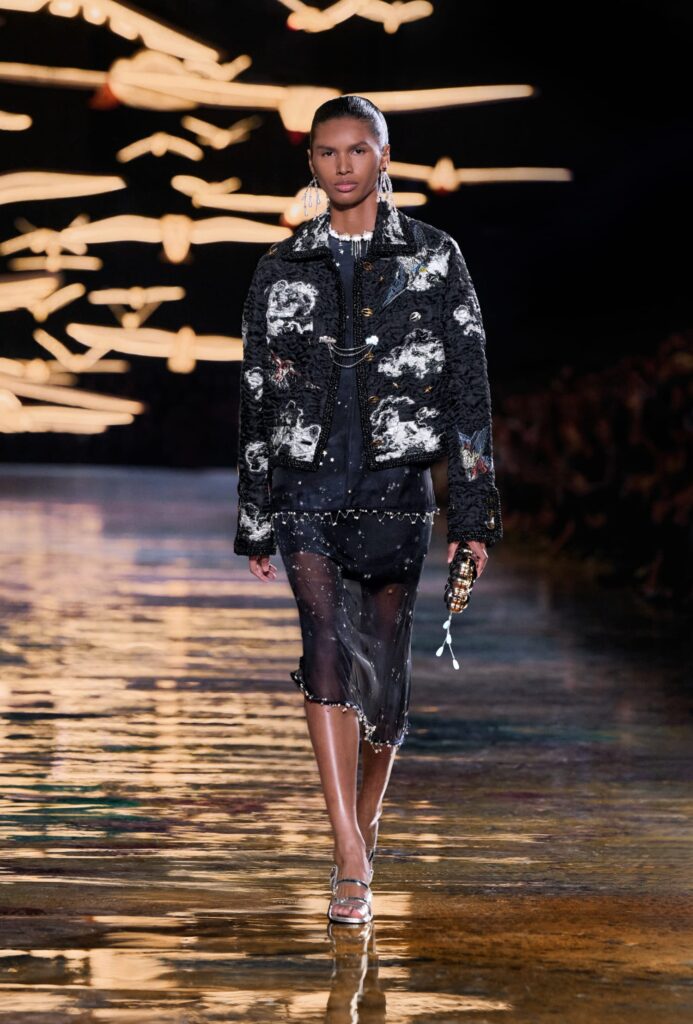
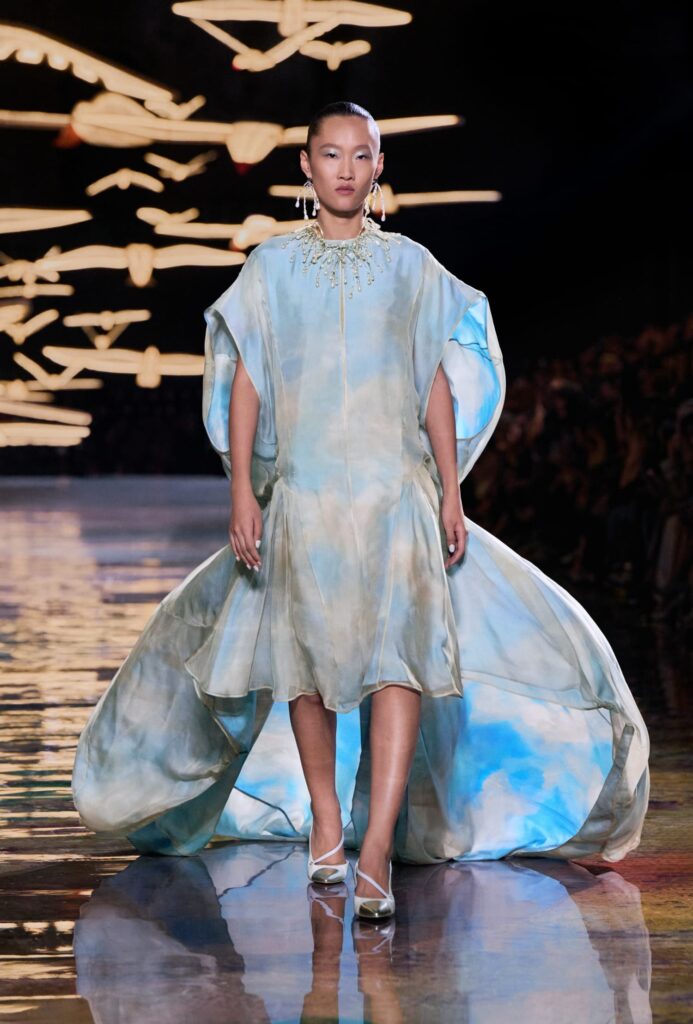
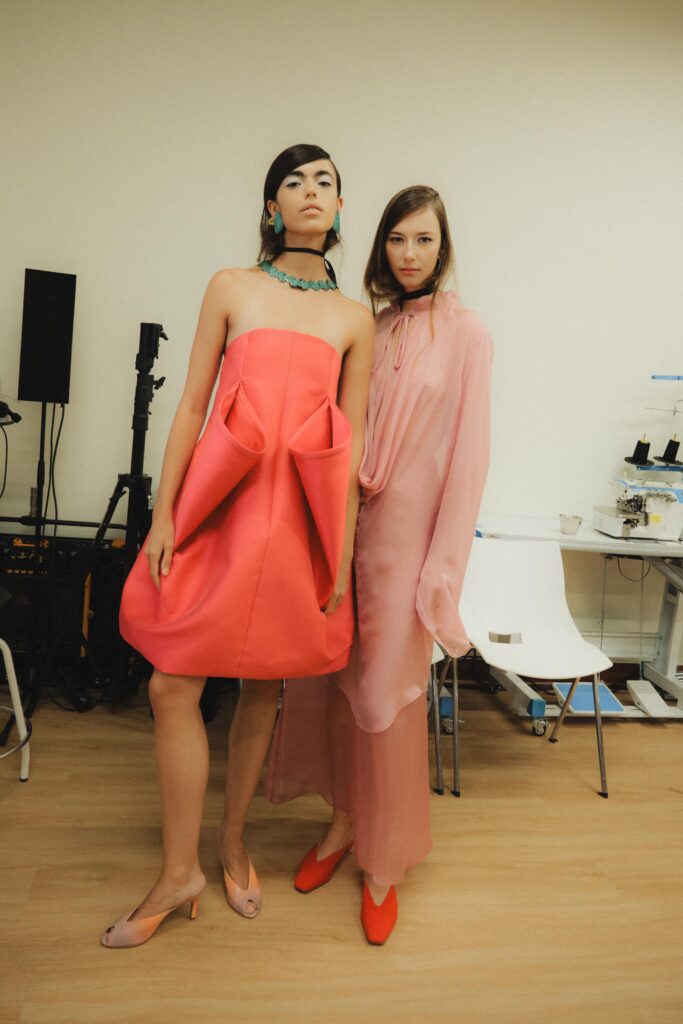
The collection lets you be swept away. Layers of printed silk, differing in weight and transparency, evoke clouds passing through morning, golden hour and nightfall. Bias structured, sequinned gowns and knitted, beaded dresses bring an ease to eveningwear that feels particularly seductive. Their lightness gives the workmanship a purpose: allowing the wearer to move, rather than asking her to accommodate the dress.
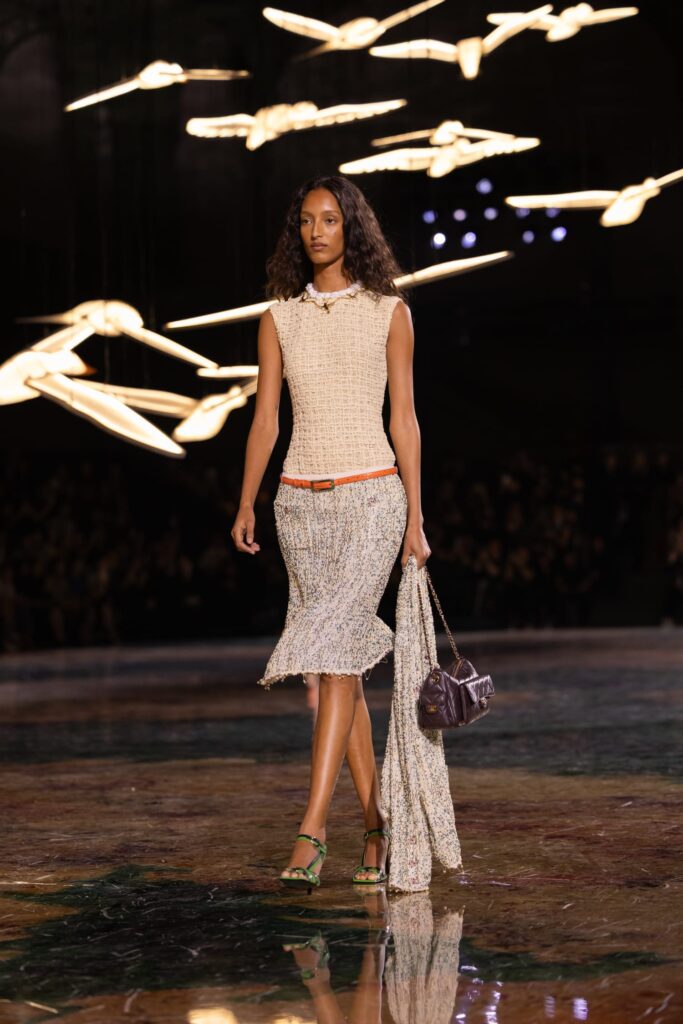
That thought comes into sharpest focus in the new smocked tweed. Stretch lends the suit a malleability that brings it closer to the body, connecting the jersey underwear at the beginning of the collection with the tailoring at its close. Here, fabric development advances an idea that was central to Gabrielle’s work. The innovation feels persuasive because it answers a recognisable desire: to wear something beautiful and still feel free within it.
The casting felt personal, particularly the choice of Rachel Ojuromi. She had previously interpreted the Métiers d’art 2026 collection in photographs shot on the streets of her hometown Lagos, bringing Chanel into her own surroundings and giving it her own point of view. Seeing her on this runway felt like an acknowledgement of that contribution. I loved the sense of a conversation moving both ways: a woman interpreting the house, and the house responding to her. It gave the collection’s exploration of identity a lived dimension, recognising that Chanel’s story is also shaped by the women who make it their own.
Then there was Gabrielle’s own handbag. Dyanira Hurbuscher, who opened the show, returned for the final look carrying Gabrielle Chanel’s own original 2.55 from 1955, brought from the Patrimoine archives. After the crushed, cherished bags of Blazy’s debut, here was an object whose familiarity came from Gabrielle’s own life. Its presence made the conversation between them feel almost tangible. We often encounter her through photographs, quotations and the codes she left behind; this was something she had held and carried. Now, in another woman’s hand, it brought a private piece of her history into motion again. For a moment, the distance between Gabrielle and the women wearing Chanel today felt remarkably small.
A year into this conversation, I find myself drawn to Blazy’s ability to make that inheritance feel available. Chanel’s recognisable forms remain, but there is space inside them for different temperaments, bodies and ways of living. Gabrielle’s many selves become an invitation to consider our own. Perhaps that is why this collection feels so intimate. It makes room for the woman you are today, while leaving you free to become every version of yourself.