
Elsa Chagot

Fashion Articles

Benjamine Cadette – An Interview With the Designer

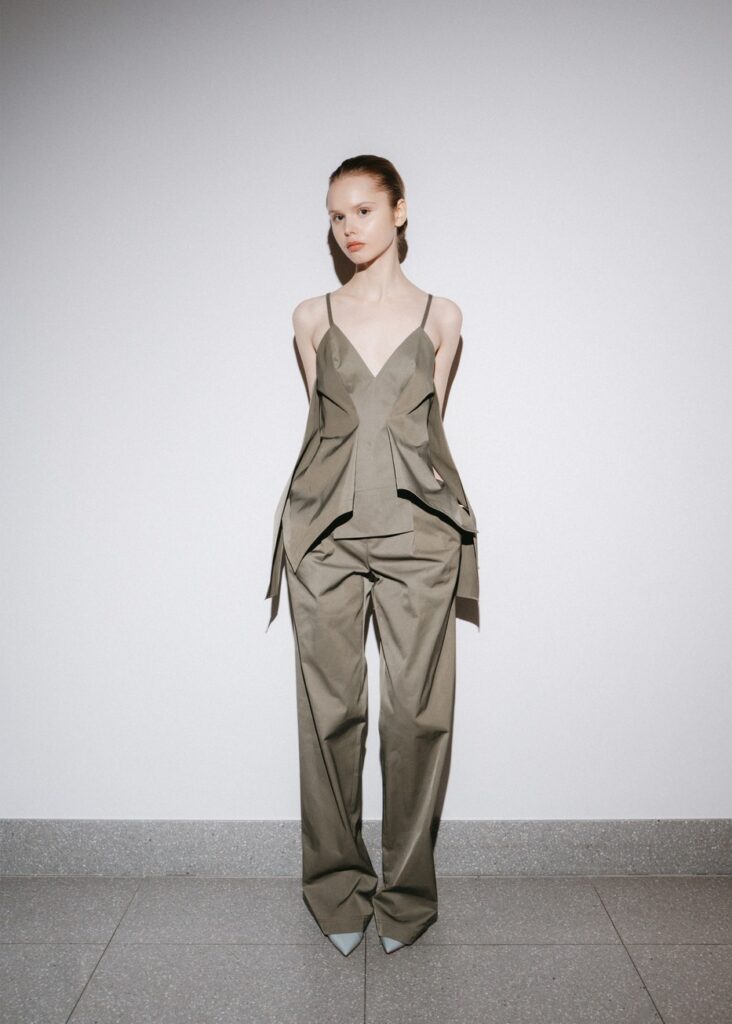
Benjamine Cadette – An Interview With The Designer text Elsa Chagot photography Viktor Tägt Ring images courtesy of Benjamine Cadette Moving between Seoul, Paris, Seattle and now Stockholm, designer Hyoung Ook Choi has shaped his brand, Benjamine Cadette, as a world built on dualities; organic emotion and architectural structure, instinctive expression and refined restraint. His practice is guided not by trend or reference, but by observation: the behaviour of plants, the rhythm of cultural landscapes, and the subtle ways a garment can align with its wearer rather than impose upon them.  In conversation with Odalisque Magazine, Choi reflects on the evolution of his aesthetic, the layered meanings behind his two collections, and the philosophy that anchors his approach to design. Elsa Chagot: Tell us about your journey toward becoming a designer – how that path began and evolved for you. And following that, how did Benjamine Cadette come to life and develop into the brand it is today? Hyoung Ook (Benjamin) Choi: I grew up in the countryside, where I spent much of my childhood with plant and animal encyclopedias open in front of me, observing nature closely. I was fascinated by why certain plants grew only in specific environments and how small living organisms negotiated space with one another. These early observations shaped my eye for structure and planted a deep sense of sensory curiosity. My years in Paris expanded that sensitivity in a new direction. Realizing that what I found beautiful could evoke the same emotion in others was a quiet but important confirmation. For the first time, I felt that the way I see the world could become more than personal taste — it could evolve into a kind of language. When I returned to Korea, I wanted to bring together the sensibilities and experiences I had accumulated over the years. From that flow, Benjamine Cadette was born. Later, when I moved to the United States, my work shifted once again. Living closer to nature and collaborating frequently with local creatives, I often found moments where my clothing blended effortlessly into the surrounding landscape. This harmony gave me confidence that my aesthetic was not tied to a single place — it could find its place naturally in new environments. Looking back, becoming a designer was never the result of a single decision. It was built from layers of observation nurtured by nature, sensibilities gifted by different cities, and the traces left by moving through cultures and environments. All of these accumulated to form who I am today. Benjamine Cadette continues to grow through understated emotion and restrained beauty. The layers of time I have lived — the nature, the cities, the people — remain quietly embedded in the shapes and textures of the clothes. E: What specific experiences or influences have most profoundly shaped your personal aesthetic or the way you perceive fashion? B: No, I didn’t get inspired by other designers or whatever, just my lifestyle. And yeah, I think a lot of myself, what I want. E: Your journey spans Seoul, Paris, Seattle, and now Stockholm. How have these diverse cultural environments shaped not only your aesthetic, but also the way you understand fashion as a cultural language? B: Experiencing life across Seoul, Paris, Seattle, and now Stockholm has given me one clear understanding: the more diverse the cultural landscape becomes, the more fashion — as a cultural language — demands a pure form of expression. Just as people can misunderstand each other even while speaking the same verbal language, fashion can also be misread within the same culture. These experiences taught me that sincerity, emotional honesty, and expressing what feels truly ‘mine’ are what allow fashion to communicate clearly across cultural boundaries. portrait photography Sandra Myhrberg métier moment moment The more I moved between cultures, the more external decoration and explanation lost their power. Instead, I learned that raw, instinctive, and original expression carries a deeper resonance. Whenever I worked from that place of honesty, the reactions to my clothes felt warmer, more human, and more profound. Ultimately, this journey made one direction very clear to me: to express myself more purely, more truthfully, and more in alignment with who I am. I believe that is the cultural language of fashion that remains authentic, even when the culture shifts. E: How do you balance individual creativity and expression with the practical, commercial realities of building a collection?  B: In the early stages of running my brand, I naturally adapted to the commercial realities of the business. However, as time went by, I realized that if my personal creativity is not fully expressed, the brand’s character and identity can begin to fade. That is why I actively propose and pursue various collaborations, and especially through the Métier line, I am able to express my creativity in a deeper and more meaningful way. By finding this balance between practical considerations and creative expression, I ensure that the brand continues to grow without losing its essence. E: When looking at your collections Métier and Moment, I see two distinct yet connected worlds. Métier with its emotional lightness and organic, more nature-driven femininity, and Moment with its more structured, architectural approach.  What guided you in defining these collections as separate expressions within the brand? And how are these identities evolving as you move into the next collection – what can we expect to see? B: The name Benjamine Cadette is built on dualities; each word holds two meanings. Benjamine can sound like a masculine name while also meaning “youngest sister.” Cadette refers to an aristocratic soldier going to war for the first time, but in its feminine form also means “younger sister.” These layered meanings naturally shaped the structure of the brand. Métier is the line that expresses the brand’s essence in its most vivid and raw form — where nature and my cultural roots appear most clearly. Moment refines the same sensibility and philosophy into the language of everyday life — a world that moves quietly
Art

Between Surrealism, Memory and the Female Gaze – An Interview With Sanna Fried

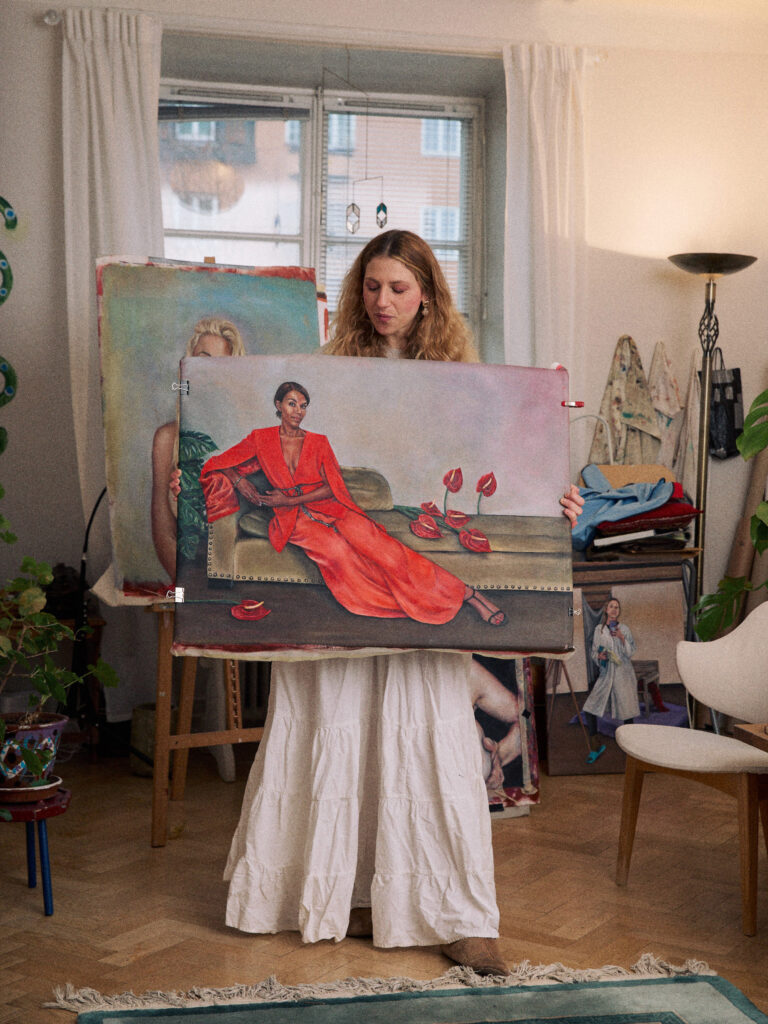
Between Surrealism, Memory and the Female Gaze – An Interview With Sanna Fried text Elsa Chagot photography Sandra Myhrberg In her paintings, Sanna Fried moves between worlds; the commercial imagery of her former fashion career, the emotional intensity of female surrealism, and the lived realities of women who stand outside narratives. Speaking with Odalisque Magazine, she reflects on returning to fine art, the women who shaped her visual language, and the ongoing project that challenges the ways society interprets female autonomy and desire. Elsa Chagot: You began your career in fashion before fully turning to painting. How has that background shaped the way you approach art today? Sanna Fried: Although painting has always been my deepest passion, and I went to a foundation art school, Nyckelviken, in Stockholm, at 23 my focus shifted towards fashion. Unexperienced, barely speaking English, but with a determination, I moved to New York City to fulfill my dream to work as a fashion editor. Suddenly a formative decade had gone by, working with clients such as Vogue, Vera Wang, Cartier, and Missoni but I felt something was missing me- the art! The beginning of the pandemic became a turning point for me and I felt the call to return to fine art. I spent the first part of the pandemic on a beach in Costa Rica where I spent my time studying art and practicing, painting oil on canvas but also murals. In my search for what is my artistic voice I found inspiration in the female surrealist movement and artists like Remedios Varo, Dorothea Tanning and Leonor Fini together with masters of expressional portraiture like Mary Cassatt, John Singer Sargent and Diego Rivera. The inspiration I found in the history of art began to intertwine with my greatest influences from fashion photography. I’m deeply inspired by Paolo Roversi’s portraits- how a single image can hold an entire story, and by Richard Avedon’s In the American West– where he in portraits reveals the soul of his subjects using no more context than a white backdrop. Like Warhol, my years in the commercial industry eventually led me back to the path of creating fine art, now deeply influenced by the language of commercial visual storytelling, and fashion photography. This foundation continues to impact my painting, inform my compositions and my curiosity in challenging what an image can be. EC: You cite artists like Remedios Varo, Dorothea Tanning, and Leonor Fini as influences. What draws you to these female surrealists? SF: In the later part of the pandemic I moved to Mexico City and ended up being Mexico bound for about 2 years. There, an entirely new visual world opened up to me — shaped by Mexico’s centuries-old cultural heritage and its long traditions of visual and artisanal arts, and reflected so clearly in the city’s many museums and cultural institutions. One of the first things I noticed was Mexico’s tradition of honoring female craftsmanship. Because of this, female contemporary artists have, in a very organic way, been given the spotlight they deserve. Discovering women artists who are barely mentioned in European and American art books — yet in Mexico are considered part of the country’s most important contemporary heritage — was extremely liberating for me. The women you mention were the ones who spoke to me the most: female artists working during modernism, going their own way. Using the bold colors of fauvism, blending rich detail with surreal elements, and bringing forward their most personal thoughts and emotions without censorship or fear — through their art. art Sanna Fried My own art has always been about not trying to satisfy the audience, but instead addressing the subjects that matter to me — and mental health is one of the most important among them. These women all had roots in Europe, yet each of them found her artistic identity through Latin America. I relate to that. I’m a woman from Europe, a context where female artists have always been, and still are, underrepresented. Finding my own artistic voice in Mexico, I discovered in these women not only new inspiration, but also a new sense of confidence as an artist. EC: You’ve drawn interest from both the fashion industry and female surrealists. What happens internally when those two worlds meet; the commercial and the surreal, the stylized and the raw? SF: For me, those two worlds meet very naturally. Fashion taught me to think in images — how a single frame can communicate mood, narrative, and identity with clarity and intention. Female surrealism, on the other hand, opened the door to everything that doesn’t need to be explained: symbolism, intuition, and the emotional layers beneath the surface. So internally it’s not a clash, it’s a dialogue. Fashion and commercial brings structure, composition, and a trained eye for detail; surrealism brings freedom and experimentation. One part of me builds the image carefully- the other part pushes me to let go a bit and let something unexpected in, or sometimes even something uncomfortable. In that overlap my work starts to feel honest to me and I find the balance between control and instinct. EC: I’ve heard artists describe their works as their children. What’s your personal take on that idea when it’s applied to your own art? SF: I can relate to that idea. My paintings do feel like my children in many ways.  Creating a painting is a slow process where you give something of yourself in order to bring something new into the world. There’s care, time, frustration, joy- and then a moment when the work no longer belongs to you, but has a life of its own. EC: You lead community workshops combining art and hospitality. Can you tell us more about that and its effect? SF: I started to shape my creative workshops during the first half of the pandemic, when I was living between Costa Rica and Tulum- two places with strong spiritual communities. I needed to find a way to support myself, and

Design

Mizetto Launches Modular Sofa Cargo in Sweden

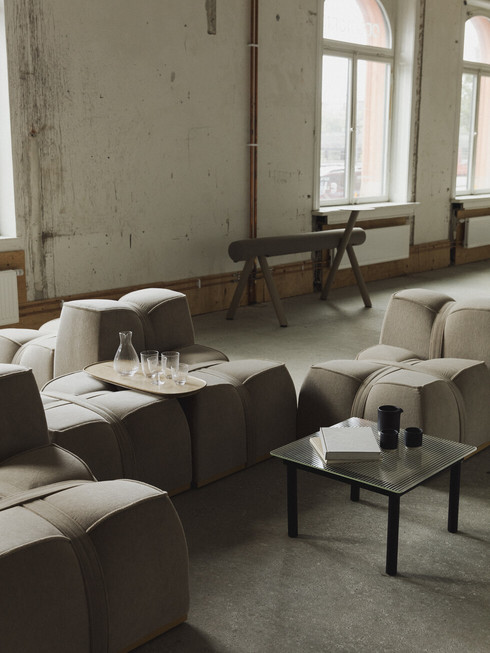
Mizetto Launches Modular Sofa Cargo in Sweden text Elsa Chagot With roots in Småland and a string of design awards, Swedish brand Mizetto is now launching its  modular sofa, Cargo, designed by the Kalmar-based studio ADDI. Following acclaimed debuts at NeoCon in Chicago and New York Design Week, Cargo was introduced to the Swedish market on September 9, 2025. Founded in 2004 by Malin and Richard Muskala, Mizetto has grown from a small storage-solutions company in Småland to an internationally recognized design brand with showrooms in Stockholm, Hamburg, and Chicago, as well as collaborations with global fashion houses including Gucci, Chanel, and Jacquemus. Cargo represents a bold step into the sofa segment. Inspired by the cube, its modular design allows endless layouts, from large open spaces to narrow passages. The backrest doubles as an interactive architectural element, while attachable tray tables add flexibility, turning Cargo into a workstation, meeting hub, or relaxation spot. The design of Cargo also emphasizes sustainability. Mizetto’s mostly local production in Kalmar, close relationships with nearby suppliers, and short transport chains ensure better quality and promotes sustainability. Fabrics are removable and replaceable and all components are designed for repair, reuse, or recycling, which ensures longevity as well as aesthetic durability.

Scroll to Top