Art

Art

 Jenny Kaiser wants to bring back the punk at Fotografiska 

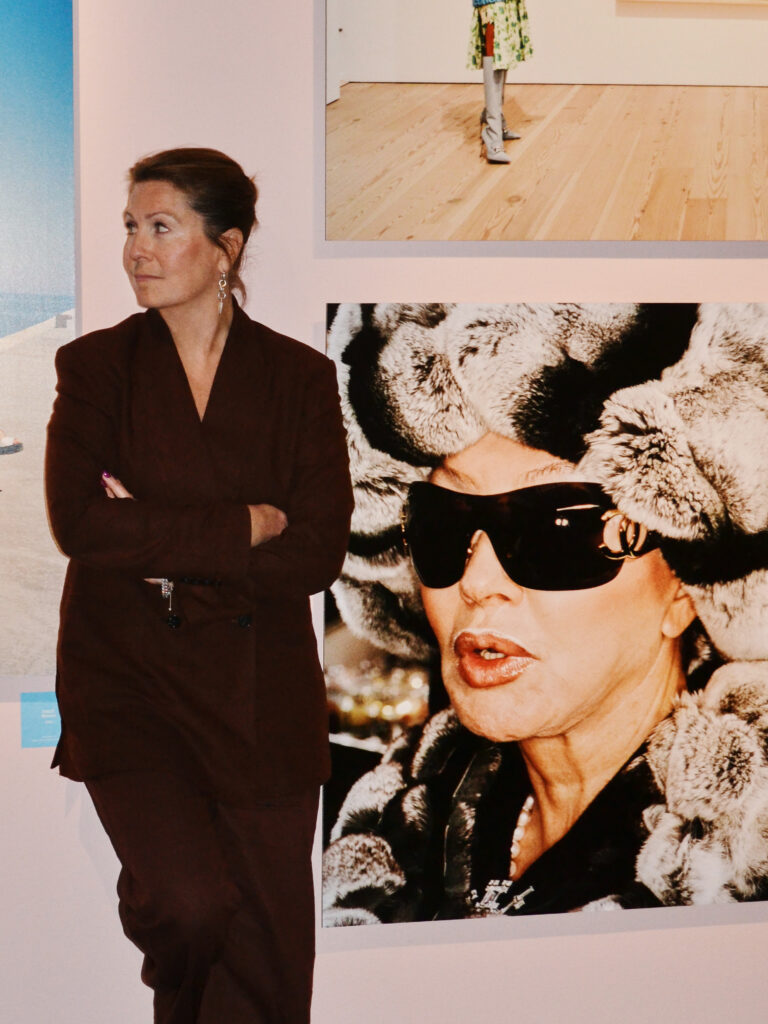
Jenny Kaiser wants to bring back the punk at Fotografiska Text by Natalia Muntean “People have never been more alone than we are today. That’s a huge strain on society,” says Jenny Kaiser, newly appointed Director of Fotografiska Museum in Stockholm. Kaiser didn’t come from the art world. She came from advertising, from one of Sweden’s largest agencies, and she arrived at Fotografiska with a clear-eyed diagnosis: that in an era of endless images, the experience of actually standing in front of one has never mattered more. Located on the edge of Södermalm, on the shore of the Baltic Sea, Fotografiska has just celebrated its 16th year. Kaiser is now steering it into the next chapter with a mandate to sharpen, provoke and, in her own words, get the punk back. Natalia Muntean: In these seven months, what was one achievement you’re proud of or that surprised you in how things turned out?Jenny Kaiser: One thing I’m very proud of, and that was also a key reason I came here, was getting the team aligned on a joint direction for the future. We’ve actually just celebrated our 16th birthday. One of the tasks I was given was to define what Fotografiska will become in the next 15 years. What was quite evident to me was that we have a fantastic base to build from, from a branding perspective, a destination perspective, and a photography perspective, but we lacked a clear direction. Where are we heading? Why? Who are we here for? What kind of experience do we want to offer? That’s something we’ve worked on together, not just in the management team but across the entire organisation. We’ve only just gotten started, but I’m proud that we’re already here, because a lot has been happening in terms of getting to know the company, the brand, the culture, the people, the business, the guests, the art, the exhibitions and the artists. Photos by Saskia Clarke NM: You come from the advertising world, so you have a bit of an outsider perspective. What has that allowed you to see when it comes to leading Fotografiska? JK: Having worked as a consultant for many years, I was trained to ask questions before giving answers. I’m very curious about what’s working, what isn’t, what we’ve done before, what we’ve learned, and what happens if we approach things differently. Not coming from the art world, but from business, leadership, and the creative sector, gives me a clear path in what I see and acknowledge. I also believe in organisations that dare to bring in new people who break convention, because that’s crucial for any industry today. Everything moves so quickly, and with that, you need to adapt, while also protecting what’s really the strength of your business, your model, and your brand. NM: It sounds like a tricky task – progressing while maintaining the core and the essence. You don’t come from the art world and now you work with a museum. Is that ever intimidating?JK: Not intimidating. I have huge respect for those who work with exhibitions, both strategically and from a curatorial knowledge perspective; that’s their real expertise. But running a museum goes beyond that. We’re not just a museum; we’re a destination where photography, art, and culture come together. I’m also, in some ways, a member of the general audience. I don’t know as much as our curators and experts about art of course, but I really love and appreciate art. I think culture and art are really important for people, especially now, when we need to come together, reflect, get inspired, have conversations, and meet each other in person. That’s what matters when it comes to what we offer through exhibitions, but we are much more than a museum, and we need to secure that going forward. NM: You mentioned the next 15 years. What do you have in mind, and what would success look like? JK: Success goes way beyond growing in the number of guests. It’s about humanity and emotions. It’s about being a place where people come together: companies, individuals, cultures, opinions. It’s important that we continue to be a force in Stockholm’s cultural life, and that the city acknowledges what culture adds to the broader perspective of Stockholm. Culture has always been important here, but it becomes even more important now, in the context of transformation. Another aspect: sometimes a museum is perceived as being in contradiction with having a financially healthy business and I don’t think that’s a contradiction at all. You need financial stability to be able to progress and continue to invest in what you’re doing. That’s also something we need to secure going forward. Fotografiska has always been a societal brand that hasn’t been afraid of going into subjects that are sensitive or that raise big questions. That’s a force we need to continue to be, not for its own sake, but because that’s the role of art, storytelling, and creativity: to share a perspective, a view of the world today, what we see in the future, what’s happening in a contemporary context. When we use art and culture to nurture those conversations, the world becomes a better place. What Fotografiska does, and will continue to do, is bring different perspectives under one roof. Regardless of why you’re here, you might visit the restaurant and unexpectedly experience an exhibition you never would have sought out, or come for one exhibition and be surprised by another. That’s what it’s all about: perspective, storytelling, different viewpoints coming together. Inclusiveness is essential. NM: We’re living in an era of extreme image saturation. What does that mean for a place like Fotografiska? JK: We’re almost fed up with images. If you go into social media and all the different digital spaces, I think it’s made us numb. The role we play, which is so important, is the emotional part. A small image of Martin Parr on a mobile phone for half a second in a tiny
Art

What the Mind Protects: Elin Fiorentino on DIAGNOSIS and What Comes Next

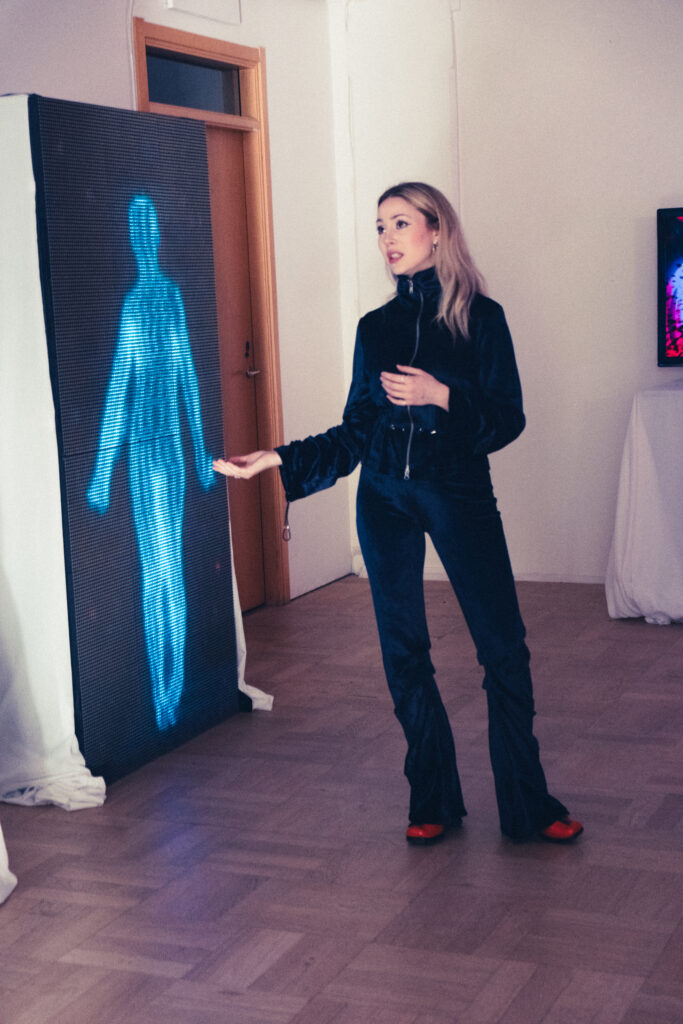
What the Mind Protects: Elin Fiorentino on DIAGNOSIS and What Comes Next Text by Natalia Muntean “I want people to leave with less shame and more compassion, both for themselves and for others,” says Stockholm-based artist Elin Fiorentino about her debut solo show, DIAGNOSIS. Eight video works, each one a different trauma response: dissociation, flashback, altered perception, were built from saturated colour and glitching texture into a space designed to materialise the ways of  an altered mind. For Fiorentino these trauma responses are not pathologies, but more of an evidence of the mind’s own intelligence at work. Natalia Muntean: DIAGNOSIS mapped eight distinct trauma responses: intrusion, dissociation, flashback, altered perception. How did you decide which symptoms to portray, and was there one that proved the most difficult to translate?Elin Fiorentino: It was less of a conscious decision, more of an observation of what felt most present and persistent to me at the time. But the most difficult piece to translate was ‘Perceive Or Receive’. Unlike something more tangible, such as flashbacks or intrusive thoughts, altered perception or depersonalization affects the way reality itself is perceived as well as how you see yourself. I wanted to communicate that unsettling feeling of existing in a familiar world that suddenly feels foreign. Finding a visual language for something so internal and abstract was very challenging. NM: You describe the mind’s symptoms and trauma responses as forms of intelligence rather than failures. Where did that understanding come from, and how does it shape what you want a viewer to take away from your work?EF: It comes from being an observer of my own mind and experiences. During the period that inspired DIAGNOSIS, it became clear that I wasn’t consciously choosing these reactions. I could intellectually understand that I was safe, while my body and mind would respond as if I wasn’t. Even though it was very difficult to navigate at the time, I was able to observe my trauma responses and see them as adaptations designed by the brain to protect me. Which, to me, translates to something fundamentally human, a form of survival intelligence, rather than something broken. Seeing the symptoms this way allowed me to study what was happening rather than being consumed by it. Instead of asking, ‘What’s wrong with me?’ I wanted to focus on understanding what my mind was doing. That shift in perspective became an important part of both my healing process and the development of the work itself. This perspective is also what I hope viewers take away from DIAGNOSIS. I want people to leave with less shame and more compassion, both for themselves and for others. I believe understanding trauma responses and identifying when they occur in yourself or in others is an important step towards creating a safer world. NM: Your visual language is very specific: bichromatic saturation, pixel aesthetics, organic abstraction colliding with pop references. Was that a deliberate construction, or did it show up intuitively?EF: My visual language mainly unfolded over time intuitively. There are aspects of how I express myself creatively that tie back to the first paintings I ever made, which is something I can´t really explain. But I think it also took form through experimentation and allowing myself to explore different tools and techniques that interest me.   I think finding your voice in any art form really comes down to repeatedly doing, trying, failing and obsessing over it. I´m not one of those people who like to know exactly where I’m going before I start. I love it when there is an aspect of exploration into the unknown. With that said, I think personal taste inevitably shapes the direction of the work too. I tend to be drawn to visuals that feel nostalgic, surreal or emotionally resonant. I love abstract and fractal geometry, high contrasts, bright colours, particles and find a lot of inspiration through cinema. Each of these elements resonates with me for different reasons, and over time, they have naturally become part of my visual language and the world I want to exist in. NM: You perform live as a VJ as well as making exhibition work. How do those two sides of your practice relate to each other?EF: I always aim to create an emotional experience and communicate something internal, whether it’s in the form of an installation or a live performance. But despite the intention being the same, they do also feel like parallel forms of expression to some extent. My exhibition pieces function more like moving paintings or worlds to step into. I spend more time in the creative process and have more freedom in expression and combining different disciplines. When vj-ing, the work emerges through a dialogue between myself, the music, and the surrounding environment. Performing live taught me to let go of perfectionism and to trust intuition. In a live setting, there is no time to refine or second-guess decisions. You’re constantly responding to the music and atmosphere, anticipating movement, and trusting your instincts.  Photo by Elis Lindsten The experience changed the way I approach video art altogether. I tend to tap into this approach when I work with installation, too. Focusing less on how something should look and more on how it makes you feel and what it communicates. There is something magical about letting go of control and just allowing yourself to express. It’s in those moments of freedom where you create with the most honesty.  NM: DIAGNOSIS was your first solo exhibition. What did making it clarify about where your practice is heading?EF: I always had a vision of creating space for reflection, conversations and bringing people together. It was one of the things that felt the most important to me with this exhibition. Making the room itself become part of the conversation. Which it did, and I feel very grateful for that. It became clear to me that it is possible and important to follow the ideas you hold, especially if they appear impossible. Always find a way to
Art

Making Room for Play: Design through the eyes of childhood

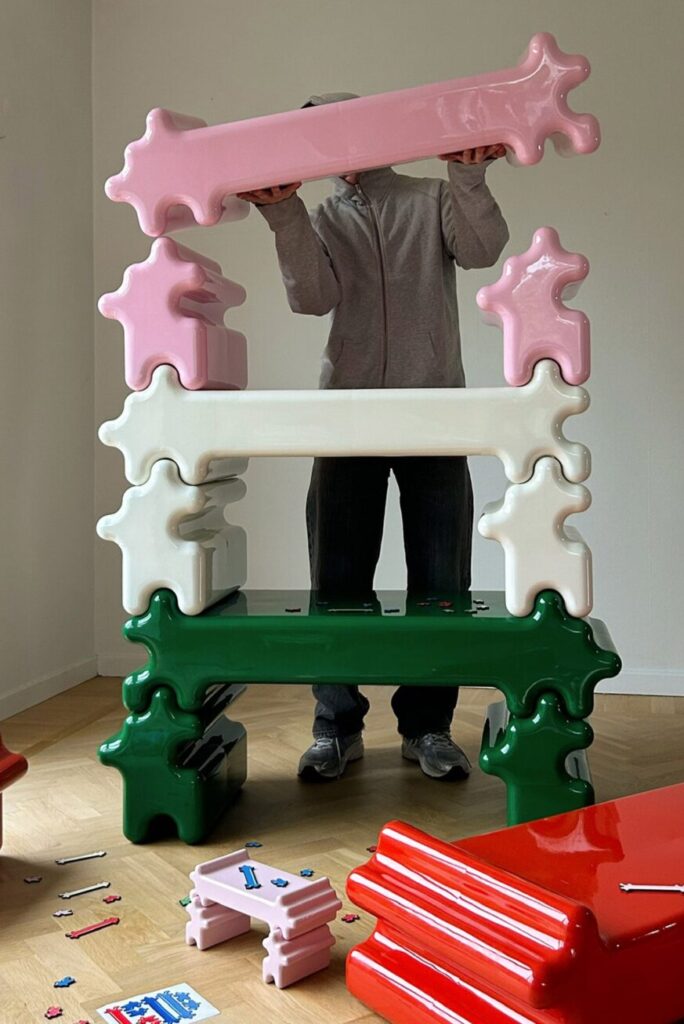
Making Room for Play: Design through the eyes of childhood Text by Astrid Birnbaum Puzzle Shelf by Gustaf Westman Box Stool by Max Lamb INNER CHILD: Playing with Design is the title of Artipelag’s major autumn exhibition. Curated by trend forecaster and design curator Lidewij Edelkoort and curator, art historian, and trend analyst Philip Fimmano, the show brings together more than 100 designers from around the globe. Longtime collaborators, the two have worked together on a number of international exhibitions exploring design and material culture. Structured across eight thematic sections, the presentation explores play, making, and curiosity through furniture, textiles, objects, and installations. “Through works by established designers and new creators, this exhibition offers an uplifting sense of hope,” say curators Edelkoort and Fimmano. The exhibition design has been developed by Dutch designers Kiki van Eijk and Joost van Bleiswijk together with their two children. The family collaboration echoes the subject of the show, not only in the works on view, but in the way it has been conceived. Among the participants are Maarten Baas, Yinka Ilori, Max Lamb, Gustaf Westman, Victoria Yakusha, Pierre Yovanovitch, and numerous other designers and makers. “The exhibition is an international investigation into design and fantasy as a creative force in our challenging times,” says Dragana Kusoffsky Maksimović, Artipelag’s newly appointed museum director. INNER CHILD: Playing with Design opens at Artipelag on October 10, 2026, and remains on view through April 11, 2027.
Scroll to Top