Art

Art

An Interview With Curator Matilda Olof-Ors

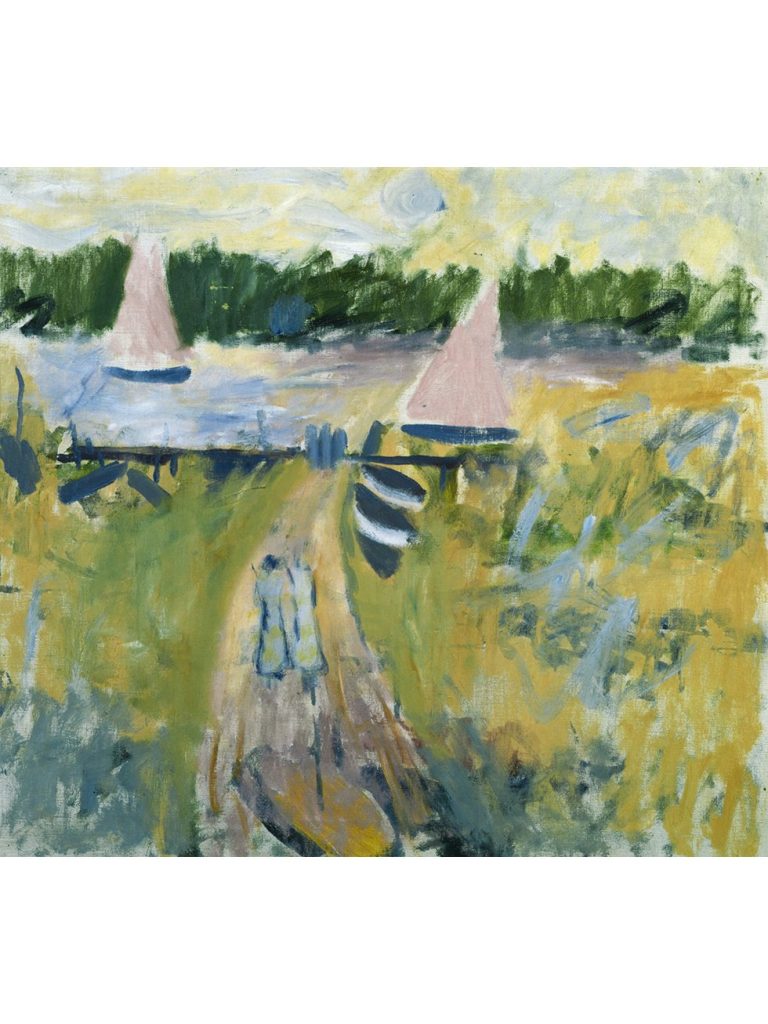
An Interview With Curator Matilda Olof-Ors text Josie McNeill A large sculpture composed of stacked wooden logs greets visitors as they enter the Moderna Museet’s “Pink Sails – Swedish Modernism in the Moderna Museet’s Collection,” exhibit that was unveiled on June 17. The sculpture, “Horizon of Me(aning)” by Carola Grahn, is a part-performance piece that, per the artist’s instructions, must be privately assembled in the exhibit while having a conversation about mental health. “Horizon of Me(aning)” speaks on how nature is animate, and although it is from 2015 originally, the work’s theme of trust in nature connects to many of the other pieces in the exhibit from the 20th century. ‘Pink Sails’ explores this theme, along with other progress and changes in society in this age, through the lens of modernist artwork. ‘Pink Sails,” curated by Matilda Olof-Ors, is a part of the museet’s new exhibition program in which each exhibit aims to explore art historical contexts instead of simply showcasing the chosen pieces chronologically. The exhibit draws its title from Ragnar Sandberg’s 1934 painting of the same name. For Olof-Ors, she was inspired to name the exhibit after this painting because “the lyrical and open character of the title also speaks to a strand of Swedish art at the time that existed side by side with the more well-known modernist narratives of transition and progression.” Can you start off by just giving me an overview of the exhibit?It’s based mainly on works from the Moderna Museet’s collection and covers the period from 1900s to the 1940s. I’ve been interested to see how the very drastic and rapid changes in society, of course, also reached the realm of art. You find it in both the artists’ quest for new motifs, and in the motifs themselves, capturing the new society-–everything from the fast growing cities to the industrial sites. But also I think it’s reflected in how the artists’ constantly strive to push the boundaries in search for new expressions, as well as in the artists that were rather turning their gaze inwards, using inspiration from fantasy, from fairy tales, from literature, and from sort of a non-visual world. It is also interesting that these tendencies exist side by side; it’s not like one thing or the other. What was your process of curating the exhibit? Did you come up with the idea first and then find paintings to fit in or were you inspired by the collection of paintings?The museum has a fantastic collection of works from these periods, so it’s been most inspiring to go back and look into that to explore. As the exhibition is based on our collection, limitations are of course inevitable, and I have included a few loans from neighboring institutions like National Museum and an institution in Uppsala, Bror Hjorths Hus, The Hilma af Klint Foundation and the Swedish Radio. The curation process, of course, has involved the compilation of a few monographic rooms, and also outlining some more thematic contexts. How did you choose the sub themes for the exhibit?It’s been a combination of posing questions and exploring: What art works, artists, and themes do we have in the museum’s collection? What sort of stories can we tell? What is interesting and relevant today? I think this period is interesting to look at now, almost 100 years later. Today, there’s another war going on in Europe. We experience very drastic changes in society, still going faster and faster as well. And I think we again gaze at nature as a way of searching for solutions to the challenges that we face today. To conclude, some prevailing themes in the early and mid 1900s are still very present or reoccurring today. I was gonna ask you to talk about that a little more. How do you think ‘Pink Sails’ is still relevant in today’s world?I would say that history is always relevant. We both get to know the history and get to reflect on contemporary society. As I mentioned earlier, many of the things that we are facing in the show are also very present today. Was there a piece of exhibit that stood out to you as being particularly impactful?One of my favorites is that wall [pointing]. I really like the texture, and the combination of the textile work by Anna Casparsson and the Vera Nilsson painting. I think they grasp some of the atmosphere that I was aiming for in this room. But also, I do have so many favorites. And then is there like a central message you want people to take away that are visiting the exhibit?Not particularly. It’s more that I hope that everyone would see and find something that they could relate to in the exhibition. And then did it come together the way you initially visualized it? In a way, yes. I think it’s so interesting working with contexts and ideas that you could start at one end, and then you realize you end up somewhere else once you sort of set the tone. And then how do you think Swedish modernism has evolved since the 20th century from when these paintings are from?That’s such a long story to tell. Of course, history is always changing. I would say the way we look at these paintings now is totally different than how they were perceived in the 1920s, or even in the 1970s, or the 1980s. I would argue that our relation to what we see is always the present one – both the artworks and how we look at them, but also how we interpret them is in a totally different way today than in the past.
Art

An Interview With Lío Mehiel

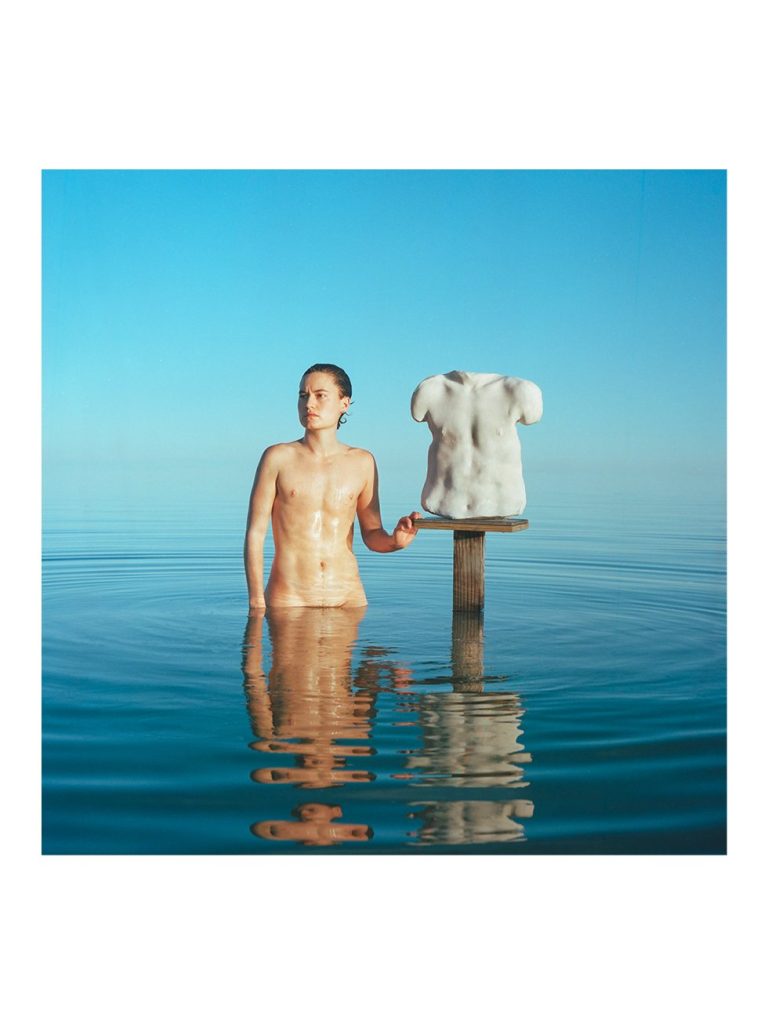
An Interview With Lío Mehiel text Josie McNeill When trans-masculine filmmaker, actor, and artist Lío Mehiel came across the toxic, man-made lake of the Salton Sea in Bombay Beach, California, they saw a metaphor for the experience of transgender people in the world. “It felt like a warning message, that underneath this man-made, toxic lake, the world had drowned, and the world is drowning,” Mehiel said. “And like, the powers that be … are distracting us by getting us to argue about whether or not trans people should exist and whether women should have the choice to get an abortion. It’s like we’re being distracted by this shit when our world is drowning, and it’s underneath the toxic lake of our own making.” Mehiel explored this comparison and others in their photograph ‘angels in a drowning world.’ The piece, which was shot by trans masculine photographer Wynne Nielly, will be on display as part of the ‘Saints and Sinners’ exhibition in the Guts Gallery in London from June 9 to July 7. The exhibition showcases art by LGBTQIA+ artists and aims to explore what it means to be queer in a time where many safe spaces are being physically closed. The trans experience is a topic Mehiel explores through their multitude of artistic pursuits, including their portrayal of Feña in the film ‘Mutt,’ which will be released August 18. Mehiel was awarded the U.S. Dramatic Special Jury Award for Acting at the Sundance Film Festival on Jan. 27 for their leading role in the film. ‘Mutt’ centers around a tumultuous, emotion-filled day for Feña, a young trans masculine person. So with all of that, if you haven’t heard Mehiel’s name in conversations in the arts world yet, you probably will soon. Can you start off by telling me a little bit about yourself and your background in the arts?I’m a Puerto Rican and Greek trans masculine artist. I’m a filmmaker and I’m also an actor. I started out actually dancing salsa when I was seven years old, professionally, and then I was acting on Broadway in New York as a kid. And then it really wasn’t until University and upon graduating that I started to form more in the installation and the visual art space, which really just serves as a passion space for me. It’s not something I necessarily have an agenda about making money from or building a career because acting and filmmaking takes up the industrious side of my work. But visual art and installation is something I do as a way to explore and pilot out aspects of my identity. And to sort of reckon with the difficult things that I see in the world. Like I sort of process it through photo projects, in collaboration with other artists. What drew you to photography? Was it mostly your filmmaking background?I think that I’m an image maker and creating images has always been really fascinating to me, especially as a queer and trans artist because I spent so much time in my life before I transitioned thinking about the image of myself and trying to figure out how to both create an image that was what I thought would be acceptable to the outside world and also understand what it is that people were perceiving about me that was leading them to treat me in a certain way. And so I think Trans and Queer people, especially when they’re making art, have a sort of—or at least I can only speak for myself—I have a relationship to image making that is deeply personal because of the way that it’s threaded throughout my life. How did you come up with the concept for the angels of a drowning world photoshoot?So, a very close friend of mine is the one of the lead producers of this arts festival called the Bombay Beach Biennale. And it happens at Bombay Beach, which is a partially abandoned desert town about 45 minutes past Palm Springs and California. And it really feels like it’s the end of the world. Like it’s the last stop in the world that you would get to if the world was flat.  And the town is sitting on a man made, toxic lake called the Salton Sea, which is a really rich and inspiring, jumping off point for a lot of artists. [The Bombay arts festival was] able to give me a small grant to do some kind of installation and performance piece. At the time, I was already working on developing a collection of sculptures of trans and gender expansive folks, which is called Angels, with Holly Sylius, who made the sculpture of me that is in this photo. And then this opportunity came up and I was like, what are the implications of putting the sculpture of a trans person, me, and this you know, euphoric moment in my life commemorating my top surgery, inside of this man made toxic lake. I became obsessed with the metaphor within that and I’m still obsessed with it. I’m now sort of in a year-long project around this lake and the relationship to these sculptures. But yeah, I was just like, oh, this sea is an uncanny comparison to this project of developing these sculptures. Did you say you’re working on another project that surrounds the same concept? Is it an expansion of the photo or a different project altogether?Next year in April for the festival, I’m hoping that we’re going to be done with the 12 sculptures that we’re building as part of the Angels collection. And once we’re done, I want to install it in the sea in a semi circle position and do some kind of performance in relation to them. But it feels like a reference to the Last Supper. A lot of my work is for some reason organically in response to classical and religious themes. I think because the scale of that kind of art, even Renaissance period art, is the only

Art

Affordable Art Fair 2023

Affordable Art Fair 2023 text Natalia Muntean Stockholm Affordable Art Fair 2023: A preview of what’s to come“I see them in my dreams. I dream a lot,” says Fredrik Sologub, known as Dive, about his paintings and creative process. He stumbled into painting eight years ago after a party and hasn’t stopped since. “Nowadays, my art is much less curated and more raw and authentic,” he says about his evolution.Dive is one of the artists whose work will be featured at the upcoming Affordable Art Fair in Stockholm, with his painting adorning the event’s poster. The Stockholm fair, now in its 11th edition, will run from October 4th to 8th, 2023, at Nacka Strandsmässan. It will showcase thousands of contemporary artworks from over 60 hand-picked local and international galleries. This year’s fair, called Follow your art, emphasizes love and humanity – something needed in these times and something that art can help express. Among the artists showcasing their art this year are Mimmi Hammar, contemporary artist, Yoyo Nasty, artist and illustrator, and Erik Batsberg, multidisciplinary artist working in interior design, sculpture, and painting. In addition, Sigrfrid Billgren, designer, artist and the son of Swedish artist and writer Ernst Billgren, will also display his art at the fair. The first Affordable Art Fair took place in Battersea Park in 1999. It has now spread to ten cities around the world, welcoming over 185,000 art lovers each year to explore affordable artwork crafted by emerging and established artists. Poster: DIVE, ‘Cottoncandy Volcano’

Art

Chen Man

Chen Man text Sandra Myhrberg @CHEN MAN, 12 Chinese colors Vermilion, 2011 Being born in post-revolutionary Beijing with the one-child policy in effect, the world’s famous female artist and photographer, Chen Man has created her own spiritual revolution by changing China’s face for the western world. Being compared with Annie Leibovitz and dubbed the “Mario Testino of China”, the artist has renegotiated the cultural and philosophical ideals of her home country established in the Western society boldly through her images giving the China’s beauty aesthetic its own postmodern identity and putting the latter on the world’s fashion scene. Seemingly, “Fearless & Fabulous” – the artist’s first solo exhibition taking place outside China – is a luminous proof of that. The exhibition opened on December 9th at Museum of Photography in Stockholm and has undoubtedly conquered the fastidious cultural world of the Scandinavian capital. The artist’s works create a self-speaking dualistic illustration of a new aspirational China, where East meets West in a reality balancing between the outer beauty and the inner wisdom. Furthermore, Chen, as China’s top fashion photographer and artist, has a myriad of photo shoots on her CV, starting with Dior campaigns and ending by her self-portrait for Qeelin’s Chen Man by Chen Man campaign. Her lens has virtuously captured China’s national icon, actress Fan Bingbing and strikingly eternalised such celebrities as Rihanna, Nicole Kidman, Keanu Reeves and Victoria Beckham. Chen’s photographs have been acquired by the Victoria and Albert Museum for their permanent collection. Entirely, the images of Chen Man are easily recognisable as they embrace both modern post-production techniques and Eastern themes, creating an own unique fearless and fabulous philosophical fusion of pure romance, rough spirit, naked ambitions and exquisite humour.   @CHEN MAN, Long Live the Motherland, Beijing No. 1, 2010 @CHEN MAN, Long live the Motherland, Beijing 5, 2009 I have understood you started with art at an early age. At what age did you steer over to photography?When I was in college my major was in photography. I read that you were born during the time when China was implementing the one-child policy in families, do you think that had an affect on your artistic exploration?Off course, I was a single child. Our generation started to study really early. The thing is that I am really good at painting. My parents gave me professional training at painting. Classes to train different techniques since I was two years old. Actually my major profession is a painter and I still paint. I am a better painter than a photographer. Your work almost looks like paintings after post production, did you ever work with analog photography or have you always worked with the digital medium?I started with a series of images for an art magazine called Vision Magazine when I was in college, I made one photo per month. I have a lot of passion for the visual language, therefore I have used a lot of Photoshop and really heavy post-production since then. That is where people think I am from. My name is Chen Man, so a lot of people [outside China] think that I am a man. At that time no one used Photoshop in China, when those works reached the market. Artist and photographers were quite shocked about this series. Thus, they didn’t know wether to define me as an artist or a photographer. Did you teach yourself photoshop or did you study?I am also a graphic designer so I kind of already new photoshop. You also have a clothing label, how come you started to do clothing design?I am not a professional clothing designer but I was approached by different brands to put together a crossover collection since I am kind of a celebrity in China. I have a bunch of followers on Instagram, over 10 million in China. A lot of them are young girls and that is a huge market so the brand has chosen me as a special artist to create different kinds of products. This is my fifth year creating a collection. I like cosmetics and I also have a collab with Mac Cosmetics. The brand chose me as a first Chinese artist for their collection of limited edition of crossover products called Love & Water. @CHEN MAN, 12 Chinese colors White, 2011 @CHEN MAN, Long live the Motherland, Beijing 5, 2009 What’s your favourite camera you like to use?I am not a fan of the machine so I use what I have, for example Hasselblad and Canon. I have Canon investors in China. You were first published with a self portrait in a Chine’s art magazine that caught a lot of attention, and shortly after you were published in many international publications, do you think the rise of the internet at the time helped you gain recognition outside China as a young artist?Yes, could be. I was reported by different kinds of medias in the beginning such New York Times, CNN and ID. How is it to work as a female photographer in China? Have you felt any limitations?I don’t feel any limitations. I am quite casual, not really tuff as a business woman. I am concentrating on the visual language and how to enjoy it. I think it is a convenience that I am a woman. I shoot a lot of female actresses and therefore I can shoot them totally nude without any boundary. Are the editors at the magazines you work with in China mostly men or women?Most of the editors I  work with are mostly female or gay…. Do you find that you work in a different way when you work with international clients?No, it depends on the country and on different people. Some really understand their brand and know what they need and they trust their choice and let me do what I want. Other brands don’t know who they are yet and are trying to figure out what they want to do. So, could you say that you do branding in a way?Yes. @CHEN MAN, Long live the Motherland, Shanghai, 2010 @CHEN MAN, Long

Art

Viviane Sassen

Viviane Sassen text Blenda Setterwa While waiting for Viviane Sassen in the exhibition room at the Fotografiska Museet (Museum of Photography), in Stockholm, I have time for a private moment with the almost finished UMBRA exhibition. As much as I’ve read up on Viviane Sassen’s photography, something comes together in the dimly lit room, like a wordless message is being whispered from the walls. They trigger a sense of fusion and synecdoche in me, where all my senses become equally receptive. The sort of images that linger when you close your eyes and speak to a place in your mind where they might be mistaken for personal memories in the future.UMBRA is full of contrasts and contradictions. A galanty show, color-popping sunlight, smoke, mirrors and frozen intimacy, capturing the space between the internal and external in us. Shadows of all shapes and sizes follow us like ghosts through the images. Pitch black and magnetic, sharply cut and graphic or thinly-spread like smoke and veils, all with a sense of gravity, mysticism and presence seen through Sassen’s camera lens.As we sit down for the interview, Viviane Sassen – like her body of work – signals an alliance between contradicting forces. Genuine openness and curiosity paired with strong integrity and a piercing gaze. V: I sometimes refer to myself back when I was younger as a shy exhibitionist. I think that in a lot of my work, there are paradoxes. Darkness and light, bold and subtle… there are all these contrasts. I feel drawn to both sides at the same time. Referring to myself as a shy exhibitionist sums it up. You want to show, you want to shine but at the same time you’re too shy to truly show your self. And I often feel drawn towards images that don’t show faces because I feel like they leave much more to the imagination. I like an image to not be… conclusive. To have an open end. B: Something that lingers… V: Yes. It makes you think about how you should perceive the image and what the story behind it is. In our subconscious we all have these universal ideas of what things are, how to register and categorize them, to be able to understand the outside world. And how that reflects back on our self. That’s constant, measuring between the self and the other. B: What is your fascination with shadows? V: I think the shadow stands for the unknown and I want to peek into the unknown. But it’s not about finding answers, it’s the curiosity itself. Maybe it is the fascination with the unknown. With darkness and with death, ultimately. And a fear of death that I have always had. My father was a doctor and worked in Africa. Later when we moved back to Holland, he had his practice in our house. There was always sickness and death nearby, it had something mysterious about it for me. And later on my father passed away, he ended his own life which was very tragic and something I can’t really understand. I think I still wonder what it’s like on the other side. B: And the shadow is a portal? V: A portal, yes. Without any answers. B: Can you tell me how you made these glass photographies in the desert? They look Photoshopped, but they’re not? V: No their not. It’s actually pieces of coloured prospects and a mirror. At least in the smaller once I used a mirror. And it was by accident that this happened because I set myself a goal to make a photographic version of the black square of Malevich. I had these really square things in mind and using the landscape. Almost like Rothko you know? All those references are there, but then I also brought a mirror, but I didn’t know what to do with it. At one point we were just resting a bit, drinking some water because we were in the desert in Namibia. When we put the mirror in the sand to free our hands, I saw the reflection of the sky. That was really beautiful! So we started experimenting with making shadows on top of the mirror. That is basically what you see. For instance that arrow here in the very corner, just a very thin line in the middle. That’s the mirror itself, seen from above. That dark piece on the right is the shadow of the mirror and the light piece is the reflexion of the sun in the mirror. They became very graphic, but I Like the human element in them, that you still see the shadows of the hand. B: How and when did you know you wanted to express yourself through photography? V: I think it was clear to me from a very young age that I wanted to do something creative, because I just couldn’t stop dreaming and drawing. That’s basically all I did. After high school it was pretty obvious that I would go to art school, but at the time I didn’t really know what I wanted to do or become. Or study. I thought maybe graphic design, maybe fashion design. I think the idea of becoming an artist was one step too far for me at the time, It was to vague and I needed something with more structure. So I decided to study fashion design, witch I did for two years. But I quite quickly realized that making clothes was not my passion, I wasn’t really interested in clothes that much. I’ve always had this kind of love/hate relationship with fashion. Like, not really interested but at the same time fashion photography always gave me a great platform to express myself, communicate and experiment with photography. B: You started out as a model, that was your first encounter with the fashion industry. Do you think that affects your artistic expression in any way, that you have a double view? V: Yeah, I think it had an influence on me back then. Just the fact that I worked with other creative people

Art

 Jenny Kaiser wants to bring back the punk at Fotografiska 

Jenny Kaiser wants to bring back the punk at Fotografiska Text by Natalia Muntean “People have never been more alone than we are today. That’s a huge strain on society,” says Jenny Kaiser, newly appointed Director of Fotografiska Museum in Stockholm. Kaiser didn’t come from the art world. She came from advertising, from one of Sweden’s largest agencies, and she arrived at Fotografiska with a clear-eyed diagnosis: that in an era of endless images, the experience of actually standing in front of one has never mattered more. Located on the edge of Södermalm, on the shore of the Baltic Sea, Fotografiska has just celebrated its 16th year. Kaiser is now steering it into the next chapter with a mandate to sharpen, provoke and, in her own words, get the punk back. Natalia Muntean: In these seven months, what was one achievement you’re proud of or that surprised you in how things turned out?Jenny Kaiser: One thing I’m very proud of, and that was also a key reason I came here, was getting the team aligned on a joint direction for the future. We’ve actually just celebrated our 16th birthday. One of the tasks I was given was to define what Fotografiska will become in the next 15 years. What was quite evident to me was that we have a fantastic base to build from, from a branding perspective, a destination perspective, and a photography perspective, but we lacked a clear direction. Where are we heading? Why? Who are we here for? What kind of experience do we want to offer? That’s something we’ve worked on together, not just in the management team but across the entire organisation. We’ve only just gotten started, but I’m proud that we’re already here, because a lot has been happening in terms of getting to know the company, the brand, the culture, the people, the business, the guests, the art, the exhibitions and the artists. Photos by Saskia Clarke NM: You come from the advertising world, so you have a bit of an outsider perspective. What has that allowed you to see when it comes to leading Fotografiska? JK: Having worked as a consultant for many years, I was trained to ask questions before giving answers. I’m very curious about what’s working, what isn’t, what we’ve done before, what we’ve learned, and what happens if we approach things differently. Not coming from the art world, but from business, leadership, and the creative sector, gives me a clear path in what I see and acknowledge. I also believe in organisations that dare to bring in new people who break convention, because that’s crucial for any industry today. Everything moves so quickly, and with that, you need to adapt, while also protecting what’s really the strength of your business, your model, and your brand. NM: It sounds like a tricky task – progressing while maintaining the core and the essence. You don’t come from the art world and now you work with a museum. Is that ever intimidating?JK: Not intimidating. I have huge respect for those who work with exhibitions, both strategically and from a curatorial knowledge perspective; that’s their real expertise. But running a museum goes beyond that. We’re not just a museum; we’re a destination where photography, art, and culture come together. I’m also, in some ways, a member of the general audience. I don’t know as much as our curators and experts about art of course, but I really love and appreciate art. I think culture and art are really important for people, especially now, when we need to come together, reflect, get inspired, have conversations, and meet each other in person. That’s what matters when it comes to what we offer through exhibitions, but we are much more than a museum, and we need to secure that going forward. NM: You mentioned the next 15 years. What do you have in mind, and what would success look like? JK: Success goes way beyond growing in the number of guests. It’s about humanity and emotions. It’s about being a place where people come together: companies, individuals, cultures, opinions. It’s important that we continue to be a force in Stockholm’s cultural life, and that the city acknowledges what culture adds to the broader perspective of Stockholm. Culture has always been important here, but it becomes even more important now, in the context of transformation. Another aspect: sometimes a museum is perceived as being in contradiction with having a financially healthy business and I don’t think that’s a contradiction at all. You need financial stability to be able to progress and continue to invest in what you’re doing. That’s also something we need to secure going forward. Fotografiska has always been a societal brand that hasn’t been afraid of going into subjects that are sensitive or that raise big questions. That’s a force we need to continue to be, not for its own sake, but because that’s the role of art, storytelling, and creativity: to share a perspective, a view of the world today, what we see in the future, what’s happening in a contemporary context. When we use art and culture to nurture those conversations, the world becomes a better place. What Fotografiska does, and will continue to do, is bring different perspectives under one roof. Regardless of why you’re here, you might visit the restaurant and unexpectedly experience an exhibition you never would have sought out, or come for one exhibition and be surprised by another. That’s what it’s all about: perspective, storytelling, different viewpoints coming together. Inclusiveness is essential. NM: We’re living in an era of extreme image saturation. What does that mean for a place like Fotografiska? JK: We’re almost fed up with images. If you go into social media and all the different digital spaces, I think it’s made us numb. The role we play, which is so important, is the emotional part. A small image of Martin Parr on a mobile phone for half a second in a tiny

Art

What the Mind Protects: Elin Fiorentino on DIAGNOSIS and What Comes Next

What the Mind Protects: Elin Fiorentino on DIAGNOSIS and What Comes Next Text by Natalia Muntean “I want people to leave with less shame and more compassion, both for themselves and for others,” says Stockholm-based artist Elin Fiorentino about her debut solo show, DIAGNOSIS. Eight video works, each one a different trauma response: dissociation, flashback, altered perception, were built from saturated colour and glitching texture into a space designed to materialise the ways of  an altered mind. For Fiorentino these trauma responses are not pathologies, but more of an evidence of the mind’s own intelligence at work. Natalia Muntean: DIAGNOSIS mapped eight distinct trauma responses: intrusion, dissociation, flashback, altered perception. How did you decide which symptoms to portray, and was there one that proved the most difficult to translate?Elin Fiorentino: It was less of a conscious decision, more of an observation of what felt most present and persistent to me at the time. But the most difficult piece to translate was ‘Perceive Or Receive’. Unlike something more tangible, such as flashbacks or intrusive thoughts, altered perception or depersonalization affects the way reality itself is perceived as well as how you see yourself. I wanted to communicate that unsettling feeling of existing in a familiar world that suddenly feels foreign. Finding a visual language for something so internal and abstract was very challenging. NM: You describe the mind’s symptoms and trauma responses as forms of intelligence rather than failures. Where did that understanding come from, and how does it shape what you want a viewer to take away from your work?EF: It comes from being an observer of my own mind and experiences. During the period that inspired DIAGNOSIS, it became clear that I wasn’t consciously choosing these reactions. I could intellectually understand that I was safe, while my body and mind would respond as if I wasn’t. Even though it was very difficult to navigate at the time, I was able to observe my trauma responses and see them as adaptations designed by the brain to protect me. Which, to me, translates to something fundamentally human, a form of survival intelligence, rather than something broken. Seeing the symptoms this way allowed me to study what was happening rather than being consumed by it. Instead of asking, ‘What’s wrong with me?’ I wanted to focus on understanding what my mind was doing. That shift in perspective became an important part of both my healing process and the development of the work itself. This perspective is also what I hope viewers take away from DIAGNOSIS. I want people to leave with less shame and more compassion, both for themselves and for others. I believe understanding trauma responses and identifying when they occur in yourself or in others is an important step towards creating a safer world. NM: Your visual language is very specific: bichromatic saturation, pixel aesthetics, organic abstraction colliding with pop references. Was that a deliberate construction, or did it show up intuitively?EF: My visual language mainly unfolded over time intuitively. There are aspects of how I express myself creatively that tie back to the first paintings I ever made, which is something I can´t really explain. But I think it also took form through experimentation and allowing myself to explore different tools and techniques that interest me.   I think finding your voice in any art form really comes down to repeatedly doing, trying, failing and obsessing over it. I´m not one of those people who like to know exactly where I’m going before I start. I love it when there is an aspect of exploration into the unknown. With that said, I think personal taste inevitably shapes the direction of the work too. I tend to be drawn to visuals that feel nostalgic, surreal or emotionally resonant. I love abstract and fractal geometry, high contrasts, bright colours, particles and find a lot of inspiration through cinema. Each of these elements resonates with me for different reasons, and over time, they have naturally become part of my visual language and the world I want to exist in. NM: You perform live as a VJ as well as making exhibition work. How do those two sides of your practice relate to each other?EF: I always aim to create an emotional experience and communicate something internal, whether it’s in the form of an installation or a live performance. But despite the intention being the same, they do also feel like parallel forms of expression to some extent. My exhibition pieces function more like moving paintings or worlds to step into. I spend more time in the creative process and have more freedom in expression and combining different disciplines. When vj-ing, the work emerges through a dialogue between myself, the music, and the surrounding environment. Performing live taught me to let go of perfectionism and to trust intuition. In a live setting, there is no time to refine or second-guess decisions. You’re constantly responding to the music and atmosphere, anticipating movement, and trusting your instincts.  Photo by Elis Lindsten The experience changed the way I approach video art altogether. I tend to tap into this approach when I work with installation, too. Focusing less on how something should look and more on how it makes you feel and what it communicates. There is something magical about letting go of control and just allowing yourself to express. It’s in those moments of freedom where you create with the most honesty.  NM: DIAGNOSIS was your first solo exhibition. What did making it clarify about where your practice is heading?EF: I always had a vision of creating space for reflection, conversations and bringing people together. It was one of the things that felt the most important to me with this exhibition. Making the room itself become part of the conversation. Which it did, and I feel very grateful for that. It became clear to me that it is possible and important to follow the ideas you hold, especially if they appear impossible. Always find a way to

Art

Making Room for Play: Design through the eyes of childhood

Making Room for Play: Design through the eyes of childhood Text by Astrid Birnbaum Puzzle Shelf by Gustaf Westman Box Stool by Max Lamb INNER CHILD: Playing with Design is the title of Artipelag’s major autumn exhibition. Curated by trend forecaster and design curator Lidewij Edelkoort and curator, art historian, and trend analyst Philip Fimmano, the show brings together more than 100 designers from around the globe. Longtime collaborators, the two have worked together on a number of international exhibitions exploring design and material culture. Structured across eight thematic sections, the presentation explores play, making, and curiosity through furniture, textiles, objects, and installations. “Through works by established designers and new creators, this exhibition offers an uplifting sense of hope,” say curators Edelkoort and Fimmano. The exhibition design has been developed by Dutch designers Kiki van Eijk and Joost van Bleiswijk together with their two children. The family collaboration echoes the subject of the show, not only in the works on view, but in the way it has been conceived. Among the participants are Maarten Baas, Yinka Ilori, Max Lamb, Gustaf Westman, Victoria Yakusha, Pierre Yovanovitch, and numerous other designers and makers. “The exhibition is an international investigation into design and fantasy as a creative force in our challenging times,” says Dragana Kusoffsky Maksimović, Artipelag’s newly appointed museum director. INNER CHILD: Playing with Design opens at Artipelag on October 10, 2026, and remains on view through April 11, 2027.

Scroll to Top