Art

Art

Hermès Presents “Antre” – Joël Riff’s Seventh Exhibition as Curator at La Verrière

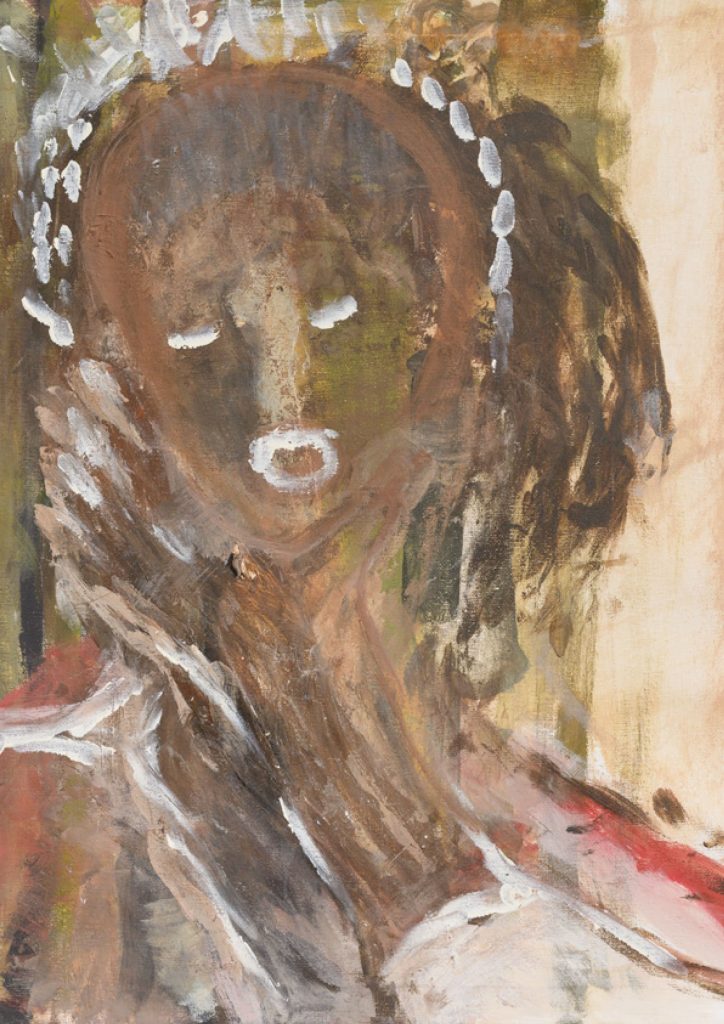
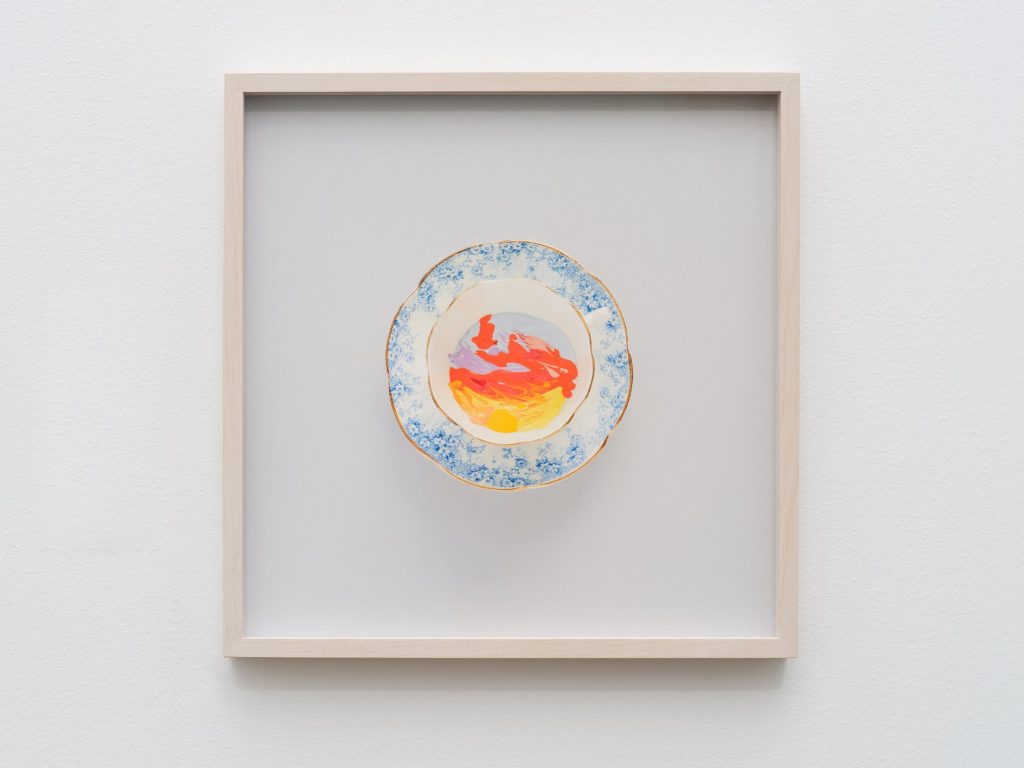
Hermès Presents “Antre” – Joël Riff’s Seventh Exhibition as Curator at La Verrière text Art Editor “Antre” – the French word for a lair or a den – Joël Riff’s seventh exhibition as curator of La Verrière, explores the depths from which we emerge. A metaphor for the studio, and the very antithesis of any glass roof, this obscure zone is now brought into the light by the exhibition of still-vibrant fragments, removed from their source. In this way, the project examines the tension between the violence and legitimacy of ‘the exhibition’ in the strict sense of the term, showcasing that which is often discarded. The expedition revolves around Pélagie Gbaguidi’s work, which is characterised by encounters the artist makes around the world while embracing sedentary stints at a central site in her practice, twelve kilometres south of the Brussels address of the Fondation d’entreprise Hermès. Going against the grain of extractivism, the aim is to find a balance between what we extract and what we return, encouraging an awareness of how we treat what we take. The artist navigates through brutal realities as a means to transform materials. A mediator of memories, she bears witness and passes them on. While her work is receiving increasing international recognition, Pélagie Gbaguidi has rarely exhibited in Belgium. This is her first major solo show in Brussels. The exhibition focuses on her paintings and drawings, reviving the impact of her powerful pictorial work. At La Verrière, her works are surrounded by furniture made by the Brussels collective Aygo, the words of French author Sophie Marie Larrouy (FR, b.1984), sculptures by Marianne Berenhaut (BE, b.1934) and embroideries by Hessie (JA, 1933-2017). The presence of the latter, who was the subject of a solo exhibition at La Verrière in 2016 when Pélagie Gbaguidi first met her, is also a way of raising public awareness of the 25th anniversary of the exhibition space – inaugurated in 2000 – and highlights its enduring importance. Pélagie Gbaguidi, Chaîne humaine, 2022. Pélagie Gbaguidi, The Witness, 2021
Art

Light Beyond Reality – The Ethereal Worlds of SOL Summers

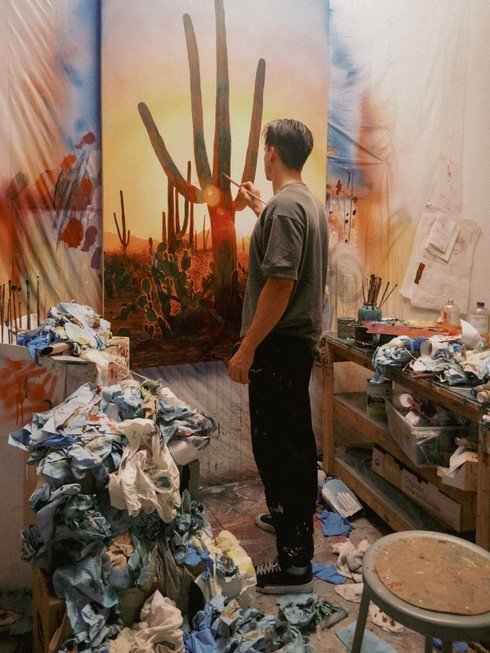
Light Beyond Reality – The Ethereal Worlds of SOL Summers text Jahwanna Berglund “Parhelion” is not just the title of this latest body of work; it is a gateway into an ethereal and mesmerising exploration of light, wonder, and myth. The series delves into the phenomenon of parhelia—commonly known as sun dogs—and uses this rare interplay of light and atmosphere to evoke a sense of the extraordinary breaking into the mundane. In this interview, the artist Sol Summers discusses the inspirations and creative processes that shaped the series, drawing on everything from the paintings of Edvard Munch to the otherworldly beauty of desert landscapes. The work reflects a profound connection to nature’s fleeting, awe-inspiring moments, as well as a fascination with the idea of contemporary myth-making—placing the unexplainable and magical within the everyday. From embracing new materials and techniques to reflecting on the cyclical nature of artistic exploration, “Parhelion” represents a significant evolution in the artist’s oeuvre. Yet, at its heart, it maintains a consistent thread: a desire to distill life, energy, and emotion into each painting. Through this series, viewers are invited to pause, reflect, and perhaps find a mirror to their own sense of awe and discovery. As “Parhelion” debuts at the Untitled Art Fair during Art Basel in Miami, Sol Summers hopes these works resonate on both a deeply personal and universal level, offering a transformative experience that lingers long after the moment of encounter. In the conversation that follows, we delve into the ideas, techniques, and inspirations behind this captivating new collection. Jahwanna Berglund: “Parhelion” is an intriguing title. Can you elaborate on its significance and how it relates to the themes explored in this new body of work? Sol Summers: “Parhelion” speaks to the idea of something strange and ethereal breaking through the everyday. It has this quality of otherworldliness that feels as though it belongs to myth rather than reality. I often think about how these phenomena must have struck people thousands of years ago – they must have dropped what they were doing and stood, staring at the sky with awe, maybe even fear. Back then, things like rainbows or eclipses sparked entire mythologies, stories about gods and cosmic events. What I’m trying to capture in these series is light that defies explanation – light that forces you into a kind of magical thinking. That sense of wonder, of being momentarily untethered from the ordinary, is what I want these paintings to hold. Whether it’s an atmospheric phenomenon or a lens flare, these glitches of light bring a sense of wonder to the work. In a way, it’s a form of contemporary myth-making, placing something unexpected into a scene to disrupt its familiarity.   “Turning to nature opened everything up for me.” NM: You’ve included artists from both Sweden and other countries. How did you choose these specific artists, and how do their works connect to the exhibition’s theme?Caroline Wieckhorst: It’s been a privilege to work with these amazing artists and their artistry. A key for us has been finding a great mix and balance of art with different expressions and mediums that communicate with and challenge each other and us as viewers. Works that, in different ways, have their own gaze and agency, interacting with our emotions, challenging our perspectives and sometimes what we might take for granted or know to be true. How we interpret the artworks is individual, and this is the point – to shift the focus from how the artists, curators, and critics intend for the art to be interpreted and, instead, how the art itself makes us react and feel. For instance, an artwork that very literally gazes back at me is Ulla Wiggen’s eye, Iris. With its ice-blue colour, it’s hard not to feel watched and pierced through your inner thoughts. But is this how you would interpret or feel about this work? And Karon Davis’ sculpture Echo & Narcissus: Looking Glass, speaks to me about the fragility of life, with the plaster that is lightly pieced together and at the same time it holds a certain power and grace, that makes me act with a high sense of respect around it. Paloma Varga Weisz’s large bronze sculptures, Wilde Leute, make me want to hang and sit with them, despite their intimidating size. And Charlotte Gyllenhammar’s child sculpture, Beholder, makes me wonder what she is thinking of and how I best approach her. While Marie-Louise Ekman’s huge floor piece, 30 bilder, with her characteristic comic strip motif, makes me break the rules and let loose my inner side, walking all over the piece and acting more like a rebel. Or at least, trying to. LH: As Caroline mentioned, we aimed to create a thematic show where various aesthetics and perspectives are represented, with the body as a central theme. Some pieces are abstract, others figurative, but to me, they all convey a sense of the body. For example, Kennedy Yanko’s sculptural work using scrap metal and a material she calls paint skin – formed by pouring large amounts of paint onto a flat surface, which is then shaped and manipulated as it begins to dry – to me says something about what it is like to inhabit a body. It’s perfectly balanced yet also twisted and strange, pieced together in an oddly familiar way. Some parts of the work speak to me in more subtle and ambiguous ways, but this only strengthens its impact. Not everyone will interact with it this way, and it’s not an “intended” reaction, but that’s why we wanted the show so rich. I hope that at least one piece in the show will challenge, unsettle, or make each viewer feel self-conscious. NM: The exhibition suggests that the artworks might be ‘looking back’ at the viewers. How do you think people will feel about this idea of being observed by the artworks?CW: Aren’t we always being watched or observed? I think and hope that it might open up new ideas about who or
Art

Jenny Carlsson Grip: “I Dig, Claw and Plough in the Colour”

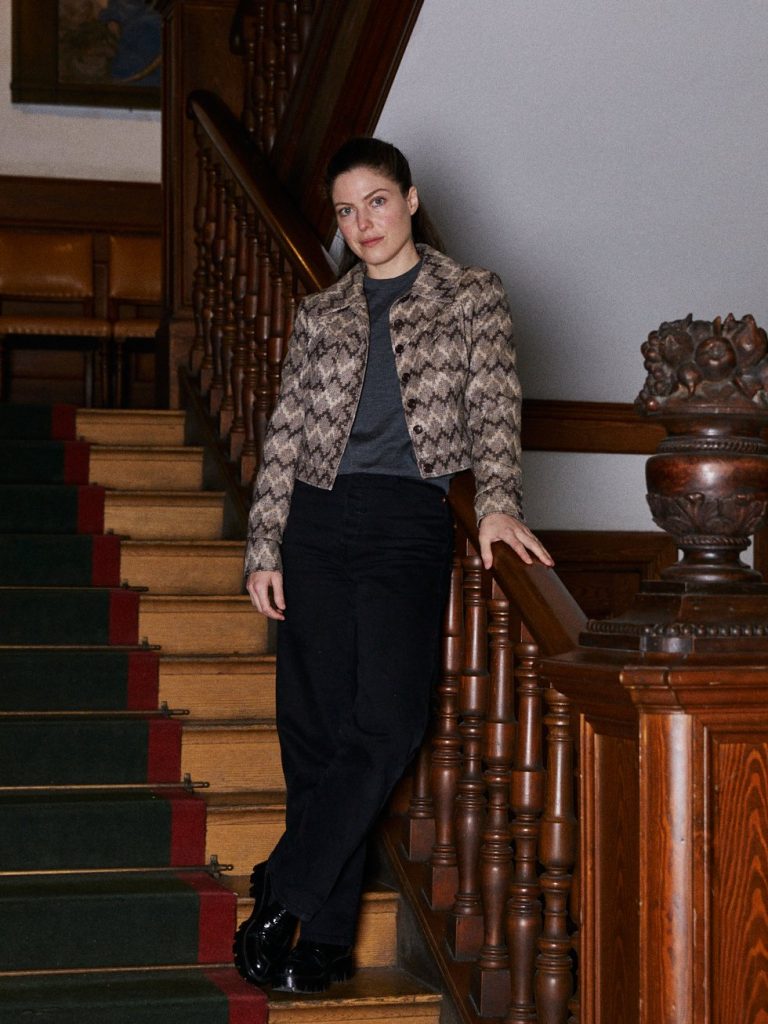
Jenny Carlsson Grip: “I Dig, Claw and Plough in the Colour” text Natalia Muntean Celebrated for her evocative blend of painting and graphic art, Swedish artist Jenny Carlsson Grip is one of the four recipients of the prestigious Ann-Margret Lindell scholarship, offered by Grafikens Hus. Based in a forest studio in Blekinge, Carlsson Grip’s art bridges the rawness of nature and the intricacies of human expression. Her work, often created through field observations and completed in the studio, captures the textures, moods, and contrasts of the natural world. In our conversation, we discuss her artistic process, the significance of receiving this recognition, and her plans to further explore landscapes through hand-printed graphic art inspired by weather diaries and Nordic terrains. NM: Nature plays a central role in your work, yet you avoid romanticising it. How do you strike a balance between abstraction and realism in conveying the rawness of the natural world?JCG: I’m drawn to both the wild and the cultivated landscape and am intrigued by the ugly and frightening as well as the calm and beautiful sides of nature. My work is a place where energy, nature and colour meet. NM: Your dynamic brushwork and physical engagement with paint give your work a tactile quality. How does this hands-on approach enhance the storytelling in your art?JCG: The physical process with the material, the paint and needle strokes, are central to my work. I dig, claw and plough in the colour, walk back 20 steps just to run forth again. In the large canvases, I can let the arms stretch and the nails scrape on the surface, in the small graphic plates the drawing carries the moment, and the printing refines it. NM: What does receiving this scholarship mean for you, both personally and professionally, and how do you see it shaping your future as an artist?JCG: Thanks to this I can continue to work professionally as an artist in these rather uncertain times, it is of course also very meaningful to get recognition for my art so I’m very grateful for this. This will help me to continue using graphic art in my fieldwork exploring nature and colour. NM: The stipend celebrates excellence in graphic art. What do you think makes your approach to graphic art unique, and how does it align with the values of this award?JCG: I come to the graphic art technique as a painter and find within it a materiality and an expression that complements my oil painting. I usually work outside and have found that the graphic copper and plastic plates also work very well in bringing them out into the landscape. I make the drawing with the needle outside and let the colours come in the printing studio, which leaves space both for the motif and for the act of painting, I like that process.
Art

Jordana Loeb: “Each Process Has Its Own Dimension”

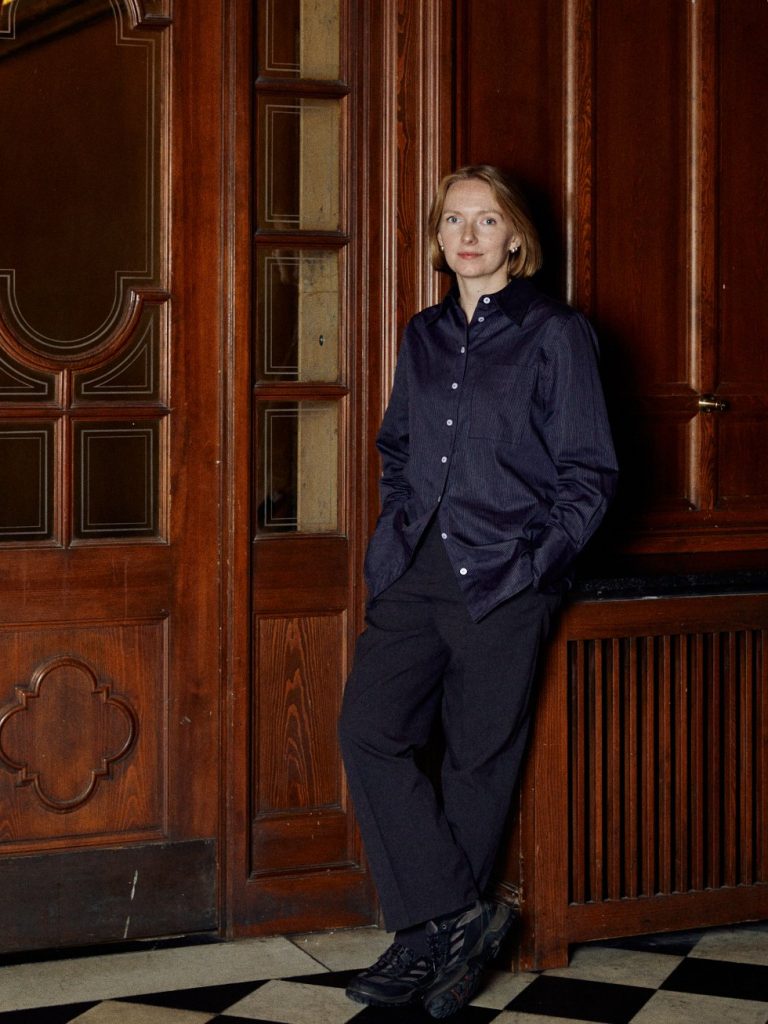
Jordana Loeb: “Each Process Has Its Own Dimension” text Natalia Muntean Jordana Loeb’s practice bridges printmaking, sculpture, sound, and movement, creating deeply transformative works that connect natural materials with themes of memory, heritage, and interaction. Her experimental approach—most recently exemplified by her ongoing project Wooden Feedback—demonstrates an innovative fusion of traditional techniques with contemporary performance and sound. The American artist, who is based in Stockholm, has been awarded the Ann-Margret Lindell Stipendium by Grafikens Hus, in recognition of her contributions to graphic arts. In our conversation, Loeb offers insights into her creative process and the evolving dialogue between materials, movement, and sound. Natalia Muntean: Your practice merges printmaking, sculpture, and sound with influences from dance and movement. How do you ensure these elements communicate cohesively in your work?Jordana Loeb: One aspect that has tied printmaking, sculpture and sound together in my practice has been the material, such as wood. Through hours of repetitive carving, I started to question the material. Does the tone of the wood change from carving at different depths? How do the density, hardness and type of wood also affect the sound? In the ongoing project, “Wooden Feedback”(2022-), a series of carved resonating boards, I have combined relief processes, sculpture and sound in connection with the moving body. Each of these processes has its own dimension, and the combination of the four, as seen in this work, allows for them to coexist. I am drawn to letting the material speak for itself and giving it the space to do so. This has been important as it shows the cause and effect. Specifically in how the sonic feedback loop is driven by the interaction between the body’s movements and wooden boards. NM: What inspired you to merge your background in movement with traditional graphic techniques, and how has it evolved?JL: During my Bachelor’s at Syracuse University, I first thought I would major in Communication Design, yet I found myself stuck at a screen. By chance, I took a printmaking relief course and realised that I was spending more time in the studio as I was constantly moving. I think the lack of movement from my every day started this merge with printmaking. As I reflect on previous and current works, I’ve noticed a pattern of focusing on movements of balance, weight and tension. Especially in my sculptural work “Apple pillars: echo” (2024), a series of carved apple logs fused in steel, balancing from its own pressure and force. I find myself swaying between sculpture, print, sound and performance as each document the process from its own angle. I think this way of working helps me to understand what I am doing and to get closer to my work. We met up with the artist Hank Grüner (b.1991 Bogota, Colombia) who currently lives and works in Stockholm. Grüner approaches his artistic practice from a place of adoption, resulting in a personal history and deeply personal experiences, paired with an exploration of cultural heritage, belonging, and transformative mythology. He portrays these themes in his latest exhibition ’Signs from above’, which features six sculptural works displayed over 96 square meters on the facade of Sthlm02 Studion, a creative initiative by Skanska Fastigheter in Hammarby Sjöstad.Grüner is represented by Coulisse Gallery in Stockholm. His previous exhibitions include solo shows at Bam Berlin, Galleri Thomassen, and the Swedish Embassy in Paris, among others. He has also gained attention for his collaboration with Our Legacy. Why are you doing an exhibition in Hammarby Sjöstad?I have dreamt about creating something this big for a long time, that dream also involved creating something public that would reach people on a bigger scale. This peace will be a part of peoples daily routine, their way to work and schools. My goal is always to reach people that normally don’t get in touch with art and that also makes the form of public art even more appealing to me. The opportunity to make this artwork came through the building company Skanska, which I am really grateful for. Tell us more about your background.I was born in Colombia and came to Sweden and my new family when I was three months. My whole life has been coloured by the fact that I was adopted. The question of What if? That sliding doors moment. When I create something, I always include those questions and sometimes I find answers in my creations. I find time after time that my heritage is set deep into my bones, how I paint flowers and patterns with colors that are so significant for my Colombian heritage and typical for where I came from.I am not traditional in how I work, I never finished any art school and learned most of what I know through my mentor and former boss Christopher Nying, founder and CD of Our Legacy. My work includes paintings, sculptures, ceramics, and more.
Art

Fanny Hellgren: “Each Work Is a Universe in Itself”

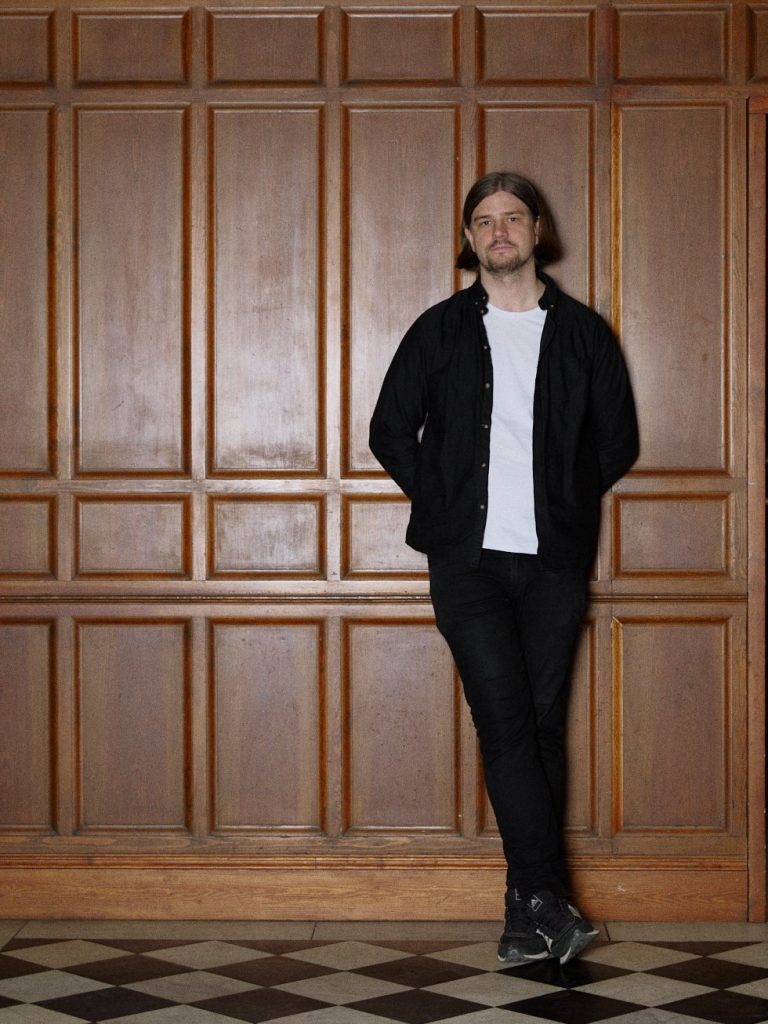
Fanny Hellgren: “Each Work Is a Universe in Itself” text Natalia Muntean Born in 1992 in Gothenburg, Fanny Hellgren is an artist whose work bridges the ephemeral and the eternal, capturing the cycles of nature and humanity’s search for meaning. Through innovative techniques blending sand, water, and pigment, she creates mesmerising landscapes and sculptures that reflect geological processes and cosmic origins. This experimental approach, steeped in both scientific inquiry and mysticism, has earned her the prestigious Ann-Margret Lindell Stipendium for excellence in graphic art, making Hellgren one of the four receivers of the 2024 Ann-Margret Lindell Stipend offered by Grafikens Hus. Find out more insights about the artist’s creative process and how her art resonates with contemporary audiences navigating environmental and existential crises. Natalia Muntean: Your work delves into geological processes and their connection to cosmic origins. How do you think these themes of time and materiality resonate with contemporary audiences?Fanny Hellgren: I think these more eternal themes that I work with are always relevant in a way. Now, when we’re in the middle of an environmental crisis, ideas of how we’re part of nature and what our role is to it resonates with many people I believe. At times of political conflicts, wars, and humanitarian crises, people tend to search for more existential and spiritual expressions. NM: How did you develop this method of working with sand, pigment, and water, and what challenges or discoveries have shaped it?FH: I began making these works in 2020 during the pandemic when I was studying at Malmö Art Academy at the time and the school shut down suddenly. I didn’t have access to my studio anymore and this forced a turning point in my practice. I began spending a lot of time walking at the Ribersborg beach in Malmö, so I began making works outdoors using sand, stones and graphite powder to make marks on paper. The process evolved quite fast and I started using a spray gun to apply pigments mixed with water onto sand-covered papers. I constantly discover new directions and results within this process. One important discovery was when I started using slightly bigger grains of sand, which resulted in the contour of every grain becoming visible and imprinted on the paper. This is conceptually important for this series. When you see the works close-up they are very detailed – you can see how the grains gather as islands and how the water finds its way around the dunes. But seen from a distance this is not perceptible and instead other patterns and shades appear. It’s like each work is a universe in itself. NM: What does receiving the Ann-Margret Lindell Stipend mean for you, both personally and professionally, and how do you see it shaping your future as an artist?FH: I’m very honoured to receive this grant. It means that I can dive deeper into my process to develop it and give myself the space in terms of time and money that is needed to take it seriously. NM: The stipend celebrates excellence in graphic art. What do you think makes your approach to graphic art unique, and how does it align with the values of this award?FH: I have never worked in a particularly traditional way with any medium. Instead, I prefer an experimental approach to the materials I use and enjoy discovering my own unconventional techniques. My sand drawings can be defined as drawings, paintings, or graphic art and I’m glad the jury thinks my work fits in this context and may contribute to widening the definitions of what graphic art can be. It’s really a kind of printing technique I’ve developed, but without a press and with an ever-changing result.
Art

Linus Höj Krantz: “Finding Loopholes in a Medium With Set Rules”

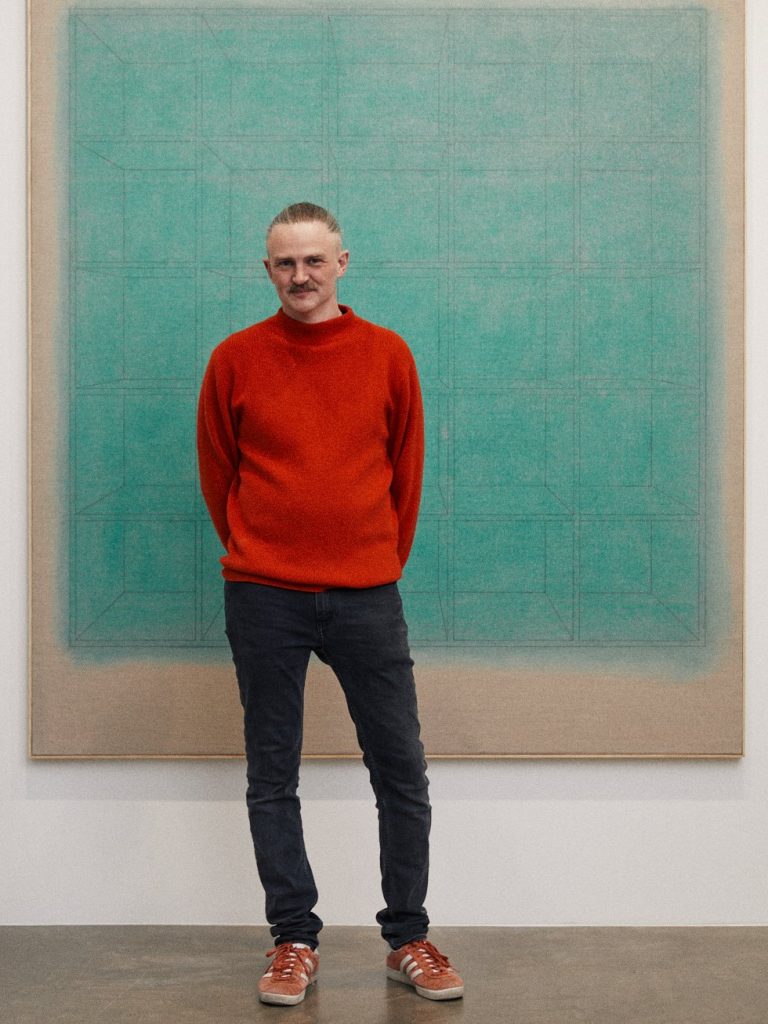
Linus Höj Krantz: “Finding Loopholes in a Medium With Set Rules” text Natalia Muntean Blending alchemical experimentation with graphic art and craftsmanship, Linus Höj Krantz, born in 1989 in Stockholm, Sweden, is an artist whose works explore themes of cycles, escapism, and environmental disruptions, often integrating unconventional techniques with traditional methods. In his latest project, Linus draws inspiration from Arlanda Airport, transforming its logistics and design elements into etched circuit boards, copper engravings, and sculptural objects that connect history with modernity. Discover more about the artist’s innovative approach to printmaking, the impact of being one of the four receivers of the 2024 Ann-Margret Lindell Stipendium, and the importance of creating a dialogue between art and the unnoticed systems that shape our world. Natalia Muntean: Your interest in unconventional methods of printmaking sets you apart. What draws you to challenge traditional boundaries in this medium?Linus Höj Krant: I think perhaps the way I work around these boundaries has a lot to do with my personality. I enjoy haphazardness and a tiny bit of chaoticness, at the same time I crave boundaries and templates. Finding loopholes or possibilities to tweak a medium that has long-set rules and archetypes is just something that suits having that type of mindset. Also, I think it´s a medium that has a lot of potential to conversate with the present and its ways of transmitting images and information. NM: Your work often combines experimental techniques with traditional printmaking. How do you decide which techniques to integrate into a new project?LHK: Accumulating techniques and finding out what works is a long and slow process, I would say. I might pick up a seed of a technique while working on a current project. Then a concept or a site or something that whispers to this technique gets added to the back of my brain and eventually, it becomes the foundation towards new work. For the last ten years, I´ve been travelling a lot by bus and train within the Nordic countries, partially because of studying in Norway, Denmark and Sweden. These constant journeys have made me subconsciously and consciously merge landscapes, energy and logistics with techniques such as electrolytic printmaking, circuit boards and sculpting found material/metal. Usually, I start a project with too many ideas, and as the project develops, I scratch and peel off what doesn´t need to be in it. NM: What does receiving this scholarship mean for you, both personally and professionally, and how do you see it shaping your future as an artist?LHK: I think it means more than a lot. It´s a great encouragement to continue to try new and unwritten paths within my artistic process. Hopefully, it will bring more flexibility for me to spend longer periods on research and grinding new techniques. NM: The stipend celebrates excellence in graphic art. What do you think makes your approach to graphic art unique, and how does it align with the values of this award?LHK: I guess what sets me apart could be that I´m very curious about how rare methods and artistic processes can have a dialogue with what surrounds us but often go unnoticed. Having your antennas both inside the box and outside of it, I guess resonates a lot with the ideas and core values of this incredible grant.
Art

Paul Fägerskiöld: Mapping the Mind through Painting

Paul Fägerskiöld: Mapping the Mind through Painting text Sandra Myhrberg In his latest exhibition at Lützengatan, Paul Fägerskiöld unveils a new series of raw, introspective paintings. These works, featuring vertical structures on fields of colour, explore the essence of image-making and the act of painting itself. Using symbolic pillars and shelves, the paintings act as blueprints of a cognitive “mind palace,” where abstract forms transform into recognisable images. Rooted in art history, the series draws from 18th-century Korean Chaekgeori and the Renaissance interplay between Disegno and Colore. Fägerskiöld continues to evolve his visual language, offering a fresh perspective on the relationship between form, colour, and meaning. You work a lot with time and space. Can you elaborate on your view of the present?I don’t know how abstract one should be 🙂 On one level I think of all segments of time as parts of a 4-Dimentional sculpture. Seen from a different perspective all the things we base our experience of the world on, before-after, cause-effect, history-present-future would all form an entity containing all its stages. In other words, the chicken is both egg and hen at the same time, seen from this perspective In a more reality-bound view the present is our experience of time passing. The interface on our journey through space-time. What does your working process look like?Like most things, I work cyclical. And there are many different cycles ongoing at the same time. I constantly collect ideas, do sketches, take photos and reflect on stuff in the studio. Some of those ideas or notes from my notebook hold more than I first thought and after a couple of years they start to connect to other ideas and it becomes necessary to investigate them more. This is done by doing a lot of “bad” paintings and sketches, trying to reach past the initial often to a literal idea. Sometimes there is more. Sometimes I find something along the way, a sketch or an idea that breaks what I had initially intended and opens up for something more interesting. In a later face of that cycle, I start to make choices regarding what that work asks for in terms of scale, presentation, colour etc. And if I ́m working on an upcoming exhibition those choices also relate to the works as a group, what they add to each other, to the exhibition space, to the viewer passing through the space and while doing so moving through different modes of perception. Once the exhibition is up that cycle continues with reflection, finding new questions and points of curiosity and developing the work from where it was presented in the exhibition. Can you describe the materials and techniques you use?Generally I have been using traditional medias for painting such as oil-paint, gesso, graphite, acrylic on linen. But there is no conceptual block in my work, if the work would ask to be done completely different I would follow. In regards to technique, all the bodies of work I have done has asked for their own way of being made, which often has been very difficult to figure out. Some works has been made with brush, some with spray cans pressed in the wrong way. This show has been done only using cloth and paper to rub layers of paint onto the surface and then remove it, leaving thin layers of residue. And the drawing part of the paintings has been made over layers as well, almost carving into the linen using a graphite-pen. In the end, paint has been caught in the valleys made by the drawing, making the lines both graphite and paint. What is your relationship with time?Like most people I’m a mortal human being passing through space time just trying to make sense of it.  I once attended one of your vernissages. There were many layers, and it smelled of paint. Are you often working up to the last minute? How do you decide when a painting is “complete”?Working towards an exhibition is a quite specific experience and process. It has become a point of total focus for me, I constantly make choices and learn what it is I ́m doing while doing it. The presence and the focus often demands unexpected things from me in terms of finishing the works, they often develop exponentially the last weeks leading up to the show, but even if most of the works are done 2 weeks before the exhibition the last 3-4 paintings that arrive to the exhibition might completely change the direction and the focus of the show. A work is finished when it holds its own ground, when it asks no more of me. When there is nothing I could do to make it find itself. Most of the time the paintings are not as I had thought or intended and part of my work is listening to the work and hearing what it asks for. An unfinished or failed work works the same way. What drives your artistic practice?I have for as long as I can remember asked myself questions about transformation and change, trying to make sense of how we create meaning and understanding in the world we live in. Those questions still drive my practice. But on a less cerebral level curiosity, fear, joy and necessity/urgency drive what I do. When something really intrigues me, it tends to be a good direction to go towards, if it at the same time feels a bit scary and fun it tends to be something worth investigating. Or when something feels completely necessary to do even if the arguments are lacking. Your latest works are described as “cognition maps” or “blueprints of a mind palace.” How do you see the relationship between your inner thoughts and the visual language in your paintings?In some regard this show is the result of work I have done over the last two years, thinking about what it would look like painting the creative process itself. But hopefully its more archetypal than just my inner thoughts. I think of the different bodies of work in the show as investigating different modes of cognition. It started with thinking about Matisse’s painting the Red Studio and asking myself how it would work if I painted it. Making a painting of my actual studio felt completely irrelevant, but making a painting of the “mind-space” where
Art

Isabella Ducrot

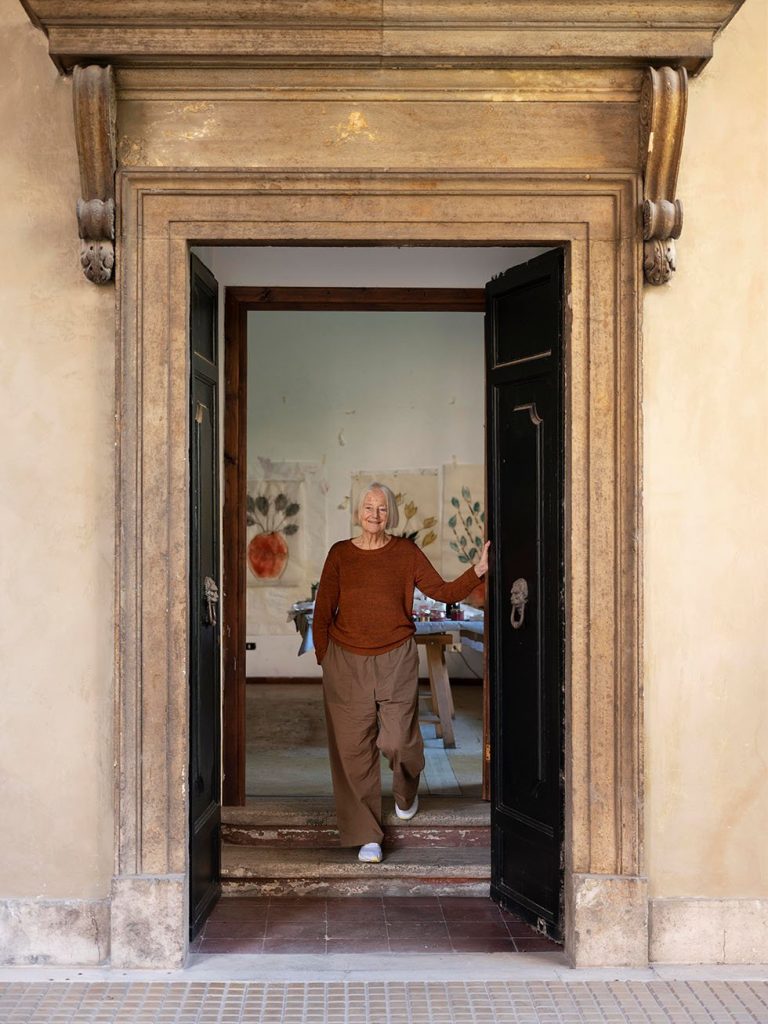
Isabella Ducrot text Sandra Myhrberg Odalisque had the opportunity to ask some questions to Isabella Ducrot, who lives and works in Rome. Known for her innovative use of woven textiles as the foundation of her paintings, Ducrot began her artistic career later in life. Through her extensive travels in Asia, she has amassed a remarkable collection of antique fabrics from Turkey, India, China, Tibet, and Afghanistan, which often feature prominently in her work. She is currently exhibiting at Gallery Belenius in Stockholm. You began your career as an artist in your fifties, which is unconventional. What inspired you to start creating art later in life?I just did it—no clear reasons came to mind. You grew up in Naples during a turbulent time in history. How did your childhood and the experience of war shape your artistic sensibilities?Not at all. For children, what happens is normal. I thought war was a normal condition. What inspires you?Everything! Your work often incorporates textiles and paper. How did your extensive travels and the collection of rare fabrics influence your choice of materials and themes?The quality of textiles was very important—the colors, the textures, the decorations. But little by little, I understood that my main interest was in the texture, not the decoration. It’s the same with paper; for me, the quality of the paper is what matters.   What was it like to work with Dior? What is your view on fashion?Working with Dior was very, very interesting. Their attention to historical traditions means a great deal to me. Fashion is important for understanding a society; it’s like a mirror reflecting the aesthetic history of a country. Do you consider yourself a feminist? If so, how has that perspective influenced your art and shaped your view of society?I never forget that I am a woman, and after that, I am a feminist. I’m very interested in feminine language. What kind of response did you receive at Frieze Masters in London earlier this fall?I’m extremely excited about Frieze Masters 2024. How much do you work, and what do you dream of for the future?I work every day, with great pleasure, and have no specific plans for the future. Do you have any advice for younger artists?Read, study, and annoy yourself. What does the future hold for your art, and how do you hope your legacy will be remembered?It’s not a concern for me. I’m not anxious about the destiny of my work. 2024 by Isabella Ducrot / BeleniusOn view08.11 – 07.12.2024
Art

Kristina Jansson, Paintings for People in Trouble

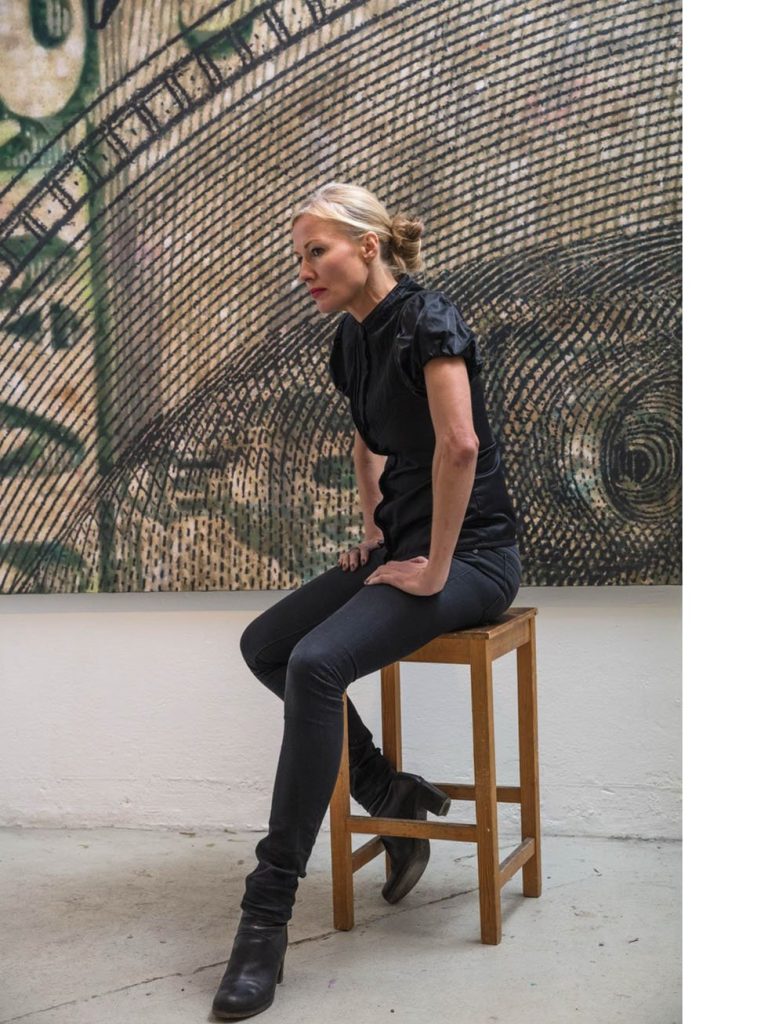
Kristina Jansson, Paintings for People in Trouble text Sandra Myhrberg Where does the image end, and where does painting’s ability to tell what the image cannot begin? This question has always been central to Kristina Jansson’s practice. Her exhibition Paintings for People in Trouble, her fourth solo show at Andréhn-Schiptjenko, is as much a reflection on contemporary society as it is an invitation for the viewer to engage with this inquiry. Without offering definitive answers, Jansson’s paintings—laden with references and charged imagery—guide the viewer into a space where the (im)possibility of dialogue, the fleeting nature of existence, and unstable environments invite a deeply personal reading of our times. When did you first realize that art would play a significant role in your life?Slowly. Growing up in the countryside on a farm, art was not part of the daily life. I would say it was a slow parallel insight that I needed to find spaces and places for a dimension in me that I couldn’t find where I was. After finishing a degree in chemistry, I lived to the States for a year. Coming back to Sweden I moved to Stockholm and started to find a path towards art educations and forming a new identity. You’ve lived and studied abroad. How have these experiences shaped you personally and artistically?At the time when I first left for the US for a year there was no digital infrastructure what so ever, it really gave me a sense of autonomy and freedom. This has stayed with me when living, studying and working with art in other countries. When I got accepted to the academy in Vienna everything was really old school analogue and I had no-one there to help or guide in anything. Strangely enough it really gave me a sort of mandate to pursue and work with the things I really was interested in, I had no-one to answer to, I was the strange Swedish girl, so the Austrian heritage didn’t become me either. I think that experience was important, to feel self sufficient and independent is good for the work and the artistic development, especially during that period of life. I think it really inspired me to take whatever opportunity I got to try and repeat that, so I  also worked in Rotterdam for a period, studied at École des Beaux-Arts in Paris and later on worked there for a year on a French scholarship. Where does your exploration of the boundary between image and painting begin? How do you define what painting can express that the image cannot?I was very early aware of the discrepancy between the photo and the reality even though I had no words to define it. Susan Sontag has written about it, and so has (Jaques)Lacan and (Roland)Barthes,in his way. We live today in a world almost violently reflected through technical images, some more obviously fictive than others. I believe it’s very hard to understand to what extent this twarts our perception of the world, ourselves and who we are. It sounds really big but making paintings is for me a way of processing the state of the world the way it sort of hits me, through a kind of ”bastard” image that is not smooth and “swipeable”. Something that creates friction and another challenge to the viewer.To answer your question, I do believe that the painting offers a completely different kind of visual relationship with the viewer. Your paintings often contain loaded references. How do you choose these motifs, and what role do they play in guiding the viewer’s interpretation?I always try to make paintings that ”functions/works” in their own right, but their origins are the engine for me to make them at all. I could never make something for the plain esthetics of it, they are too tough to produce, I have to be really attached to their subject matter to manage that process. I am interested in the basic human drives, vices and desires, how they materialize. Working for all these years I see that I constantly try to process different aspects of them in imagery, ofter with popular references in combination with different painterly strategies.  I have learned to trust this weird selection system that has guided the choices of what and how to work. Sometimes I feel like the servant of the painting, that it is the work that dictates for how to ”perform them”. It’s only in retrospective that I can really see that the works has a lot to do with the state of the world and myself, my feeling of being hostage in a very cynical and dangerous time is something very present. For the viewer I never hide their origin but I do think that a piece also have the right to autonomy. I trust that they will do their job in one way or the other without me constantly explaining or talking about them from my perspective. Paintings for People in Trouble is described as a reflection on contemporary society. What specific aspects of today’s world influenced this body of work?This particular body of work consists of paintings with environmental subject matters, On human struggles with courage, cowardice and art. Very broad but I see it perhaps as they touch upon the clash between the human world and the “real” world. We make a very big deal of ourselves instead of looking at ourselves as a spices among other spices. To me a lot of what happens in the world are repercussions on our unwillingness to rethink our place and mandate in the world as such. How has your role as a professor of painting at the Royal Institute of Art influenced your own practice? Do you find teaching inspires new perspectives in your work?To me the teaching part is a constantly evolving practice. The students I meet are young and more unexperienced than me but they sort of inhabit something that is unattainable for me, their particular ”zeitgeist” if you will. I find this extremely

Art

Lie Fallow an Exhibition by Dimen Hama Abdulla

Lie Fallow an Exhibition by Dimen Hama Abdulla text Sandra Myhrberg Dimen Hama Abdulla, a multifaceted artist whose work spans playwriting, dramaturgy, painting, and sculpture. Born in Kurdistan in 1984, she arrived in Sweden at the age of six, carrying the weight of migration and the responsibility to tell her story. Her debut monologue, On All Fours, received critical acclaim, marking the beginning of a prolific career in theater. Yet, behind the scenes, Dimen’s visual art remained a deeply personal practice—until now. With her latest exhibition, Resting Fallow, she invites us into a world where words and images intertwine, exploring themes of survival, restoration, and creative renewal. In this conversation, we delve into her artistic journey, the symbolism behind her latest works, and the dialogue between her visual and literary expressions. What inspired the title Lie Fallow for your exhibition?“Lie fallow” is a concept in farming related to letting the soil rest and allowing hidden “things” to process. Lie fallow, besides being a very beautiful and poetic phrase, carries the meaning of being in fruitful solitude. How does the concept of “Fallow” connect to your personal and artistic journey?To Lie Fallow is a cyclic process of dying, being, and blossoming. For me, it’s a story of becoming. Your works often merge the abstract with the figurative. How do you navigate these two realms in your art?It’s a process about being responsive to the intuitive and the intentional. The “navigating” is a practice of listening to what is happening in the work. How has your relationship with visual art evolved over the years?I’ve always had a relationship with visual art, since the first time I saw my first cartoon. Then I started to draw—as every child does—but I continued and never stopped. What role do materials play in your creative process?A significant one; for me, a painting is a sensory practice. The materiality is part of the joy and pleasure— the fabric of the paper, the pigments of the color, the density and softness of pastels. Your work often reflects themes of survival and migration. How do these experiences influence your visual art?I wouldn’t say that my work often has themes of survival and migration; rather, these are part of my history and what has formed me. I don’t want to set a theme for my work. I think language sometimes pins art, and even if it’s alluring to define it through language, I don’t want that. For me, it’s more that “things” are encapsulated in the pictures, but the paintings themselves aren’t meant to be read as a theme of migration and survival. You’ve worked across multiple artistic disciplines—writing, dramaturgy, and visual art. How do these practices complement each other?One is the discipline of the hand, one of the heart, and one of the head. What’s next for you after Lie Fallow? Are there any new projects or collaborations in the works?I am very happy to be the external examiner for the artist Jaana-Kristin Alakoski in two weeks. I am working on a theatre play for Stockholm Stadsteater, and I am teaching at Biskops-Arnö. I want to put some love and focus into these and create peace and space to return to painting. Dimen Hama Abdulla / Saskia Neuman GalleryLie FallowOn view 07.11—19.12.2024

Scroll to Top