Art

Art

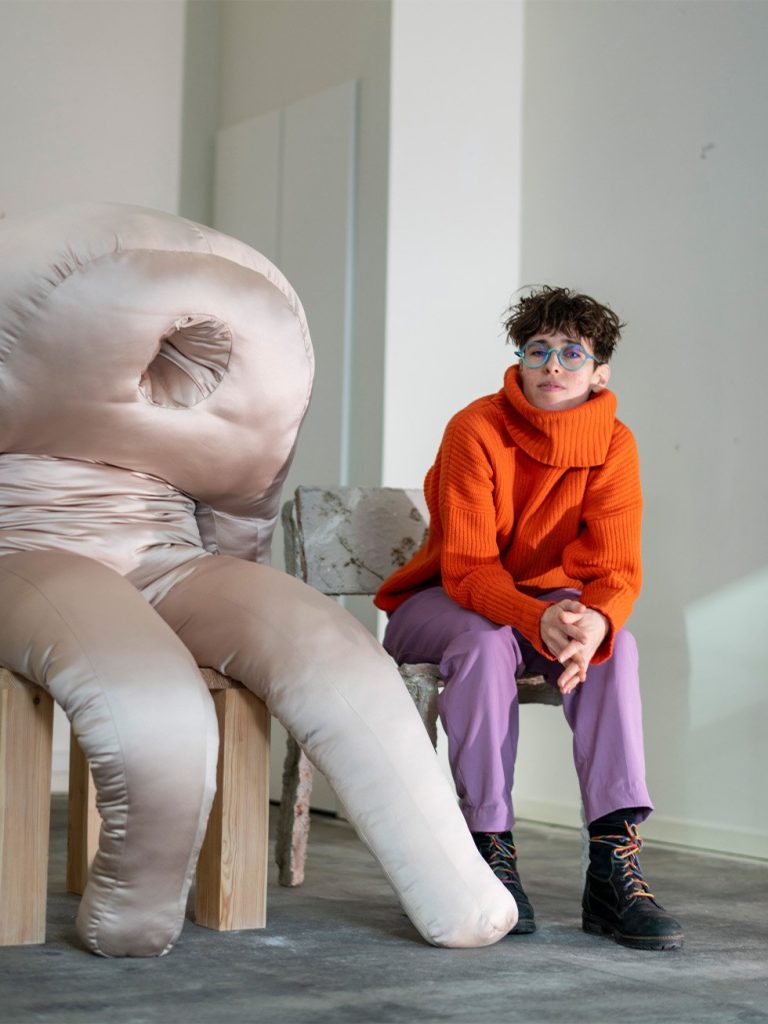
An Interview With Håkan Rehnberg

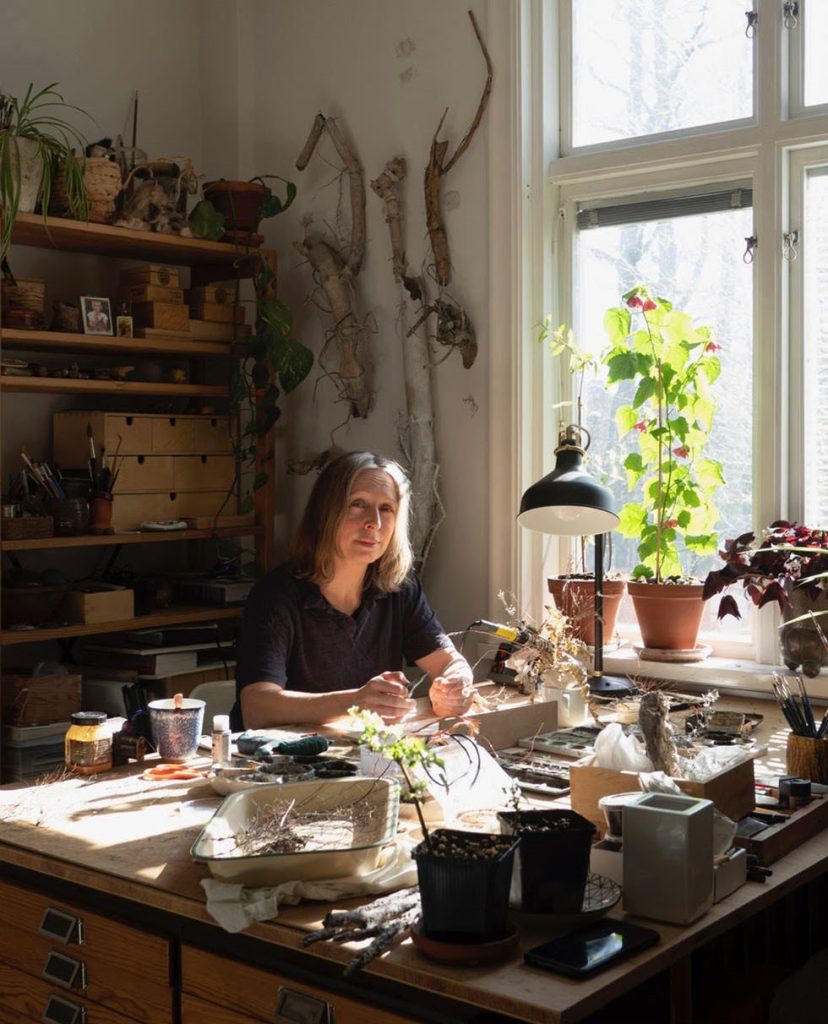
An Interview With Håkan Rehnberg text Emelie Bodén & Filippa Finn Håkan Rehnberg is one of Sweden’s most distinguished contemporary artists. For several decades his artistic practice has combined a formal precision with a fundamental interest in the inherent character and possibilities of his materials. The artist describes each individual work as an attempt not to seek answers to but instead to deal with an impossible situation. The sculptures focus on the language-less-ness that he believes is fundamental in his work in which the relationship between the form and the material takes on a new character that is not burdened by language constructions and predetermined rules. What sets this exhibition apart from your previous body of work? Can you elaborate on the new direction it represents?This exhibition features a large group of new sculptures, a departure from my previous focus on painting and a single sculpture. In this exhibition, I showcase a significant collection of new sculptures, some of which have become pivotal works, symbolizing various stages in my artistic journey. The most significant piece is called “derovink,” a German term meaning a blink, closely associated with a gesture. I do not make statements or assert anything in my art; it’s purely a gesture. The sculpture itself is an upright aluminum slab with a slight deviation from the vertical, held in place by thin wires. This deviation holds great significance in the exhibition and has historical connections to other sculptures by artists like Barnet Newman, Giacometti, and Greek figurines, albeit with a unique twist. Another work in the exhibition, “Talapparaten,” is related to a stutter I suffered from for many years. However, it has evolved into a different perspective on language than the norm. I often talk about wanting but not being able to, and being able but not wanting to. I work under these dual premises, which can be rather negative in many ways. However, my focus is on highlighting expressions rather than the language itself. My works are never linguistic in that sense but rather a critique of language. Language presents a problem for me. I dislike the idea of artworks representing something; they should be themselves. I’m against representation and prefer to discuss gestures over depictions. I’m not fond of symbols either, as they represent and are tied to meanings. I believe that art does not carry meaning; it has a deeper impact on the viewer, striking them in a way that leaves an impression without complete understanding. It lingers and affects individuals in various ways. Why do you exclusively choose to work with oil on blasted acrylic glass for your paintings? Was this a deliberate choice, or did it evolve organically over time?Thirty years ago, I began working with sandblasted acrylic glass. Before that, I worked with heavier iron objects, lead plates, and such. I was searching for a canvas that wasn’t burdened with historical connotations. That’s when I came across this sandblasted acrylic glass, which has an entirely smooth surface and excellent paint adhesion. I have always preferred oil paint because you can work with it for quite some time before it dries. What distinguishes my painting, and has done so since I started using these materials, is that I always complete a painting in a single session. I never go back and make changes; it must be executed in one sitting. This session can last from a few hours to a full day. What inspired the title of your new exhibition, “By an Oak and a Rock”? Could you share the origin or significance of this name?The expression “by an oak and by a rock” originates from an ancient writer named Hesiod. One could say that this expression predates the Muses, in other words, aesthetics. It’s something much more primitive and raw. Initially, he invokes the Muses to be able to write. The Muses are somehow connected with art, form, and storytelling. But then, after he has done this and invoked them, he suddenly says, “But what does it matter to me by an oak and by a rock?” It emerges spontaneously as a new beginning. It’s actually incomprehensible in the context, but I have found some research that shows it’s a recurring expression. It appears in Homer and in Babylonian creation stories, among others. What inspired your first video work that’s presented in this exhibition, featuring a brutal scene of transformation in nature? What message or emotions were you aiming to convey through this?The video included in the exhibition is titled “Peacock Eye and Cross Spider.” It features a cross spider weaving a peacock eye into its web. Initially, I didn’t know why I should include it. But in some way, I felt that it touched me. The more I’ve looked at it and the more I’ve accepted it, I feel that it reflects my position as a creative artist. The vulnerability one feels between the struggles of power and one’s own creative work. A kind of susceptibility to an authoritarian language that one is always threatened by. By an Oak and a RockExhibition period: November 11 – December 16, 2023Opening hours: Tuesday – Friday 11.00 – 18.00, Saturday 12.00 – 16.00

Art

An Interview With Rankin

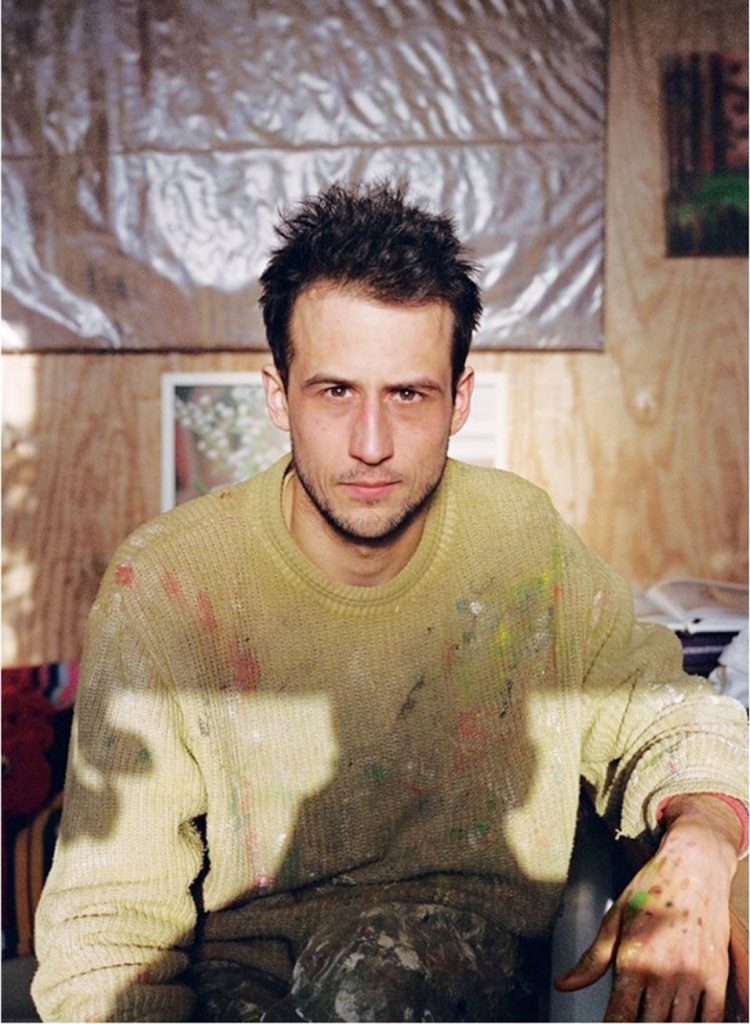
An Interview With Rankin text Emma Bernhard John Rankin – or Rankin as he’s more commonly called – has been establishing himself as a major photography figure since the 90’s with his famous celebrity portraits. Madonna, David Bowie, Kate Moss, Jay-Z and even the Queen. He had the privilege to enter the universes of these pop culture symbols and the talent to make these universes appear in a picture, using his personal colorful and expressive touch. This year, he’s presenting his first solo exhibition in Sweden : an exhibition he curated himself and whose title “Rankin: The…” perfectly reflects the wide prism of his work, from fashion to music, including cinema and advertising. Do you have to like someone’s universe – or at least something from their universe – to portray them ? Or do you also like to explore universes you’re not familiar with or you don’t necessarily like in the beginning?That’s a very good question, I’ve not been asked that very much. I learned very early on that the idea of liking someone who’s in the news or the media comes with a whole lot of baggage. So, the reason you have an opinion about them is either you’ve read something about them or you’ve seen something (like a photograph, a video…) Or someone you know is talking about them because they’ve seen or read something about them. The thing about the media is that it really inheres in lies about people. So it creates heroes and it creates villains : and that’s how it works. So the whole media is about lies. Because I’m a photographer, I kind of record history and document the person in front of me. I decided very early on to try to avoid having preconceptions and I did that by immediately trying to go into a situation with this view that was unaffected by what I had read. That doesn’t mean I wouldn’t research someone; I do research people. But it does mean that I tend to trust what’s going on in the moment with people. You definitely meet people that you don’t like but there’s a lot of people you presume you’re not going to like that you do like because a lot of what people write is bullshit. And some people that you love and think they’re really nice people, they’re not nice people. So, it’s quite an interesting game. For me, interestingly, you’ve put a name on a head because a lot of the time what i’m trying to do is show something that people don’t see about someone in my pictures, show something that maybe they’re unveiling or left behind the curtain. In making something together I’m trying to get them to reveal something about themselves. So, interestingly, sometimes they reveal them a bit more. You said it was important for you to meet the person before and to talk with them so it seems to be a whole process. But are you sometimes surprised by what it ends up to be?Yes. Hundred percent. I think if I was process driven aesthetically I would not get the best versions of what I wanted whereas it’s because I’m very flexible and move very gently I think I get very good experiences with people. But also, I’m not scared of technology. It doesn’t worry me. Something goes wrong, we find a solution. Or if someone goes :” I don’t like that”, well, it’s okay, we can change it. I don’t hold on and say “No, that’s how we’re doing it” because I don’t believe in that dictatorial approach. You also said that you liked to work fast. Does that mean that you’re not a perfectionist?Nothing’s perfect. As I’m walking in the gallery I don’t say to myself : “what’s wrong with this space?” or “what’s wrong with that shadow?” or “I hate that shadow on that picture. I hate it, and it annoys me to have this shadow on my picture.” Every picture is not perfect at all, ever. You let it go, even if it’s still there in the back of my head but you just have to live with it. “C’est la vie” ! Do some painters inspire you?Yes. Caravaggio, Rembrandt, Egon Schiele… and conceptually Damien Hirst, Tracey Emin and Jenny Saville. I don’t use them as references very often but yes I love them. I just saw Donatello two days ago in V&A in London and it was absolutely extraordinary to see what he did. It’s mind blowing. Is it the same approach if you portray someone famous or someone who’s not?Everyone is different in front of the camera. There are people you expect to be so relaxed and they come in with walls up, or people who you expect to be nervous who are so confident and vibrant in front of the lens. I don’t think it’s a matter of celebrity vs. “real people” – it’s just the nature of people in general. When you look at an image of someone you want to see that glint in the model’s eye. You want to feel a connection with them. Every photo tells the story of how the shoot went, the atmosphere in the room and how the model felt, so it’s my responsibility as a photographer to make sure everyone is having a nice time in front of the camera – whether I’m photographing a musical icon, a supermodel or volunteer working for a charity. Has your work been welcomed the same way depending on the different countries you presented it in ? If not, in which way was it different?Different countries always have different responses. So much of art and photography is subjective and how you approach work does come in part from your background and culture, so someone viewing my photography in Sweden will have a different relationship to someone from the UK or Italy. That’s not to say it’s a good or bad thing. But it does make it exciting for me

Art

An Interview with Kaffe Fassett

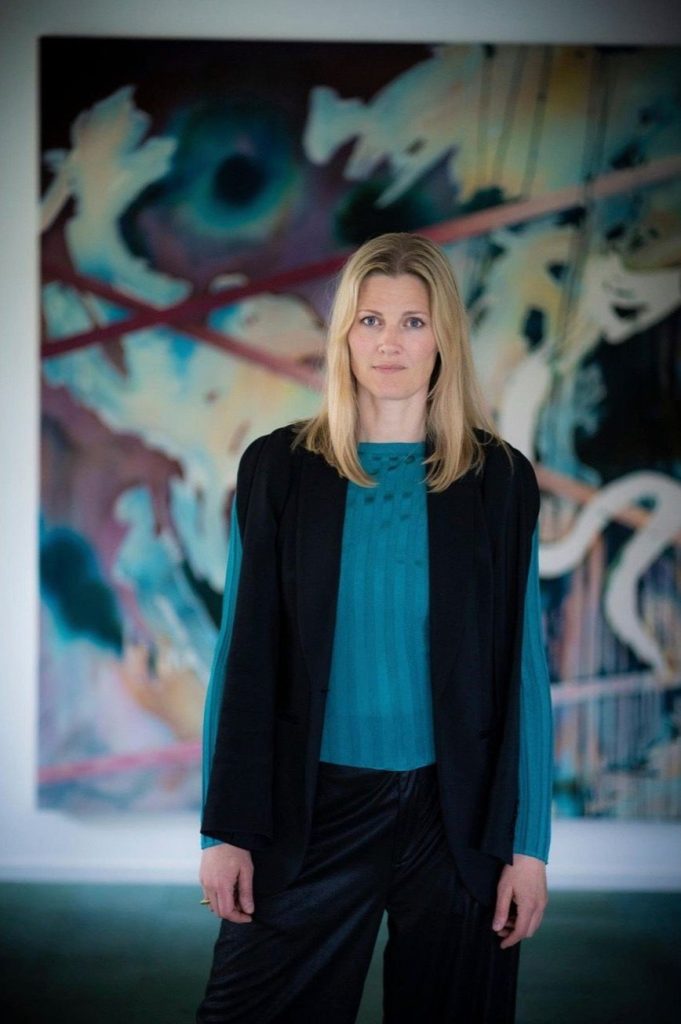
An Interview with Kaffe Fassett text Linnéa Ruiz Mutikainen Craftsmanship, reimagined. Textile trailblazer Kaffe Fassett’s creative landscape embraces eccentric forms, a bustling exploration of not only technique but also color. For him, crafting in color is a recurrent desire. End of September, Kaffe Fassett: The Power of Pattern opens its doors at Millesgården Museum, set to inject energetic to the zeitgeist minimalist agenda of the region. Linnea Ruiz Mutikainen: Color is undoubtedly key to your artistic practice, continuously depicted through your work. What sparked this interest? Kaffe Fassett: When I first started life as a serious full-time artist, I painted only white on white still lives. Color was just a distraction from many white dashes on white clothworks. I gradually got into color as I encountered Persian paintings in the Victoria and Albert Museum. They were crammed with the movement of pattern in a riot of color, transforming my own paintings to a dance of pattern in multicolor. These paintings made me feel joyous. LRM: Your incorporation and later key transition from classic painting to textile craftsmanship is of particular interest to me. Did it come to you naturally? KF: I started knitting because the yarns I found in Scotland were intriguingly beautiful. No one was using them to their advantage. It was meant to be a brief relief from my painting career, but soon I found the act of knitting to be so soothing and addictive. My mind loved the exercise of creating patterns to carry color in more inventive ways. My personal travels, visits to museums, and searching in books for rich patterns of past cultures turned into an all-absorbing pastime. Months of experiments passed and I got to design for the Missoni’s in Italy and be celebrated by Vogue Magazine. LRM: There are regular injections of diverse materials and techniques, from hand-stitching to patchwork and quilting, through your work. Have you always been curious to try out new textures? KF: I am curious about new textures and ways of manipulating patterns. But my main obsession and quest is to develop colors in any way that I can find. Just arranging colorful cushions and carpets in a room is deeply satisfying to me. LRM: The Colour Lab is not only your studio, it is also your home. Has it ever been challenging or solely creatively fruitful merging private life with artistic creation in the same space? KF: I love to wake up amid my projects. Living where I work is so rich to me. I do make myself take breaks to walk or go for a swim to find balance in my life. But I love what I do. I am so glad I don’t have to travel to get stuck in each day. LRM: Your upcoming exhibition at Millesgården, Kaffe Fassett: The Power of Pattern showcases a diverse range of your work. What can we, as visitors, expect from the exhibition? KF: The Power of Pattern is a celebration of all the quilters around the world who use the Kaffe Collective prints by Brandon Mably, Philip Jacobs, and myself in diverse and brilliant ways. Any would-be creative person should find inspiration and ideas here. LRM: Do you have any sources or ideas of inspiration, both for this exhibition and your creative process in general? KF: I would say my main inspiration comes from the makers of the past. Skansen is a perfect example. A rich gathering of wonderful life-enhancing design, made by people in the past who wanted life to be decorated and special. The exhibition Kaffe Fassett: The Power of Pattern opens today September 30th, 2023 at Millesgården and is open until February 28th, 2024.

Art

The Time Between Us by Jason Martin

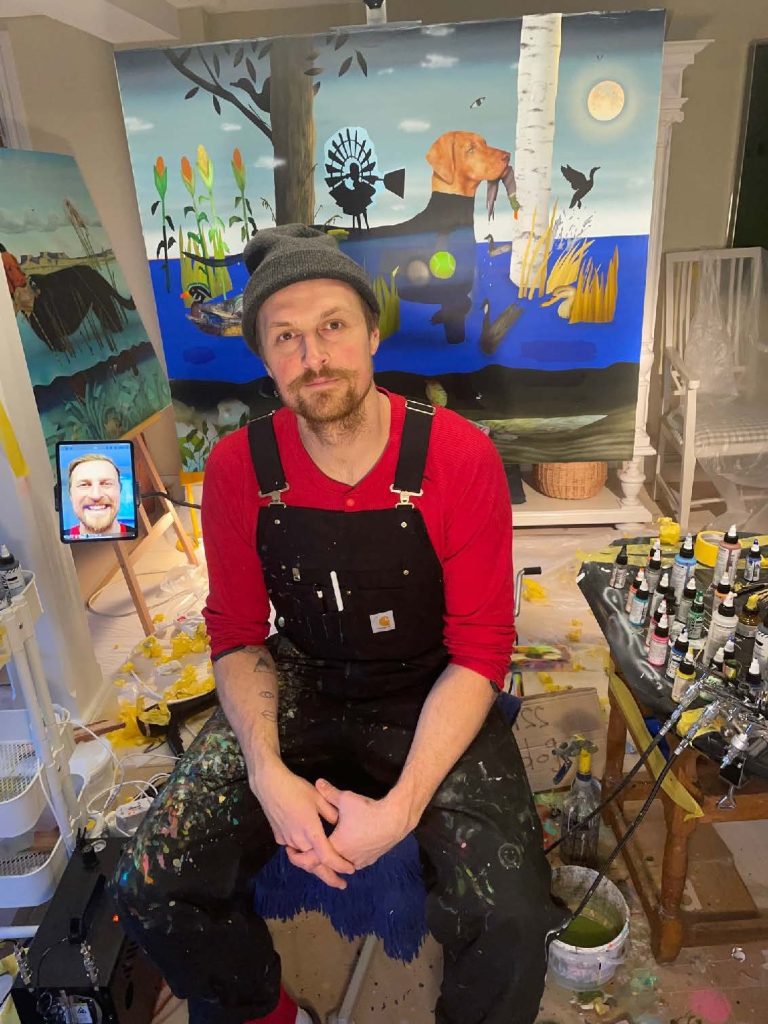
The Time Between Us by Jason Martin text Natalia Muntean “It’s always about finding the balance between capturing the moment in a still painting, while also showing the movement and boldness,” says British artist Jason Martin.  The Time Between Us is an exhibition bringing together pieces from years ago and the artist’s current work, as an ongoing search to expand a personalised vocabulary that stretches 23 years. Golden accents, shimmering greens or profound, oily hues, all blend to show Martin’s creative universe and act as an exploration of the tension between the ephemeral and the eternal. The paintings represent an attempt to capture moments that encompass the duality of being fleeting but also lasting forever, like trapping a moment into forever. As if Martin has managed to imprison time within his canvas. Through his work, the artist aims to transmit an eternal energy that can have an impact on a wider audience. “I make works for the now, the contemporary cycle we all inhabit but as important for the unborn,” concludes the artist.After a 12-year absence, Jason Martin returned to Stockholm with The Time Between Us, a solo exhibition on display at Wetterling Gallery until the 30th of September. Jason Martin was born in 1970 in Jersey, Channel Islands. He holds a BA from Goldsmiths University and is well known for his monochromatic abstract paintings. Portrait: Mustafa Hulusi  

Art

An Interview With Curator Matilda Olof-Ors

An Interview With Curator Matilda Olof-Ors text Josie McNeill A large sculpture composed of stacked wooden logs greets visitors as they enter the Moderna Museet’s “Pink Sails – Swedish Modernism in the Moderna Museet’s Collection,” exhibit that was unveiled on June 17. The sculpture, “Horizon of Me(aning)” by Carola Grahn, is a part-performance piece that, per the artist’s instructions, must be privately assembled in the exhibit while having a conversation about mental health. “Horizon of Me(aning)” speaks on how nature is animate, and although it is from 2015 originally, the work’s theme of trust in nature connects to many of the other pieces in the exhibit from the 20th century. ‘Pink Sails’ explores this theme, along with other progress and changes in society in this age, through the lens of modernist artwork. ‘Pink Sails,” curated by Matilda Olof-Ors, is a part of the museet’s new exhibition program in which each exhibit aims to explore art historical contexts instead of simply showcasing the chosen pieces chronologically. The exhibit draws its title from Ragnar Sandberg’s 1934 painting of the same name. For Olof-Ors, she was inspired to name the exhibit after this painting because “the lyrical and open character of the title also speaks to a strand of Swedish art at the time that existed side by side with the more well-known modernist narratives of transition and progression.” Can you start off by just giving me an overview of the exhibit?It’s based mainly on works from the Moderna Museet’s collection and covers the period from 1900s to the 1940s. I’ve been interested to see how the very drastic and rapid changes in society, of course, also reached the realm of art. You find it in both the artists’ quest for new motifs, and in the motifs themselves, capturing the new society-–everything from the fast growing cities to the industrial sites. But also I think it’s reflected in how the artists’ constantly strive to push the boundaries in search for new expressions, as well as in the artists that were rather turning their gaze inwards, using inspiration from fantasy, from fairy tales, from literature, and from sort of a non-visual world. It is also interesting that these tendencies exist side by side; it’s not like one thing or the other. What was your process of curating the exhibit? Did you come up with the idea first and then find paintings to fit in or were you inspired by the collection of paintings?The museum has a fantastic collection of works from these periods, so it’s been most inspiring to go back and look into that to explore. As the exhibition is based on our collection, limitations are of course inevitable, and I have included a few loans from neighboring institutions like National Museum and an institution in Uppsala, Bror Hjorths Hus, The Hilma af Klint Foundation and the Swedish Radio. The curation process, of course, has involved the compilation of a few monographic rooms, and also outlining some more thematic contexts. How did you choose the sub themes for the exhibit?It’s been a combination of posing questions and exploring: What art works, artists, and themes do we have in the museum’s collection? What sort of stories can we tell? What is interesting and relevant today? I think this period is interesting to look at now, almost 100 years later. Today, there’s another war going on in Europe. We experience very drastic changes in society, still going faster and faster as well. And I think we again gaze at nature as a way of searching for solutions to the challenges that we face today. To conclude, some prevailing themes in the early and mid 1900s are still very present or reoccurring today. I was gonna ask you to talk about that a little more. How do you think ‘Pink Sails’ is still relevant in today’s world?I would say that history is always relevant. We both get to know the history and get to reflect on contemporary society. As I mentioned earlier, many of the things that we are facing in the show are also very present today. Was there a piece of exhibit that stood out to you as being particularly impactful?One of my favorites is that wall [pointing]. I really like the texture, and the combination of the textile work by Anna Casparsson and the Vera Nilsson painting. I think they grasp some of the atmosphere that I was aiming for in this room. But also, I do have so many favorites. And then is there like a central message you want people to take away that are visiting the exhibit?Not particularly. It’s more that I hope that everyone would see and find something that they could relate to in the exhibition. And then did it come together the way you initially visualized it? In a way, yes. I think it’s so interesting working with contexts and ideas that you could start at one end, and then you realize you end up somewhere else once you sort of set the tone. And then how do you think Swedish modernism has evolved since the 20th century from when these paintings are from?That’s such a long story to tell. Of course, history is always changing. I would say the way we look at these paintings now is totally different than how they were perceived in the 1920s, or even in the 1970s, or the 1980s. I would argue that our relation to what we see is always the present one – both the artworks and how we look at them, but also how we interpret them is in a totally different way today than in the past.

Art

An Interview With Lío Mehiel

An Interview With Lío Mehiel text Josie McNeill When trans-masculine filmmaker, actor, and artist Lío Mehiel came across the toxic, man-made lake of the Salton Sea in Bombay Beach, California, they saw a metaphor for the experience of transgender people in the world. “It felt like a warning message, that underneath this man-made, toxic lake, the world had drowned, and the world is drowning,” Mehiel said. “And like, the powers that be … are distracting us by getting us to argue about whether or not trans people should exist and whether women should have the choice to get an abortion. It’s like we’re being distracted by this shit when our world is drowning, and it’s underneath the toxic lake of our own making.” Mehiel explored this comparison and others in their photograph ‘angels in a drowning world.’ The piece, which was shot by trans masculine photographer Wynne Nielly, will be on display as part of the ‘Saints and Sinners’ exhibition in the Guts Gallery in London from June 9 to July 7. The exhibition showcases art by LGBTQIA+ artists and aims to explore what it means to be queer in a time where many safe spaces are being physically closed. The trans experience is a topic Mehiel explores through their multitude of artistic pursuits, including their portrayal of Feña in the film ‘Mutt,’ which will be released August 18. Mehiel was awarded the U.S. Dramatic Special Jury Award for Acting at the Sundance Film Festival on Jan. 27 for their leading role in the film. ‘Mutt’ centers around a tumultuous, emotion-filled day for Feña, a young trans masculine person. So with all of that, if you haven’t heard Mehiel’s name in conversations in the arts world yet, you probably will soon. Can you start off by telling me a little bit about yourself and your background in the arts?I’m a Puerto Rican and Greek trans masculine artist. I’m a filmmaker and I’m also an actor. I started out actually dancing salsa when I was seven years old, professionally, and then I was acting on Broadway in New York as a kid. And then it really wasn’t until University and upon graduating that I started to form more in the installation and the visual art space, which really just serves as a passion space for me. It’s not something I necessarily have an agenda about making money from or building a career because acting and filmmaking takes up the industrious side of my work. But visual art and installation is something I do as a way to explore and pilot out aspects of my identity. And to sort of reckon with the difficult things that I see in the world. Like I sort of process it through photo projects, in collaboration with other artists. What drew you to photography? Was it mostly your filmmaking background?I think that I’m an image maker and creating images has always been really fascinating to me, especially as a queer and trans artist because I spent so much time in my life before I transitioned thinking about the image of myself and trying to figure out how to both create an image that was what I thought would be acceptable to the outside world and also understand what it is that people were perceiving about me that was leading them to treat me in a certain way. And so I think Trans and Queer people, especially when they’re making art, have a sort of—or at least I can only speak for myself—I have a relationship to image making that is deeply personal because of the way that it’s threaded throughout my life. How did you come up with the concept for the angels of a drowning world photoshoot?So, a very close friend of mine is the one of the lead producers of this arts festival called the Bombay Beach Biennale. And it happens at Bombay Beach, which is a partially abandoned desert town about 45 minutes past Palm Springs and California. And it really feels like it’s the end of the world. Like it’s the last stop in the world that you would get to if the world was flat.  And the town is sitting on a man made, toxic lake called the Salton Sea, which is a really rich and inspiring, jumping off point for a lot of artists. [The Bombay arts festival was] able to give me a small grant to do some kind of installation and performance piece. At the time, I was already working on developing a collection of sculptures of trans and gender expansive folks, which is called Angels, with Holly Sylius, who made the sculpture of me that is in this photo. And then this opportunity came up and I was like, what are the implications of putting the sculpture of a trans person, me, and this you know, euphoric moment in my life commemorating my top surgery, inside of this man made toxic lake. I became obsessed with the metaphor within that and I’m still obsessed with it. I’m now sort of in a year-long project around this lake and the relationship to these sculptures. But yeah, I was just like, oh, this sea is an uncanny comparison to this project of developing these sculptures. Did you say you’re working on another project that surrounds the same concept? Is it an expansion of the photo or a different project altogether?Next year in April for the festival, I’m hoping that we’re going to be done with the 12 sculptures that we’re building as part of the Angels collection. And once we’re done, I want to install it in the sea in a semi circle position and do some kind of performance in relation to them. But it feels like a reference to the Last Supper. A lot of my work is for some reason organically in response to classical and religious themes. I think because the scale of that kind of art, even Renaissance period art, is the only

Art

Affordable Art Fair 2023

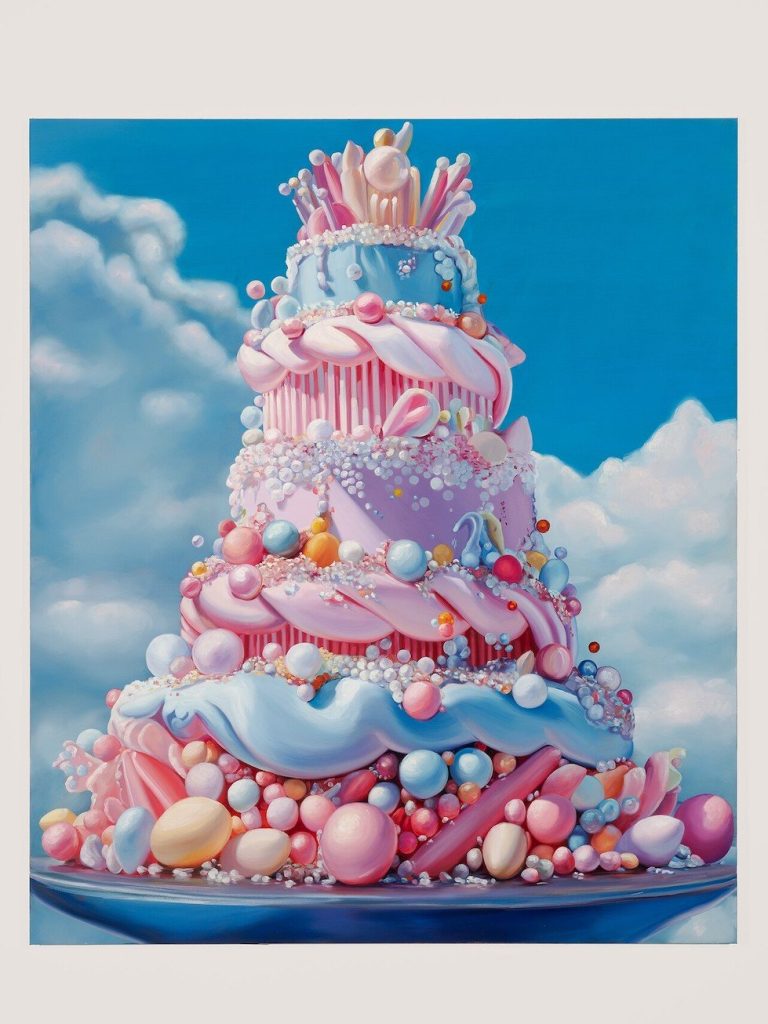
Affordable Art Fair 2023 text Natalia Muntean Stockholm Affordable Art Fair 2023: A preview of what’s to come“I see them in my dreams. I dream a lot,” says Fredrik Sologub, known as Dive, about his paintings and creative process. He stumbled into painting eight years ago after a party and hasn’t stopped since. “Nowadays, my art is much less curated and more raw and authentic,” he says about his evolution.Dive is one of the artists whose work will be featured at the upcoming Affordable Art Fair in Stockholm, with his painting adorning the event’s poster. The Stockholm fair, now in its 11th edition, will run from October 4th to 8th, 2023, at Nacka Strandsmässan. It will showcase thousands of contemporary artworks from over 60 hand-picked local and international galleries. This year’s fair, called Follow your art, emphasizes love and humanity – something needed in these times and something that art can help express. Among the artists showcasing their art this year are Mimmi Hammar, contemporary artist, Yoyo Nasty, artist and illustrator, and Erik Batsberg, multidisciplinary artist working in interior design, sculpture, and painting. In addition, Sigrfrid Billgren, designer, artist and the son of Swedish artist and writer Ernst Billgren, will also display his art at the fair. The first Affordable Art Fair took place in Battersea Park in 1999. It has now spread to ten cities around the world, welcoming over 185,000 art lovers each year to explore affordable artwork crafted by emerging and established artists. Poster: DIVE, ‘Cottoncandy Volcano’

Art

Chen Man

Chen Man text Sandra Myhrberg @CHEN MAN, 12 Chinese colors Vermilion, 2011 Being born in post-revolutionary Beijing with the one-child policy in effect, the world’s famous female artist and photographer, Chen Man has created her own spiritual revolution by changing China’s face for the western world. Being compared with Annie Leibovitz and dubbed the “Mario Testino of China”, the artist has renegotiated the cultural and philosophical ideals of her home country established in the Western society boldly through her images giving the China’s beauty aesthetic its own postmodern identity and putting the latter on the world’s fashion scene. Seemingly, “Fearless & Fabulous” – the artist’s first solo exhibition taking place outside China – is a luminous proof of that. The exhibition opened on December 9th at Museum of Photography in Stockholm and has undoubtedly conquered the fastidious cultural world of the Scandinavian capital. The artist’s works create a self-speaking dualistic illustration of a new aspirational China, where East meets West in a reality balancing between the outer beauty and the inner wisdom. Furthermore, Chen, as China’s top fashion photographer and artist, has a myriad of photo shoots on her CV, starting with Dior campaigns and ending by her self-portrait for Qeelin’s Chen Man by Chen Man campaign. Her lens has virtuously captured China’s national icon, actress Fan Bingbing and strikingly eternalised such celebrities as Rihanna, Nicole Kidman, Keanu Reeves and Victoria Beckham. Chen’s photographs have been acquired by the Victoria and Albert Museum for their permanent collection. Entirely, the images of Chen Man are easily recognisable as they embrace both modern post-production techniques and Eastern themes, creating an own unique fearless and fabulous philosophical fusion of pure romance, rough spirit, naked ambitions and exquisite humour.   @CHEN MAN, Long Live the Motherland, Beijing No. 1, 2010 @CHEN MAN, Long live the Motherland, Beijing 5, 2009 I have understood you started with art at an early age. At what age did you steer over to photography?When I was in college my major was in photography. I read that you were born during the time when China was implementing the one-child policy in families, do you think that had an affect on your artistic exploration?Off course, I was a single child. Our generation started to study really early. The thing is that I am really good at painting. My parents gave me professional training at painting. Classes to train different techniques since I was two years old. Actually my major profession is a painter and I still paint. I am a better painter than a photographer. Your work almost looks like paintings after post production, did you ever work with analog photography or have you always worked with the digital medium?I started with a series of images for an art magazine called Vision Magazine when I was in college, I made one photo per month. I have a lot of passion for the visual language, therefore I have used a lot of Photoshop and really heavy post-production since then. That is where people think I am from. My name is Chen Man, so a lot of people [outside China] think that I am a man. At that time no one used Photoshop in China, when those works reached the market. Artist and photographers were quite shocked about this series. Thus, they didn’t know wether to define me as an artist or a photographer. Did you teach yourself photoshop or did you study?I am also a graphic designer so I kind of already new photoshop. You also have a clothing label, how come you started to do clothing design?I am not a professional clothing designer but I was approached by different brands to put together a crossover collection since I am kind of a celebrity in China. I have a bunch of followers on Instagram, over 10 million in China. A lot of them are young girls and that is a huge market so the brand has chosen me as a special artist to create different kinds of products. This is my fifth year creating a collection. I like cosmetics and I also have a collab with Mac Cosmetics. The brand chose me as a first Chinese artist for their collection of limited edition of crossover products called Love & Water. @CHEN MAN, 12 Chinese colors White, 2011 @CHEN MAN, Long live the Motherland, Beijing 5, 2009 What’s your favourite camera you like to use?I am not a fan of the machine so I use what I have, for example Hasselblad and Canon. I have Canon investors in China. You were first published with a self portrait in a Chine’s art magazine that caught a lot of attention, and shortly after you were published in many international publications, do you think the rise of the internet at the time helped you gain recognition outside China as a young artist?Yes, could be. I was reported by different kinds of medias in the beginning such New York Times, CNN and ID. How is it to work as a female photographer in China? Have you felt any limitations?I don’t feel any limitations. I am quite casual, not really tuff as a business woman. I am concentrating on the visual language and how to enjoy it. I think it is a convenience that I am a woman. I shoot a lot of female actresses and therefore I can shoot them totally nude without any boundary. Are the editors at the magazines you work with in China mostly men or women?Most of the editors I  work with are mostly female or gay…. Do you find that you work in a different way when you work with international clients?No, it depends on the country and on different people. Some really understand their brand and know what they need and they trust their choice and let me do what I want. Other brands don’t know who they are yet and are trying to figure out what they want to do. So, could you say that you do branding in a way?Yes. @CHEN MAN, Long live the Motherland, Shanghai, 2010 @CHEN MAN, Long

Art

Viviane Sassen

Viviane Sassen text Blenda Setterwa While waiting for Viviane Sassen in the exhibition room at the Fotografiska Museet (Museum of Photography), in Stockholm, I have time for a private moment with the almost finished UMBRA exhibition. As much as I’ve read up on Viviane Sassen’s photography, something comes together in the dimly lit room, like a wordless message is being whispered from the walls. They trigger a sense of fusion and synecdoche in me, where all my senses become equally receptive. The sort of images that linger when you close your eyes and speak to a place in your mind where they might be mistaken for personal memories in the future.UMBRA is full of contrasts and contradictions. A galanty show, color-popping sunlight, smoke, mirrors and frozen intimacy, capturing the space between the internal and external in us. Shadows of all shapes and sizes follow us like ghosts through the images. Pitch black and magnetic, sharply cut and graphic or thinly-spread like smoke and veils, all with a sense of gravity, mysticism and presence seen through Sassen’s camera lens.As we sit down for the interview, Viviane Sassen – like her body of work – signals an alliance between contradicting forces. Genuine openness and curiosity paired with strong integrity and a piercing gaze. V: I sometimes refer to myself back when I was younger as a shy exhibitionist. I think that in a lot of my work, there are paradoxes. Darkness and light, bold and subtle… there are all these contrasts. I feel drawn to both sides at the same time. Referring to myself as a shy exhibitionist sums it up. You want to show, you want to shine but at the same time you’re too shy to truly show your self. And I often feel drawn towards images that don’t show faces because I feel like they leave much more to the imagination. I like an image to not be… conclusive. To have an open end. B: Something that lingers… V: Yes. It makes you think about how you should perceive the image and what the story behind it is. In our subconscious we all have these universal ideas of what things are, how to register and categorize them, to be able to understand the outside world. And how that reflects back on our self. That’s constant, measuring between the self and the other. B: What is your fascination with shadows? V: I think the shadow stands for the unknown and I want to peek into the unknown. But it’s not about finding answers, it’s the curiosity itself. Maybe it is the fascination with the unknown. With darkness and with death, ultimately. And a fear of death that I have always had. My father was a doctor and worked in Africa. Later when we moved back to Holland, he had his practice in our house. There was always sickness and death nearby, it had something mysterious about it for me. And later on my father passed away, he ended his own life which was very tragic and something I can’t really understand. I think I still wonder what it’s like on the other side. B: And the shadow is a portal? V: A portal, yes. Without any answers. B: Can you tell me how you made these glass photographies in the desert? They look Photoshopped, but they’re not? V: No their not. It’s actually pieces of coloured prospects and a mirror. At least in the smaller once I used a mirror. And it was by accident that this happened because I set myself a goal to make a photographic version of the black square of Malevich. I had these really square things in mind and using the landscape. Almost like Rothko you know? All those references are there, but then I also brought a mirror, but I didn’t know what to do with it. At one point we were just resting a bit, drinking some water because we were in the desert in Namibia. When we put the mirror in the sand to free our hands, I saw the reflection of the sky. That was really beautiful! So we started experimenting with making shadows on top of the mirror. That is basically what you see. For instance that arrow here in the very corner, just a very thin line in the middle. That’s the mirror itself, seen from above. That dark piece on the right is the shadow of the mirror and the light piece is the reflexion of the sun in the mirror. They became very graphic, but I Like the human element in them, that you still see the shadows of the hand. B: How and when did you know you wanted to express yourself through photography? V: I think it was clear to me from a very young age that I wanted to do something creative, because I just couldn’t stop dreaming and drawing. That’s basically all I did. After high school it was pretty obvious that I would go to art school, but at the time I didn’t really know what I wanted to do or become. Or study. I thought maybe graphic design, maybe fashion design. I think the idea of becoming an artist was one step too far for me at the time, It was to vague and I needed something with more structure. So I decided to study fashion design, witch I did for two years. But I quite quickly realized that making clothes was not my passion, I wasn’t really interested in clothes that much. I’ve always had this kind of love/hate relationship with fashion. Like, not really interested but at the same time fashion photography always gave me a great platform to express myself, communicate and experiment with photography. B: You started out as a model, that was your first encounter with the fashion industry. Do you think that affects your artistic expression in any way, that you have a double view? V: Yeah, I think it had an influence on me back then. Just the fact that I worked with other creative people

Scroll to Top