Author name: Ulrika Lindqvist

Opiates

The Extreme Cream by MANTLE

The Extreme Cream by MANTLE Scandinavian skincare has long built its reputation on resilience, shaped by a climate that demands more from both skin and the products designed to protect it. With The Extreme Cream, MANTLE leans into this legacy, presenting a moisturiser developed not for comfort, but for endurance. Rooted in Nordic conditions where cold, wind and dryness are constants, the cream positions itself as a response to environmental stress in its most literal form. Yet the idea of “extreme” has quietly expanded. Modern skin is no longer only challenged by weather, but by sealed indoor climates, travel, pollution and the pressure of continuous movement. Protection today is as much about urban life as it is about winter landscapes. The formulation reflects this duality. Built around the brand’s mSkinPreserve Complex, it focuses on maintaining skin resilience over time, addressing dryness, oxidative stress and the slow effects of inflammaging. Its structure as a water in oil emulsion creates a barrier that holds moisture while still allowing active ingredients to function, balancing protection with performance. There is also a personal narrative embedded in its development. Founder Josefin Landgård’s experience as a competitive skier informs the product’s intent, shaped by the absence of a moisturiser that could protect without excess, irritation or unnecessary additives. What emerges is a product that speaks less about luxury and more about necessity. Unscented and free from silicones and petroleum, it is designed for skin that is compromised, reactive or simply overexposed. In a market saturated with promises of glow and transformation, The Extreme Cream instead argues for something quieter but more enduring. Skin that is protected, supported and able to withstand whatever environment it is placed in. Read more about The Extreme Cream here   Image courtesy of MANTLE

Opiates

Guldkula Champagne introduces Pink Grand Cru

Guldkula Champagne introduces Pink Grand Cru Guldkula Champagne expands its collection with Pink Grand Cru, a new rosé champagne that captures the essence of summer evenings, elegant picnics, and quiet moments outdoors. With fresh notes of red fruits and a refined character, the cuvée is designed for occasions defined by lightness and ease. The champagne is the result of a continued collaboration between Håkan Guldkula and Richard Juhlin, who have worked together to create a balanced expression of elegance, fruit, and complexity. Pink Grand Cru replaces the brand’s previous rosé champagne and represents a new stage in its development, with the ambition to become a seasonal favorite among champagne enthusiasts. Composed of 55 percent Chardonnay Grand Cru and 45 percent Pinot Noir Grand Cru, with 14 percent of the Pinot Noir vinified as red wine, the champagne reveals aromas of cherry and strawberry. The palate is round, soft, and lingering, making it suitable both as an aperitif and alongside summer desserts with red fruits. Pinot Noir sourced from Ambonnay contributes to the champagne’s layered and elegant expression.  With Pink Grand Cru, Guldkula Champagne continues its focus on balance, versatility, and elegance. The release stands as a tribute to outdoor living, seasonal gatherings, and the enduring appeal of rosé champagne, reminiscent of summer on the French Riviera. Read more about the Pink Grand Cru here       photography  Julia Viklund

Opiates

String Furniture expands Pira with a new display cabinet

String Furniture expands Pira with a new display cabinet The Pira shelving system was originally designed by Swedish architect Olle Pira for the iconic H55-utställningen. In 2023, String Furniture introduced a contemporary interpretation created by architect Anna von Schewen and industrial designer Björn Dahlström. The updated Pira system combines elegance and durability, produced in modern materials for contemporary interiors. The system now evolves further with the introduction of a new display cabinet that enhances both its flexibility and visual expression. Designed to integrate seamlessly into the existing structure, the cabinet can be used whether the shelving system stands freely in a room or is mounted against a wall. With glass on both sides, the cabinet becomes a natural extension of the system and introduces new possibilities for storage and display. A defining characteristic of Pira is its ability to function as a freestanding element, acting as a room divider while maintaining transparency. The absence of a solid back allows visibility through the structure, and the glass cabinet reinforces this quality by making its contents visible from both sides. This addition marks another step in String Furniture’s long term commitment to developing Pira as a living system. By continuously introducing new functions, the project evolves alongside changing storage needs. With the display cabinet, Pira further establishes its role as a flexible and architectural shelving system where form, function, and material meet in a contemporary interpretation of Swedish design heritage. Find the Pira collection here  image courtesy of String Furniture

Opiates

Veja and Magliano reinterpret the Panenka

Veja and Magliano reinterpret the Panenka Veja teams up with Italian brand Magliano to present a new interpretation of the Panenka, inspired by vintage football boots. The unisex silhouette becomes a space for bold and unconventional tailoring, where sport and couture meet. Pushing the football aesthetic further, the Panenka features a folded tongue over the upper, recalling classic cleats worn on the pitch. Crafted from a single perforated piece, the flap allows for asymmetric lacing. Three pairs of laces are included, creating a graphic interplay of interwoven colors that reflects the contrasts central to Magliano’s design language. Function and eccentricity come together in a design that moves between culture and couture. The collaboration is introduced in three colorways. A deep black version with cream accents, a white edition with black contrasts, and a pearlescent pink silhouette. For this release, Veja places the Magliano logo at the forefront, honoring the identity of the Bologna based brand while giving the Panenka a distinct new character. Find the collection here  image courtesy of VEJA

Fashion Articles

MADH: Redefining Denim Through Craft, Customisation, and Creative Independence

MADH: Redefining Denim Through Craft, Customisation, and Creative Independence ALL IMAGES COURTESY OF MADH  After nearly two decades shaping denim at Acne Studios, MADH founder Martin Gustafsson set out to build something slower, more deliberate, and deeply personal. Launched in 2023, MADH positions denim within a high-fashion context, combining Italian craftsmanship, sustainable production, and customisation to challenge the conventions of seasonal fashion. Ulrika Lindqvist: Please tell me a bit of your backstory, I know you founded MADH in 2023, what had you done before that and what was the idea behind MADH? Martin Gustafsson:  I studied at the Textile University in Borås and completed my internship at Acne Studios, where I was later hired and began working in the denim department. I was fortunate to be part of the brand’s journey, spending nearly 20 years focused on denim development and design. With MADH, the idea is to create looks centered on exclusive denim within a high-fashion context. The focus is on quality and sustainability, supported by the close relationships we’ve built with Italian mills and industry specialists. UL: How did MADH come together as a company? MG:  When the brand was still just an idea, I reached out to a small group of people I had worked with over the years: individuals from across the industry whom I found inspiring and who I felt would be a strong match for MADH as a platform for creative work. UL: You offer ready-to-wear as well as customisable denim, how do you combine your customised service with a world of fast fashion? MG:  Customisation is an alternative to the traditional, season-driven business model. When it comes to jeans, we believe certain styles will always function as core pieces in a wardrobe. An on-demand setup allows both customers and stores access to a wider range of options and unique designs that are only produced when there is an actual demand. This approach significantly reduces leftover products after each season — a situation that is neither sustainable for the business nor for the environment. UL: What are the steps of buying a MADH SKINS piece? MG:  You pick you fit, black or blue denim, then you can pick from light or dark shade. After that you can add plain wash or vintage look. Final step for the ones that want to create a true customised look you can also add holes, embroideries or patches.   UL: What is the inspiration behind your designs? MG: The process starts through style-out session in Stockholm or Paris.  We combine previous seasons jeans with vintage clothing that are combined to a new look. Garments will need reconnection, cut, stitch, pin tuck and within the process you find inspiration for what feels interesting. We work a lot with the fabrics to develop  finishes or techniques that sometimes give inspiration to a garment. UL: What would you say are the 3 core values for MADH? MG: Innovation, Creative collaboration and Responsibility UL: How would you describe the MADH customer? MG:  Someone that loves denim and fashion, likes to create their style trough unique products produced in best quality and sustainable mindset. UL: How do you source your materials? MG: We work directly with a few mills in Italy. We develop fabrics together with them based on look, quality and sustainability. This is one of the most inspiring parts of the process.  UL: How do you approach designing your unisex collection? Does it differ from designing menswear or womenswear? MG: This comes naturally, if it wouldn’t I don’t think it would work. Often we make the fitting on different body types to see how the appearance looks. Small technical pattern changes will sometimes give a more characterful look. Fit is crucial and its start with look we want to create.   UL: What have been the most challenging aspects during these first years? MG:  We live in a world and market that is within constant change and the challenge I would say is all the small things within a company with few people that needs to be take care of and adapted to the changes needed and spend money right. Its costly to introduce a brand so the financial situation will always chase you. UL: What can we expect from MADH in the near future? MG:  To be seen in more high end stores in Europe, so far we been focusing on Japan and US.  We also plan to make some pop-up exhibitions in collaboration with some artists.

Fashion Articles

From Dalarna’s Lakes to Timeless Swimwear: Paula on 30 Years of PAULA Beachwear

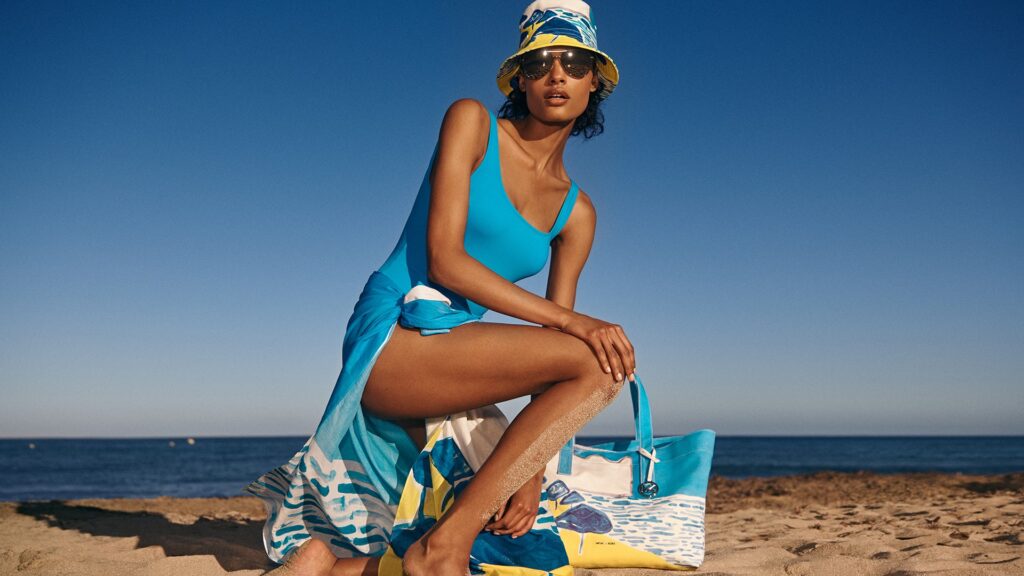
From Dalarna’s Lakes to Timeless Swimwear: Paula Malm on 30 Years of PAULA Beachwear What began as a personal pursuit of the perfect swimsuit has evolved into a cult Swedish beachwear label defined by precision, restraint, and longevity. As PAULA Beachwear marks its 30-year anniversary, founder Paula Malm looks back on her early inspirations, her creative process, and the philosophy of timelessness that continues to shape the brand. Ulrika Lindqvist: Looking back, what inspired you to start PAULA Beachwear in the first place? Paula Malm: I have always loved the ocean and water, spending my childhood and teenage summers by a small lake in Dalarna, but also in the west coast archipelago of Sweden. The feeling and memories of salty shoulders after long days of swimming and crab fishing are my eternal sources of inspiration. I swam many miles in the pool on the island of Marstrand in a super simple striped swimsuit that I wore for several summers – an inspiration for the classic swimwear I still create today. UL: Could you tell us a bit about your background? What did you study and work with before founding PAULA Beachwear? PM: I studied tailoring and pattern making in Sweden, and design and drawing at Parson in New York City. I worked for a short time at Björn Borg, parallel to design projects in Kenya and Zimbabwe, before starting my own brand. During my studies, I also worked in a very chic lingerie boutique, which later became a great asset in understanding fit and quality. UL: How would you describe your creative process? PM: I am always inspired by three things – a material, colours, and a lack of garments that I want for myself. I only design pieces that I would wear myself, no matter what. I usually visit fabric fairs, and when I feel a new material, I can already envision the garment it will become. UL: How have your designs developed over these 30 years? What discoveries have you made? PM: My designs are constantly being refined for a better fit and improved materials, even though the styles remain basic and timeless. I believe in classic cuts in high quality that will live long in your beach wardrobe. A PAULA swimsuit today is even better than it was 30 years ago – I think it fits more body types, and there is always a wide range of colours to choose from. I have learned that fashion colours sell later in swimwear, and how important it is to stay true to my original vision rather than designing for everybody or every occasion. UL: What pieces would you describe as the core classics of the brand? PM: Our signature piece, Swordfish, is truly a core classic – totally timeless and equally beautiful as both a top and a swimsuit. I have met clients who own it in seven or eight colours. Poppy is another clean, classic suit, and for bikinis, our bra Mermaid is also becoming a timeless favourite. UL: Do you have a favourite sea, lake or beach in the world? PM: Oh yes – the small lake in Dalarna, Sweden, where I learned to swim; the ocean around the island of Marstrand on the Swedish west coast; and the beaches of Martha’s Vineyard, south of Boston, USA. UL: Is there a particular moment in your career that stands out as especially memorable? PM: Recently, Swedish Television presented a new version of the Astrid Lindgren series Vi på Saltkråkan, where my childhood idol is wearing a PAULA beachwear swimsuit. I watched it with my children and got goosebumps. UL: What are you most looking forward to in the coming year? PM: There is so much fun ahead! Our new collection is larger than ever, and the photos shot in Sicily truly capture the spirit of the season. It is such a joy to see the garments in their right element, and we had the best team ever for this project.   All images courtesy of PAULA Beachwear

Opiates

Eton X Valentines

Eton X Valentines In time for Valentine’s Day, Eton reintroduces a perennial favourite: the white collar shirt. Returning for Spring/Summer 2026, the beloved silhouette arrives in refined blue and pink stripes, a subtle nod to romance through a distinctly sartorial lens. Clean, crisp and deliberately composed, the design is crafted from wrinkle-resistant 100% cotton Signature Twill and finished with a sharp white contrast collar. A modern classic that balances softness with structure, it’s a piece designed to move effortlessly from occasionwear to everyday tailoring. The collection is available at EtonShirts.com, in Eton stores and through selected retailers. The perfect gift for someone you love, or for yourself.  Image Courtesy of Eton

Opiates

Tretorn Unveils Premium SS26 Collection, Reimagining Weatherproof Classics

Tretorn Unveils Premium SS26 Collection, Reimagining Weatherproof Classics Tretorn presents its premium Spring Summer 2026 collection, redefining the brand’s iconic weatherproof staples through a contemporary design lens. Founded in 1891 and renowned for its functional outerwear and footwear, the Swedish brand continues to build on its AW25 premium line, strengthening its relevance for modern city life where craftsmanship, innovation, and protection meet elevated design. For SS26, Tretorn refines its functional DNA through updated silhouettes, thoughtful material choices, and considered detailing. The collection introduces versatile outerwear and footwear designed to adapt seamlessly to changing weather, offering pieces that are as practical on rainy days as they are effortless when the sun appears. Both the women’s and men’s collections reinterpret Tretorn’s classic rain jackets with a minimalist and sophisticated approach. In the women’s line, the new Raven Coat and Cove Jacket offer a more feminine and urban silhouette, while the men’s collection introduces the Gain Coat and Bound Parka, designed to integrate naturally into city environments. Crafted from recycled Oxford fabric with a matte PU finish and fully welded seams, the jackets combine technical performance with refined aesthetics. Expanding beyond traditional rainwear, the SS26 collection introduces a range of adaptable shell garments designed for layering. The women’s Lone Wrap Coat and the men’s Ash Coat are engineered for high technical performance and can be worn alone or paired with insulating layers. Complementary pieces such as the Loop Liner for women and the Core Hood Jacket for men allow for flexible styling across seasons, offering comfort and functionality from early spring through late autumn. Footwear also plays a key role in the collection, with the launch of the Ari Clog, a modern reinterpretation of the classic wooden clog crafted in FSC-certified natural rubber. Designed for both garden and city wear, it embodies Tretorn’s balance of tradition and innovation. Rendered in timeless neutral tones of black, navy, and beige, the SS26 collection presents a modern wardrobe rooted in quality, versatility, and understated elegance. Sustainability remains central to the brand’s philosophy, with responsible design and material choices shaping every piece. Tretorn’s Spring Summer 2026 collection launches on February 11 at tretorn.com and selected retailers worldwide. Images Courtesy of Tretorn

Design, News

LAYERED Unveils the Lozza Rug Collection Designed by Erik Bratsberg

LAYERED Unveils the Lozza Rug Collection Designed by Erik Bratsberg LAYERED presents the Lozza rug collection, a hand tufted series designed in collaboration with artist and designer Erik Bratsberg. What began as a practical solution to wine stains in a restaurant project evolved into a broader exploration of form, colour, and function, resulting in a collection defined by sculptural expression and thoughtful design. Crafted in wool and shaped by soft, organic silhouettes, Lozza draws inspiration from Bratsberg’s sculptural wall works, where overlapping forms create a sense of harmony and movement. The rugs move beyond the traditional rectangular format, offering irregular shapes that bring flexibility, flow, and a subtle dynamism to interior spaces. Each rug is composed of three tonal fields, carefully balanced to create depth and contrast. A lighter outer edge lifts the room, while deeper tones toward the centre add visual weight, enhanced by subtle variations in pile height and tactile detailing. Available in two versatile colourways, the collection is designed to complement both warm and cool interiors, harmonising effortlessly with diverse materials and furnishings. The name Lozza stems from the Italian word tavolozza, meaning artist’s palette, reflecting the layered composition and Bratsberg’s enduring fascination with the interplay of colour, form, and materiality. Through this collaboration, LAYERED continues its mission to merge art, culture, and design, creating objects that transcend function to become expressive centrepieces. The Lozza collection launches today on layeredinterior.com. Image Courtesy LAYERED

Fashion Articles

A Journey in Time: Stephane Waser on 50 Years of Maurice Lacroix

A Journey in Time: Stephane Waser on 50 Years of Maurice Lacroix Marking half a century of Swiss watchmaking, Maurice Lacroix looks ahead rather than back. In an exclusive interview, Stephane Waser speaks about the brand’s defining moments, its core values, and how iconic collections like AIKON continue to redefine accessible luxury for a new generation of watch lovers. Ulrika Lindqvist: How have your designs developed over these 50 years? What discoveries have you made? Stephane Waser: Since our foundation in 1975 in Saignelégier, design has evolved alongside the identity of Maurice Lacroix. The launch of the Masterpiece line was a key moment, allowing us to enter haute horlogerie and explore bold complications like the Square Wheel and Mysterious Seconds. These watches pushed our creative and technical limits, and that know-how still shapes our designs today. Another major shift came in 2016 with the launch of AIKON, a modern reinterpretation of Calypso. It marked a new direction, speaking to a younger, urban audience with strong design and clear value, making Swiss quality more accessible. With the 1975 Collection, 1975 Legacy, and AIKONIC, we celebrated our 50 th Anniversary by honoring our heritage while reinterpreting it for modern watch lovers. That balance between roots and relevance defines Maurice Lacroix. UL: What are the characteristics of Maurice Lacroix? SW: Maurice Lacroix is defined by a clear mission: Swiss craftsmanship, iconic design, and accessible excellence. We stand for accessible luxury, combining strong aesthetics, functionality, and our Swiss heritage in every timepiece. What has evolved is how we express these values. In the early years, the brand explored a wide range of references and even ventured into high-end, complex watchmaking. Over the past decade, we’ve refined our approach, focusing on a clearer identity built around strong, coherent collections — with AIKON as a key example — and placing greater emphasis on understanding and engaging with our customers. UL: What defines a good timepiece for you?  SW: For me, a good timepiece brings together Swiss craftsmanship, iconic design, and real functionality, all delivered with a sense of accessible excellence. It has to be authentic — rooted in genuine watchmaking know-how, particularly our heritage in the Jura, where strong finishing, quality, and design are part of being a true manufacture. A good watch should also feel inclusive rather than exclusive. It needs to look and feel premium, use quality materials, and offer lasting value, while remaining within reach. Today’s customers, whether seasoned collectors or first-time buyers, are looking for thatbalance: a watch with a clear identity, strong design — like AIKON — and the reassurance of Swiss expertise at a fair price. UL: Do you have a favorite piece from your collection? What makes it special to you? SW: My favorite piece is the AIKONIC Master Triple Retrograde. What makes it special is how completely it expresses the Maurice Lacroix mindset. Throughout our history, we’ve always looked for inventive ways to indicate time, using curves, lines, colors, and materials to createbold and expressive watchmaking. Retrograde displays are a perfect example of this spirit. It has been over 25 years since we introduced our first retrograde model, the Calendar Retrograde, featuring a proprietary mechanism — and since then, this rare complication hasbecome a true signature of the brand. The AIKONIC Master Triple Retrograde brings all of that together in one watch. It combines three retrograde indications — day, date, and power reserve — with skeletonized elements, creating a display that is both technical and highly visual. Clearly inspired by our pastcreations, it distills the AIKON design codes, our manufacture movement expertise, and our mastery of materials into one singular form. For me, it feels like a future icon. It shows our ability to make high watchmaking complications relevant for today, delivering an ultra-desirable, urban timepiece while offering a clear glimpse into the future direction of Maurice Lacroix. UL: What would you say are the three core values that define Maurice Lacroix? SW: Maurice Lacroix is defined by three core values: accessibility with high perceived value, offering Swiss luxury watchmaking at fair prices; quality and craftsmanship, rooted in strong Swiss traditions and in-house expertise; and innovation driven by the journey, where creativity, technical progress, and bold ideas shape the brand’s continuous evolution. UL: How would you describe the typical Maurice Lacroix customer?  SW: The typical Maurice Lacroix customer values authenticity above all, drawn by our genuine Swiss craftsmanship and deep roots in the Jura. They appreciate watches with strong finishing, thoughtful design, and true quality. At the same time, they seek accessibility—they want premium-looking, well-made timepieces that offer real Swiss expertise without being out of reach. Whether collectors or first-time buyers, they value the balance of exceptional design and fair pricing. Most importantly, they expect a brand that listens, understands, and anticipates their needs, creating a genuine connection beyond just the watch itself. UL: If you could design for anyone, who would be your dream client? SW: If I could design for anyone, my dream client would be someone who embodies self-made success—not relying on inherited wealth, but earning everything through hard work and determination. They’d have an adventurous spirit and a strong sense of urban cool, with an appreciation for genuine craftsmanship without any pretension. This client would likely be part of the Millennial or Gen-Z generation, digitally savvy and globally minded. Whether an entrepreneur, an athlete who has overcome challenges, a creative professional, or an explorer, their personal journey and mindset would perfectly resonate with Maurice Lacroix’s philosophy that success is a journey, not a destination. UL: Is there a particular moment in these 50 years that stands out as especially memorable? SW: One thing I want to make clear is that for our 50th anniversary, we didn’t simply look back and celebrate our legacy — that’s not really in the spirit of Maurice Lacroix. Of course, we marked the milestone with collections like the 1975 and the AIKONIC, which honor where we come from. But what matters most to us is consistency: staying true

Scroll to Top