Author name: Odalisque

Fashion Articles

An Interview with Elmina Ekman

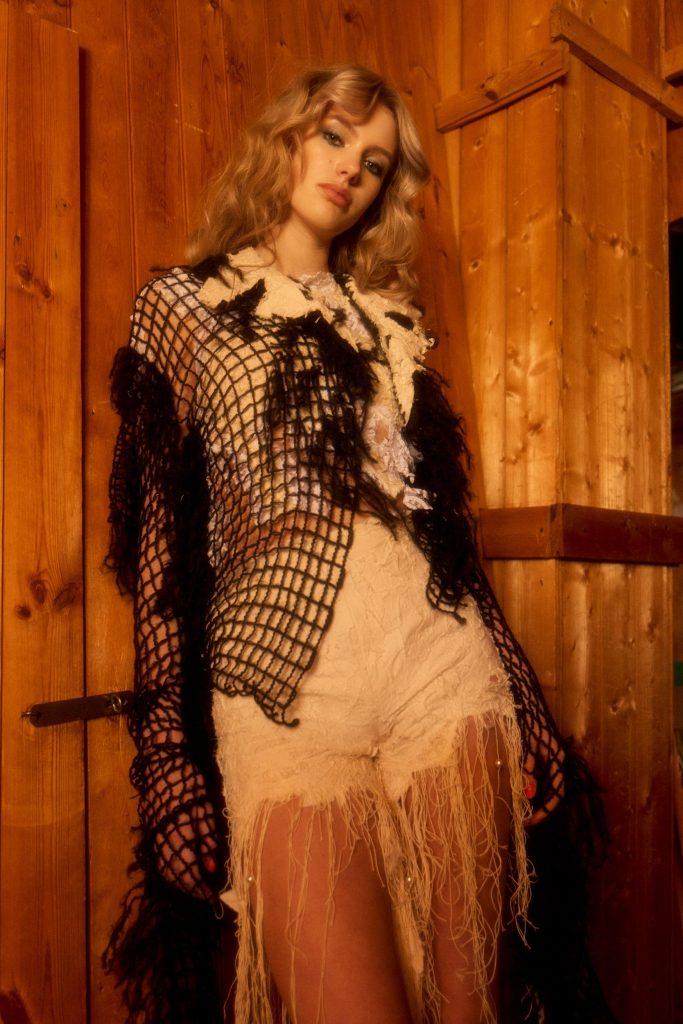
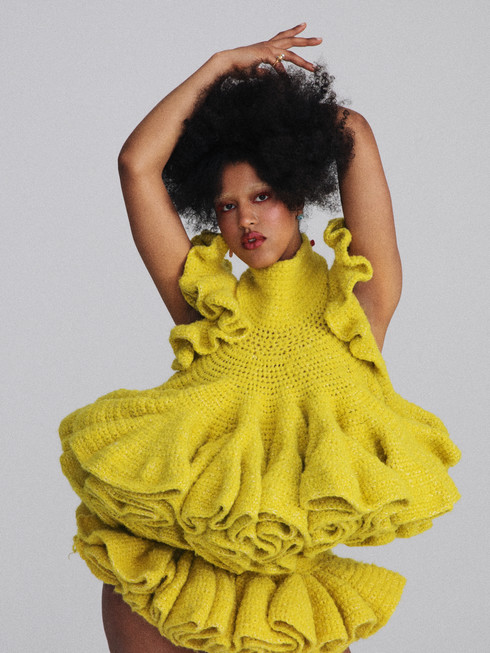
An Interview with Elmina Ekman text Josie McNeill Artist and designer Elmina Ekman needs a break from fashion. After finishing her degree at the Swedish School of Textile last year in addition to various other arts schools and then completing a fashion internship in Paris, Elmina Ekman released her ’80s inspired Dusty Delights collection. The 26 year old designer drew inspiration for her latest project from her parents’ closet as well as her boyfriend and collaborator Hannes Mörk’s parents’ home. The collection consists of lacey leggings, dainty lace up tops, and soft knitwear—perfect for the current rise of ballet-inspired fashion. But now she said she’s taking a much needed rest and recovery from fashion design before letting her creative energy flow into making garments again. What’s your main focus now instead of fashion design?Well, for now, I just moved to a new apartment. So now it’s all about, you know, interior design and finding new furniture and kind of, yeah, the new place to work. I also have a new studio so I will start doing some new stuff pretty soon, but now I’m getting to know the new place. How would you describe your design aesthetic?I think it’s a little bit difficult to pinpoint. Because, you know, when you’re a new designer, you’re new to the fashion world. I mean, it’s only been a year. It’s kind of hard to to niche. And also, when I went to school, I didn’t want to set my aesthetic too early. I just wanted to explore. I think I still have that a little bit inside me. And I definitely will say that I like working with the materiality of this kind of handy, crafty aesthetic. I will say it’s about structures and kind of neat details. I am mostly working with and get inspired by crafty things, materials, and of course, I love walking around into flea markets to look for interesting whatever actually, it could be textiles or objects. For your dusty delights collection, why’d you decide to use more lace and knitwear fabrics because I feel like it differs greatly from the materials on your past designs?For this project, I collaborated with Hannes, my boyfriend and often when we do these shootings, we decide the location after you know the aesthetic of the clothing. For this project, we set the mood and atmosphere and the location first. And then made the pieces when we shot it in this kind of mix and match spare apartment at Hannes’ parents house. We have this granny longstocking vibe because it’s kind of a bit weird, and it kind of reminds me of when I was visiting my grandparents house and looking at my mom’s old ’80s clothing and knitted pieces that my great grandmother had made. I wanted to kind of achieve this kind of new romantic look with lace and leggings. For this, gown dresses have been ripped apart. And that was like the idea for Dusty Delights, when you went through your mom’s old wardrobe. So we went for that and had like this kind of polish look with no defined curls and neat makeup. I really liked that it was kind of like ballet inspired here with leg warmers and lace.Yeah exactly. And also for some of the pieces drawn from my graduate collection. I used some tall fabrics that I cut in small pieces, glued together, and stick stitched because I wanted to achieve, on the surface, the impression of paper. So for Dusty Delights, I use elements that I had developed from my graduate collection from school. Can you talk a little bit about your experience at the Swedish School of Textiles?Well, my experience was great. I think it was a perfect time in my life to move to a smaller city because I’m from Stockholm. It’s not like you’re supposed to be like commercial fashion. It’s more a place to work with materiality. And I really would say, I mean, it has pros and cons, but I always say like overall I’m really pleased with my education and my experience with teachers was great. I think I learned a lot from being at school. However, I kind of feel like what I missed a little bit, was like the commercial part actually, because it’s not like that when I graduated, I had all the tools to go out into the industry and start working. And then how would you describe your design process from start to finish?I start sketching in my head. Especially now during my work hours, I listen to podcasts and it’s this perfect opportunity to be in your head and thinking, so I kind of sketch in my head. Again, I often like working in the material world in either 2d or 3d. When I start a project I go all in, zero to 100%, so it gets really intense in the studio I also look at a lot of magazines and the internet and listen to music. For example, for Dusty Delights, because I wanted to have this 80s inspiration, I listened to ’80s music because I wanted to get into the mood. So that’s part of my process. And then I try and try and try and go back and cut and sew again and hem. I work really free. What was some of your favorite 80s music to listen to when you were designing Dusty Delights?Maybe I should pull up my Spotify Spotify? I made this amazing French 80s playlist, so I mainly like listening to French 80s music. Elmina sent the song that was most inspirational to her for Dusty Delights, “Les démons de la minuit” by Images, after the interview. And then do you think you’re gonna do a lot of other collaborative photography projects with your boyfriend in the future?Yes, I think so. I mean, he’s my partner in crime. How did the collaboration with your boyfriend first come together?He used to photograph my school projects, and so on. We have a good working relationship too. I’m sorry. We just have

Music

King, an Interview With Winona Oak

total look Tanja Vidic and Abbe Mandegar Collaborationshoes Jimmy Choo text Natalia Muntean photography Sandra Myhrbergfashion Louise Dyhrfort Winona Oak’s journey is touched by alchemy. The 30-year-old artist has taken grief, loss, self-doubt, and the pain of her childhood and transformed them into music. Through some kind of alchemy, she has turned her darkest moments into something luminous – songs that resonate with raw emotion and unflinching honesty. “Maybe water,” she says when I ask which one of the four elements would describe her career. “Because I feel like it’s just like the waves. It’s been such a journey: big waves, all the different styles I’ve been exploring. My career has been a lot like waves, too. Up and down, up and down. It’s like life itself. It takes time to grow, to find your path, and to be true to yourself.” hat Piers Atkinsondress Abbe Mandegar and Tanja Vidic Collaborationshoes Jimmy Chooring All Blues art rugs Petrus BergstrandNordenskiöld FROM THE ISLAND OF THE SUN TO THE WORLD Winona’s story begins on Sollerön, a small island in the Nordic forests of Sweden known as the “Island of the Sun.” Growing up surrounded by forests, animals, and the echoes of her grandmother’s unfulfilled dreams, Winona found solace in the simplicity of rural life. “Being around animals was my safe space,” she recalls. “We had five horses, lots of dogs, and even a rescued crow that would sit on my shoulder. I didn’t have to think about how I looked or what anyone thought of me. The horse would love me either way, even if I looked like a troll.” Her grandmother, a gifted performer, was her source of inspiration. “She had this big personality, this joy for life,” Winona says. “She encouraged me to sing, to write, to dream.” From the age of five, Winona was crafting songs, mostly about animals, and finding her voice in the stillness of the countryside. By nine, she was playing the violin and piano. “It was a wonderful childhood,” she reflects. “It taught me to appreciate the quiet moments, to find beauty in the small things.” But Winona’s dreams stretched far beyond the island. After moving to Stockholm to pursue her passion for music, she embraced creative risk, and, in 2017, joined Neon Gold Records’ songwriting retreat deep in Nicaragua’s jungle. It was there she connected with Australian electronic maestro What So Not, co-writing his next two singles, Better and Stuck In Orbit. By 2018, she stepped into the spotlight as both the writer and featured artist on his single Beautiful. That same year, her career reached a pivotal moment when she co-wrote and featured on The Chainsmokers’ hit single Hope. The track became a global success, catapulting her into the spotlight and introducing her voice to millions. “It was surreal,” she recalls. “I went from being a relatively unknown artist to performing in front of massive crowds almost overnight. But it also taught me that success isn’t linear – it’s a journey with ups and downs, and you have to keep growing.” MUSIC AS A LIFELINE In 2022, Winona experienced the most profound loss – the death of her mother. It was a loss that shattered her world and reshaped her as both a person and an artist. “She was my person, my best friend, my source of love and guidance,” she says. “I always turned to her for reassurance. Losing her felt like losing a part of myself. There’s me before, and then there’s this different version after.” Writing about her loss became a way to process the pain. “Music saved me in ways I didn’t know it could. It became the only thing I truly wanted to do. I wrote With or Without You after she passed away, and when I performed it live, people who had lost loved ones came up to me,” she says. “They related to it so deeply. It felt like we were sharing the pain. That’s the beauty of music – it connects us.” The experience transformed her perspective on life and art. “It made me realise how fragile everything is,” she says. “You can lose your world in a second, but it also made me braver. I take more risks now because I only have this one life. I’m less focused on rules and more willing to be vulnerable. The worst has already happened, and grief forces you to evolve.” blazer Pearl Octopuss.ypants and boots Abbe Mandegar and TanjaVidic Collaborationjewellery All Blues and Pearl Octopuss.y THE MANY FACES OF AN ARTIST Winona Oak. Oaks. Johanna. They are all her, yet each serves a different purpose. While her work as Winona Oak is introspective and intimate, her new project, Oaks, explores the world of dance music, her new electronic alter ego. “It’s a way to take all the pain and dilute it, like putting milk in coffee,” she explains. This duality reflects her own complexity. “Winona is fragile, introspective,” she says. “Oaks is darker, more avant-garde. It’s like this club version of me.” For Winona, the separation is essential. “I didn’t want to confuse people or mess with the music algorithms,” she says with a laugh. “But really, it’s about giving myself the freedom to explore both sides of who I am.” “I’m never satisfied,” she admits. “I always want to develop myself, and my sound, and try new things, new genres, and mix things. I never feel like it’s enough. I’m always on to the next thing.” Winona’s relationship with her fans is deeply meaningful to her, and she often receives messages from people who connect with her music on a profound level. “I’ve had people tell me my music saved their life,” she says. “That’s overwhelming, but it’s also beautiful. It’s why I do this – to make people feel seen. When I perform live and someone knows the lyrics, when they sing along, that’s when I know I’ve touched someone.” Her latest EP, Salt, was released in February, and with it, Winona Oak is stepping into a new chapter – one defined by growth, resilience, and

Music

Lowheart – The Art of Turning Vulnerability into Song

Lowheart – The Art of Turning Vulnerability into Song text Alicia Hurst Lowheart is an emerging indie pop artist whose music delves deep into the complexities of human emotion and relationships. With influences ranging from Beach House and Robyn to The Strokes and Alice Boman, Lowheart crafts a unique sound that combines glittering synths with heartfelt, honest lyrics. Their debut album, “Honeymoon Is Over,” is a journey through the highs and lows of life, offering listeners a blend of introspection and uplifting energy. Through their music, Lowheart aims to provide a comforting and relatable experience for those navigating the twists and turns of their own emotional mazes. Join us as we dive into the creative world of Lowheart and explore the inspiration behind their latest musical endeavors. Can you tell us about your journey from debuting with & “Lovely Weather” in 2022 to now releasing a new album? What inspired this new album?It’s been a very fun and challenging journey and I’ve learned so much since my first release. Creating my EP took quite a long time, I worked on it for over three years and by the time it was released I felt a strong desire to move on with something new. I had already started writing new songs by that time and wanted to push myself creatively, and the album was a perfect way to do that. Early in the process I came up with the title “Honeymoon Is Over” which kind of set the mood for the whole album. The exhaustion I felt after completing my EP was a catalyst for change, and “Honeymoon Is Over” became a symbolic representation of this transition. Growing up in a musical family, how did your upbringing with classical music and artists like David Bowie and Radiohead influence your music style as Lowheart?My dad is a classical pianist, and I grew up listening to him practice all day long in our living room. It was never quiet; if he wasn’t playing the piano, he was always listening to different kinds of music. At a very young age he introduced me to artists like David Bowie, Kate Bush and Blondie, who quickly became my musical heroes and my greatest source of inspiration at that time. When I was around 9 years old, he showed me Radiohead’s “In Rainbows”, which remains one of my favorite albums to this day. Growing up in this musical family, attending numerous concerts from a very young age and just spending time with musicians and other creative persons all nurtured my belief that I could one day follow a similar path. For me, music has always been the one thing I excel at and deeply connect with. There’s no better way for me to express myself. photography Mikael Jansson fashion Anna Sundelin Could you share some insights into the themes explored in your first full-length album, “Honeymoon Is Over” ?“Honeymoon Is Over” is about facing life’s tough challenges when the fun and carefree times start to fade away, and reality hits hard. These songs reflect a time when I was questioning everything- myself and the world around me. I felt I had to deal with a lot of things that I had pushed aside for a while, and they suddenly demanded my attention. Each song in the album shows a bit of the emotions and thoughts I had during that time. What motivated you to delve into the indie pop world, and how did you find your place within it?I guess listening to Blondie and Radiohead as a young kid always fueled my dreams of being in a band and becoming the lead singer. When I was around 10 years old, I watched Sofia Coppola’s “Marie Antoinette” and fell in love with the soundtrack, featuring artists like The Cure, The Radio Dept. , New Order and The Strokes. It introduced me to a new world of indie punk music which led me into discovering other bands. Writing has always been a passion of mine, whether it’s in the form of diaries, short poems or lyrics. During my high school years, I formed a band with my closest friends, and this marked an important turning point. It was the first time I sang my own lyrics in front of others. I remember singing directly from my notebook during our rehearsals. It was a valuable experience where I learned a lot and it also created a safe space to try out different things. After high school I continued to make music independently and collaborated with different producers. However, it took quite some time before I eventually started to make music under the name Lowheart. “Honeymoon Is Over” seems to touch on themes of self-doubt and the challenges of maintaining relationships. Can you share some personal experiences that inspired the album content? When I started writing this album, I found myself in a place where everything that used to be so easy and fun suddenly felt tough and harsh. It was like a reality check, which is why I titled it Honeymoon is Over. Releasing music, especially as a debut artist, made me question who I wanted to be. I felt that everything was more challenging than I expected, from releasing music to being in a relationship after 1,5 years, staying connected with friends… These songs reflect a period in my life when I had doubts about myself and the world around me. But there’s also a touch of humor in the album. I believe the title or the expression “Honeymoon is over” is quite fun but also a bit sad. To me, it evokes memories of David Lynch’s movie “Wild at heart”, which I adore. I find it enjoyable to challenge listeners and perhaps even leave them a bit confused, haha… I suppose one of the toughest aspects of being in a relationship is navigating through the difficult and dull times without losing hope. In a way, that’s a central theme of the album as well. I explore and twist the concept of “Honeymoon is Over”. Can you discuss

Fashion Articles

An Interview With Sofia Corneskog

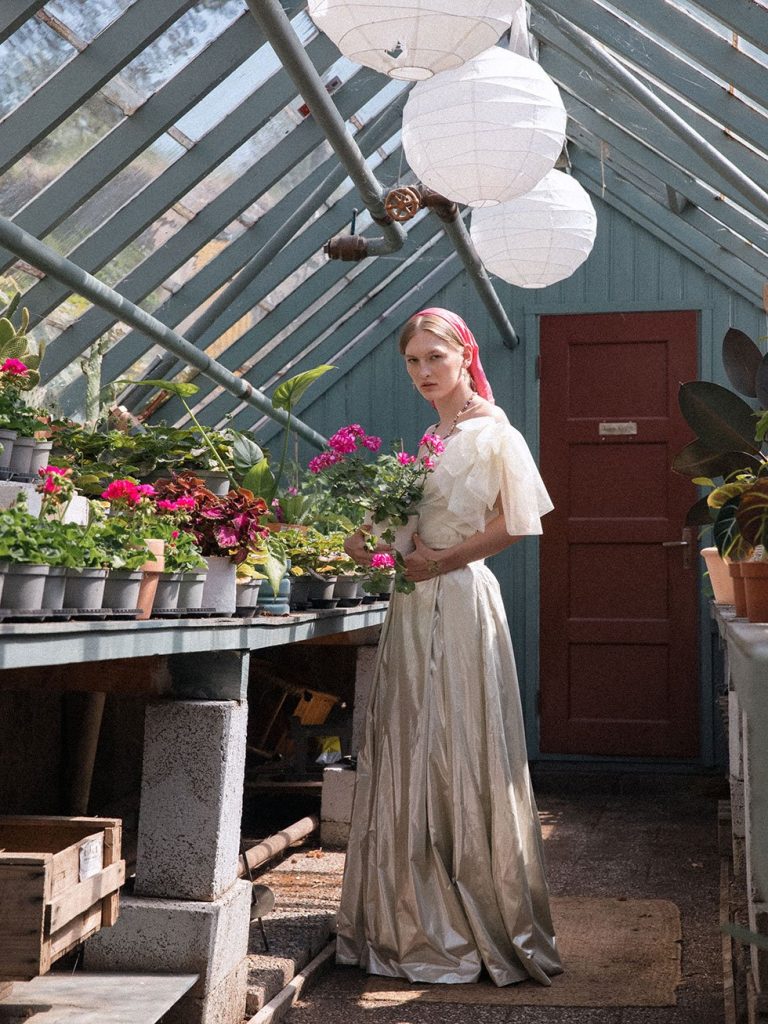
An Interview With Sofia Corneskog text Josie McNeill photography Sandra Myhrbergfashion Alicia Hurstall clothing Sofia Corneskog all jewellery & headpiece Stylist’s Own Sofia Corneskog, a couture designer based out of Sweden, believes party and formal dresses should be worn for more than that one special occasion. According to her website, she designs clothes to be combined with other items in the customer’s wardrobe to create unexpected outfits and color combinations. Her designs range from custom designed bridal and party gowns to more casual, skirts, trousers and shirts. All her designs have a classic Corneskog flare, with bold colors mixed with timeless and romantic tulle, organza, and lace fabrics. Her hand-stitched, dreamy designs deserve to be taken off the closet hanger more than once. And if you listen to her fashion philosophy, you’ll find a little extra space in your everyday wardrobe just for that. “When you fall in love with your clothes, they will last longer,” Corneskog wrote on her website.How did you first become involved in fashion and design?My interest in creativity has always been a part of me. My mother is very artistic and had a great interest in various forms of creation. She used to sew a lot, and I got the opportunity to try it out, so my interest in sewing developed at a very young age. My interest in fashion and design came about during my teenage years when I realized that I could sew the garments I wanted to wear. How would you describe your design aesthetic?I would describe my design aesthetic as “clean” and “simple,” with a touch of playfulness. I’m also drawn to the contrast between the delicate and the raw, the beautiful and the cool, all at the same time. Who do you mainly design for?I mainly design for women who dare to take up space and be noticed.   What designers had the biggest influence on you?I draw inspiration from a wide range of designers, such as Vivienne Westwood, Stella McCartney, and fashion icon Iris Apfel. Generally, I’m inspired by women who dare to be themselves, who stick to their design language, and who show that it’s never too late to fulfill your dreams. How does French couture influence your designs?French couture influences my designs through the tailored and custom-made aspect. The craftsmanship involved, where each garment is made to order and unique, tailored to fit one’s body shape. How do you keep sustainability at the forefront of your designs?I prioritize sustainability in my designs primarily by creating garments on demand. This eliminates waste and the need for inventory. Additionally, I use fabrics from suppliers who have some form of sustainability certification. It’s not easy to find such suppliers, but I try my best. What is your creative process?My creative process is always with me, and I find inspiration from life in general, both the harsh and the soft aspects. Many designers get ideas and sketch them out. I had a mentor once who encouraged me to experiment in the creative process, and that’s usually how I approach it. I can be inspired by a beautiful fabric and then experiment until I achieve the desired end result, similar to painting a picture. If it doesn’t turn out as intended, I make adjustments until I create the design I envision. earrings Stylist’s Own earrings Jocelyn earrings Sägen   earrings Clara Fina earrings Sägenbag Weekday shoes Nude Of Scandinaviabag Atelier Fanny Castrobracelet By Jolinaearrings Clara Fina How do you find a balance between your own aesthetic and the design that a customer commissions?Finding a balance between my own aesthetic and a customer’s commission is something I struggle with. However, I no longer accept clients who want me to create something they have designed themselves. I want to work based on my design language and put my name on a design I can stand behind. Of course, customers can still provide their preferences and wishes. Do you mainly receive commissions for bridal or party dresses?Currently, I would say it’s about a fifty-fifty split between bridal and party dress commissions. A couple of years ago, the majority of clients were brides, but now there are as many people seeking party dresses. What would you say is the main difference between your bridal designs and party dresses, besides the colors used?The main difference between my bridal designs and party dresses, besides the colors used, isn’t significant in my opinion. Perhaps I allow myself to be a bit more adventurous with a party dress. Otherwise, I start with my design language, which is based on a clean and stylish expression with a hint of playfulness. Do you think there could be more crossover in the future between your bridal and party dress designs?I hope there will be more crossover between my bridal and party dress designs in the future! When I created the bridal collection for 2023, I designed some garments to be versatile enough to be worn as party dresses as well, which expands their usability significantly. earrings Jocelyn ring IOAKUsunglasses Emporio Armani shoes Steve Maddennecklace Atelier Fanny Castroearrings Becca Design photography Sandra Myhrbergfashion Alicia Hursthair & makeup Paloma Gonzalezmodel Astrid Baauer / The Wonderspost production Emelie Hammarfeltall clothing Sofia Corneskogspecial thanks to Floroteket

Music

Beyond the Booth with Pretty Pink

photography Sandra Myhrberg Beyond the Booth with Pretty Pink text Sandra Myhrberg With a sound that bridges the quiet of nature with the hypnotic pulse of underground clubs, Pretty Pink has carved out a unique space in the electronic music world. Raised in a small town in East Germany and shaped by the raw energy of Berlin’s scene, her music blends deep emotion with powerful grooves — a reflection of both her roots and relentless evolution. In this candid interview, we dive into the moments that shaped her journey, the lessons learned from world-class collaborations, and what fans can expect next from this grounded yet rising force in melodic techno. Sandra Myhrberg: You’ve performed all over the world. How has your background influenced your style and sound? Pretty Pink: I grew up in a small town in East Germany, surrounded by nature and a certain quietness. That environment had a big impact on how I feel music and what I want to express through it. I’ve always been drawn to warm, emotional sounds with a strong melodic core. Later, when I started discovering the underground scene in bigger cities like Berlin, I got inspired by those driving, hypnotic club grooves. Today, my sound is really a fusion of both worlds – emotional, grounded, but with an energy that moves you forward. SM: You’ve worked with huge names in electronic music. What’s one thing you’ve learned from those collaborations? PP: One of the biggest takeaways is that creativity has no fixed formula. Every artist brings their own energy, and it’s about listening, being open, and trusting the process. Sometimes magic happens in the first session, sometimes it takes a while to find the right flow. But you always learn something new, whether it’s about production techniques, storytelling, or just seeing how someone else channels emotion into sound. SM: Even with big achievements like Times Square and Spotify campaigns, you come across as very down-to-earth. How do you stay grounded? PP: That’s really important to me. I’ve built everything step by step, with a lot of love and persistence. Nothing was overnight. And I have a strong support system, friends, family, my team – who keep me balanced. I try to stay focused on the music itself, because that’s what it’s all about. The rest is beautiful, but not the core. SM: How do you balance life on the road with staying creative and inspired? PP: It’s definitely not always easy, but I’ve learned to find little moments in between. I travel with a small mobile setup so I can sketch ideas whenever inspiration hits. Sometimes it’s during a sunrise flight, or after a gig when the energy is still buzzing. I also try to keep simple habits, like going for walks, grabbing a matcha or taking time to reflect. Those moments help me stay connected to my creative side. photography Sandra Myhrberg SM: What’s one moment recently where you had to stop and think, “Wow, this is really happening”? PP: When I played at Brooklyn Mirage, I remember standing there during the intro and feeling this overwhelming energy from the crowd. It was one of those moments where everything just clicks. Also, seeing my face in Times Square for the Spotify campaign – I honestly had to pause and take it all in. Those are moments you dream of, but they still feel surreal when they actually happen. SM: If someone’s never heard your music before, what’s the one track you’d want them to start with – and why? PP: I’d probably say “Born Digital” or “Wildlands.” They really capture my sound – melodic and emotional, but still powerful and club-ready. I love the contrast between natural textures and electronic elements. Those tracks tell a story, and that’s what I always try to do with my music. SM: What can fans expect from you this year – in music, on stage, or beyond? PP: There’s a lot coming. I’m working on new tracks that go deeper into my melodic techno side, but still carry that emotional signature. There will be new collaborations, some fresh ideas for the live shows, and of course more Deep Woods events. I’m really focused on creating experiences – both through the music and through the way it’s presented. So yes, lots of exciting things ahead.

Fashion Articles

The Game Has Changed

text Linnea Ruiz Mutikainenphotography Sandra Myhrberg all clothes Stine Goya jacket “Noreia” t-shirt “Margila” skirt “Sif” shoes “Butterfly” nose jewellery Ana Vivero tote bag “Rita” all clothes Stine Goya shirt “Juno” dress “Naomi” socks “Verita” sunglasses “Cat Shield” shoes “Butterfly” plastic scarf In Crime Content Trailblazing Danish designer Stine Goyahas upped the ante for contemporaryfashion of the North. Here, in conversa-tion with Odalisque, we dissect the pastand the present of the vibrant forerunner. Dopamine dressing is buzzy, of the moment term gaining notable momentum in the ever-changing fashion landscape. The primary purpose spells well-being, presented through lively hues and bustling garments, in an ode to elevate one’s mood. Remarkably, its predecessor was brought up surrounded by zeitgeist muted Scandinavian minimalism. “Stine Goya first saw daylight because I wanted the distinction,” ponders Goya herself. “It was a conscious decision to challenge the fundamentally rooted fashion repertoire of the region. ”Born in tranquil Taarbæk, Goya’s childhood years bathed in Northern ease, with proximity to both flourishing greens and the sea. “When I turned 16, I really wanted to explore.” In Goya’s case, exploration translated into an undaunted year in Honduras, slowly shaping the foundation of a more eclectic agenda. “The cultural switch-up made me grow quickly. I had to take care of myself, continuously making responsible choices. It shaped my present day self. ”For Goya, the connection between fashion and curiosity is core. Starting as dress-up in her mother’s wardrobe to then crafting her first dress aged 9, an undeniable passion for the craftsmanship has always been there. “My vision has never changed. I wanted to design for myself while establishing a brand.” all clothes Stine Goya shirt “Charlota” trousers “Amalie” skirt “Sif” hat typical from Canary Islands nose jewellery Ana Vivero shoes “Butterfly” LINNÉA: You’ve been in diverse roles within the fashion field; model, stylist, and editor. Why venture into fashion design? STINE GOYA: It’s been a driving force since forever. Modeling pro-vided a thorough understanding of garments and their movement, whilemy editorial stint focused on curating looks. Fashion design blossomedinto my next, bigger vision. In hindsight, experiencing multiple areas before venturing into my own brand was a privilege. L: I’ve read how you don’t consider yourself a typical Scandinavian designer. SG: In 2006, when I founded the brand, Scandinavian fashion was strictly minimalist. I wanted to create a brand that truly set itself apart.Opting for the complete opposite, encouraging color and creativity, was quite the statement. It still is. all clothes Stine Goya top “Una” panties Cecilia Rafael sunglasses “Cat Shield” bracelet Reserved shoes In Crime Content all clothes Stine Goya shirt “Juno” dress Celsia trousers “Fatou” nose jewellery Ana Vivero L: How do you integrate sustainability into your crafting? SG: It is fundamental to our business, present in every decision we make.Right now, sourcing responsible garments is our main target. Occasionally, it is quite a challenge. But the browsing process and all potential hurdles often birth unexpected creative turns. L: Creative turns that seem to help distinguish Scandinavia on the fashion radar. SG: There’s Copenhagen Fashion Week too, which has turned into a significant pillar of the fashion calendar. Its great success is directly correlated with endless demand. As long as the supply is there, and expands, we continue to gain momentum. The reach increases and so is visibility.We’re just seeing the beginning, particularly in terms of global expansion all clothes Stine Goya blazer “Hanne” shirt “Charlota” dress “Stina” shoes Butterfly L: What makes the Stine Goya AW23-collection standout? SG: This collection, called Freeze, is inspired by Danish author Hans Christian Andersen and his fairy tale, The Snow Queen. There’s emotional value, being one of my childhood’s most defining tales, revisiting my life as of late. The storyline is progressive, challenging the male hero narrative by shining light on the bravery and power of female protagonists. I wanted to explore through a contemporary lens. The result is quite laissez-faire, inspired by the luxurious mountain tops ofAspen and all well-dressed women on the slopes. Think extravagant layering, out of proportion-shapes, and elevated dresses with a subtle touch of skiing. all clothes Stine Goya shirt “Juno” dress Celsia trousers “Fatou” nose jewellery Ana Vivero L: Any favorite detailing? SG: I do love the sweetheart necklines. You get the feel of the frozen heart, fundamental in the tale, yet it is sharply juxtaposed with androgynous power-play silhouettes and oversized coats. L: What lies ahead for Stine Goya? SG: We’re experiencing incomprehensible global growth and expansion.As much as Copenhagen and Scandinavia will always be our home, welust for the international field of play. We have set our sights abroad all clothes Stine Goya dress “Elena” gloves Reserved all clothes Stine Goya t-shirt “Margila” photography Sandra Myhrbergtext Linnea Ruiz Mutikainenfashion & set design Maria Vinagre / In Crime Contenthair & makeup Elba Ahlbinmodel Maria Penanose jewellery Ana Vivero / Mad Modelsfashion assistant Mica Pelejaproduction assistant Carlos Ortega  

Music

Alba August: “I decided I was going to be the last man standing”

Alba August: “I decided I was going to be the last man standing” text Natalia Muntean Alba August has had a busy few months. Two years after her debut album “I Still Hide,” the artist returned in October with a new EP titled “I Wish I Was Someone Else,” earning her the title “Swedish rock queen” from a music critic. “It was surprising because I didn’t see the EP as rock, but I relate to this idea in a way. I wanted it to be less polished, more raw, and I enjoyed being a badass in the music videos,” says August. Besides the developments in her music career, the Danish-Swedish artist graces both big and small screens, starring in “Stockholm Bloodbath,” a new movie by Mikael Håfström, and the Danish series “Bullshit.” Born into a family of cinematic royalty, August has been forging her path with a sense of self-assurance, introspection and a pinch of mischievousness. In this conversation, Alba reflects on her artistic evolution, navigating the complexities of creativity, self-discovery, and balancing her music and acting careers. Natalia Muntean: This is your second EP after your debut album. How do you see the musical journey that you’ve been on between these two releases?Alba August: With “I still hide“ I wanted more energy. During production, I was constantly pushing for more—choirs, layers, you name it. But this time around, I remember talking to my producer and saying, “Take away, take away, take away.” I wanted this to be different. The first album was me wanting to be excessive. Now, I craved something stripped down, more raw. These albums are like a showcase of where I am in my personal journey. Back then, I was in a different place, I had a more extroverted lifestyle, with a lot of partying. But now I’ve come to realize how sensitive I am to sounds and people. I’ve always been that way, but I’ve only just realised the source of all the anxiety. I needed to pare things down in my music. I needed to be more direct. It’s, for sure, a way of processing what’s going on in my life and my mind. Even with what I’m working on now, it will have even fewer elements. I always want to do things that I haven’t heard before. And I want to push myself in directions where I’m a bit uncomfortable. NM: What I understood about “I Wish I Was Someone Else”, the whole EP, is that it has hints of empowerment, self-discovery and living with one’s decisions. You’ve also turned 30 this year, so I wonder if that impacted the stories you tell or the music you put out in the world. photography Martin Kiessling AA: This EP focuses on some things I was struggling with. Trying to understand more about myself is something that I have always liked since I can remember, maybe since I was five years old. I’ve always been super anxious and felt very lonely but I didn’t realise that the feeling I felt was loneliness. Now, as a grown-up, I understand it. And then I realised that I always felt weird. All of these things started to resurface as I was writing this. So “I wish I was someone else” was absolutely a way to allow myself to be the weirdo I am. But it’s also about wishing I was normal. That’s what’s so amazing about being an artist and working with art – only when I am being creative I can fully be myself. It’s the only time when I’m really happy and Zen with being in this world. NM: You mentioned that you have social anxiety, however, you are an artist in the public eye and you expose yourself to the world. How does it work then?AA: In a way, being an artist it’s a bit like a persona. I think in private it’s harder to cope with being me compared to when I’m performing. NM: So is there a split between Alba in your personal life, so to speak, and Alba, the artist?AA: There’s a word in Swedish, hudlös, which means skinless and that’s how I feel in private, like I have no skin, more vulnerable, as if everyone can see inside of my body and I have no protection. But when I’m in character, when I’m acting or on stage, I feel strong and I feel like I have control over the situation. NM: Do you feel that on stage you have more freedom to do whatever you would like to do without being judged?AA: Yes, on stage I feel I have power over the audience. It’s clearer what my role is when I’m performing. Everything is decided: I’m going to be on stage and I’m going to do this and they are going to sit and watch. And in my private life, everything is uncertain, and I have a hard time coping with that. NM: In the video for “The Summer of 99” there’s a lot of footage from your childhood. How does it feel to revisit those memories, and how does it impact your music? Does reconnecting with your younger self shape the stories you want to tell?AA: I have mixed feelings about looking back. In a way, it’s a bit sad watching those videos when I was feeling so free, so unaware of how people perceive me. But I also just love the early 2000s. There’s something about that time. Life was so much about dreaming about what it was going to be when I got older. Looking back I also realised how creative life was. My sister and I were always rehearsing a dance or a play. There was always a project we were working on. And there was so much lightness, silliness and humour in the things we did. And it’s hard to find time and space for that as an adult because adult life is so much about achieving, making money and doing boring things. I feel like there’s not that

News

Breitling x Cutler and Gross: Where Time Meets Vision

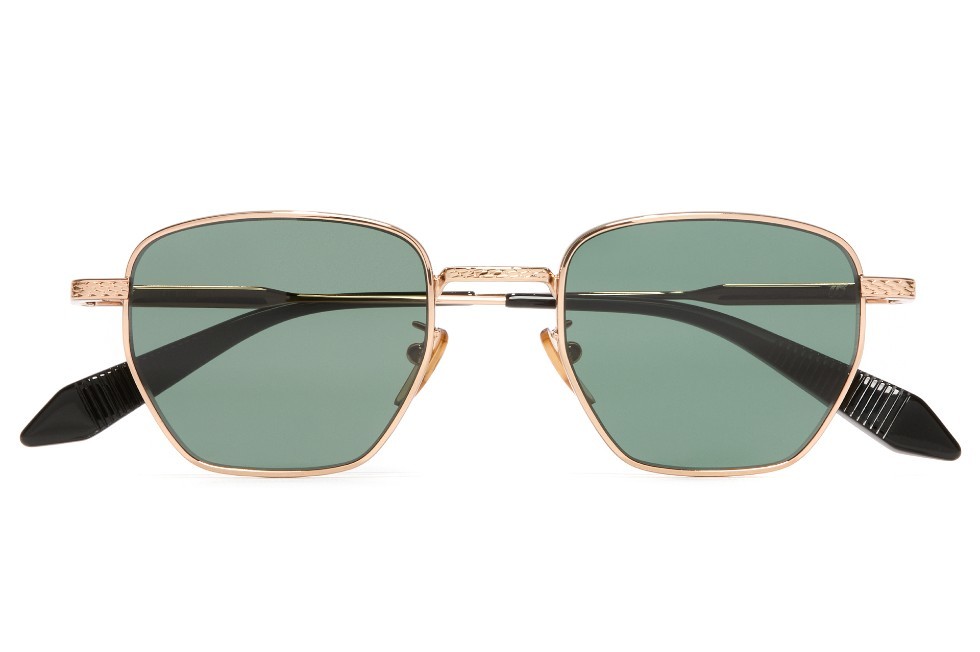
Breitling x Cutler and Gross: Where Time Meets Vision text Natalia Muntean When two masters of craftsmanship come together, the result is more than just a product, it’s a shared expression of style, heritage, and innovation. Breitling, renowned for its precision timepieces, has joined forces with Cutler and Gross, the iconic British eyewear brand, to bring their distinct worlds into perfect focus.
 This exclusive collaboration extends Breitling’s signature spirit of adventure beyond the wrist, introducing a limited-edition sunglass collection that’s as functional as it is striking. Each pair reflects the same meticulous attention to detail found in Breitling’s watches: luminous lacquer-filled temple tips, Milanese-engraved core wires reminiscent of the Superocean’s iconic mesh bracelets, and handcrafted frames that feel as good as they look.
 Available in metal, eco-conscious cellulose acetate, or mixed materials, each style is produced in a limited run of just 500 pieces, a true collector’s item for those who appreciate design with a story. 

Music

Diane Emerita on Music, Memory, and Momentum

Diane Emerita on Music, Memory, and Momentum text Sandra Myhrberg After a whirlwind year filled with praise from major media outlets, airplay on P3, and a standout performance at Way Out West, singer-songwriter Diane Emerita finds herself both exhilarated and grounded. Her music—intimate, conceptual, and often rooted in family and memory—has resonated widely, yet she still writes songs on her mother’s piano and juggles her music career with a mathematics degree. Sandra: You’ve had quite a whirlwind year—praise from major media, airplay on P3, and a performance at Way Out West. How has this rise affected you, both creatively and personally?Diane: It is fun and scary and interesting. I am taking my time to process it all. I still can’t believe I have done certain things like having a song of mine in the game SIMS. But then most of the times I am just myself and not my “artist persona” so really I am quite calm and don’t think about it too much. I study a bachelor in maths and besides music that pretty much fills up my thoughts. Creatively, I am just excited that people seem to get something out of my music and buy tickets to my shows and that I get to see how far the music can reach. I remember a line in Frank Ocean’s song Futura Free saying “Play these songs, it’s therapy momma, they payin’ me momma, I should be payin’ them” and I resonate with it a lot. I get so much out of reflecting my own thoughts and emotions and expressing them through my music that mostly I am just thankful that I get to do and make a living out of it as well. So then, I write and sing to find out what I have to say. S: Your music feels deeply personal, often rooted in storytelling. “Indigo Bruised” is another collection of songs based on stories about your family. What draws you to these themes, and what can listeners expect from this EP?D: I looove storytelling. I like to intentionally work with concepts because it somehow becomes a challenge for me to master – a problem solver. Music andthe visual expressions, including styling and performances become so much easier for me to coordinate when they have a connected concept. I get emotionally invested. Also I think it is quite refreshing working with themes because it is easier for me to understand where I start and where I draw the line and move on to the next project. For instance “Indigo Bruised” has four tracks in it because I wanted to dedicate one song to my mom, sister, father and brother, simultaneously as making each symbolise a season as well. But there are only four seasons, so that is how many songs I made. Listen to “Indigo Bruised” and see if you can guess which song is what season. (Either way you are right) S: You’ve continued working with producer Hampus Norén, who also contributed to “Traveling Forever.” What is it about this collaboration that keeps you coming back? How has your sound evolved together?D: I think I like the way how he challenges me to let go a bit. To see it all more as a game than something serious. Well I still take music very serious because it makes me feel so much, but it has definitely been a nice journey to allow some imperfections into creating the sound of my songs. There is a clear seriousness to the songs I released before “Travelling Forever”. Hampus brings in an aspect of playfulness and “dirt” into the productions. He likes for it all to not sound all too clean and perfect, which I think helps giving the music emotional depth. And also it takes a long time for me to let someone into my creative space, so he has also become a comfortable teammate to keep because he know gets me. I know what I want my music to sound like and I always have very clear references for the production if I am not producing myself and then he always manages to give me more than I’ve asked for, which is great. And then we have our incredible mixer Sven Johansson who just elevates everything we do and gives the sound the last needed edge. S: Despite all the buzz, you still write your songs at your mother’s piano. Is that a grounding ritual for you? What’s your songwriting process like—does melody come first, or do lyrics lead the way?D:I have a lot of siblings, so my mother’s place is a very lively house. Most of all Ilove playing on her piano because I get to disappear into my own bubble in the way I always have done even when I was younger and was still living there. So I float away into my bubble, but life around me kind of goes on. My songwriting process is a long one, I play the piano and after some time, perhaps weeks or a day or a second lyrics arrive. But the music, the playing always comes before the singing starts. I also love when some of my siblings start singing to along to what I am playing. You could indeed call it a grounding ritual, it gets my creativity flowing. I feel like Sampha’s song “No One Knows Me Like The Piano” when I play. S: You’ve described Malmö as a creatively thriving scene. How has the city and its artistic community influenced your work?D: Malmö feels warm and open both in climate and culture of the people. I really love the fact the artistic community is inclusive and welcomes everybody. Like there is no need to feel like you are competing with other artists for attention of others, everyone kind of supports everyone. It sounds very cheesy but ultimately I find it to be a very respectful, warm and vibrant place. I work mostly in Stockholm when it comes to music, so when I am at home in Malmö I get to chill and study which for me has been such

Fashion Articles

An interview with Rasmus Georgiadis – winner of the NK Young Talent Award by Beckmans

An interview with Rasmus Georgiadis – winner of the NK Young Talent Award by Beckmans text Ulrika Lindqvist With botanical elegance, sculptural precision, and an unwavering vision of beauty, the winner of this year’s NK Young Talent Award is turning heads and turning fashion into art. Fresh from receiving the prestigious honor, Rasmus Georgiadis speaks with us about the journey from childhood sketchbooks to intricate, nature-inspired couture, the challenges behind the celebrated collection A Flourishing Confluence, and a creative process rooted in emotion, detail, and transformation. Ulrika Lindqvist: Congratulations on winning the NK Young Talent award. What are your initial feelings? Rasmus Georgiadis: Thank you so much. I’m incredibly grateful, and it feels truly rewarding to have my workacknowledged in this way. This kind of recognition makes all the hard work feel worthwhile. UL: Tell us a bit about your backstory. What did you study or work with before getting accepted to Beckmans? RG: Fashion has been a focus of mine for quite a while — both creatively and through academic research. In high school, I studied a fashion program with an emphasis on sustainability, which taught me a lot about materials, production processes, and their environmental impacts. From early on, I became aware of not just how I design, but why I choose certain materials over others. I began experimenting with draping during this time, since we mostly worked from pre-made base patterns. But I wanted to build garments from scratch, so after graduating, I took a year to study patternmaking in Malmö. Alongside drafting skills, I also learned Photoshop and Illustrator — tools that have since become essential in my work at Beckmans and beyond. In 2020 I moved to Stockholm and began studying Fashionology — and honestly, had I not gotten into Beckmans the following year, I likely would have pursued a full degree in that field. UL: What initially drew you to the fashion industry? RG: I think it started with art. As a child, I was always drawing — filling sketchbooks with characters, especially princesses and fairies. What fascinated me most was designing their dresses. That creative impulse never really faded. Over time, those fantasy figures turned into models, and the designs became more diverse and expressive. If you’d asked me what I wanted to be as a kid, the answer was always “a fashion designer.” There have been moments of doubt, of course — where I wondered what I’d do if fashion wasn’t an option. But I’ve never found a real alternative, which tells me this is the only path forward. UL: What is your inspiration behind your designs — and this collection in particular? RG: Nature has always been a big source of inspiration for me — especially botanical textures and organic forms. In this collection, that connection is very present. But the core idea was to explore how a garment and the wearer could appear to grow together — to feel like one unified form, or like an extension of each other. To give structure to that concept, I turned to one of my favorite childhood art styles: Art Nouveau. Its romantic, flowing aesthetics — seen in everything from illustration to interior design — became a guiding reference. I used this collection as a showcase of my techniques and creative growth. For example, I looked at how Art Nouveau book covers used symmetrical, botanical patterns, and translated that into laser-cut designs in gold silk, placed on mesh to give a two-dimensional “glued-on” effect. I also drew inspiration from ornamental metalwork, which I interpreted using 3D modeling and printing. It was a long process — from sketch to CAD model to physical piece — including patination to mimic aged metal. These components were meant to feel alive, as if the model was wearing, or becoming part of, an art installation. I try to create some kind of layered thinking for each piece — I enjoy working in small detailsthat tell a bigger story. UL: Can you share some insights into your creative process?  RG: For me, creativity is driven by emotion. I want my work to evoke a feeling in others — and forthat to happen, I believe I have to feel it twice as strongly myself. That can come from setting a mood with certain music, or from hours of draping until I land on a detail that truly excites me. If I, as my own toughest critic, feel something powerful about what I’ve made, it’s usually a good sign. I also rely heavily on drawing. I don’t use erasable tools when I sketch — I prefer the permanence of ink. It forces me to trust my hand, to commit to the line. The embroidery patterns in this collection were created by freehand sketching — letting intuition lead the way, thentranslating those lines directly into stitchwork. UL: What are your core values as a designer? RG: At the heart of my work is a commitment to creating my own version of beauty. I believe beauty is incredibly powerful — not necessarily in how others perceive it, but in how it can transform how someone sees themselves. To help someone feel strong, confident, and like the best version of themselves — that’ssomething I find deeply meaningful. Fashion can be a powerful tool for empowerment, and that sense of emotional transformation is what I strive for in every piece I create. UL: What was the biggest challenge in creating this collection? RG: The biggest challenge in “A Flourishing Confluence” was managing the weight and structure of the heavier pieces. I wanted the garments to feel light and effortless — almost like gravity wasn’t an issue — but, of course, gravity had plenty to say. For instance, the Ginkgo leaf piece is covered in thousands of rhinestones and weighs several kilos. I had to find hidden structural solutions — like reinforced stitching and built-in wire — tomake it appear weightless. Similarly, the angelic white dress worn by Carola was made from a material too heavy to hold its own shape. I ended up integrating metal wiring to support andsculpt it, and it took multiple prototypes to reach the final result. At

Scroll to Top