Author name: Odalisque

News

IAMISIGO Wins the Zalando Visionary Award 2025 at Copenhagen Fashion Week

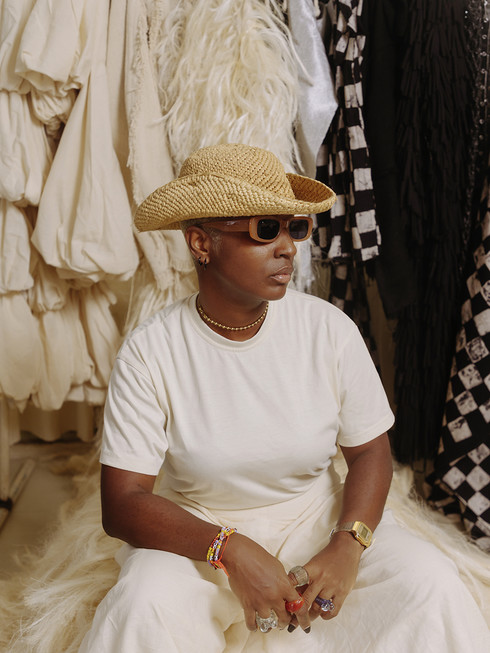
IAMISIGO Wins the Zalando Visionary Award 2025 at Copenhagen Fashion Week Written by  Janae McIntosh At this year’s Copenhagen Fashion Week, the Zalando Visionary Award, a prize that champions innovation, sustainability, and cultural dialogue was awarded to IAMISIGO, the groundbreaking fashion label founded by Bubu Ogisi. More than just recognition, the award provides financial support, mentorship, and access to an international network, helping to amplify voices that are reshaping the future of fashion.For Ogisi, this win is a reminder that the world is finally listening. IAMISIGO’s work is rooted in ancestral knowledge, textile innovation, and cultural continuity threads that weave together tradition and experimentation, the spiritual and the technological. Her collections are not merely garments; they are living archives. Woven into every piece are the gestures of women weavers, the memory of dyeing rituals whispered through generations, and philosophies embedded in acts often overlooked as “domestic.”Born in Nigeria and now working across the African continent, Ogisi has become a voice of resistance and reclamation. By keeping creation close to home, she insists on telling stories on her own terms and centering “forgotten historical narratives” in an industry that too often overlooks them. IAMISIGO’s practice refuses to treat heritage as static or craft as quaint; instead, they are seen as living technologies, deeply intellectual systems of knowledge, survival, and imagination. Jahwanna: What has winning the Zalando Visionary Award revealed to you? Not about your brand, but about  how the world sees your brand?It revealed that the world is finally tuning into frequencies we’ve always been emitting—frequencies rooted in  ancestral knowledge, material intelligence, and cultural continuity. The recognition was proof that people are  beginning to see beyond aesthetics and into intention. Awards often offer visibility, but what kinds of deeper exchange do you hope to build through  Zalando’s support, be it the mentorship, or the network behind the prize?I’m interested in systems—how this platform can facilitate cross-cultural research, ethical production pathways,  and long-term support for material economies across the continent. I hope to exchange not just knowledge, but  frameworks for sustainable sovereignty. Why is it important for you to keep creation close to home, and to centre these ‘forgotten historical  narratives’ in a global fashion system that often overlooks them?Keeping creation close to home allows us to unearth them on our terms, through our hands. It’s an act of  resistance, but also of reclamation. We’re not inserting ourselves into fashion’s history—we’re reminding it of its  roots. IAMISIGO often merges ancient techniques with future-forward materials, so, if your SS26  collection had to be understood as a kind of time travel, where exactly is it taking us?It takes us to the in-between: the liminal space where ancestors meet algorithms, where spirit tech and  biotechnology are not separate but symbiotic.  How do you know when something is finished, when your work celebrates anti-finishing? What  makes a piece ‘complete’ in your world?A piece is never really done—it’s paused. It lives, breathes, unravels, and mutates. I consider something  ‘complete’ when it begins to communicate back to me—when it starts carrying its own energy into the world.  When I’m designing the piece is really only ready when it leaves my hands and gets onto the runway.  Much of your work deals with the spiritual body, so, when designing for the runway, how do you  stage something that’s not meant to be seen, but felt?Nothing is staged. Everything exists just as it has to in this world. It is a question of looking a bit closer. On the  continent, things exist now as they were centuries ago. We just have big concrete cities now to mask all of that.  But spirituality is still deeply embedded in the land. I think when I visit these spaces and make them, I’m just  stirring the pot. What you see in the show is the fumes from all of this spirituality cooking.  Is there a material you’ve encountered recently that frightened or overwhelmed you, creatively,  spiritually, or otherwise?  Yes—tempered glass. So precise, yet fragile. Its false sense of strength mirrored something in me. It forced me to reflect on the illusion of control in creation. It also made me curious about the invisible tensions materials hold. There’s a recurring theme in your work around portals — to ancestry, to alternative futures. What’s the last personal or creative portal you walked through that changed you? Abidjan. I fell in love with the city when I went there to work on the collection in May.  Your research spans cities, villages, spirit realms. Where does knowledge travel fastest, and  where does it get lost? It travels fastest through the body. Movement, dance, repetition—those are archives. But knowledge gets lost in  translation—when we try to fit fluid systems into rigid structures. Oral traditions don’t fit neatly into Dropbox  folders. What’s the biggest misconception you think the fashion industry still holds about “heritage” or  “craft”?That heritage is static and craft is quaint. Both are living technologies. Craft is not just skill—it’s cosmology.  Heritage isn’t backwards-looking—it’s the past, the present and the future. It is strategic memory and the industry  often commodifies both without understanding the systems they emerge from. IAMISIGO often functions as a living archive, and so, are there any stories, voices, or techniques  you feel responsible for protecting right now?Yes, there are—too many to mention, and I’m not sure I can fully articulate a complete response right now,  because the responsibility is a profound one. But I carry with me the stories of women weavers whose hands  remember more than books ever could. For example, the oral dyeing rituals passed down in hushed tones. The  philosophies embedded in folding, wrapping, and stitching—acts often dismissed as domestic, but deeply  intellectual. I feel responsible for preserving these not just through documentation, but through activation—by  centering them in contemporary contexts, and ensuring they are not just seen, but valued, protected, and paid. If IAMISIGO were to evolve into something that isn’t a fashion label, what form would it take next?A collective. A tribe. A space where creativity is fluid and purposefully uncontained. IAMISIGO would evolve into  a roaming academy, a cultural sanctuary, a research institute that merges material science with ritual practice and 
Opiates

Byredo’s New Fragrance Bottles the Spirit of Joy

Byredo’s New Fragrance Bottles the Spirit of Joy Text by Jahwanna Berglund Byredo has always been about more than scent, it’s about emotion, memory, and identity. With their latest launch, Alto Astral, the Swedish house takes us far from Scandinavia and into the beating heart of Brazil.
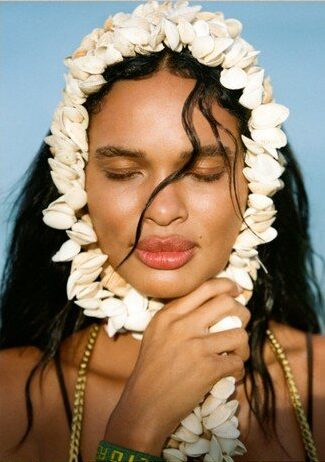
 The name itself, borrowed from Brazilian Portuguese, means an elevated state of mind. And that’s exactly what the fragrance feels like: light, joyful, and full of movement. Imagine samba at dusk, the salt of the ocean breeze, or the energy of motorbikes weaving through Rio’s streets. Alto Astral is a reminder that optimism can be a way of life.
Crafted by longtime Byredo perfumer Jérôme Epinette, the scent opens with the unexpected brightness of aldehydes and coconut, softens into jasmine, incense, and musk, and settles into sandalwood, cashmere wood, and salted amber. It’s radiant yet comforting, like sunshine lingering on the skin.
 Shot in Rio by photographer Rafael Moura and filmmaker Breno Moreira, the campaign celebrates real Brazilian life, dance, beaches, street culture with an authenticity that feels as luminous as the perfume itself.
 Launching worldwide on August 14, Alto Astral is a reminder to carry joy wherever you go. In a world that often feels heavy, Byredo offers us a fragrance that is, quite simply, light. www.byredo.com

Fashion Editorial

Blinding 

earrings Cornelia Webbskin Eco By Sonya & JOIKlips Uoga Uoga necklace ALL BLUEStop Viktoria Chanskirt MISC STHLMskin NOBE & INIKAlips Manasi top Viktoria Chanearrings Murky jacket BITE Studiostrousers Bondage Factory / The Forumistshoes Hugo Boss skin L:A & RMSlips puroBIO Cosmetics dress & hat Linda Dekhlastockings FALKEshoes STAND STUDIOS handbags STAND STUDIOtop & belt BITE Studiosstockings Swedish Stockingsshoes Hugo Boss
Fashion Articles

Michael Rider Marks His Arrival at Celine with Printemps 2026

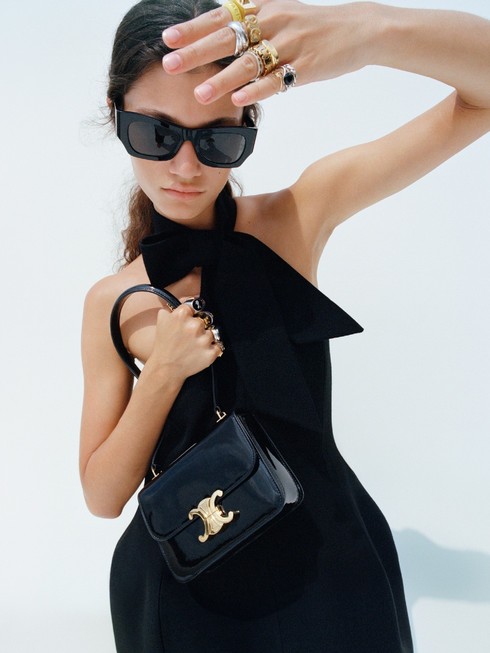
Michael Rider Marks His Arrival at Celine with Printemps 2026 Written by Jahwanna Berglund The first campaign under Michael Rider’s creative direction at Celine has arrived, and it is nothing short of a statement. Shot by Zoë Ghertner, the Printemps 2026 campaign introduces Rider’s vision for the house with a cool precision, leaning into intimacy rather than spectacle. Kylie and Victoria, who both walked the Paris show in July, return as the campaign’s protagonists embodying Rider’s debut with a stripped-back elegance. At its heart lies the rebirth of an icon: the Luggage. Originally launched over a decade ago, the silhouette now returns as the New Luggage, unveiled on Rider’s debut runway and carried into the campaign as a centerpiece. The standout detail, the so-called “Smile Variation,” lends the bag a subtle playfulness that balances Celine’s reputation for understatement. The New Luggage is offered in supple, shiny lambskin across black, tan, citrus, oxide blue, and deep brown, alongside suede calfskin in beige and exotic Porosus crocodile in rich tones of black and chocolate. Oversized east–west shapes sit alongside smaller formats, each defined by versatility and Rider’s attention to construction and texture. The first drop, featuring the “Smile Variation,” will pre-launch at the end of September on celine.com and in select stores, before the full collection lands worldwide in mid-November. For Rider, stepping into Hedi Slimane’s shadow might have been daunting. Yet his first campaign suggests a different rhythm: less about a clean break, more about layering heritage with a modern sensibility. If Slimane’s Celine was razor-sharp and restless, Rider’s debut hints at a quieter confident one that extends the conversation between past and present without losing its edge.
Opiates

The Perfect Essense of Harriet Allure

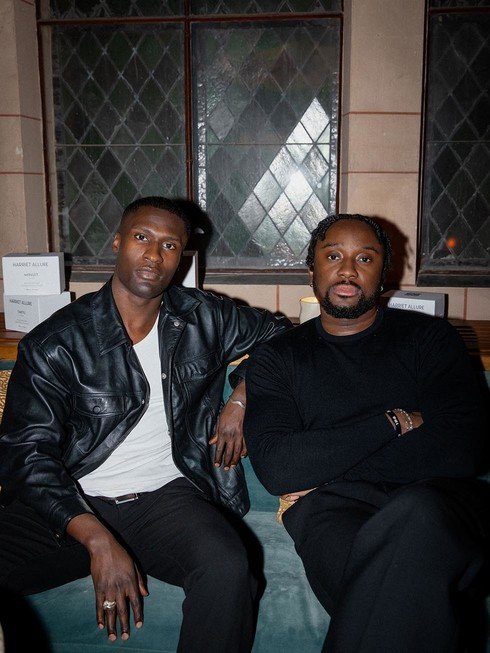
The Perfect Essense of Harriet Allure Written by Janae McIntosh The candle of the year has finally come to your doorstep. Modern reality meets the sense of smell. Harriet Allure was created by Freddy and Alex, two friends from Ghana, West Africa, who shared a lifelong love for home. As they blend uniqueness with life, they create a beautiful design for your home. Life is a theme they make apparent in their company. “The candles represent the light amidst the darkness of life, the hope for a bright future, and the nostalgia of cherished people and special places”, an endearing quote from their webpage sums up their journey. The brand name “Harriet Allure” is inspired by motherhood. This takes the personal connection between the brand, owners, and customers. Harriet, after Alex’s mother, which brings significant meaning to him, and allure, a French word for beauty and attraction. Together, they resemble a sense of individuality, which is shown in every candle jar. Every scented layer is specially designed to evoke notes of affection and cherishable love.  A Note from the Campaign: The idea for this campaign was born from a desire to create a project that transcends boundaries within the creative industry, a space where diverse qualities and perspectives are given room to shine. The brand story of Harriet Allure and the background of art director Amen Zelleke aligned naturally, making this collaboration a personal reflection of our individual journeys, as well as those of a broader community navigating identity, belonging, and the blend of cultures. We envisioned a visual dialogue between African heritage and Scandinavian minimalism, expressed through thoughtful styling, makeup & hair, casting, set design, and post production. The result is a beautiful collaboration that bridges design, fashion, and art, a project that resonates deeply with us and one we hold close to heart.
Opiates

Moomin’s 80th Anniversary

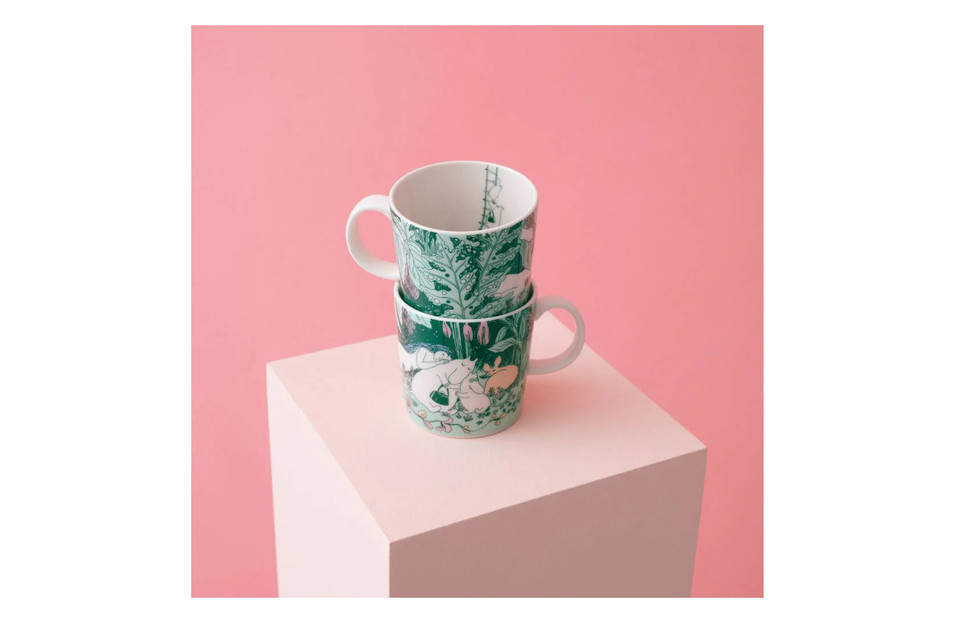
Moomin’s 80th Anniversary text by Yasmine Mubarak To celebrate Moomin’s 80th Anniversary this year, Arabia is releasing a coffe table book highlighting the history and the lovely fandom of the Moomin mug. Before we get more information regarding the Coffee Table Book release, they have sneek peaked this years mug. Moomin Arabia’s Moomin’s Day mug 2025 celebrates the first Moomin story, The Moomins and the Great Flood, with an adorable scene featuring Moomintroll and Moominmamma resting among ferns. The limited-edition mug will be available from August 9th, 2025 at 10.00 am (EEST) only as long as stock lasts. The mug also has a special inner decal featuring Moomintroll and Moominmamma climbing up a ladder and a Moomin 80 bottom stamp. It comes in a premium gift box with Moomin 80 graphics. The Moomin’s Day mug 2025 is a limited edition item. It will be available from 9 August 2025 at 10.00 am (EEST) only as long as stock lasts from Moomin.com, Moomin Shops at Esplanadi and Helsinki Airport, Moomin Arabia webshop, Moomin Arabia Stores, and at selected retailers.
Fashion Articles

Between the Thread: A Conversation with Saveja Awzel

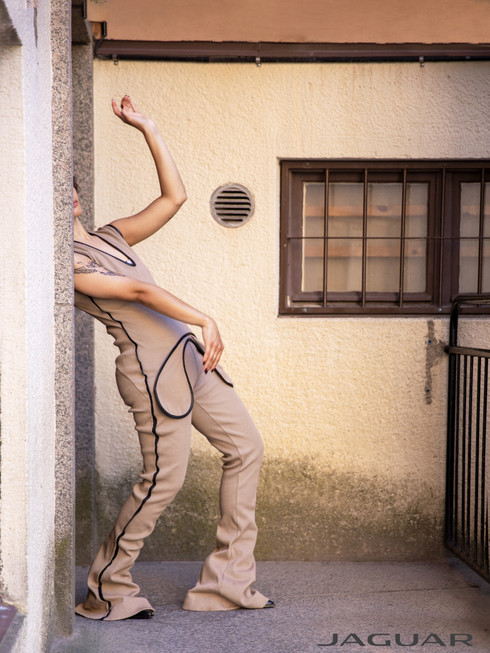
Between the Thread: A Conversation with Saveja Awzel text by Janae McIntosh Saveja first caught the eye of fashion around seven. Her mother, a fashion designer herself, inspired Saveja to fulfill the dream. A kid, Saveja would sneak into her mother’s workspace to use her sewing machine, loving the sound and feeling of stitching. Fashion became Saveja’s escape from reality, and through this creative, unique, and beautiful space she built, Saveja made her aspirations into existence. As her career grew, Saveja held onto the special feeling of endless possibilities and opportunity to spread a message beyond her work.“I didn’t just want to wear fashion, I wanted to create it, shape it, and give it meaning”. Janae: What’s the collection you are most proud of?Saveja: The collection I’m most proud of is called Lost On Silk Road. It’s a timeline frozen in textures and colors — a crossroads between modernity and tradition. The concept comes from tales about the Silk Road I heard as a child, now reimagined through the lens of my everyday life as a Scandinavian. The Silk Road, this meeting point of cultures and history, is more than just a metaphor — it’s my reality. I’m Uyghur, born in China, and a Swedish citizen.This collection is an inner journey — a return to my origins, but also a construction of a new identity that embraces all the cultures I represent. It’s deeply personal, yet globally resonant. Through design, I’ve created space for all parts of myself to exist and evolve. J: What is something you wish you knew earlier in your career?S: I wish I had understood sooner that clarity is power — especially in business. Creativity thrives with direction. As a designer, it’s easy to pour everything into the work and overlook structure, but building a brand requires both vision and systems. Once I leaned into that balance, things began to move with intention. J: What is one piece of advice you received that stuck with you and helped you grow as a fashion designer?S: When I was 15, one of my teachers told me: “Never say that you dream of achieving something — always see it as a goal, and you’re already one step closer.” That changed everything for me. It made me take myself seriously, even when others didn’t. It gave me the confidence to treat my ambitions not as fantasies, but as steps on a path I was already walking. J: How would you define your style?S: My style is paradoxical and sexy, with a hint of mystery. I’m drawn to contrasts — soft structure, refined boldness, the mix of old-world symbolism with modern silhouettes. I think there’s power in restraint, but also in unexpected detail. It’s not about being loud — it’s about being intentional. My work is rooted in culture and identity, but always seen through a contemporary lens J: Having moved to Sweden from China at the age of 18, what was the culture shock like? What stood out to you most about Swedish culture?S: Definitely the minimalistic aesthetic. When it comes to fashion, Sweden is quite the opposite of China. There are two distinct styles here: one very minimalistic — it can be just a pair of plain trousers and a T-shirt — while more fashionable people tend to go extreme, even cartoonish, with outfits that have so much detail. J: How does that experience inform your creative process? Where do you draw inspiration from?S: That has been interesting, it has given me, like, a lot of access to different inspiration. I’ve realised while creating my graduation collection that I make a lot of references to the cultures I have lived in. They make up my identity, both personally and professionally. In China, we deeply believe in symbolism; whether it be colours, the food you eat, even numbers and the weather, and that has been very interesting for me to put into my designs. The shape of a pocket or other small details allows me to put all the symbols into the clothing. J: Symbolism clearly plays an important role in your creative process. What other elements of Chinese culture have you tied into your designs?S: Symbolism for me, when I look back, is a lot of different things, from the food to the culture and the language; the characters I can write and read in Mandarin inspire me, seeing their shapes and how the Chinese symbols look. J: What are you excited about in the future? Is there anything you can share, exciting projects you’re currently working on?S: I’m launching my brand this autumn, which is very exciting. We’re starting with handbags, the production is all ready. So it’s super exciting. Other than that, I  started working for Alice Stanlouv, the Swedish influencer. We’re working on a rebrand, and we’re launching a whole new collection this fall as well. So I’m launching my own brand and her rebrand, too! photography Sandra Myhrbergfashion Ulrika Lindqvistmakeup and hair Elva Ahlbinmodel Luca Myhrberg
Art

Between Touch and Tension: A Conversation with Anna Camner

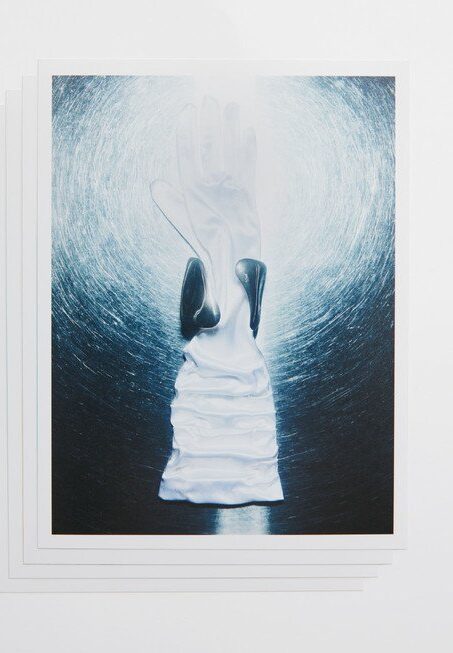
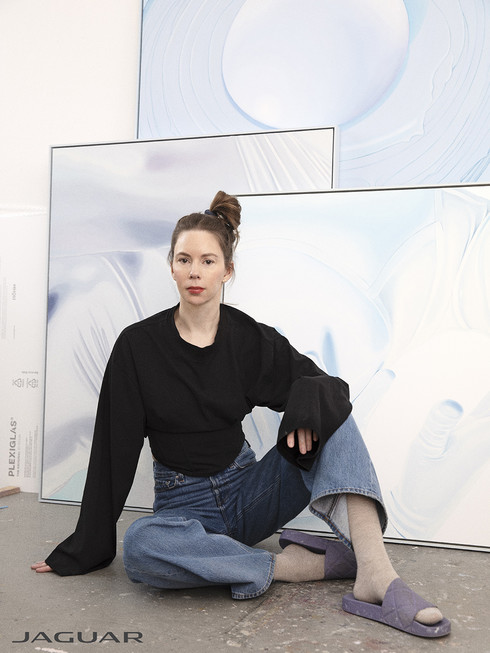
Between Touch and Tension: A Conversation with Anna Camner text by Natalia Muntean “I’m not a creative person, I just like to paint,” says Anna Camner. A paradoxical statement that is bound to raise eyebrows, considering how Camner’s work vibrates with tension. For Camner, painting is an act of continuous distillation, of “narrowing it down to what feels meaningful,” the Swedish artist obsessing over miniature details and labouring until “there are no question marks anywhere.” While Camner believes “it’s a human need to be creative,” her process is far from effortless. Even after decades, it remains “extremely frustrating,” demanding monastic focus, a surrender to a “trance-like state of mind” she achieves through music. Camner’s canvases are defined by contradictions – control and abandonment, the synthetic and organic, the weight of light and the lightness of touch – a duality she will explore in her 2025 exhibition, ‘Weight of Light.’ Natalia Muntean: Early in your career, you painted hyper-detailed Gothic flora and fauna – bats, rats, poisonous plants. Now, your work is more abstracted, almost scientific. Was this shift intentional, or an organic shedding of layers? And what has it taught you about your artistic identity?Anna Camner: Shedding of layers captures it very well. I always had this urge to paint, but when I was young, it was more difficult. I didn’t have my voice yet, so I painted what was around me. I grew up outside Stockholm and spent a lot of time in the forest by the house, walking around, looking at little plants and stuff. For the first years I started painting, I was painting zoomed-in little leaves, plants and details of things happening in nature. With time, old patterns and art historical baggage have gradually fallen away, and I am going in a more personal direction. Now I like to look forward, into the future. I’m much more curious about the future than looking back into my childhood, or art history, or what other artists have done. Over the past twenty years, the process has become less about arriving at a fixed identity, I guess, and more about allowing things to evolve. Patterns emerge, but they do so slowly and without any set destination. NM: Why and when did this shift happen?AC: I’m not sure. I started to sneak in plastic at some point into the nature images – little bits of used plastic, or used condoms, into nature. I realised it was more interesting. Then I started doing plastic with bits of nature on it, like it had been lying outside and had little things stuck to it. It was a gradual transition, and I’m not sure why. It’s just a lot more interesting to try and figure out what’s going to happen in the future, especially with things changing so fast. NM: Where do you get inspiration?AC: The work itself is like an ongoing dialogue with myself. It’s continuous, a little bit like one painting after the other. Sometimes I always go back, like 10 paintings, and I want to return to certain topics, certain patterns. I like it when it’s more chaotic, I guess. But with some sort of a sense of order. But you can never predict what that order would be like. I’ve done those patterns every two years, maybe. Sometimes I return to some themes I’ve always been working with, and sometimes I find new directions. NM: Why do you think you go back to themes you’ve explored and to older paintings?AC: I don’t feel like I’m done. I can keep exploring it because I still find it interesting for the same reasons I always have. NM: Do you feel you need to excavate it until there’s nothing more to find?AC: No, I can build on it. I can keep building on it. NM: You work with this tension, the relationship between natural and synthetic materials – do these materials serve as a metaphor for human emotions or desires?AC:The layers on the bodies and faces amplify or hide gestures and expressions. I like to try to hide the obvious and expose the hidden. Hopefully, the viewer wants to fill in the blank spaces with their interpretations. Due to some sensory differences, the contrast between textures has become a bit of a fixation for me, and this finds its way into my work. When I paint, I often imagine the feeling of touching them. It’s like an obsession, especially with plastics and soft materials. I want to observe and show the different types openly and without assumptions. For me, materials are equal, with no hierarchy between natural and synthetic. It’s all part of the same world. NM: You also explore touch, both as sensation and communication. How do your paintings translate the intangible experience of touch into visual form?AC: A painting often starts with imagining how it would feel to touch a material. The layers of different materials become an intensified skin, offering a boosted sense of connection. I play a lot with gloves because hands are very expressive. Facial expressions can be a little overwhelming, but gestures with hands and body language are quite expressive. Especially with gloves, because if you drape something and have layers on the face or body, it’s both hiding parts but also enhancing gestures. NM: Do you paint your own hands, hands that you know or do you just imagine them?AC: Often my own. I have gloves of different materials in my studio – soft gloves, latex, different colours and some masks. I work with that. NM: After avoiding painting during Art School, what made you return to it?AC: In school, the noise of opinions made it hard for me to stay grounded. Painting requires a kind of vulnerability, and the criticism at school felt too intrusive at the time, so I stopped painting entirely. But I did lots of other stuff – animation, video, everything else but painting. As soon as I graduated, I started doing it again. And then I had to kind of start from the beginning because it was five years of not painting at all, and I had
Fashion Articles

sania d’mina Debuts in Nordiska Kompaniet’s Iconic Ljusgården

sania d’mina Debuts in Nordiska Kompaniet’s Iconic Ljusgården Written by Jahwanna Berglund Swedish shoe brand sania d’mina is marking a new milestone with a striking presentation at Nordiska Kompaniet’s Ljusgården in Stockholm. The pop-up invited visitors into founder and designer Sania Claus Demina’s world, where Italian craftsmanship meets timeless elegance and contemporary comfort.
 The immersive setting designed by Daniel Kutlesovski, with photography by Erik Lefvander and creative production by Caroline Nyström—translated Demina’s personal vision into a refined environment that mirrors the brand’s DNA.
 “For sania d’mina to take place in NK’s Ljusgården is a dream come true. I’ve carried this vision for a long time, and being able to invite people into our universe here feels like a milestone, both personally and for the brand,” says Sania Claus Demina.
 Founded in 2018, sania d’mina was born out of Demina’s lifelong fascination with shoes and her relentless pursuit of the perfect balance between comfort and style. Since then, the brand has evolved into a symbol of uncompromising quality and timeless design creating shoes that are flattering, elegant, and a joy to wear.
 While the NK pop-up was live September 11–14, 2025, those who missed it can still experience the world of sania d’mina by booking private appointments at the brand’s Stockholm showroom.

Scroll to Top