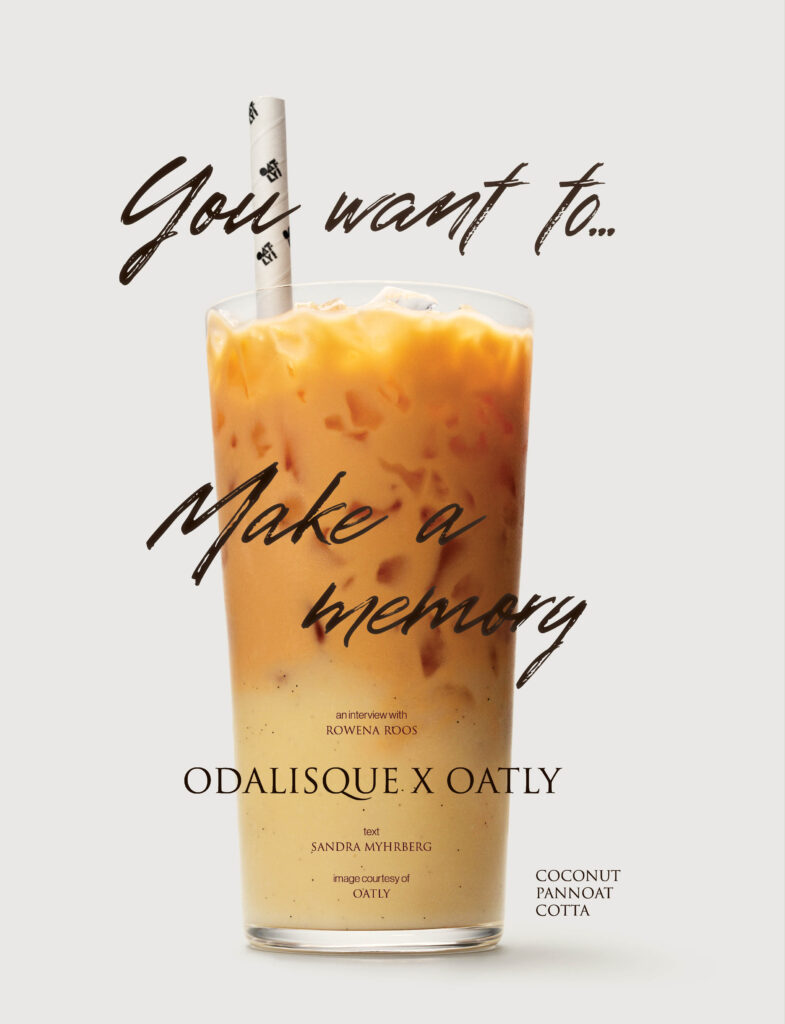
You Want To... Make A Memory
The future of food and drink is rarely invented overnight. It’s found in cafe orders, unfamiliar ingredients, changing rituals and the small shifts in taste that eventually filter into the mainstream. For Rowena Roos, Head of Food and Drinks Experience (FADE) at Oatly, reading the signs in all part of the job. With a team of beverage experts across the globe, she looks at what is going on in the world of drinks and considers how new behaviours, flavours and ideas can be turned into experiences that customers can actually taste.
This perspective forms the basis of Oatly’s Future of Taste Report 2026, which comes from the combined insight of hundreds of baristas, café owners, mixologists, and drink experts from across more than 21 countries. Their research shows a transition underway in café culture: wellness is becoming more playful, global flavours are finding their way into the mainstream and texture is joining the list of things that contribute to what we like to taste. At the same time, cafés are evolving into more important spaces for human connection, even as automation and AI change the industry. In our conversation, Roos considers what these changes could mean for Oatly, where the future of flavour might come from, and what it all means to predict and understand not just what holds people’s attention, but what they return to.
What does FADE stand for, and what is Oatly’s day-to-day connection to café culture that put you in a position to co-author this?
FADE stands for Food And Drinks Experience. But what does that mean, well it is me and my team’s job to translate what’s happening out there in the world into an experience you can actually taste. We work with our amazing team of 65 beverage experts globally, plus our partners at CultureLab, to spot trends before they hit the mainstream. Oatly’s been in cafés for years, we’re in over 20,000 locations worldwide so we’re not just watching drink culture, we’re literally pouring it. That barista-level access, combined with quantitative data, is what made the Future of Taste Report possible. We’re not guessing; we’re listening to the people who are making beverage culture.
You surveyed baristas and experts across 21 countries. What is a finding that did not make the final cut, or surprised you most compared to last year’s report?
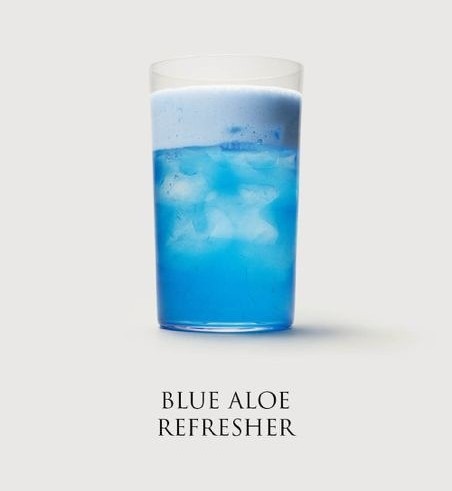
The strongest surprise for me was the rather ambitious amount of emotional and functional work that drinks are expected to do now. The 2026 report “Pharmafication of Drinks” captures that perfectly: consumers are looking for drinks associated with focus, calm, gut health, energy and recovery, but they increasingly want those benefits delivered with colour, texture and a sense of play.That is quite different from old-fashioned wellness, which often arrived in a brown bottle and behaved like homework. The opportunity now is to make a drink feel functional whilst also being delicious and an experience.
Oatly’s whole premise is a plant-based ingredient. Does the shift toward medicinal, functional drinks change how you think about formulating oat-based products?
To directly quote our Future of Taste Report, ‘Whether the milk in your coffee comes from a cow or not is kind of redundant news in 2026.’ The report’s “Pharmafication of Drinks” trend shows how wellness is becoming more imaginative, with consumers seeking function through café formats, playful flavours and sensory experiences rather than through direct supplementation. For us, that means our Barista products need to work with botanicals, spices, tea, fruit, fermentation and other functional ingredients while still delivering the creaminess and balance people expect from Oatly. Customers want the best texture, mouthfeel, flavour and experience, luckily oats are the perfect base for this, a neutral profile to layer flavours on, creamy mouthfeel to bring balance and texture and a great nutritional profile/sustainable choice.
Kombucha, kvass, tepache, is there a plant milk equivalent moment coming, a heritage or fermented format Oatly is watching?
Fermentation is one of the clearest places where heritage, wellness and flavour are meeting. Tepache is already identified in Oatly’s first report as a format with international potential, alongside broader interest in fermented drinks and gut health. The report recorded a 25% increase in UK pageviews related to tepache and noted that baristas were seeing consumers become more comfortable with fermented flavours.I would not predict a literal “oat milk kombucha” as the next inevitable thing. That is how trend forecasting gets itself into trouble. But I am interested in what fermentation can contribute: acidity, complexity, texture and a sense of provenance. Kvass, kombucha and tepache all show that consumers are becoming more curious about drinks with a story and a little microbial personality. For example, there is a recipe for Tepache made with Oatly Barista Edition in our Look book Vol 3.0, and guess what, it’s delicious.
Where does a plant-based brand fit into the idea of the café as a social club ? And is oat milk itself becoming a marker of identity the way black coffee is for some customers in the report?
“The Great Café Reconnection” trend is important because it highlights that hospitality is not just a delivery system for beverages. A café can be a place to work, meet, hide, celebrate or spend forty minutes pretending to answer emails. The human interaction is such a key part of the product. In a world where home working has increased and traditional nighttime industries have seen huge declines, cafes are spaces to find community and belonging.Signature beverages are an important part of this too. Oatly fits beautifully here because it’s versatile enough to be a canvas for local ingredients helping cafés create drinks that are inclusive, exciting and specific to their community. Is Oatly an identity marker? In some circles, yes. But the point is not to turn oat into a personality test; it is to give baristas a versatile tool for building the communities and cultural currency that makes their cafes uniquely theirs.
Automation versus human connection came up a lot in the findings. Where does Oatly sit on AI in cafés, as a product maker rather than a venue?
I don’t see automation and hospitality as automatic opposites. Automation can help with consistency, speed and access, particularly in offices, transport hubs and high-volume environments. Oatly developed Baristamatic specifically for automated coffee machines, to address the technical challenge of making a great flat white in these high-volume environments. But this should not be confused with the experience. As we found in “The Great Café Reconnection” trend, human connection is increasingly important in a world mediated by screens, algorithms and AI.AI may help a café understand demand, manage stock or improve consistency. It cannot however be the human connect a customer looks forward to every morning, or the Barista who remembers their name and asks, ‘the usual?’. More than half of the baristas we surveyed said community and connection will be central to the future of the café. The best future is probably smarter operations with more room for human attention.
Ube outperforming cappuccino in mentions is a striking stat. Does global flavour experimentation change what Oatly needs from a base product versatility over a single taste profile?
In our first report we found global searches for ube, pandan and hojicha had doubled since January 2022 and, like you say, in this report Ube was mentioned twice as often as the flat white or cappuccino. Some baristas love it; others said it stains everything and they don’t like the taste. That tension is exactly why our base product needs to be neutral and versatile. Oats don’t compete with ube, they carry it. The job of our Barista range is to let the flavour shine, whether that’s coffee, pandan, hojicha, or something else totally new.
Are there regions or flavour cultures Oatly is building toward that Western menus have not caught up to yet?
East and Southeast Asia are still leading hard right now. ‘The End of the Flat White’ trend and last year’s ‘Global Flavour Exchange’ both showing how much excitement consumers have for new flavours, ingredients and textures. It’s important to note that influence travels in multiple directions, not simply from East to West. For example, both koji from Japan, and Kvass from Eastern Europe, came up in our research as next-wave flavours.I am particularly interested in flavours that arrive with a cultural practice attached: tea rituals, fermented ingredients, regional fruits and nostalgic preparations. Western menus often discover an ingredient after the cultural context has already made it meaningful elsewhere. The opportunity is to approach those flavours with curiosity and respect, not strip them down into a colour for that social media pop.
This is the section where Oatly appears directly plant-based becomes a texture playground. Is texture now a bigger R&D focus than flavour for you?
They’re inseparable, honestly. You can’t talk about texture without talking about how it affects flavour perception, and vice versa. That said, texture is having a moment. The “Squishy Boom” trend is all about how consumers are looking for drinks that are chewy, layered, spoonable, bouncy, foamy or otherwise more experientially engaging.Our R&D team in Lund (70+ scientists) is constantly challenging themselves to get the best flavour and texture from our products. Oatly’s Barista Cold Foam is a good example of the category moving in that direction: it is a plant-based topping designed to create a long-lasting, customisable foam layer on hot or cold drinks and I can’t stop wanting it on everything.
The report links this trend to rising GLP-1 use. Is that shaping product development conversations at Oatly right now?
GLP-1 users are eating smaller portions, snacking less, and shifting toward functional, lower-calorie options. That aligns with trends we’re already seeing: decaf, low-sugar, fibre-forward drinks. Oats are naturally fibre-rich and lower in sugar than many alternatives, which positions us well. We’re not developing “GLP-1 products,” but we are thinking about how to serve people who are being more intentional about what they consume. Several of the report’s trends relate to this, ‘The Pharmafication of Drinks’ and ‘The Squishy Boom’ especially. Consumers are looking for a lot in their beverages at the moment, wellness, texture, experience, and this becomes even more important if you are consuming less in a day.
If you had to bet on one trend from this report becoming genuinely mainstream in five years, which one, and why?
I would bet on the café becoming more human at the same time as the back end becomes more automated. That is the tension running through “The Great Café Reconnection”. Technology will make ordering, preparation, personalisation and stock management more efficient, but that efficiency will make genuine hospitality more noticeable, not less.
What does next year’s report need to ask that this one did not?
Next year’s report should ask what consumers are willing to repeat. Trend culture is very good at identifying the drink that generates a photograph and less good at identifying the drink someone orders for the fourth time.We would want to track three things: whether functional claims change behaviour or simply decorate menus; whether the café reconnection survives rising prices and increasingly automated service; and which textures remain enjoyable after novelty wears off.The future of taste should not just ask what is exciting. It should ask what becomes part of everyday life.