Kim Simonsson's Moss Giants Come to Norrviken
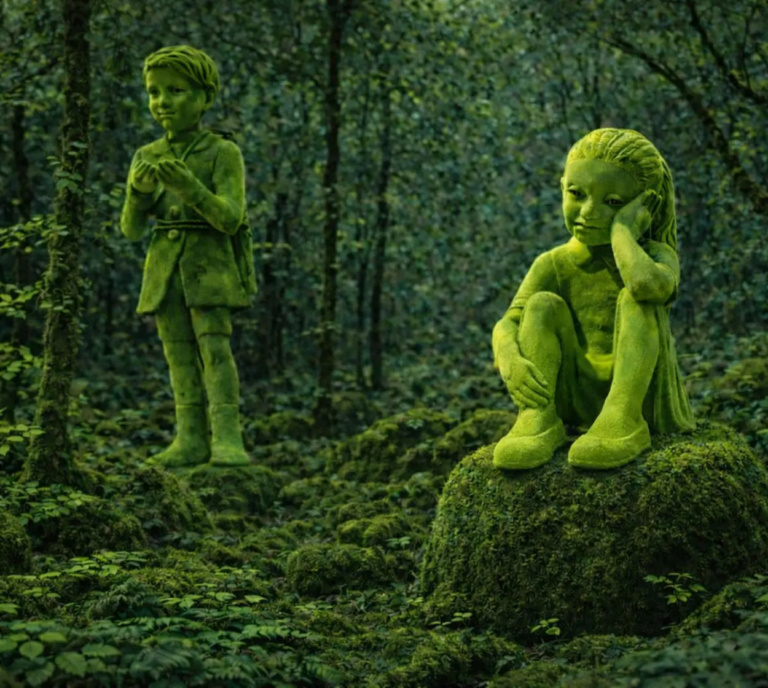
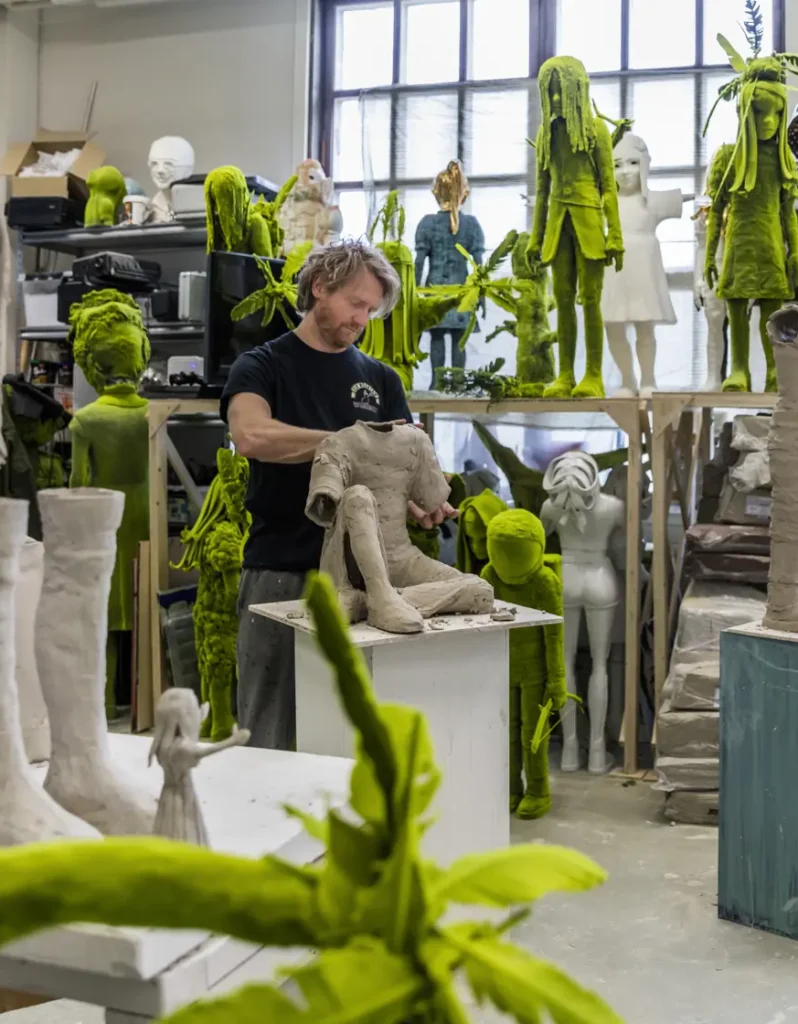
Kim Simonsson’s moss giants were born in utopia, imagining a community without hierarchy, where every role, from philosopher to caretaker, carries equal weight. Now two of them, Nest and Thinker, have found a permanent home in the forest landscape of Norrviken in Båstad, where they stand among moss-covered stones as though they were always there.
Natalia Muntean: Nest and Thinker were created for Lille3000 in 2022. How does it feel to see them move into a permanent home, and does permanence change how you think about a piece?
Kim Simonsson: I am very happy that almost all of the 11 giants created for the “Utopia” arts festival in Lille in 2022 have found a permanent home. Two are in private collections in the USA; one is in the centre of the historic Austrian town of Gmunden; one is in front of a shopping mall in Roubaix; and four are in a forest near Söderlångvik Manor on Kimitö Island in southern Finland.
The sculptures have found homes in a wide variety of locations, which is wonderful to see. I am very happy that they have found a new life after the main event. When they were first created, I wasn’t thinking about them being spread around the world, but I am glad that people appreciate them individually and in different settings.
NM: Norrviken is a designed landscape with over a century of history. Did that context influence which two figures you felt belonged here?
KS: There were only three sculptures left to choose from, but these two, by coincidence, fit the setting of Norrviken perhaps best of all eleven. One is the boy with a bird’s nest on his back – many birds are likely to nest in the forest where it is located. The other is the girl, a melancholic artist, and I’m sure there have been melancholic artistic types pondering life in the park.
Part of the mythology I created for the moss giants is that they originated in the Scandinavian forests and later wandered to Lille. It is very fitting that they have now returned from their European journey to their home, a forest in Norrviken, with many stories to tell.
NM: As the moss giants age in place, they will literally become part of the ecosystem. Does that feel like completion to you, or loss?
KS: I would be happy if real moss and lichen began to grow on the sculptures, and if birds made nests in them. Eventually, the sculptures will become part of their surroundings, like large stones or fallen trees.
NM: Each figure has a role that is described as equally essential to the group. How do you decide what roles the community needs, and how does a new figure come into being?
KS: The theme of the art festival in Lille was Utopia. I began to imagine a utopian group and considered what kinds of skills would be needed within it. There was no leader, and since it was a utopian community, all skills were equally valued. There was, for example, a doctor, a gatherer, and a teacher, but also a philosopher and a girl whose role was simply to think rather than to act. The figure with the nest was the one who communicated with the animal world.
NM: You started shaping figures in snow as a child, while others built snowmen. Do you think your relationship to form has changed, or is it still essentially the same impulse?
KS: I am a maker, and I love being able to create the figures I imagine out of clay. My aim is to refine my skills so that I can give the figures at least a small sense of life, so they can connect with the viewer’s unconscious and perhaps take them back to a cherished childhood memory.
NM: Is there a figure you have made that you found hardest to let go of?
KS: For me, it is an essential part of my profession to create works for an audience, not just for myself. So I am always very happy when someone wants to live with one or more of my creations. Usually, the most important sculpture is the one I am working on at that moment.