
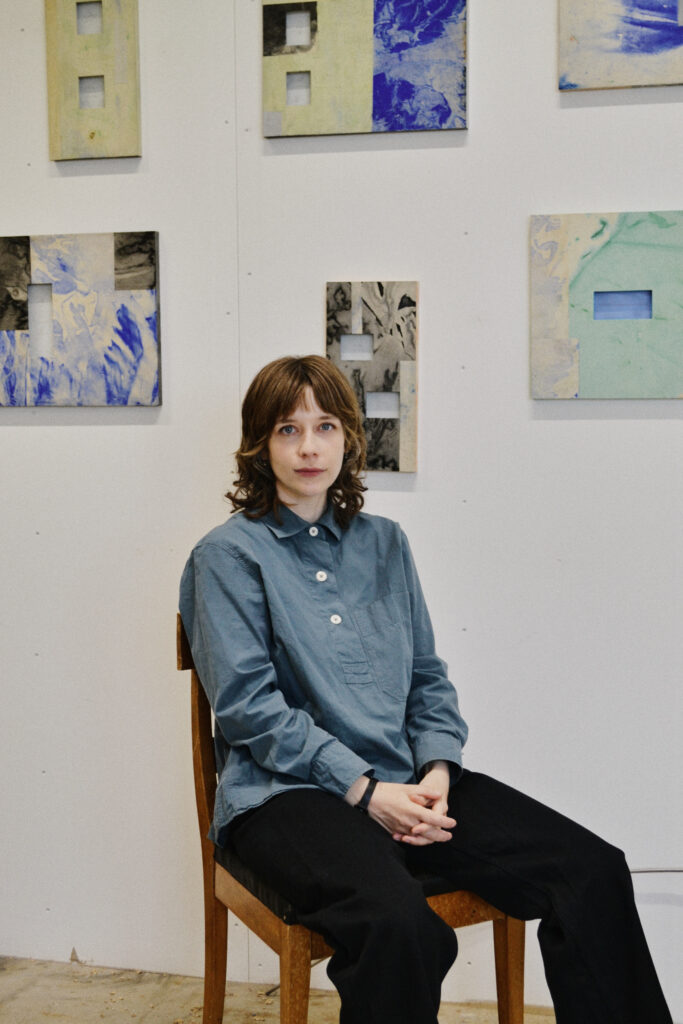
Nadine Byrne on sisterhood, inherited materials, and learning to be here now
text Natalia Muntean
photography Saskia Clarke
I knew I wanted to talk to Nadine Byrne as soon as I saw the title of her new show at Saskia Neuman Gallery in Stockholm, and saw an image of one of the pieces that moved me. Mothers and Sisters and Daughters is Byrne’s second solo show with the gallery and is an exploration of relationships that tie us as women. “For years, I worked alone. I felt that I needed that solitude, but something shifted a while ago, and I started wanting to be with people,” she tells me. The building that houses the studio she shares with her architect husband is home to approximately 80 other artists. The day I visited her studio in Stockholm, she was putting the finishing touches on everything before it was packed and sent to the gallery. “I’m not usually this last minute,” she laughs, “I’m still learning how to work while also having a child.”
Her interest in digging deeper into these relational chains comes from her own relationships with her mother, her two sisters and more recently, from her becoming a mother herself. Sisterhood, she says, is where it all begins and where it keeps returning.
NM: How do you think being a middle sister influenced you?
NB: Very much. I grew up most closely with my older sister. She was very influential to me from a young age – showing me things, or me sneaking into her room, going through her records. She was my idol growing up. My sister, my mother and I were kind of tightly knit together. So that relationship, mother, sister, daughter, has been in the background of everything I’ve done somehow.
NM: This exhibition marks a shift in your work, from grieving inward to something more relational and outward. What changed?
NB: I think I’ve been very open about the grief work; it’s been hard to hide. But it’s more that I want to move away from that conversation. And now, having a daughter, you’re so forced to be here now. I’m happy about being more here now. I’m still very much interested in memories; memories have always been my inspiration. But in my private life, I need to be more present. And my artistic practice mirrors my life, always. So even before I had a child, I had come to that conclusion. I wanted to be here more now. That’s kind of why I shifted towards sisterhood, because that’s present. And then I had a child, so becoming a mother is also now part of the exhibition.
NM: The show features photos of your sisters. When you photograph them, are you looking for resemblance or difference?
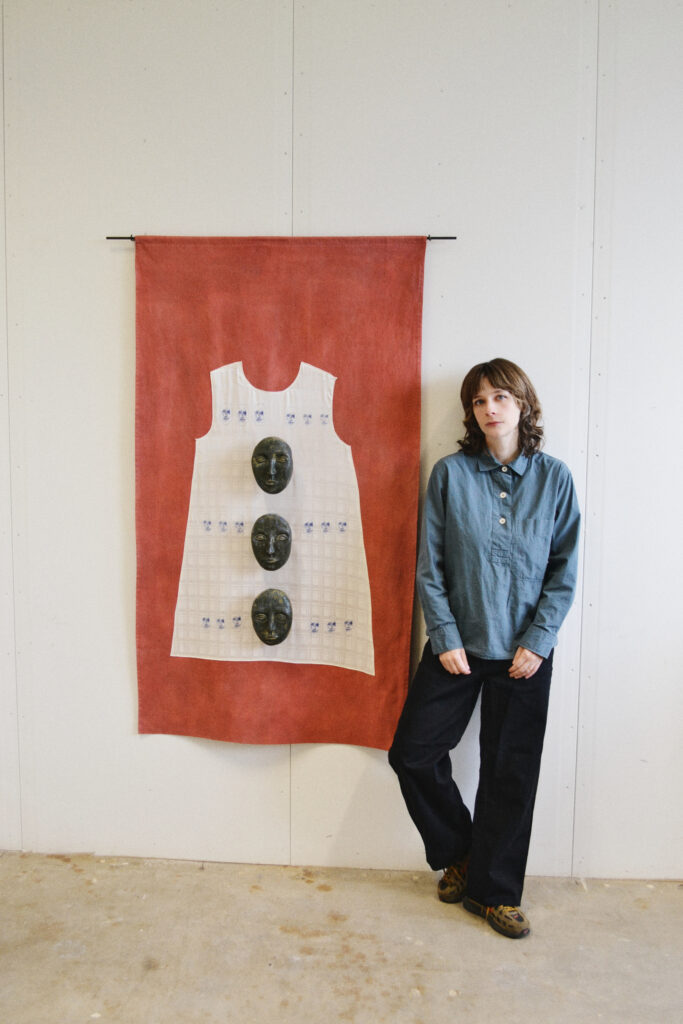
NB: I think I’m interested in the merging of identities. That’s something I’ve been exploring for a while – how sisters can create their own language, how identity starts to blur between them. I made a work two years ago, a commission for Elektronmusikstudion, here in Stockholm, and part of it was a story about three sisters – about how, when their home had disappeared, there were no longer any boundaries between them and their identities started to merge. So that’s kind of also present in the piece called Klotho, Lachesis and Atropos/Deino, Pemphredo and Enyo/Dike, Eunomia and Eirene. The three figures have the same face, but I gave them different features, so they become separate.
There’s an elasticity when it comes to sisters. The boundaries are not the same as with other people. You can be treated in ways that no one else would treat you by your sister. And you treat them the same way. Then again, you would do almost anything for each other. But where else do you find that? And that’s actually in the poem scattered amongst some of the works. One of the fragments says: entangled and pulled taut. That is an attempt to describe the relationship.
NM: You can see that the poem is there, but you can’t really read it clearly. Was that intentional?
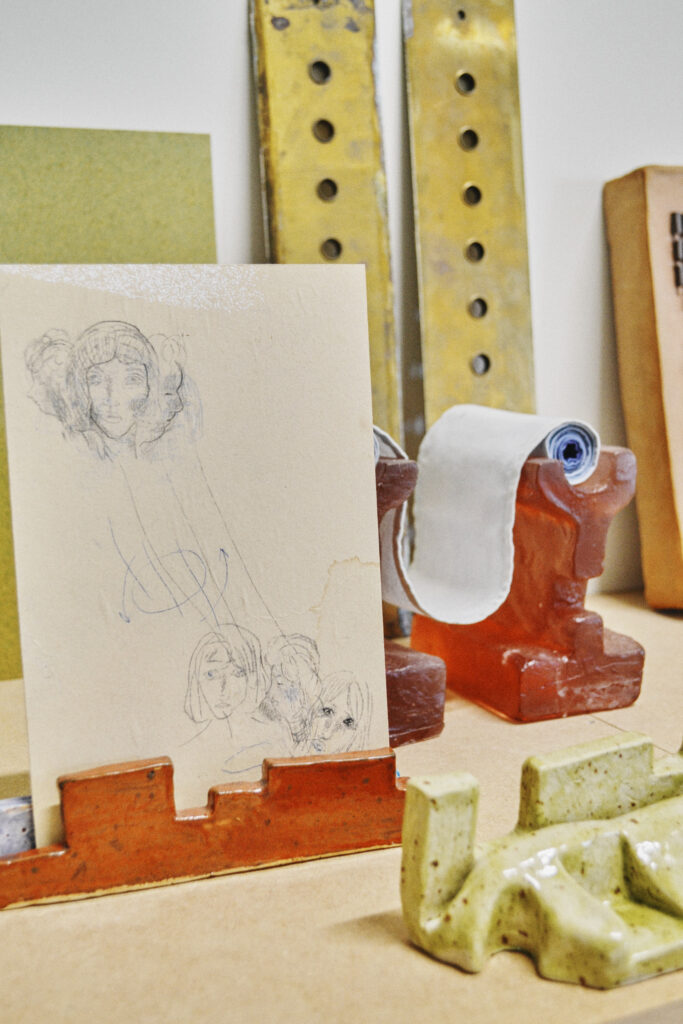
NB: Yes, that was intentional. I didn’t want the text to take over the work. I wanted the pieces to have a life of their own without the text defining everything else. And I’m just a fan of things not being too articulated. I have a fragmented visual language. If you want to read it, you have to get very close.
NM: What’s the poem about?
NB: It’s about being sisters. I was also listening to a lot of music while I made these works, a group called the Roches, from the 70s and 80s. It’s three sisters who sing in harmony, and I was listening to them a lot at the same time as I wrote the poem.
NM: The three mythological triads, the Moirai, the Graiai and the Horai, each carry very different energies. What drew you to all three?
NB: I came to them by thinking about my own sisters, trying to mirror that. When it comes to sisters or women, the powers are always divided. Three sisters, three different forces. Why? Why have they been split that way? I think perhaps it is just an early account of how sisters work – you have different roles. One is more nurturing, one is the wild one. I find that true in my case, too.
NM: Your mother died when you were twenty, and you inherited things from her that you use in your works.
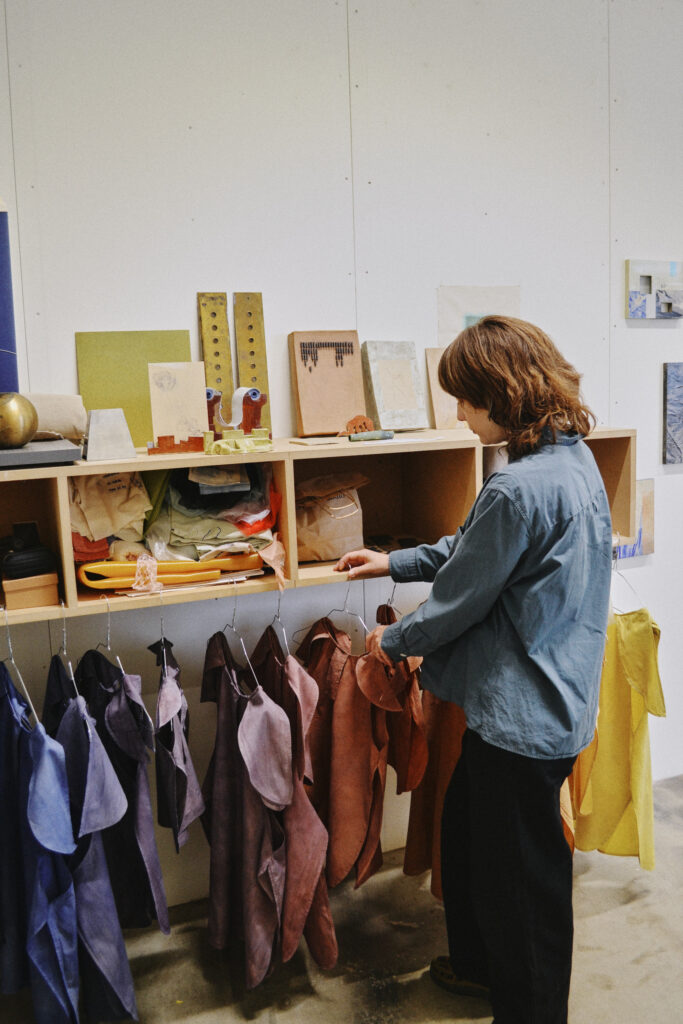
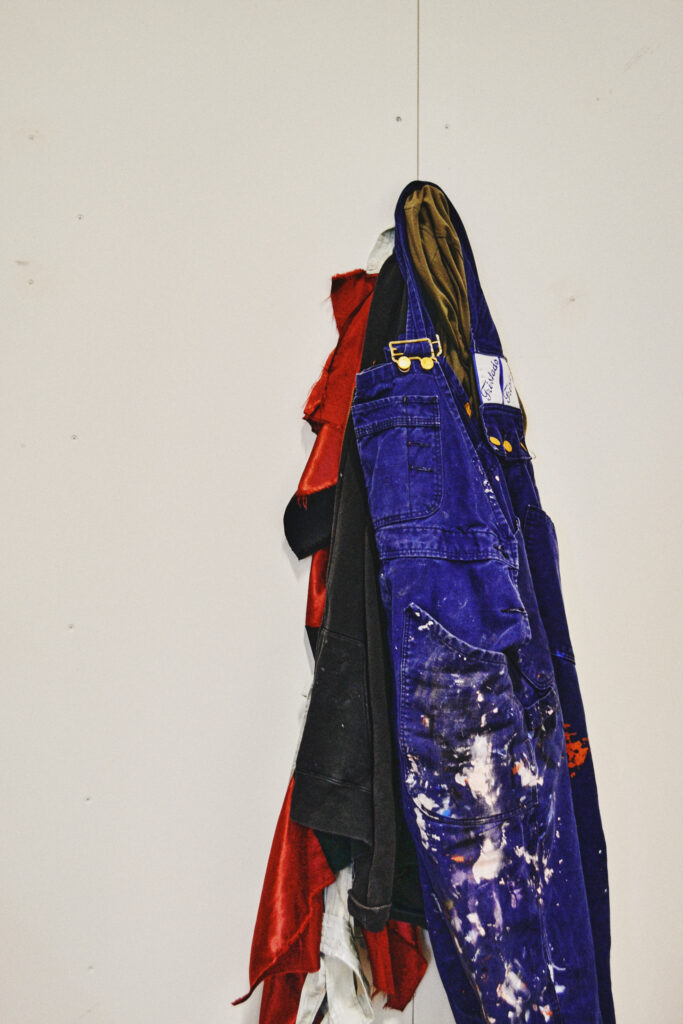
NB: I inherited a lot of fabrics and things, and I started working with them quite early. When you clean out an apartment after someone dies, you become acutely aware of how important material objects are for keeping a relationship with someone alive, someone whose bodily presence is gone, but who has left these things behind. You can continue the relationship through the material. And memories are linked to the material, too. I’m very interested in how objects, how costumes, can have this transcendent quality of maintaining a relationship with someone or something that’s gone. The artwork becomes a surface where different times and emotions converge and coexist. Which is also, I think, not so different from a ritual. In a ritual, so many things coexist that you can’t really say with words – it all becomes embodied. In movement, in costume, in an object. I come back to that all the time.
I think of these garments I created for Mothers and Sisters and Daughters more as uniforms. Something you put on top of your existing self. And what I want is to emphasise the different ways of inhabiting these roles – that there is no right way. It’s more about opening up what a woman can be, what a mother can be.
NM: You work with so many different materials: steel, ceramic, textile, glass, photography, paper, sound, and video. How do you choose them for each piece?
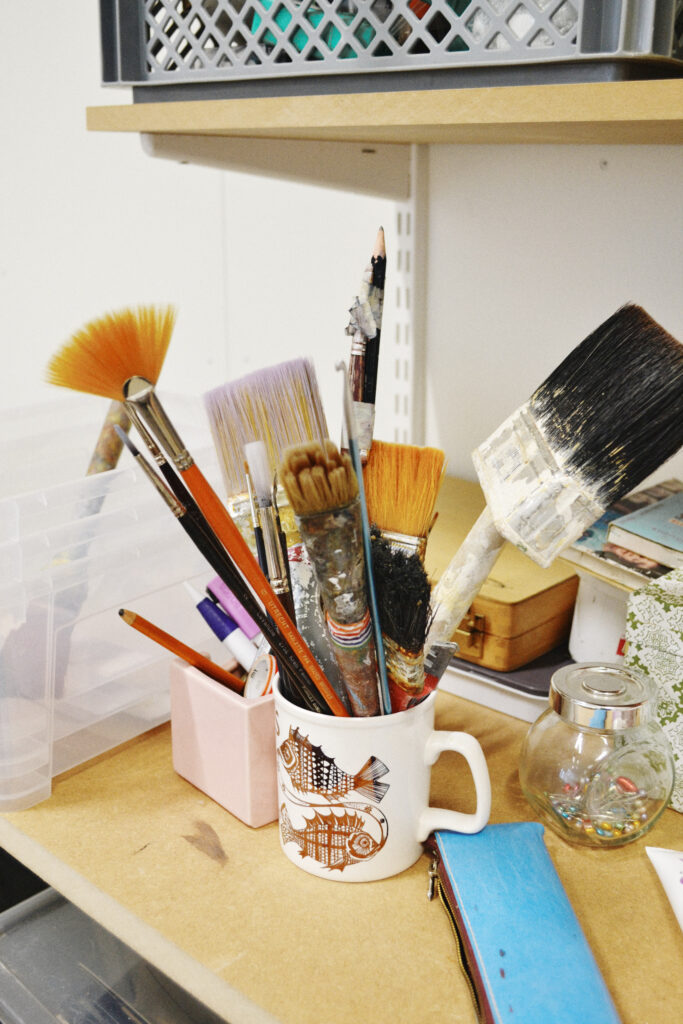
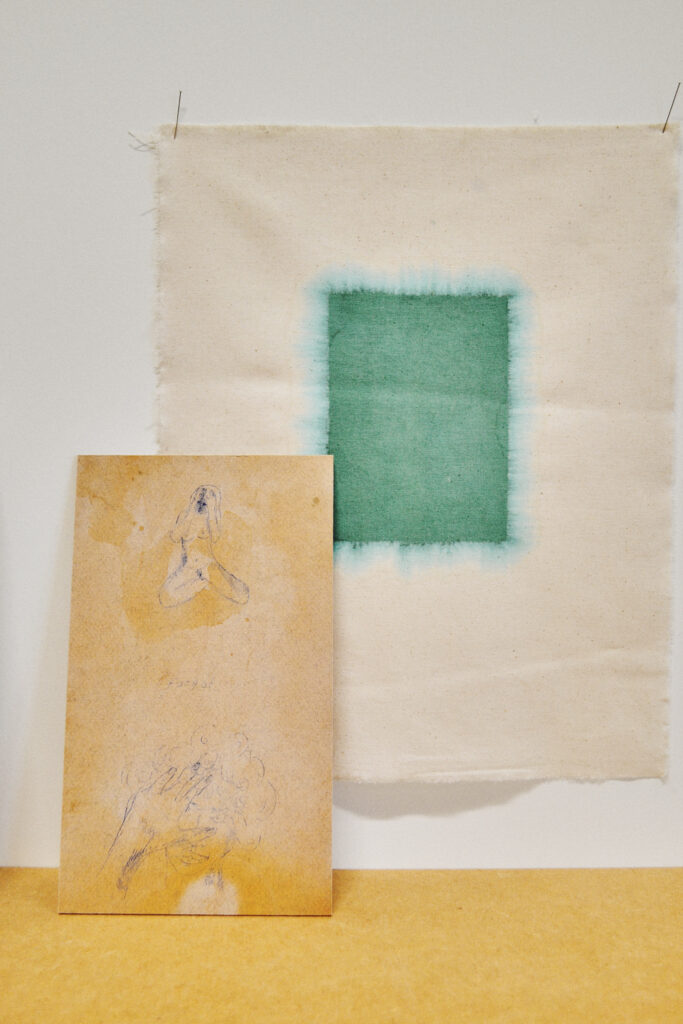
NB: Foremost, it’s because I’m so curious about materials. I really love them. I have this archive in my head – I’ll see something, and it goes in there, and then maybe it comes out later paired with an idea. I always find that my practice is a way of learning new things. I can get a bit annoyed with myself that there’s so much going on, sometimes I’m jealous of painters who really know their one craft. But I think my favourite thing to do is actually to just have a lot of material, fabric or paper, and put them together in different ways until something has the right feeling. And then trust that the material carries something in itself as well.
NM: Is it a lot based on intuition?
NB: Yes. I have a little plan, and then it’s fifty-fifty planning and process. Being guided by what happens, what you can’t control. But that’s the fun of it. I really enjoy being in my own world and being guided by materials.
NM: Is there something in this body of work you made for someone specific, even if they’ll never see it?
NB: No one specific. But I do always create with a spectator in mind, not a specific person, just the idea of someone looking at what I’ve done. It motivates me and means I’m not sloppy. It’s a critical spectator, I think. I can hear the critique before it arrives.
NM: What do you hope people who come to see the show take away from it?
NB: I’m very happy when someone tells me they were moved by a piece. That’s kind of it, I guess, that I managed to translate something into these works that resonates with people.
NM: What do you carry from the women who came before you that you didn’t choose to carry?
NB: I come from a line of women who have had to struggle, on both sides, poor circumstances, and different kinds of hardship. I think that’s inherited in different ways. My mother and my grandmothers are very present to me; none of them is alive anymore, but I work with materials I inherited from them. It’s been a way of speaking to them. Maintaining a relationship. And I’ve always found it fascinating that I actually existed already in my grandmother as an egg. It’s so fascinating. I’ve been a bit obsessed with this idea of matrifocal heritage or the female-centred line.
NM: Do you feel like you’re finished with what you wanted to say here, or is this just the beginning?
NB: I feel like I’m just scratching the surface of sisterhood, of motherhood, of all of it. I will continue this work. And I know it could be seen as a cliché – the artist has a child and makes work about motherhood. But I kind of enjoy being part of that cliché. I’m open to change. But I’m not finished here.