Uncategorized

Beauty Editorial, Uncategorized

I FOLLOW RIVERS

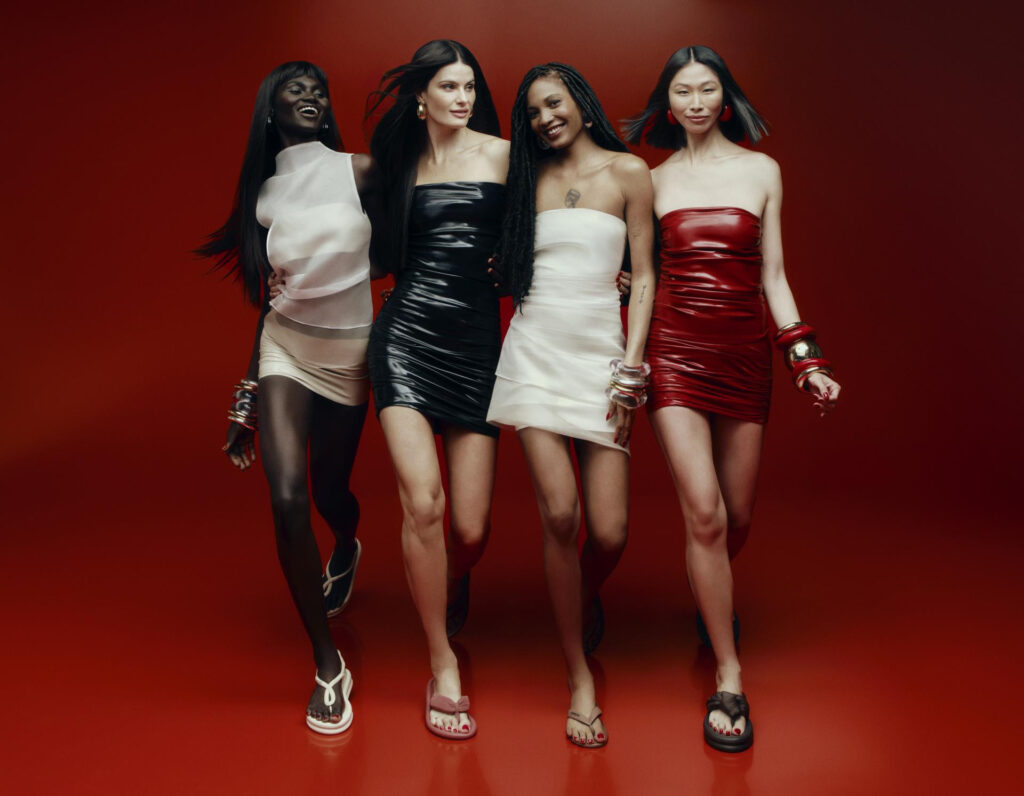
skin Cle’ De Peau radiant cream foundation ochre 20 Rare Beauty liquid luminizer enlighten art Diamond FX aquacolor black lips M.A.C Cosmetics sheer lipstick dubonnet Sugarpill loose shadow asylum   top Airi skin Cle’ De Peau radiant cream foundation ochre 20 Rare Beauty liquid luminizer enlighten art Make Up For Ever flash color palette black lips Pat McGrath Labs matte trance lipstick vendettanails Mika Ochi skin Cle’ De Peau radiant cream foundation ochre 20 Rare Beauty liquid luminizer enlighten art Diamond FX aquacolor black lips  M.A.C Cosmetics sheer lipstick dubonnet Sugarpill loose shadow asylum top Airi skin Cle’ De Peau radiant cream foundation ochre 20 Rare Beauty liquid luminizer enlighten eyes Mehron metallic powder gold lips Pat McGrath Labs matte trance lipstick mcmenamy Girlcult lipgloss shimmery black red   dress Issey Miyake skin Cle’ De Peau radiant cream foundation ochre 20 Rare Beauty liquid luminizer enlighten art Make Up For Ever flash color palette black lips Girlcult lipgloss plasma red dress Donna Vivid skin Cle’ De Peau radiant cream foundation ochre 20 Rare Beauty liquid luminizer enlighten art Make Up For Ever flash color palette black lips Pat McGrath Labs matte trance lipstick fever dream dress Issey Miyake skin Cle’ De Peau radiant cream foundation ochre 20 Rare Beauty liquid luminizer enlighten art Diamond FX aquacolor black lips  M.A.C Cosmetics sheer lipstick dubonnet Sugarpill loose shadow asylum top Airi skin Cle’ De Peau radiant cream foundation ochre 20 Rare Beauty liquid luminizer enlighten art Make Up For Ever flash color palette black lips Girlcult lipgloss plasma red dress Donna Vivid

Opiates, Uncategorized

Susie Cave Presents Weddings and Funerals

images courtesy Susie Cave Susie Cave Presents Weddings and Funerals Susie Cave opens a new appointment‑only space in Kensington, marking the beginning of a distinct chapter in her creative world. SUSIE CAVE, WEDDINGS AND FUNERALS introduces a demi‑couture offering shaped by the designer’s desire to return to something elemental and personally driven. The pieces carry the familiar tension and elegance of her earlier work, yet stand apart with a sharper, more intimate focus. The shop invites visitors into a subtly surreal environment where black and white form the foundation of a new visual language. Despite the name, the designs are not traditional bridal or funeral attire. Instead, they explore the ceremonial and performative nature of clothing — from minimal monochrome mini‑dresses to elaborate, sculptural silhouettes. The debut collection consists of 25 designs, each custom‑tailored and fully personalisable. The approach reflects Cave’s wish to step away from the industry’s relentless pace and create garments rooted in intention rather than demand. Opening in mid‑late May 2026, SUSIE CAVE, WEDDINGS AND FUNERALS offers a space where ritual, imagination and craftsmanship meet on their own terms.

Music, Uncategorized

“Whatever, We Are Dying” – An Interview With River

“Whatever, We Are Dying” AN INTERVIEW WITH RIVER photography Saskia Clarke & Jeffe Lingier  fashion Mauri Camelbeke & Kaat Van Der Linden  hair Wanda Persson makeup Alicia Hurst  photography Saskia Clarke dress Shultneck  lace top baum und pferdgarten stockings Swedish Stocking earrings Glitter ring ByKrohnstad photography Saskia Clarke With the upcoming release of her new album A Dying Source, River reflects on a period marked by emotional excavation and a growing trust in her own intuition. The project captures her shift toward creating without fear; letting melodies surface instinctively, allowing lyrics to reveal truths she often didn’t know she was carrying. What emerges is a body of work shaped by contrasts: softness and darkness, fragility and defiance, the self she has outgrown and the one taking form. Rather than constructing an image, River leans into vulnerability as her creative compass. The album became a space to confront the fears she once avoided; fear of loss, of aging, of expectations, and transform them into something atmospheric and deeply human. A Dying Source marks a moment of release, a quiet surrender to change, and an embrace of the unknown as part of her artistic evolution. Your new music feels very personal. Do you write songs to understand yourself better, or to express things you already know deep inside? I usually don’t have a premeditated meaning when I start. The words are usually born directly from the chords and the instrumentation. It’s more like the music pulls things out of me. Sometimes I learn something new about myself in the process, and occasionally the outcome is something I didn’t even realize I had inside me until I heard it back. Your recent songs talk about inner struggle, healing, and emotions that are not always easy to face. Why was it important for you to explore those feelings in your music? As a teenager, I often found myself in codependent relationships, held back by fears that stopped me from following what I actually wanted. But when my dad passed away when I was 17, I made a promise to myself: to always follow my gut, no matter what. That was something I deeply admired in him, and I wanted to carry that gift with me to live in that same brave spirit. Once I actually started acting on that promise, bringing my truths to the surface and doing things despite being afraid, I realized what a treasure it is to be vulnerable. Not running from yourself or putting on an act just to stay in the ‘comfort’ of fear. With this album, I felt drawn to face the fears I carry inside, just like the fears I see in the world around me. I’ve realized that in order to grow, I have to look them in the eye. That’s where the strength is. In your new music, there is both softness and darkness. Do you feel that contrast is a big part of who you are as an artist? Yes, definitely. To me, that contrast is where the growth happens. This album, ‘A Dying Source,’ is really about that transition, letting an old, guarded part of myself die so something new can start. I’m seeing life and love through vulnerability and sarcasm, honesty and lies. I think you need both the darkness to see what you’ve been hiding from, and the softness to finally forgive yourself and let go. It’s that balance that makes the music feel real to me photography Saskia Clarke top Pampas bottom girdle Gabriella Danderlö stockings Swedish Stockings earrings Stylist’s Own photography Saskia Clarke top and skirt Gabriella Danderlöv  stockings Swedish Stockings  headband Eyui Atelier  Your world feels very visual and emotional at the same time. When you create, what comes first: the feeling, the image, or the story? It’s always the emotional state that leads the way for me. The images or any kind of story usually just follow that feeling naturally as the music starts to take shape. I don’t really sit down to plan a plot or a visual, I just let the emotion dictate where we’re going and let the rest catch up A lot of your music feels honest and vulnerable. Is it hard for you to be that open in your songs? No, not at all. I’ve realized that vulnerability is actually essential to any kind of artistic or human work. Those imperfections and insecurities aren’t things to hide; they’re guiding forces. They lead me to the truth in a song much faster than trying to be perfect ever could. My work is much more of a diary entry rather than creating content for consumption. I wouldn’t know how to create that, I mean I don’t have that quality. My quality is to be vulnerable and honest with what I want to say. Your artistic identity feels very strong and unique. Have you always known who you are creatively, or did that take time to build? My identity has evolved over time, in hand with my inner journey of facing and overcoming fears, challenging what I thought I knew about myself and life.  I view artistic identity as a commitment to truth, always putting my authentic vision over commercial popularity no matter what. I can say I have never been driven by trends, rather the opposite. If I realize ‘everyone else’ is doing something I automatically start looking the other way for something new to explore. It’s just an inner compass I can’t control. But as an artist, I think as long as I stay authentic and don’t spend my time looking at what other people are doing, and stay in my own creative bubble, it will be unique regardless if other people outside are doing something similar. The important part for me is just to stay true to myself and follow my guts.  photography Saskia Clarke dress Gabriella Danderlöv  shoes Stylist’s Own  necklace Kaleido When you write music, do you ever surprise yourself with what comes out? Yes, I’m often surprised. Especially the melodies

News, Uncategorized

Desenio establishes Desenio Art Awards

images courtesy Desenio Desenio establishes Desenio Art Awards Desenio is taking another step in its commitment to contemporary art by launching the Desenio Art Awards, a global initiative with the ambition to identify, elevate and support the next generation of artists, photographers and creators in the long term. With a growing international presence and an established position in accessible art, Desenio continues to develop its role as a platform for artistic expression. The Desenio Art Awards are part of this work, where new voices are given space to reach a wide audience and become part of a global context. Artists are invited to apply with their works through six categories. New Talent, Illustrator, Photographer, Graphic Artist, Mixed Media Artist and Street/Urban Artist. Selected entries will be exposed internationally, and the final winners will be integrated into Desenio’s creative universe as part of the brand’s continued artistic development. An internal jury with expertise in art and visual culture nominates six artists per category. The process is then opened to public voting, allowing for both industry and public perspectives in the selection. The application period for the Desenio Art Awards is now open and will end on April 19, 2026. Entries are submitted via Desenio.com/art-awards. 

Art, Uncategorized

Gallerist Georgina Pound Honors Mexico’s Surrealist Female Artists

Gallerist Georgina Pound Honors Mexico’s Surrealist Female Artists text and photography Sanna Fried Mexico City Art Week 2026 was a beautiful and eventful journey of art, parties, earthquakes, and bad phone service.  Much to my delight, this year turned out to be the year of the figurative painters, with women leading the way. It was also the year to celebrate the female historical surrealist painters of Mexico City, notably Leonora Carrington, whose work I saw presented in no fewer than six galleries throughout the week.  A woman who has also been shaped by this wave of female painters sweeping across Mexico is the British gallerist Georgina Pounds. For her, the female surrealist artists, with Leonora Carrington at the forefront, have become a source of inspiration that she has carried forward and developed into a contemporary gallery rooted in Mexico’s cultural past. One of my highlights from Mexico City Art Week was meeting the ever-so-inspiring and energetic Georgina Pounds.  Mexico City is in a moment of transformation, yet Roma Norte, the area where Georgina Pound Gallery is located, continues to hold a quiet connection to its past. The Colonia’s architecture is evolving and adapting to new uses and rhythms, but when we look closely, it remains grounded in a city shaped as much by memory as by development.  When Pounds was given the opportunity to open a gallery at Casa Lamm, a large and beautiful historic building, built in 1911 as a private palace, she knew it was the right time. She had been dreaming of a project that was personal and aligned with her own history.  She decided to keep the rooms’ original names:  Frida Kahlo, Nahui Ollin, Marguerite Yourcenar and Luis Cernuda, each carrying their own symbolic presence into the new gallery. Pound also preserved the building’s original 1911 features: high ceilings, moulded detailing, and herringbone wooden floors, and in many ways, its usage and artist memory. Casa Lamm is a remarkable building, rich with history and culture. For decades, it functioned as a cultural centre, housing a library, classrooms, and a restaurant. It is said that this restaurant was a favourite of the artist Leonora Carrington.  Pounds holds a deep admiration for the women surrealist painters who lived and worked in Mexico during the first half of the 20th century. Pounds explains that the story of Leonora’s favourite restaurant being inside Casa Lamm became a meaningful and symbolic sign for Georgina to take the leap and establish her own space right there, where Carrington had her beloved meals.  During the first half of the 20th century, Mexico City became a creative hub and a sanctuary where many women felt free. Pounds sees clear parallels between the artistic circles that gathered in Mexico at that time and today’s new wave of artists and cultural practitioners. For her, women surrealists like Leonora Carrington, Leonor Fini, Remedios Varo, Dorothea Tanning, and the support they offered one another remain a key source of inspiration.  Pounds believes there are clear parallels in the connections she sees between the artistic circles that gathered in Mexico during that time and the new wave of artists and cultural practitioners from Europe and America arriving in Mexico City today. Her vision for the gallery at Casa Lamm is to reflect that same spirit of openness and artistic community, as well as to echo the building’s past as a cultural centre. She wants the gallery to be a living, welcoming space filled with movement, gatherings, and events, such as the free guided meditation she organised on International Women’s Day.   Before moving to Mexico City, eight years ago, Pounds studied architecture at The Cass in London. She believes that having an eye for architecture is imperative in Mexico City, a city where it blends seamlessly and constantly with the visual arts. The gallery’s first show at Casa Lamm, featuring British painter Vanessa Raw, solidified this idea, with Raw’s romantic and classic work speaking intimately with the architecture of the space. Spanning three rooms, Raw’s large-scale oil paintings featuring landscapes, animal or female nudes are a blend of Greek mythology, Mexican traditions and the natural world, oozing poetry, sensuality and vulnerability. Simultaneously, Casa Lamm is hosting another show, which brings together works by young painters and sculptors from Europe and Mexico, such as María Kalach, Fredrik Nystrup Larsen and Tali Lennox, with artists connected to the historical surrealist movement in Mexico City. Especially touching, Kati Horna’s photography features Carrington and serves as a reminder of the importance of sisterhood and friendship between artists. “I grew up in Sussex, in the same village where the poet and surrealist patron sir Edward James grew up”  Pounds explains with pride in her voice. James specifically supported one artist… guess who- Leonora Carrington. Perhaps it is because of Georgina’s upbringing that she has developed such a strong, lifelong connection to surrealism. Georgina’s love for Carrington’s work, an interest cultivated throughout her upbringing, became the catalyst for discovering another important figure of the Surrealist movement – Sofia Bassi. Bassi, unlike many of the artists in Mexico City’s Surrealist movement, was Mexican. Her paintings carry many layers and a sense of darkness, with many of them being produced while she was imprisoned, after being convicted of murdering her daughter’s husband.  Sofía Bassi and Kati Horna were close friends, and now in April, Georgina Pound Gallery will present works by both artists. The show will bring together voices, histories, and relationships of women who shaped Mexico’s Surrealist movement and today’s art scene.  In many ways, Georgina Pound Gallery feels like part of a larger moment in Mexico City, where history, identity, and new artistic voices are being woven together. In a city constantly shifting between past and future, Pound seems to move effortlessly between both. Her gallery is not just a space for art, but a continuation of something that has always existed here – a quiet thread of connection between artists, histories, and women who found their freedom in Mexico City. Looking back at a

News, Uncategorized

Jeremy Allen White for the Louis Vuitton Speedy P9

Jeremy Allen White for the Louis Vuitton Speedy P9 Louis Vuitton unveils its “In My Bag” campaign with a series of portraits centered on the Speedy P9, reimagined by Men’s Creative Director Pharrell Williams. Among the featured talents, Jeremy Allen White offers one of the most intimate glimpses into the bag’s spirit and purpose. Photographed by Thomas Lagrange, White appears with a green Speedy P9 crafted from double‑tanned, drum‑milled calfskin that gives the bag its soft, waxed texture. The portrait opens the bag to reveal the objects he carries through his day: a newspaper, a spiral notebook, a brimmed cap, a comb, a watch, a set of dice, extra socks and a charging cord. Together, they form a quiet study of routine, movement and the small rituals that shape a life. The Speedy P9 itself draws on the legacy of the original Speedy from the 1930s, reinterpreted through Williams’ lens. Named after Paris’s Pont‑Neuf, the site of his debut runway, the P9 blends heritage with a forward‑looking sensibility, turning a classic travel icon into a modern companion. In White’s portrait, the bag becomes more than an accessory. It becomes a container of habits, ideas and the understated details that define his everyday world.   image courtesy Louis Vuitton

Opiates, Uncategorized

Fjällräven finds a new home at NK

Fjällräven finds a new home at NK images courtesy Fjällräven   Fjällräven has opened a new dedicated space at Nordiska Kompaniet (NK) in Stockholm, in partnership with long-standing outdoor retail partner Naturkompaniet. This strategic move strengthens the brand’s presence in its home market and welcomes international visitors to one of Scandinavia’s most iconic retail environments. The new space unites Fjällräven and Naturkompaniet within NK, reflecting a shared commitment to functional design, durability, and a deep-rooted Nordic outdoor heritage. The outdoor lifestyle, long central to Nordic culture, has seen renewed growth as more people seek time in nature alongside urban living. Fjällräven describes the opening as “finding a new home” within NK, introducing an updated retail concept built on the brand’s founding principles since 1960: sustainability, functionality, and timeless design. The assortment includes equipment for hiking, cycling, and alpine activities, alongside some of Fjällräven’s most recognisable products such as the Kånken backpack, the Expedition Down Jacket, and the Greenland Jacket. For many Swedes, owning a Fjällräven down jacket, which gained widespread recognition in the 1990s, was once a rite of passage, contributing to the brand’s strong nostalgic appeal and enduring legacy. The store also emphasizes product care, repair, and longevity, encouraging customers to extend the life of their garments and equipment. According to Fjällräven chief executive Martin Axelhed, the NK location provides an opportunity to meet both local and international customers who value quality, expertise, and functionality in a new setting. Naturkompaniet chief executive Henrik Hoffman added that the collaboration naturally brings together two brands with shared values, inspiring more people to discover the outdoors. Developed with PS Retail, the new concept store features natural materials and Swedish craftsmanship throughout, including bespoke interior elements and archival pieces from Fjällräven’s history in Örnsköldsvik, creating an immersive journey through the brand’s evolution and future vision.

Opiates, Uncategorized

Universal Genève Presents the Disco Mini

Universal Genève Presents the Disco Mini Universal Genève introduces the Disco Mini, a new women’s model that draws on the maison’s long history as a leading designer of women’s timepieces throughout the 20th century. The watch bridges the worlds of horology and jewellery, translating the spirit of the house’s couture‑inspired creations into an everyday piece defined by both form and function. The Disco Mini reflects Universal Genève’s philosophy of functional beauty. Its construction is intricate yet intuitive, built around a unique caseback clip system inspired by the brand’s multiband watches of the 1950s. This mechanism allows the wearer to switch seamlessly between a metal bracelet and a wide selection of straps, adapting the watch to any moment or mood. Elegant and compact, the Disco Mini embodies the maison’s legacy as Le Couturier de la Montre, bringing craftsmanship, versatility and a sense of play into a single design. It is conceived as a true companion; a piece that moves easily between jewellery and timekeeping, tradition and modernity. The Spring/Summer strap collection, crafted in 18k rose gold or 18k white gold and sold separately, expands the watch’s possibilities even further. images courtesy Universal Genève

Beauty Editorial, Uncategorized

SUBSTANTIA

models Regitze Ofelia Risager / Elite Copenhagen, Hyemin Christiansen / Scoop Models, Lethia Sharp / Scoop Models  design studio Reevein Studios hair and makeup assistant Julie skov skin Couleurs de Noir fusion glow foundation eyes and lips Manasi 7 all over color fuchsine Couleurs de Noir instant lip oil skin Malin+Goetz all purpose moisture balm lips Couleurs de Noir chubby lipbalm flamingo art M.A.C Cosmetics connect in color palette  lips Couleurs de Noir stylo lipstick velours red Couleurs de Noir chubby lipbalm Malin+Goettz lip moisturiser  lips Couleurs de Noir creamy blush sweet peach  RMS Beauty honey and pomegranate fizz blush lips Manasi 7 all over color setsunai eyes RMS Beauty hanky panky blush Malin+Goetz gloss lip moisturizer skin Ellis Faas skin veil foundation Ellis Faas concealereyes and lips Ellis Faas hot lips soft pink skin Ellis Faas skin veil foundation Ellis Faas concealereyes Ellis Faas hot lips fluo pink

Art, Uncategorized

Sheree Hovsepian is (still) Becoming

Sheree Hovsepian is (still) becoming text Natalia Muntean photography Saskia Clarke  “I never considered myself a photographer,” Sheree Hovsepian tells me. The camera is just one of the tools. Photographs, hand-shaped ceramics, string, bronze, she brings them together until they become something they weren’t on their own. Becoming is Hovsepian’s first exhibition at Carling Dalenson Gallery in Stockholm, and its title names what her practice has always been about: not arrival, but the ongoing act of taking shape.   Natalia Muntean: The exhibition is called Becoming. Can you tell me a bit more about that choice and how it reflects the body of work you’re presenting? Sheree Hovsepian: It’s from a quote by Simone de Beauvoir. “One is not born, but rather becomes a woman.” That act of transition, of being in flux, of growing into something else, felt very pertinent to my work. Because of the nature of assemblage, a few things put together that become something else, and because the core of the work is very feminine, I thought it really resonated with these pieces, with the collages in particular.   NM: Did you make new work for this exhibition, or was there a selection process?SH: All of the collages are unique, even though I reuse photographs at times. Because I’m making all of the ceramic shapes by hand, everything is different; they’re all one-of-a-kind pieces. This is from a body of work I’ve been developing for a few years. Similar work was included in the Venice Biennale four years ago. So it’s an ongoing series.The sculptures are relatively new. The first editions were made for a show I had in New York this past May. They look great in this gallery, and I’m so glad we paired them with the collages.   NM: Can you tell me a little about your process? What does a day in your studio look like? Do you go in with a plan, or do you allow yourself just to explore?SH: Lately, I’ve been fortunate enough to be working towards shows. When I’m working on the collages, I make the different pieces separately. I use my sister as a model. When she comes to visit, I’ll shoot her in the studio and make many images of her. Then I’ll choose which ones to print and make many prints from those. With the ceramics, it’s similar. I’ll make a lot of them, bring them to the studio, and then I have my string and other materials there too. When it’s time to put everything together, it’s really about play. Very hands-on, moving things around, changing them, seeing what this looks like next to that. It’s actually quite antithetical to photography in a way, but I really love this additive process of bringing things together. For me, making the collages is a bit like the idea of an exquisite corpse: building a body, assembling a figure out of disparate parts.   NM: How did you arrive at this place in your practice, working across string, photography, ceramics and sculpture?SH: I studied photography in college and grad school; that was my focus. But I never really considered myself a photographer in the traditional sense, someone who goes out into the world and takes pictures, which feels like a very subtractive process. My sensibility has always been more additive, more akin to painting or sculpture, because it’s about building something. Photography just became one of the tools I use. With ceramics, I was drawn to it because I love working with my hands, and I love the idea of making something that carries a residue, a residual effect of having been touched. There are also some interesting parallels between ceramics and photography: both can take an impression, both go through a chemical process, and both carry a threat of failure. You don’t know what you’re going to get. I’m talking about analogue photography, which is what I use for this work. I use silver gelatin paper specifically: the weight of it, the depth, the tonal range, the drama. I love the theatrical nature of it, the romance of photographing my sister in the studio, this kind of intimate dialogue between us that feels like a dance, a choreographed sequence.   NM: Why your sister specifically? You’re both the observer and the observed, in a way.SH: When you’re working with a body, so many questions come into play: whose body is it, where did you find this body, what colour is it, what’s the gender? But when you’re talking about yourself, all of that falls away. You can just focus on the self, on your own subjectivity. These works are really about how I interpret life. So it makes sense to think of them as a kind of self-portrait. I use my sister because she’s physically very similar to me. It allows me to be behind the camera and in front of it at the same time. It’s also a mediated process. It’s easier to look at her in the negatives than it would be to look at myself, which I’ve tried and rejected. You’re more critical of yourself. Using her gives me a little more freedom. And I always joke that it’s the only time she actually listens to me, when I’m directing her in front of the camera. It becomes a very special time between us.   NM: You moved from Iran to the Midwest when you were very young. How has that shaped your work and the subjects you return to?SH: I think very much, though not directly, more indirectly. Being someone in the diaspora made me very aware of my own physical presence, my physicality, the way I move through space. I grew up in the Midwest, where I lived was very homogenous, very white. There weren’t many people of colour around me when I was young, so I could always feel my difference. I think that created a hypersensitivity around my body and my presence and how I existed in that space.   NM: The half-moon shape appears throughout your work. Is that connected to

Scroll to Top