Culinary

Culinary

A Night at Black Milk – Stockholm’s Most Theatrical Omakase

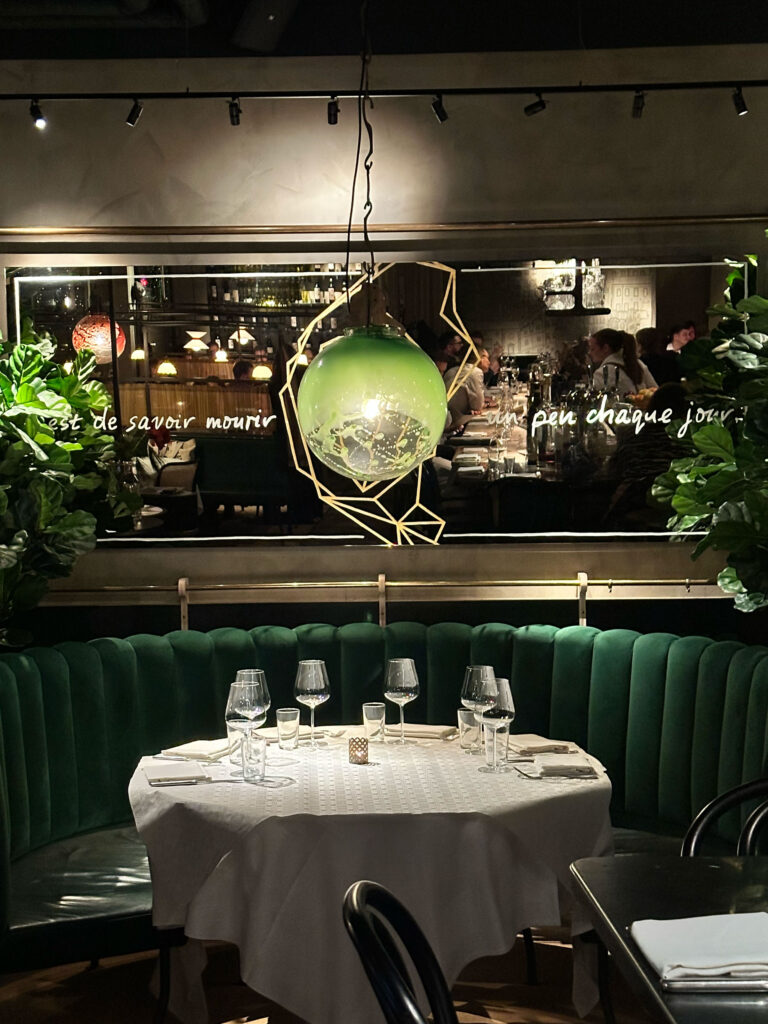
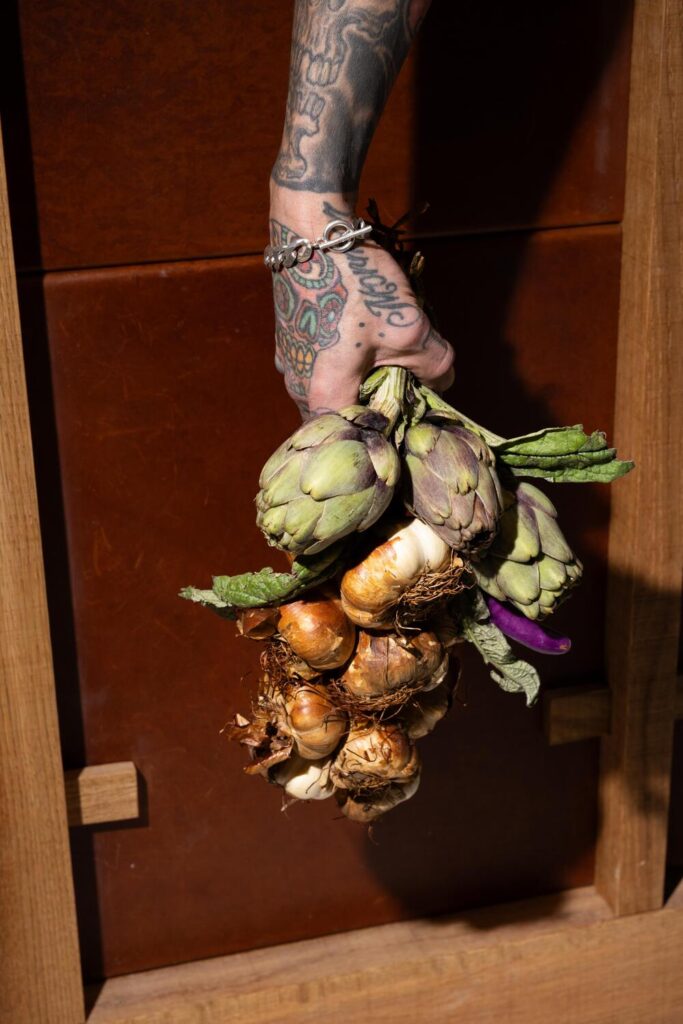
A Night at Black Milk – Stockholm’s Most Theatrical Omakase text Jahwanna Berglund images courtesy of Black Milk There are meals, and then there are experiences. Black Milk Gastro Bar is unmistakably the latter. Tucked away in Stockholm, yet worlds apart from the polished sameness of the city’s fine dining scene, Black Milk doesn’t just serve food, they perform it. With the poetic tagline “taste lives in the beholder,” the evening unfolds like a play, where each act is a new flavor, each bite a story, and you, the guest, become part of the script. When you step into Black Milk, there’s no menu to choose from. Instead, you’re greeted by the råvaror, the ingredients of the night on display across the counter and wall. Like clues in a mystery, they offer glimpses into what’s to come: jet-black Peruvian mint, thick cuts of parrotfish, Ethiopian kale, Japanese chili, and curious jars filled with yuzu, coconut, and black Russian caviar. The room hums with quiet excitement. The scene is set. Omakase – A Trust Fall in Flavors Black Milk operates under the Omakase principle, a Japanese tradition that translates to “I leave it up to you.” Rather than ordering à la carte, guests entrust the chef with full creative control. It’s an invitation to surrender expectations and in return, receive something far more intimate and daring. This is not fusion. It’s something more instinctual, more emotionally driven. It’s global storytelling told through food by chefs and sommeliers who’ve wandered the world not just to collect flavors, but to understand them. At one point in the evening, I’m handed a plate with parrotfish gently cooked and paired with a dark chocolate mole, bold, rich, and surprisingly delicate. Ethiopian kale arrives next, buttery-soft and tinged with an unexpected garlic flavor and the fresh sourness of lemon. Later, a scoop of yuzu gelato topped with olive oil and black caviar shocks my palate awake: creamy, salty, cold, unexpected. I feel like I’m in Tokyo, Addis Ababa, and Lima all at once. And yet, it never feels forced. Every course is timed with cinematic pacing, each ingredient introduced like a new character. The sommeliers narrate as they pour natural wines, rare bottles, unexpected pairings and guide you through the story without ever overshadowing it. A Stage for the Senses Black Milk is not about indulgence. It’s about curiosity. It’s about chefs who are genuinely passionate and not about trends, but about flavor, people, and memories. In a city often defined by its minimalism, Black Milk dares to be maximalist in feeling. It’s not just a restaurant. It’s a mirror held up to your senses that asks you to feel more, taste more, and think less. And yes, while this experience is deeply personal, emotional, and guided by the senses, I’d be lying if I said I didn’t reach for my phone more than once. With the perfect lighting and presentation of each dish plated like a miniature set design on a theatre stage, the camera roll quickly filled with Instagram-friendly moments. Call it a modern standing ovation. If you’re tired of the predictable, if you’re craving something emotional and alive, step inside. At Black Milk, the play is always about to begin. blackmilkgastrobar.com

Culinary

Copine Reopens in Stockholm — A Renewed Rhythm of Taste and Togetherness

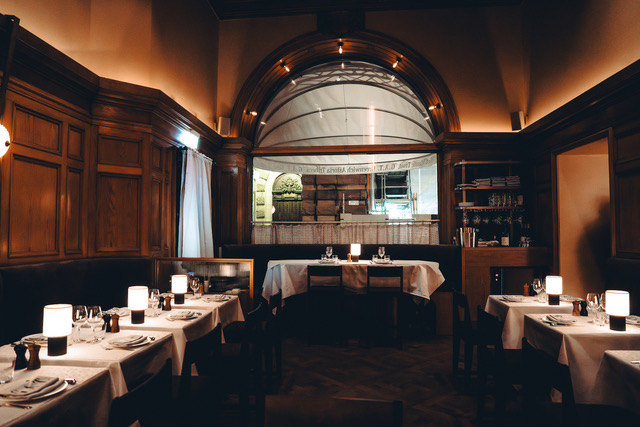
Copine Reopens in Stockholm —A Renewed Rhythm of Taste and Togetherness text Jahwanna Berglund  After a summer spent quietly reinventing itself, Copine has reopened its doors at Kommendörsgatan 23, welcoming guests back to one of Östermalm’s most beloved dining rooms now with a fresh rhythm, a new food bar, and a more open, social atmosphere. image courtesy of Copine The trio behind Copine — Jim Hammargren, Jacob Nermark, and Jonathan Mattsson — has used the break to refine both the space and the experience. “We’ve wanted to bring more life to the bar for a long time,” says Hammargren. “Now we’ve created a space where you can just drop in for a glass of wine and still feel the full Copine experience. It’s going to be so much fun to welcome both regulars and new guests again.” The interior has been reshaped with new levels, warmer lighting, and a sleek 15-seat food bar overlooking the kitchen designed to blur the line between dining and gathering. The renovation mirrors Copine’s philosophy: local ingredients, elegant simplicity, and human connection. At a recent press lunch, I got a first taste of the new menu, a reflection of the team’s grounded creativity. The classics remain (the famous corn bread and beef tartare are still there, thank God), but the menu now feels more playful and personal. From Trombonzucchini with aged Manchego and pine nuts to Pigvar with Pil Pil and citrus confit, each dish carries a quiet confidence. The Tagliatelle with braised rabbit and Swedish grapes and the Duck with Pak Choi and hot apricot sauce balance Copine’s hallmark finesse with a new sense of spontaneity. “We’ve adjusted rather than changed,” says creative chef Jacob Nermark. “Some dishes stay because they’re part of our DNA, while new ones bring more of our own personalities into the mix.” For Jonathan Mattsson, who oversees service and wine, the renewal is about flow creating a seamless rhythm between the bar and dining room. “It’s not about becoming a bar,” he says. “It’s about giving guests more ways to experience Copine — whether you come for a glass, a full dinner, or just stay to see where the evening takes you.” The new Copine feels both intimate and alive, a place that invites you to linger, share, and rediscover why the simplest things, done well, still feel like the most luxurious. CopineKommendörsgatan 23, Stockholmwww.jimjacobrestauranger.se/copine

Culinary

AKOKO: A Journey Beyond Borders

AKOKO: A Journey Beyond Borders Text Jahwanna Berglund                   Seated just in front of but slightly separate from the quiet choreography of the open kitchen, I knew I was in for a taste ride I had never experienced before. There’s something admiring about the way each dish is completed at Akoko, like watching a ceremony unfold. As I sat watching, I felt the curiosity build: What does West Africa taste like when interpreted through the lens of fine dining, without losing its soul? Coming from Sweden, where finding authentic African cuisine is rare and finding it at this level, near impossible, I had no real blueprint for what to expect. My ideas of African food were mostly shaped by home-style stews, market food, or community meals. But Akoko didn’t aim to replace that familiarity. It aimed to honour it and amplify it. In doing so, it expanded my understanding of what African food can be.   You don’t simply enter Akoko, you step out of London entirely and into founder Aji Akokomi’s deeply personal vision. Nestled in the heart of Fitzrovia, the Michelin-starred restaurant offers more than a meal. It’s a sensory odyssey, one that reaches back to ancestry and forward to possibility, stitched together with fire, fermentation, and finesse. The space is warm and grounded. Earth-toned walls, hand-carved wooden accents, woven textures, everything seems chosen not to impress, but to belong. There’s no performative spectacle here. No heavy-handed branding. Just an atmosphere that says, “you’re welcome here. Stay a while”. And so I did. When thinking of African cuisine, my mind immediately drifts to Jollof rice, vivid, tomato-rich, warmly spiced. It’s a dish synonymous with home, celebration, rivalry even (ask a Nigerian and a Ghanaian who does it better). So when Akoko’s version arrives, I brace myself. How do you reinterpret something so iconic and so personal, for a Michelin-star audience? The answer comes in a shallow, artfully plated bowl. The rice is perfect: smoky from the stock, layered in depth, and full of that unmistakable Jollof intensity. But here, it’s part of a larger symphony paired, unexpectedly and yet seamlessly, with a bold red wine from South Africa’s first female wine producer. The pairing is more than clever, it’s poetic. It marks one of the many moments when I realise: every detail at Akoko is a continuation of a larger story. The tasting menu unfolds like a landscape. From the northern Sahel to the coastlines of Ghana and Nigeria, each course acts as a geographic and emotional waypoint. Cashew cream made from nuts soaked in goat’s milk for two days is one of those quiet, understated showstoppers. It’s tangy, nutty, and smooth and almost meditative in flavour. Then comes grilled plantain dressed with a scotch bonnet kick that doesn’t scream heat but rather hums beneath the sweetness. These aren’t dishes trying to be exotic. They’re elemental, anchored by respect for the ingredient, the technique, and the memory behind them. And just when I think I understand the rhythm of the menu, caviar arrives. But not as an indulgent afterthought.Nestled in fermented maize, it has smokiness, salt, and a subtle funk that connects it back to traditional fermentation practices found across West Africa. It feels both luxurious and deeply rooted, something I didn’t know was possible until I tasted it. Then dessert arrives and shifts the emotional tempo. Nutmeg ice cream, a single scoop that is soft, aromatic, and gently spiced becomes a closing act that lingers like a lullaby. It’s comforting, ancient, and yet completely new to me. It tastes like memory and imagination at once. What Akoko does is rare. It doesn’t translate African food into something more “palatable” for a Western audience. It trusts the food. It lets the ingredients speak. It treats elements like ogiri, suya spice, grains of selim, and smoked pepper with the same reverence French kitchens reserve for truffles and aged cheeses. Under the guidance of head chef Mutaro Balde, the kitchen manages to bridge fine dining and cultural depth with sincerity, not spectacle. For me, Akoko was more than a culinary experience. It was an emotional one. It reminded me that food is a kind of language that travels across borders, generations, and senses. And if you listen closely, you realise you’re not just eating, you’re being told a story. Akoko doesn’t whisper that story. It sings it.

Culinary

Where Purity Meets Precision: Inside the AI-Powered Water Experience at Mandarin Oriental Palace, Luzern

Where Purity Meets Precision: Inside the AI-Powered Water Experience at Mandarin Oriental Palace, Luzern text Janae McIntosh If you’ve ever questioned what the future of five-star hospitality looks or tastes like, it might just begin with a glass of water.   At Mandarin Oriental Palace, Luzern, the definition of luxury is undergoing a quiet but powerful shift. In partnership with Swedish sustainability pioneer Nordaq, the historic lakeside hotel is now home to the world’s first AI-driven water filtration and bottling system, a groundbreaking innovation unveiled earlier this summer in an intimate press presentation hosted on-site.Filtered down to 0.03 microns, Nordaq’s new NQ600 unit delivers water so pure it rivals bottled imports and eliminates the need for them entirely. Installed behind the scenes, this intelligent system now supplies every room, spa, fitness area, and dining space across the hotel with crystal-clear still and sparkling water, locally sourced and refined on-site.But what makes this moment truly special is not just what’s being filtered out, it’s what’s being added in.From the first sip in your lakeview suite to the final pairing at Omakase Restaurant Minamo, water (and Champagne) becomes an intentional part of the sensory journey. Tucked away in an intimate corner of the hotel, Minamo presents a multi-course Japanese tasting experience where every detail is choreographed with the same precision as a kaiseki meal. Here, Nordaq’s ultra-pure water acts as a subtle companion, cleansing the palate, elevating each note of umami, and never overpowering the chef’s creations.“We didn’t want sustainability to be a footnote,” said Christian Wildhaber, General Manager of the hotel. “We wanted it to be embedded into every moment of the guest experience, from the ritual of tea to the pour of a simple glass of water.”Equipped with IoT sensors, the NQ600 automatically adjusts to different bottle shapes and sizes, tracking each pour and optimizing output to reduce waste. Guests will notice the elegantly branded bottles across the property, each one capped with a unique, geo-tagged QR code that opens a deeper look into the   sustainability journey. Transparency, in more ways than one.Johanna Mattsson, Group CEO of Nordaq, believes this is just the beginning. “What we’re doing here in Luzern is setting a new benchmark—not only for Switzerland but for sustainable hospitality worldwide,” she said during a lakefront lunch at MOzern, the hotel’s all-day restaurant where Nordaq water is served alongside seasonal dishes. “In 2024 alone, our systems helped prevent the use of 139 million plastic bottles. We’re not dreaming of change. We’re building it.”The collaboration reflects a shared vision: that the future of luxury isn’t about excess. It’s about intention. Mandarin Oriental Palace, Luzern, has transformed the most basic of human needs into a bespoke, high-tech service without sacrificing aesthetic, taste, or environmental responsibility.From the wellness rituals in the serene spa to the multi-sensory omakase menu at Minamo, this is a place where purity, performance, and pleasure meet.And perhaps the clearest sign of innovation isn’t what’s new but what’s no longer needed.

Culinary

MAMBO – A Vibrant Culinary Journey inPalma de Mallorca

MAMBO – A Vibrant Culinary Journey in Palma de Mallorca Text Jahwanna Berglund Mambo, nestled in the heart of Palma de Mallorca, is a culinary haven that takes diners on a delightful journey of Mediterranean flavours with a twist. Owned and runned by Brazilian chef Gabriel Conti and his charming wife, Elena Gil, this is a gem on the Palma restaurant map. With stylish decor. A mix of modern and rustic elements and an overall relaxed atmosphere. The restaurant boasts an expansive outdoor seating area, which offers stunning views of Palma’s picturesque streets.The staff at Mambo deserve special praise for their warm and genuine hospitality and attentiveness. From the moment we were seated, I was greeted with a smile and promptly presented with a menu. The waiters were knowledgeable about the dishes, offering insightful recommendations. Throughout the meal, they were attentive without being intrusive, which added to the overall pleasant dining experience. Mambo’s menu boasts an enticing selection of dishes that showcase the best of Mediterranean cuisine with a creative twist. The fusion of local produce and international influences made each dish a delightful surprise. I started with the Avocado Russian salad that was topped with shredded egg and the grilled Razor clams , which was a harmonious blend of flavours. For the secondi, me and my company shared the baby squids from Galicia. Galicia is located in the northwest Iberian Peninsula and is known for their way of serving octopus. For the main course, we opted for the Filet Mignon with Perigord sauce and the Grilled High Loin , a rich and aromatic masterpiece that transported my taste buds to the south of France. Matched with perfectly cooked mashed potatoes, a true symphony of flavours. The restaurant also offers a commendable variety of vegetarian and vegan options, providing a welcoming space for diverse dietary preferences.Mambo’s dessert selection was a delightful finale to the meal.The Curd Apple Cheesecake was a true highlight, with its tangy lemon curd, fluffy meringue, and buttery pastry. It was a refreshing and light option to end the meal on a sweet note.   While the quality of the dishes and the overall dining experience at Mambo justify the prices, it leans towards the higher end, making it more suitable for special occasions or indulgent outings. Nonetheless, the innovative culinary offerings and top-notch service make it a worthwhile splurge for food enthusiasts seeking a memorable dining experience in Palma de Mallorca.In conclusion, Mambo undoubtedly lives up to its reputation as a top dining destination in Palma de Mallorca. With its vibrant ambiance, diverse menu, and impeccable service, the restaurant offers a memorable culinary journey that is sure to please food connoisseurs and casual diners alike. If you find yourself in Palma and have an appreciation for creative Mediterranean cuisine, Mambo is a must-visit to satiate your cravings.

Scroll to Top