Charlotte Bodum Wants to Bring Back Ordning & Reda
Charlotte Bodum remembers working during her summer and Christmas breaks while growing up in shops that carried Ordning & Reda, the Swedish stationery brand. After a career in fashion, including 11 years in Paris, she now leads its creative direction from Switzerland, but every time she finds herself in Copenhagen, she visits their shop at Illum to observe how people interact with the products. “People want to touch a product, and they want to look inside a product and test out a pen,” says the creative director of the Swedish stationery brand, founded in Stockholm in 1982.
The creative director has plans to further expand the brand’s reach in Scandinavia, Stockholm being one of the cities on her radar. Part of the Bodum Group since 2003, the brand is also leaning on its parent’s name. “If you know a brand and you know the products and they’re good quality, you have maybe a little more trust in the brand,” she says.
Natalia Muntean: Why was this the right moment to revise it and give it a breath of fresh air?
Charlotte Bodum: My father has always had a lot of love for Ordning&Reda. He believed in it and always saw it as a really strong brand. I also grew up with it, working in the shops during my summer and Christmas breaks. Then I went into fashion design and worked for a fashion brand for a long time. Every time I spoke to my father, he would ask, “Wouldn’t you want to come help out with this brand? It really needs someone to take care of it. It has so much potential.”
When I stopped working at my previous job and moved back to Switzerland after 11 years in Paris, I thought I wanted to try my hand at something else and went into jewellery design, intending to start my own brand. During the pandemic, however, I got cold feet and decided to try with Ordning & Reda. I started slowly and went back and forth on what I wanted the brand to be. To me, it always felt like the brand needed to make more sense with Bodum, so that these two very strong Scandinavian brands would now be related.
NM: When you looked at the brand as it was, what did you want to keep and what did you want to change?
CB: I changed the logo slightly because I wanted the focus to be on the letters. The whole setup of the letters is so beautiful, and that is confirmed for me when I make new products, because of how nice they look with the logo.
Another thing I remember from my teenage years is walking into the shops and they were so colourful. I felt that was missing, especially for stationery. The range had become very muted, with too much black and white and too many neutral colours, and I wanted it to be a more colourful universe.
NM: Your vision is described as “playful simplicity.” What does that mean in practice when you hold an Ordning & Reda product?
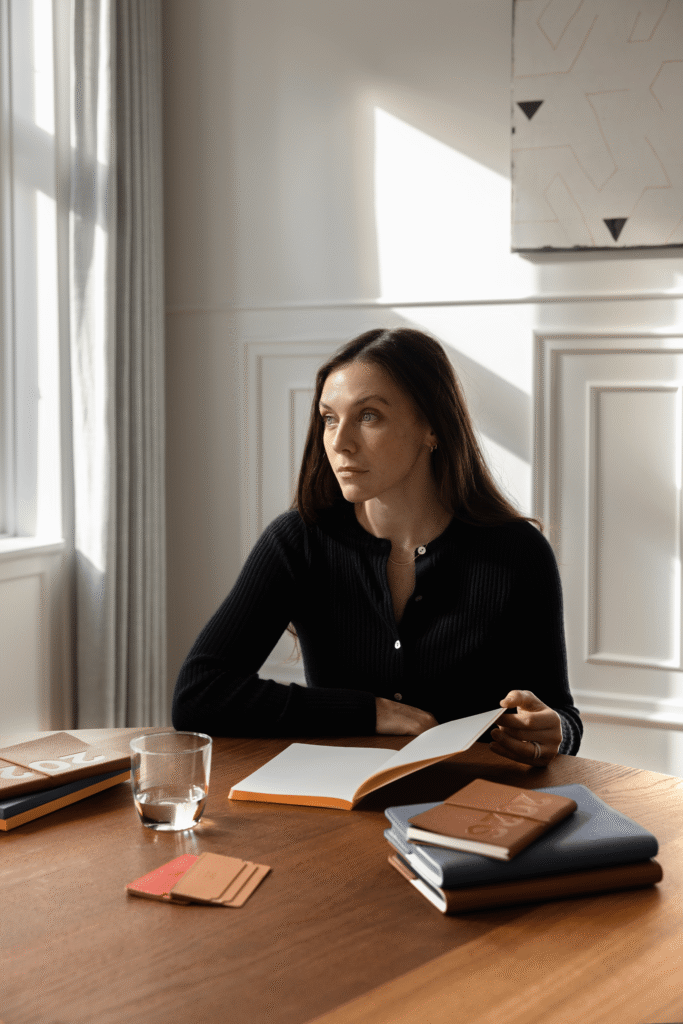
CB My approach is different because my background is in fashion, not product design, so I might start with the material. I then go back into the archives and, for example, find some of our old pieces and think of a new way to use them, perhaps elevating them a bit or finding a new technique.
One such piece was a card with a vintage design we found in our archives and decided to reinterpret. The card had a very simple cloud print: just a light blue background with white clouds. We then took each shape in paper and moulded it, which creates a little 3D effect. This small detail makes the card a bit different. I am focused on small details.
NM: You studied at Parsons and then worked at Balmain. What do you bring from that world into stationery?
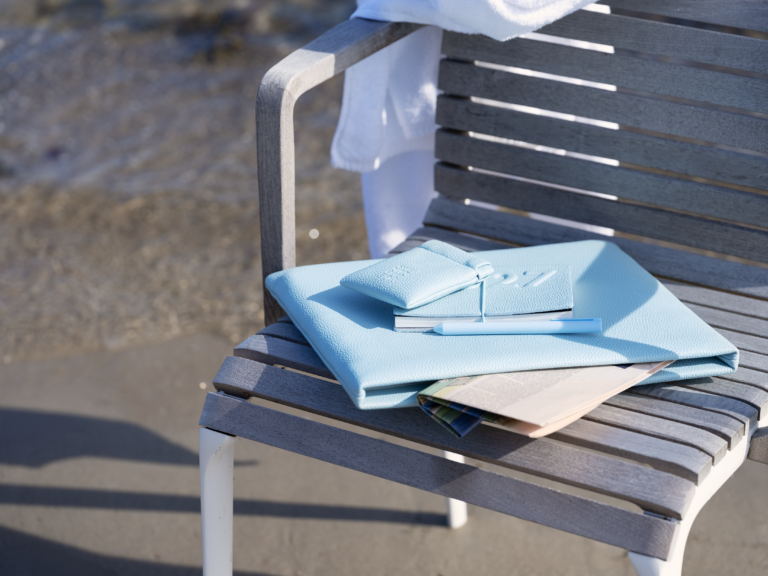
CB: I always explore different materials. My first approach was to find better-quality leather and a leather alternative. I first looked into vegan leather, but I realised that we are still producing new material that way. So we decided to use leather leftovers. I found a company that takes leftovers from the shoe and furniture industry, grinds them down and makes new sheets of leather. I worked with leather a lot in the past, so finding out how to use it on a notebook or a pencil case is a different approach, but an interesting one.
NM: What was the biggest challenge when changing mediums?
CB: Probably finding out what I could do that is a little different. It is also a hard sector, because many people moved away from using pen and paper, so at times I doubted whether anyone would still use a notebook. But now I feel there is a bit of a wave of “let’s go back to pen and paper and put our thoughts down on a piece of paper.”
NM: What do you look for when you visit your suppliers?
CB: I have always liked going to the supplier, even in my previous job. Suppliers have their own techniques and ways of doing things, and seeing how something is made gives me new ideas.
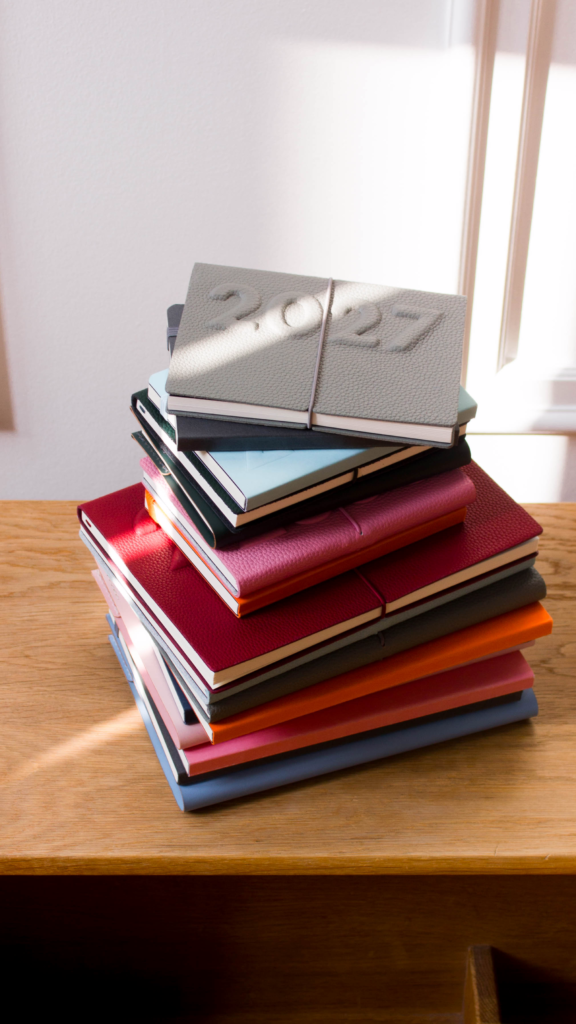
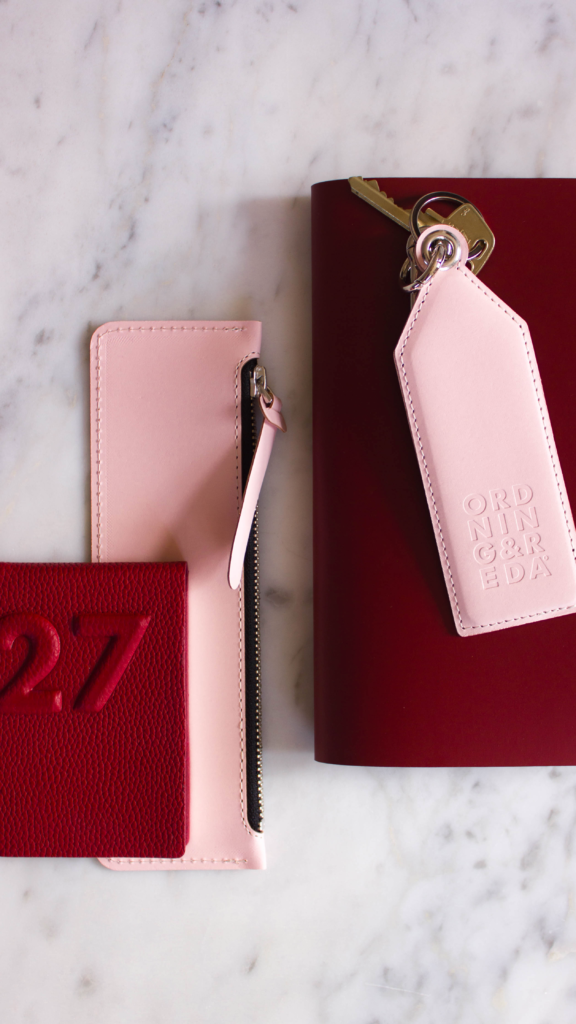
The diaries, for example, are still our best seller; they are the product people come back for. For the 2027 collection, I decided to lift the numbers on the cover. Instead of being pressed into the leather, they now come out of it. That was a different challenge: how do we, with the supplier, figure out what goes inside? This happened during a meeting in Asia. Our contact there is in communication with my team and me every day, but there is also a lady sitting next to her who makes the samples. Even if she does not speak English, she shows me, “Oh, we can do this.” We talk with our hands, and they might grab something or quickly make a sample for me and ask, “Is this how you want it?” Those moments are important.
NM: Is there one object in the new collection that captures the new direction?
CB: To me, the new direction lies in the whole idea of the things we carry around with us every day, much like a handbag with everything in it. Whether it is the pencil case, a notebook that matches your notebook cover, or something you have made your own by mixing and matching colours, it is all the paper products: the notebooks and still the diaries. It was important to me to keep certain things similar to the way they were.
NM: You’ve also launched home products, a laundry bag, for example.
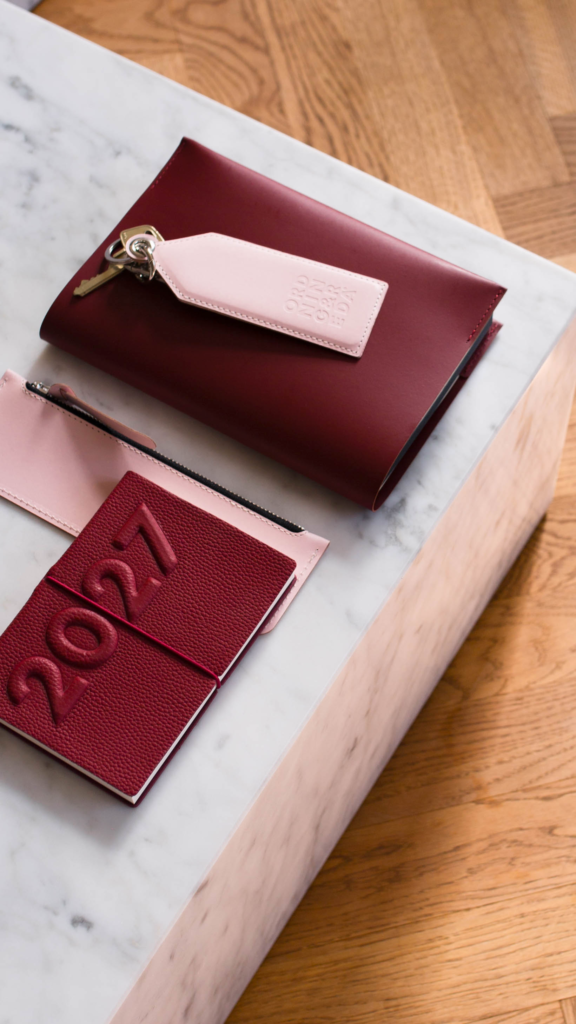
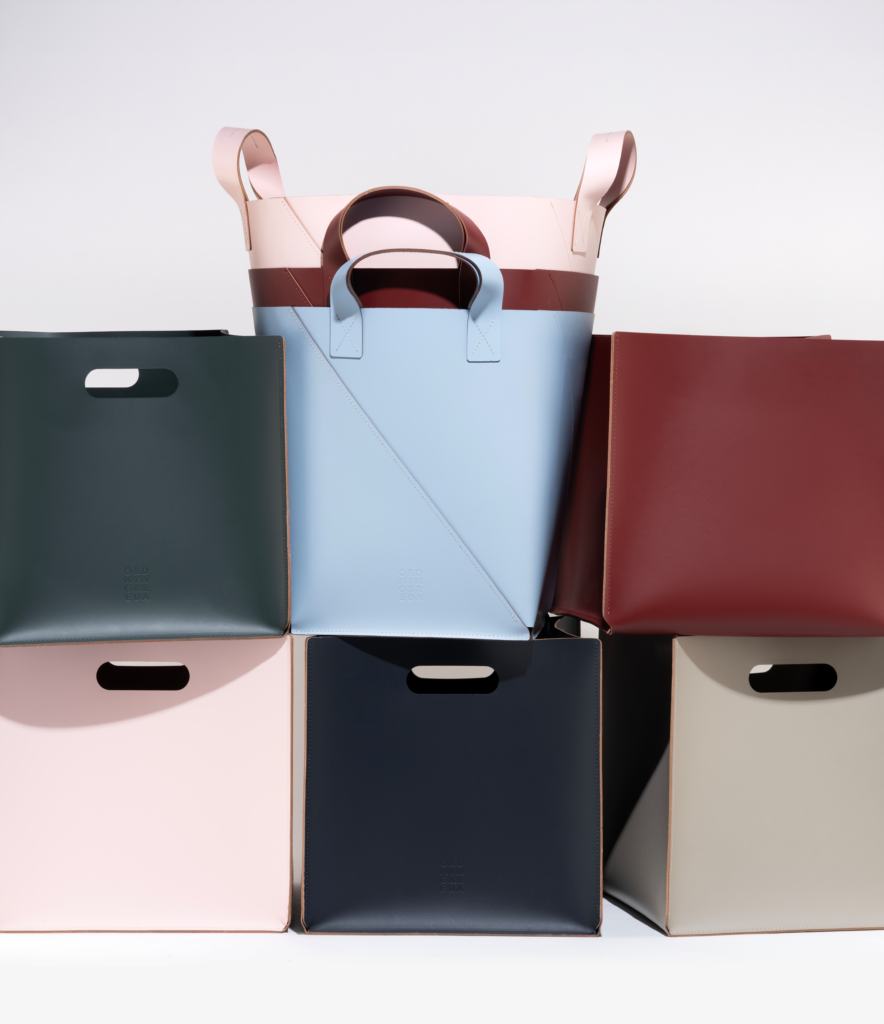
CB: Yes, I wanted to see whether customers are interested, so I wanted to try different types of organising products. In the end, whether it is for your home or your office, those spaces overlap nowadays, and your home office is maybe as important as your work office. The laundry basket was, for me, another item that makes things look a little nicer and more organised.
NM: Are you planning other home objects?
CB: I think so. I am in the stage of testing different lines, and it will be hard in the beginning to see what will definitely work. Customers are very focused on our diaries.
NM: You started as creative director in 2025, and also opened the first shop in Copenhagen. Tell me more about it.
CB: We had an opportunity, through Illum in Copenhagen, to open our first shop. That gave us another reason to really push through, because it was a good chance for the brand to be seen in Scandinavia again.
NM: Is that the only physical shop?
CB: We opened at Selfridges in London a month ago. It is a pop-up for six months, so we will see how that goes. We have also had a pop-up in Tokyo for a month. Japan is so strong in stationery that it was really exciting, and I think people there reacted to the colours. They like the colourful universe, which is nice to hear.
NM: People are going back to writing on paper and using real pens. Is that a trend, or a backlash to everything happening with AI? Do you think it will last, and do you take it into account in your future collections and strategy?
CB: I wouldn’t necessarily say it is because of AI. I would say it is more a reaction from a younger generation that does not know a world without all this technology. I still grew up going to school without a computer, at least for the first part, and then came the learning to type, the big screen and trying to figure out how to use a computer. Nowadays children learn from about five years old. That generation has so many opportunities through technology, but at the same time I think they may feel slightly cheated, for not having this quietness and a break from it, such as going home from school and not being in contact.
I do feel there is an interest in having a notebook and writing things down or sketching. You might not be good with your hands, but you can write something down even if your handwriting is terrible.
NM: You’ve said that a notebook offers a sense of calm and connection. Who do you picture using these products?
CB: What I have seen at Illum is that our customers are a wide range of people of different ages. For some products it is a 15-year-old girl, and for others a 70-year-old man who comes in wanting to buy a diary. Maybe he gets one every year, but then he sees this one and is open to buying something different, which is nice.
NM: Besides laundry bags, you’ve also talked about school essentials for children. Is that a direction you want to go in?
CB: Yes, I am working on a kids’ line at the moment, but it is a longer process because of the testing involved. There are so many products for kids, but I want to make something simple and easy to use. I always think about whether it is easy to clean, for example, because that is another thing with kids: you have to be aware of all of these details.
NM: What kind of products are you thinking of, and what about colours and materials?
CB: Bags and backpacks. We are now working on one based on our grown-up backpack, and I have made a mini version of it, which is very cute. So far I have only done two colours for kids, but I will probably use some of the colours from the regular line as well. I want to make it colourful, and I also want it to be customisable in some way.
NM: Which markets matter most to you, and where are you looking for retail partners?
CB: Scandinavia is important to me, mostly Denmark and Sweden, since that is where the brand has always been best known. The UK has also always been a big market, and people there are happy to see the brand come back.
The UK still has a much stronger tradition of sending cards, which I hope comes back, because it is nice to get something different in your mail sometimes. A Christmas card or a birthday card feels special.
Japan would be exciting. We did a month, but a month is not a long time. Hopefully the US will follow at some point, but for now I am focused on Europe, and then we grow. My approach is also to grow slowly, or to come back slowly.
NM: If someone picks up an Ordning & Reda product in ten years, what do you hope they feel?
CB: It is always linked to a little nostalgia for people who know the brand, and there is something nice about that feeling, such as keeping your diaries from different years and going through them once in a while. My mom has a whole collection of her old diaries, and every time we argue about something, she goes down to her basement and finds the exact details. It is cute, because you often argue about something silly and everyone thinks they are right, and in the end you have the proof because you wrote it down.
I hope people go back to writing down the things that are important, also for their children and the next generations. They probably won’t go through your old phone, but they can go through your diary or your notebooks. I still have some handwritten cards from my grandmother, and seeing her handwriting is special.
NM: It’s more intimate and more personal. It’s like a fingerprint. Do you use a diary or notebook yourself?
CB: Yes, I keep a physical diary, where I write down meetings and travels, both for work and personal. I also use a separate notebook for every meeting with my team, or when I am on a plane and think of something I want to sketch.
NM: What does success look like to you with Ordning & Reda?
CB: Probably that people come back, whether it is for one or five products they rebuy every year. I want it to be something people return to, whether it is a refill of a notebook or new pens after they have used up the old ones. That would be a success: people coming back.