Beauty Is Global: Three Days with YANGWANG

Beauty Is Global, Three Days with YANGWANG

text Sandra Myhrberg

YANGWANG invited me to come to Dubai and Abu Dhabi. I love to drive, but I’m no automotive writer, so this was a fun experience.

I spent three days with a brand that moves fast. BYD began as a battery company. Today, it is the world’s largest manufacturer of electrified vehicles, with around a million employees and some 120,000 engineers. YANGWANG, its luxury brand, has only been on the market for three years, and the Emirates was one of its first markets.

During the trip, Emirati and Chinese culture came together, with two cars at the centre: the U9 Xtreme, built for speed, which had just broken its own world record, and the ALTIOR, built for luxury, with a range of over 1,000 km on a single charge, long enough for a desert drive.

On the first day of my trip, we celebrated speed and the world record. On the second day, we saw the ALTIOR revealed at Emirates Palace. On the third day, I got to experience the cars’ power. First in the dunes of the desert, followed by testing the power of the U9.

Afterwards, I sat down with head designer Wolfgang Egger to talk design.

Egger has spent his career at brands with a long history. At Audi and Alfa Romeo, that history was the brief. At YANGWANG, there was none.

“In traditional brands with a hundred years behind them, the inspiration is the history,” he tells me over coffee, the morning after the launch. “Here, we had to ask where our inspiration would come from.” So they decided to go further back, to Chinese cultural heritage and the philosophy carried in its objects.

Stella Li, Executive Vice President of BYD, remembers what Egger told her when he joined: China has 5,000 years of history to draw on. You could see it in everything YANGWANG showed that week.
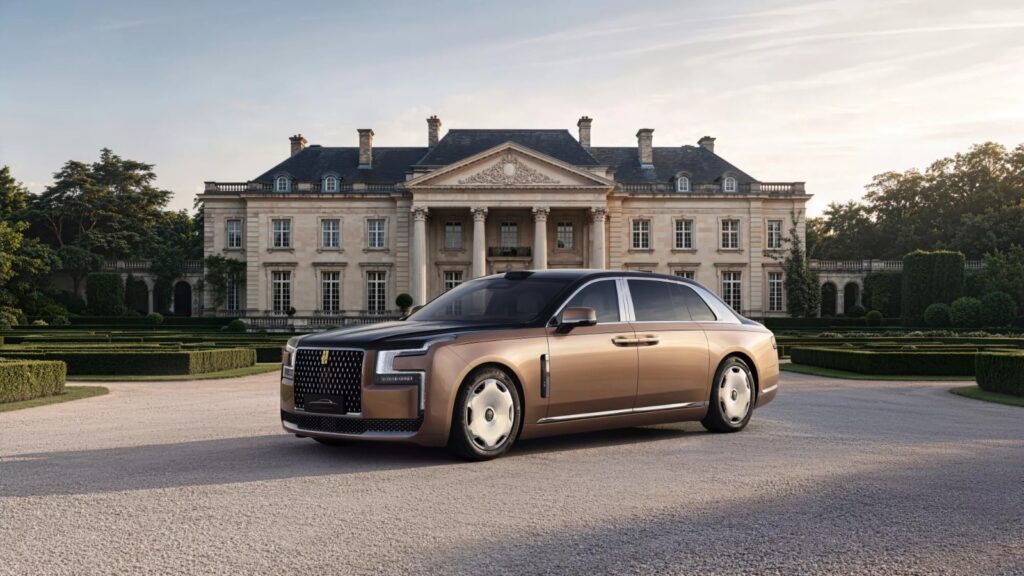
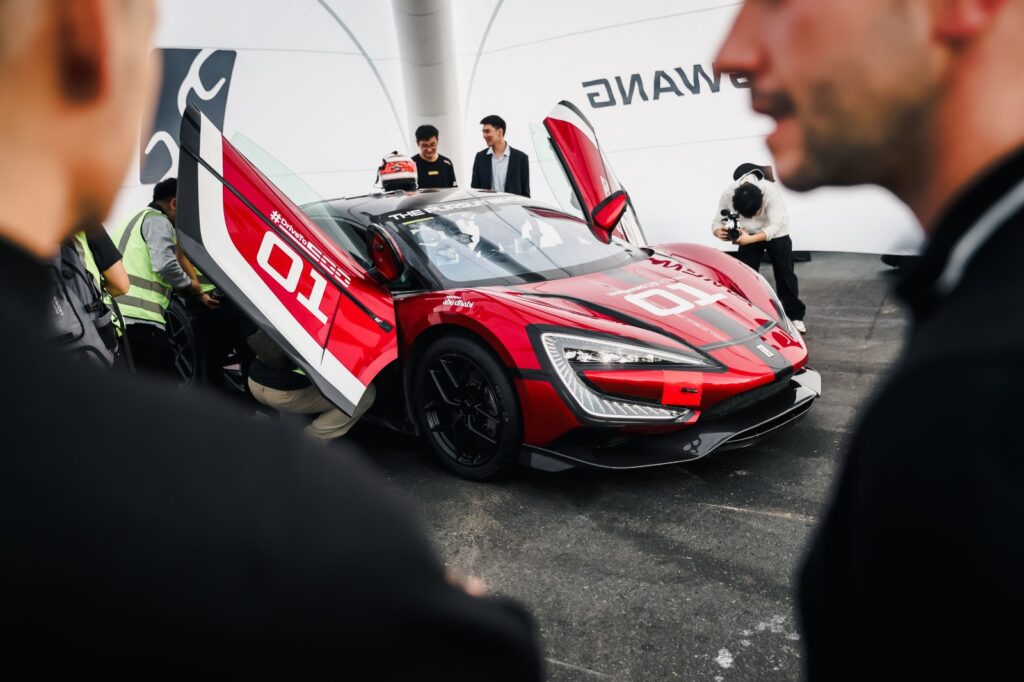
image courtesy BYD

A palace on wheels

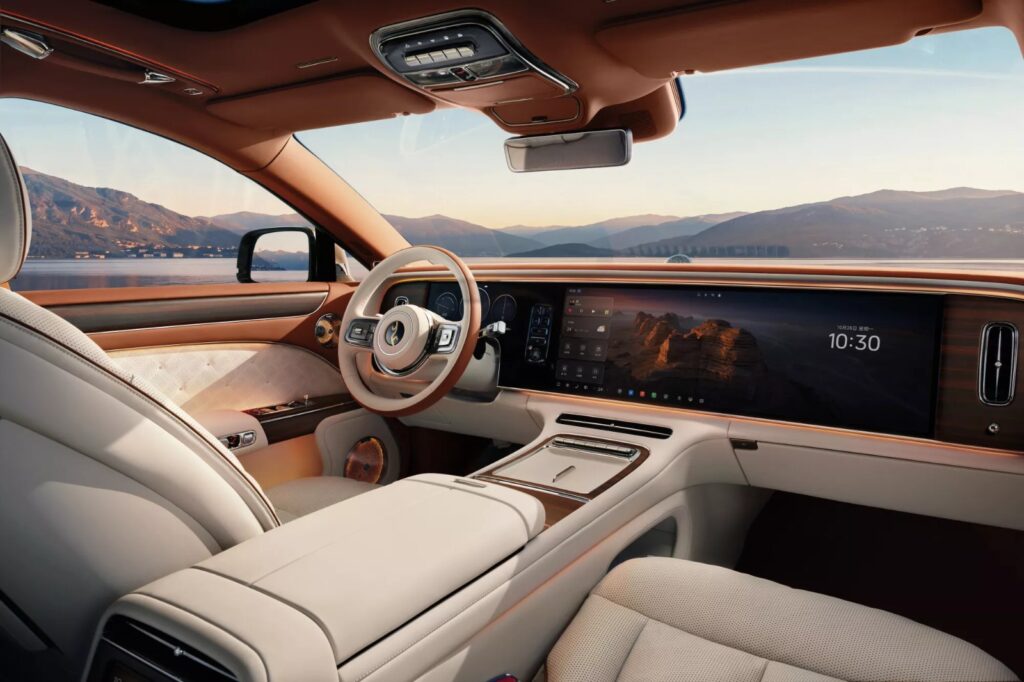
At 5.6 metres, the ALTIOR is a big car that doesn’t feel heavy. Asked how much he borrowed from Rolls-Royce, Egger is blunt: “Zero. It’s Chinese luxury.” He talks about architecture instead: vertical lines and a relaxed attitude.

Its name is Latin for “higher.”

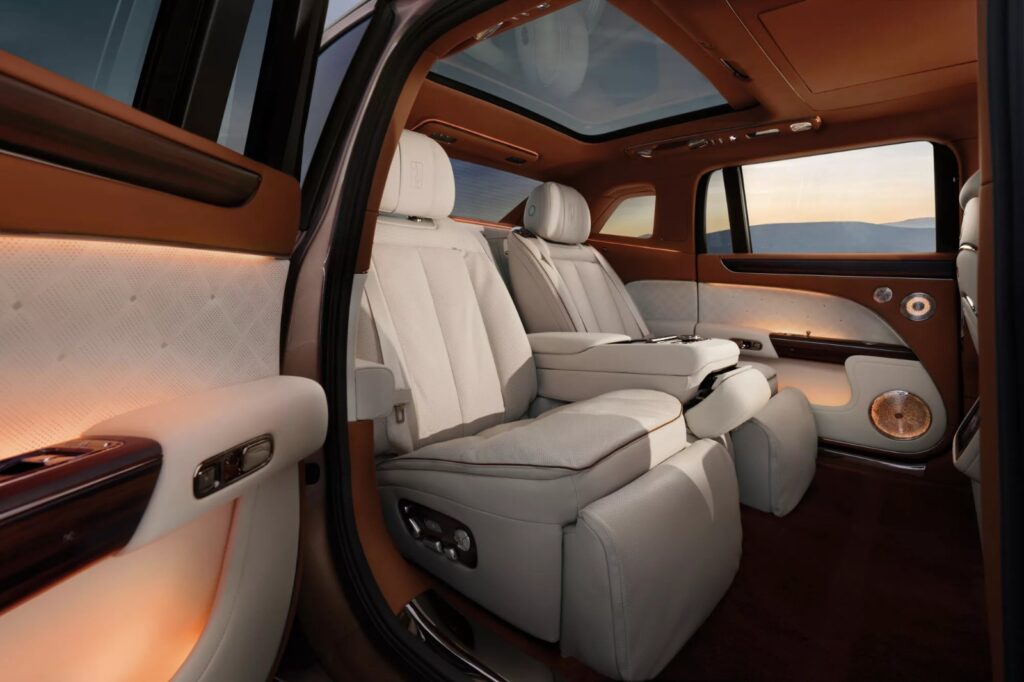
The details are where it gets interesting. Like jewelry, the grille is set by hand, piece by piece, and it catches the light as you walk around it. When you approach the car, twelve lights switch on, one by one. Inside, the air vents are polished yellow Hetian jade, and the seats carry Suzhou silk embroidery, clouds stitched with split threads. In the back, zero-gravity seats and one button that controls all of the lights, sounds and scents.

YANGWANG kept coming back to safety, which they call the greatest luxury. Four separate motors keep the car steady if a tyre blows at speed, and let it turn on the spot. If it ends up in water, it can float.

Fashion is local

I ask him how he makes Chinese heritage feel modern to an international audience. His answer could have come from a fashion house. “Fashion is local, and beauty is global,” he says. “A beautiful car is a beautiful car in China, Italy, Sweden, and the US.”

For him, beauty comes down to basics: proportions, angles, surfaces, and how they work with materials and colour. Then identity: a face you know at once and a familiar look across the entire lineup. On the U9 that face is the Time Gate: lines around the lights that pull your eye into a tunnel. He calls it a fourth dimension, inspired by speed. The ALTIOR is slower and calmer.

Made for one

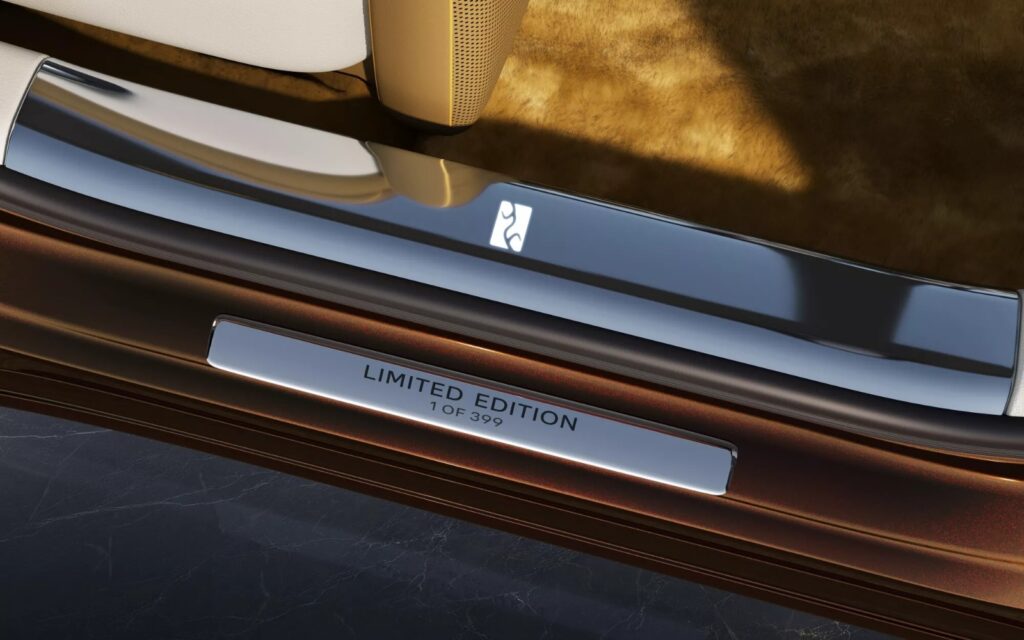
The first special edition, Shanhe Dingyun, is based on mountains and rivers inside a ding, an ancient Chinese bronze vessel used in ceremonies: brown and gold outside, jade inspired inside. Only a limited number will be made, for collectors.

I ask how personal an ALTIOR can become. “It’s not a mass production car,” Egger says. Personalisation is part of the design: handcraft, Chinese characters, stitching, porcelain, “every colour you can imagine.”

Scroll to Top