Emma François Grasset on Sessùn’s 30th anniversary: “The fascination remains unchanged”
Text by Natalia Muntean
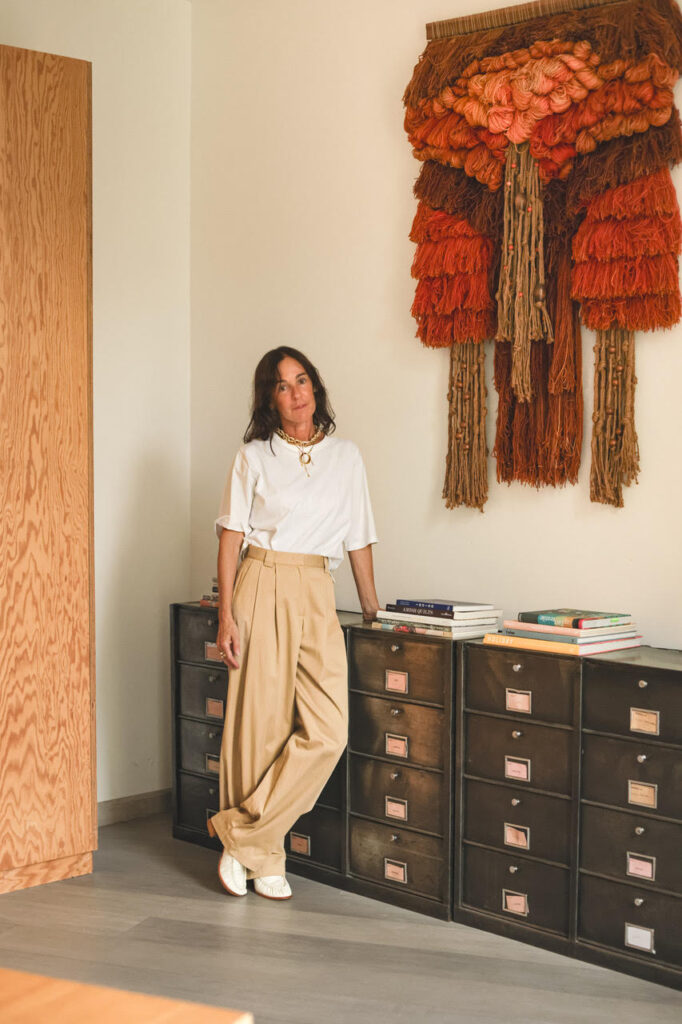
More than thirty years ago, Emma François Grasset set out on a journey that changed the course of her career and, most likely, her entire life. At the time, the Marseille based designer was studying economic anthropology, with a focus on how craftsmanship shapes regional economies. A trip to Guatemala, where she met people who weave, embroider and sew, sparked an interest in traditional skills that would later become Sessùn.
That training still informs how she looks at objects. “My studies taught me to look beyond the purely aesthetic dimension of objects and to understand what they reveal about a culture, a place, and a way of life,” she says. “Thirty years later, the way we work has naturally become much more structured, but that fascination remains unchanged.”
This year, to celebrate Sessùn’s thirtieth anniversary, the brand hosted a series of events during Paris Design Week, including the fourth edition of the Sessùn Prix de la Floraison Créative, whose brief this year was to reinterpret one of the brand’s most iconic pieces, the Divine bag. Grasset says the anniversary was never meant as a nostalgic look back, but as a way to show what continues to drive the brand: curiosity, encounters and an appreciation for craftsmanship.
Natalia Muntean: Why did you choose to celebrate Sessùn’s 30th anniversary during Paris Design Week rather than Fashion Week? What does that choice reveal about your vision for the brand?
Emma François Grasset: Paris Design Week felt like a very natural setting to celebrate Sessùn’s 30th anniversary, because the brand has always been shaped by a dialogue with disciplines beyond fashion: art, design, craftsmanship and architecture. We certainly didn’t want this anniversary to become a nostalgic celebration or simply a retrospective. What interested us was showing how far we’ve come, but also what continues to drive us forward: curiosity, encounters, an appreciation for craftsmanship and traditional skills. Ultimately, this exhibition reflects what Sessùn is today: a fashion brand, of course, but also a creative project shaped by a wide range of influences.
NM: A month on, what stays with you most from the event? What surprised you? Were there any reactions from visitors that you hadn’t expected?
EFG: What stays with me most is the emotion of seeing thirty years of history come together in one space, through such a diverse range of objects and craftsmanship. I was also deeply struck by the creative energy that the entire Sessùn team, along with all the contributors and artists, brought to imagining and bringing this project to life.
What particularly moved me was seeing how everyone made the project their own, bringing their individual sensibility and perspective. The artists offered very different interpretations of the Divine bag, while our teams worked to create a sense of coherence across all these expressions.
The visitors’ reactions were incredibly warm. Many commented on the exhibition’s quality, but also on how cohesive it felt as a whole. That response meant a great deal to me because it showed people could appreciate both the richness of the project and the common thread connecting its many expressions. I was also very happy to reveal a side of Sessùn the public doesn’t always get to see. The exhibition made us want to take the experience further and make these cultural encounters a more regular part of the brand’s life.
NM: Why was the Divine bag the ideal piece to entrust to a community of artists and designers?
EFG: The Divine is one of Sessùn’s most iconic pieces. It has a very recognisable design, but also a simplicity of form that lends itself to all kinds of interpretations. I loved the idea of taking a familiar accessory and inviting artists to transform it, reinterpret it, and sometimes even give it an entirely new purpose. It felt like a joyful way to celebrate this anniversary: taking an object that is part of our history and giving it new lives.
NM: How did you select the ten artists and designers invited to reinterpret the Divine bag, and what role did the 20 Craft Prize winners play in the project?
EFG: We invited ten artists and designers whose work we deeply admire, each bringing very different sensibilities and creative practices. Some had collaborated with Sessùn before, while others were more recent discoveries whom we wanted to involve in this anniversary. To broaden this perspective, we also wanted to celebrate the 20 winners of the Craft Prize, which was created to support emerging talents and give them the means to bring their projects to life. Their work reflected the diversity of skills, techniques and creative journeys we have supported over the different editions. What interested me was bringing these two dimensions into dialogue: the invited artists offering their interpretations of the Divine, and the designers and makers supported through the Craft Prize, whose pieces embody our commitment to passing on knowledge and encouraging experimentation. We gave everyone a great deal of creative freedom, without trying to impose a shared aesthetic. We wanted each piece to retain the distinct personality of its creator.
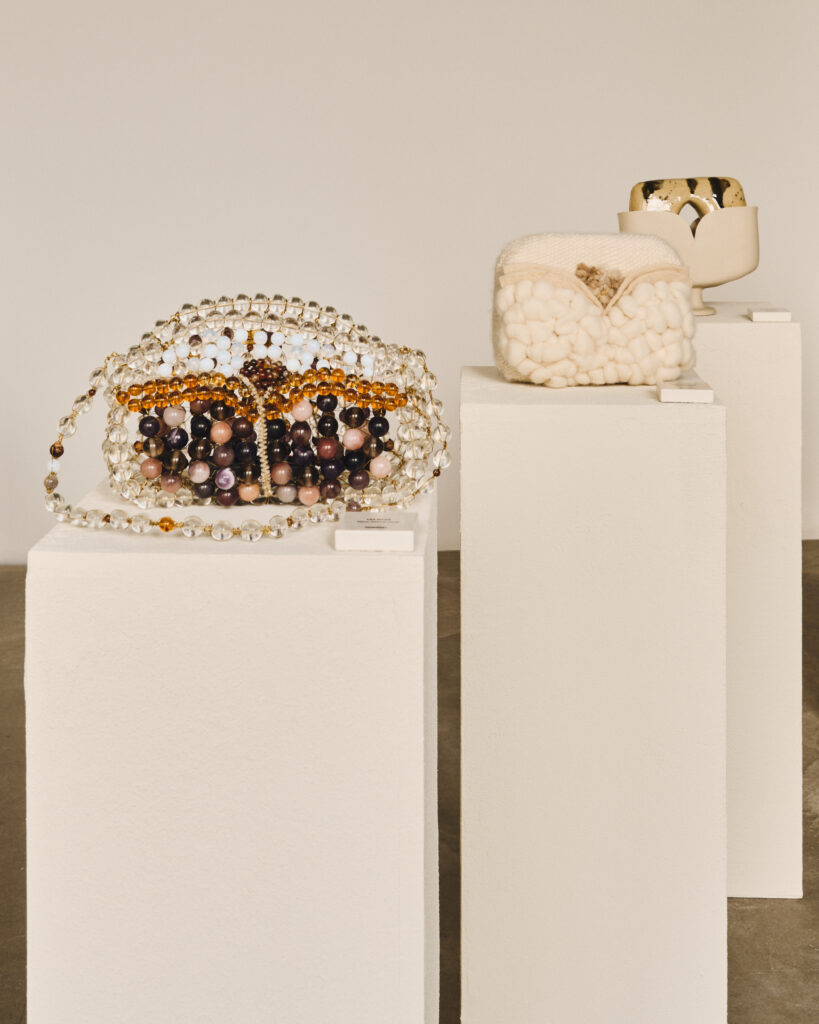
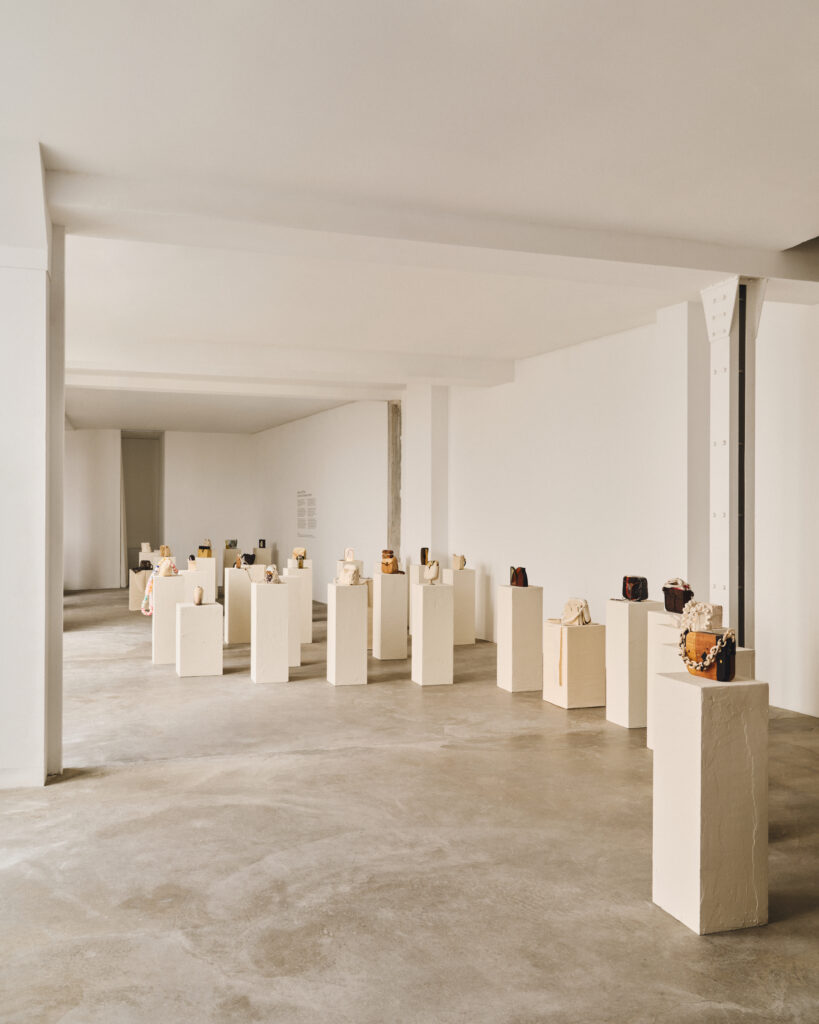
NM: How did it feel to see your own bag reinterpreted through so many different creative perspectives?
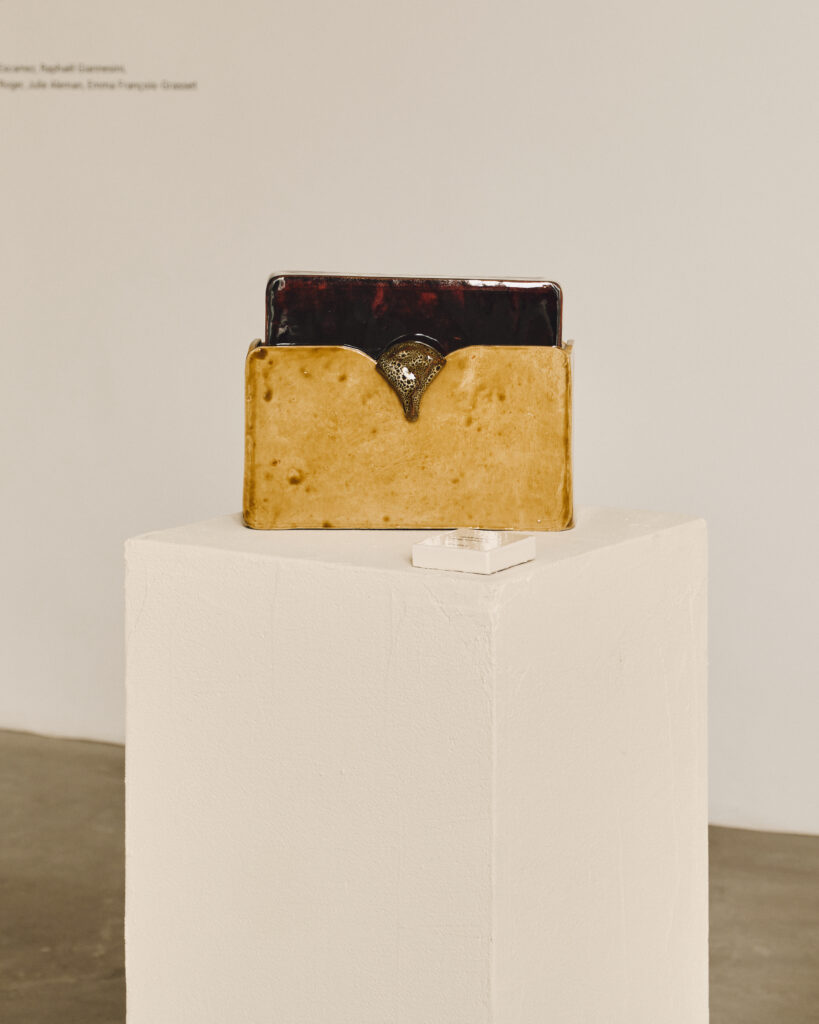
EFG: So much joy! We knew we had brought together very different creative personalities, but I hadn’t expected such an incredible variety of interpretations or such an exceptional level of craftsmanship. I loved seeing the Divine transformed into a sculptural object, a lamp, a watering can or even a bread basket. And discovering such a wealth of materials, techniques and craftsmanship!
NM: Why was it important to give the Craft Prize such a prominent place during Sessùn’s 30th anniversary?
EFG: Sessùn’s 30th anniversary was an opportunity to remind ourselves that our story is not just about collections or objects, but also about the relationships we build with the people who imagine and create them. The Sessùn Creative Flowering Prize reflects our desire to support creativity in a tangible way. It gives emerging talents the opportunity to develop an idea, produce it under the right conditions and present it to the public, which is often one of the greatest challenges when starting out.
For this fourth edition, bringing together all 20 winners as part of the exhibition added another dimension to the project. It allowed visitors to discover the diversity of creative worlds we have supported over the years and appreciate the richness of these individual journeys. I wanted this anniversary to look towards the future, giving space to those who are shaping the forms and craftsmanship of tomorrow.
NM: What made Marie Matsuura’s carafe stand out from the other creations?
EFG: The jury and I found it incredibly difficult to choose between the finalists. We selected Marie’s carafe for the elegance of its design and the exceptional quality of its execution. Marie Matsuura also managed to reinterpret the Divine with great sensitivity and precision, transforming it into an everyday object that is simple, beautiful, and functional.
NM: Craftsmanship has been central to Sessùn’s story since Guatemala. How has your approach to working with artisans evolved over the past thirty years?
EFG: My travels to Guatemala were truly formative. I discovered a different relationship with objects, the way they are made, and the beauty of the handmade gesture. I was fascinated by the skills passed down from generation to generation, the materials, the colours, and the place that handcraft held in everyday life.
In the beginning, my approach was very intuitive. I would bring pieces back from my travels, discover new techniques, and gradually begin imagining my own collections. Thirty years later, the way we work has naturally become much more structured, but that fascination remains unchanged. What interests me today is helping these traditions remain alive and find new expressions and uses, without confining them to a folkloric or nostalgic vision.
NM: As a purpose-driven company and a certified B Corp, how do you ensure that craftsmanship remains a genuine commitment rather than simply a marketing message?
EFG: A commitment only has meaning if it is reflected in the choices we make and the way we work. At Sessùn, our dedication to craftsmanship takes shape through our collaborations with artisans and artists, the Craft Prize, but also through our approach to materials, their origins and the traceability of our production chains. But we want to go further by helping to revitalise local textile industries, particularly wool and linen. This ambition brings together environmental and economic considerations with the preservation of traditional skills. Our status as a purpose-driven company provides a framework for continually improving our practices and contributing, in our own way, to the future of our industry.
NM: You studied economic anthropology and researched the impact of craftsmanship on regional economies. Does that background still influence your decisions today?
EFG: Yes, certainly, even if it isn’t always a conscious influence. My studies taught me to look beyond the purely aesthetic dimension of objects and to understand what they reveal about a culture, a place, and a way of life. I think that background has deeply shaped my approach to fashion. When I discover an object or a technique, I’m just as interested in how it was made as I am in its beauty. That attention to gestures, people, and the stories behind objects has remained a very important part of the way I work.
NM: You’ve previously spoken about the importance of books and museum bookshops as sources of inspiration. What are you reading at the moment?
EFG: I’ve always bought a great many books, from novels and essays to books on art, photography and architecture. At the moment, I’m particularly drawn to books about folk art, vernacular architecture and traditional techniques. My latest purchase was Habiter la Terre, a book exploring earth as a building material. I especially love the physical experience of books: the pleasure of turning the pages, returning to an image or discovering an unexpected connection.
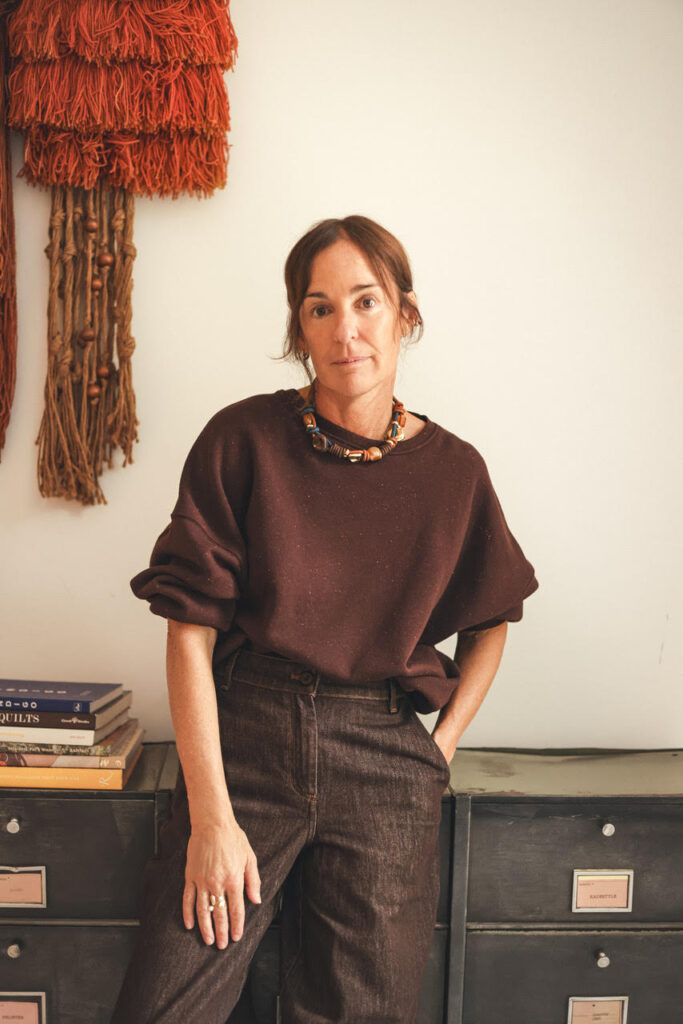
NM: Thirty years is a remarkable milestone in the fashion industry. What does reaching this anniversary mean to you personally?
EFG: It has all gone by so quickly! While preparing for this anniversary, particularly through our book and the work we did with the archives, I was struck by how consistent our story has remained, despite all the unexpected turns, changes and experiments along the way. Sessùn has evolved enormously, but I can still recognise something of my earliest intuitions.
Above all, this anniversary made me realise what an extraordinary collective adventure Sessùn has been. Behind every project are people, talents, personalities and teams who have grown alongside the brand and shaped it just as much as I have. Some have been with me for over twenty years, which I find particularly moving. I feel immense gratitude for everything we have built together. More than anything, that’s what gives these thirty years their meaning.
NM: Why do you see this moment as the beginning of a new chapter for Sessùn?
EFG: Because I believe thirty years of history have given us a new sense of confidence. We’ve built a strong identity, and we can now draw on that maturity to explore new territories. We’re continuing our international development, with the desire to introduce Sessùn to new audiences, while also deepening everything that makes the brand distinctive: our products, accessories, the spaces we create, our collaborations and cultural projects. The 30th anniversary exhibition was a wonderful opportunity to reveal the richness of this story. I would love for it to become the starting point for new encounters and experiences, rather than simply a one-off celebration.
NM: What would you say today to the young woman you were when you founded Sessùn in 1996?
EFG: I would probably tell her to keep trusting her instincts, even when she’s not entirely sure where she’s going. Not to be afraid of making mistakes, taking unexpected paths, or changing her mind. Looking back, I realise just how important those detours have been, just as much as the successes. And perhaps I’d also tell her to enjoy the present a little more, because thirty years really do go by so quickly! But I don’t think I’d give her much more advice than that. That sense of the unknown has also been part of what made the journey so rewarding.