Between Dream and Nightmare: An Interview with Francesco Casarotto of AGGLOMERATI
On 3rd of June 2026, during a press visit to the À PART Agency in Paris, the first thing that blew my mind in the middle room was the two masks that I saw displayed. One was made out of porcelain cups and plates and another one was bristled with teeth.
I first saw them as art objects calling to me. What are those? How do you wear them? I asked Anjali, the PR coordinator, who told me they were AGGLOMERATI. I had to note it down right away and felt strongly that this should have its own story.
I met up over coffee in Paris with its maker, Francesco Casarotto, on 15th of September 2026. I knew the masks had caught my attention, but what I didn’t know yet was how closely their making was tied to therapy, different inner voices and letting his feelings have a form through his artistic vision and efforts.
During the interview with Francesco, he explained that AGGLOMERATI began during sessions with his therapist. Together they explored the different voices in his mind and imagined each one as a character. He told me that, without his therapist and the work they did together, the project would not exist.
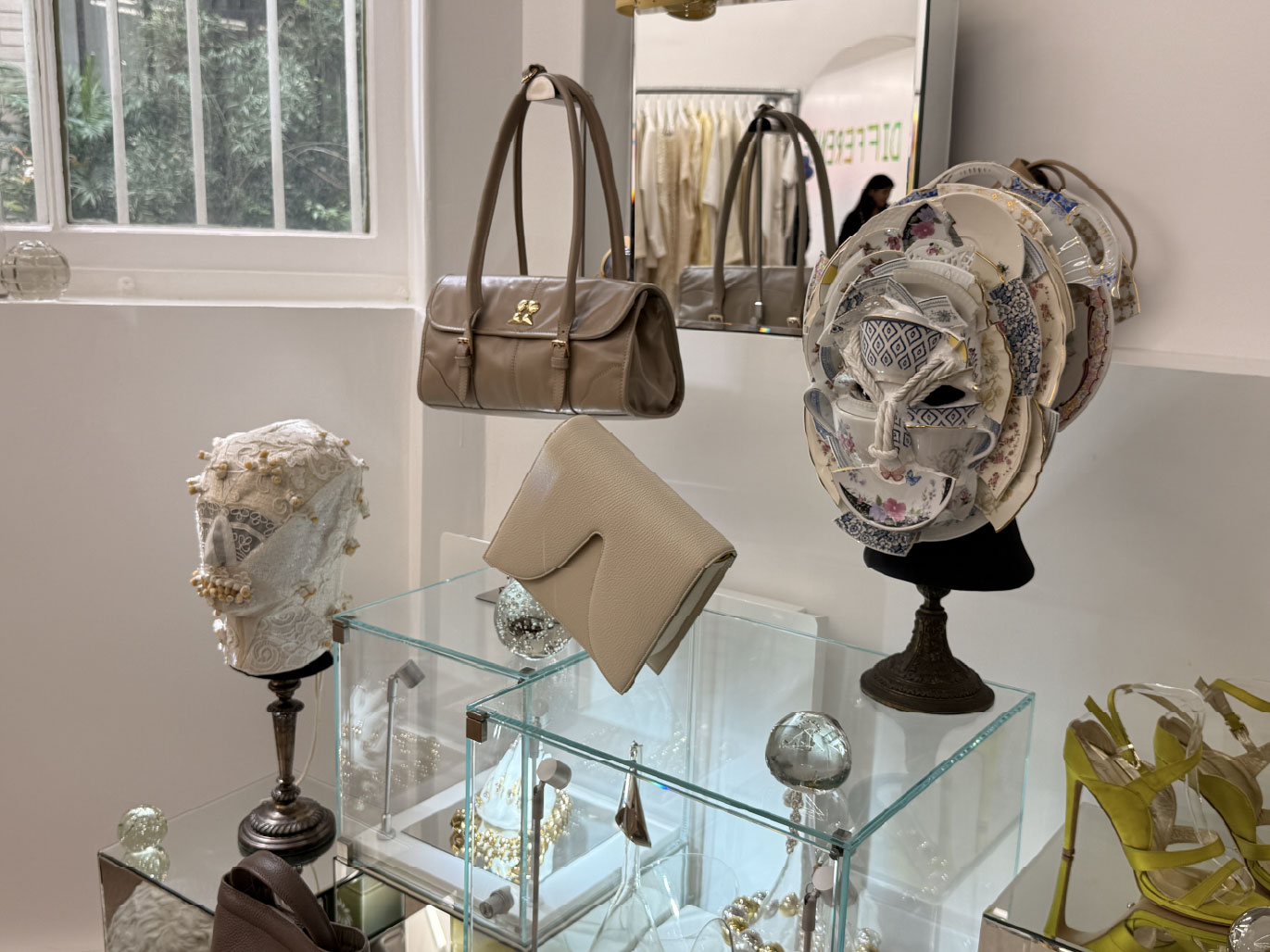
AGGLOMERATI masks displayed at À PART Agency
photography Ovlioxy Vleuryon
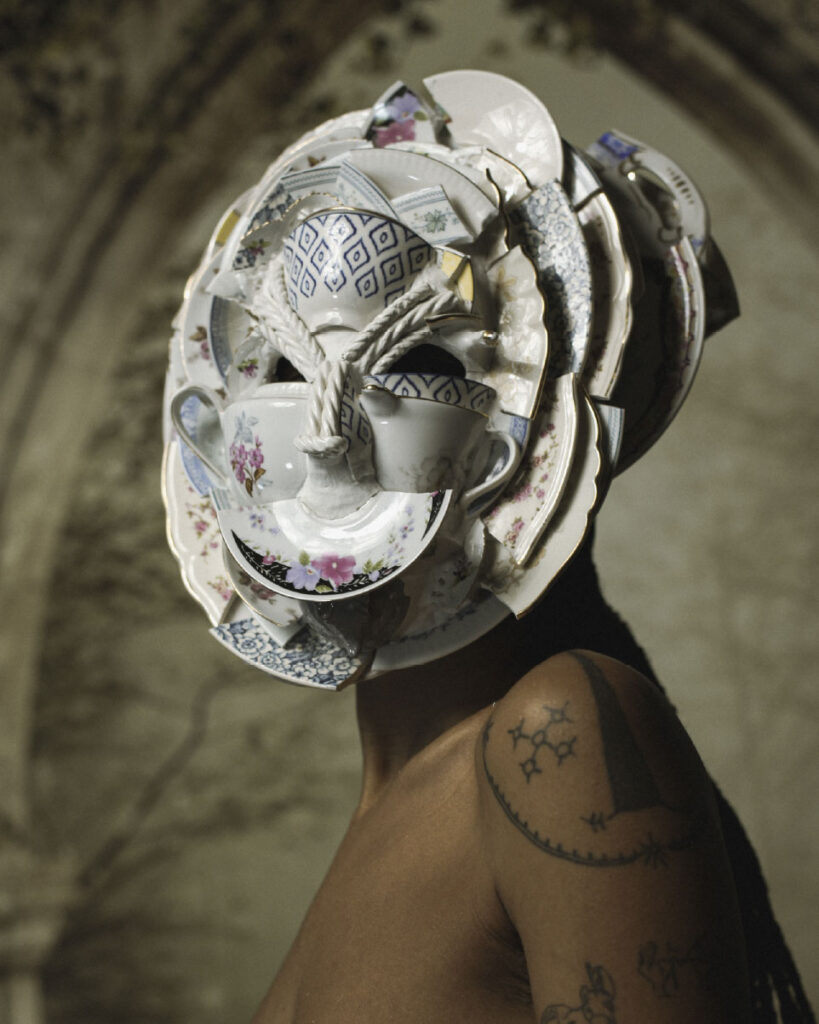
AGGLOMERATI mask
photography Omar Macchiavelli
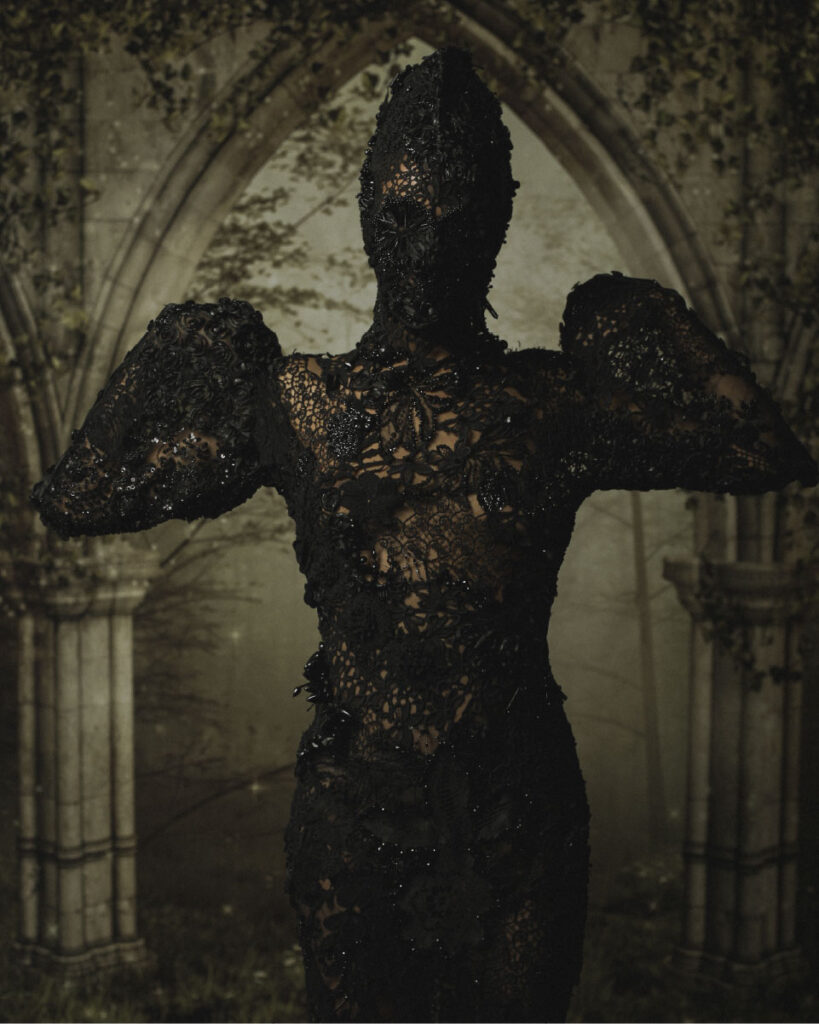
AGGLOMERATI piece constructed from black lace
photography Omar Macchiavelli
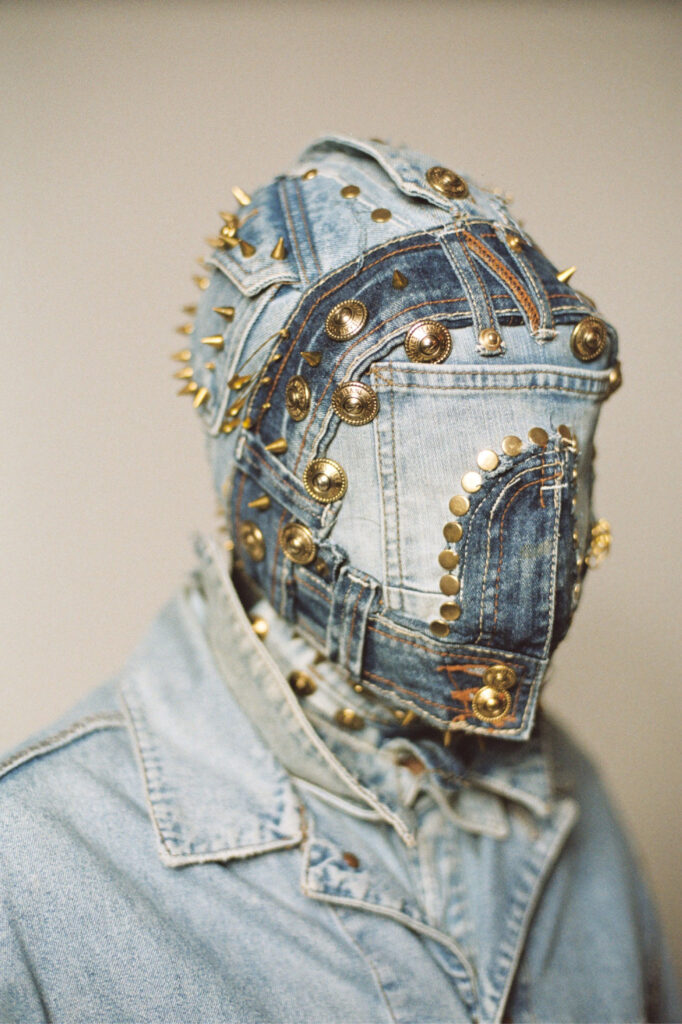
AGGLOMERATI denim mask
photography Omar Macchiavelli
Francesco started as a fashion stylist. He studied fashion design before moving into styling, and he was already making pieces by hand for editorials like hats, necklaces and jewellery. The first mask came while he was speaking with his therapist. Surprised by what he made, he made another one. Soon, friends who were stylists and photographers wanted to use the masks in their shoots. He began to photograph his creations himself, when he realized the the images from editorials weren’t carrying the vision.
The project started to grow around the masks. First into lookbooks, then into
outfits that help bring each character to life.
Francesco does not begin with a finished design in mind. He collects objects that he found while travelling, some vintage or second hand, others connected to family and brings them into his process. He starts working with what is in front of him, letting his creativity take a leap of faith and as the materials begin to take a form,
he works out how the piece should be finished. The original idea can change
along the way; that, too, is part of how a mask comes into being.
The technique changes with the material. Light pieces can be sewn onto fabric or elastic, irregular ones are held with thin wire. For heavy ceramics, such as the old dishes, he builds a base strong enough to support them. There is no single method to follow, and each object brings its own practical problem.
Many of the materials used have a story behind it. Pearls and wool came from his grandmother’s home, old dishes came from his family’s houses. He has also used shells collected in Cuba, pieces from Morocco, discarded fur, lace, nails, crystals and burned flowers. He remembers where he found each one. In the finished object a material can become a record of a place, a person or a moment. It’s his way of journalism in a way.
One mask took months to make. Francesco’s friends saved fruit seeds for three months; he dried them, fitted each with a pin and secured them with fine wire. The finished mask holds a small contribution from each friend. What might have been thrown away became an object built from time, patience and a shared effort.
One of the most personal masks began after his grandmother died. Francesco tried to remember her face without looking at a photograph, but his memories came as separate moments: her at the sea, at home, smiling or shouting. He cut details from different painted portraits and assembled them into a two-faced figure. To him, the result felt romantic; some viewers saw something frightening. He lets both readings exist.
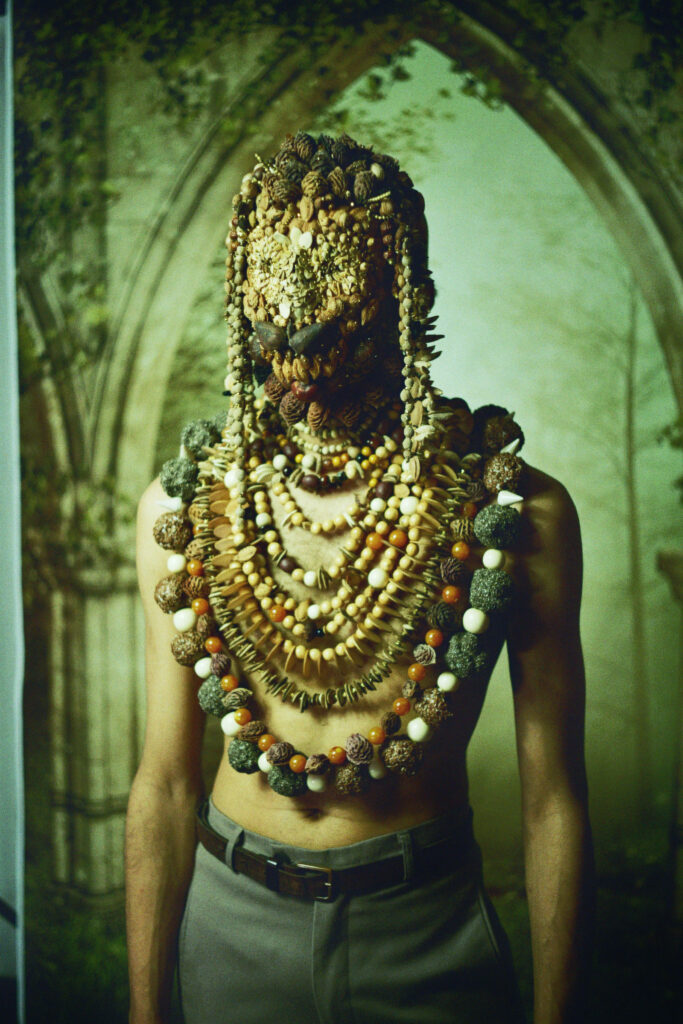
AGGLOMERATI seed mask
photography Omar Macchiavelli
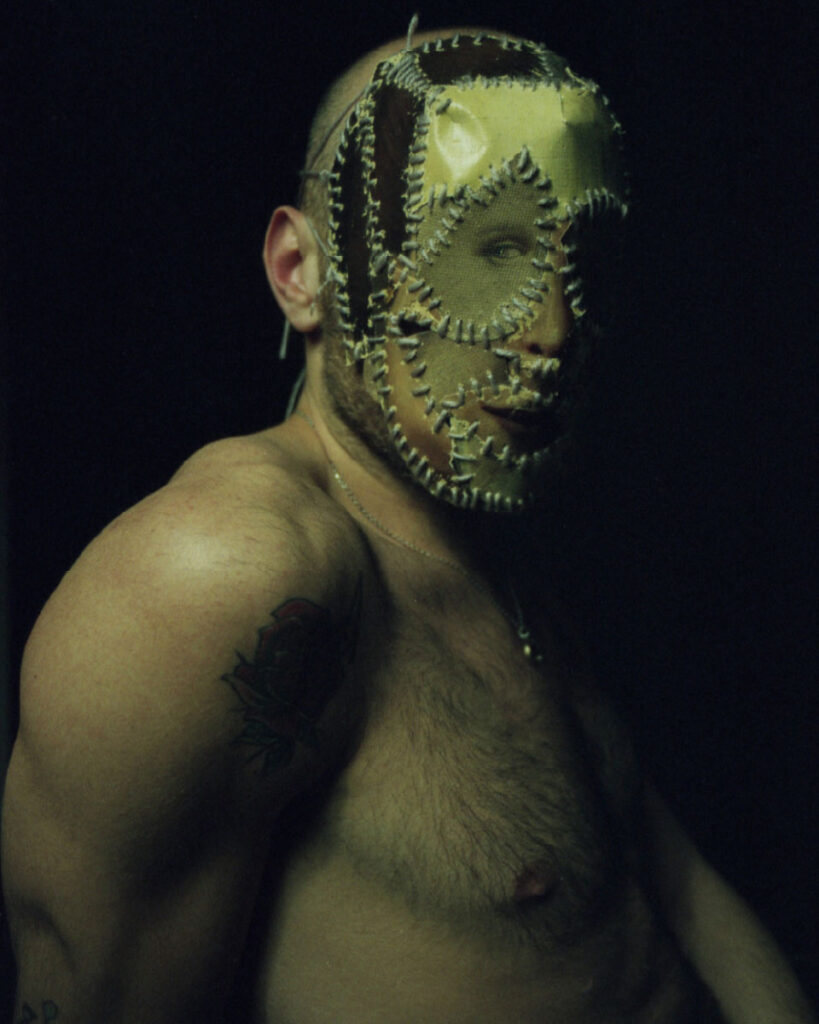
AGGLOMERATI mask inspired by Francesco’s memories of his grandmother
photography Omar Macchiavelli
Another mask came from his experience of sleep paralysis: the panic of being unable to move, unsure whether he was awake or asleep, with the feeling of a figure standing over him. He built that sensation into a silhouette from small pieces of lace. The object gives a shape to the experience without dictating what another person must see in it.
For Francesco, making by hand is also a way to focus. He describes it as a form of meditation: when his thoughts wander, he brings his attention back to the movement of his hands. The masks sit between fashion, art and wearable sculpture. Some are intended for editorial images; he is also developing softer, more wearable pieces. A presentation in Paris at Upheart is planned for the couture period in January 2027, alongside a new collection.
text Ovlioxy Vleuryon