Madrid Fashion Week: An Interview with Franx de Cristal of ACROMATYX
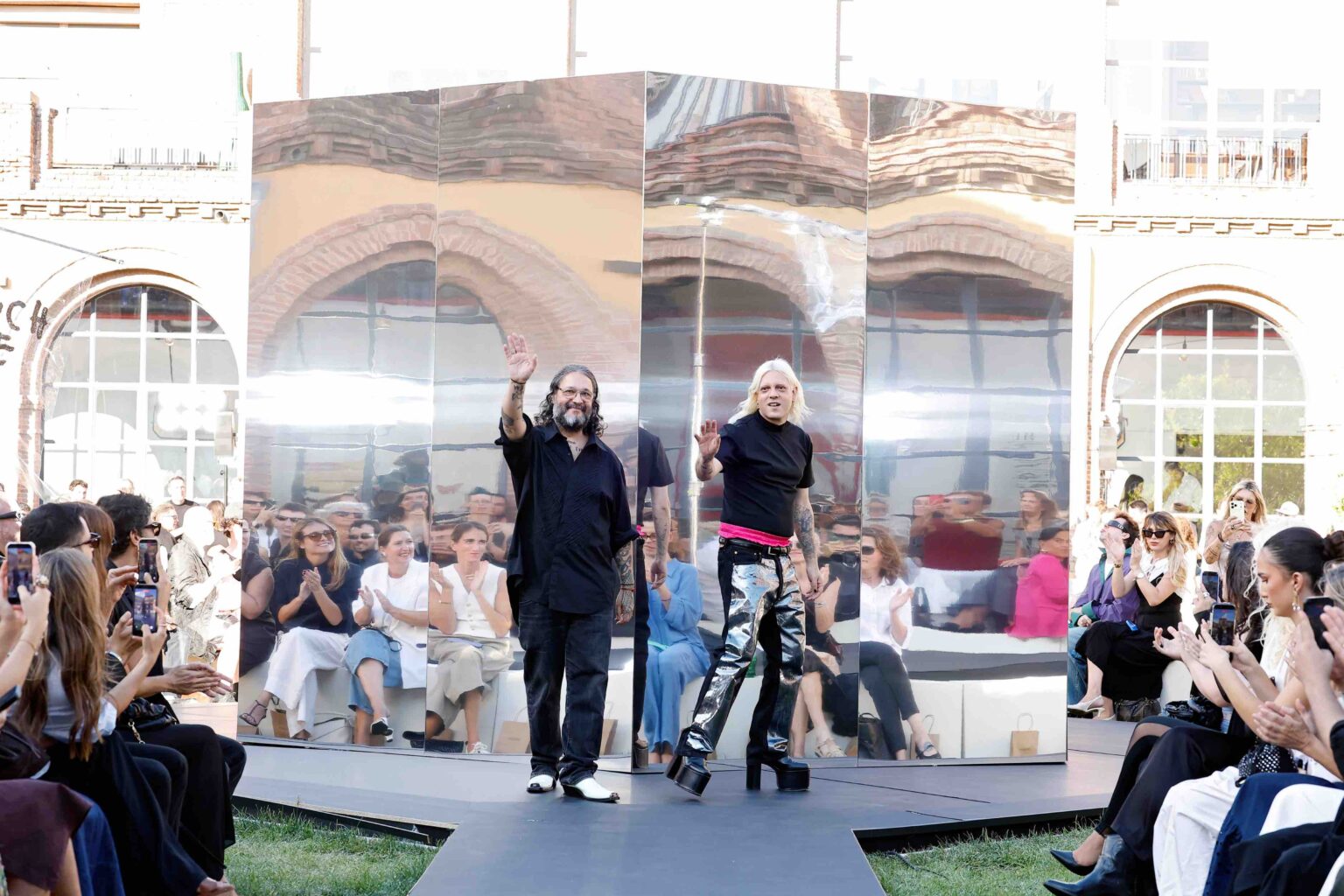
From fashion archives, we rarely learn about things that might be. Fashion archives for ACROMATYX are a point of departure in design thinking. Going back to pattern and silhouettes from past collections, Madrid-based label ACROMATYX thinks about its past work as something to reconstruct rather than something to repeat, adjusting proportions and materials and relationships to the body until something old feels new again.
Transformation has always been key to the ACROMATYX language. Traditional fabrics meet technical materials, fitted forms meet oversized shapes, and black, the brand’s signature, becomes less a single colour than a study of texture, transparency, light and volume. In our conversation, ACROMATYX thinks back to the process of going into its archive, without looking back, but forward-designs from the body outwards, explores creative contradictions and looks to what else may be explored in black.
Sandra Myhrberg: This collection revisits and reinterprets elements from your own archive. What made you want to look back at your previous work this season?
Franx de Cristal: For us, looking back is not about nostalgia. It is about understanding our own evolution. We wanted to return to certain ideas from previous collections and see what they could become from where we are now. ACROMATYX has always been about transformation, so revisiting the archive felt like another way of moving forward. The same idea can become something completely different when you change the material, the proportion or the way it interacts with the body.
S: How did you decide which past ideas or patterns you wanted to bring into the collection again?
F: It was very instinctive. We looked for patterns and silhouettes that still felt relevant to us, pieces that somehow contained part of the identity of ACROMATYX. Rather than reproducing them, we deconstructed and rebuilt them. Sometimes we changed the proportions, sometimes the fabric completely transformed the original pattern. We were interested in seeing how far we could take something familiar until it became new again.
S: The body is described as a starting point for the collection. How does the body influence the way you develop a garment?
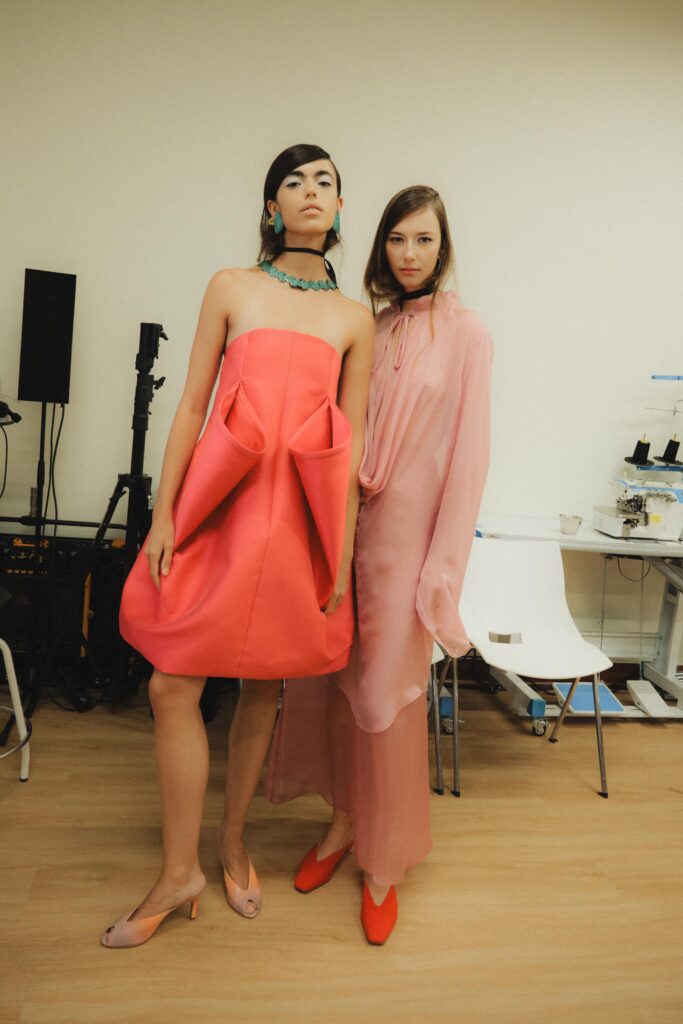
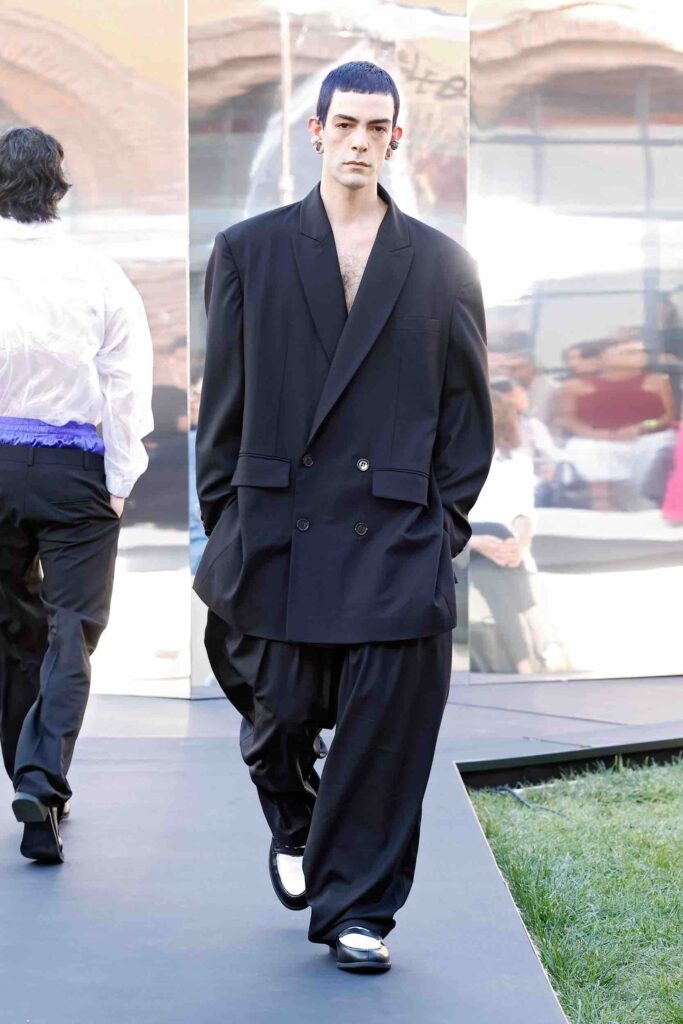
F: The body is always our first reference. We are interested in the relationship between the garment and the body: when it follows it, when it hides it, and when it creates a completely new silhouette around it. We work a lot with this tension between fitted and oversized proportions. For us, clothes don’t simply dress the body; they can transform the perception of it.
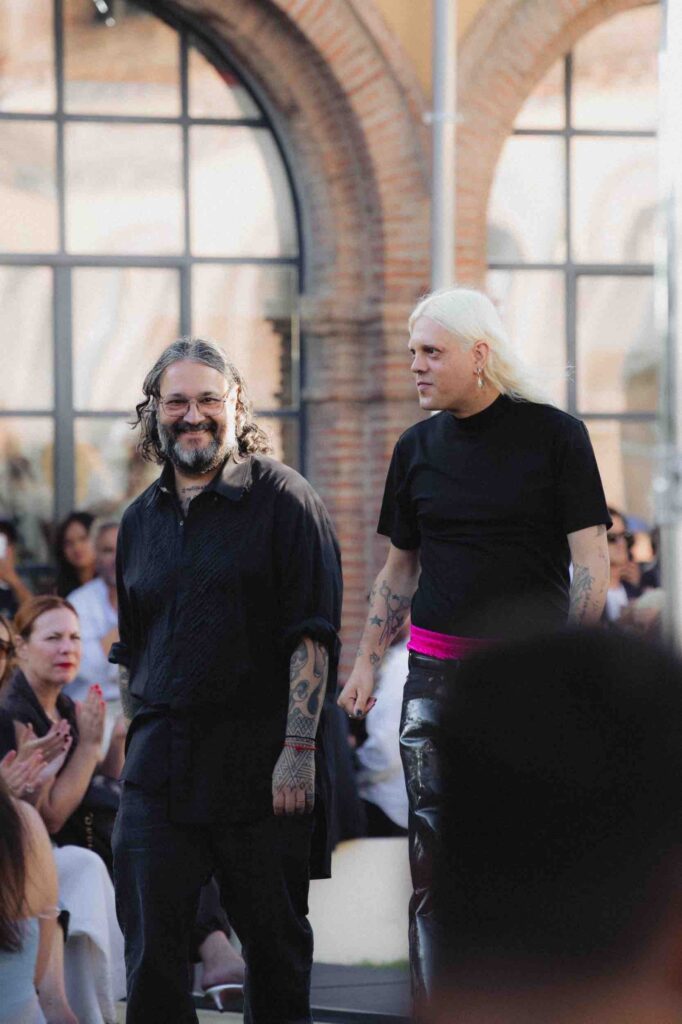
image courtesy Madrid Fashion Week
S: You combine traditional fabrics with more innovative materials. What interests you about bringing those two worlds together?
F: Contradiction is fundamental to ACROMATYX. We like placing materials with very different identities next to each other, organza with technical nylon, satin with cotton or cold wool. Traditional fabrics bring history and familiarity, while innovative materials introduce something unexpected. When these two worlds meet, both materials can be perceived differently. That tension creates a new language.
S: Black is such a strong part of the Acromatyx identity. How do you continue to reinvent something that has become such a signature for the brand?
F: For us, black is never just one colour. It changes completely depending on the material, texture, transparency, light and volume. A black organza doesn’t speak in the same way as black wool, satin or technical nylon. We see black almost as a blank canvas, a way of removing distraction and allowing the silhouette, construction and material to become more visible. So rather than feeling limited by black, we feel there is still an infinite territory to explore within it.